-
-
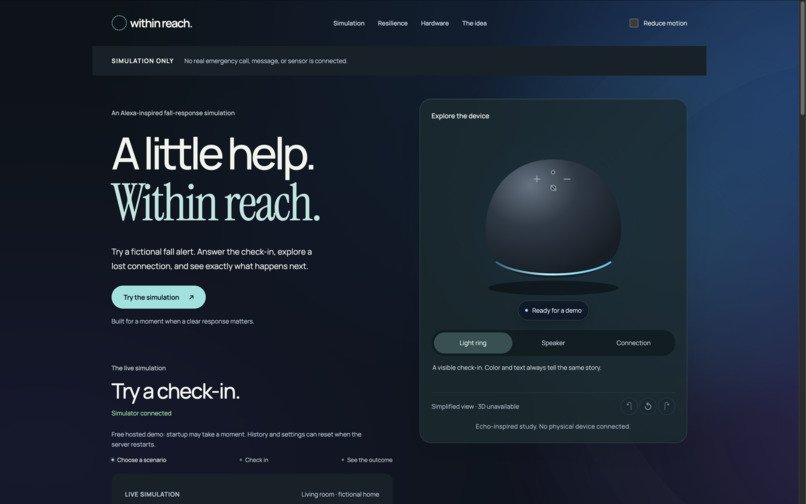
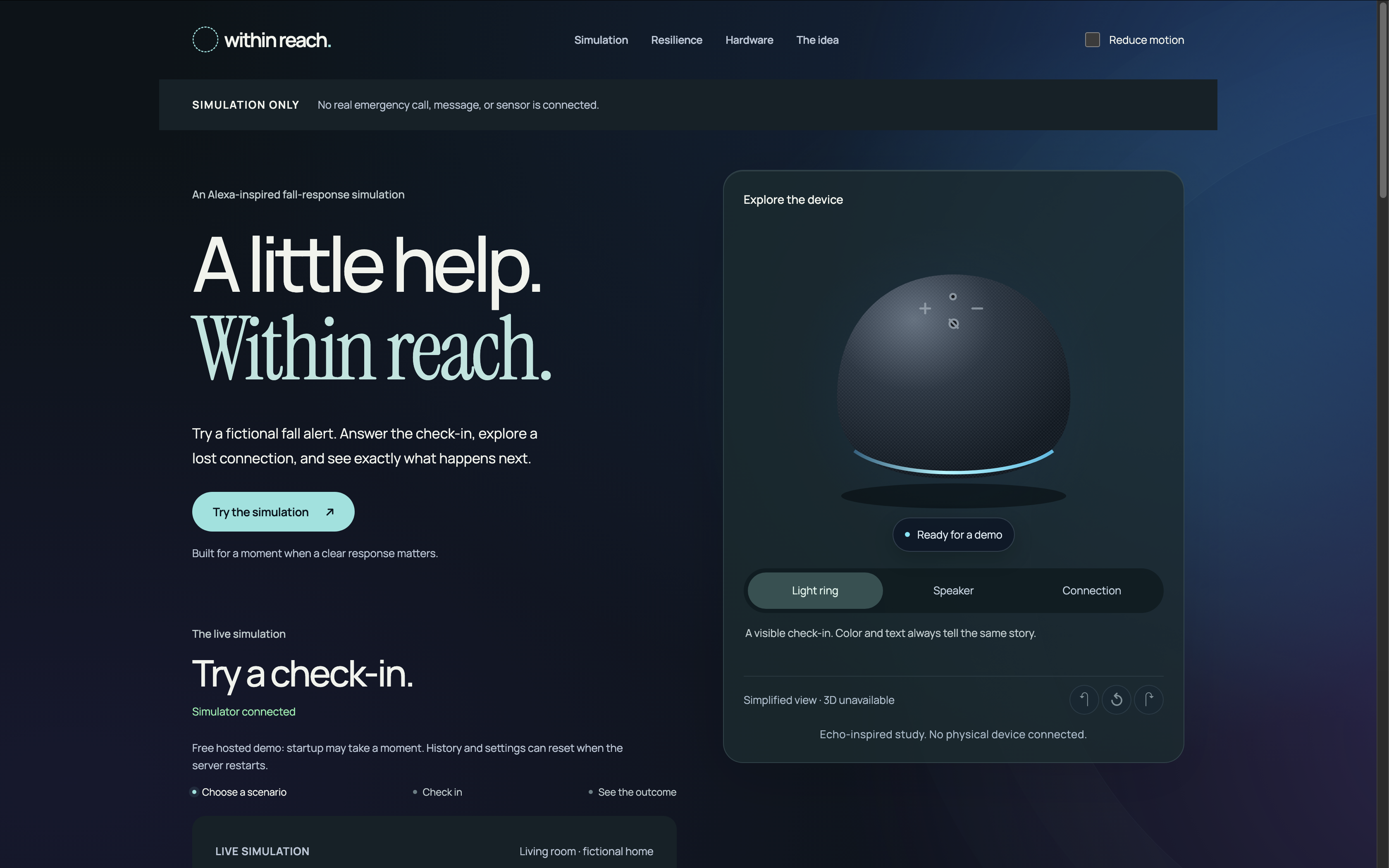
Landing Page
-
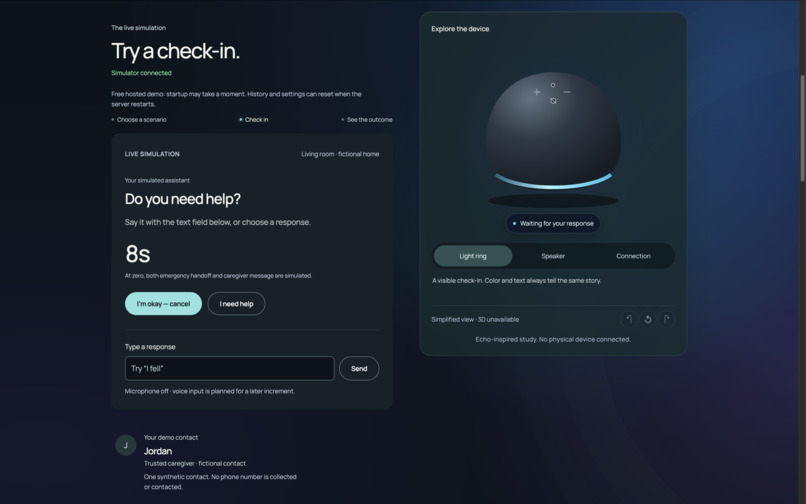
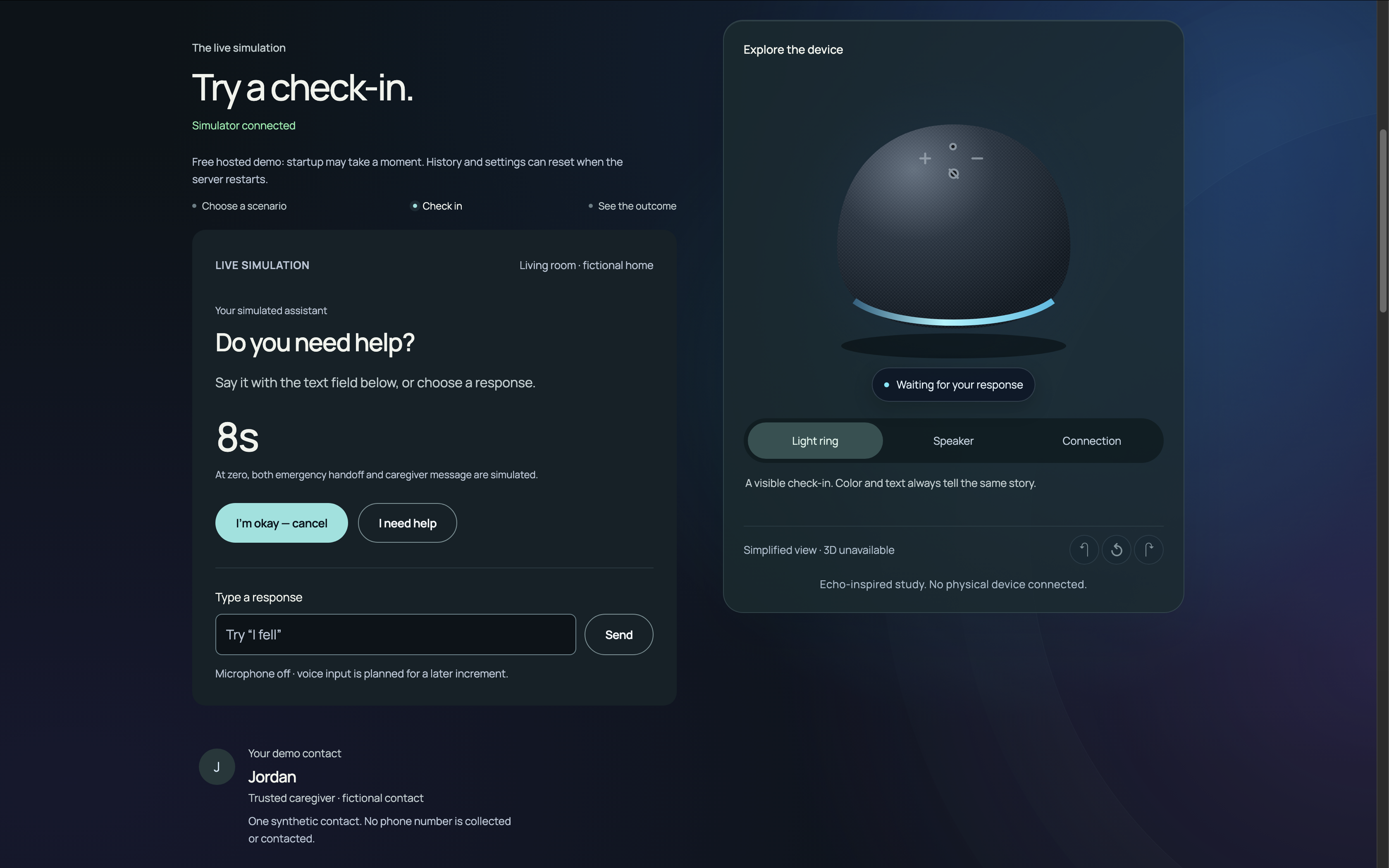
Live Simulation countdown after fall
-
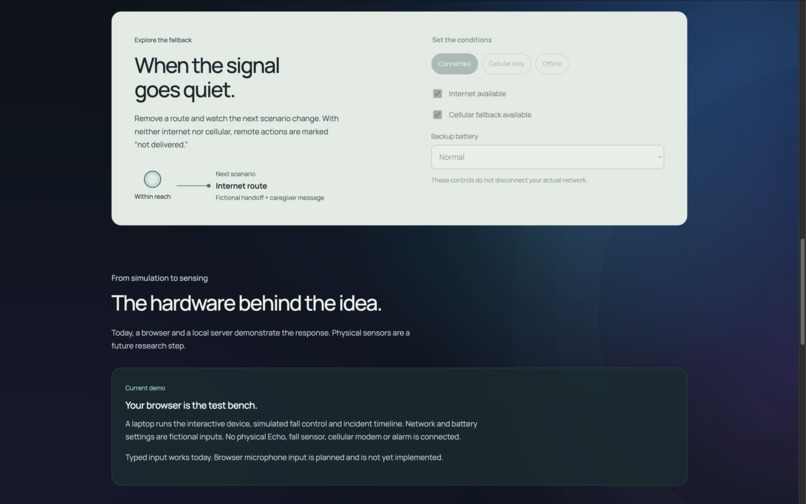
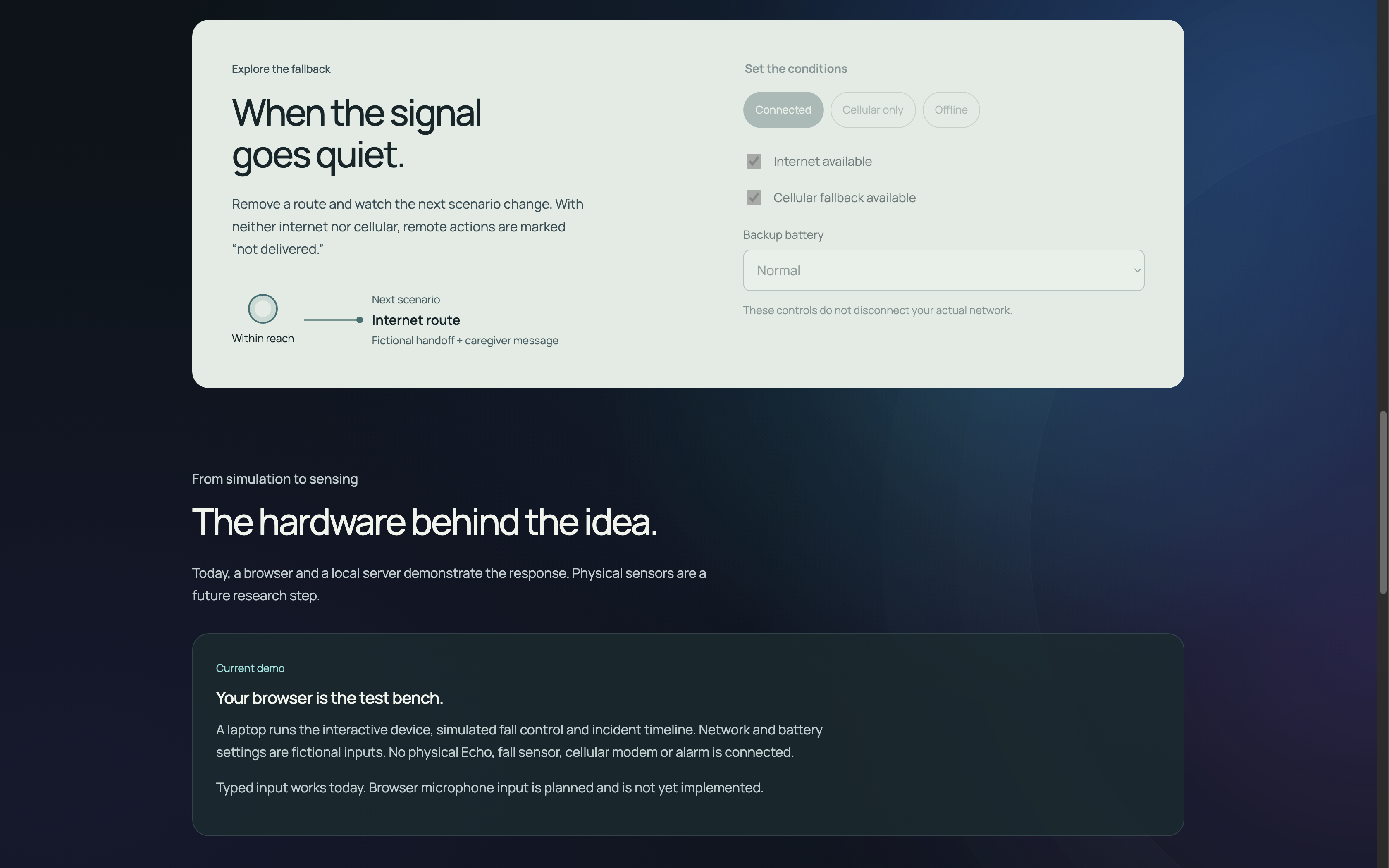
When there is no Internet
-
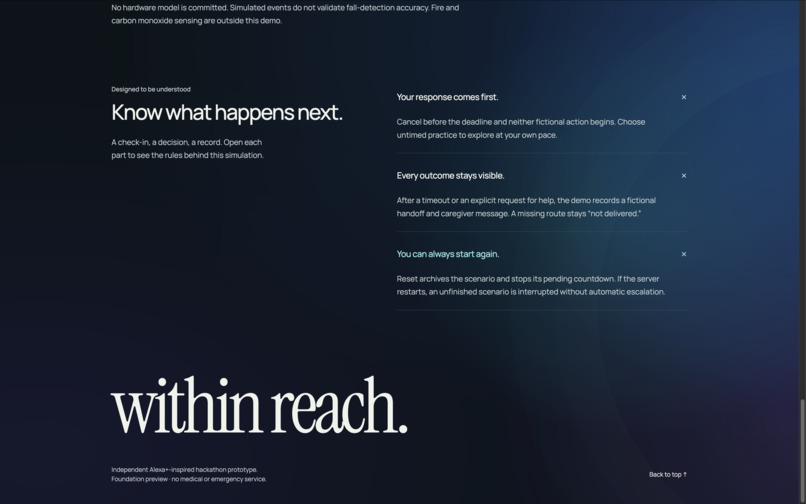
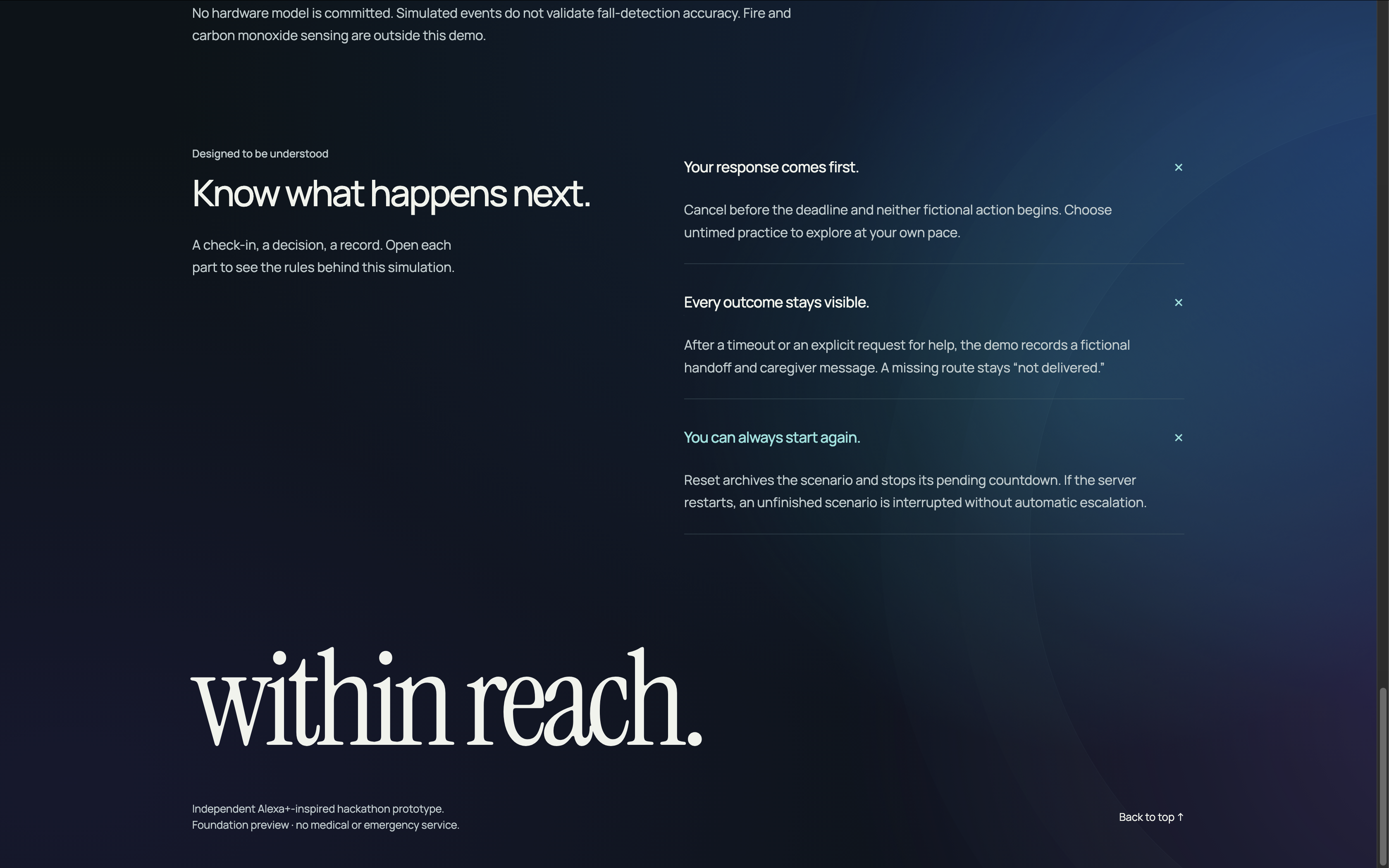
What happens next
-
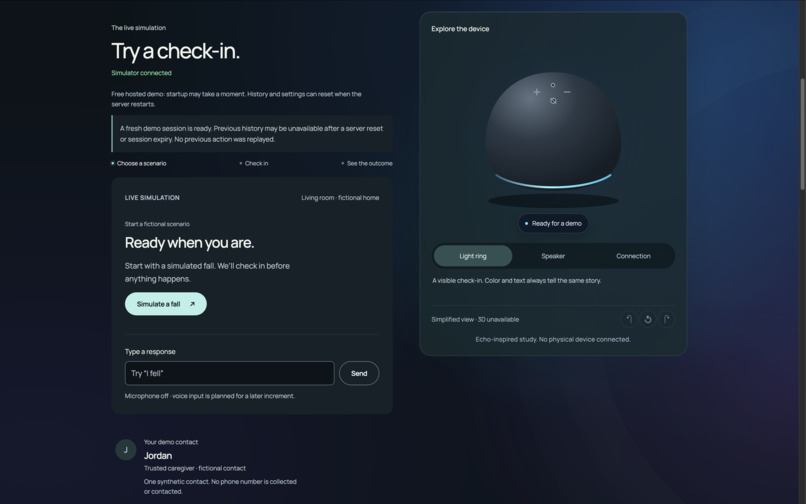
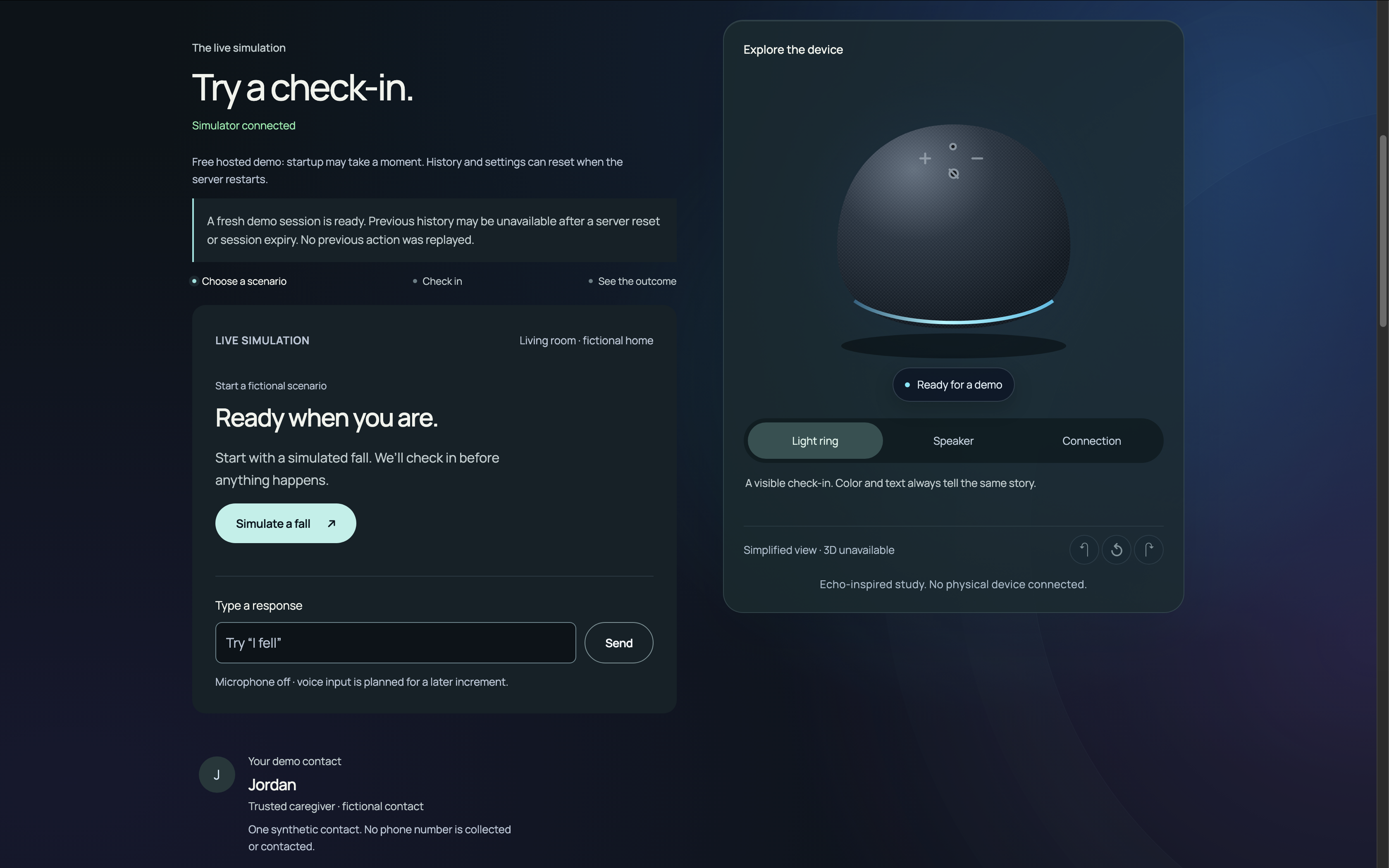
Simulate a fall
-
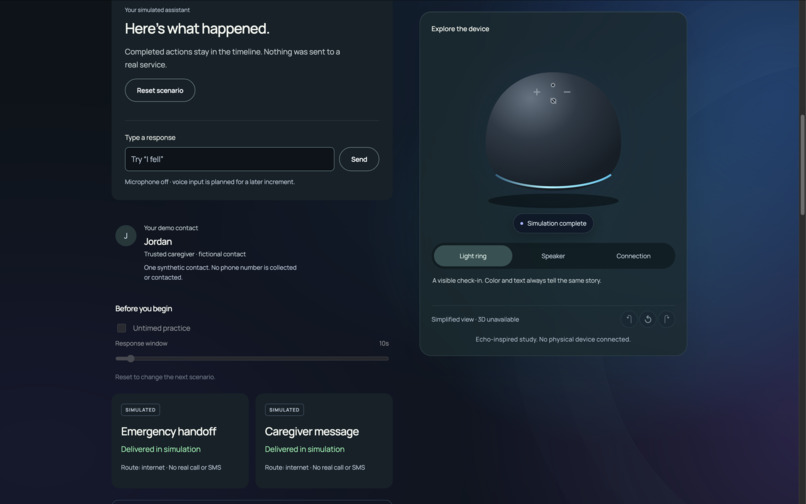
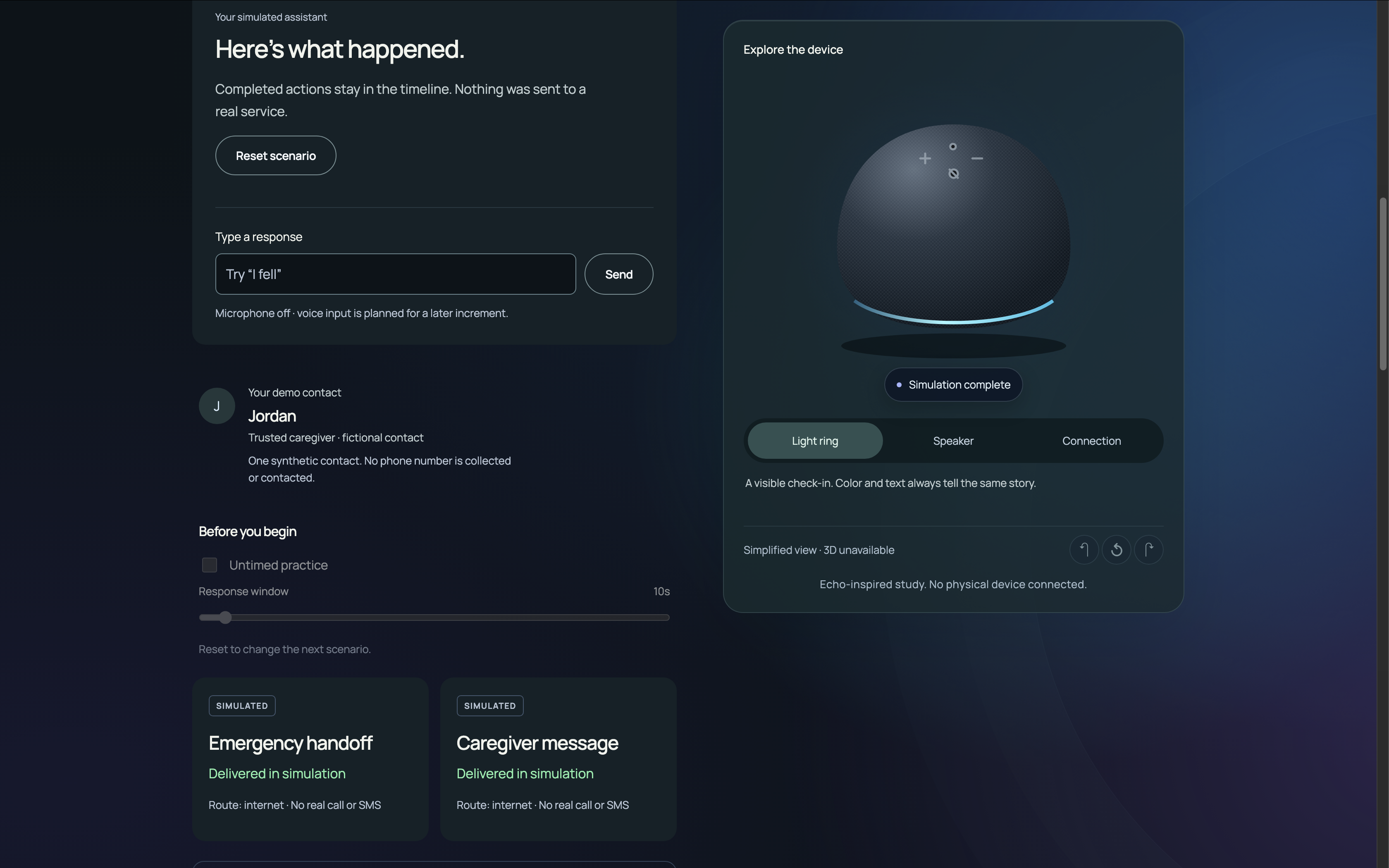
Caregiver message and 911 handoff delivered
-
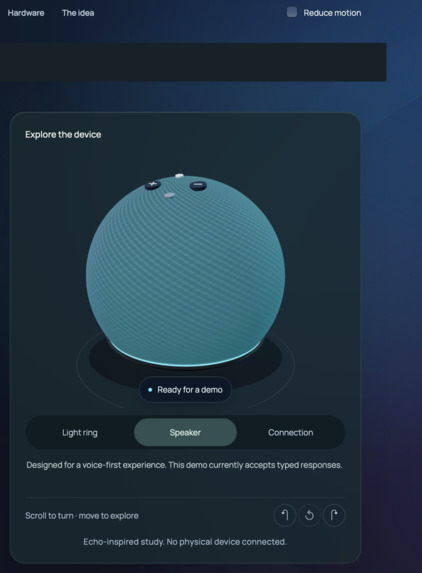
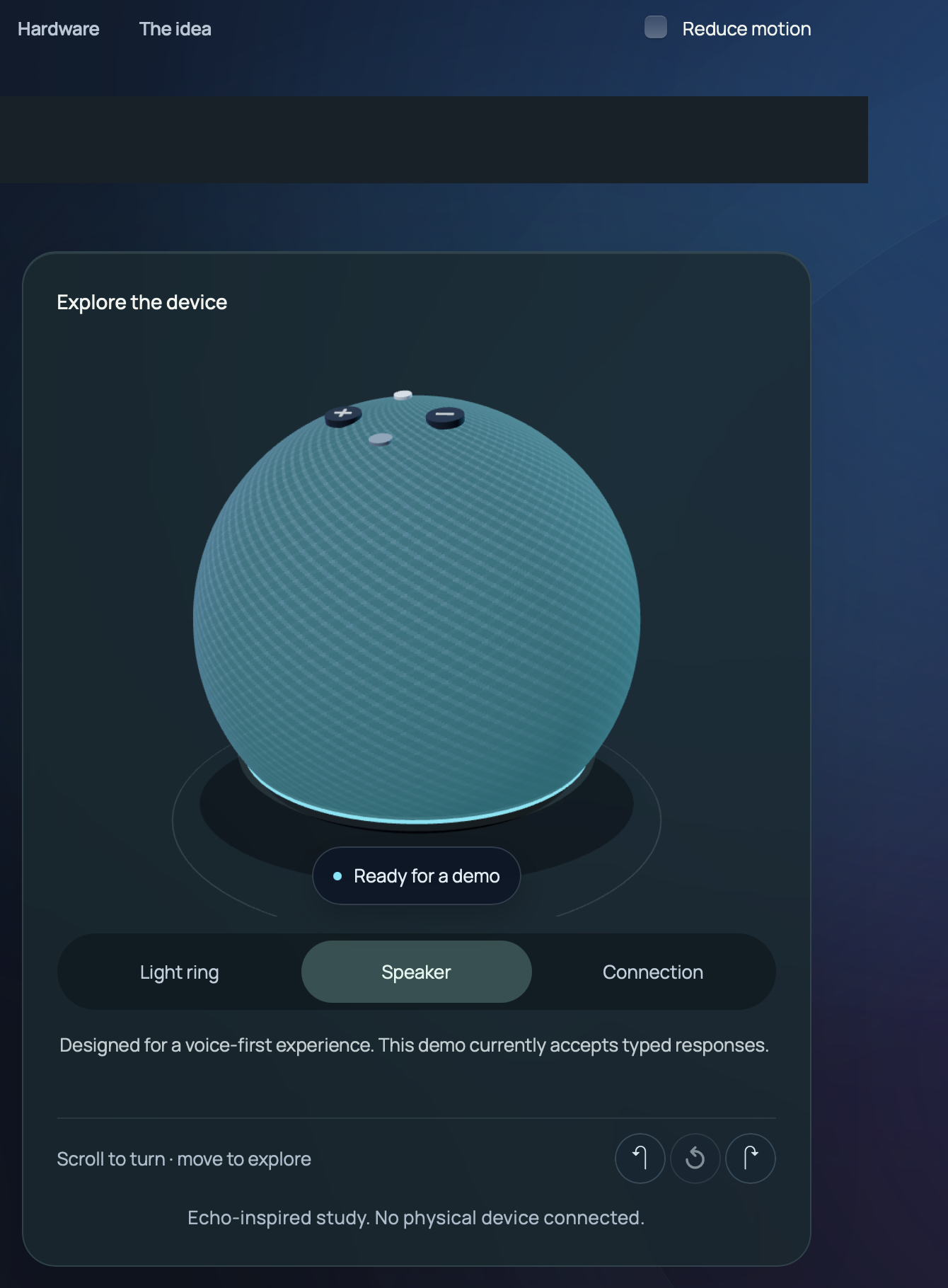
3D themes and model theme
Inspiration
A fall can leave someone unable to reach their phone or call for help. We created Within Reach around a simple idea: make it easier for someone to ask for help at home, while keeping caregivers informed about what the system did and whether an alert was delivered.
What it does
Within Reach simulates a voice-first, Alexa+-inspired fall-response experience. A possible incident can be triggered through a simulated sensor event or a spoken request for help. The system checks in with the resident and starts a configurable countdown, set to 10 seconds by default. If the resident says they are okay or cancels, the flow stops. If there is no response, the experience shows a simulated emergency handoff and caregiver text alert.
The prototype also demonstrates what happens during connectivity problems: a simulated local alarm and cellular fallback, with a clear “not delivered” status if no route is available. It does not contact real emergency services or send real text messages.
How we built it
The experience combines a web app with a self-hosted Python MCP server using Streamable HTTP. The web app provides the resident and household views, incident controls, countdown, cancellation, connectivity scenarios, and event history. It can use an explicitly started browser microphone, with text entry as a fallback.
A deterministic incident orchestrator manages the timer, cancellation, incident state, and simulated alerts. The AI agent can access a limited set of typed MCP tools, while mock adapters keep emergency and caregiver actions inside the simulation. This separation makes the flow easier to test and prevents the AI from deciding on its own when to escalate.
Challenges we ran into
The central challenge was designing a clear emergency flow without implying that a prototype can reliably detect every fall or dispatch real responders. Silence may mean someone cannot respond, but it does not prove they need emergency services. We also had to account for cancellation arriving near the end of the countdown and make network failures visible instead of suggesting an alert was delivered.
Accomplishments that we’re proud of
We brought the complete response journey into one experience: incident trigger, resident check-in, cancellation window, escalation preview, caregiver notification, and outage behavior. We’re especially proud that the resident’s core flow does not depend on them having a personal smartphone, and that the prototype makes simulation and delivery status visible throughout.
What we learned
We learned that an emergency workflow needs predictable rules and clear status at every step. MCP can give an AI agent a structured way to access tools, but a deterministic service should control timers, cancellations, and escalation. We also learned that accessibility, consent, privacy, and honest communication about system limits need to be part of the product design from the beginning.
What’s next for Within Reach
We plan to test the experience with older adults and caregivers, improve accessibility, and learn how people want check-ins and alerts to work. We also want to investigate sensor and outage options, and explore an approved Alexa+ integration if access becomes available. Any future real-world alerting would require careful safety review and authorized integrations.


Log in or sign up for Devpost to join the conversation.