-
-
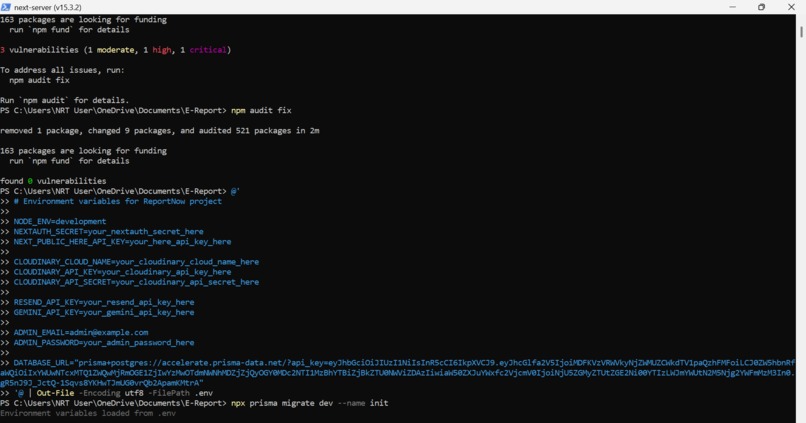
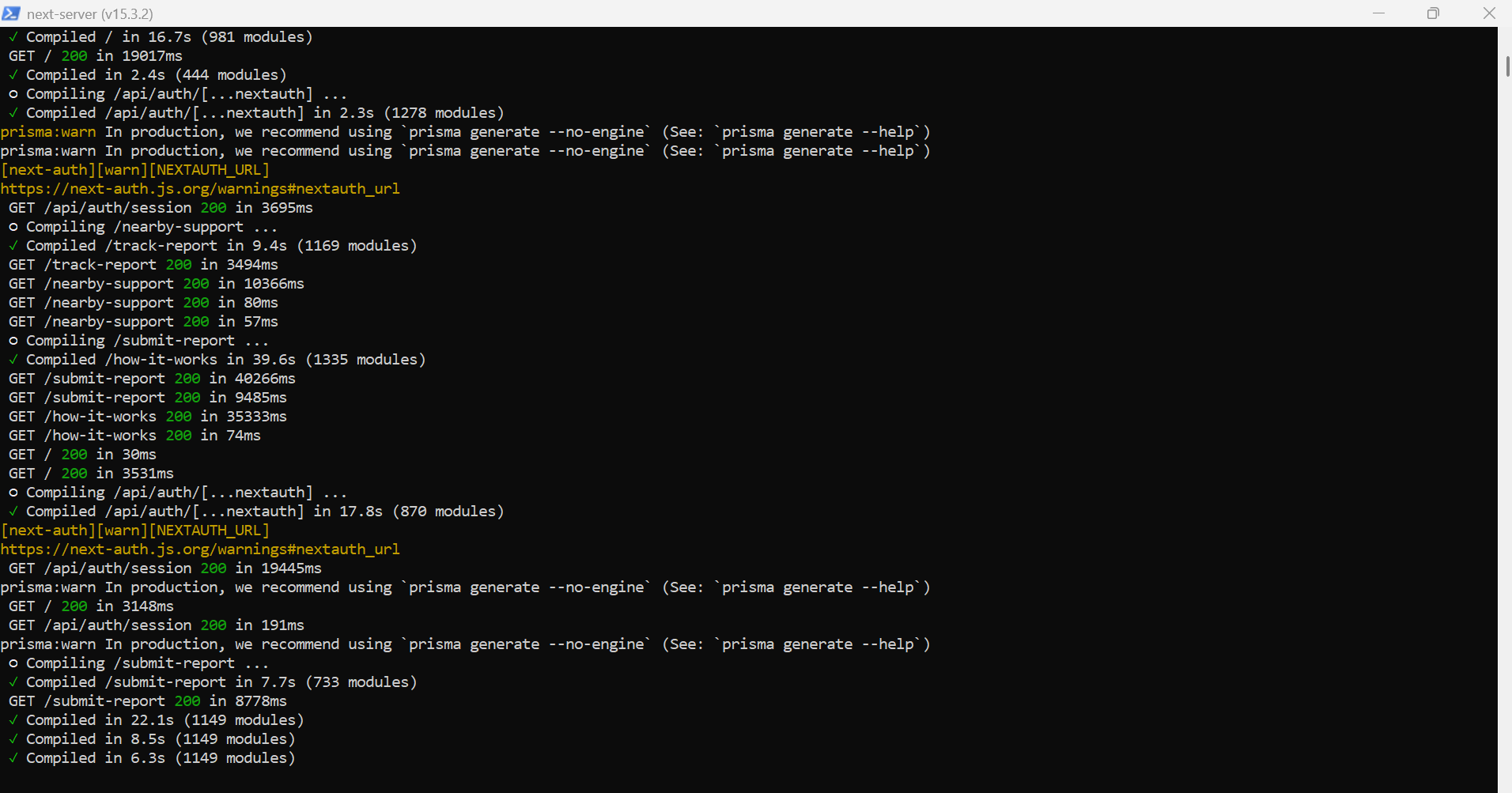
cmd
-
-
-
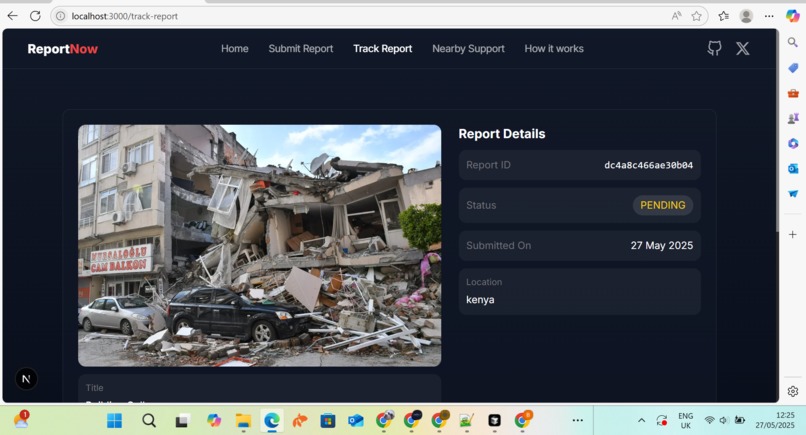
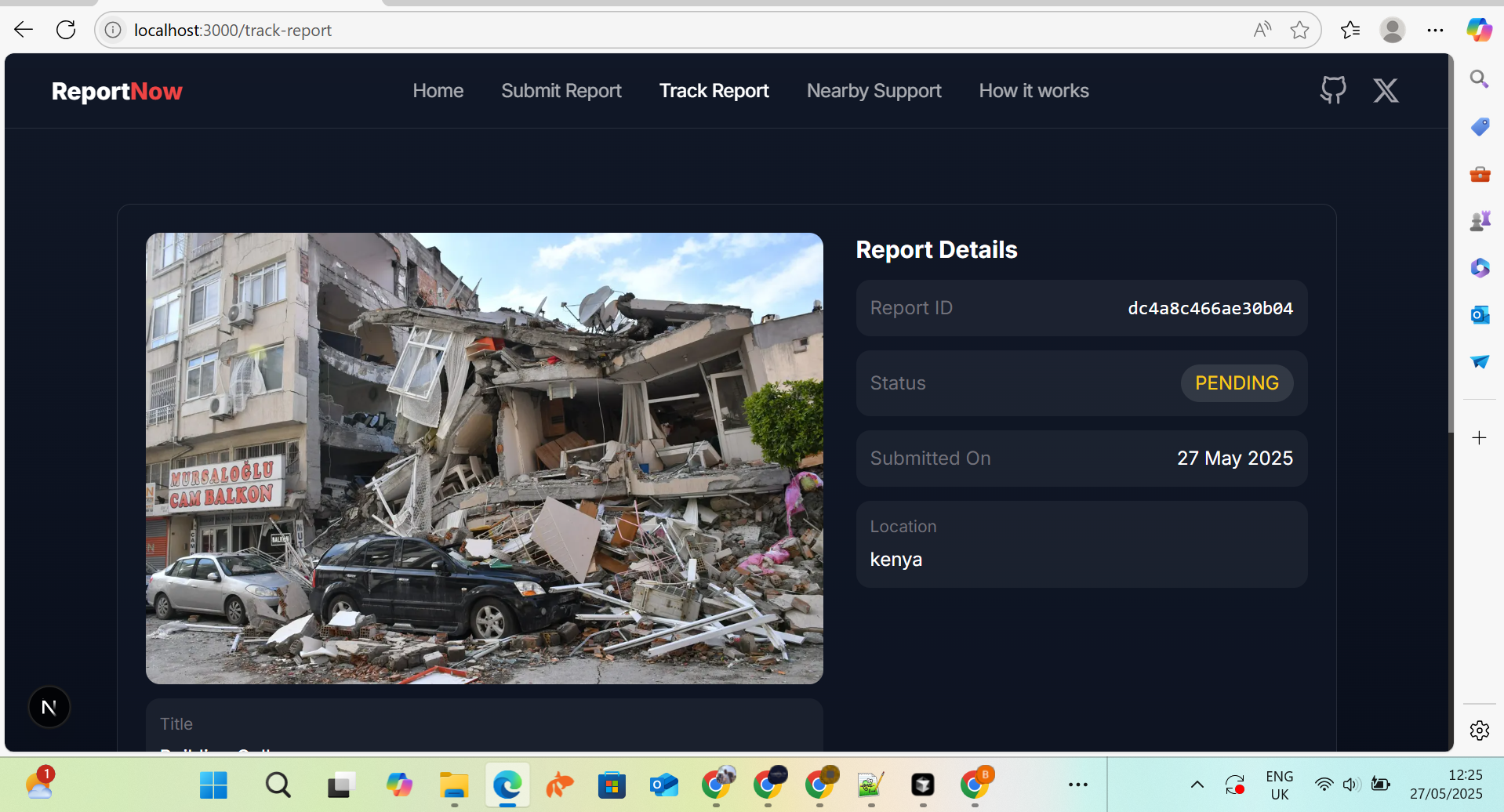
track reporting
-
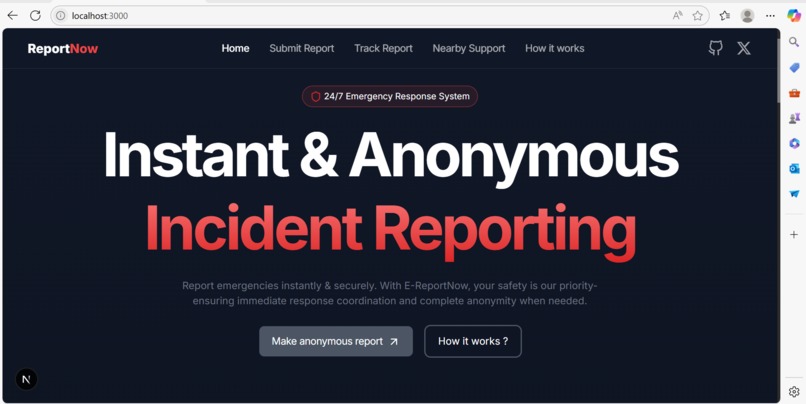
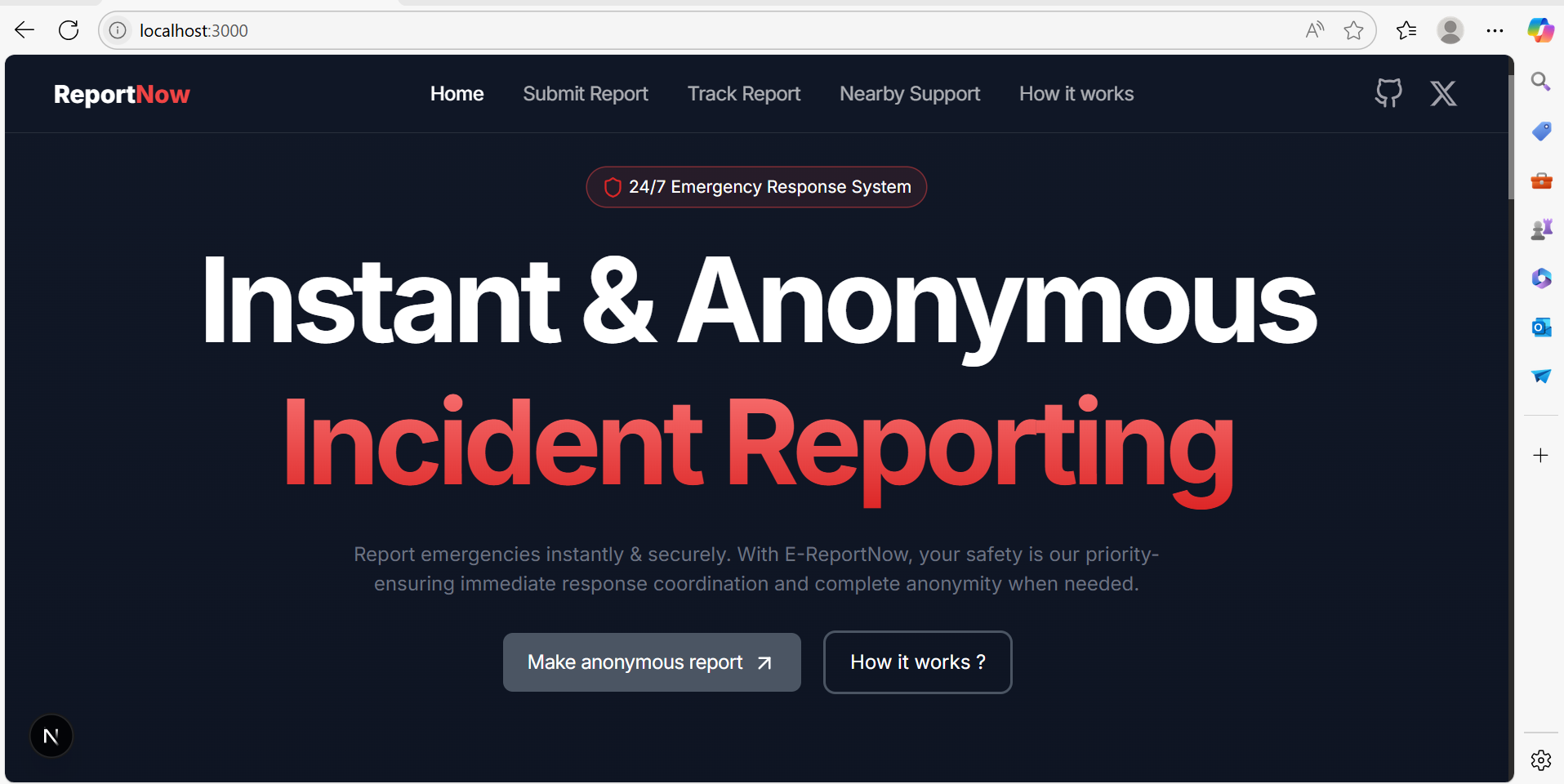
home
-
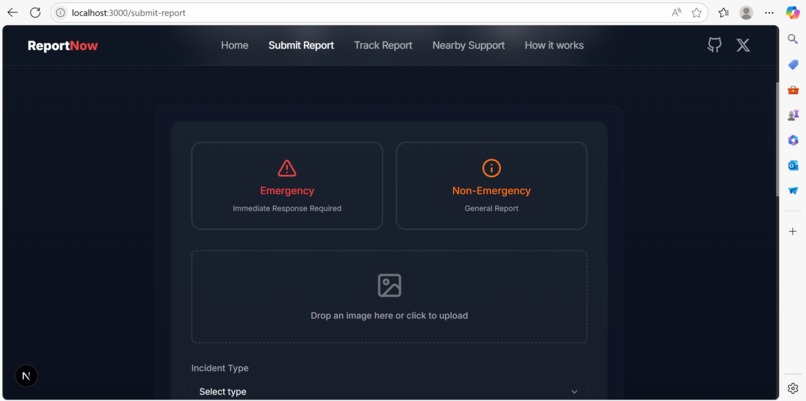
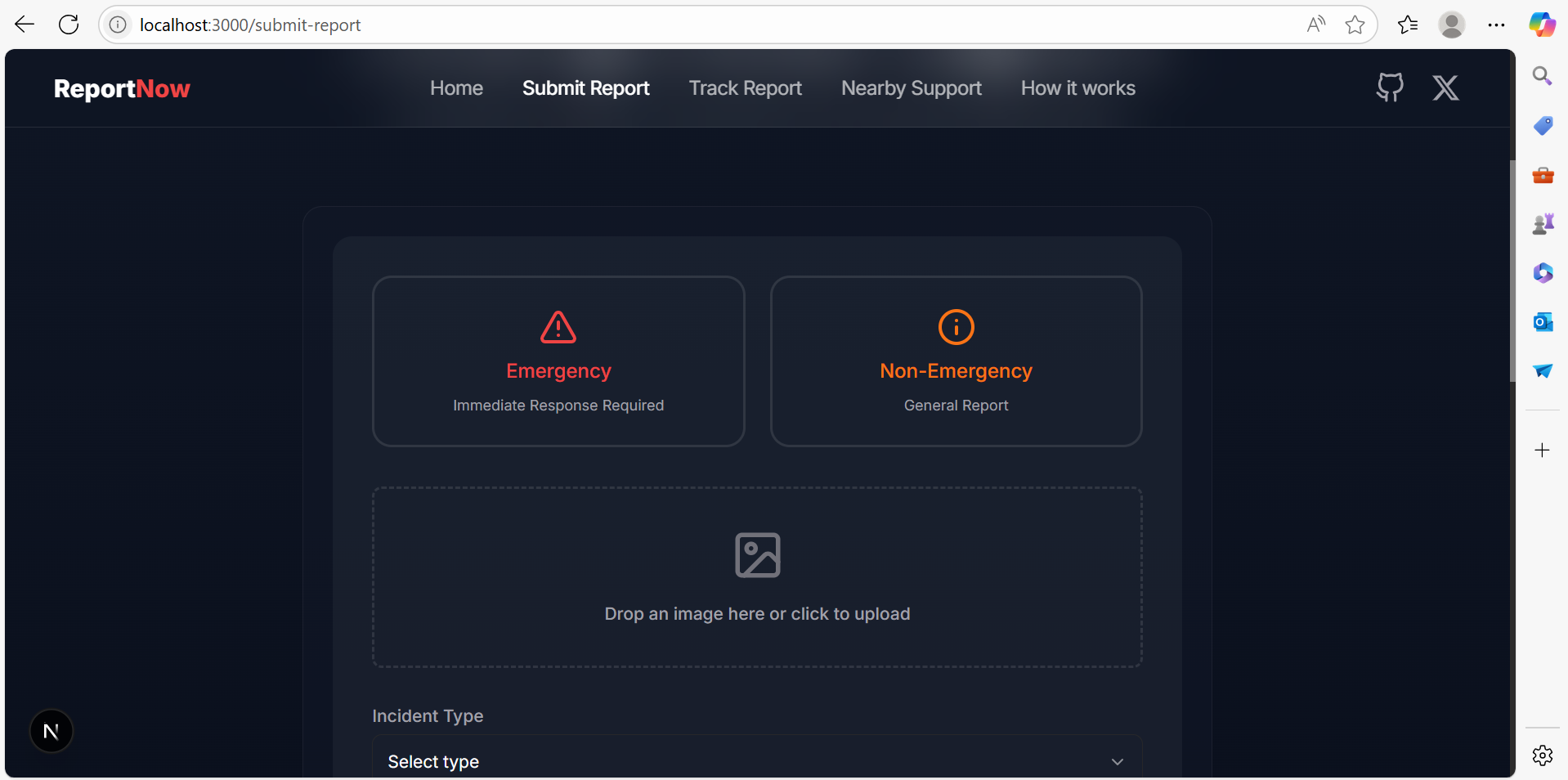
report an incident
Inspiration
E-Report was born from the urgent need to simplify how people report both emergency and non-emergency incidents. In today's fast-paced world, delays in reporting incidents may result in missed opportunities for timely intervention. We envisioned a platform that leverages the power of AI to generate structured reports from simple image uploads, minimizing user effort while maximizing accuracy and impact. Our goal is empower individuals with a smart, seamless, and secure tool that bridges the gap between civilians and emergency responders.
What it does
E-Report is an AI-powered web application that allows users to report incidents simply by uploading an image. Using Gemini LLM, the system analyzes the uploaded image and intelligently generates a structured incident report including: a. Title b. Description c. Incident Category Users can edit and review this information before submitting it. Beyond reporting, the platform provides: a. Real-time incident tracking b. Live location sharing c. Instant access to nearby emergency services such as hospitals, police stations, fire stations, and pharmacies via the Here API The platform is built for scalability and reliability, fully containerized with Docker for easy deployment across environments.
How we built it
We used the following technologies: a. Frontend: Next.js, Tailwind CSS, React Hook Form, Zod for schema validation b. Authentication: NextAuth c. Backend & ORM: Prisma ORM with PostgreSQL on NeonDB d. AI Integration: Gemini AI for generating incident summaries from uploaded images e. Geolocation Services: Here API for mapping and location-based service discovery f. Media Management: Cloudinary for image uploads and optimization g. SMS and Email Services: Resend for sms and email notifications h. Deployment: Docker for containerization, ensuring smooth deployment across cloud or local environments
Challenges we ran into
a. Image-to-Text Accuracy: Fine-tuning the prompts and handling edge cases where the uploaded images were ambiguous or low-quality b. Location Data: Integrating and syncing live geolocation data with the Here API in real time was technically challenging c. Security: Ensuring secure data handling, particularly for user location and incident reports, required careful implementation of access control and API security d. Real-time Features: Implementing real-time report tracking with limited time and resources pushed us to optimize socket usage and location polling
Accomplishments that we're proud of
Successfully integrated Gemini AI to generate structured and accurate incident reports from image input Built a fully functional MVP with real-time location sharing and service discovery Dockerized the entire application, making it deployment-ready for various environments Created an intuitive and accessible user interface that balances ease-of-use with advanced capabilities
What we learned
How to effectively integrate LLMs (like Gemini) into real-world applications Importance of real-time user experience in safety-critical applications Geolocation APIs and their real-world challenges and opportunities How to build secure, scalable, and user-friendly full-stack applications in a short time
What's next
Mobile App Development: Expanding the platform to Android and iOS Multi-language Support: Making the app accessible in multiple languages for global use Advanced AI Analysis: Incorporating video analysis and multi-modal input for richer incident reporting Crowdsourced Verification: Enabling community-based validation of reports to prevent misuse AI-Powered Emergency Routing: Suggesting optimal emergency routes based on current traffic and incident types Analytics Dashboard: Providing authorities with data insights to better allocate emergency resources
Built With
- cloudinary
- docker
- gemini
- next.js
- nextauth
- postgresql
- prisma
- react
- resend
- tailwind
- zod

Log in or sign up for Devpost to join the conversation.