-
-
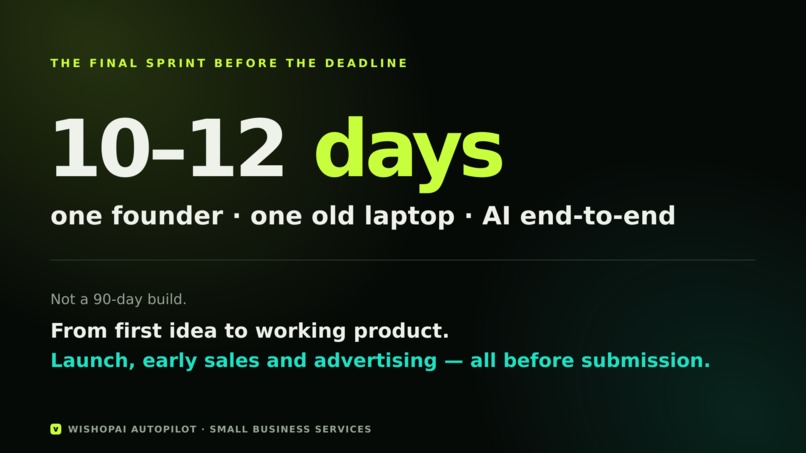
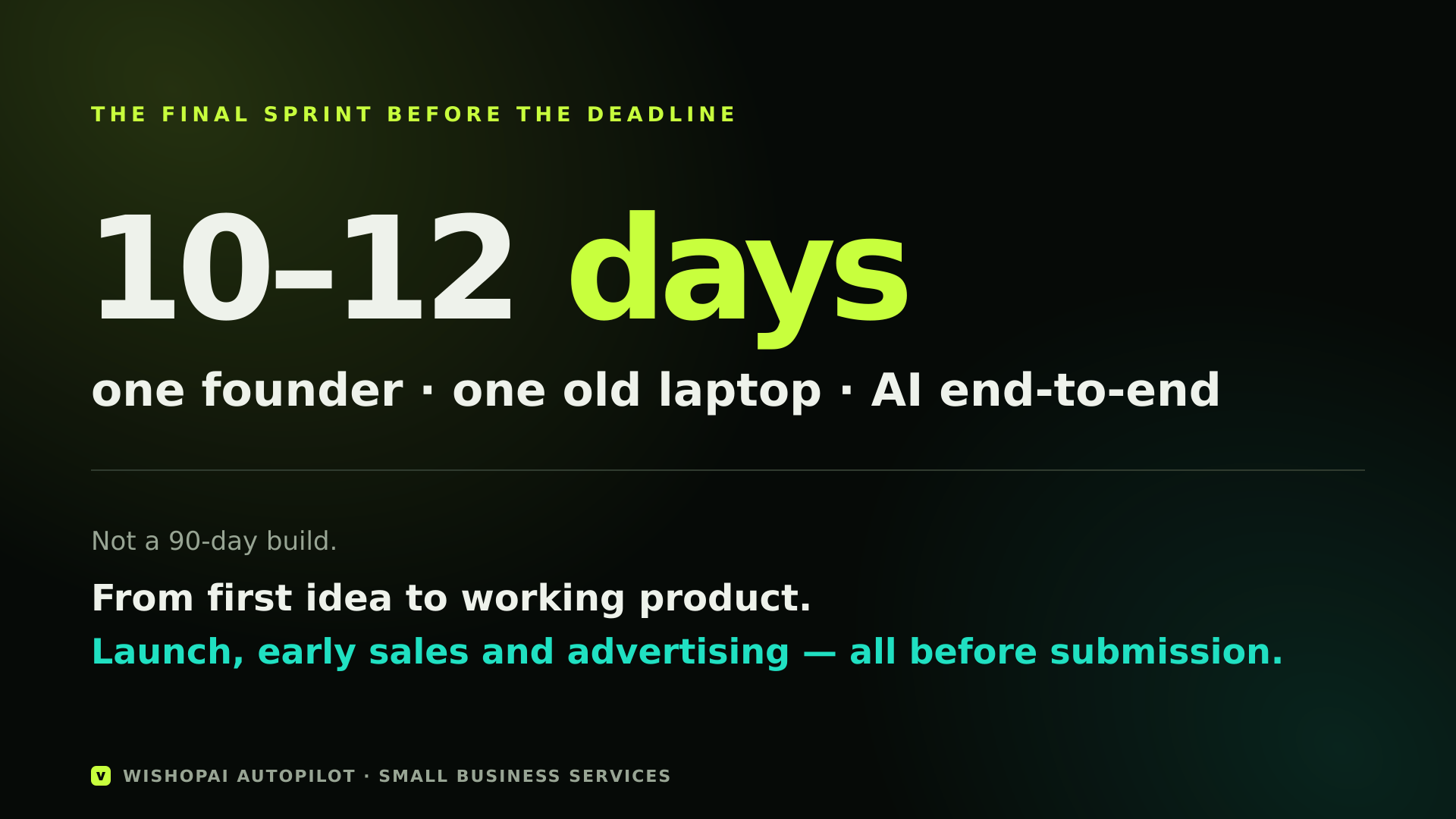
The final sprint: Wishopai Autopilot was built in 10–12 days, not over the full 90-day period.
-
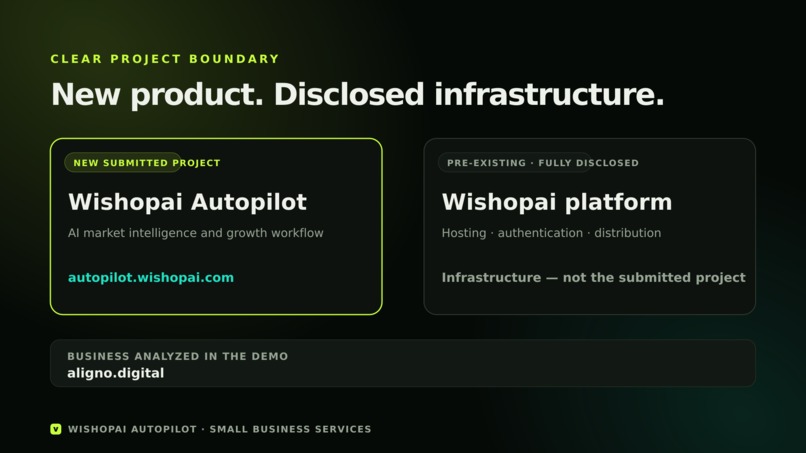
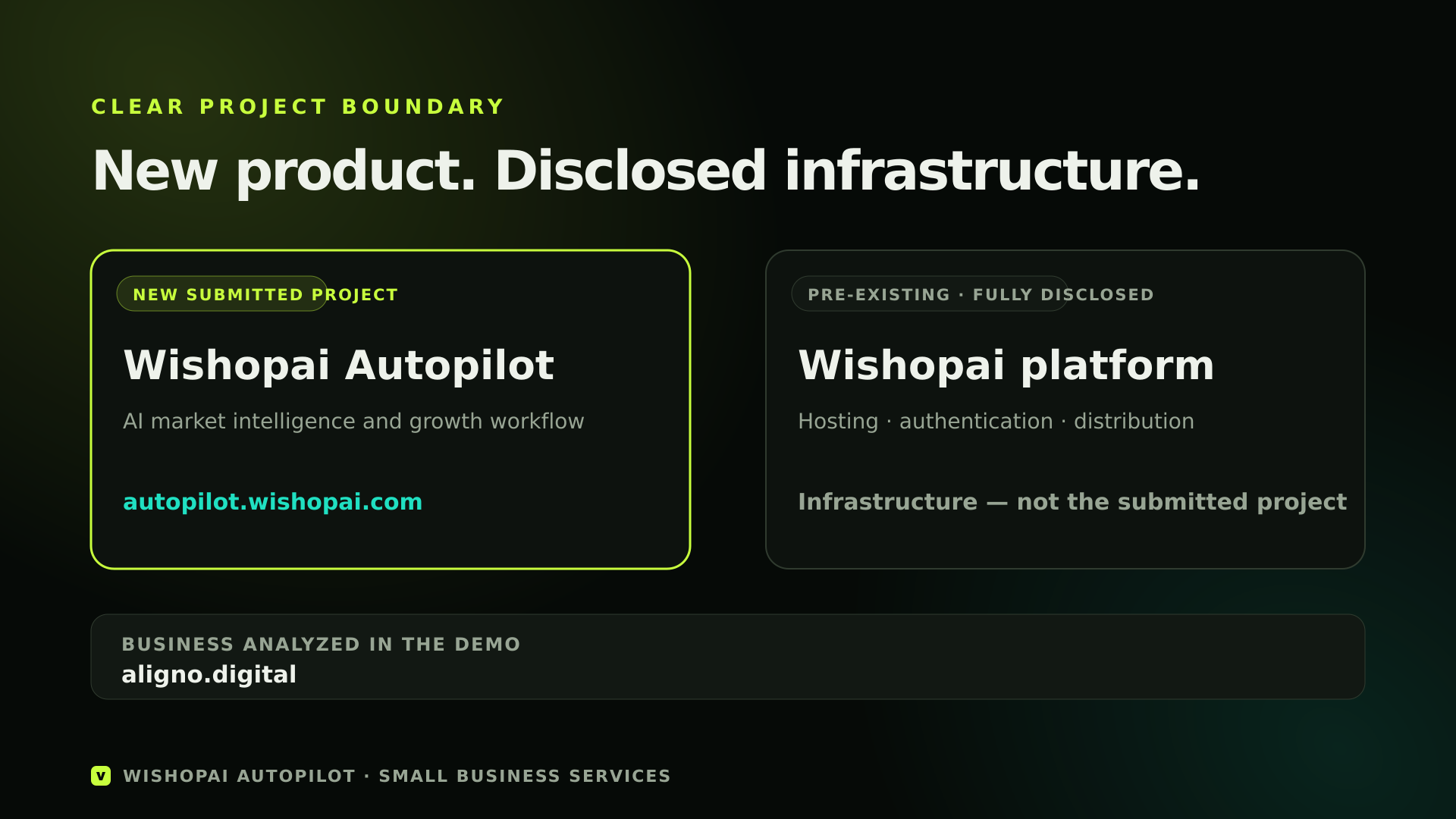
Project boundary: Autopilot is new; Wishopai infrastructure is pre-existing; aligno.digital is the analyzed business.
-
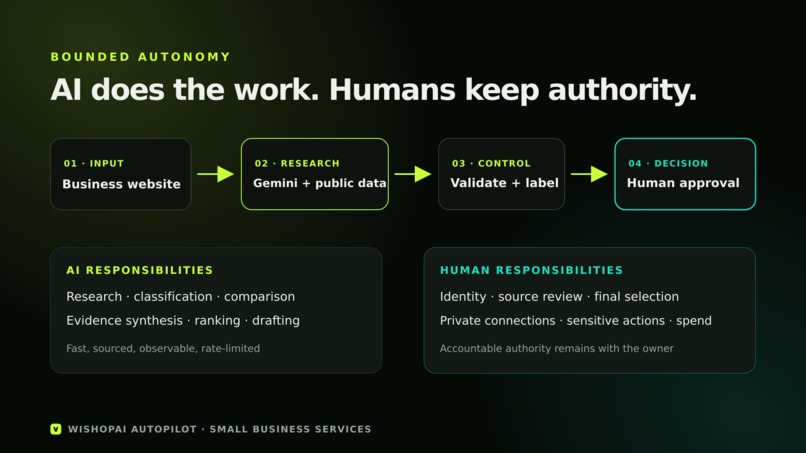
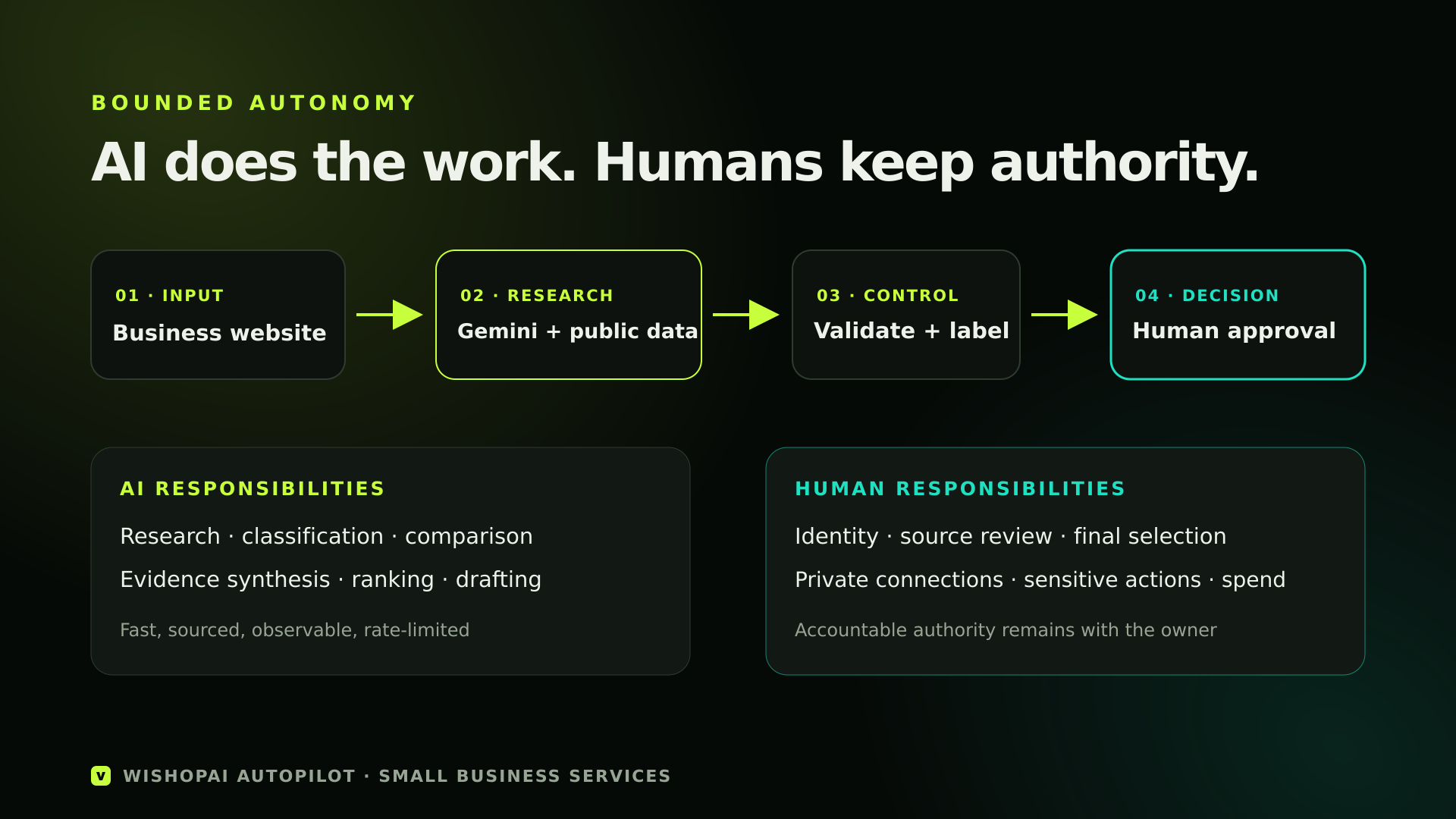
Bounded autonomy: Gemini researches and recommends while the human retains approval, spending, and publishing authority.
-
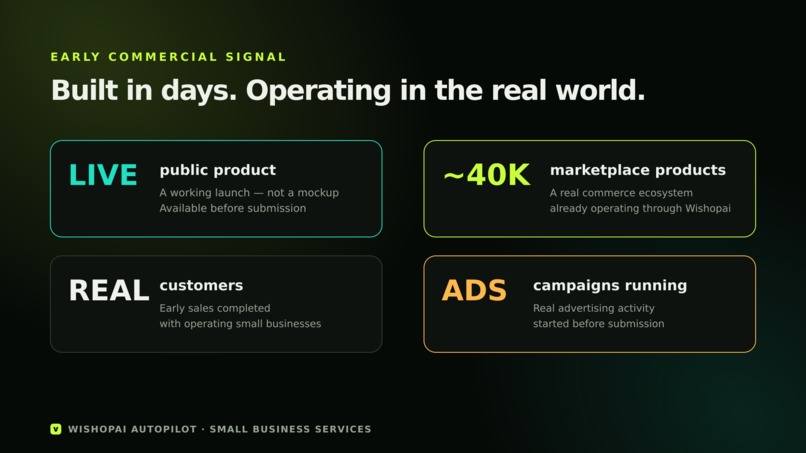
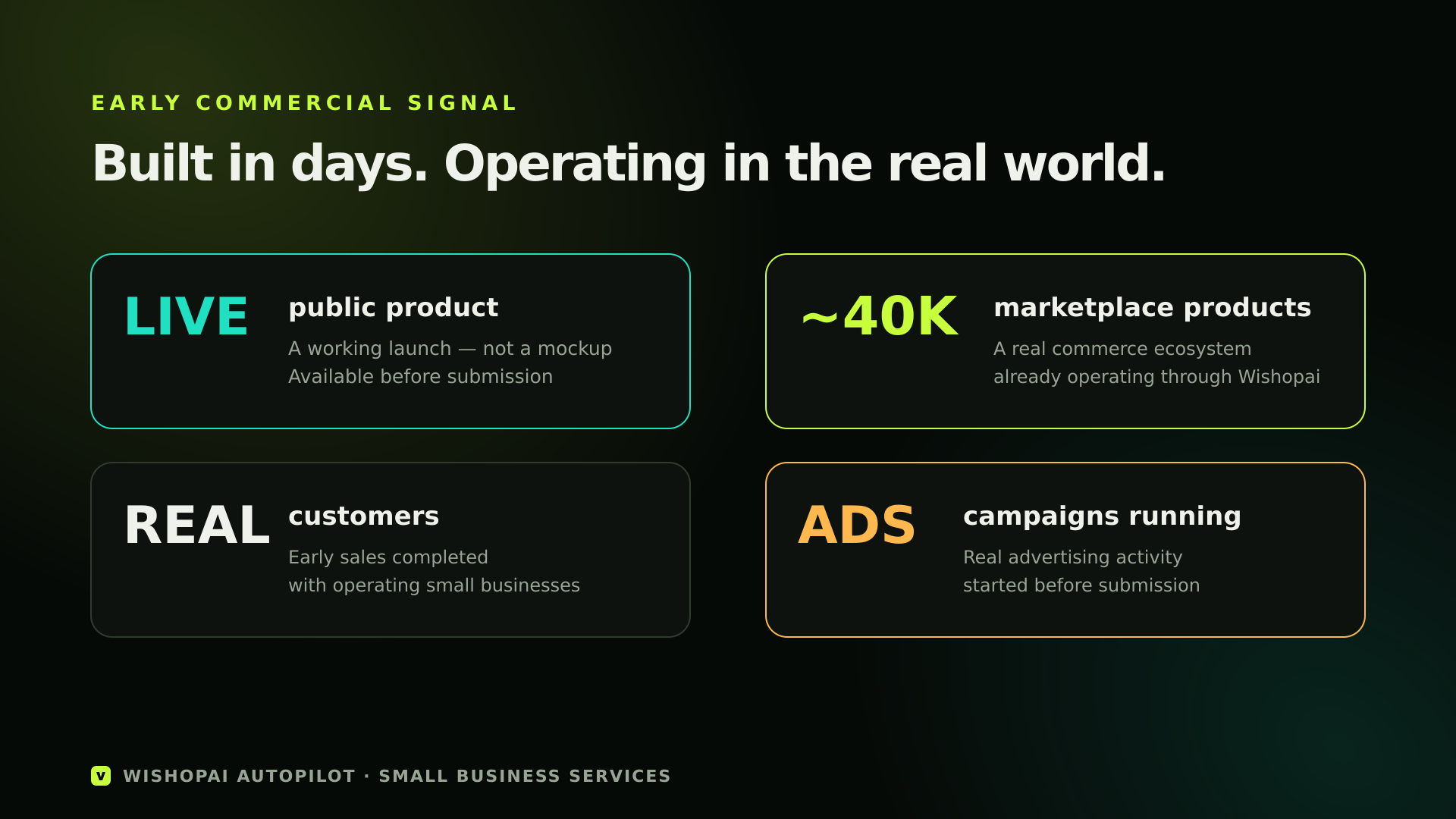
Real-world validation: live product, real customers, active advertising, and Wishopai marketplace distribution context.
-
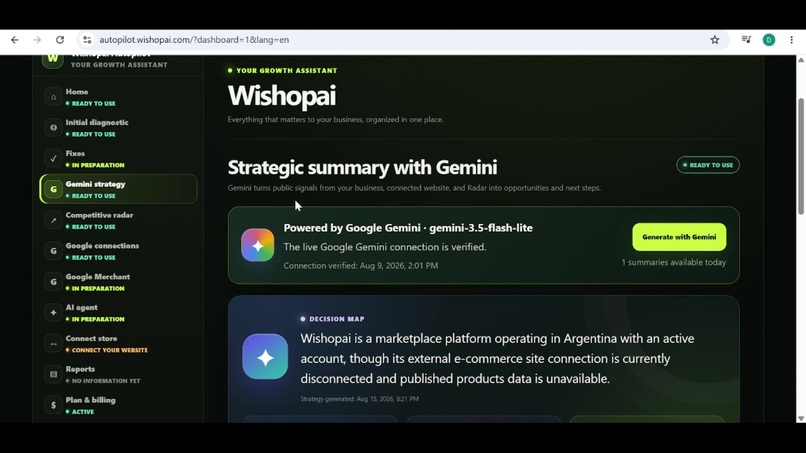
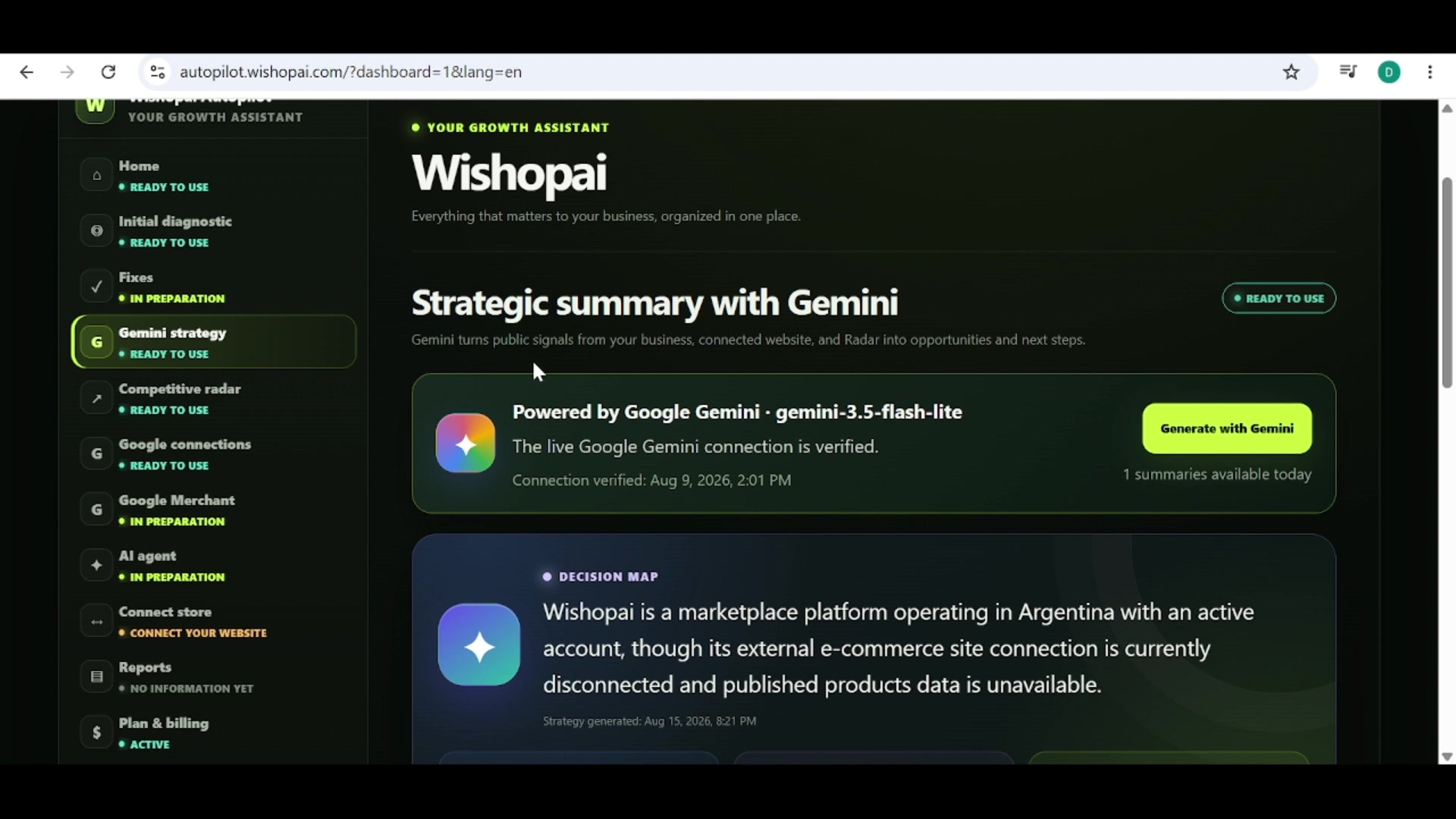
Production Gemini strategy view with a verified live connection and model identification.
-
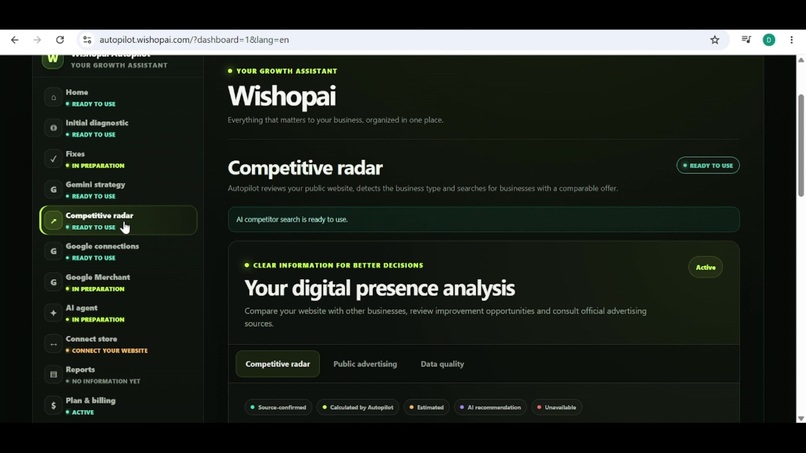
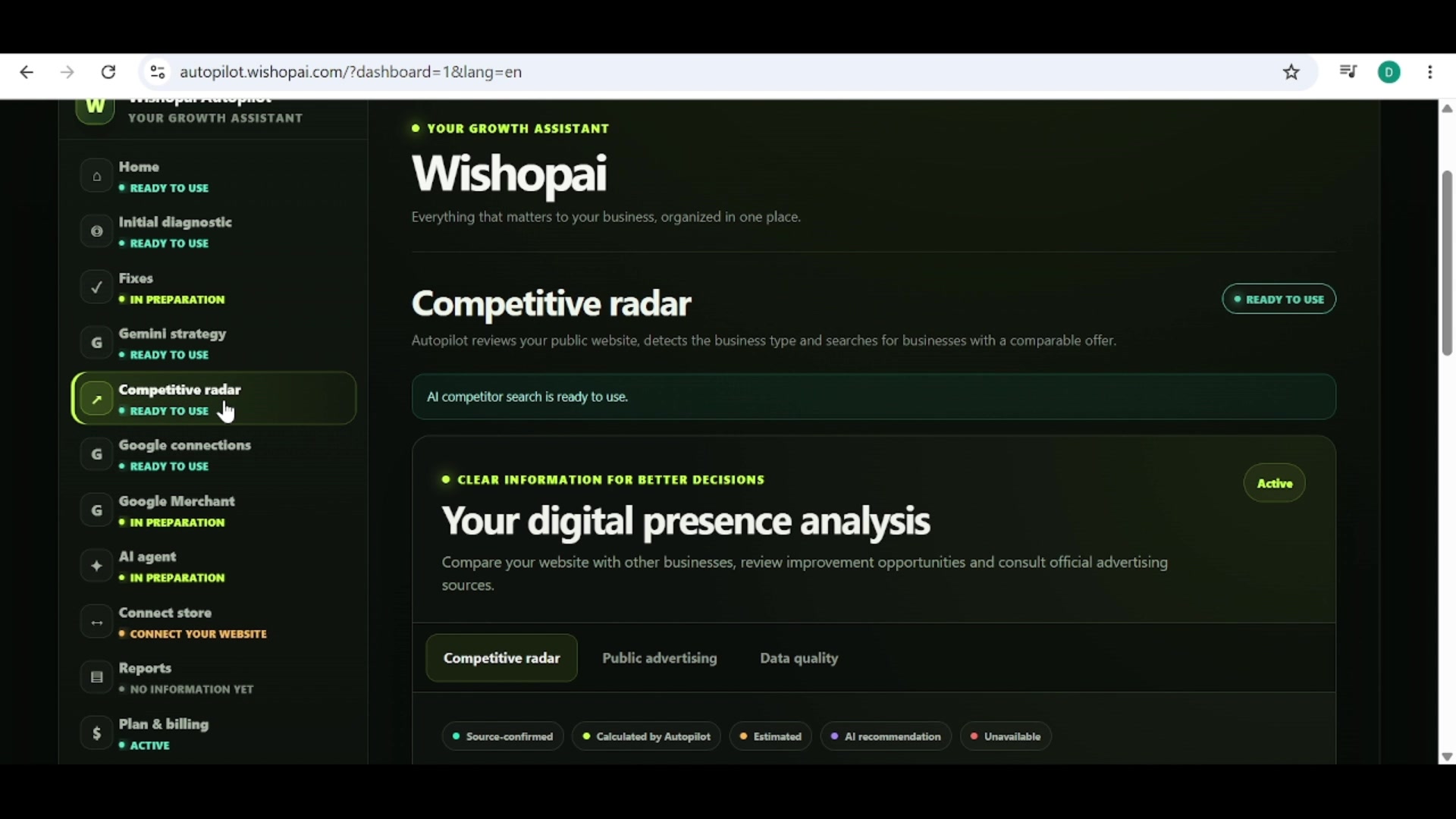
Competitive radar and digital-presence analysis in the English product interface.
-
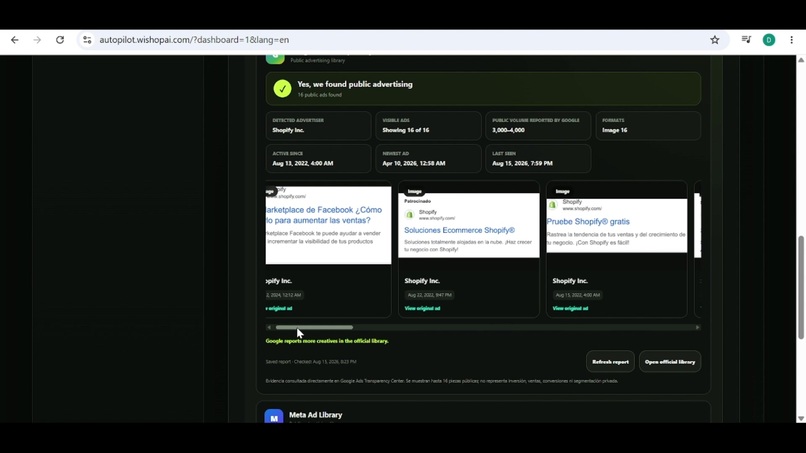
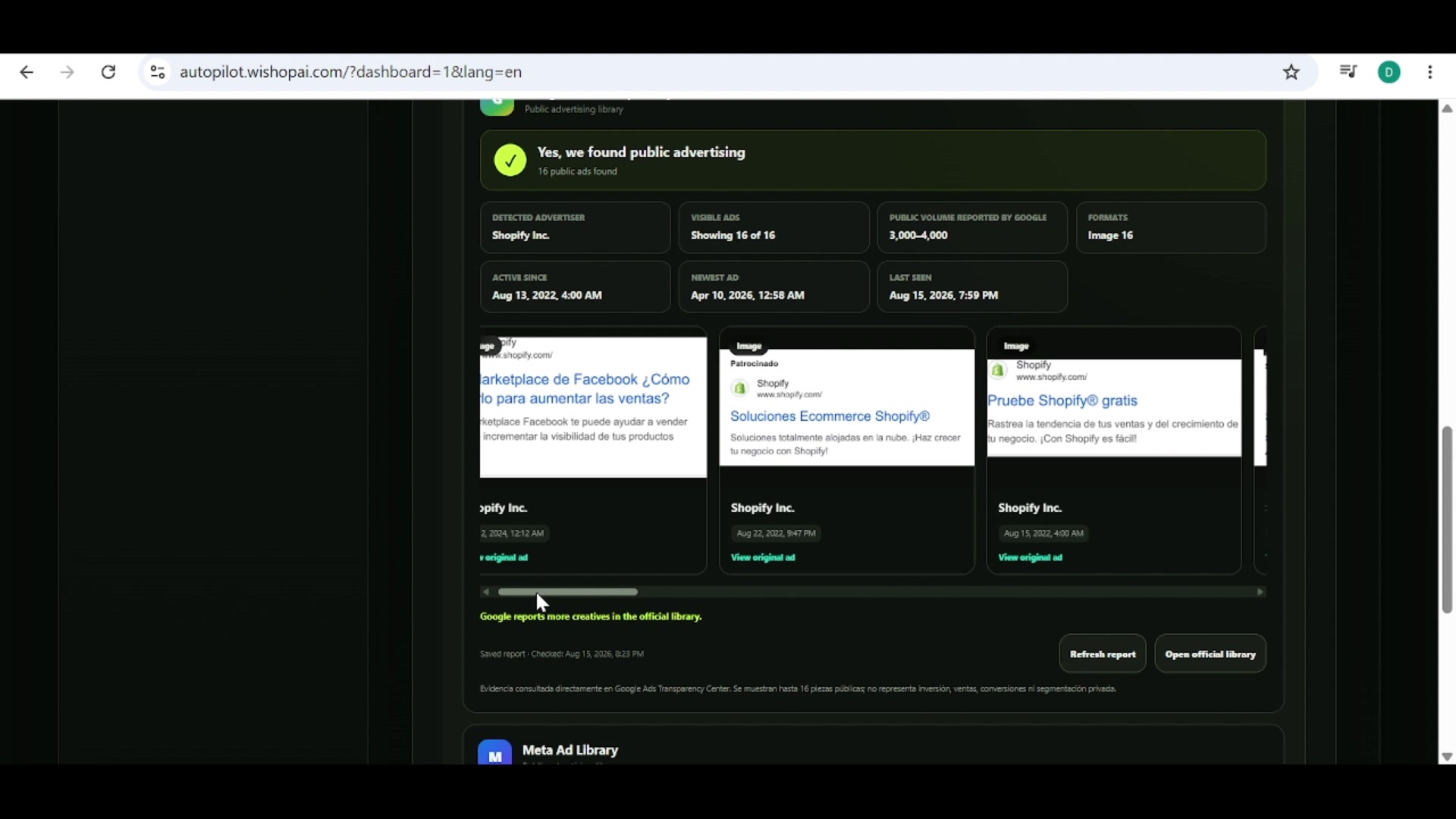
Public advertising evidence found and organized for competitor analysis.
Inspiration
Small-business owners are expected to navigate an enormous Google ecosystem: search visibility, advertising, Merchant Center, competitor research, website health, analytics, and dozens of settings spread across specialized tools. The opportunity is real, but the experience is fragmented. Many owners do not have a marketing team, do not speak the language of performance marketing, and often have only a phone and a few minutes between customers.
Wishopai saw this problem in daily work with real small businesses. We built Wishopai Autopilot to turn that complexity into one clear, mobile-friendly decision panel: evidence first, recommendations second, and the owner always in control.
What it does
A user enters a business website and Autopilot builds a practical market-intelligence workspace. It checks the digital presence, identifies competitors, compares positioning, finds public advertising evidence, summarizes opportunities, and proposes prioritized next actions. Instead of presenting dozens of disconnected settings, it explains what matters now and why.
The interface includes a diagnostic score, competitive radar, public-source evidence, a Gemini strategy view, connection status for external services, and clear action cards. Every important output is labeled so the user can distinguish source-confirmed facts, calculated values, estimates, AI recommendations, and unavailable data. If a private source is not connected, Autopilot says so rather than inventing a result.
How we use Gemini
Gemini is the reasoning layer of the product. The live production dashboard verifies the Gemini connection and currently identifies the configured model as gemini-3.5-flash-lite. Autopilot uses Gemini to synthesize structured public signals, classify findings, compare competitors, rank opportunities, draft strategic explanations, and convert research into understandable next steps.
This is more than a chat box. Gemini participates in the workflow and makes meaningful prioritization and recommendation decisions. Its calls are constrained by validation, rate limits, source labels, and explicit product rules. The result is fast enough for an owner but still observable and reviewable.
Bounded autonomy
Our design principle is simple: AI does the work; humans keep authority.
The AI can research, classify, compare, synthesize evidence, rank options, and draft recommendations. The human remains responsible for identity, reviewing sources, connecting private accounts, approving sensitive actions, choosing the final strategy, and authorizing spending or publication. Autopilot never spends money, publishes campaigns, or changes products without confirmation.
This boundary lets us deliver useful autonomy without pretending that a model should own a business decision.
Built in the final sprint
Wishopai Autopilot was conceived and built by one founder, on one old laptop, in approximately 10–12 days before the submission deadline. It was not a 90-day build. In that short window we went from concept to a functioning product, production Gemini integration, a usable English interface, real-world validation, active advertising, and early commercial traction.
We are also explicit about the project boundary. Autopilot is the new product submitted to this challenge. Wishopai's pre-existing hosting, authentication, distribution, and marketplace infrastructure are supporting resources, not the submitted project itself. The demo analyzes aligno.digital as a real business. Wishopai's wider operating context includes real small-business customers and a marketplace ecosystem indexing approximately 40,000 products; those products were not created by Autopilot.
Challenges we ran into
The hardest problem was not generating text. It was producing trustworthy guidance from incomplete and messy public information. We had to prevent confident-looking invented metrics, preserve provenance, separate evidence from inference, and make missing private data visible.
We also had to design permissions carefully, keep the experience readable on a phone, support English for judging, connect a production service under an extreme deadline, and communicate sophisticated market analysis to people who may never have used an enterprise marketing platform.
Live Google Ads control
The production dashboard is now connected to the official Google Ads API and shows account-confirmed results, including spend, impressions, clicks, conversions, and bounded campaign summaries. Autopilot can also prepare a Search campaign from a typed draft and create it only in PAUSED state after specific consent, an exact preview, a second explicit confirmation, revision checks, idempotency, and audit logging. It cannot activate the campaign or enable spend. The same protected flow is exposed through our private MCP Bridge, so an authorized operator can inspect and prepare advertising actions conversationally while the account owner retains final spending authority.
Impact and economic opportunity
Autopilot makes capabilities normally reserved for agencies or large teams accessible to small merchants. A store owner can understand the market, competitors, advertising evidence, and recommended actions from one panel—even from a mobile phone.
That creates two layers of economic value. First, small businesses can make better decisions, waste less time, and compete more effectively. Second, the platform can support new work for local advisors, resellers, implementation partners, and customer-support specialists who help merchants act on the recommendations.
What we learned
Autonomy without provenance is not trustworthy. A useful AI product must show where information came from, what the model inferred, what remains unknown, and where human approval begins. We also learned that a focused founder working with AI can compress months of product work into days when the problem, boundaries, and users are real.
What's next
Next we will complete Google Merchant API onboarding and product-level catalog diagnostics, add more Google signals, expand automatic monitoring, deepen multilingual support, and improve mobile action workflows. The long-term goal is to make the entire Google growth universe understandable and operable for any small business from one clear panel.
Built With
- ai-agents
- gemini-api
- google-ads-transparency-center
- google-cloud
- google-gemini
- javascript
- market-intelligence
- oauth-2.0
- php
- rest-api
- woocommerce
- wordpress

Log in or sign up for Devpost to join the conversation.