Inspiration
I created WishKit because as an iOS developer myself, I kept seeing the same problem: it's hard to know what features users actually want. Email, App Store reviews, and generic surveys are noisy and scattered. I wanted a simple, native way to capture feedback right inside the app, let users vote on ideas, and use real data (like vote counts) to guide what to build next.
What it does
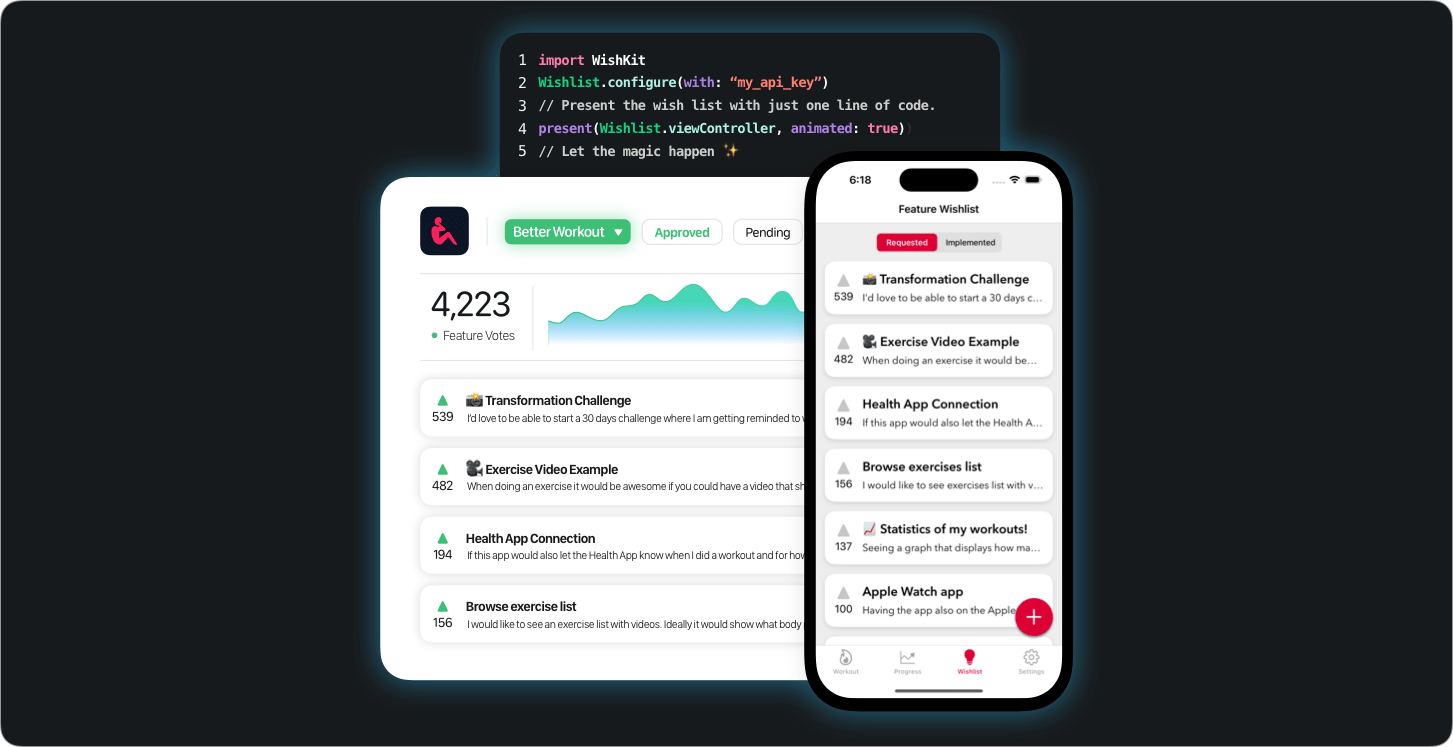
WishKit adds a beautiful, native feature request board directly into your iOS app. Users can:
- Submit new feature ideas or feedback
- Vote on existing requests (most voted rise to the top)
- Comment and discuss ideas
On the developer side, you get a clean dashboard to moderate submissions (approve/hide), respond to users, segment feedback, and prioritize your roadmap based on real user demand. Setup takes under 3 minutes — no complicated onboarding.
How I built it
I built WishKit as a native iOS SDK using Swift. The backend is a combination of server-side Swift (Vapor) and a database to handle requests, votes, comments, and moderation. The frontend is fully native SwiftUI/UIKit components for a seamless in-app experience that feels like part of the host app. I focused on keeping it lightweight, fast, and easy to integrate (literally one line of code to present the feedback screen).
Challenges I ran into
- Making the in-app UI feel truly native across both SwiftUI and UIKit without bloat
- Building a robust moderation system that prevents spam while keeping the flow smooth for real users
- Scaling the voting and real-time comment system efficiently
- Balancing feature richness (like user segmentation) with a simple, affordable pricing model
Accomplishments that I'm proud of
- Over 856 businesses and apps are now using WishKit (from indie tools like weather apps to pro apps like teleprompters and music utilities).
- One-line integration that actually works in under 3 minutes — many developers comment on how fast and painless the setup is.
- Offering a solid free tier with core features (no watermark, moderation, comments) so any developer can start collecting valuable feedback immediately.
What I learned
User feedback is gold, but only if it's structured and actionable. Prioritization by votes really does work — the most requested features often surprise you! Also, building a product for fellow developers means listening closely to their pain points, iterating quickly, and keeping things simple.
What's next for WishKit
I'm actively working on more powerful analytics (deeper insights into user segments and voting trends), better notification/email integrations, macOS support (since many iOS apps have macOS versions), and exploring ways to make responding to users even easier. Long-term goal: become the go-to native feedback solution for the entire Apple ecosystem.

Log in or sign up for Devpost to join the conversation.