-
-
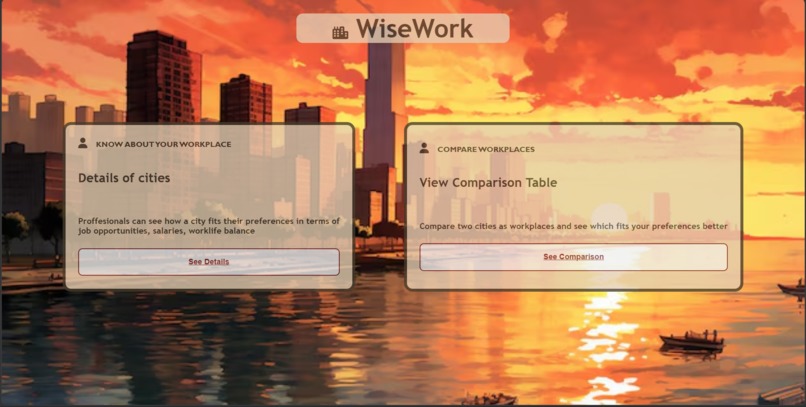
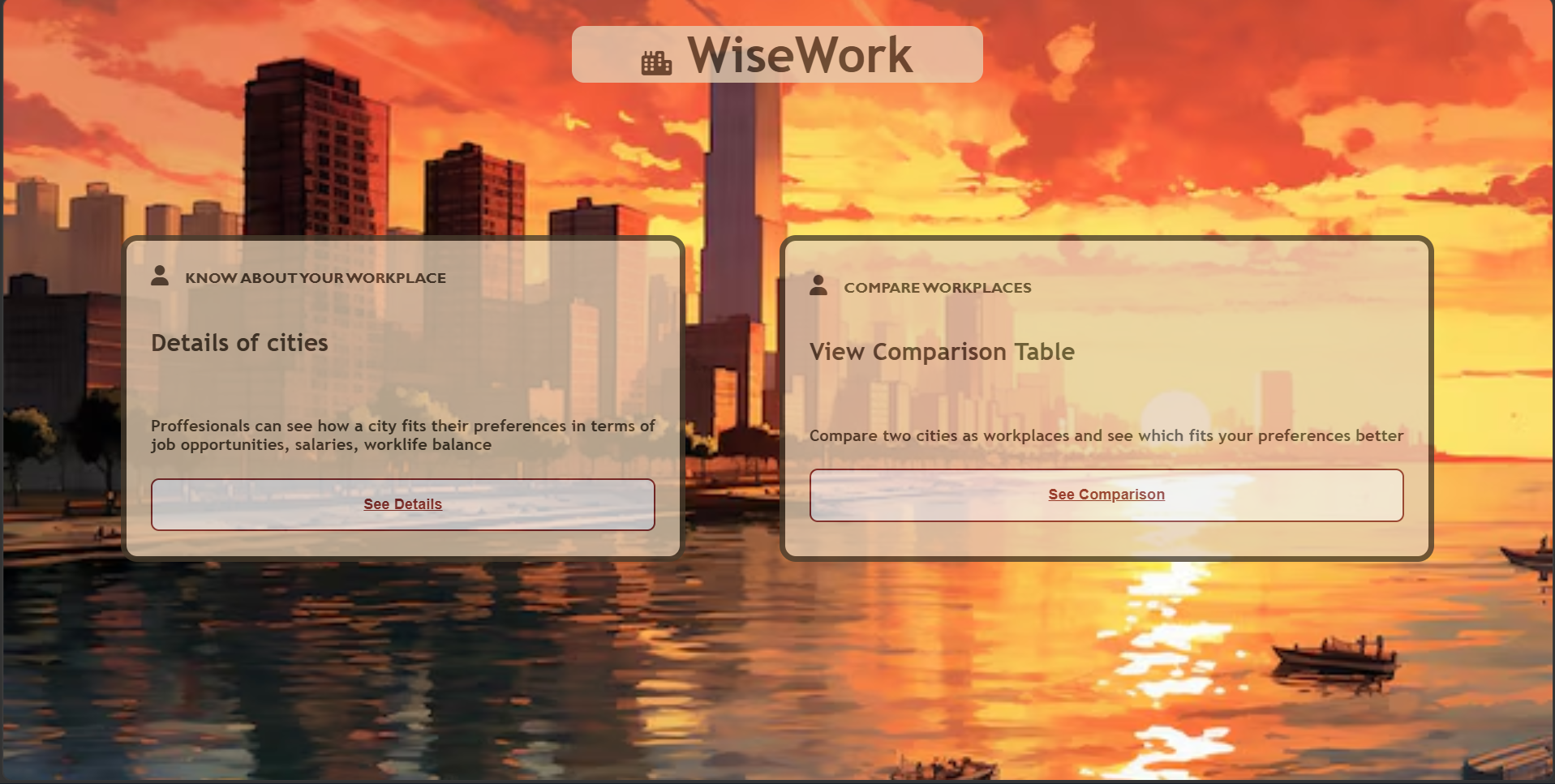
Homepage
-
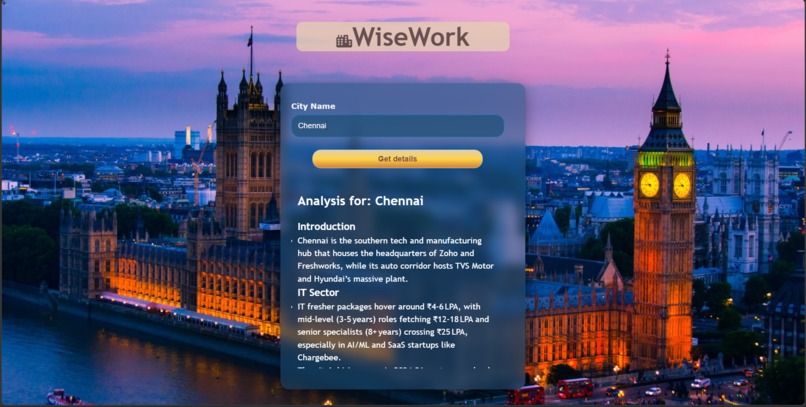
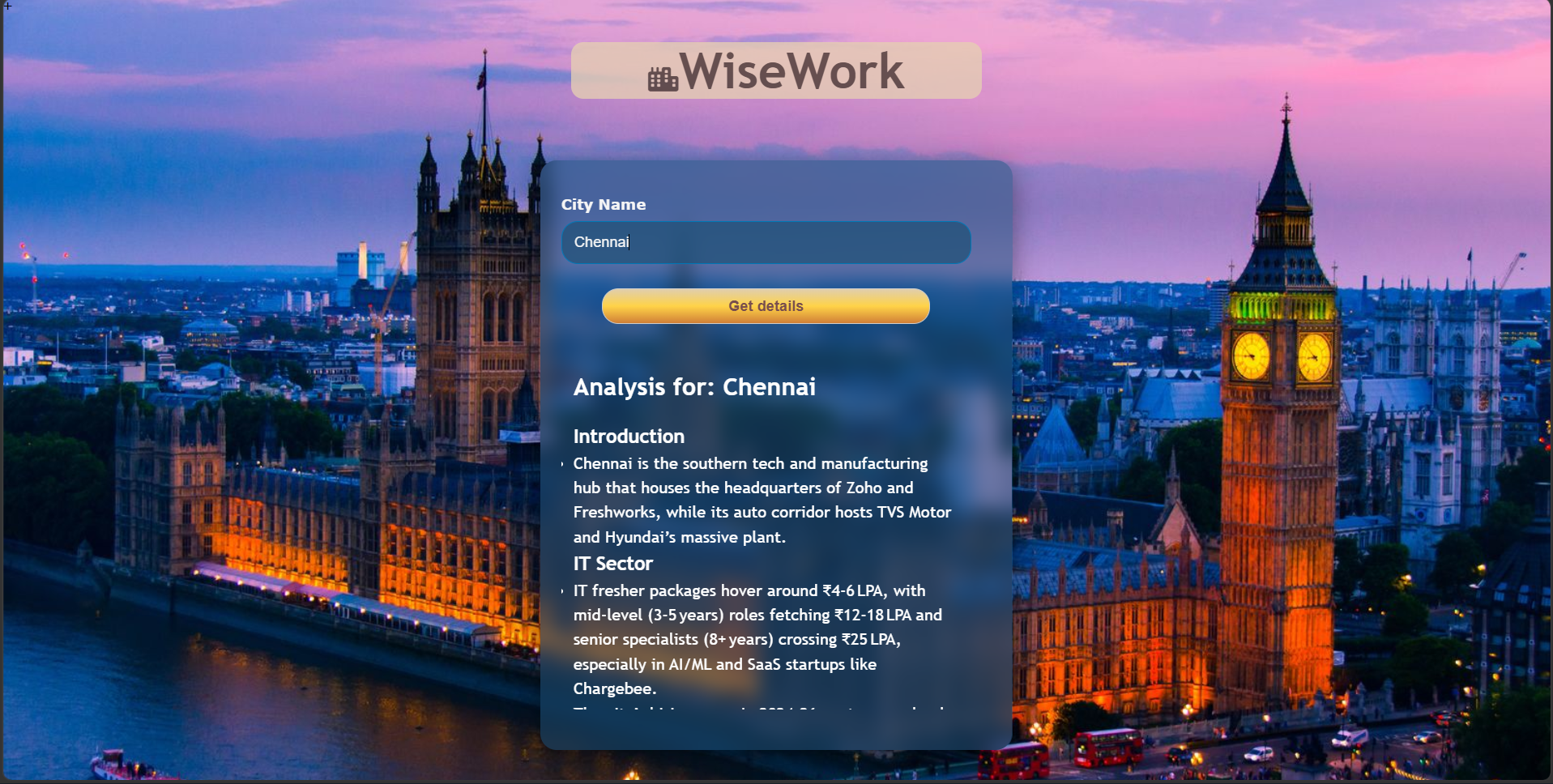
Know Your Workplace
-
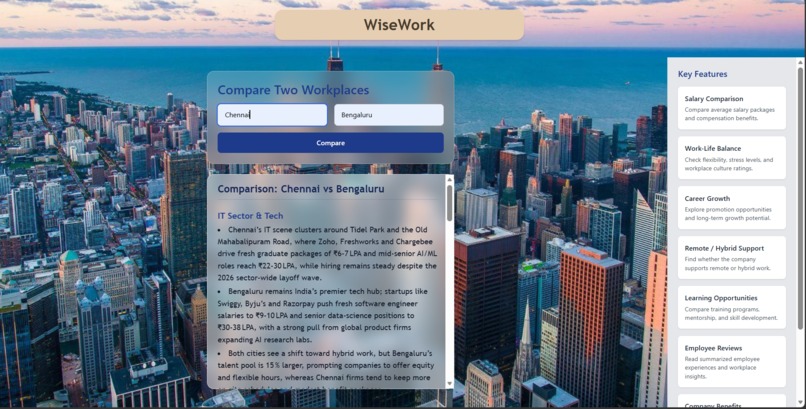
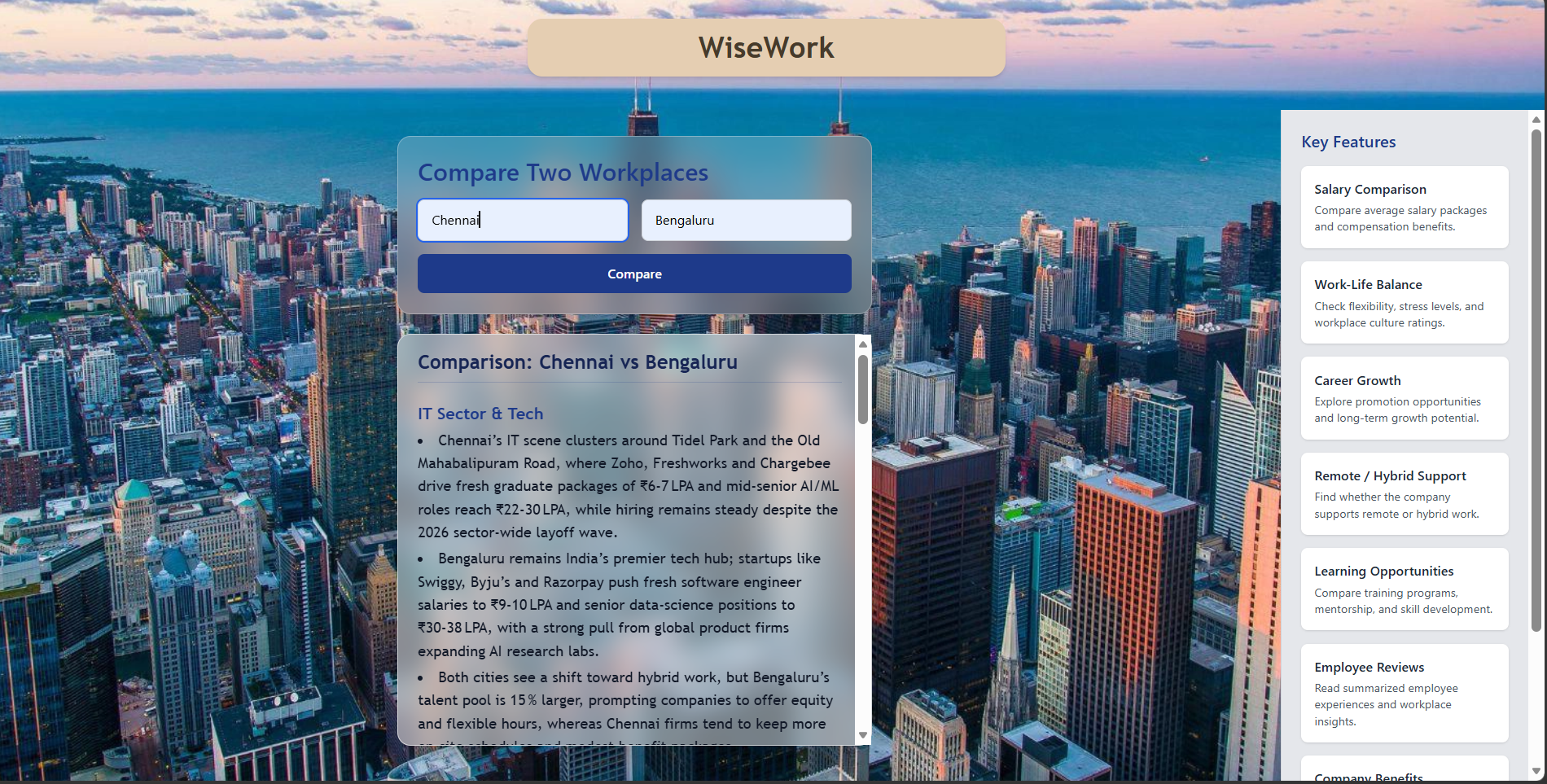
Compare Workplaces
Inspiration
During a conversation with my friend about which city we want to choose as workplace, I thought it would be nice if we make an app that generates whole itinerary about the work culture and job opportunities of a city, so that a newcomer is aware of the city before joining it.
What it does
1. Know your workplace
If an user enters the city/workplace it generates a detailed analysis of the city including - IT sector and core sector salaries, job opportunities, salary vs living cost in different parts of the city as well as the work life balance, climate, culture and recent local government initiatives for industrial growth. It also provides guidance for a newcomer in the city for the things that need to be prepared of, before settling there.
2. Compare workplaces
If an user enters two cities/workplaces it generates a side by side comparison of the opportunities, salaries, and culture of those two cities and generates an actionable advice that which city suits better based on user preferences.
How we built it
On backend we have used Python with Flask and for frontend HTML/CSS using jinja2 templates. To fetch the data in realtime we have used Groq API , the model we have used is "openai/oss-120b". For verifying or grounding of the generated response we have added a Google search grounding using serper API. For a schematic and structured response we have used Pydantic JSON schemas.
Challenges we ran into
Using an efficient API call that manages the query without running out of rate limit as well as generates verified information without hallucination was a big challenge. We have tried different API models, optimized temperatures , then only finalized.
Accomplishments that we're proud of
Balancing college assignments and lab reports with hackathon deadlines, going from an initial idea to a functional Flask web app over a single weekend. It was an efficient and solid execution of teamwork that makes us proud that we did it together.
Successful structuring of LLM outputs using strict Pydantic JSON schemas, forcing the model to yield candid, structured city data instead of using generic words repeatedly.
Built a functional RAG pipeline using Serper API so that our analysis can run strictly based on current 2025–2026 hiring trends, local salaries, and government initiatives rather than static, outdated model data.
What we learned
Flask Web Application : Connecting dynamic HTML/Jinja2 templates with a Python backend under strict time limit.
API Rate-Limit Strategy: Optimizing prompt length and request frequency to pull real-time search data without hitting API rate limits.
Schema: Using Pydantic models with Groq for structured JSON output instead of unpredictable text.
What's next for WiseWork
Instead of only analyzing the workplace city, we are planning add one more feature in our app - so that it can analyze the work culture, salary trends and opportunities not just city-wise but company-wise too.


Log in or sign up for Devpost to join the conversation.