-
-
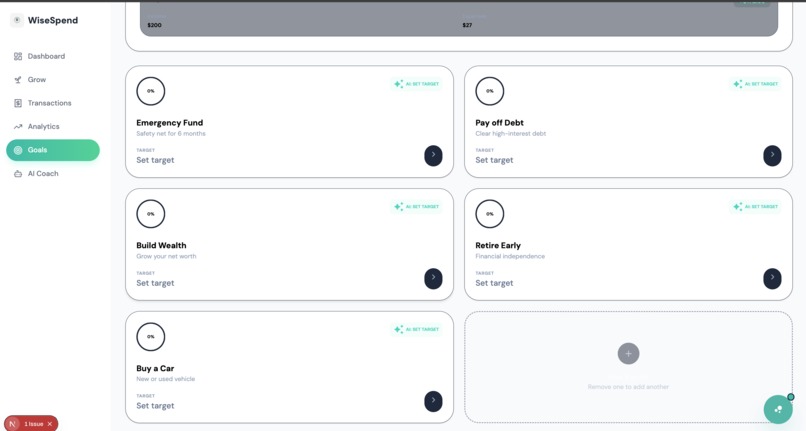
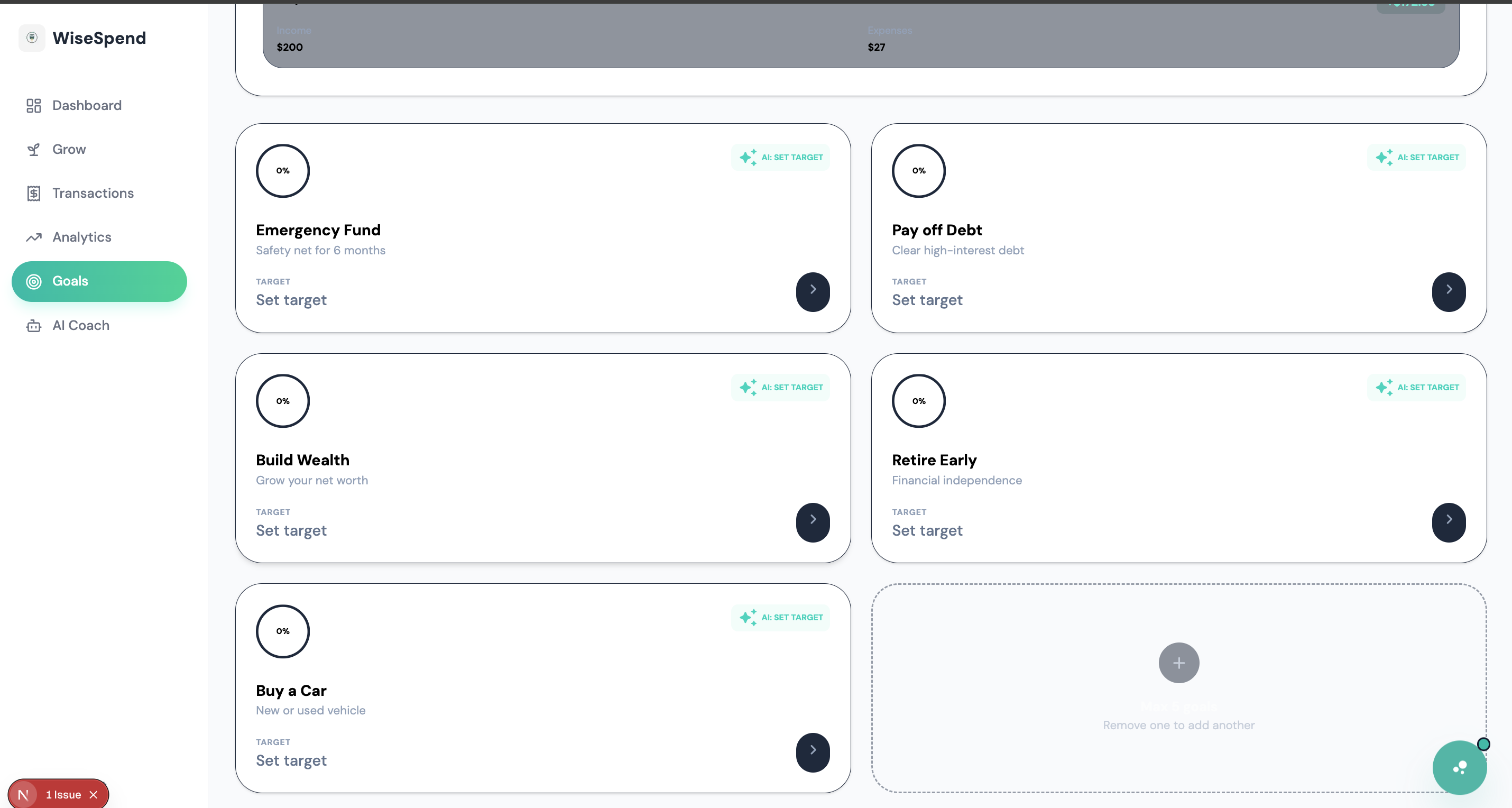
goals page
-
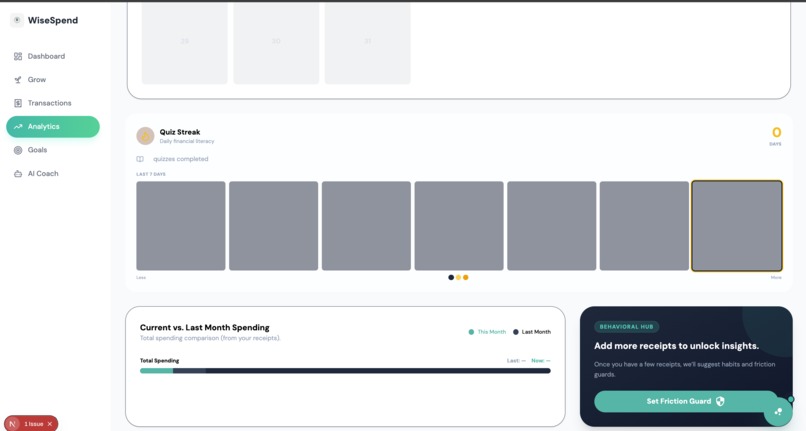
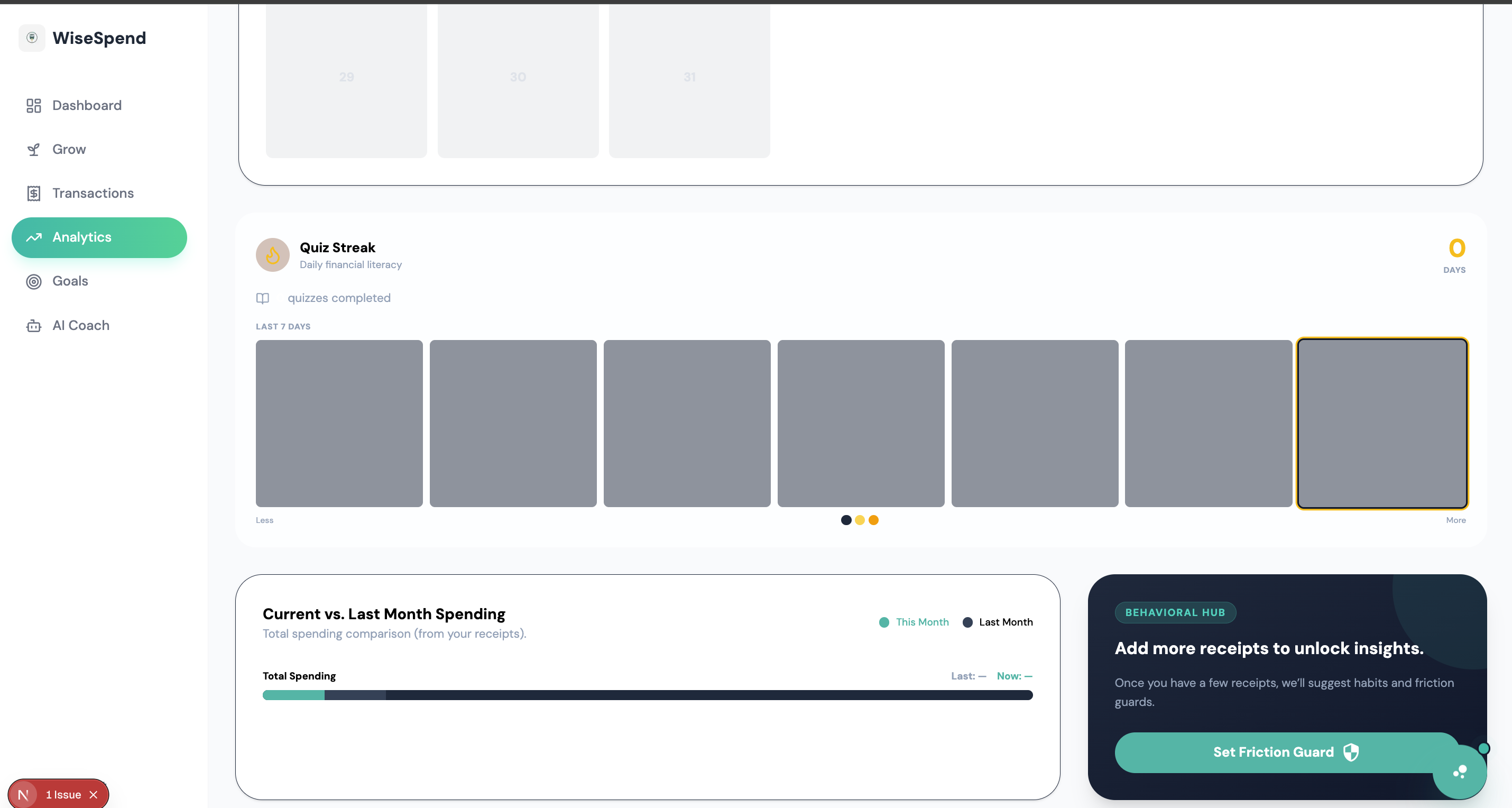
analytics page
-
-
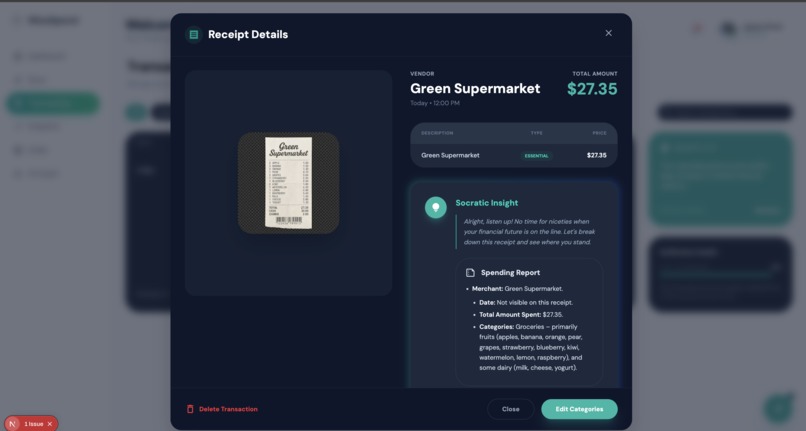
Recipe history
-
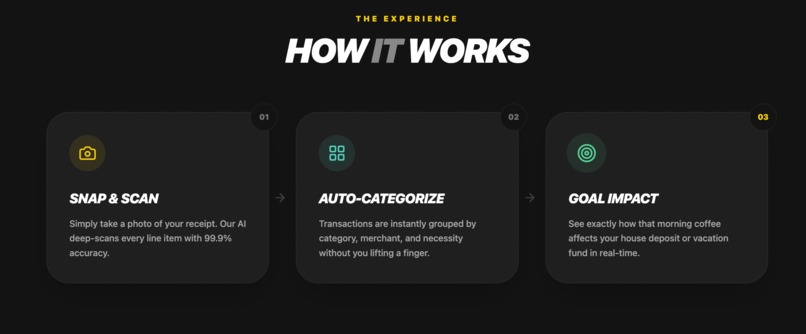
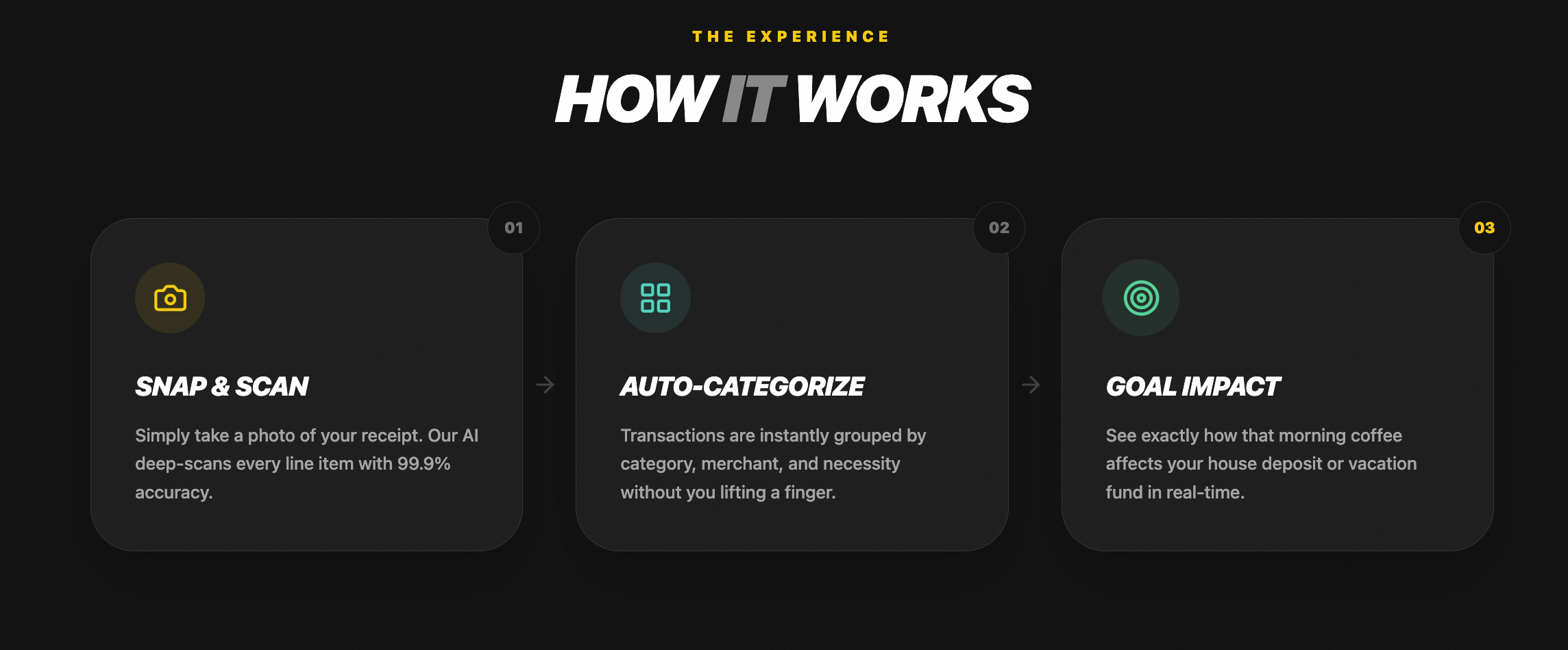
how it works
-
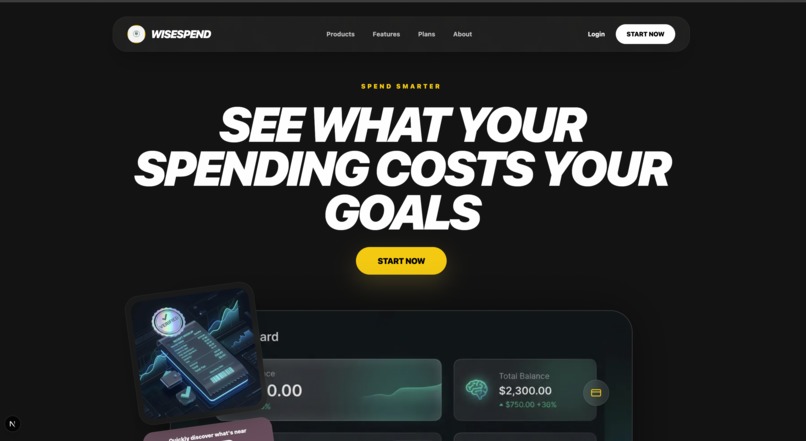
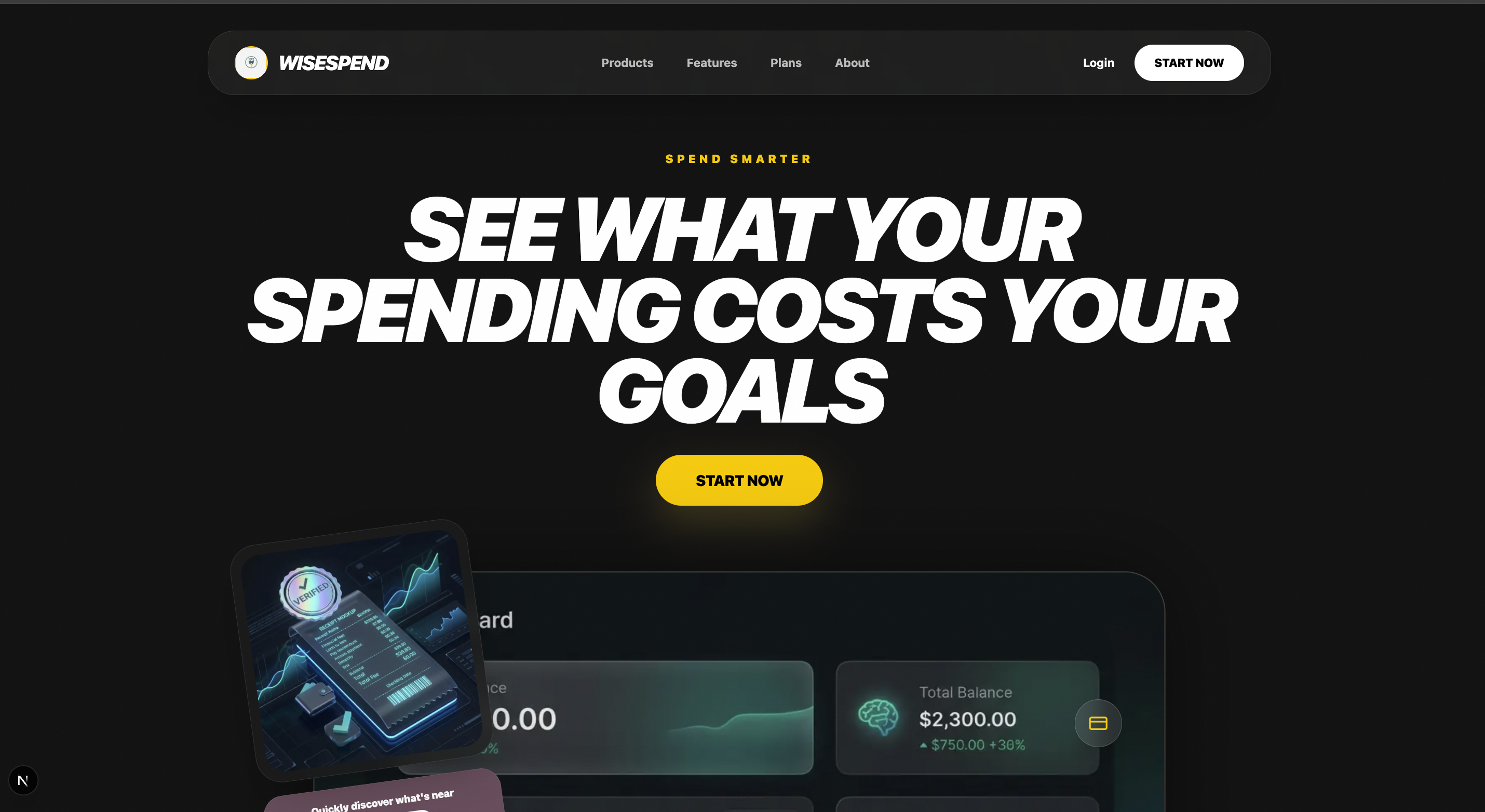
Landing page
Inspiration
Most people don't have an income problem what they have is a spending problem. Not because they're bad with money, but because they can't see the connection between today's purchase and tomorrow's goal.
We watched friends save for house deposits, only to wonder six months later where their money went. They'd download budgeting apps, use them for three days, then give up. The apps showed charts and categories, but never answered the question that actually matters: "What did that purchase really cost me?"
That's why we built WiseSpend an AI financial coach that shows you what your spending costs in units you actually care about. Not just dollars, but days or weeks toward your goals.
What it does
WiseSpend is a complete AI financial coaching system with six core features:
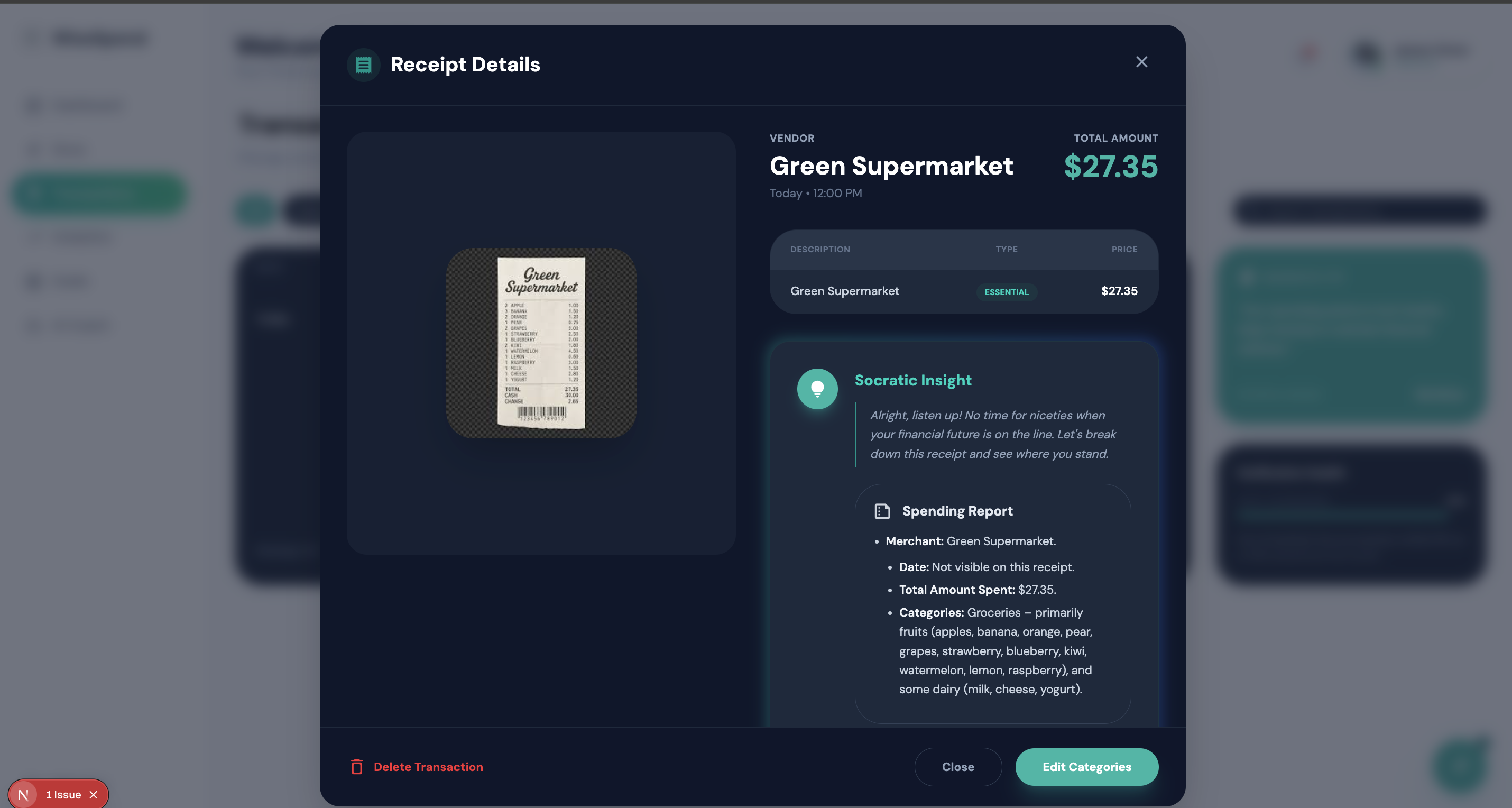
1. Receipt Scanning with Goal Impact Scan any receipt and see the real trade-off instantly. "That $100 dinner just delayed your house deposit by 2 weeks." The AI doesn't lecture it asks: "Is that worth it to you?" Powered by Google Gemini 3 multimodal vision, it understands context, categorizes items, and distinguishes necessities from discretionary spending.
2. Cash Flow Forecasting Predicts when you'll run out of money before your next paycheck. Uses recurring bills, spending patterns, and current balance to warn you 5 days early: "You'll be $200 short before payday let's make a plan."
3. Weekly Check-ins and Accountability Every Sunday, the AI reviews your week and asks you to commit to one small action. Mid-week, it checks in: "You committed to packing lunch 3x how's it going?" It celebrates wins and troubleshoots barriers without judgment.
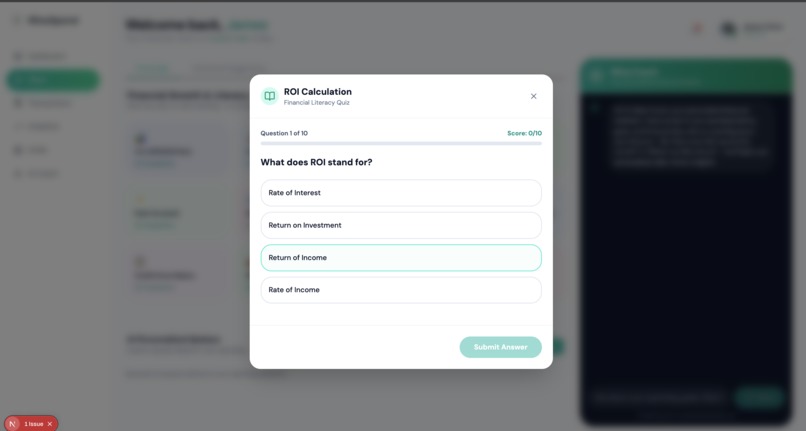
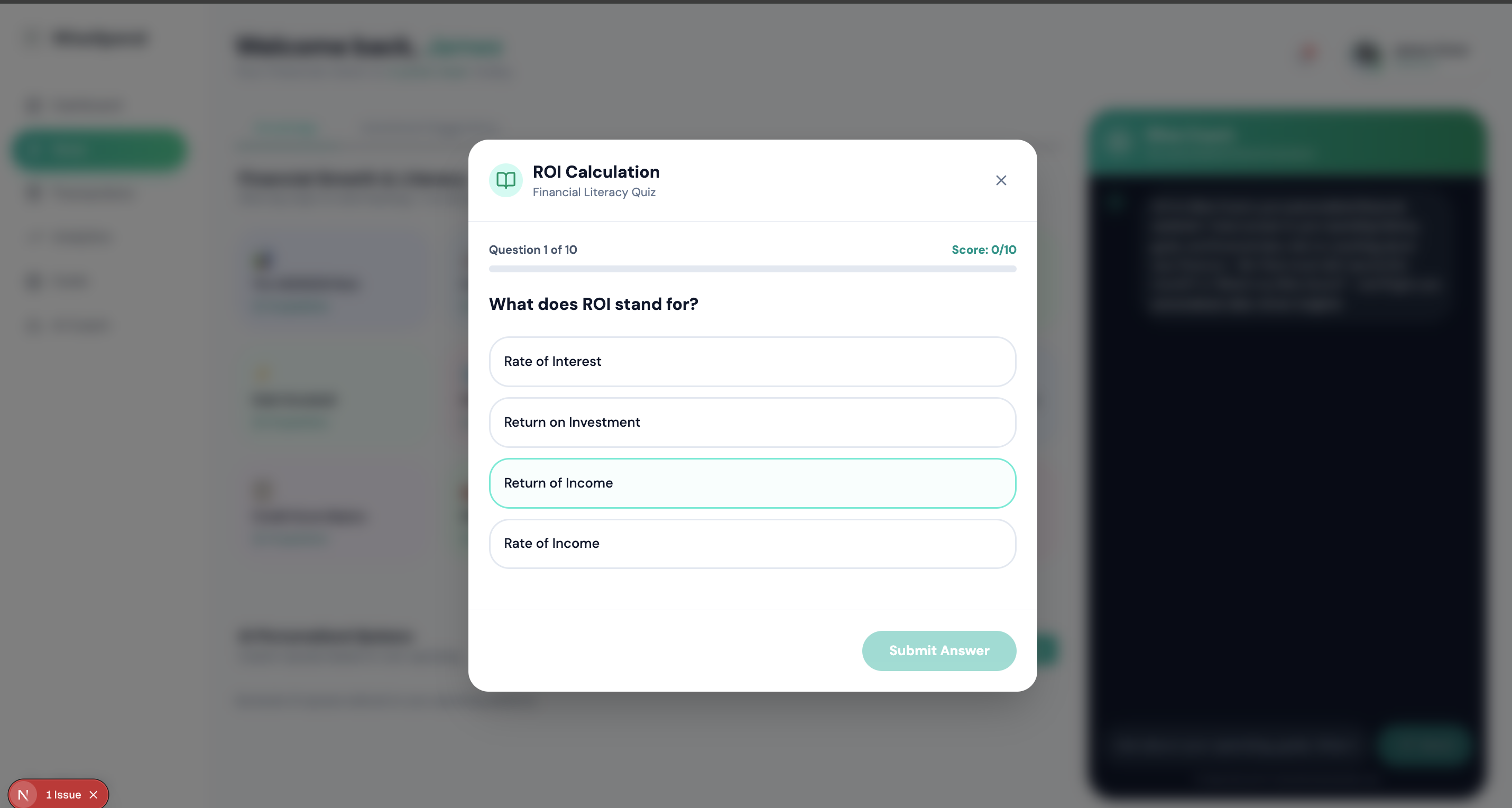
4. Financial Education 12 interactive quizzes on budgeting, investing, debt management, and credit scores. Gamified with progress tracking and completion rewards.
5. Investment Suggestions Real-time market data from Alpha Vantage API showing curated ETFs and stocks with risk classifications and educational descriptions.
6. Complete Dashboard Wise Score (0-100) measuring financial resilience. Transaction history with AI insights. Analytics showing spending patterns and goal tracking with milestone celebrations.
How we built it
Frontend: Next.js 14 with TypeScript and Tailwind CSS. NextAuth handles Google OAuth authentication. Framer Motion for smooth animations.
Backend: Express.js with MongoDB and Mongoose for data persistence. Cloudinary stores receipt images. Use-case driven architecture keeps domain logic testable and observable.
AI Integration: Google Gemini 3 powers everything, multimodal vision for receipt analysis and text generation for coaching conversations. We built an agent-style reasoning chain where receipt analysis flows through multiple steps: image preprocessing → vision analysis → item extraction → context gathering (user goals, income, history) → goal impact calculation → Socratic question generation.
Observability: Deep Opik integration with comprehensive tracing. Every AI interaction creates a trace with nested spans. Receipt analysis trace (analyze-receipt-image) shows the complete reasoning chain. Chat conversations traced as chat-gemini 3. Full error handling with stack traces and caller context. Graceful shutdown ensures all traces flush before process exit.
Automation: Cron jobs for proactive features. Daily job updates payday dates and recurring bill schedules. Wednesday mid-week check-in job finds users with active commitments and triggers accountability conversations.
Challenges we ran into
1. Token Limits on Free Gemini Account
The biggest challenge was hitting token limits when generating personalized financial education content. We wanted to create custom quizzes and lessons based on each user's spending patterns and onboarding data (their goals, income, spending history from scanned receipts).
With the free Gemini account, we'd generate a quiz question and immediately hit the rate limit. We couldn't process multiple receipts in quick succession or generate comprehensive course content without running into restrictions.
Our solution: We pivoted to a hybrid approach. Core features (receipt scanning, goal impact, coaching questions) use Gemini calls efficiently with careful prompt engineering to get maximum value per token. For educational content, we pre-generated the 12 financial literacy quizzes as structured data and use Gemini only for personalized insights during weekly check-ins when we have the token budget. We also implemented exponential backoff retry logic to handle rate limit errors gracefully.
2. Multimodal Receipt Analysis Accuracy
Getting Gemini to consistently extract correct amounts and categories from messy receipt images was harder than expected. Different receipt formats, poor lighting, crumpled paper all created edge cases.
Our solution: We added a preprocessing step that enhances image quality before sending to Gemini. We also refined our prompts to ask for structured JSON output with confidence scores, so we can flag uncertain extractions for user review.
3. Making AI Coaching Feel Human
Early versions felt robotic. The AI would say things like "Your spending patterns indicate suboptimal financial behavior." Nobody talks like that.
Our solution: We rewrote all prompts to use Socratic questions instead of statements. Instead of "You overspent on coffee," it asks "You spent $40 on coffee this week, double your usual. What changed?" This creates conversation, not lectures. We also added context awareness—if cash flow is tight, the AI mentions it naturally: "I know you're tight this week want to talk about it?"
4. Building Accountability Without Nagging
We wanted weekly check-ins to feel supportive, not annoying. Too many notifications and users tune out. Too few and there's no accountability.
Our solution: One Sunday reflection, one Wednesday mid-week check-in, that's it. We made the mid-week check-in conversational it references the specific commitment the user made and adapts its tone based on their response. If they're struggling, it troubleshoots. If they're succeeding, it celebrates. No generic reminders.
Accomplishments that we're proud of
1. Complete Agent System with Full Observability
We didn't just build a chatbot. We built a true agent with autonomous reasoning chains fully traced in Opik. Every step from image upload to coaching question is observable with nested spans, token tracking, and error metadata. This is production-grade AI engineering.
2. Real Behavior Change Architecture
Most hackathon projects are demos. We built a complete system designed for actual behavior change. Receipt scanning creates awareness. Education builds knowledge. Forecasting prevents mistakes. Check-ins create accountability. Goals show progress. Every feature reinforces the others.
3. Multimodal Vision Working on Real Receipts
We tested with actual crumpled receipts from our wallets not clean test images. Gemini's vision capabilities combined with our preprocessing pipeline handle messy real-world data.
4. Proactive AI, Not Reactive
The cash flow forecast warns users 5 days before overdraft. The mid-week check-in follows up on commitments. The AI references past patterns in current conversations. This isn't just answering questions it's actively coaching.
5. Making Finance Approachable
We took intimidating concepts like cash flow forecasting and emergency fund ratios and made them conversational. The AI explains compound interest through quizzes, then shows you how it applies to your actual goals. Financial literacy without the jargon.
What we learned
1. Multimodal AI Changes Everything
Being able to analyze receipt images with context (not just OCR) unlocks a completely different user experience. Users don't have to type anything just snap and scan. Gemini's vision capabilities made this possible in ways that weren't feasible before.
2. Token Efficiency is Critical
Working within free tier limits forced us to be extremely intentional about every API call. We learned to design prompts that extract maximum value per token, batch operations where possible, and choose carefully when to use AI versus when to use deterministic logic.
3. Observability Isn't Optional
Building with Opik tracing from day one was crucial. When receipt analysis wasn't working, we could see exactly which step in the reasoning chain failed. When coaching questions felt off, we could trace back through the context gathering to see what the AI was working with. Full observability turned debugging from guesswork into science.
4. AI Coaching Requires Human Psychology
The technical part analyzing receipts, calculating impacts was straightforward. The hard part was making the AI feel like a supportive coach, not a judgmental accountant. We learned that tone matters more than accuracy. A question like "What changed this week?" gets better engagement than "You deviated from your spending pattern."
5. Small Commitments Beat Big Goals
In our testing, users who committed to "pack lunch 3 times" had better outcomes than users who set vague goals like "spend less on food." We learned that specificity and small actions create real behavior change. This shaped our entire weekly check-in system.
What's next for WiseSpend
1. Real Bank Integration
Right now users manually scan receipts. Next step: connect to bank accounts via Plaid for automatic transaction import. Users still get the goal impact analysis and coaching, but without manual scanning for every purchase.
2. Shared Goals and Accountability Partners
Let couples or roommates share goals and see combined spending patterns. "You and Sarah are both working toward the house deposit here's how you're tracking together."
3. Upgrade to Gemini Pro for Personalized Courses
With more token budget, we can generate fully personalized financial education courses. "Based on your spending patterns, here's a custom 4-week course on reducing discretionary spending without feeling deprived."
4. Predictive Insights
Move beyond "you'll overdraft in 5 days" to "based on your patterns, you usually overspend in the last week of the month when work stress peaks. Here's your plan for next week."
5. Voice-Based Check-ins
Instead of typing responses during weekly check-ins, users can have voice conversations with the AI coach. More natural, more accessible, especially for people who don't like typing.
6. Community Features
Anonymous leaderboards and challenges. "Join the '30-day no takeout' challenge with 247 other people working toward down payments." Gamification with real community support.
7. Financial Advisor Collaboration
Build a dashboard where certified financial advisors can see their clients' WiseSpend data (with permission) and provide personalized advice. The AI coach handles daily accountability, human advisors handle complex strategy.
The vision: WiseSpend becomes the financial coach everyone wishes they had combining AI intelligence with human psychology to help millions of people build real financial resilience, one receipt at a time.
Built With
- express.js
- mongodb
- next.js
- typescript


Log in or sign up for Devpost to join the conversation.