-
-
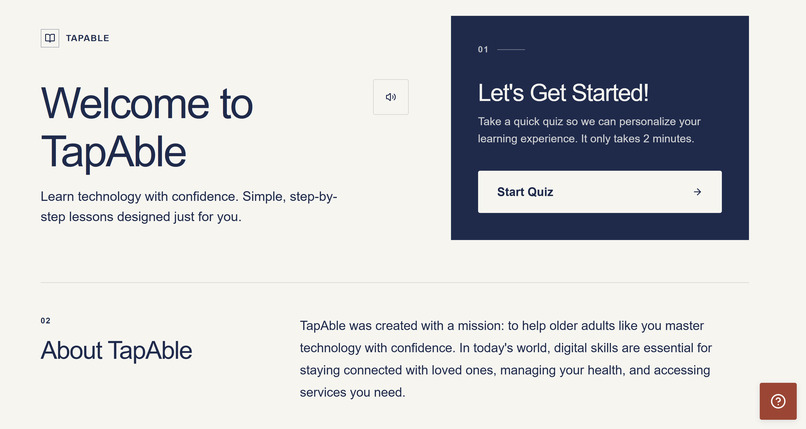
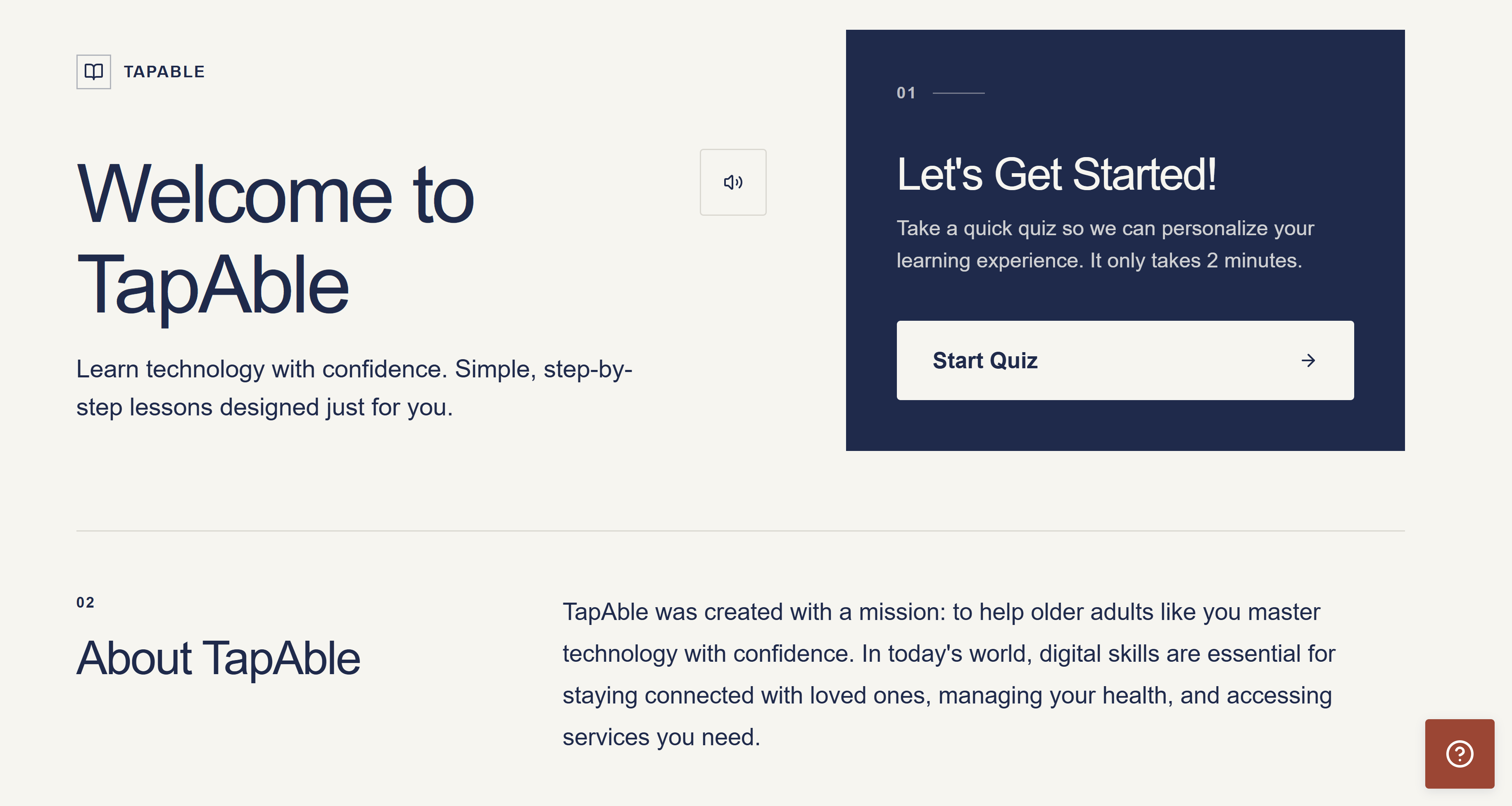
Homepage (before logging in)
-
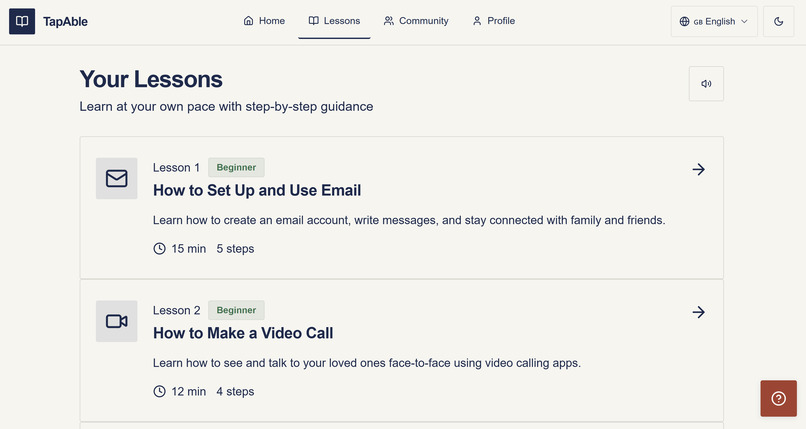
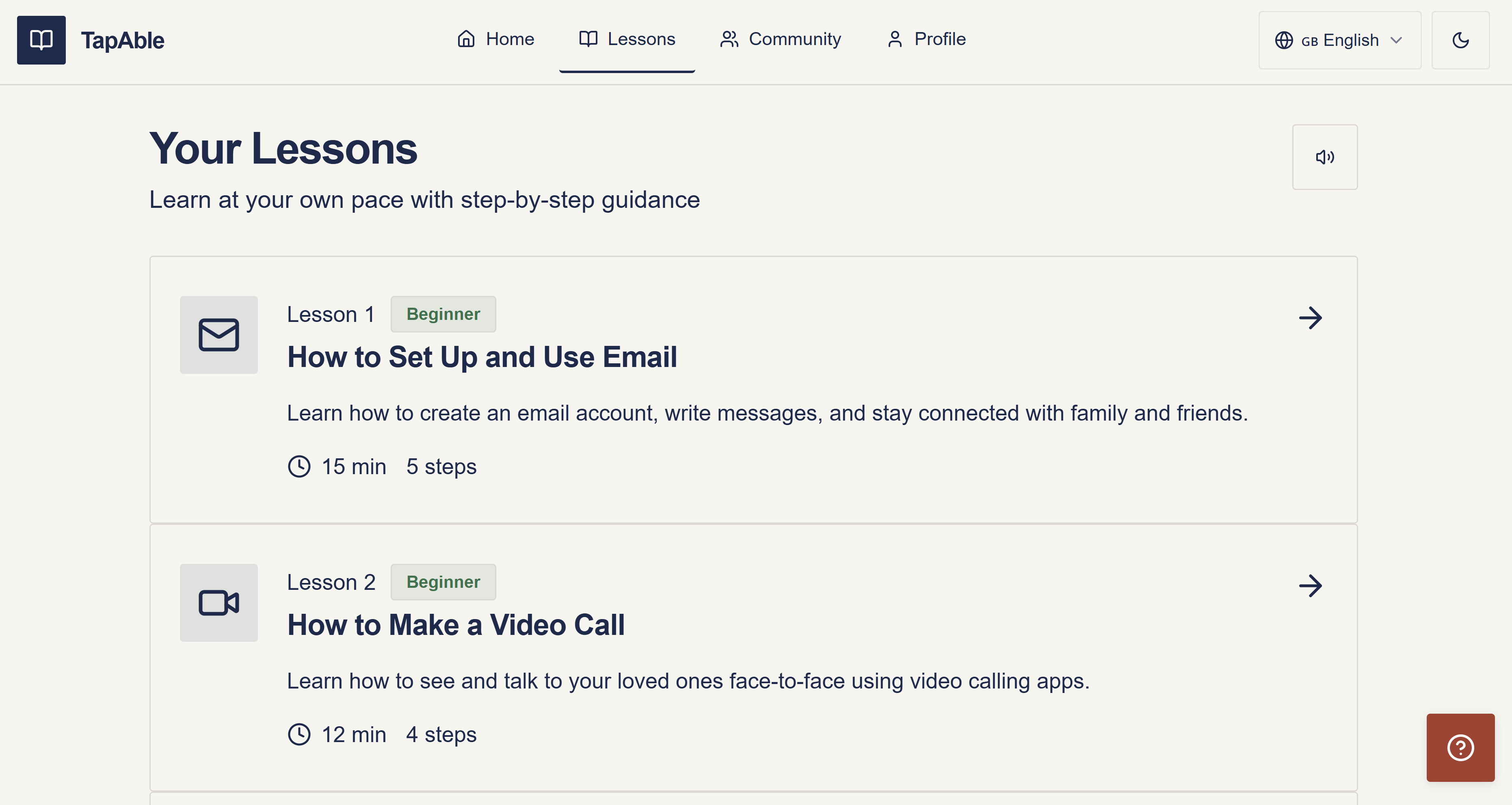
Lessons page
-
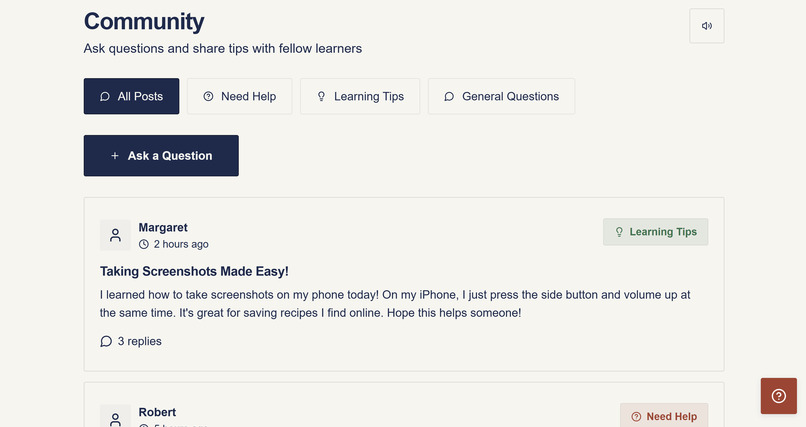
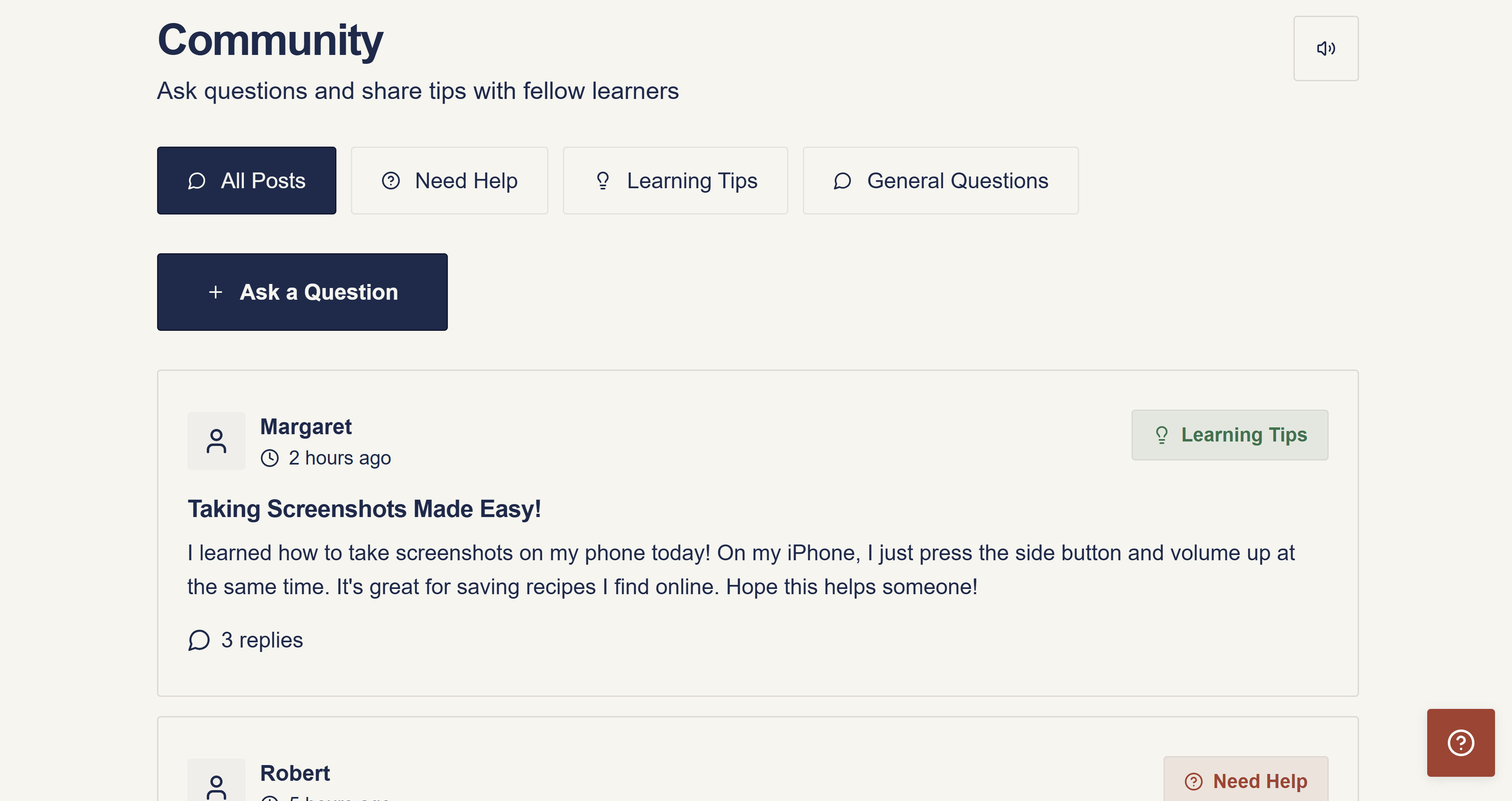
Community page
-
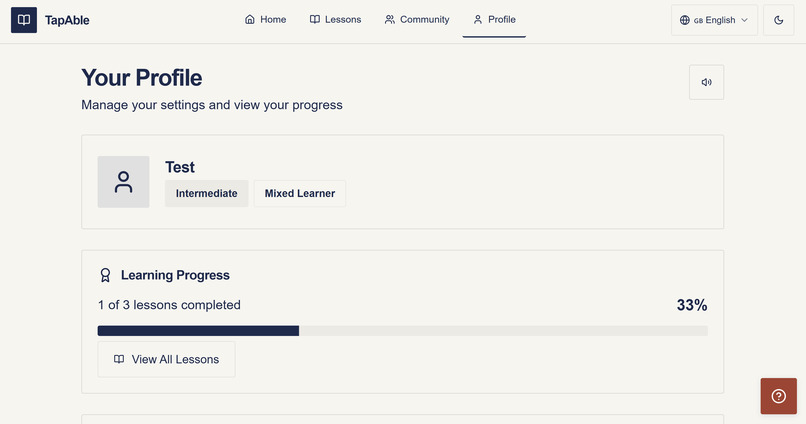
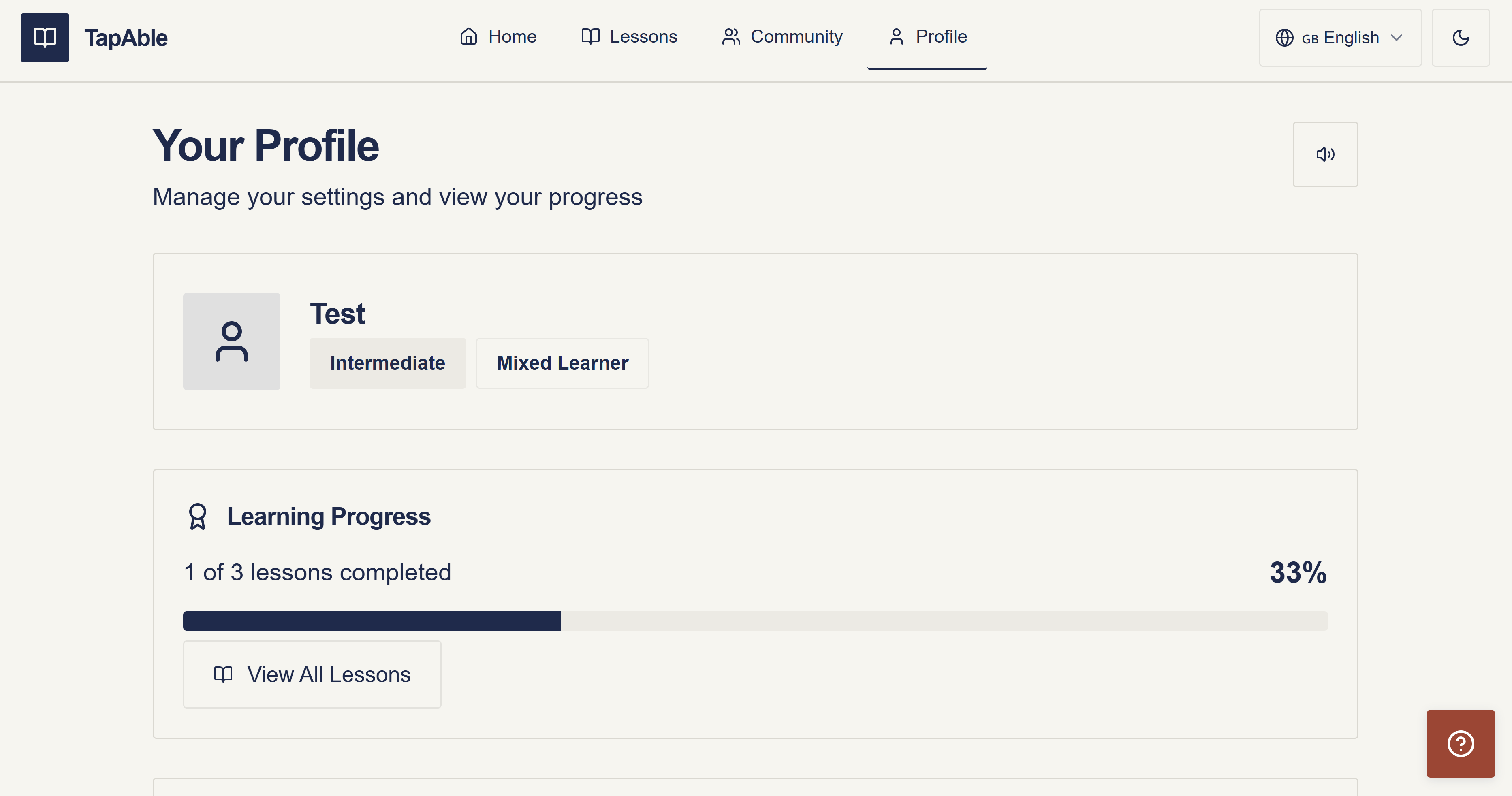
Profile page
-
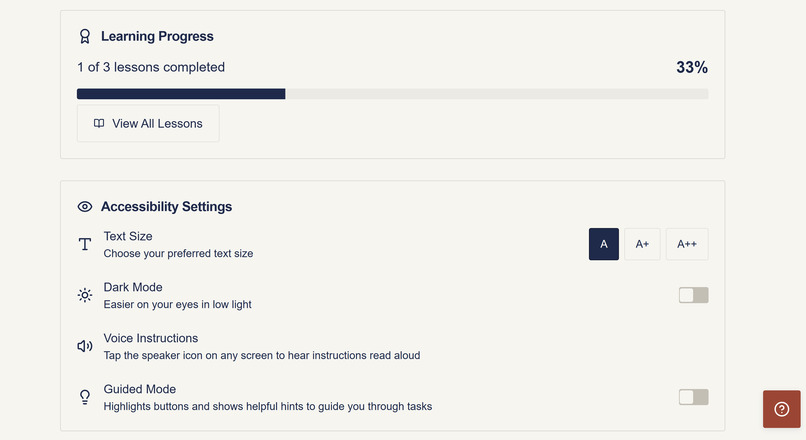
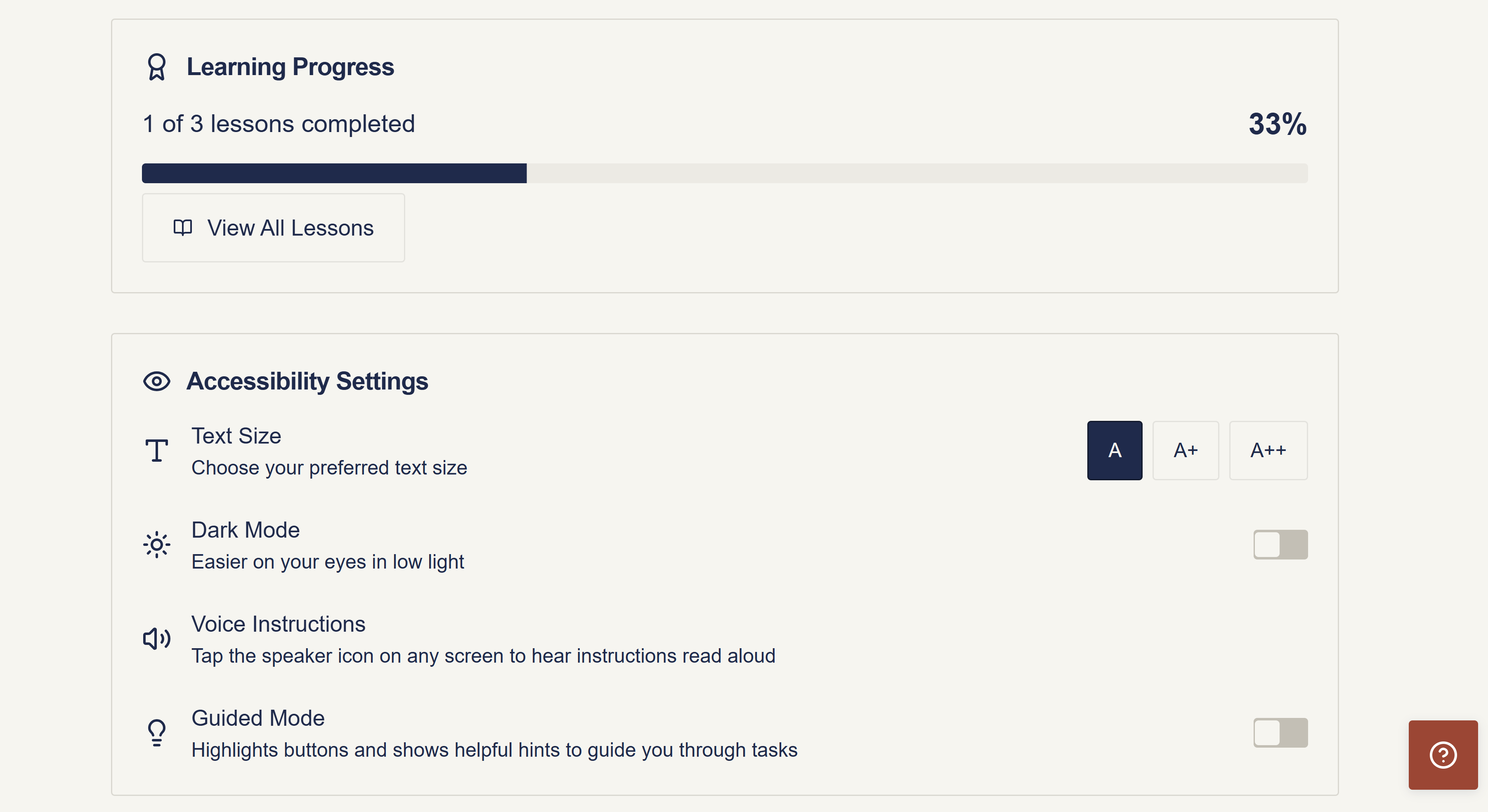
Accessibility settings
-
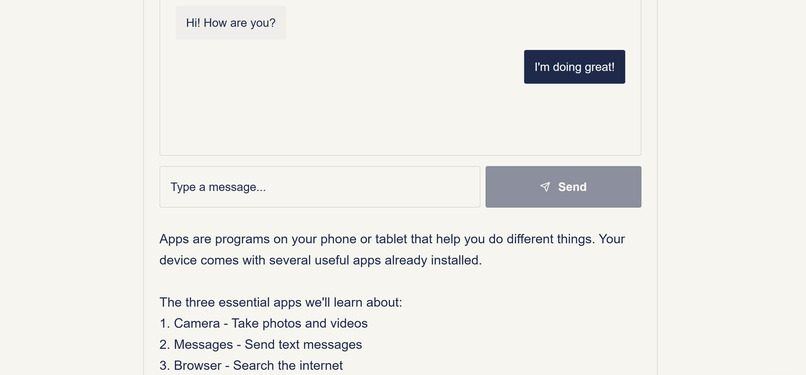
Lesson showcase #1
-
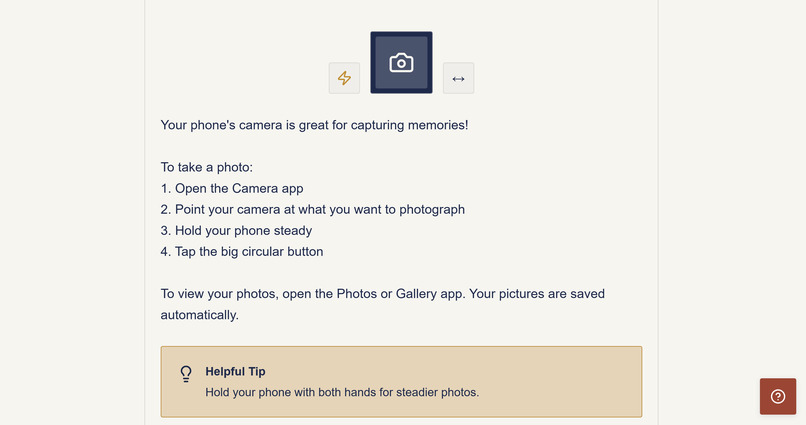
Lesson showcase #2
Inspiration
We live in a world where almost everything is becoming digital. We use technology to communicate with family, access important services, manage everyday tasks, and stay connected with the world. But we often forget that not everyone finds technology easy to use.
For many older adults, something as simple as sending an email, joining a video call, or navigating a smartphone can be a frustrating experience. As digital services become more common, struggling with technology can also mean struggling with independence.
That is what inspired me to create TapAble.
The project originally started as WiseConnect, an idea I developed to help bridge the digital divide for older adults. Since then, I have been thinking about how to take the idea further and build something that goes beyond simply explaining technology.
I want to help people actually learn how to use it.
My goal is to make digital learning more accessible, less intimidating, and more practical, so that people can build the confidence to navigate an increasingly digital world independently.
What it does
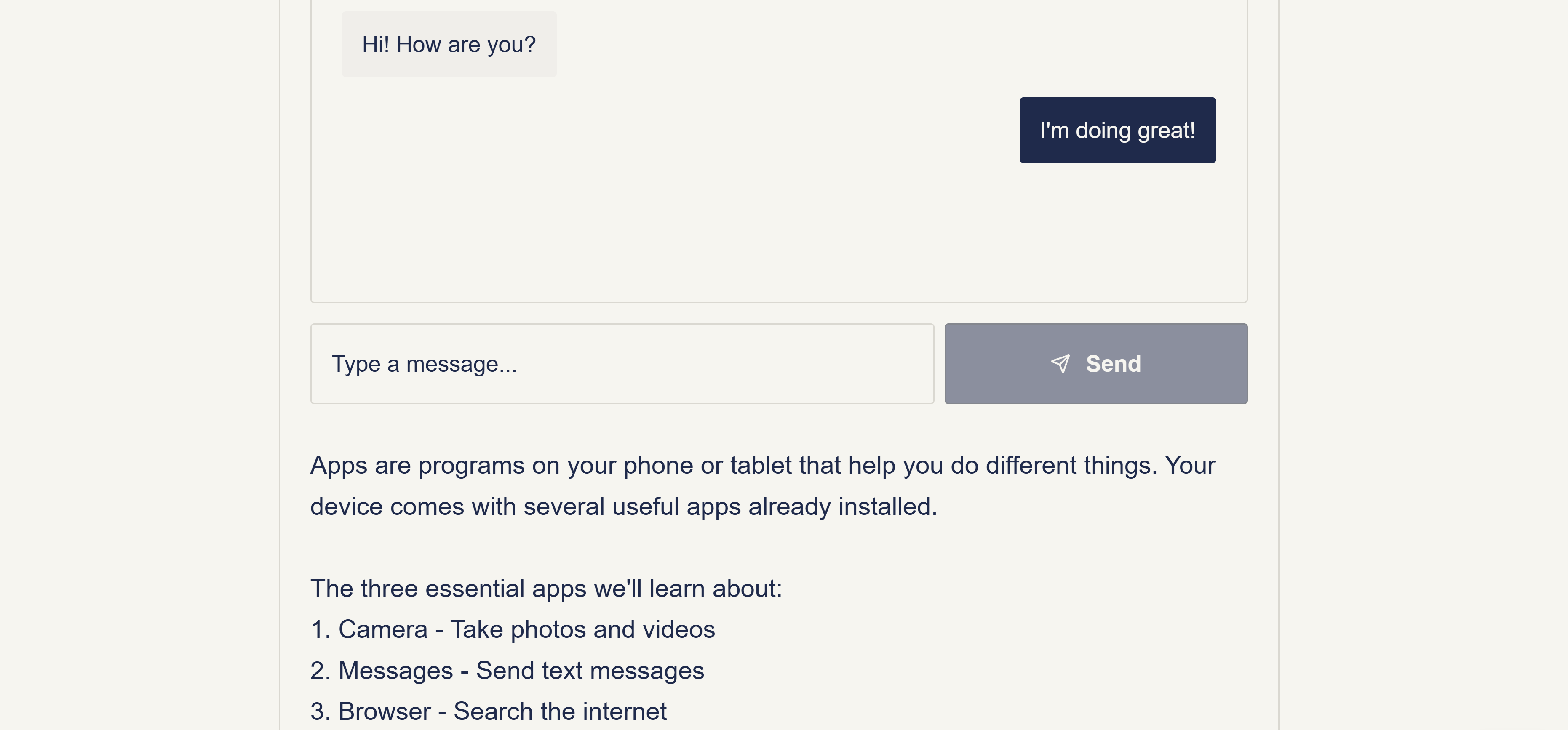
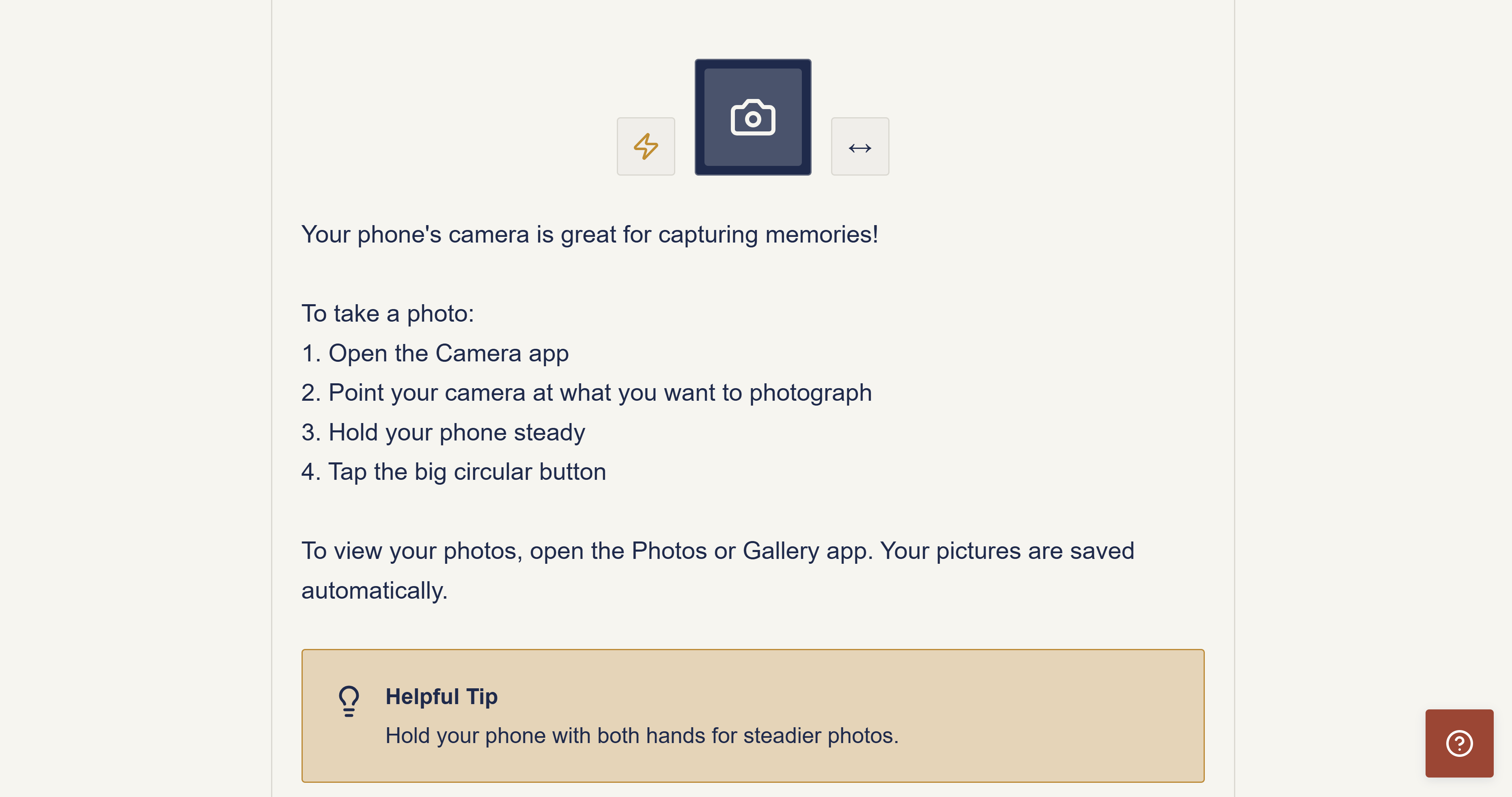
TapAble is a digital-skills learning platform designed to help people, particularly older adults with limited digital experience, learn essential technology skills through simple, guided learning.
The platform is built around making the learning experience approachable. Instead of overwhelming users with complicated interfaces and lengthy instructions, the idea is to break everyday digital tasks into smaller, easier-to-follow steps.
The core experience revolves around personalised learning paths, with an onboarding quiz intended to help identify a learner's current digital skill level and learning preferences.
The platform focuses on practical skills such as:
- Learning how to use email and communicate online.
- Understanding essential smartphone applications.
- Becoming more comfortable with digital tools and everyday online tasks.
- Building digital awareness and learning to recognise potential online risks.
Accessibility is an important part of the vision. Clear navigation, readable text, straightforward instructions, and an interface designed for people with limited technical experience are central to the product.
The bigger goal is not simply to help users finish lessons. It is to help them become confident enough to perform everyday digital tasks on their own.
How we built it
TapAble began as a web-based project, and its current codebase uses a modern JavaScript and TypeScript stack.
The frontend is built with React and TypeScript, with Vite supporting development and the production build process. React helps organise the interface into reusable components, while TypeScript provides stronger type checking and makes the code easier to maintain.
The project also includes an Express backend, which provides a foundation for server-side logic and API functionality. The repository includes Drizzle ORM and Neon/PostgreSQL-related dependencies and configuration for database-related functionality as the application develops.
The development process focused on turning the original idea into a tangible web experience, with a user interface and a learning journey that could be demonstrated through a browser.
Rather than treating digital accessibility as an afterthought, the design direction prioritises simplicity and ease of use from the beginning.
This prototype is the starting point for a larger platform. Future development will focus on strengthening the learning interactions, improving how progress is measured, and making it easier to add new lessons and learning paths.
Challenges we ran into
One of the biggest challenges was figuring out how to make a learning platform useful for people who may not be comfortable using technology in the first place.
An interface that seems obvious to an experienced smartphone user might be confusing to someone who is encountering those features for the first time. This makes navigation, instructions, button placement, and the overall learning flow especially important.
Another challenge was balancing simplicity with functionality. The platform needs to provide meaningful learning experiences without introducing too many options or overwhelming users with information.
There is also a difference between explaining how something works and helping someone learn to do it independently. That is why making guided, interactive practice a stronger part of the experience is an important direction for the project.
Finally, building a prototype is only the first step. Understanding whether the platform genuinely helps older adults will require testing it with real learners, observing where they struggle, and improving the experience based on their feedback.
Accomplishments that we're proud of
The biggest accomplishment is turning an idea about digital inclusion into a tangible web project that can be demonstrated and developed further.
TapAble has a clear purpose and a defined audience. Instead of building another general-purpose learning platform, it focuses on a specific challenge that can affect people's independence and ability to participate in digital life.
We are also proud of the direction the project is taking. What began as WiseConnect has evolved into a more focused vision centred on practical digital skills, accessible learning, and helping users become more independent.
The project has also given us a foundation to explore more advanced capabilities, including realistic practice environments, better progress tracking, multilingual learning, and more personalised guidance.
Most importantly, TapAble represents an attempt to build technology for people who are often overlooked when digital products are designed.
What we learned
Working on TapAble has reinforced the importance of understanding the people who will actually use a product.
It is easy to assume that everyone understands the same interfaces, terminology, and interactions. In reality, people's experiences with technology vary significantly, and good design needs to account for those differences.
We also learned that accessibility is not just about making text larger or buttons easier to click. It includes reducing cognitive load, providing understandable instructions, allowing people to learn at their own pace, and making it safe to ask for help or make mistakes.
Another important lesson is that identifying a real problem does not automatically validate a business idea. Research can establish that digital exclusion exists, but the product still needs to demonstrate that it helps users and that there is a sustainable way to reach them.
This has shaped the next stage of TapAble: moving beyond building features and focusing on measurable learning outcomes, user feedback, and real-world demand.
What's next for TapAble
The next step is to move from a working prototype towards a more complete and validated learning platform.
First, I want to strengthen the core learning journey, from onboarding and personalised recommendations to completing lessons and tracking progress. I also want to develop realistic practice environments where learners can safely practise digital tasks, receive guidance when they need it, and try again without fear of making mistakes.
Accessibility and internationalisation will be key priorities. TapAble is intended to serve a global audience, so its long-term direction includes support for different languages, devices, accessibility needs, and local contexts.
I also want to test the platform with older adults and measure outcomes such as lesson completion, the amount of assistance required, and whether learners can repeat tasks independently after practising.
Beyond the product itself, the next step is to explore partnerships with senior-care organisations, NGOs, libraries, community centres, and other institutions that could help bring TapAble to more people. The long-term business model would aim to keep essential learning resources free or affordable for individuals while exploring institution-funded programmes and digital-inclusion partnerships.
Ultimately, the ambition is to make TapAble more than a collection of tutorials. I want to build a platform that helps people develop the skills and confidence to participate in an increasingly digital world, regardless of their age or previous experience.
TapAble. Digital confidence, one task at a time.
Built With
- drizzle-orm
- express.js
- neon
- node.js
- postgresql
- react
- replit
- typescript
- vite

Log in or sign up for Devpost to join the conversation.