
Inspiration
Shopping today is optimized for convenience and price—but not for personal values. People want to support brands aligned with sustainability, ethics, or identity, yet lack visibility into better alternatives. At the same time, vendors struggle to reach value-aligned customers. WiseBuys bridges this gap by turning everyday purchase data into intentional consumption.
What it does
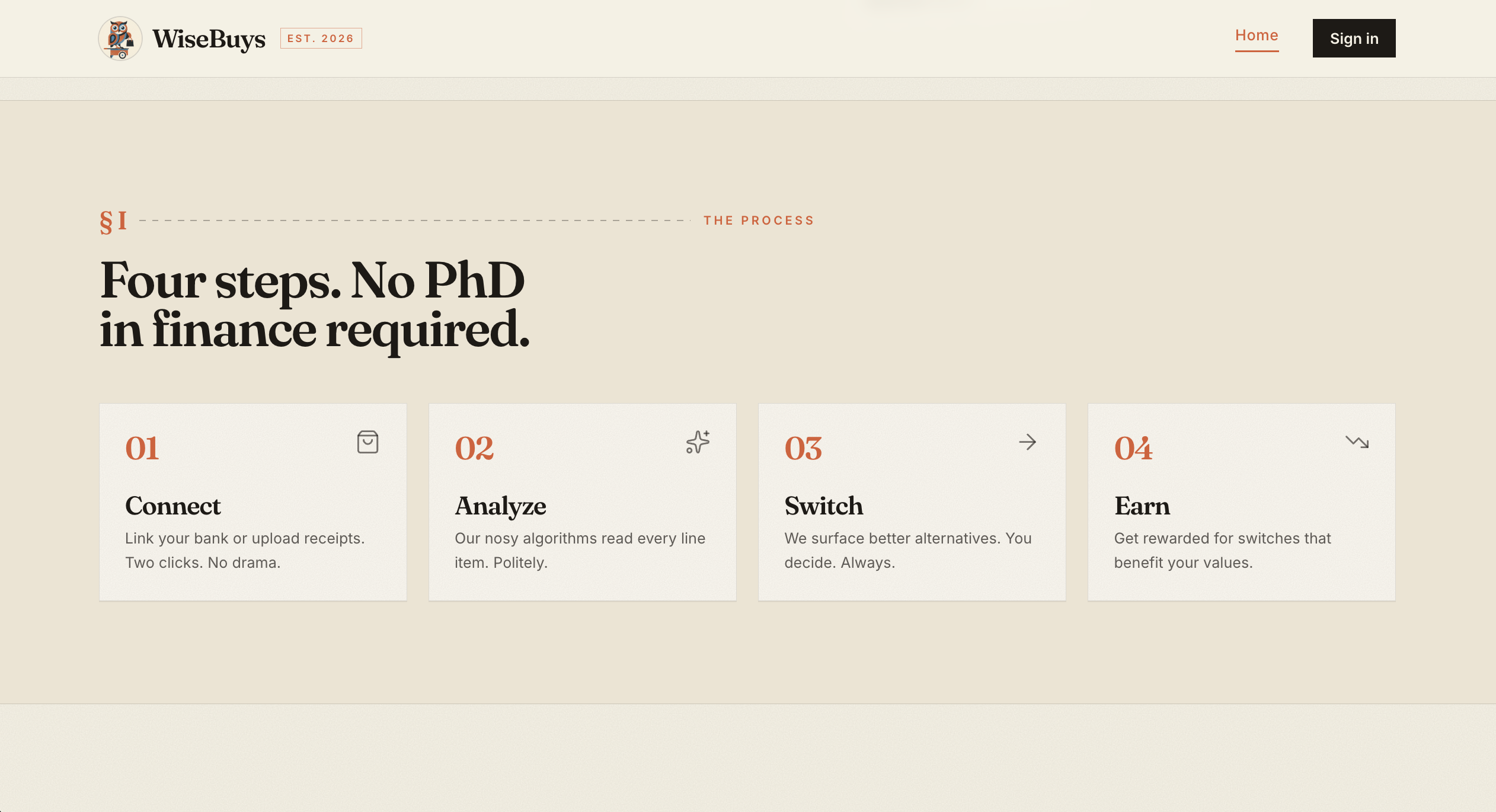
WiseBuys is a two-sided platform that connects customers and vendors through values-driven commerce. Customers link their transaction history, select what matters to them, and receive personalized recommendations with clear reasoning, comparisons, and rewards. Vendors get a curated discovery channel, product tagging aligned with values, and analytics on customer behavior, pricing, and competition.
How we built it
We built WiseBuys as a full-stack platform:
- Frontend: Responsive dashboard for onboarding, recommendations, spending insights, and vendor tools
- Backend: APIs for authentication, transaction syncing, rewards, and analytics
- Data layer: Normalized purchase data with line items
- Intelligence: Hybrid recommendation engine combining rules + embeddings (Gemini + vector search via pgvector)
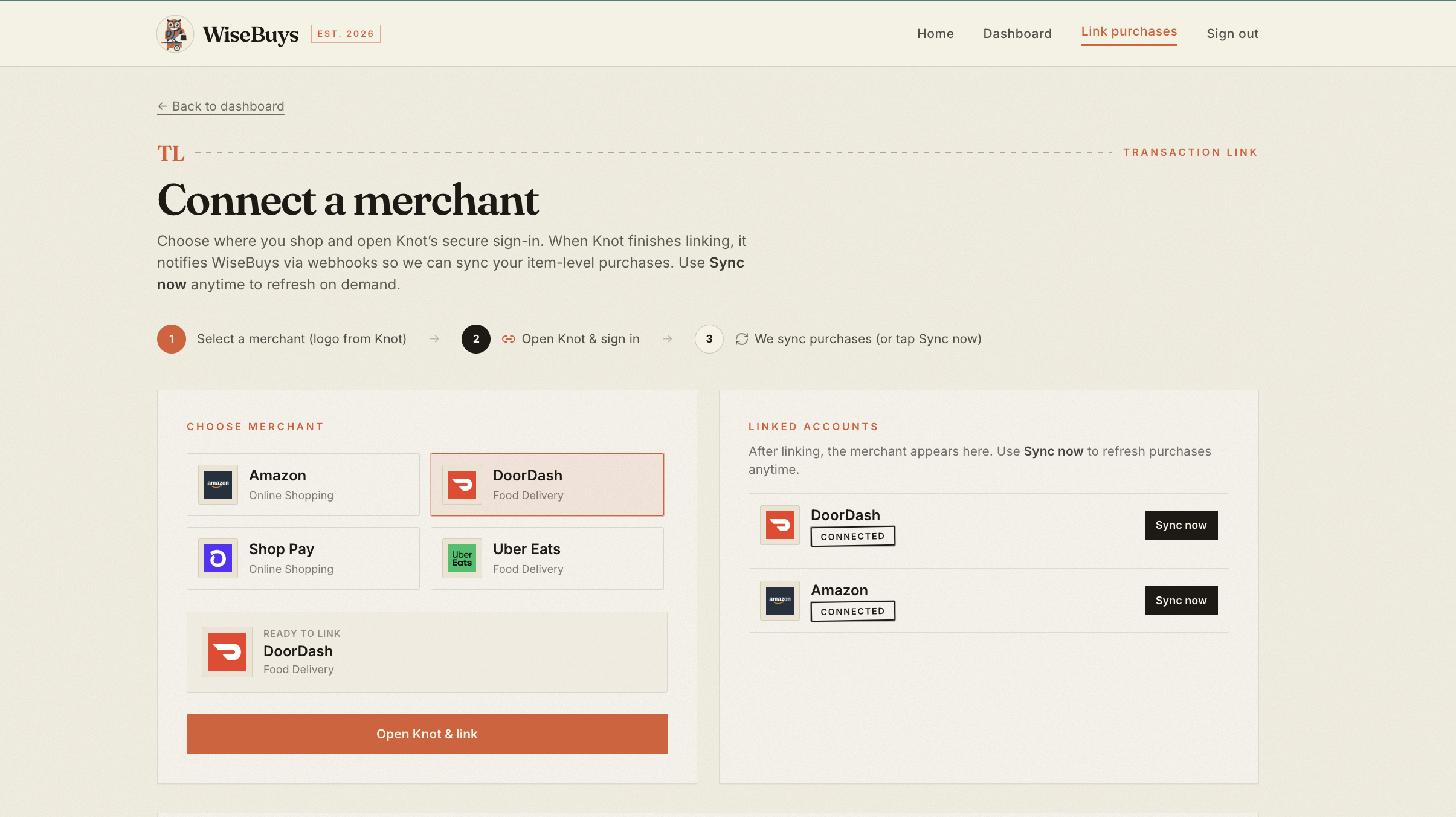
- Integration: Knot API for transaction linking and real-time updates via webhooks
Challenges we ran into
- Normalizing messy transaction and SKU-level data across merchants
- Designing explainable recommendations (not just “black box” AI)
- Balancing rule-based vs embedding-based ranking for relevance and speed
- Handling webhook reliability and syncing edge cases
- Creating a rewards system that feels meaningful but is still scalable
Accomplishments that we're proud of
- Built an end-to-end working system with real transaction syncing
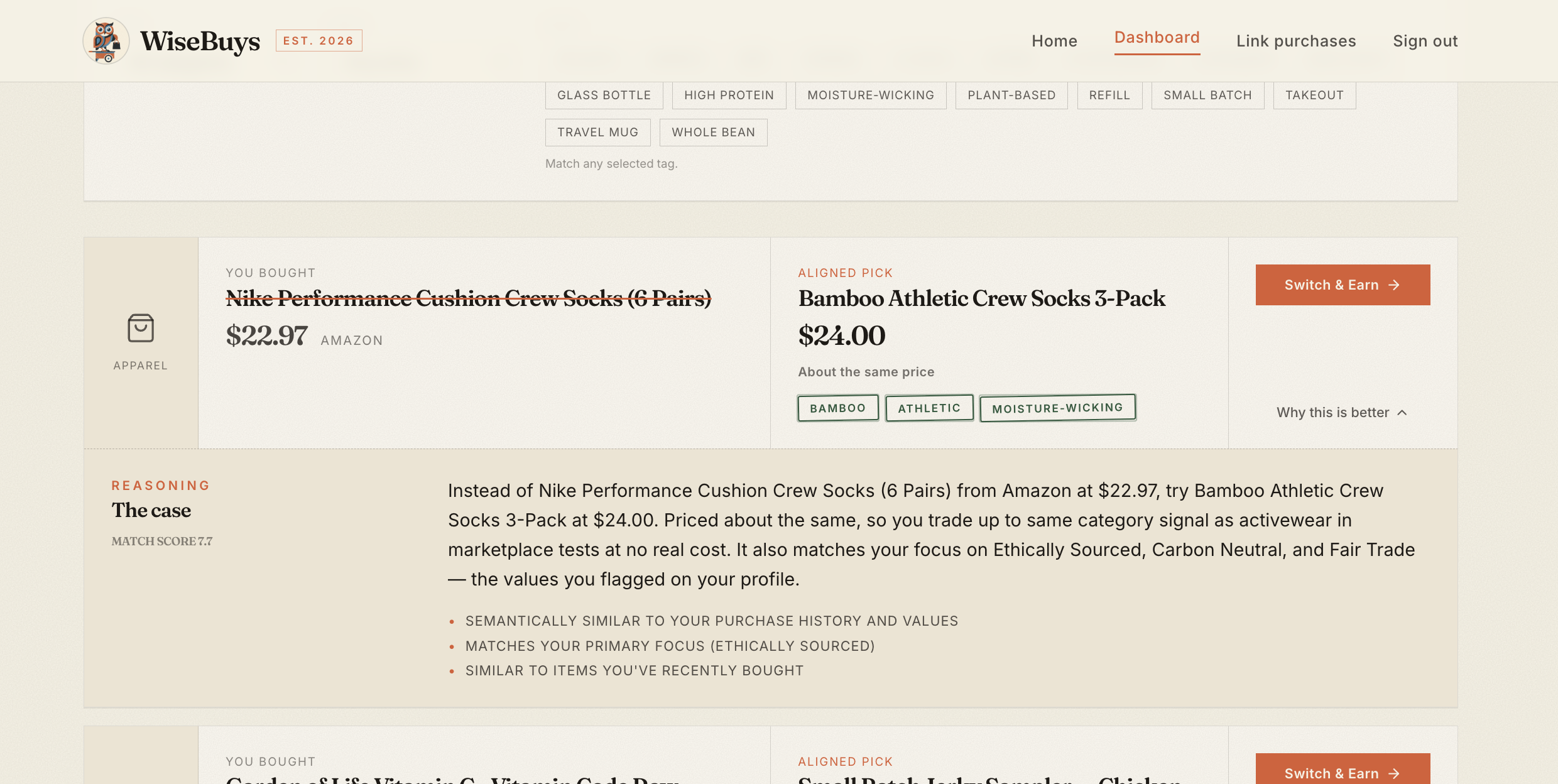
- Developed a transparent recommendation UX with “why this product” insights
- Created a dual-sided experience (customers + vendors + admin)
- Implemented a flexible value-tagging system for products and vendors
- Designed a rewards mechanism tied directly to user behavior
What we learned
- Trust is critical—users need to understand why something is recommended
- Data quality matters more than model complexity
- Two-sided marketplaces require careful balance between supply (vendors) and demand (customers)
- Simplicity in UX beats over-engineering, especially for onboarding
- Real-world integrations (like Knot) introduce complexity that prototypes often ignore
What's next for WiseBuys
- Improve recommendation quality with deeper behavioral modeling and feedback loops
- Expand vendor onboarding and verification pipelines
- Introduce social features (reviews, follows, shared value profiles)
- Enhance rewards with real incentives (cashback, partnerships)
- Scale infrastructure and prepare for production-grade deployment
- Explore agent-based simulations for predicting customer purchasing behavior
Built With
- fastapi
- gemini
- knotapi
- postgresql
- react

Log in or sign up for Devpost to join the conversation.