
ReavenueCat project app6d52ac5626
Inspiration
WisdomBound started with a simple idea: what if learning was a real game, rather than an educational app with a few game elements added on top?
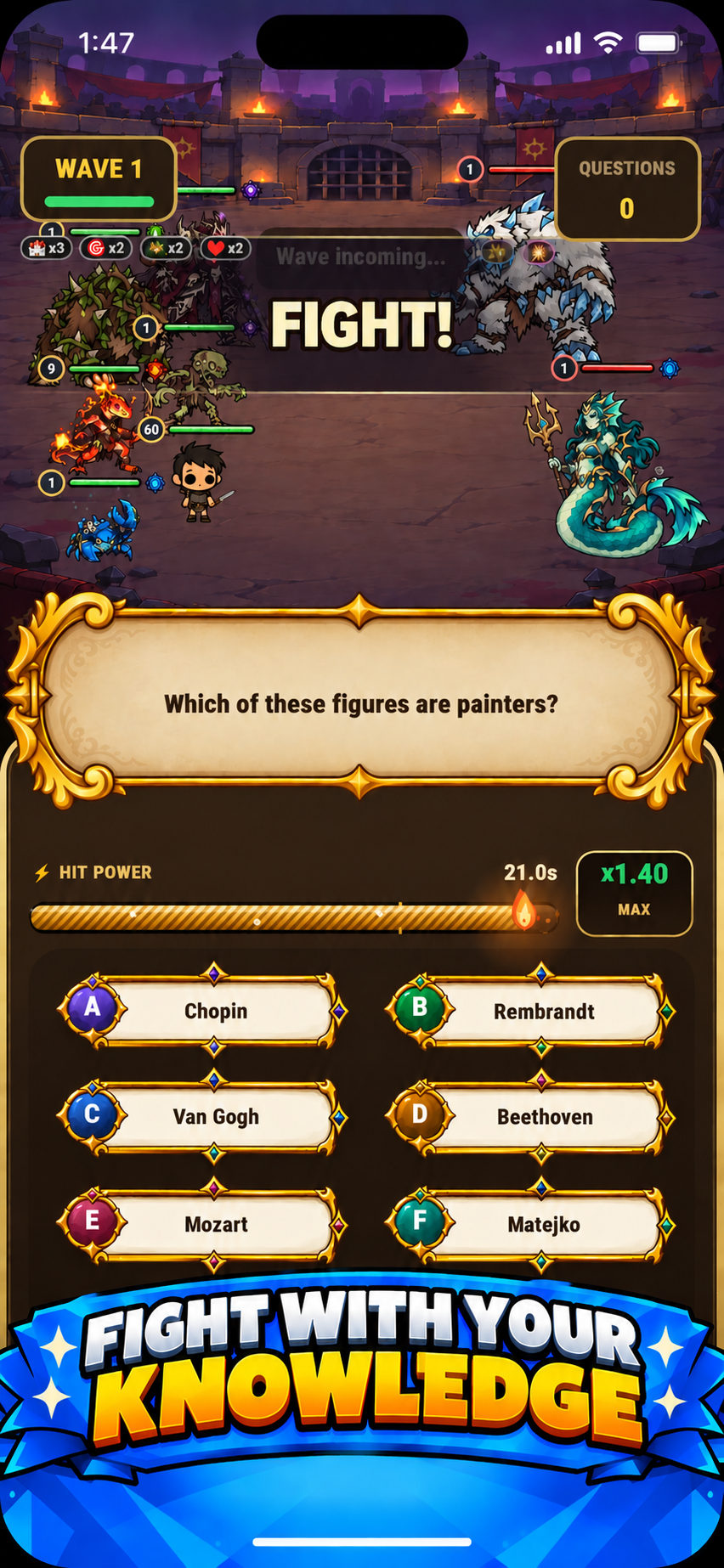
Many educational games are built around learning first, with gamification used mainly as a reward system. I wanted to approach it from the opposite direction. WisdomBound is designed as an RPG first, where learning is the actual gameplay mechanic.
The player enters a fantasy world where knowledge is power. Instead of simply fighting enemies with traditional attacks, players answer questions to influence battles, earn rewards, unlock equipment, summon companions, and build their own team.
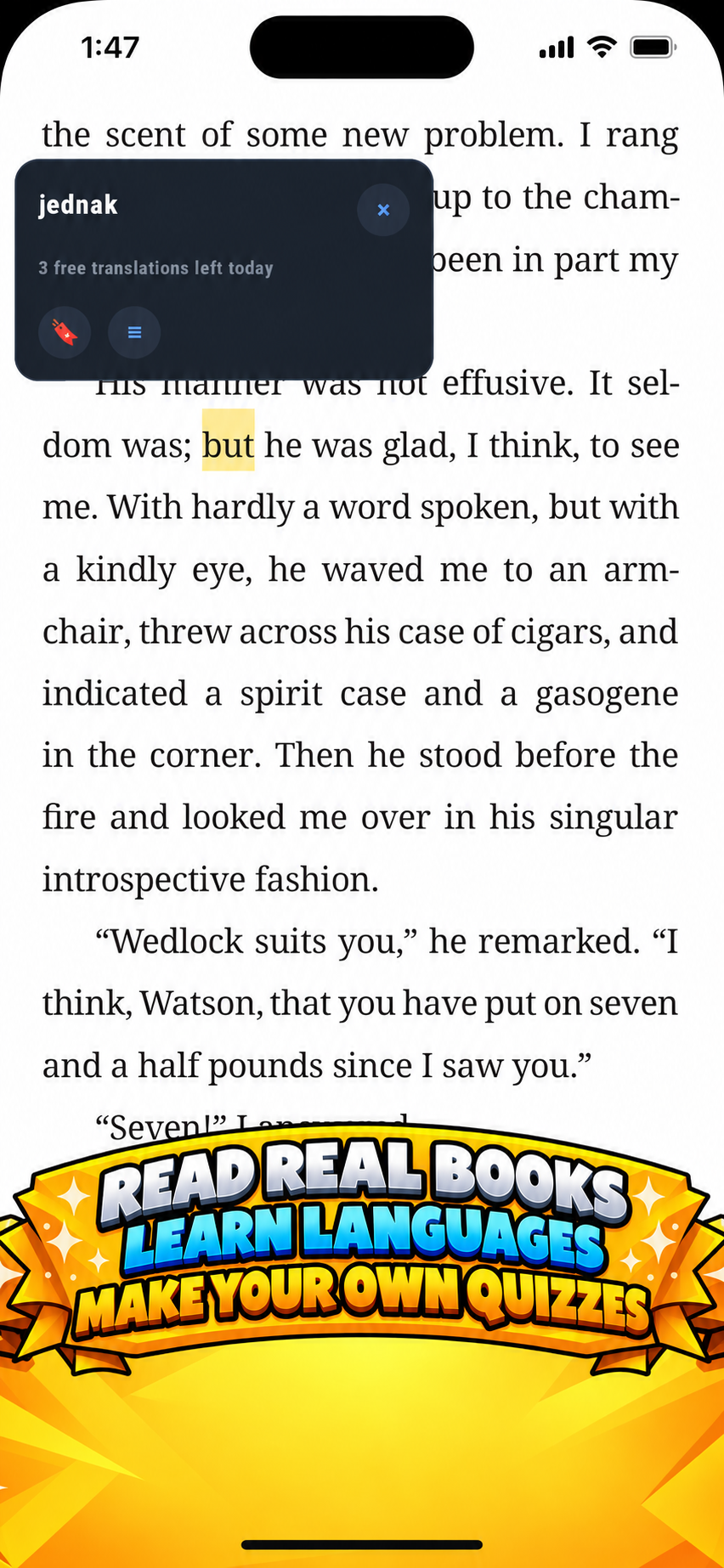
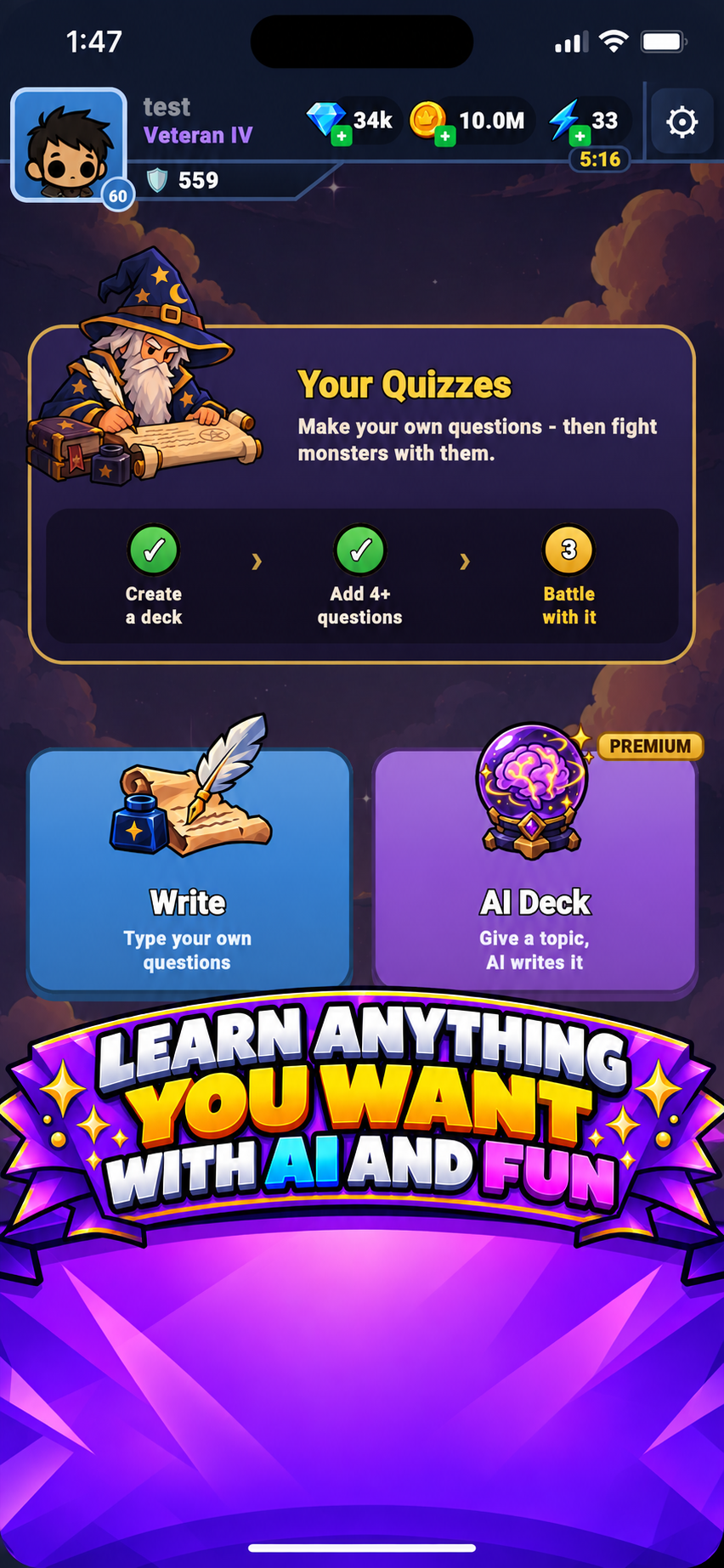
I also wanted learning to be personal. People are naturally more motivated to learn about subjects they actually care about, so WisdomBound allows players to generate quizzes around topics that interest them using AI. Players can also learn from books available in the game or upload their own materials, translate individual words, save them, and later turn them into quizzes.
The goal is to make learning feel less like completing an assignment and more like progressing in a game.
How it works
The core gameplay loop combines learning and RPG progression.
Players enter battles where quizzes determine their actions and outcomes. Correct answers help them progress and earn different in-game currencies and rewards.
Players can create quizzes in multiple ways. They can choose topics they are interested in and use an AI-powered generator to create questions. They can also learn from books and other materials, including their own uploaded content. Individual words can be translated and saved for later practice through quizzes.
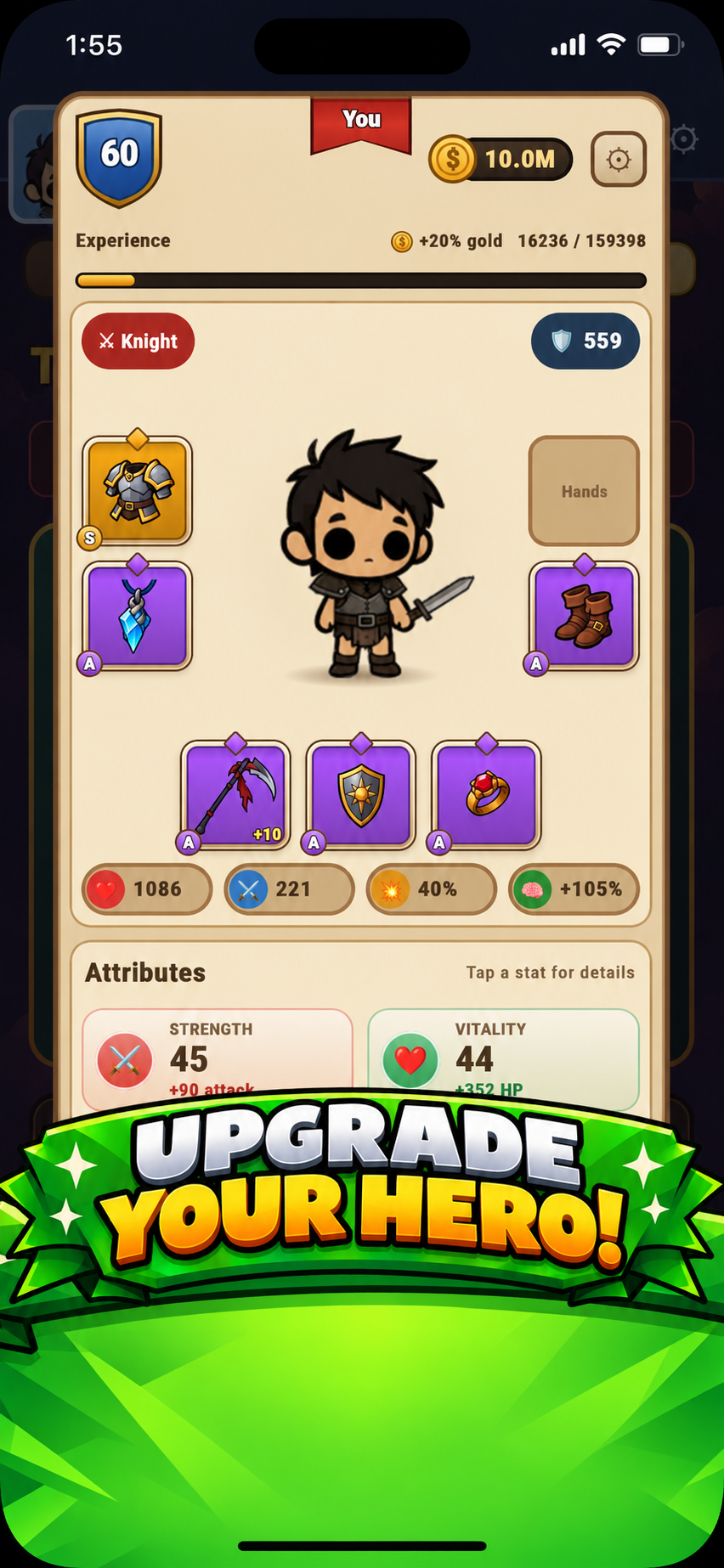
Progression is handled through achievements, statistics, equipment, currencies, chests, and companions. Equipment can be equipped directly on the character and is visually reflected on the character. Players can also summon companions using tickets and combine them into teams with different strengths.
The game also includes a shop, reward chests, rewarded advertisements, in-app purchases, and subscriptions.
How I built it
WisdomBound is built with Kotlin Multiplatform, with the goal of sharing as much code and game logic as possible between Android and iOS.
The application uses modern Kotlin technologies and a modular architecture. The UI is built with Jetpack Compose, while the project uses technologies such as MVVM, coroutines, dependency injection, local storage, and cloud services.
Firebase is used for authentication and cloud functionality, while other backend and data services are used where appropriate. RevenueCat is integrated for handling in-app purchases and subscriptions.
One of the most interesting technical challenges was designing the game logic so that important gameplay state could be validated rather than simply trusting the client. This became especially important for an RPG with currencies, rewards, battles, and progression.
I also had to balance shared Kotlin Multiplatform code with platform-specific functionality, particularly when building features that behave differently between Android and iOS.
Challenges
One of the biggest challenges was that I was not building a simple educational application. WisdomBound combines an RPG, quiz system, learning tools, AI-generated content, progression systems, inventory, companions, monetization, and cross-platform support.
Keeping all of these systems connected while maintaining a consistent player experience required a lot of iteration.
Another challenge was designing the learning mechanics so that they actually felt like gameplay. I didn't want quizzes to feel like separate tests that interrupt the game. They needed to be part of the core progression loop.
Building for both Android and iOS with Kotlin Multiplatform also introduced challenges around shared architecture, platform-specific APIs, testing, and deployment.
Finally, integrating real-world features such as subscriptions, in-app purchases, rewarded ads, authentication, cloud data, and account management added another layer of complexity beyond the game itself.
What I learned
Building WisdomBound taught me a lot about developing a complete product rather than just implementing individual features.
I learned how different systems interact in a real application: game state, networking, persistence, authentication, monetization, UI, animations, and platform-specific functionality all have to work together.
I also gained much more practical experience with Kotlin Multiplatform and learned how to decide what should be shared between platforms and what should remain platform-specific.
Most importantly, I learned that designing a game around learning requires thinking about motivation differently. The challenge isn't only to make learning possible — it is to make the player want to keep learning because it helps them progress.
WisdomBound is my attempt to turn that idea into a complete playable experience: a game where the knowledge you gain outside the game can become the power you use inside it.

Log in or sign up for Devpost to join the conversation.