-
-
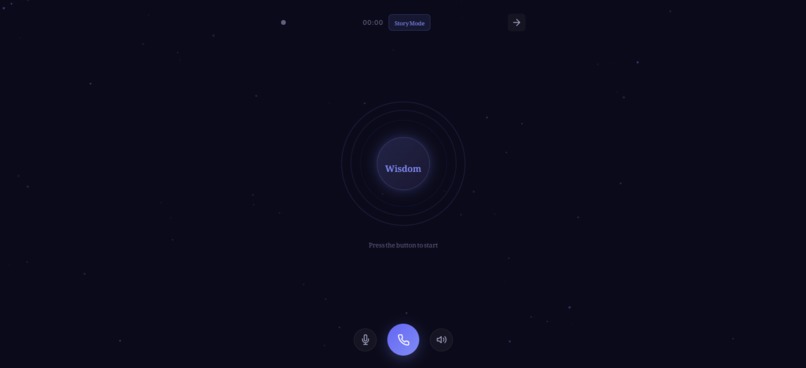
Live Talk Page
-
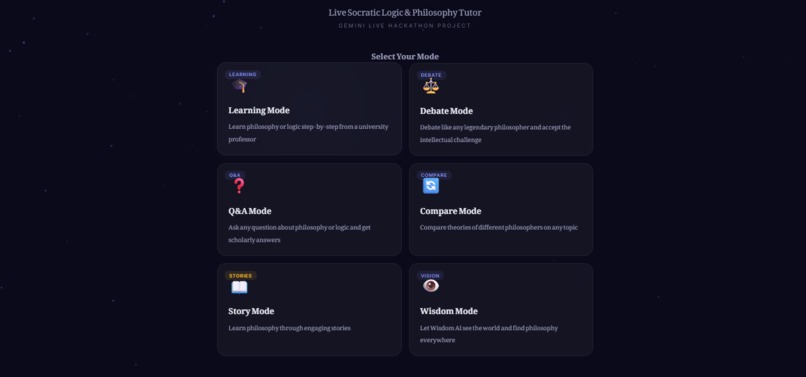
Moods
-
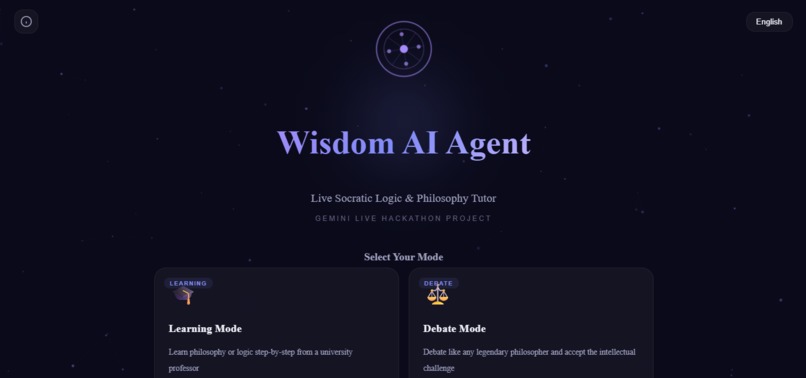
Main Page
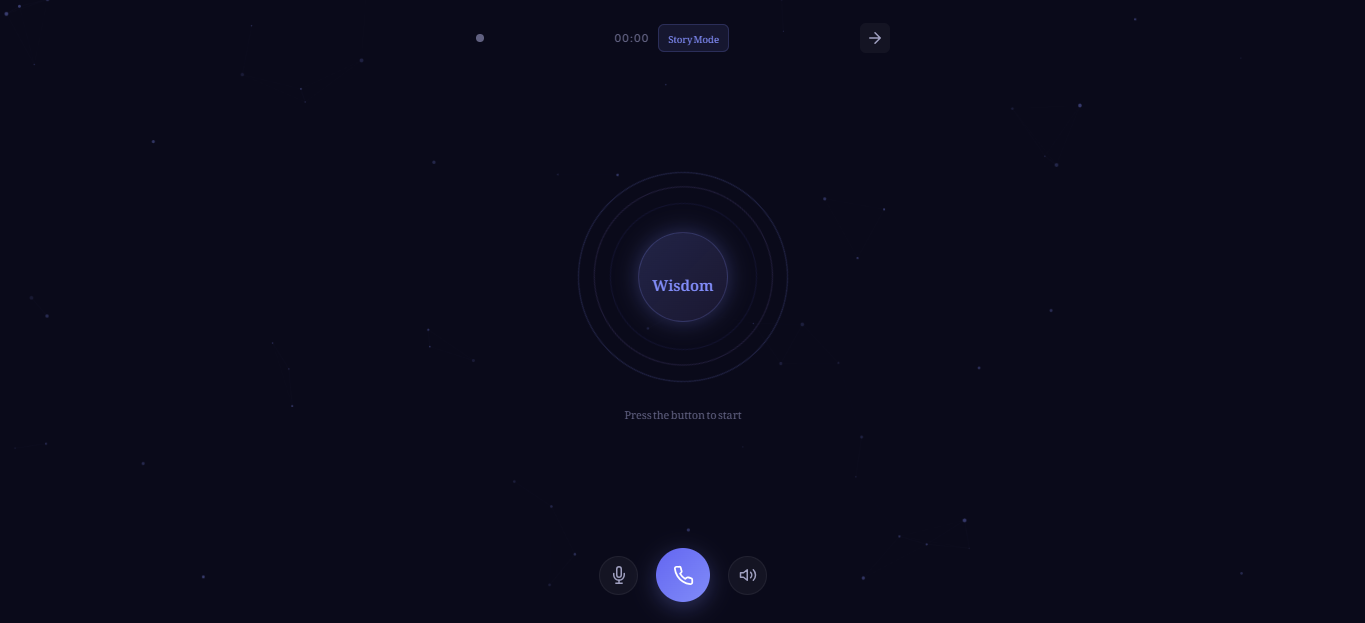
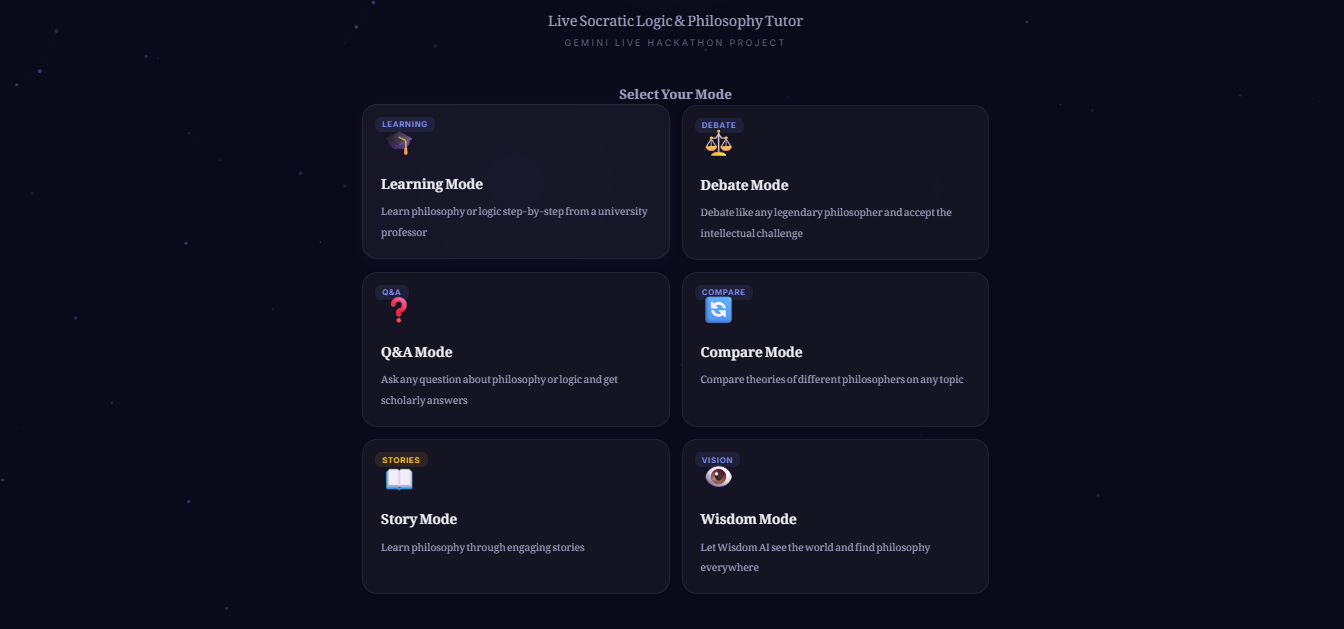
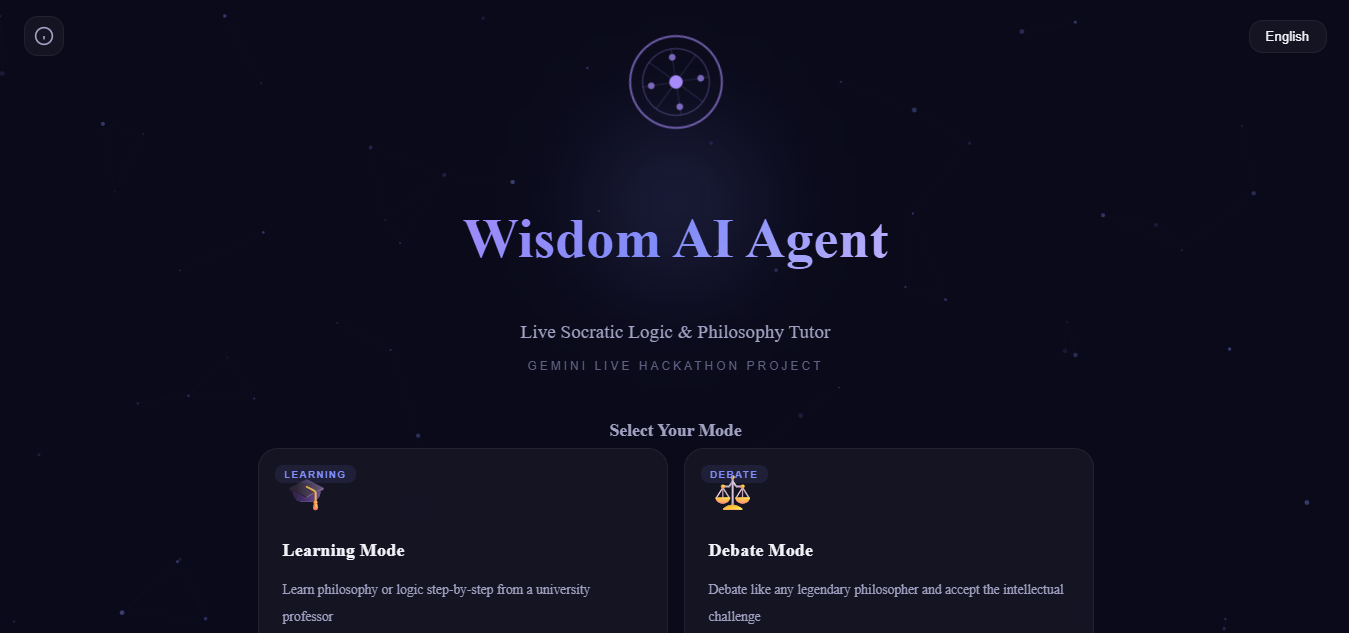
The Journey of Hikmat: Bridging Ancient Wisdom with Modern AI
🌟 Inspiration: Why Philosophy?
In a world overwhelmed by rapid information, I felt a deep calling to revive the art of contemplation and logic. My inspiration for Hikmat (the Arabic/Urdu word for Wisdom) was to create an AI that doesn't just provide "facts," but engages in deep, Socratic dialogue. I wanted to build a bridge between the profound philosophical traditions of the past and the cutting-edge Artificial Intelligence of the future.
The goal was simple yet ambitious: To make logic as accessible as a phone call. 🛠️ The Build: Crafting the Architecture
Building Hikmat was a journey of extreme precision and hard work. I leveraged the full power of the Google ecosystem to create a truly multimodal experience:
- Google Gemini Live API & Vertex AI: I utilized the
gemini-2.0-flash-exp(and later native audio-preview models) to handle high-concurrency, low-latency voice interactions. By using WebSockets, I enabled the AI to listen, respond, and be interrupted naturally—simulating a real human tutor. - Antigravity & Cloud Run: For deployment, I chose Google Cloud Run. This allowed the application to remain serverless and scalable. Integrating it with my workflow required deep configuration to handle secure environment variables, specifically for the
GEMINI_API_KEY. - Unified Backend: I engineered a custom Node.js/Express server that acts as a secure proxy between the browser and Google's powerful LLMs.
🧠 Logical Framework
Philosophy is often rooted in symbolic logic. To ensure the AI understood the structure of an argument, I focused on the Socratic Method:
$$ \forall x (P(x) \rightarrow L(x)) $$ Where $P$ represents a philosophical premise and $L$ represents a logical conclusion. If the user provides a premise $P$, the AI must verify the logic $L$ rather than just agreeing.
🚧 Challenges: The "Vision Eye" Struggle
The most grueling phase of development was the Vision Mode (Wisdom Eye). Synchronizing the camera feed with real-time audio analysis felt like an uphill battle. I faced persistent hurdles:
- Camera Initialization: In the mobile view, the camera would often fail to initialize or throw coordinate-system errors when switching between front and back lenses.
- Frame Synchronization: Sending raw image chunks alongside PCM audio data over a single WebSocket led to numerous buffer overflows and "Frame out of sync" errors. I spent days refining the capture interval: $$ f_{capture} = \frac{1}{t_{process} + t_{latency}} $$
- Hardware Routing: Ensuring that audio would route correctly to the Speaker instead of the earpiece on mobile devices was another challenge that required custom
setSinkIdimplementations and GainNode adjustments.
🎓 What I Learned
This project was a masterclass in resilience. I learned that:
- Security is Paramount: Handling GitHub alerts regarding API exposure taught me the importance of robust
.envmanagement and the necessity of strict .gitignore protocols. - Latency is the Enemy of Empathy: In a voice-based AI, even a 500ms delay can break the "human" connection. Optimization is not optional; it is the core of the experience.
- Multilingual Logic is Complex: Translating philosophical nuance across English, Urdu, and Arabic required more than just translation—it required Cultural Alignment.
✨ Conclusion
Hikmat is more than just a piece of software; it is a labor of love produced through countless hours of debugging, refining, and testing. From the glowing glassmorphism UI to the deep-learning backend on Google Cloud, every line of code was written with the intent to bring the "Light of Reason" to the user's pocket.
The path was filled with errors and "Camera Not Found" messages, but seeing the AI finally "see" a book and remark on its philosophical significance made every struggle worth it.
Built for the Google Gemini Live Agent Challenge. 🚀✨
Built With
- antigravity
- audioworklets
- camra
- css3
- custom
- dev
- docker
- express.js
- gemeniapi
- github
- glassmorphism
- html5
- mediadevices
- node.js
- vertixapi
- webadioapi
- websockets


Log in or sign up for Devpost to join the conversation.