-
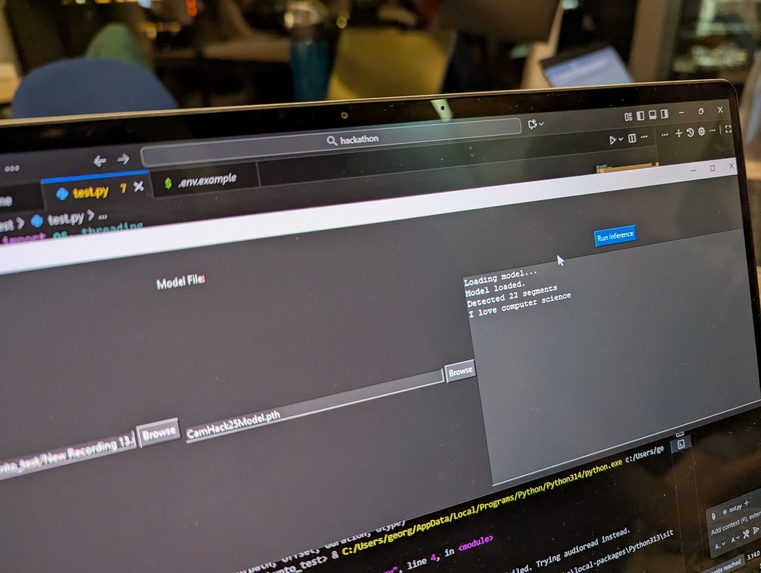
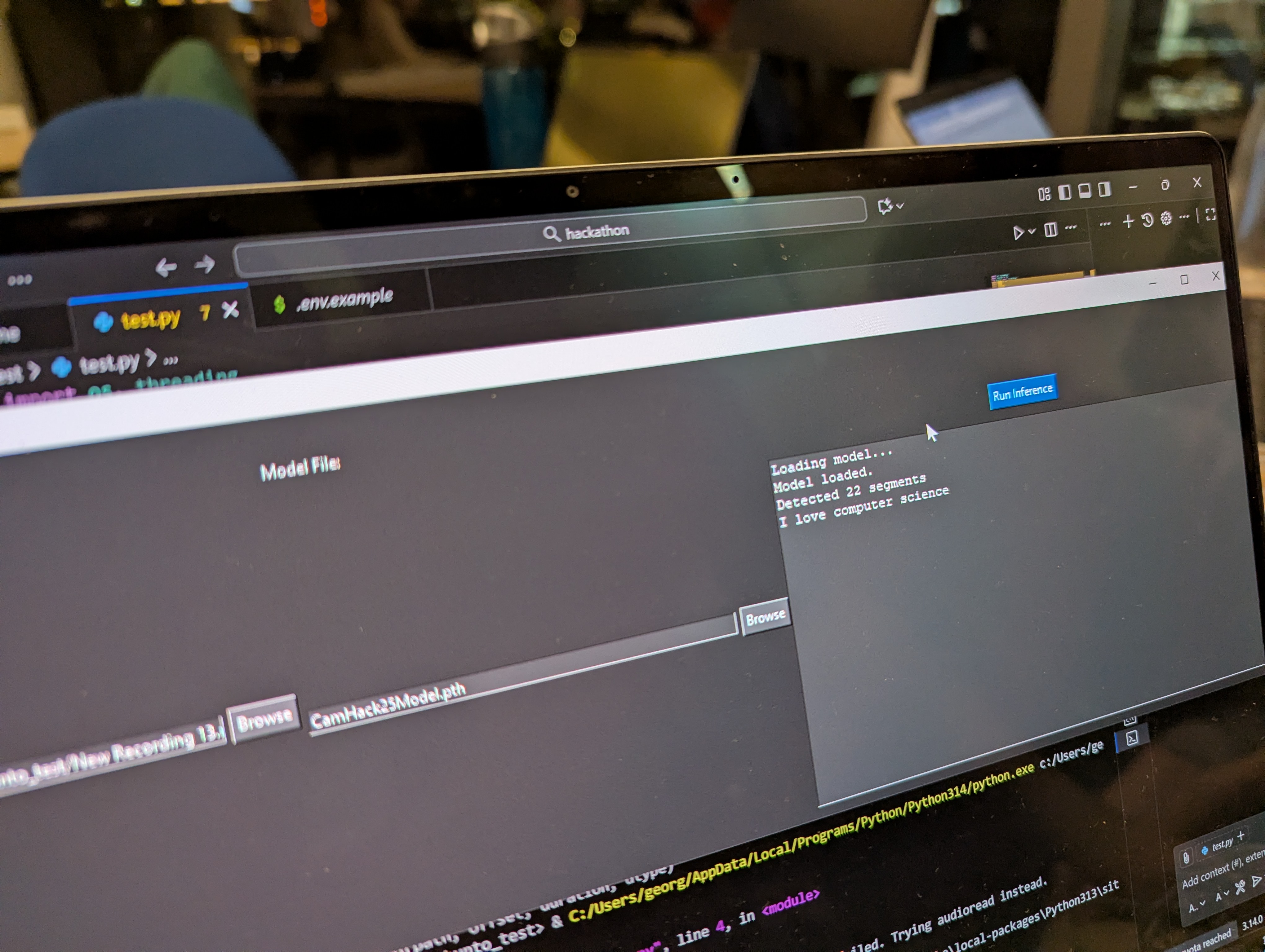
Example test of our project
Here is the information from our project, "The Wireless Wired Keyboard":
Inspiration
We were inspired by our frustration with wired keyboards. We wanted to use one without its wire, and honestly, we just hate dealing with "CABLE MANAGEMENT". We thought, what if we could just make any wired keyboard wireless?
What it does
Our project is called "THE WIRELESS WIRED KEYBOARD". It's a program that converts the sound of any keyboard into actual keystrokes. Your phone's microphone listens to you type, and our system processes those sounds and sends them to your computer, making your old wired keyboard "wireless".
How we built it
We call our process "The Science Behind the Magic", and it works in three steps:
- Acoustic Fingerprinting: First, the phone captures the raw sound wave of each keypress. We process this signal to generate a Mel Spectrogram, which creates a unique "acoustic fingerprint" by showing the key's specific sound frequencies.
- Neural Network Pattern Recognition: We trained a Convolutional Neural Network (CNN) on thousands of these labeled fingerprints. Now, when our model sees a new fingerprint from your typing, it classifies it and outputs the most probable key.
- LLM Orthographic Validation: Because the AI classifies each sound in isolation, it might make a small spelling error like "keyboartd". We pass this text to Gemini, which acts as a "contextual validator" to identify and correct those errors, giving us the final, coherent text.
Challenges we ran into
We definitely ran into some challenges. Our system is only "Mostly accurate" right now—one test showed about 75% accuracy. It's also extremely power-inefficient, about "4,000,000% less power efficient than using the wire". Plus, it's not fast; it's "Limited to 15 words per minute", with a "5000~ms latency". You also have to be very precise with your phone's positioning, and you have to "trust web server is not stealing your data".
Accomplishments that we're proud of
Despite the challenges, we're proud of what we achieved. It is "Mostly accurate", and it's an "Affordable" way to get "Short range wireless connectivity without bluetooth". And, of course, our main goal: "No cable management"! As a bonus, it "Prevents you from getting distracted by your phone" (since you're using it as a mic). We also humorously listed "Potential for spying" as an advantage.
What we learned
We learned a ton! We figured out how to build a full, multi-stage pipeline for acoustic pattern recognition. This included learning how to process raw audio to create "acoustic fingerprints." We then learned how to train a CNN to classify those fingerprints and, crucially, how to pipe that output to an LLM like Gemini for contextual validation and spelling correction.
What's next for Wireless Wired Keyboard
Right now, our main goal is to get your vote! We're excited about the possibilities, but for now, we're just happy to answer "Any questions?" you might have.

Log in or sign up for Devpost to join the conversation.