-
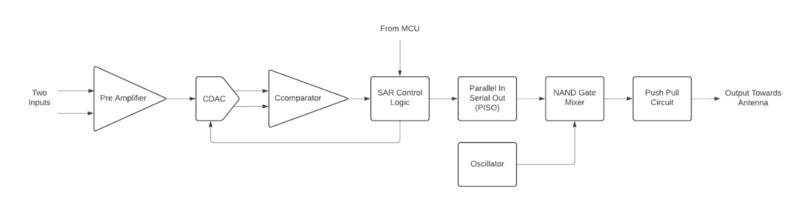
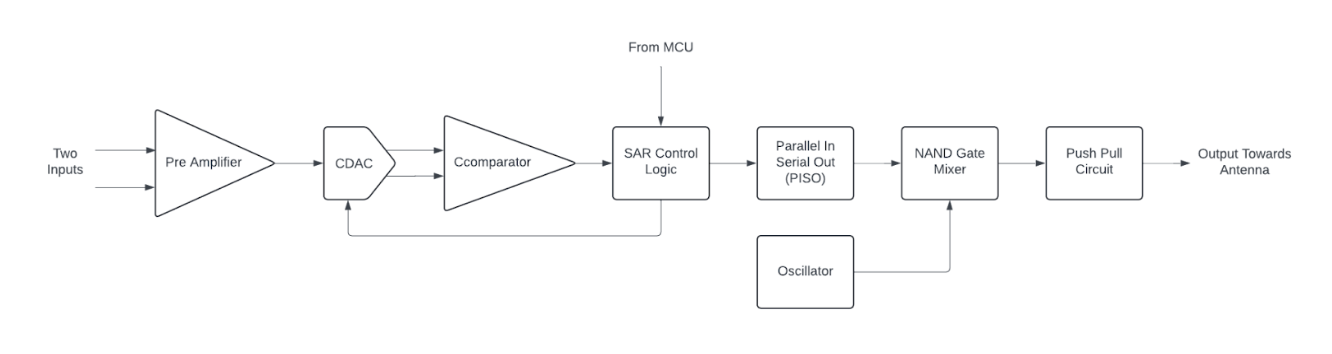
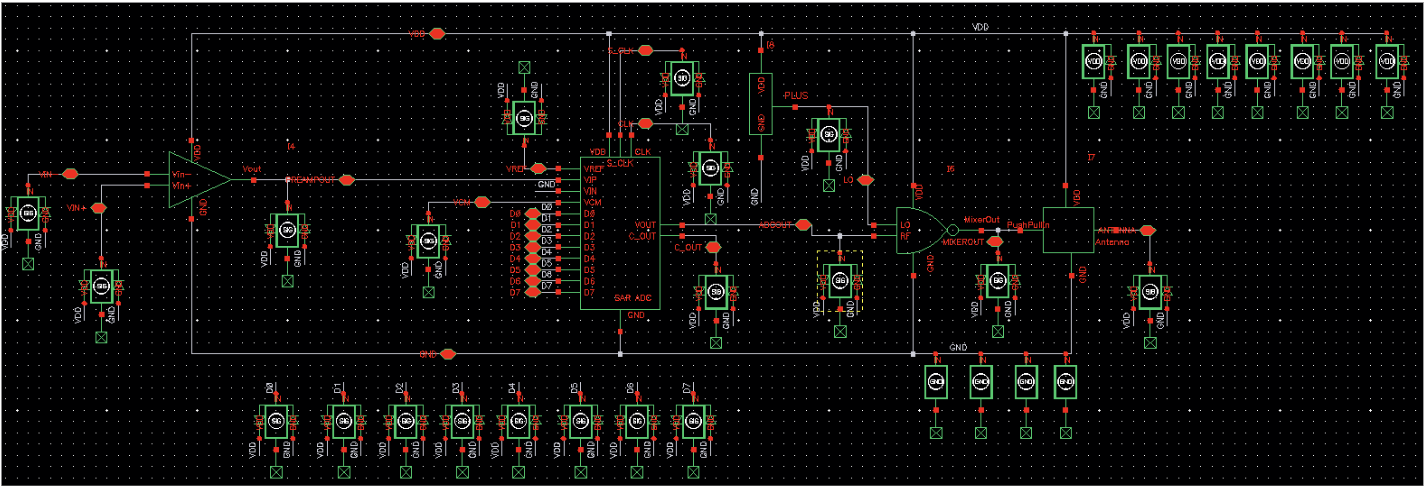
Block Diagram of Taped Out System
-
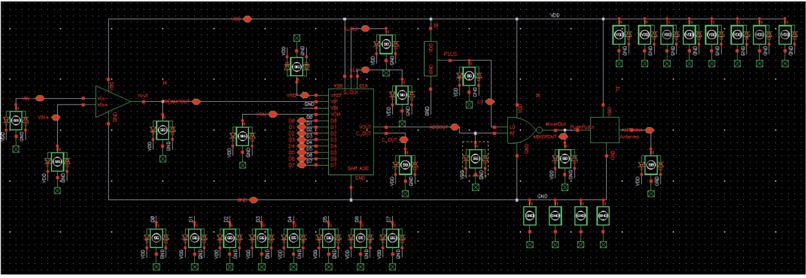
Top Cell schematic with Pads
-
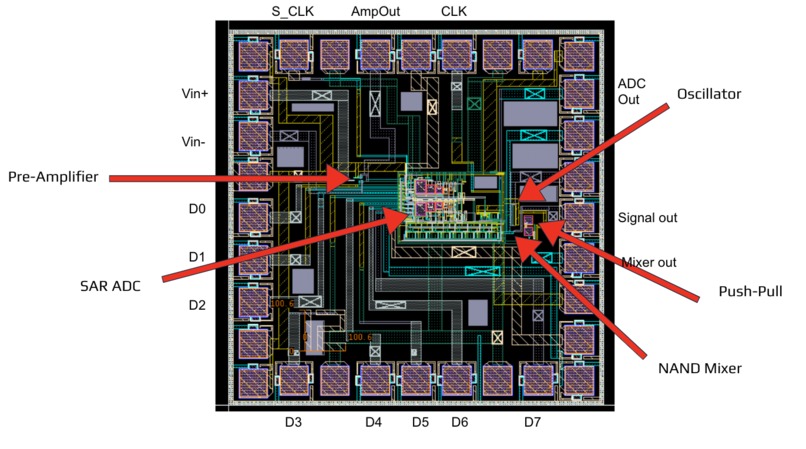
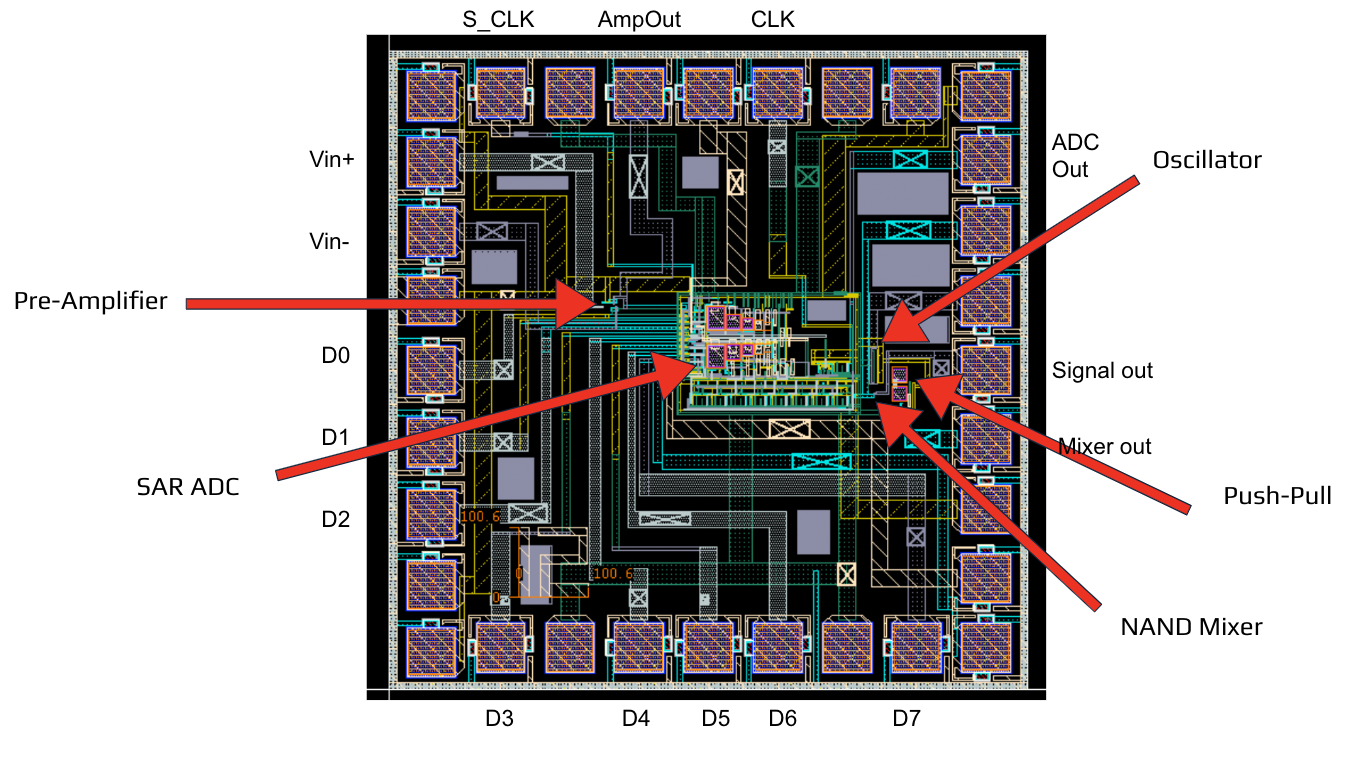
Top Cell Layout
-
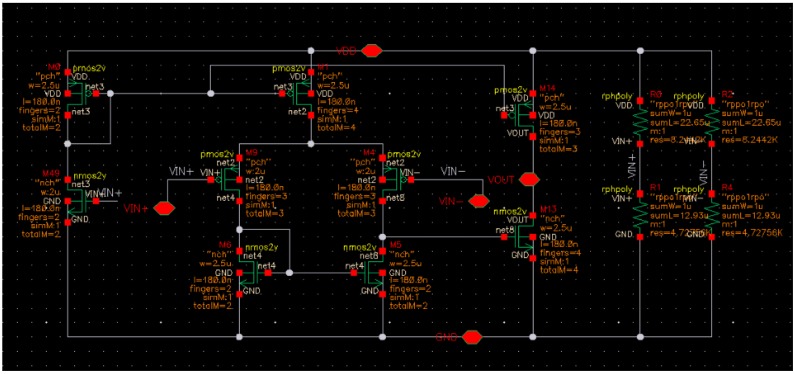
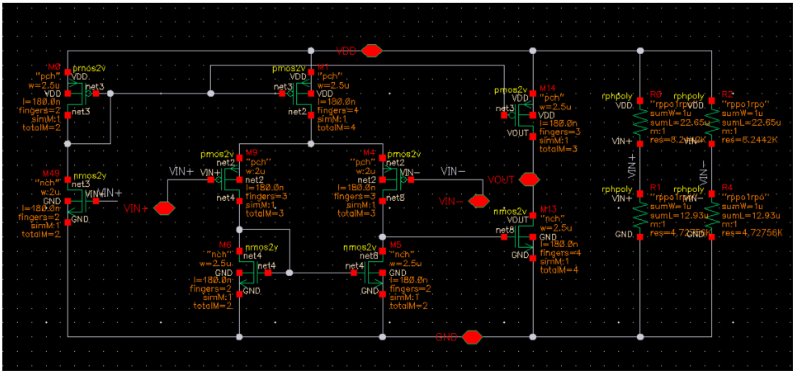
Pre-Amplifier Schematic
-
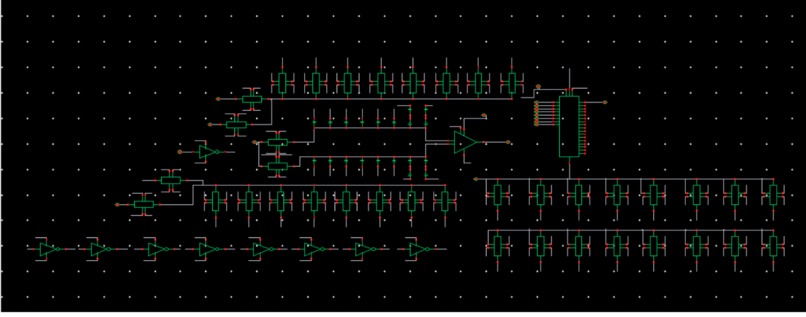
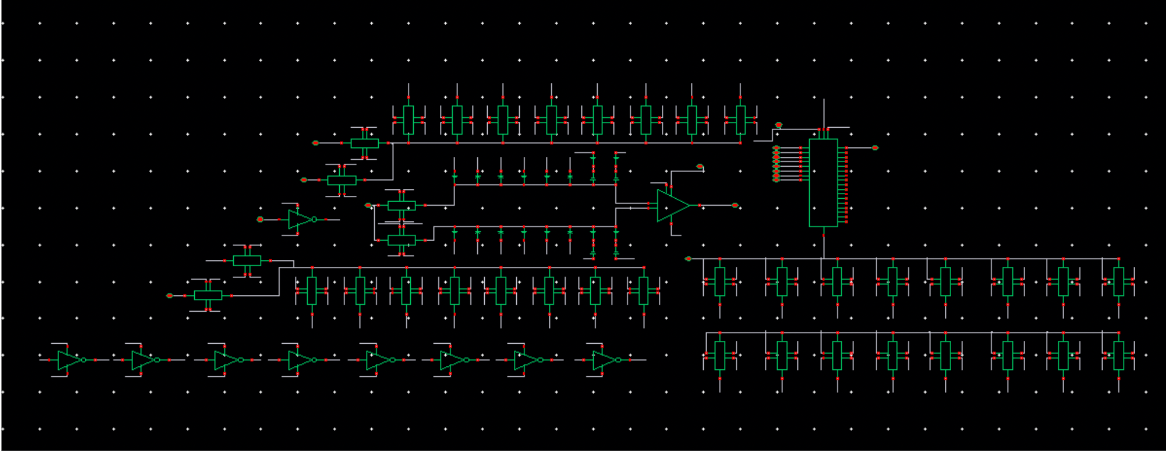
SAR ADC Schematic
-
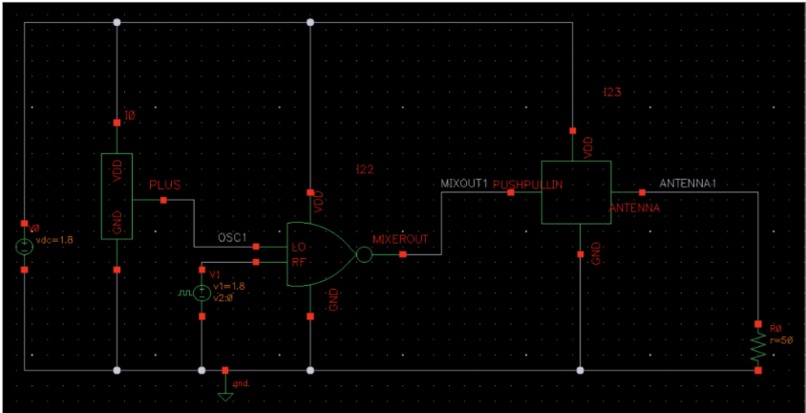
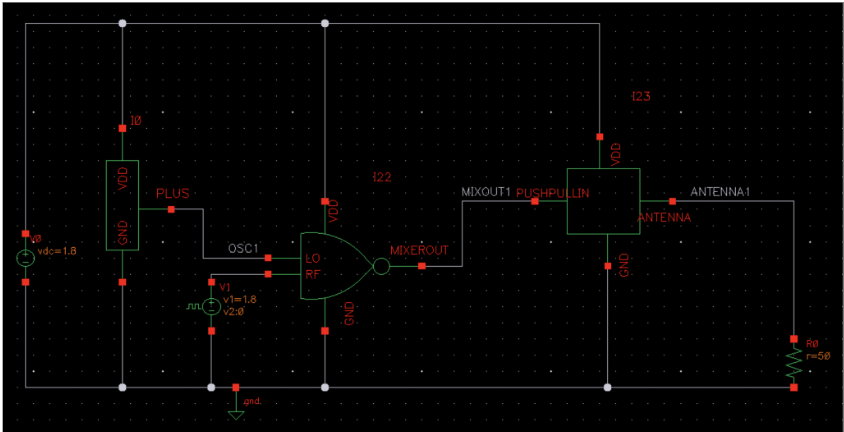
Transmission Stage Schematic
-
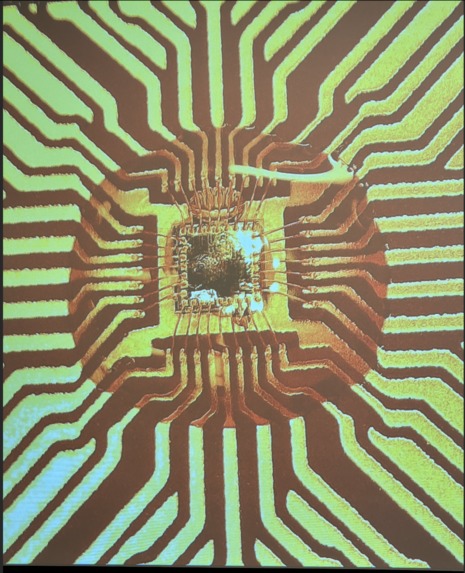
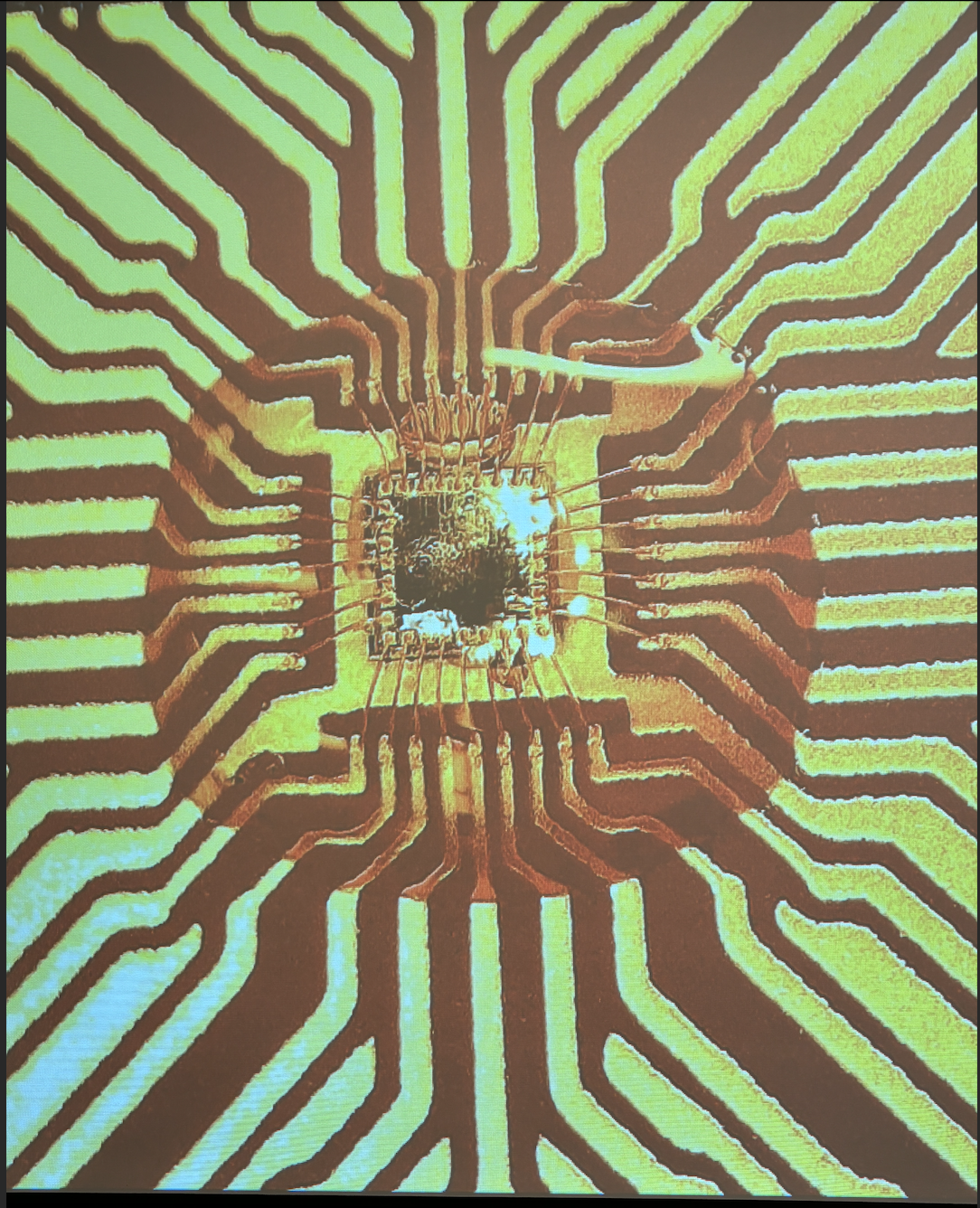
Taped Out Chip under Microscope
Inspiration
Traditional ECGs are large machines that are hooked up to the patient. What if the patient needs to keep track of their heart signals (usually older people or people prone to arrhythmia)? There needs to be a way for these people to always be able to keep track of this without hindering their ability to live a normal life. This is where the Wireless ECG chip comes in. It is a small chip that can be placed on the patient and allows the heart signals to be wirelessly transmitted to the user's phone.
What it does
It uses two electrodes connected to the user's skin and wirelessly transmits heart signals to a receiver. This is done by collecting the heart signal but since the electrical voltage level is on the scale of 1 mV, it needs to be amplified. The pre-amplifier portion takes care of this for accurate readings of the signals. When the signal is amplified, errors and noise are also amplified. This is taken care of through the low-pass filter. The signal is then digitized through the SAR ADC so that it is easier to transmit. It then goes through the transmitter stage which transmits the signal at about 1 GHz frequency through an antenna.
How I built it
This wireless ECG was built on Cadence Virtuoso using a 180nm process. The chip was fabricated from TSMC.
Challenges I ran into
There were many challenges. Most of the challenges surrounded the SAR ADC. The SAR logic block was causing some issues as well as the parallel in serial out shift register.
What I learned
I learned the necessary steps to debug a system when in simulation it stops working. I also learned the steps that are taken in designing a complex system. Going piece by piece and making sure they work on their own and then integrating the pieces together and then testing. I also learned about the many challenges in laying out a complex system and the different parasitic capacitances that affect the system.
Built With
- cadence

Log in or sign up for Devpost to join the conversation.