-
-
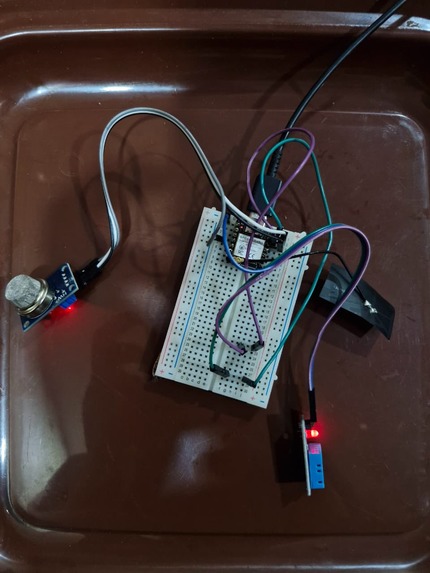
ESP 1 SEVER ( READ DATA AND SEND TO CLIENT)
-
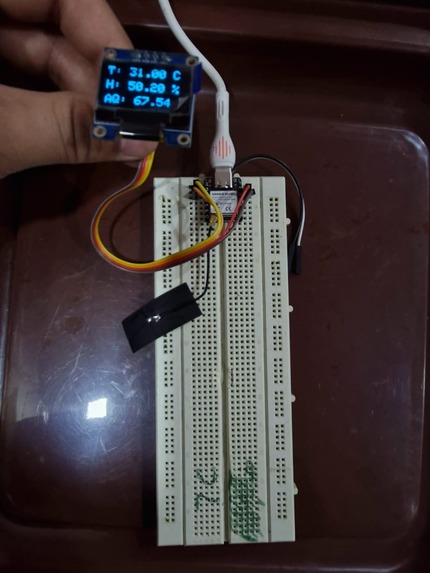
ESP 2 CLIENT TAKING DATA FROM SERVER AND SHOW IT ON OLED DISPLAY
Inspiration
During my journey in Telematics and IoT-based projects, I realized how critical it is to have real-time environmental awareness. With increasing concerns about pollution, climate change, and public health, I wanted to build something practical that could be deployed in smart cities, colleges, or even vehicles. My past experience with ESP32, Arduino, and peer-to-peer wireless communication inspired me to design a Wireless Air Quality Monitoring System using ESP Wi-Fi Now, as a low-cost and scalable solution.
What it does
The system uses ESP32 boards with air quality sensors to measure pollutants like CO2, PM2.5, and other gases, along with temperature and humidity. Data is transmitted wirelessly through ESP-NOW protocol, which works without internet or routers. A receiver node collects data from multiple transmitters (up to 1 km radius) and displays it. This makes the system:
Reliable for both indoor and outdoor monitoring.
Scalable, since many nodes can be added.
Cost-effective compared to commercial systems.
How we built it
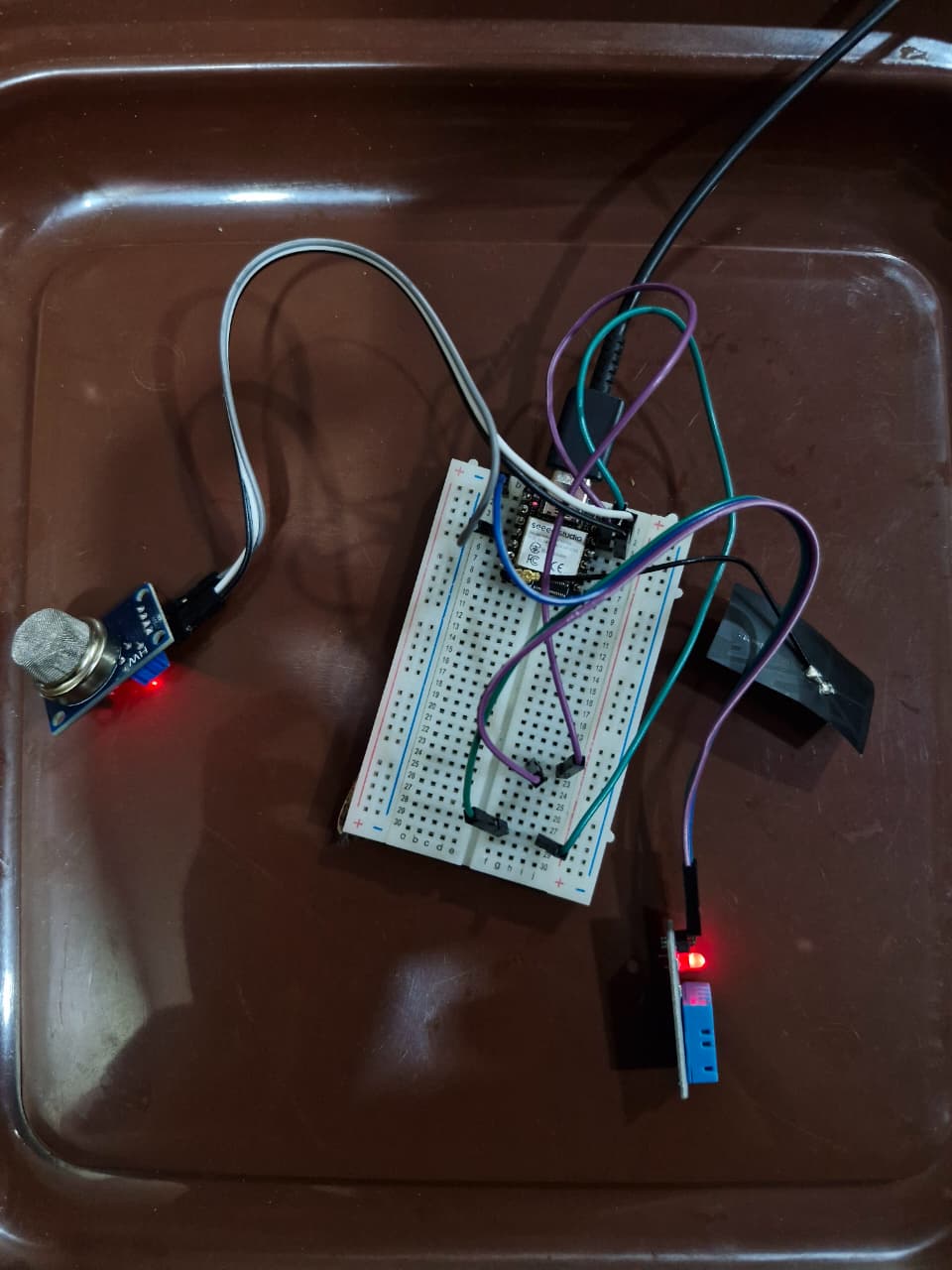
Hardware: ESP32/ESP8266 modules, MQ135 gas sensor, DHT11/22 (temperature & humidity), OLED display, power supply.
Communication: Configured ESP-NOW for peer-to-peer data transfer between multiple nodes.
Software: Arduino IDE with ESP32 libraries for ESP-NOW and sensors. I tested and debugged communication by sending sensor values from one ESP to another.
Design approach:
Transmitter → reads sensor values, sends via ESP-NOW.
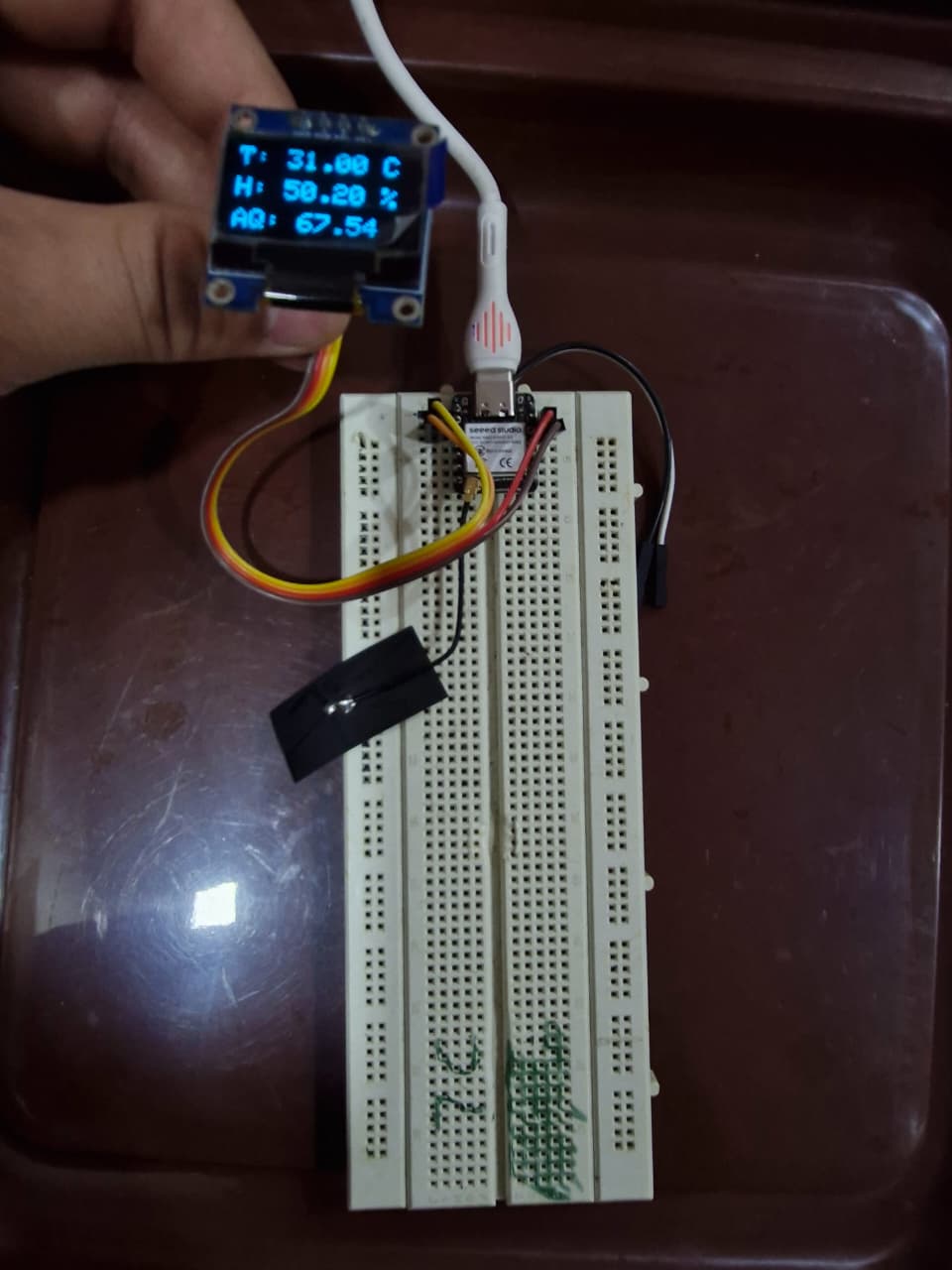
Receiver → collects multiple transmitter data, displays it on OLED/Serial Monitor.
Challenges we ran into
Ensuring stable ESP-NOW communication when multiple devices were connected.
Calibrating sensors (MQ135 & PMS series) for more accurate readings.
Reducing false spikes in data caused by environmental noise.
Managing power supply for outdoor deployment.
Accomplishments that we’re proud of
Successfully created a working prototype that transmits air quality data wirelessly.
Achieved low-cost implementation using readily available ESP modules.
Made the project modular and expandable, meaning it can be scaled for city-wide networks.
This project became a practical application of my skills in IoT, ESP-NOW, and sensor integration.
What we learned
Deep understanding of ESP-NOW peer-to-peer communication.
Techniques for sensor calibration and handling real-world data.
How to build a scalable IoT network without internet dependency.
Importance of combining hardware knowledge (sensors, microcontrollers) with software debugging.
What’s next for Wireless Air Quality Monitoring System using ESP Wi-Fi Now
Add cloud connectivity (Firebase/ThingSpeak) for storing and analyzing data.
Develop a mobile app/dashboard for live visualization.
Integrate with vehicle systems (like your four-wheeler project) to monitor air quality while driving.
Implement AI/ML models to predict pollution trends.
Use solar power for sustainable outdoor monitoring.
Built With
- arduino
- c/c++
- dht11/dht22
- esp-now
- esp32
- firebase
- mq135
- mqtt
- oled-display
- pms5003
- sql-database
- thingspeak

Log in or sign up for Devpost to join the conversation.