-
-
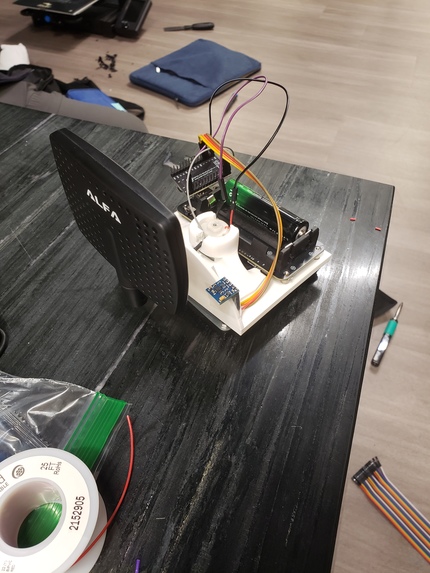
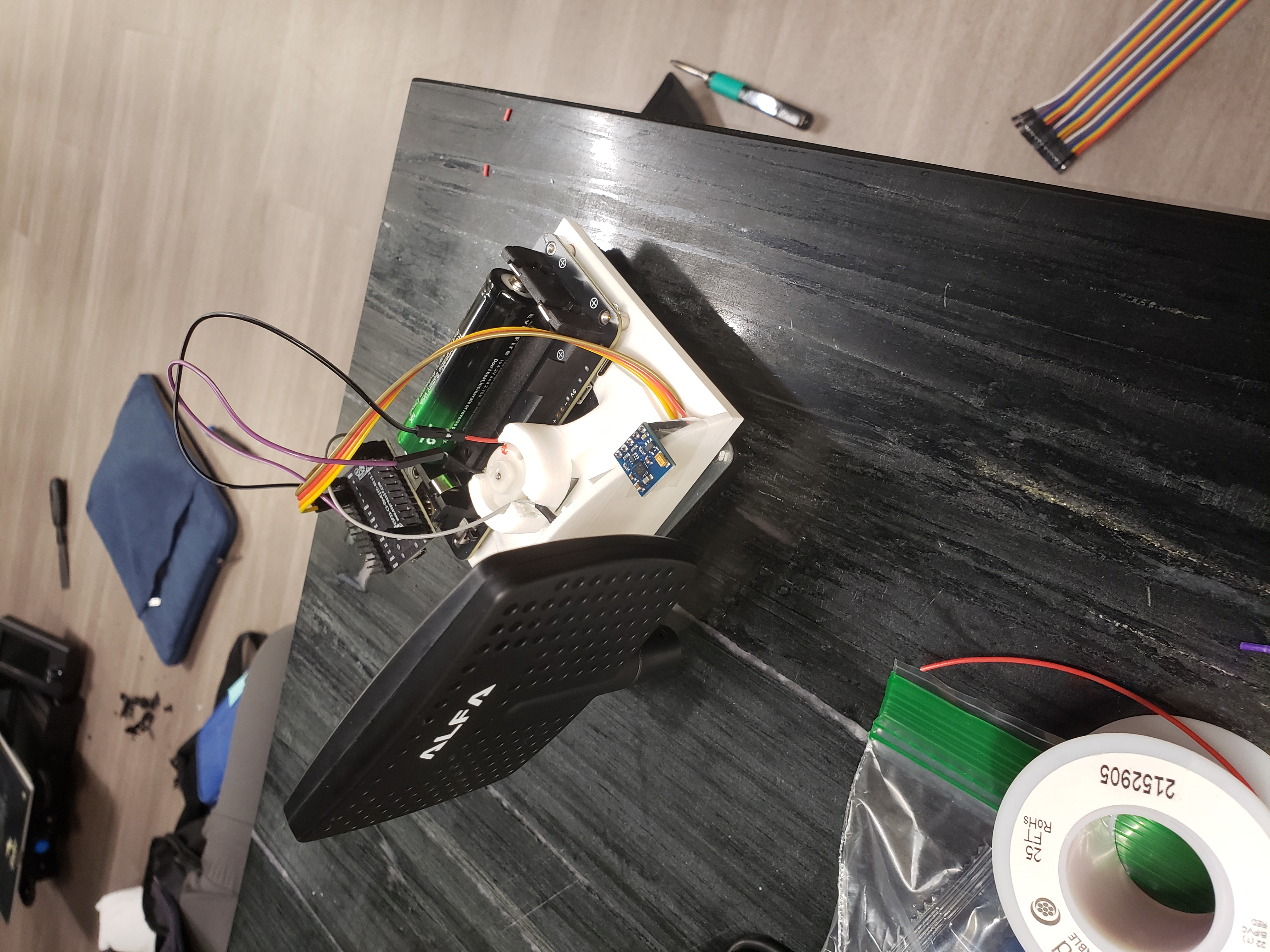
Transmission node fully assembled
-
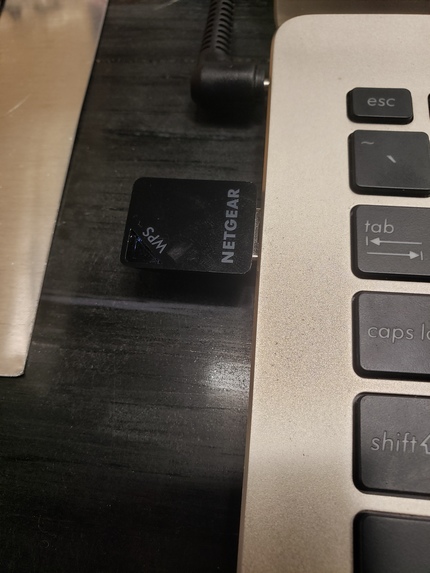
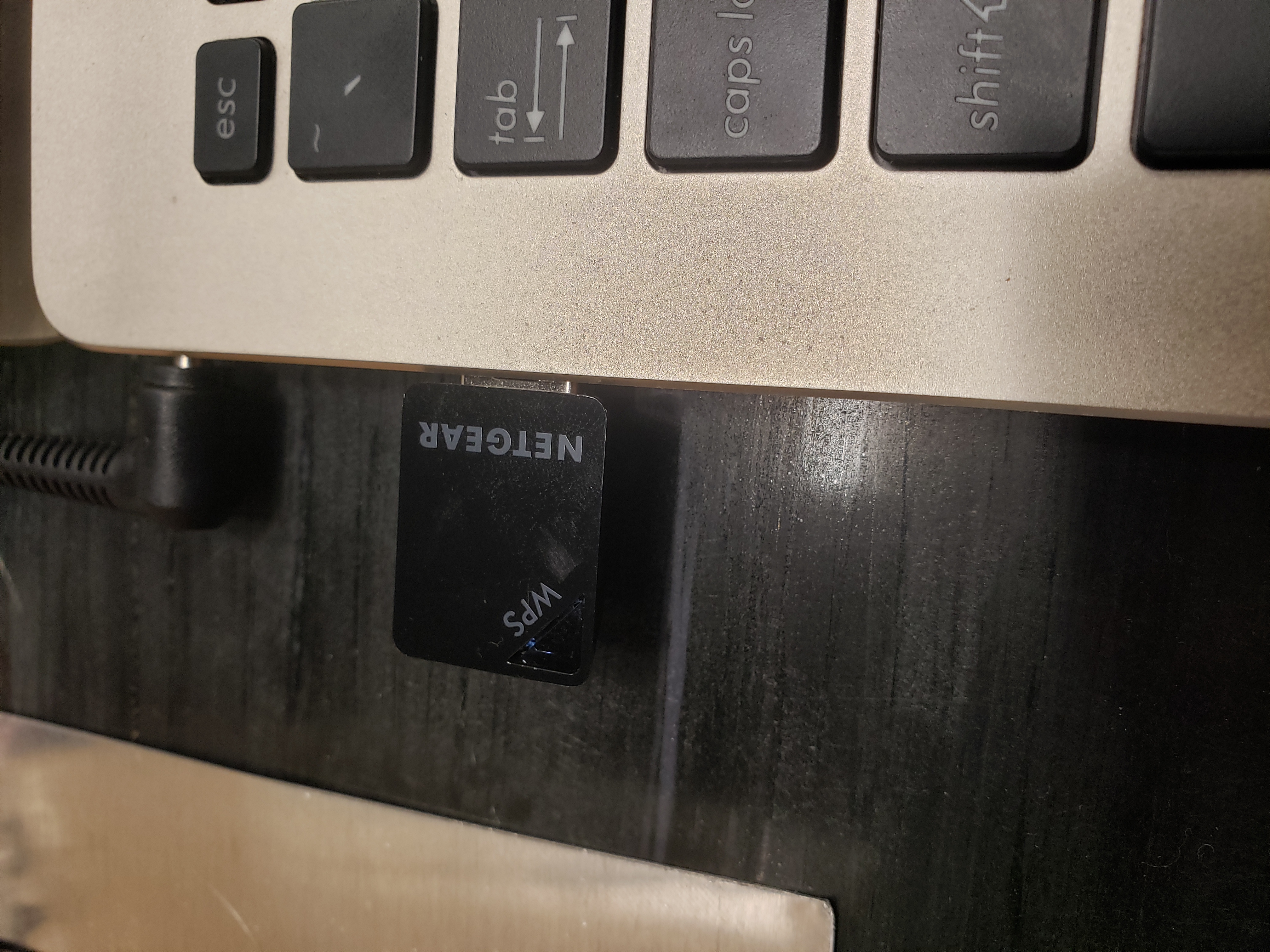
Wi-Fi adapter enabling hostapd access point relay while connected to actual network
Inspiration
We are interested in radio technology
What it does & How we built it
There are three different parts working together:
- Physical Transmission Nodes
- Central API Server + Wi-Fi Access Point
- Viewing Application
The physical transmission nodes rotate directional antennas (in promiscuous mode) in circles, and when the antennas face the central API server, they transmit highest found RSSI (Recieved Signal Strength Index) for each MAC ID (unique identifiers for each device).
The API takes info from both antennas, and since each one has a heading value, using a line intersection, we can determine the position of a device. Any devices on 2.4ghz can be detected, which is why we hosted a channel 1 only hostapd access point for devices to connect to.
The application connects to the API using a Socket-IO, allowing for the server to send position updates whenever the nodes send new data.
Challenges we ran into
Every step of the way we had challenges:
- 3d printing errors
- WIFI filtering errors (we didn't manage to fix that in time)
- API socket client communication difficulties
- Our antennas only recieve and transmit on 2.4ghz, while most devices are on 5ghz. We semi-resolved this issue by making our Wi-Fi network configured for 2.4ghz only.
Accomplishments that we're proud of
- We managed to build two spinning wifi radar scanners
- Front-end application that's able to display data received by them
What we learned
We learned how to work with sockets in express.js, and learned a lot through hardware experimentation
What's next for WIRE - (Wi-Fi Incident Response & Evaluation)
Fixing the node transmission code, and polishing the UI
Built With
- c
- dart
- express.js
- hostapd
- javascript
- node.js

Log in or sign up for Devpost to join the conversation.