-
-
Winz: all the matchday hype for fans, none of the risk for merchants.
-
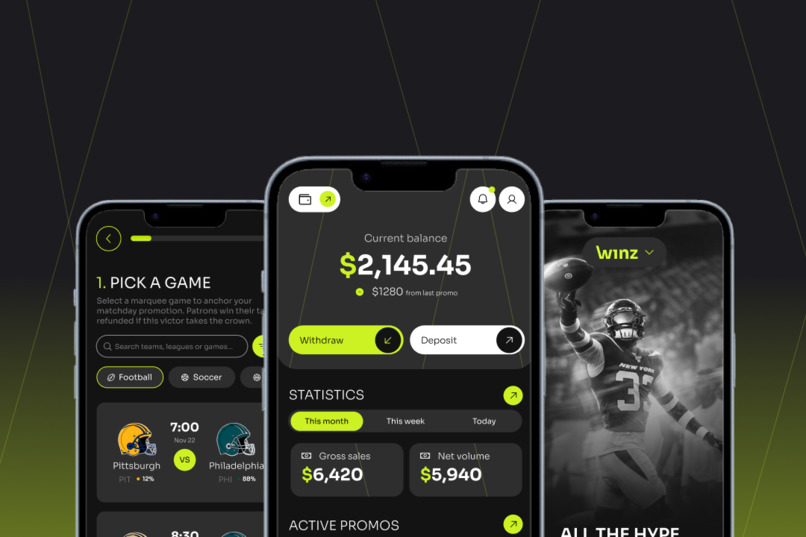
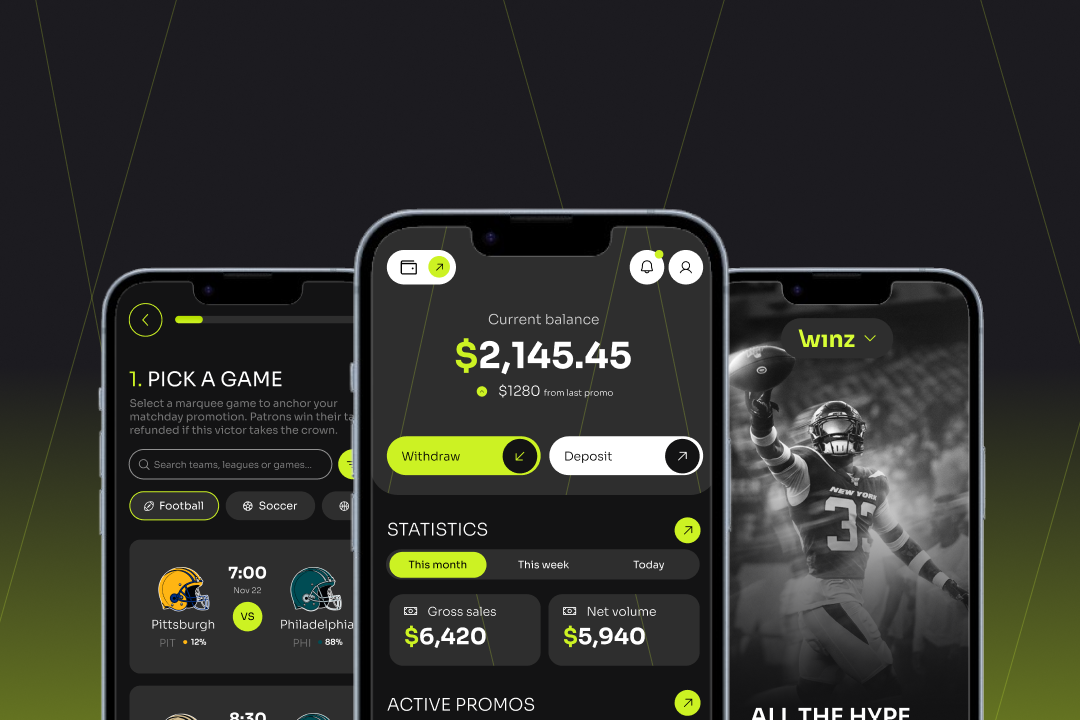
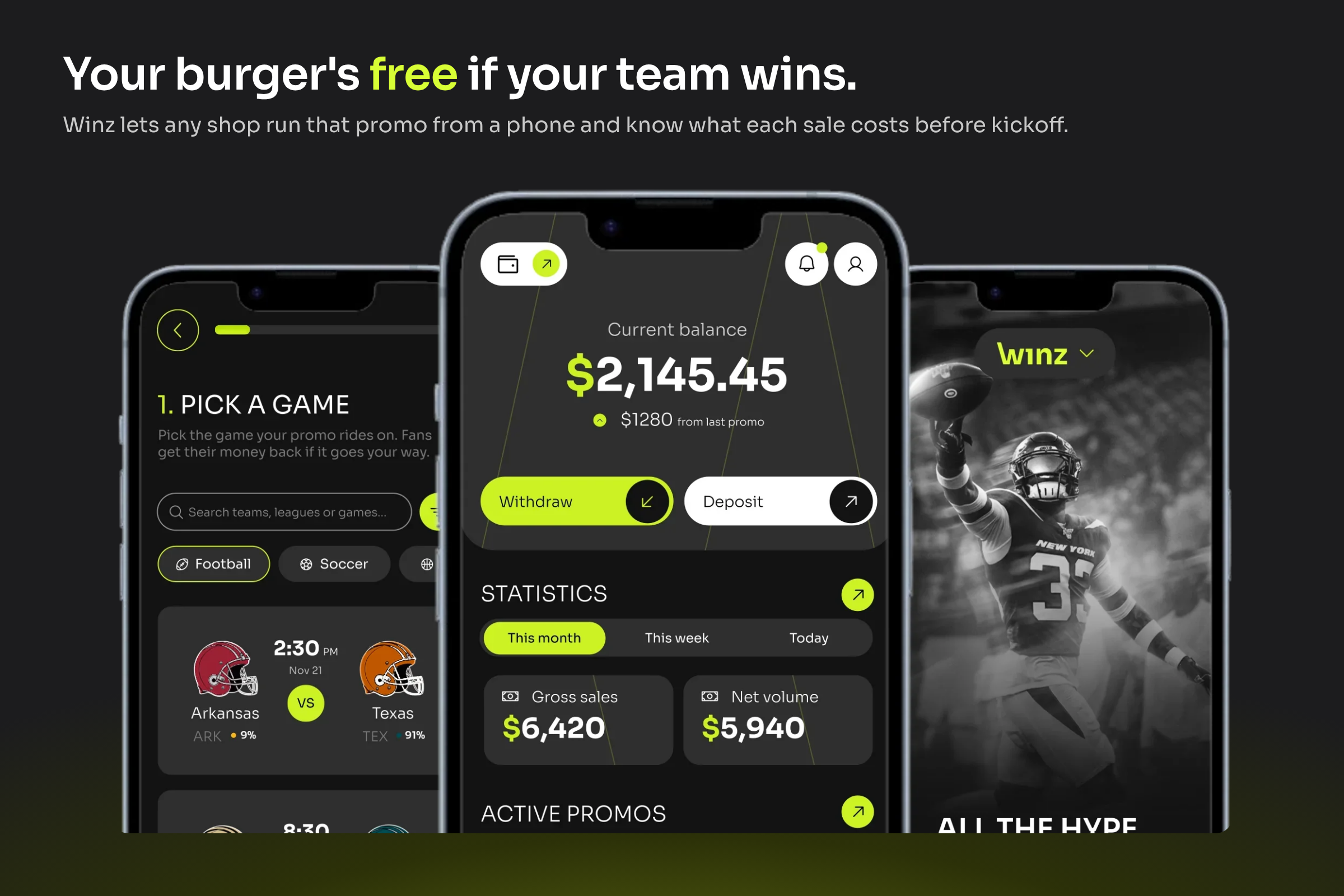
The merchant app: pick a marquee game to anchor a matchday promo, track sales and active promos from the dashboard.
-
One promise, one tap: fans get their money back if their team wins.
-
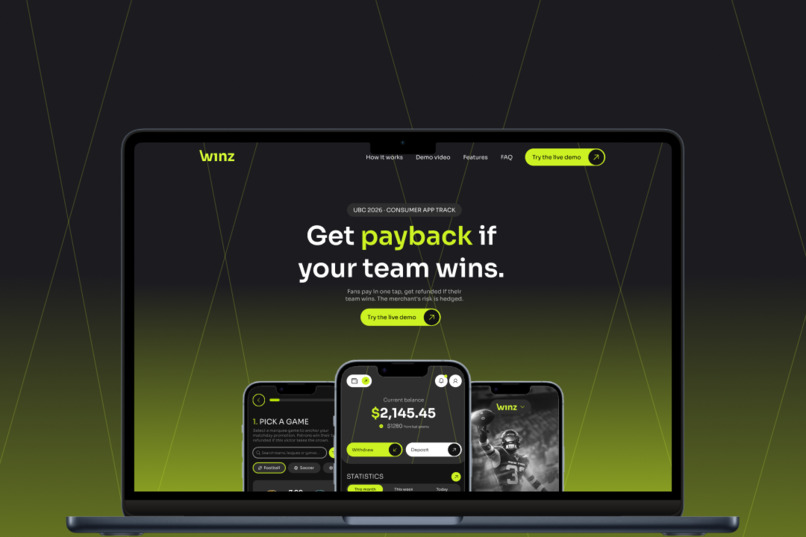
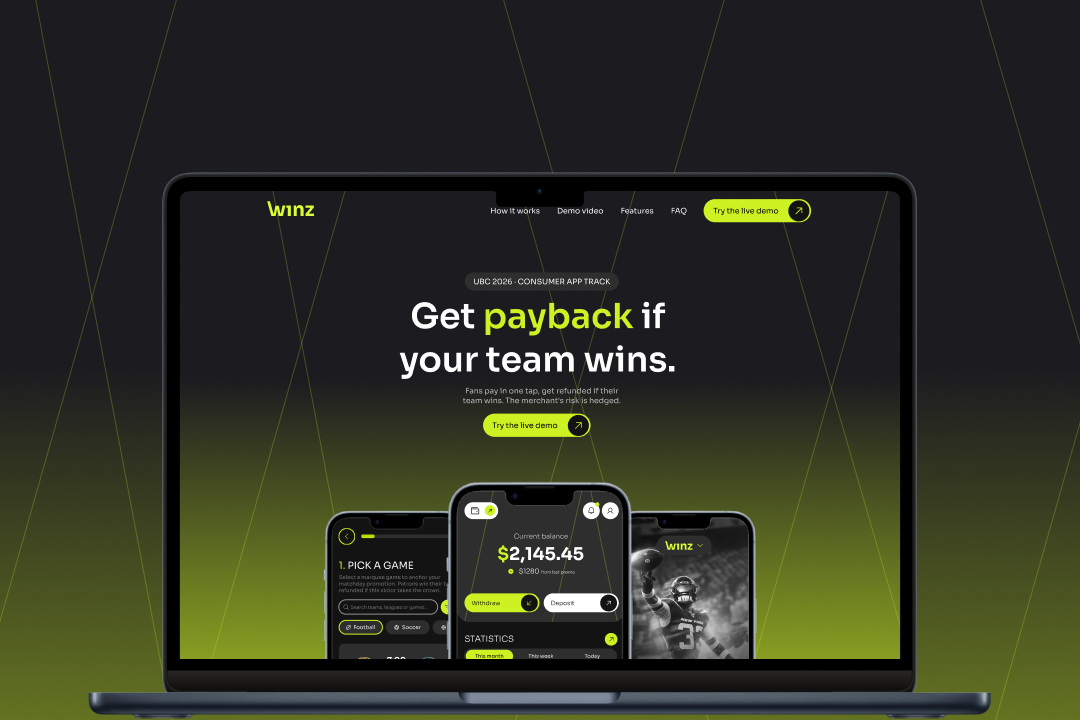
The Winz landing page, built for the UBC 2026 Consumer App Track.
-
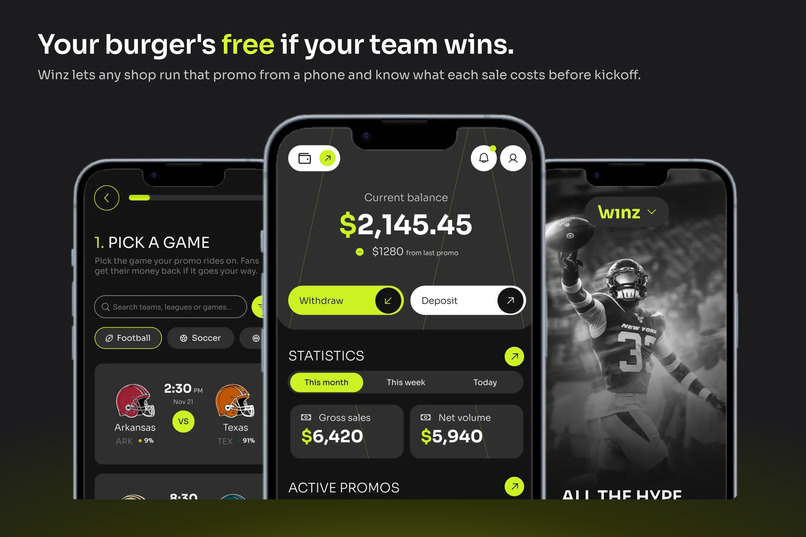
Your burger's free if your team wins. Any shop can run that promo from a phone.
-
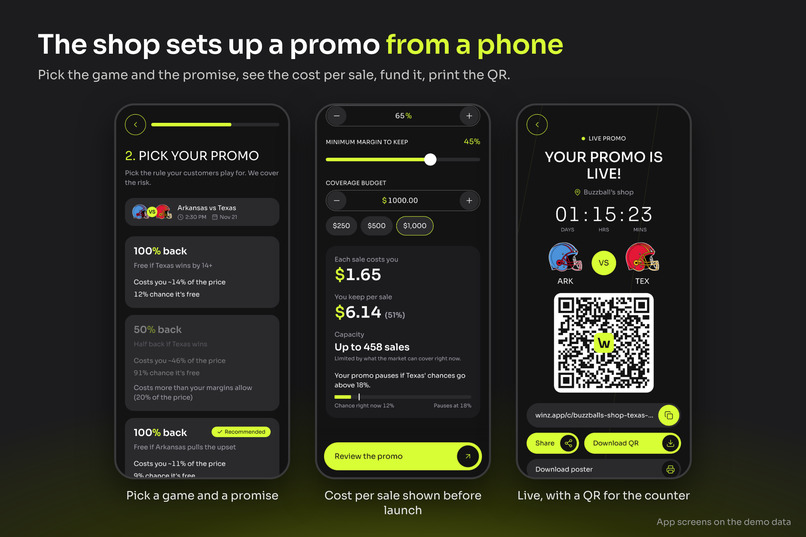
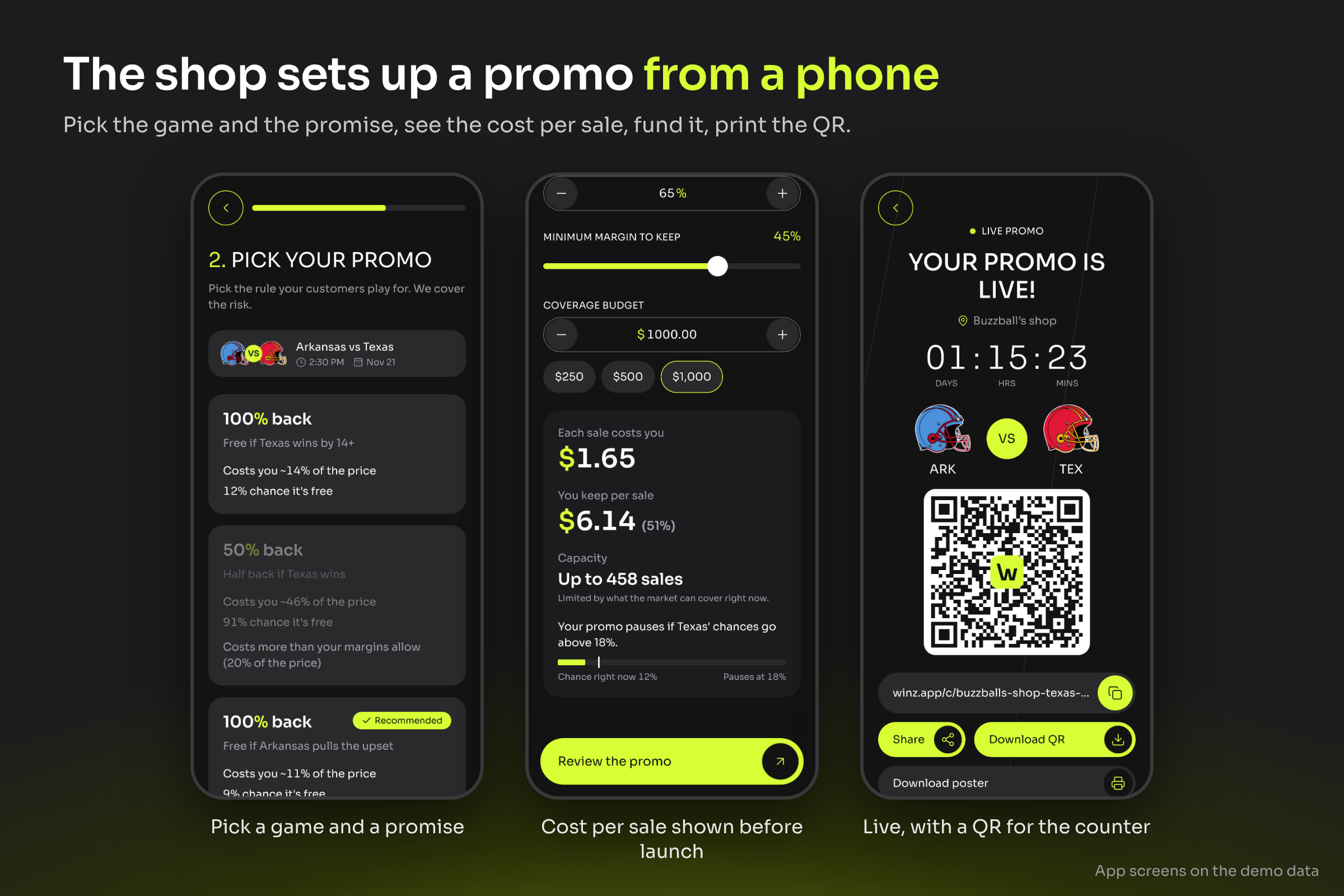
The shop picks a game and a promise, sees its cost per sale before launch, then puts the QR on the counter.
-
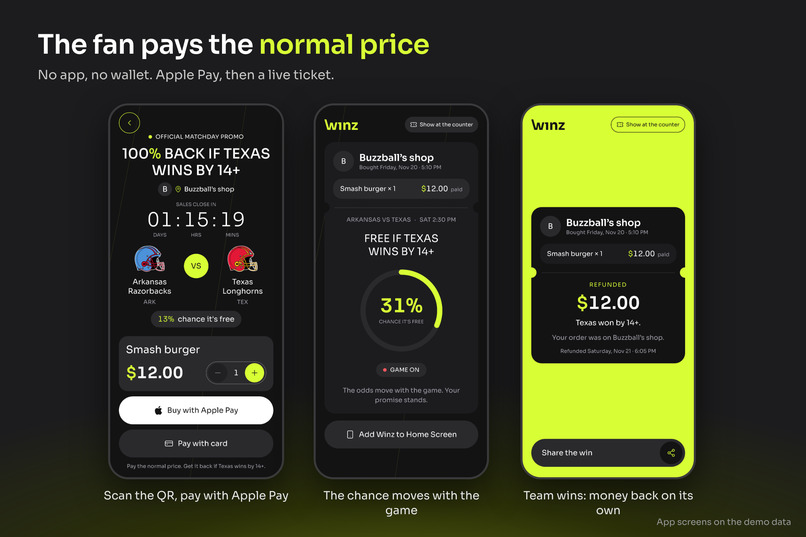
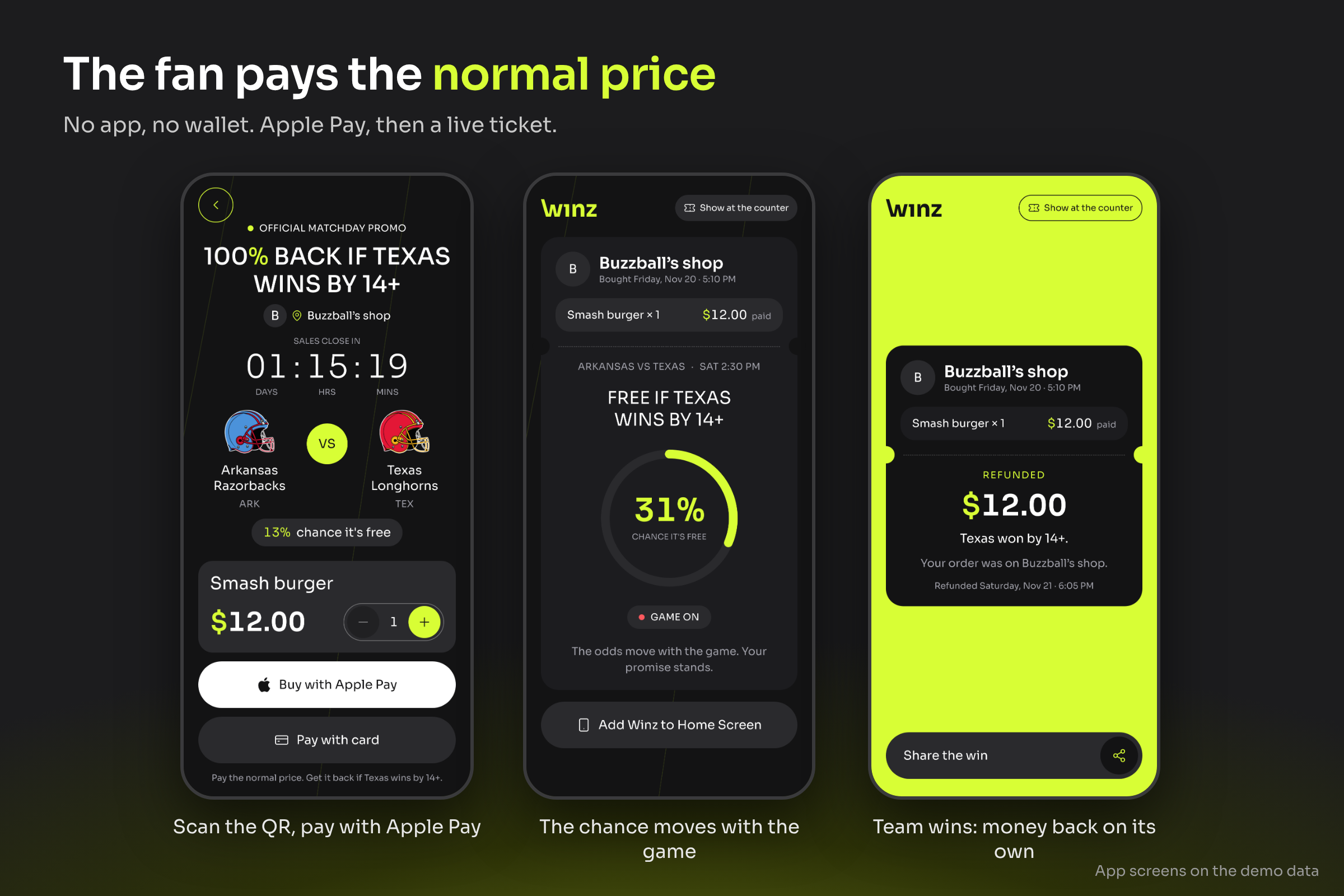
The fan pays the normal price with Apple Pay and follows a live ticket. If the team wins, the money comes back.
-
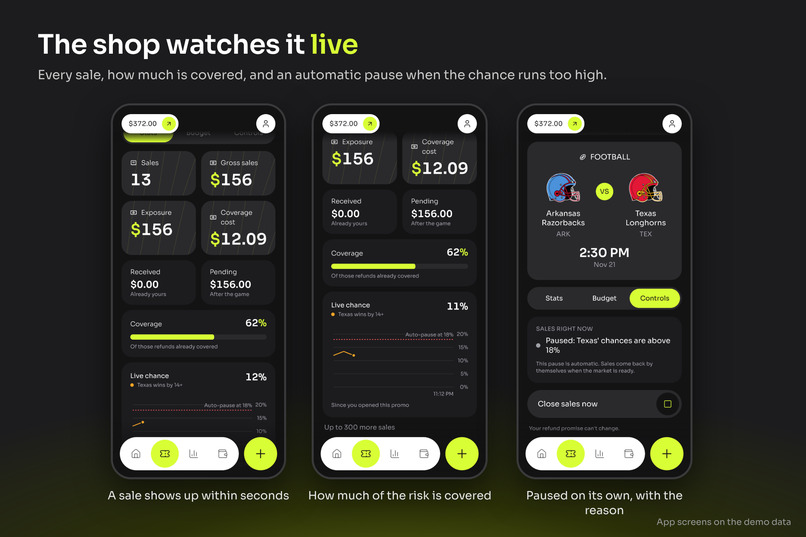
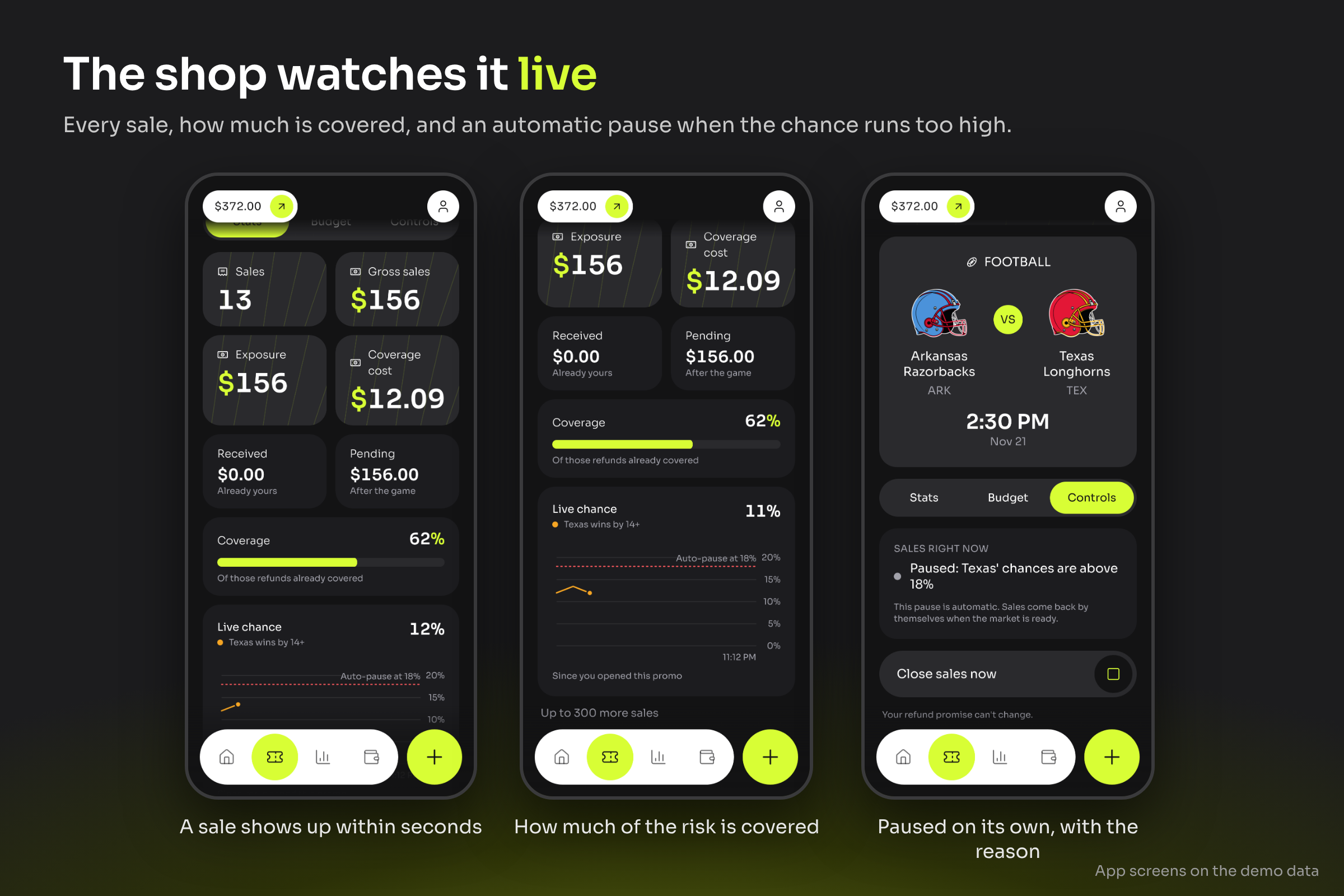
Every sale shows up live, with how much is covered. Sales pause on their own when the chance runs too high.
-
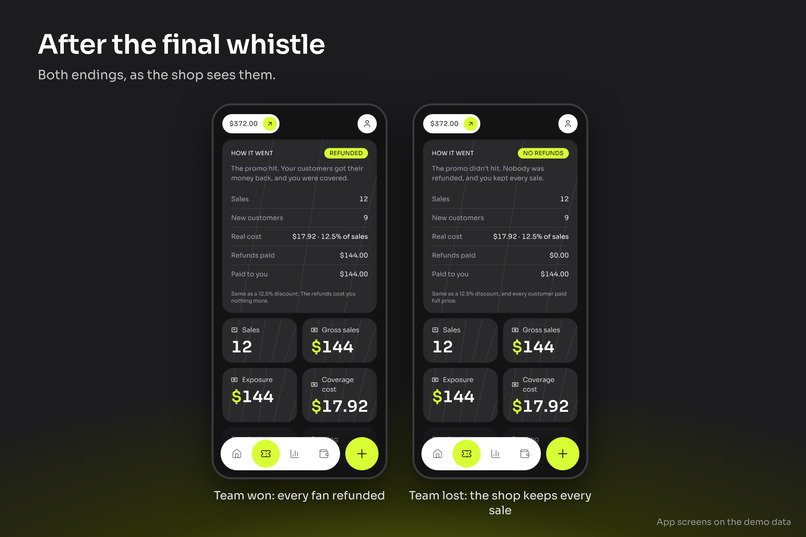
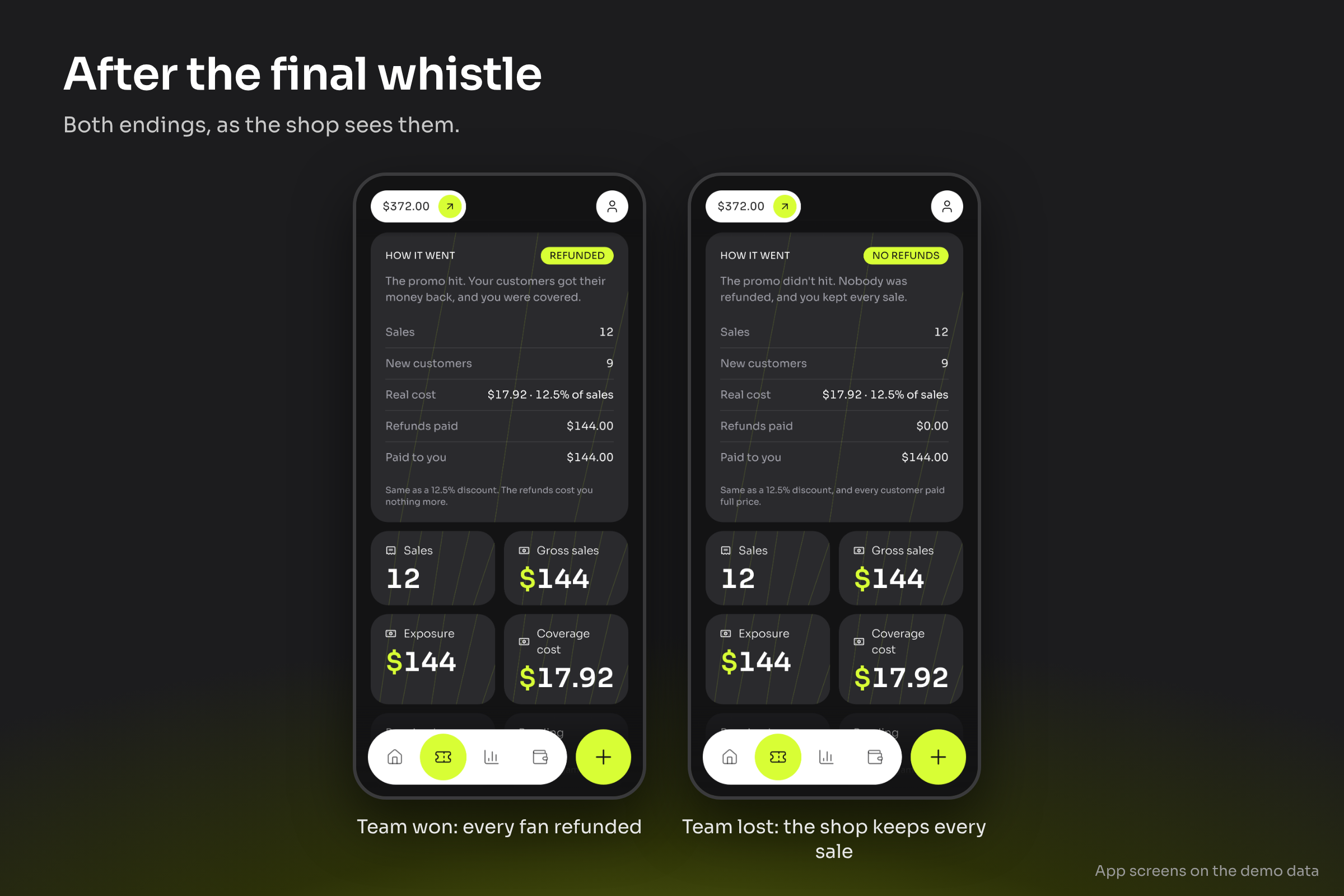
After the final whistle: fans refunded if the team won, the shop keeps every sale if it lost.
-
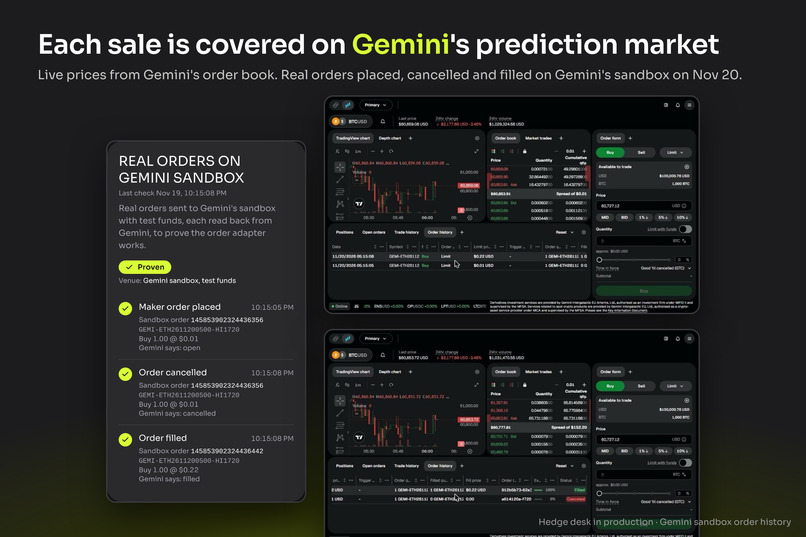
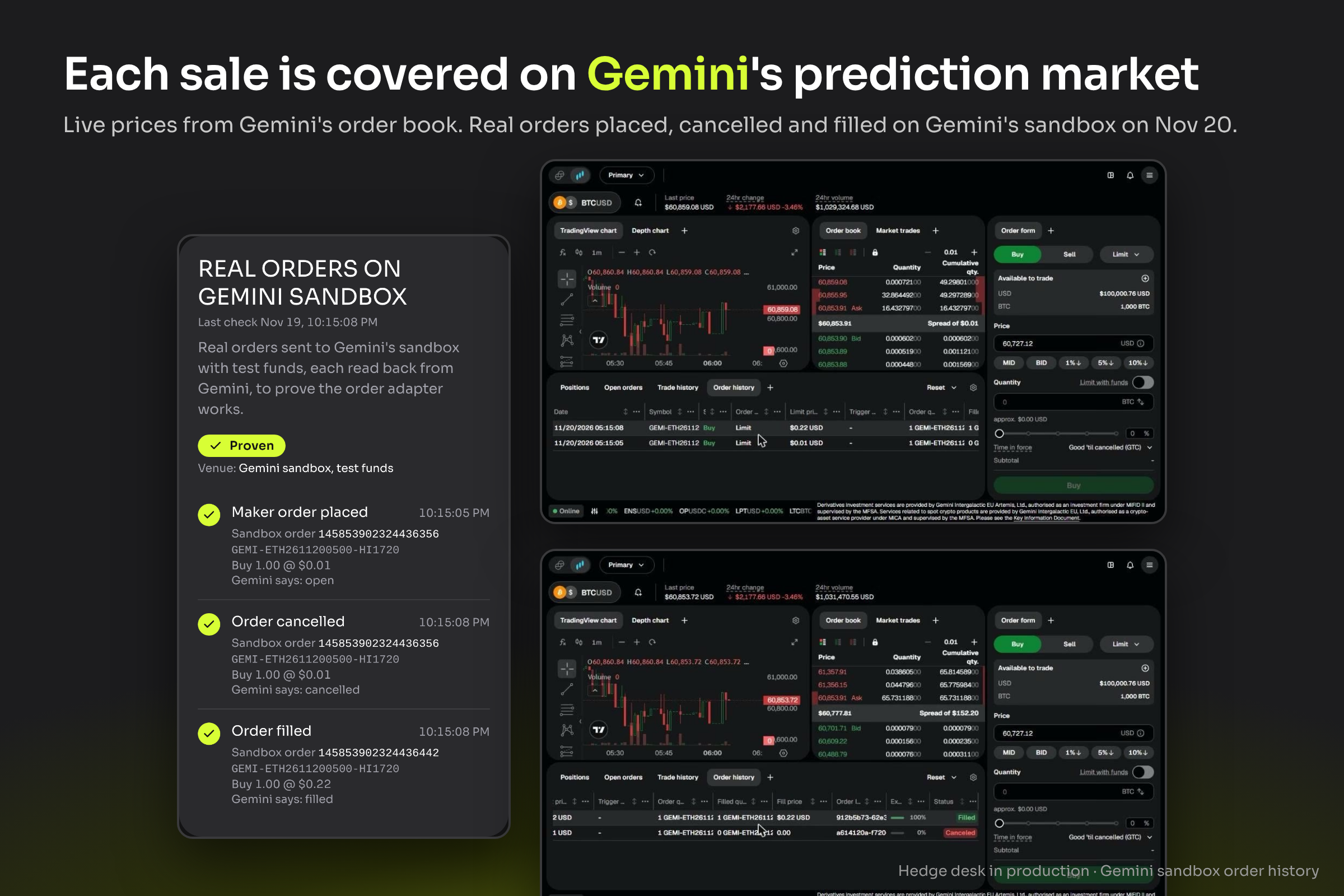
Real orders placed, cancelled and filled on Gemini's sandbox, shown on our public Hedge desk.
-
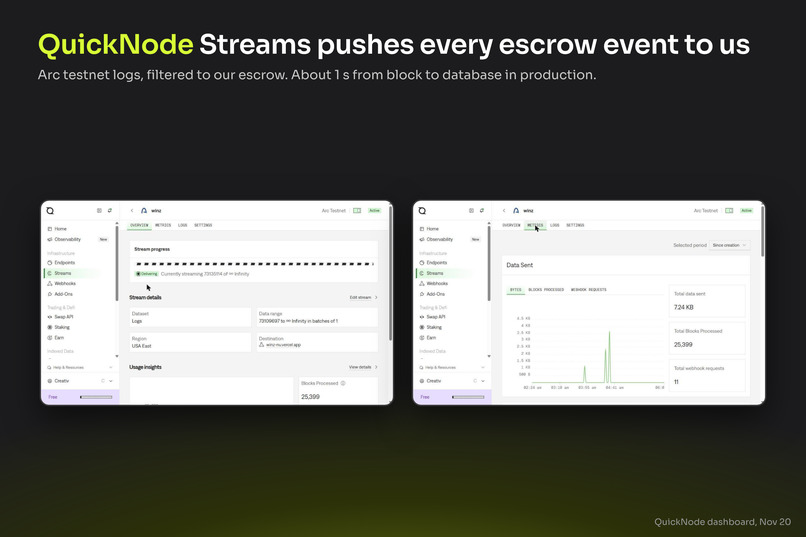
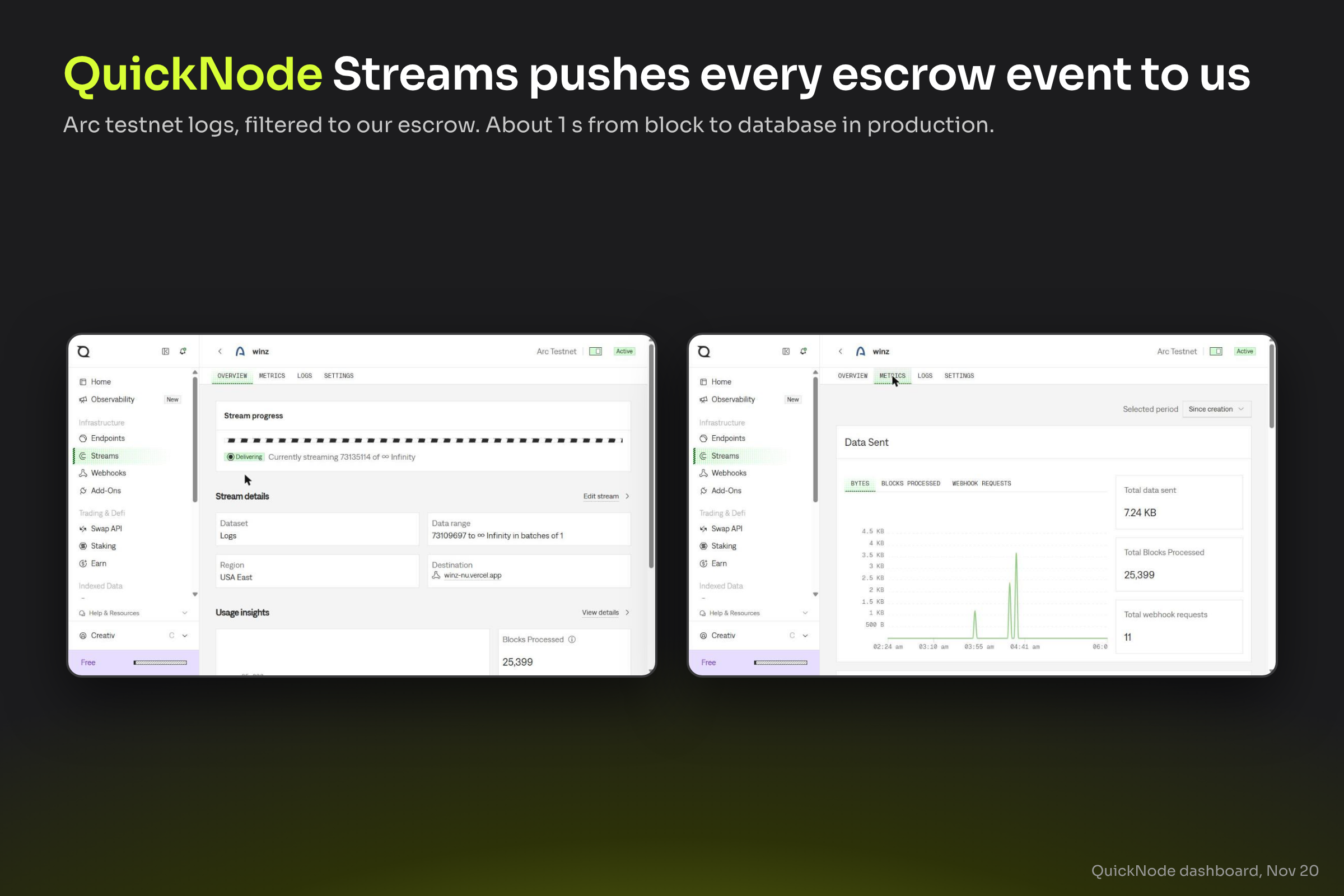
Our QuickNode Stream on Arc testnet: escrow events reach our database about 1 second after their block.
-
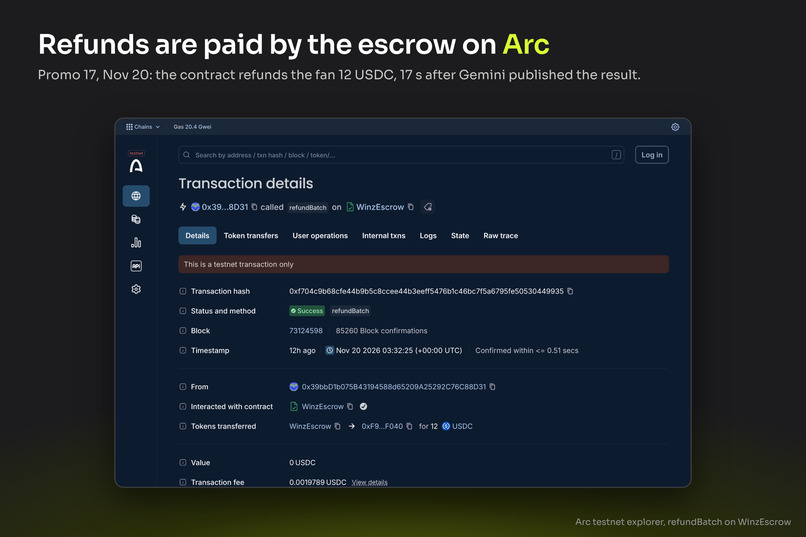
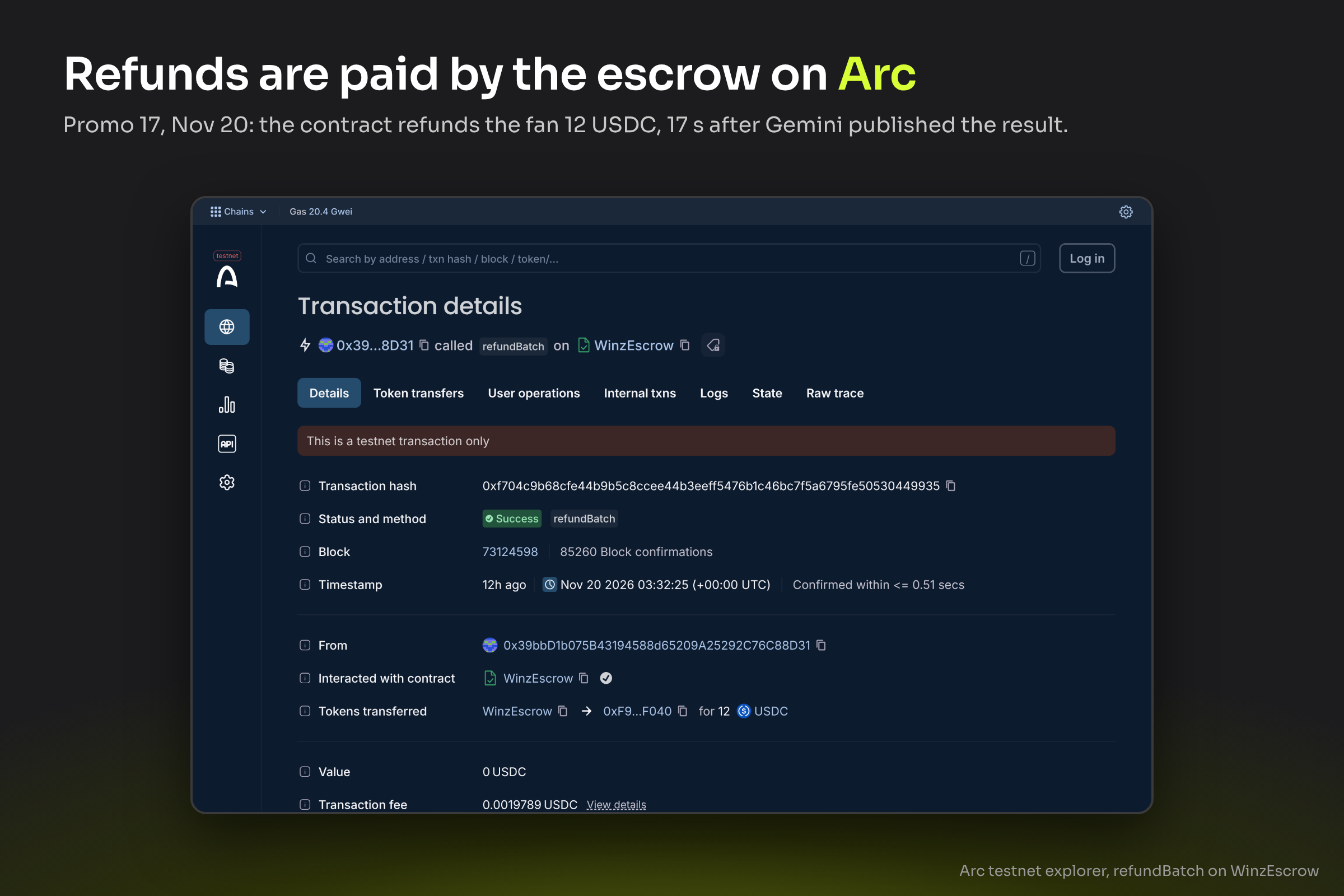
Promo 17 on Arc testnet: the escrow contract refunds the fan 12 USDC, 17 seconds after Gemini's result.
Inspiration
Bars already run game-night deals like "your burger's free if the home team wins." Fans love them. The owner hates them, because if the team wins, the owner pays for every burger, and nobody can say in advance how much that will be.
Prediction markets now put a price on that exact risk. Gemini lists the game, the condition and the chance, live. So we asked: what if a bar could buy that risk away, one burger at a time, and know what each sale will cost before the first customer pays?
What it does
Winz turns "free if Texas wins" into a promo any shop can run from a phone.
The merchant signs in with an e-mail and picks tonight's game and a promise: say, a free $12 Smash burger if Texas wins by 14+. Then they set the price and the margin they want to keep. Before launch, Winz shows the cost per sale, what they keep on each one, how many sales the budget covers, and the chance at which sales pause on their own. They fund the budget with Apple Pay and get a QR code for the counter. Seemless experience.
The fan scans the QR, pays the normal price with Apple Pay and gets a live ticket showing the chance their burger ends up free. No app to install, no wallet.
Behind the counter, the money the fan may get back is locked in an escrow on Arc the moment they pay (Stripe takes the card, and our treasury puts the matching USDC on-chain). Within seconds, Winz covers that sale on Gemini's prediction market with contracts that pay out if Texas wins. When Gemini publishes the result, the escrow refunds every fan automatically.
So who pays for the free burger? The market does. The shop only pays for the cover, out of its budget: on our first live sale, $1.88 to cover a $5 refund on a $10 burger. If the team wins, the fan gets their money back and the cover's payout goes to the shop, so the shop still ends up with its normal price minus the cover. If the team loses, the shop keeps every sale and the budget it didn't spend. The cost of each sale is capped when it's sold, and sales pause on their own when the chance climbs too high for the shop's margin.
How we built it
Two of us. Téo designed and built the screens and the landing page. Alexandre built the engine, the escrow contract and the API.
• Web app: Next.js on Vercel, for the merchant and fan screens, the API, and the Stripe and QuickNode webhooks. Sign-in with Privy, payments with Stripe (Apple Pay), data in Supabase Postgres with Realtime for the live dashboard.
• Engine: a Node and TypeScript process on Render. It reads Gemini's catalogue and live order books over WebSocket, prices each sale, places the cover orders, pauses promos when the chance climbs, and settles from Gemini's results.
• Escrow: a Solidity contract on Arc testnet, built and tested with Foundry (203 tests, including invariants and fuzzing). It holds the money in USDC, caps what each sale's cover can cost, and pays the refunds out of the escrow itself. Gas on Arc is paid in USDC too, so the whole money path uses one token.
• QuickNode Streams pushes every escrow event to our webhook, next to our own transaction receipts and a polling fallback. Whichever arrives first wins. In production, the events Streams delivered first reached our database 1.04 s after their block, on average.
Challenges we ran into
• No sports on Gemini's sandbox. We couldn't place real sports orders in test. So in production, the cover orders are simulated against Gemini's real, live order book (paper fills), and we proved the real order path (signed, placed, cancelled, filled) on a sandbox crypto contract through the same adapter.
• A missing game. Gemini's listing stops around 1,000 events, and Saturday's Arkansas at Texas game wasn't in our catalogue. We now read it league by league.
• Our first live night. We ran five real promos on real college and NBA games on November 19. During the evening, the loop that decides whether a promo can still sell stopped doing full passes while order books streamed, and promos stayed open past their sales close. We found it through our health endpoint, fixed it and redeployed. After the fix, the four NBA promos settled 12 to 17 seconds after Gemini's result (the college one took 192 s).
• Paying twice. A reload or a retry on a phone could charge a fan twice. Each purchase now keeps one payment, even across reloads.
Accomplishments that we're proud of
• Five promos sold and settled on real games, on Arc testnet, with the cover simulated on Gemini's live book. A fan got $12 back on-chain 17 seconds after Gemini published the result.
• In a rehearsal, 300 tickets were refunded in 6 batches, 4 seconds after the result was posted.
• Every cover order is public, live, on our Hedge desk page.
What we learned
The cost of a promo like this is easy to know before the game: it's the chance the team wins, times what you refund, plus fees. The hard part is that the chance moves during the game, so the promo has to stop selling on its own when it would start losing money. And money that people are promised back is safer in a contract that pays it out itself than in our database.
What's next for Winz
Real money: Gemini's production venue and Arc mainnet. More sports and more kinds of promises. And a plug-in for the point-of-sale systems bars already use, so the promo sits on the receipt, not on a separate QR.
Everything above ran with test money: Arc testnet USDC, Stripe in test mode, and paper cover on Gemini's live order book.
We'll charge the shop a 2.5% commission on each sale that goes through the escrow, never the fan.
Built With
- apple-pay
- arc
- foundry
- gemini
- next.js
- node.js
- playwright
- pnpm
- postgresql
- privy
- quicknode
- react
- render
- solidity
- stripe
- supabase
- tailwindcss
- turborepo
- typescript
- usdc
- vercel
- viem
- vitest
- websockets
- zod
