
Inspiration
Most autonomous vehicles depend on GPS and expensive LiDAR. Neither is reliable or affordable everywhere, especially in forests, hills, disaster zones and border areas. We asked a simple question: if a person can walk across rough ground using only their eyes, why can't a robot do the same with one camera?
What it does
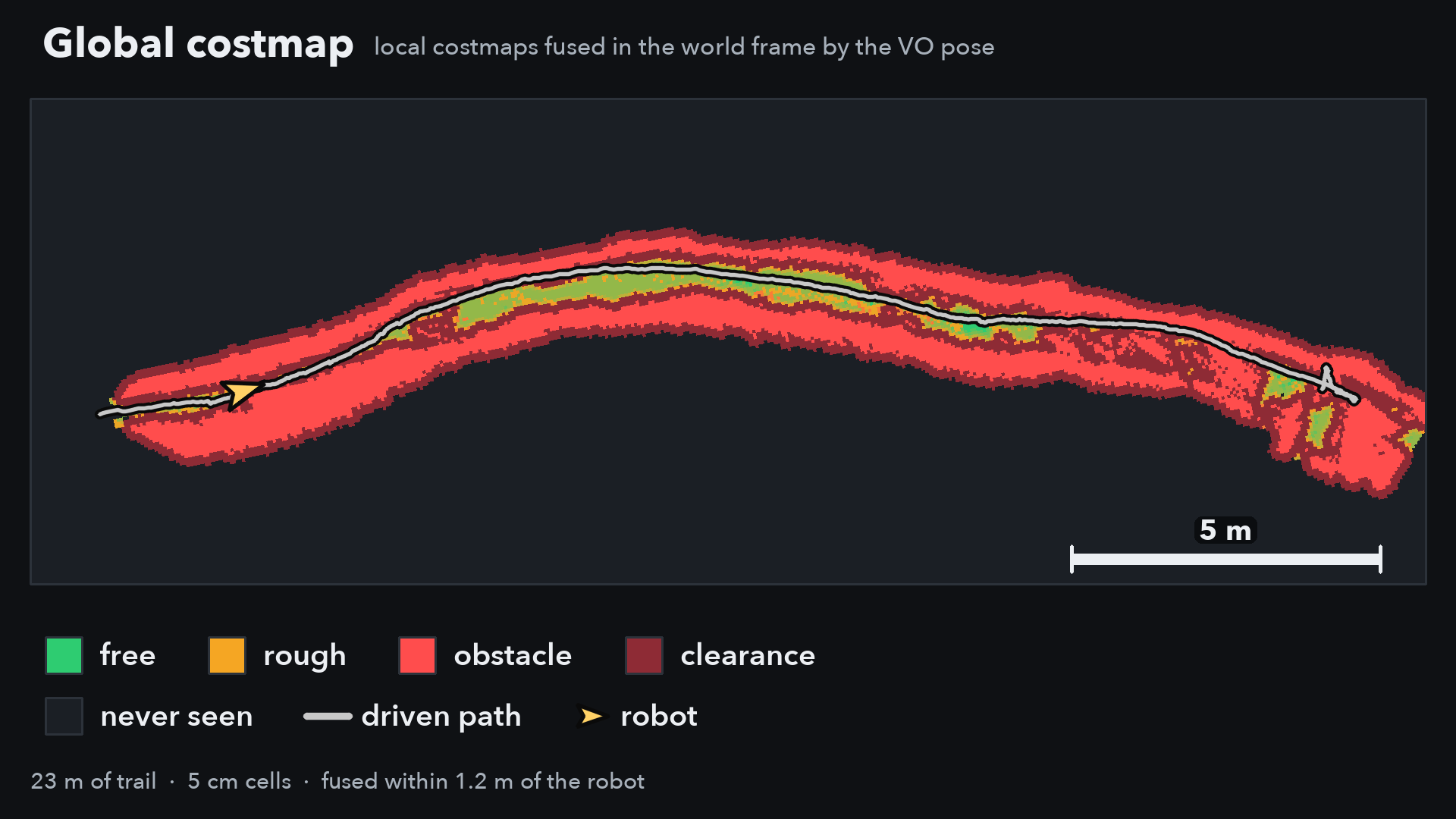
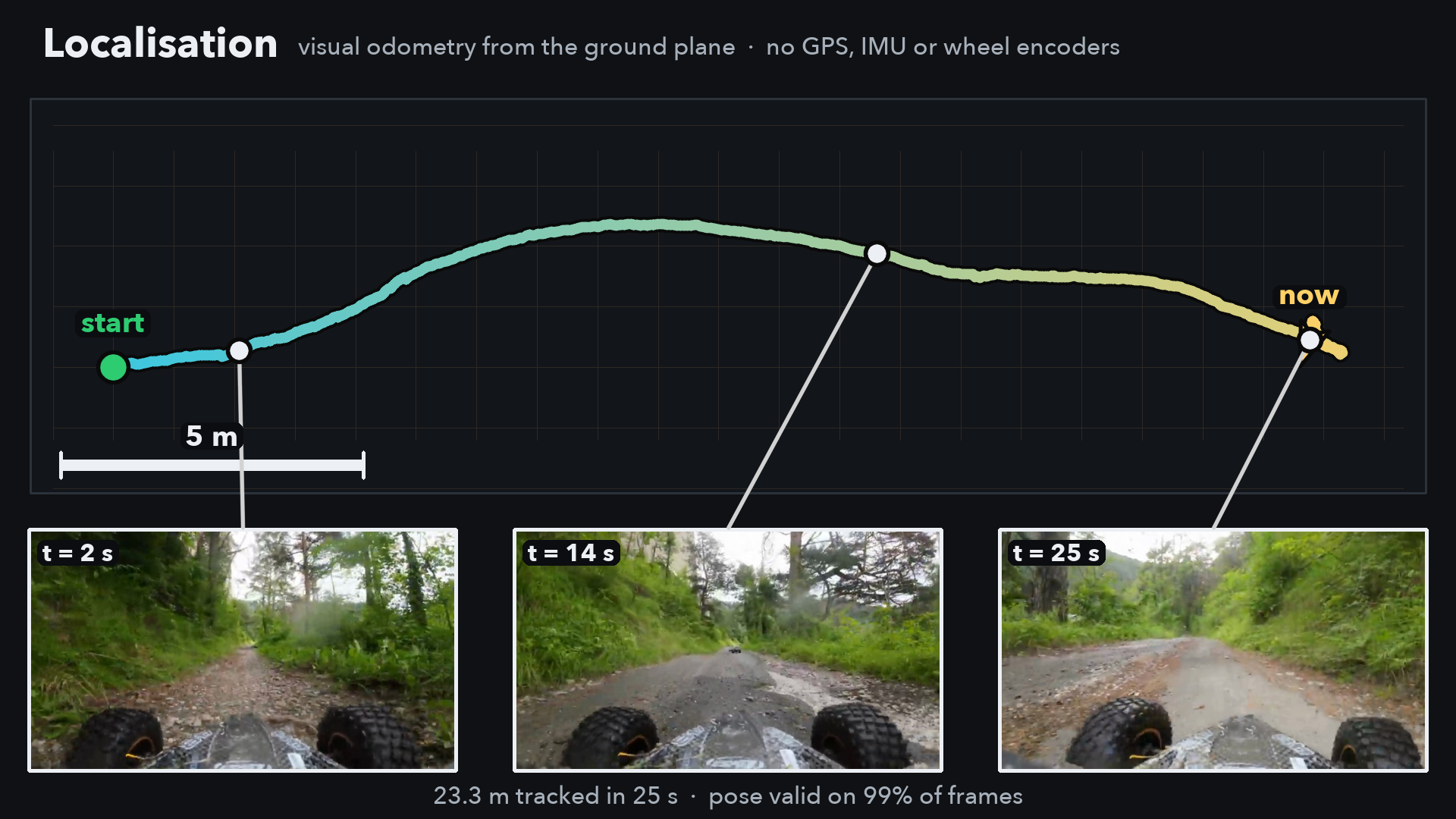
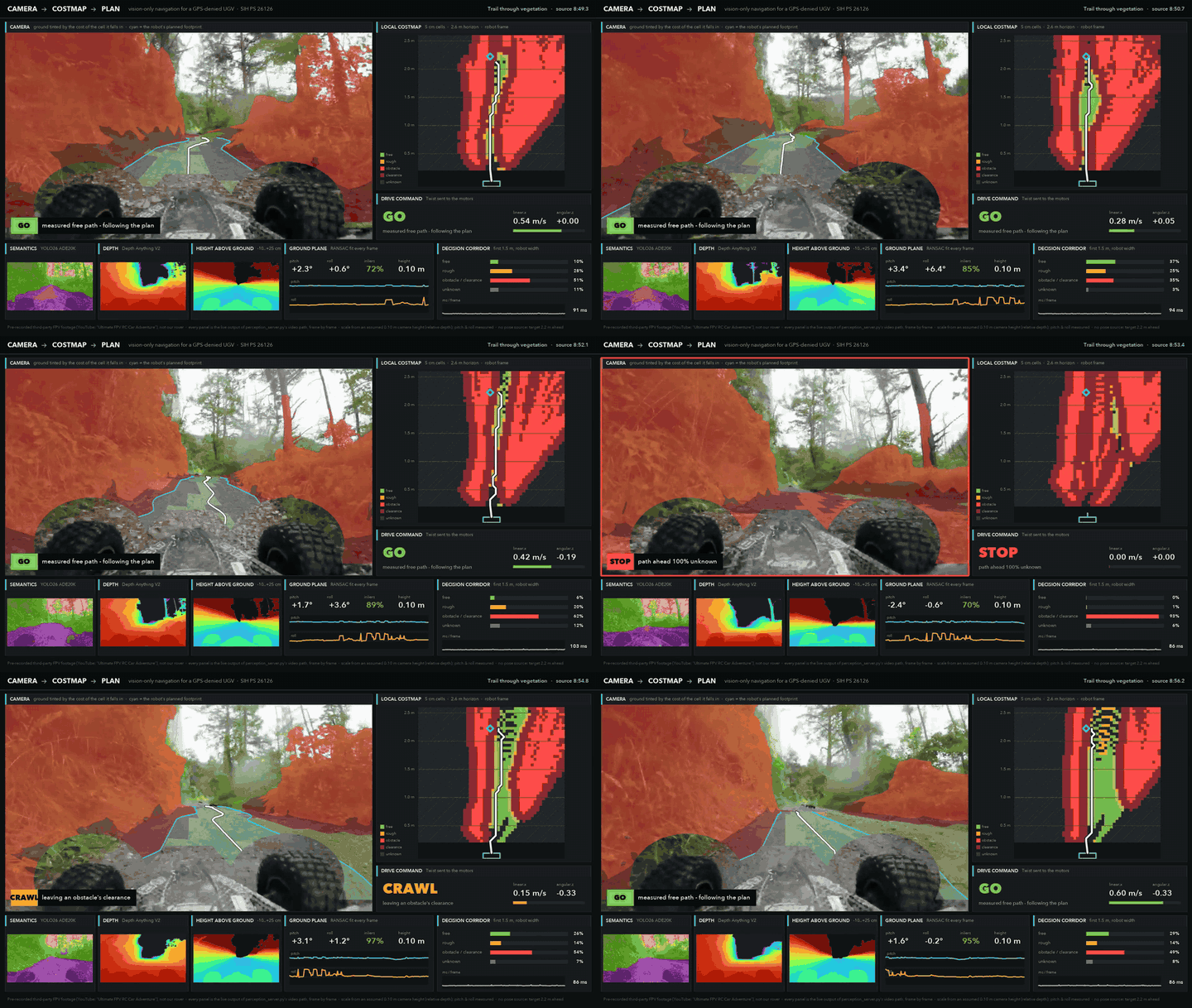
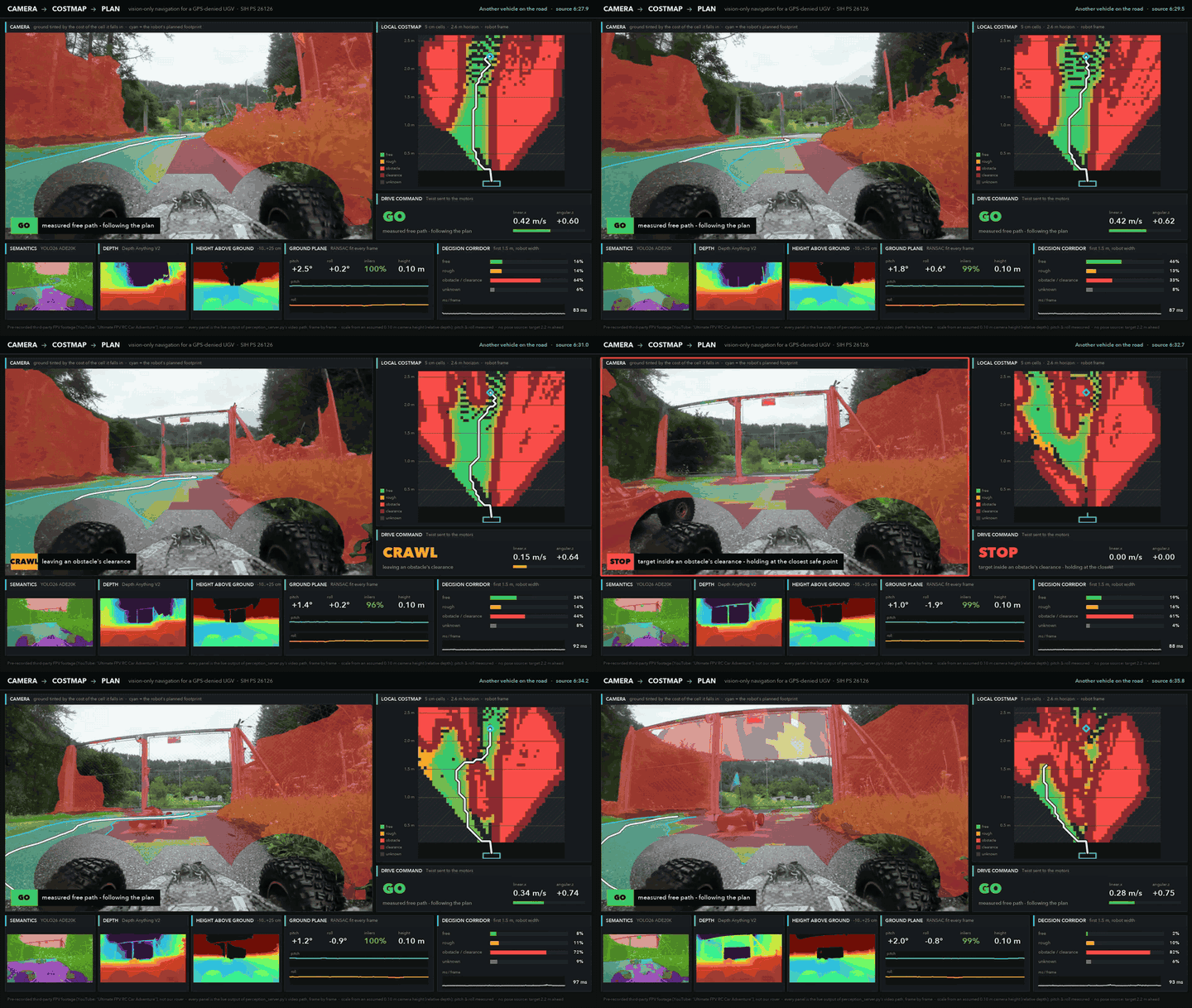
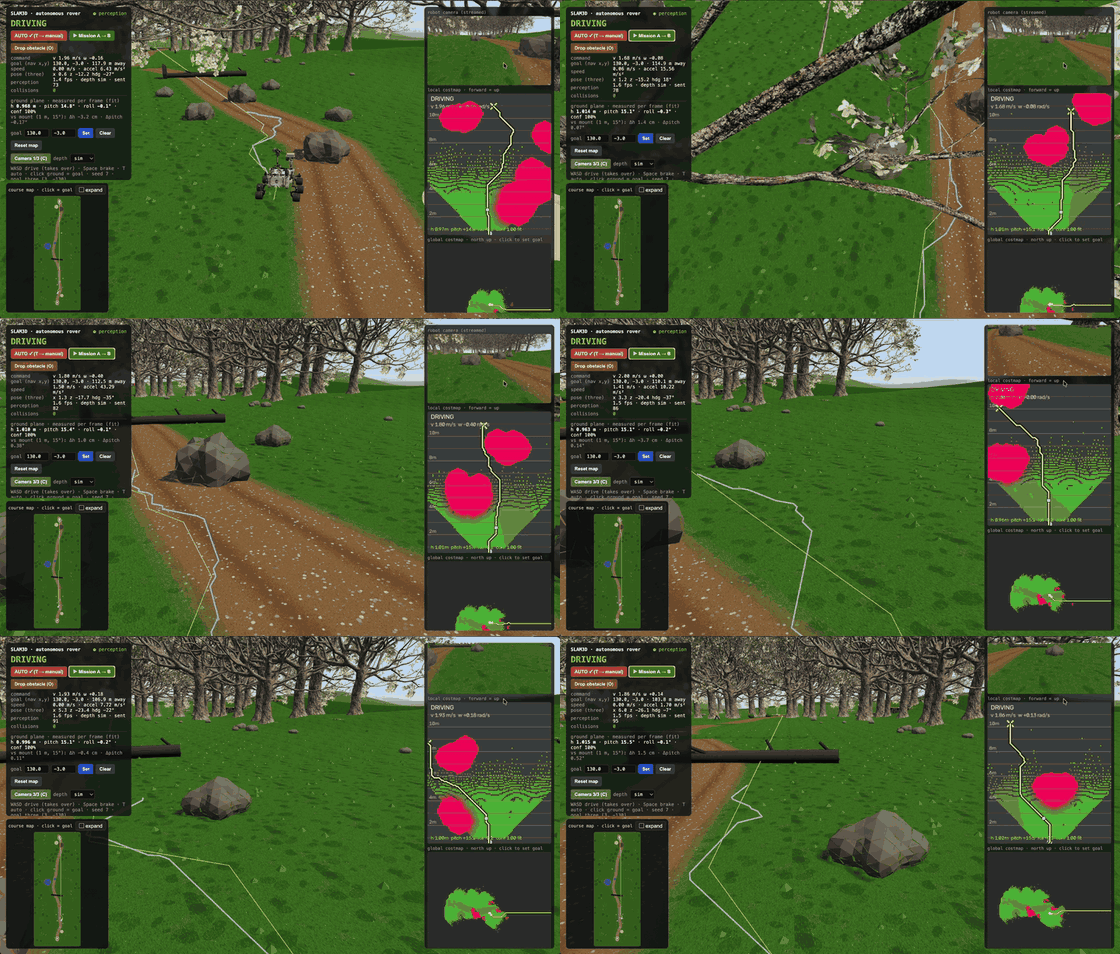
WinterBreakers is software that drives an unmanned ground vehicle (UGV) from Point A to Point B across outdoor terrain on its own. It needs no GPS and no LiDAR, only a single camera. It works out which ground is safe to drive on and which is not (rocks, slopes, ditches), then plans and follows a safe path around the hazards.
How we built it
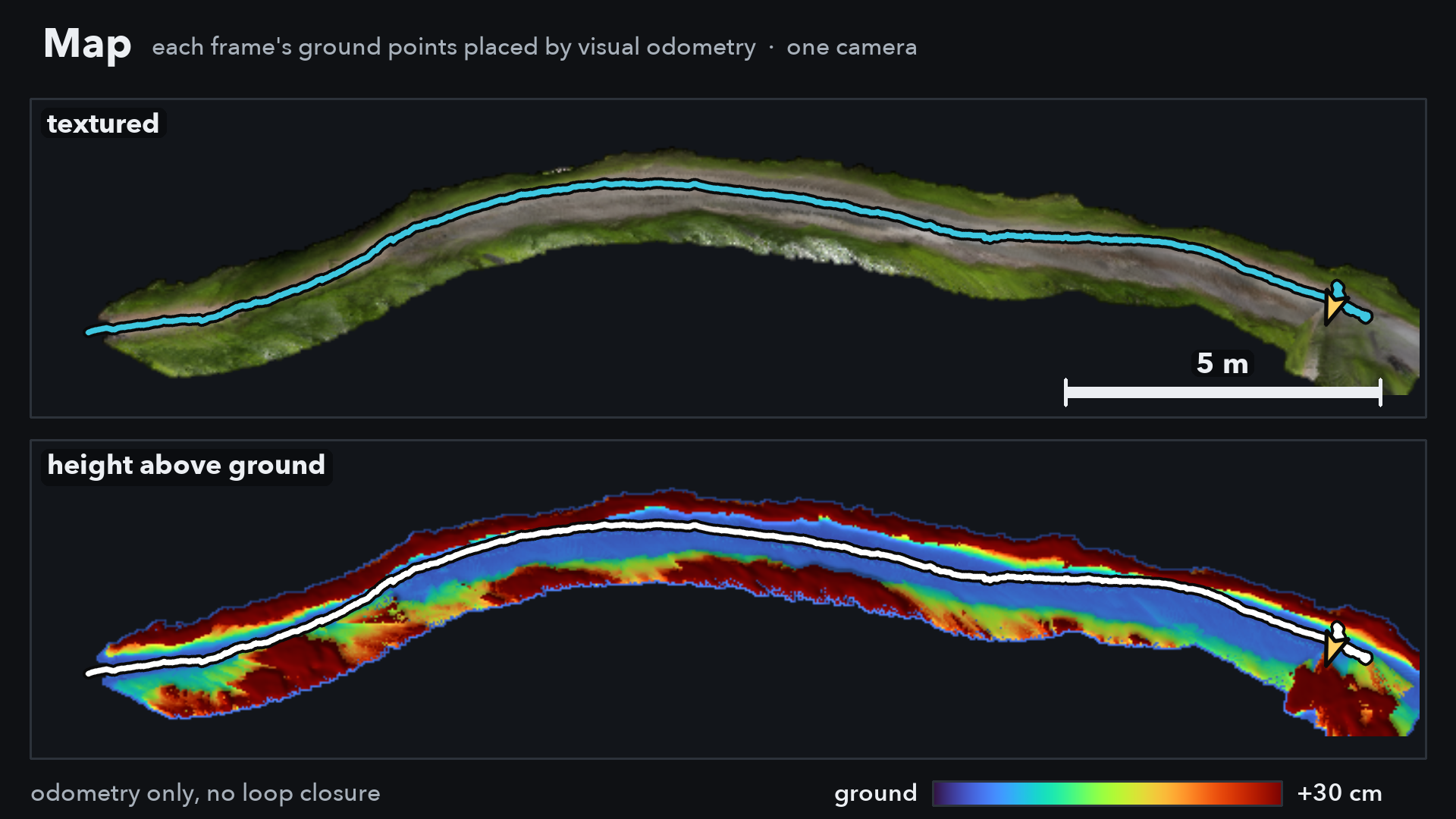
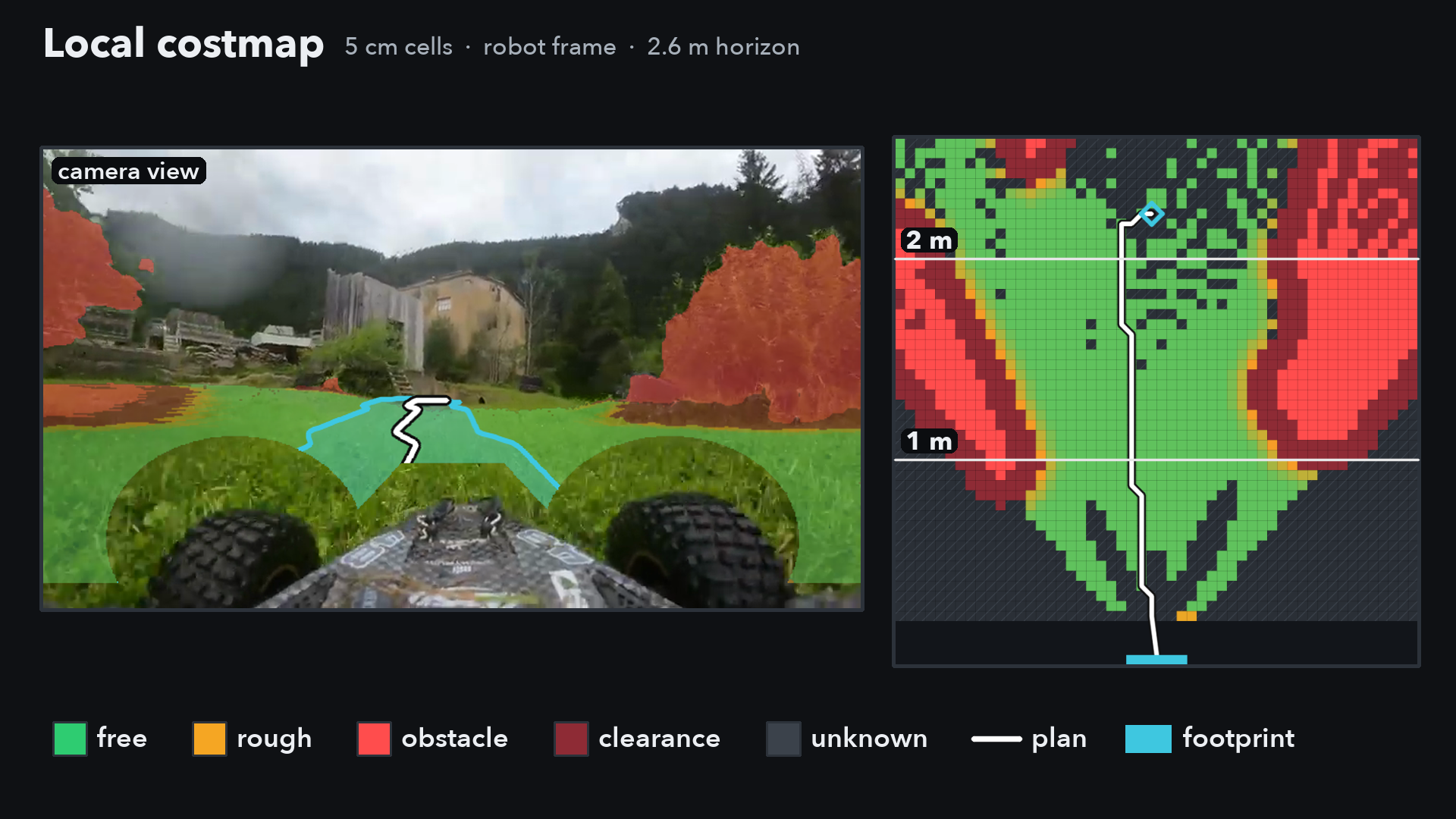
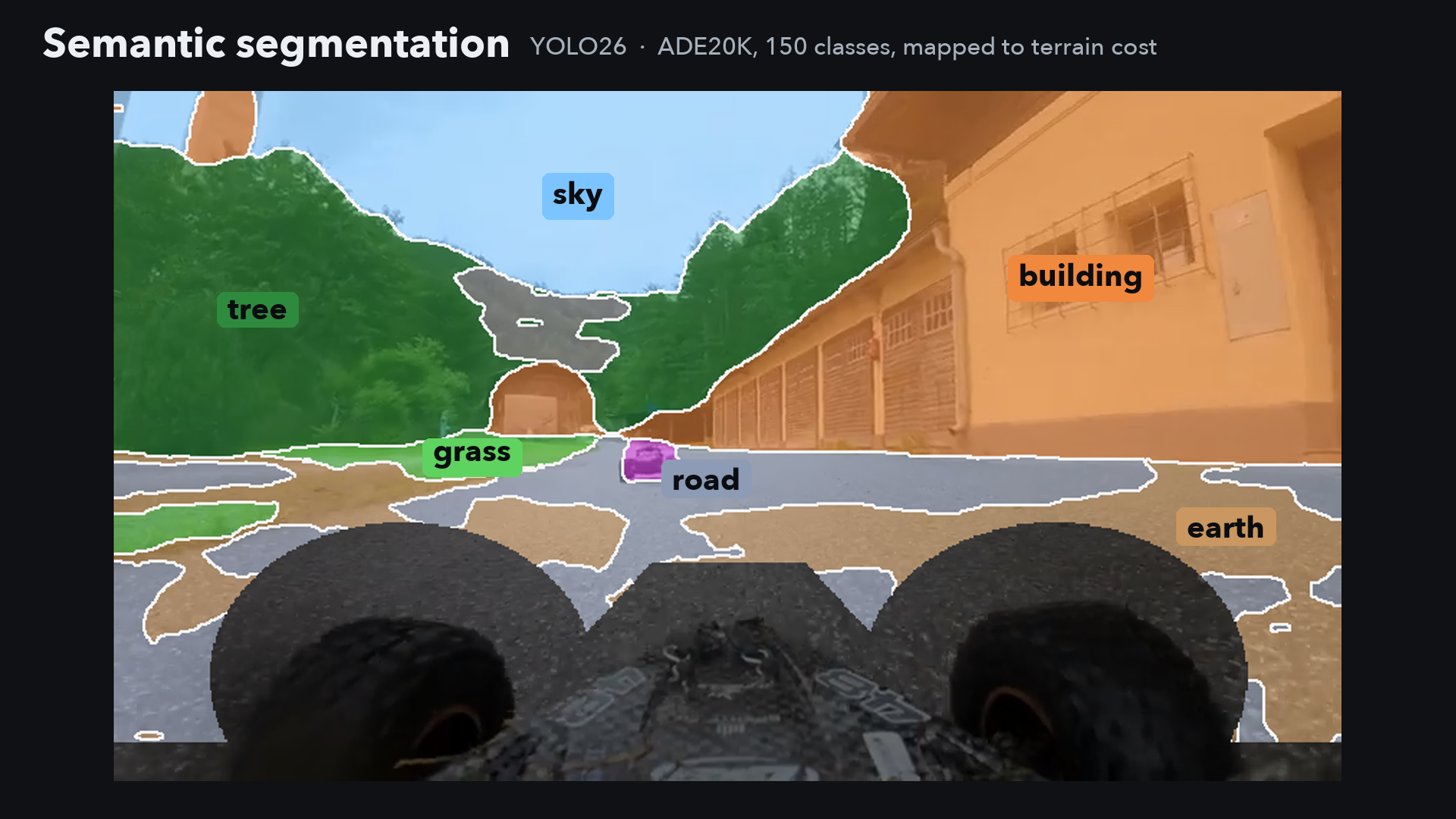
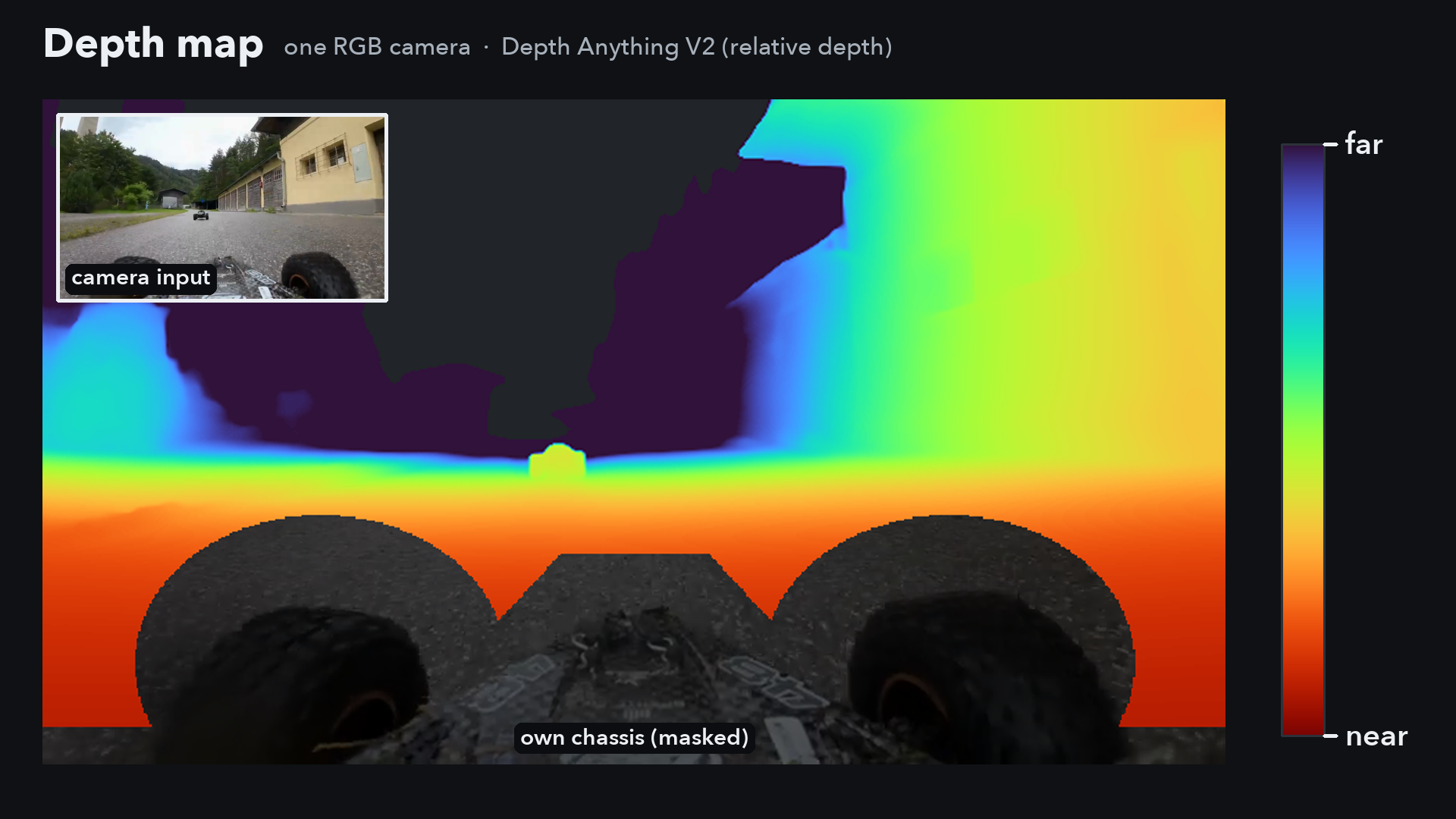
- Perception: From the camera image alone, we estimate depth and build a map of the terrain around the vehicle. The map marks each patch of ground as drivable or dangerous.
- Camera-agnostic: The camera can be mounted anywhere. The system estimates its height and tilt on every frame, so it needs no manual calibration.
- Planning: A Nav2-style planner uses that map to find a safe route and steer the vehicle.
- Testing: We first tested in a closed-loop simulation, then moved the same software onto real rover hardware.
Challenges we ran into
- Judging distance and terrain shape from one flat image, with no depth sensor to rely on.
- Camera height, tilt and roll that kept changing as the vehicle bounced over rough ground.
- Safety issues that only appeared in off-road tests, such as the vehicle seeing its own body as an obstacle.
- Keeping the simulation and real-world versions working together without breaking one while tuning the other.
Accomplishments that we're proud of
- A full autonomous navigation pipeline that runs on a single camera.
- The same stack runs in simulation and on a real rover.
- No fixed camera setup is required.
- Safety fixes found and resolved through real off-road testing.
What we learned
- A camera, used well, can replace sensors that cost many times more.
- Testing on real hardware exposes problems a simulation never shows.
- Safety and reliability matter more than raw accuracy for a vehicle that moves by itself.
What's next for WinterBreakers
- Longer and harder outdoor runs in rain, low light and dense vegetation.
- Stronger handling of moving obstacles such as people and animals.
- Building a simple kit that can be fitted to different UGVs.
- Using the system in search and rescue, agriculture and defence.
Built With
- autonomous-navigation
- computer-vision
- costmap
- depth-estimation
- embedded
- flask
- git
- html
- javascript
- monocular-vision
- nav2
- numpy
- opencv
- path-planning
- python
- pytorch
- raspberry-pi
- robotics
- ros
- simulation
- slam
- ugv
- webcam
- websockets

Log in or sign up for Devpost to join the conversation.