-
-
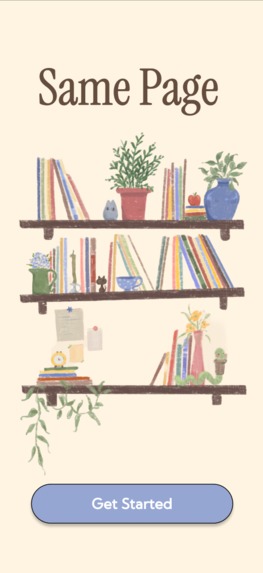
Cover Page
-
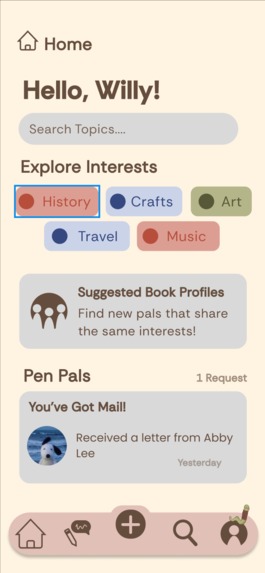
Home Page
-
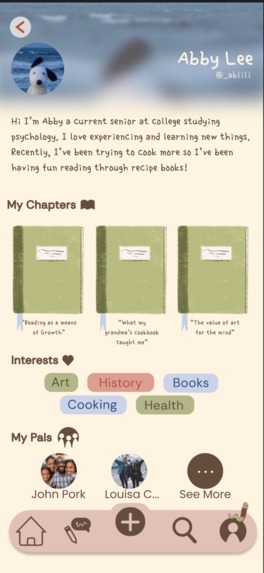
Profile
-
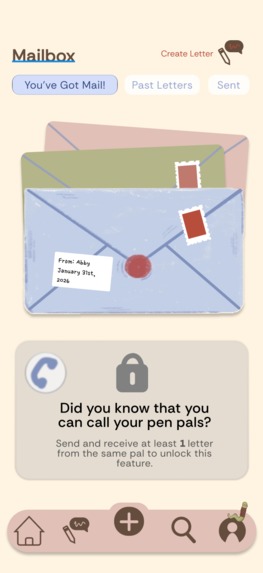
Pen Pals!
-
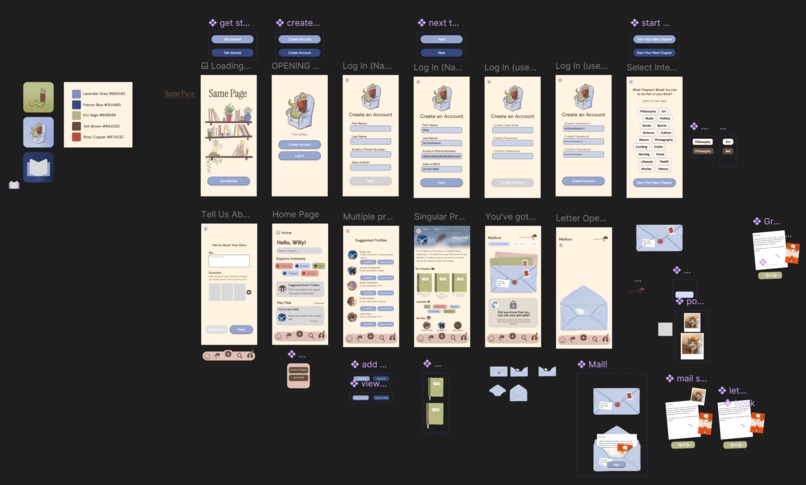
Hi-Fi Mockups
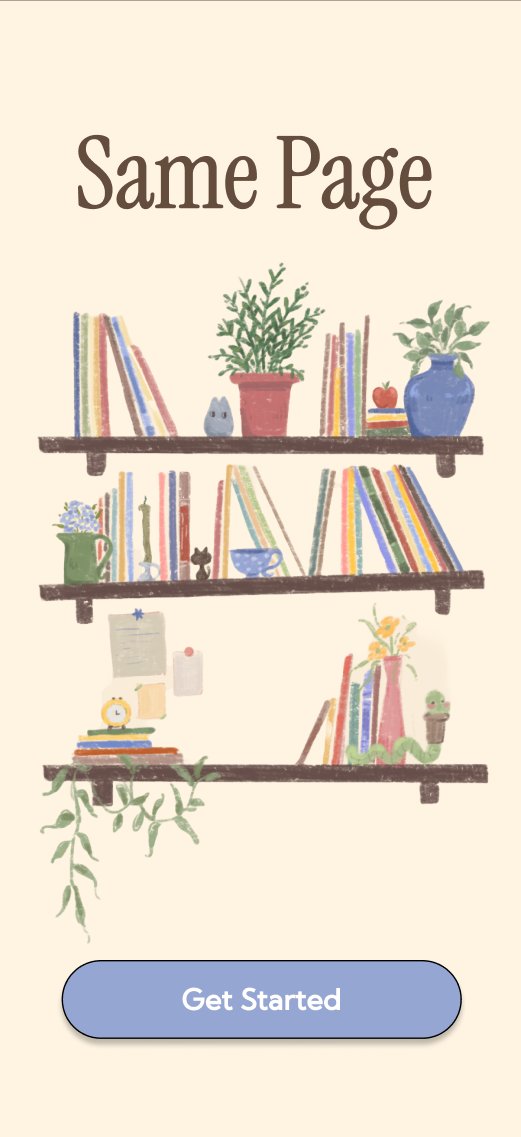
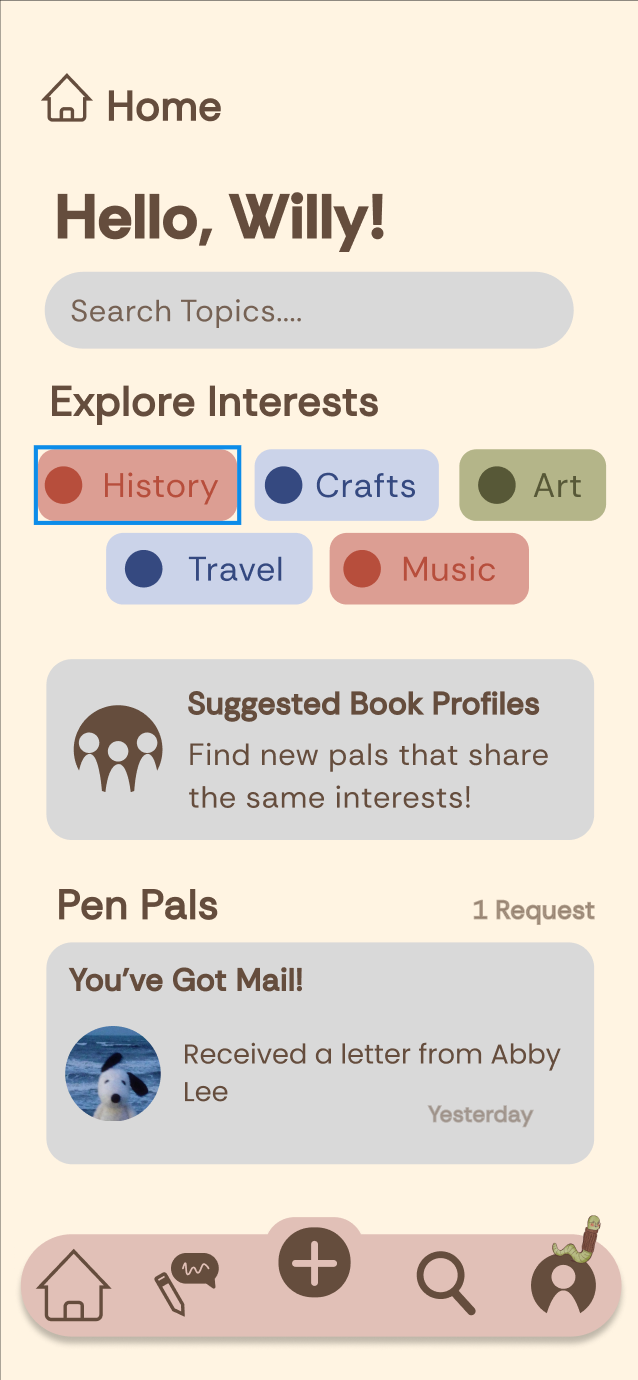
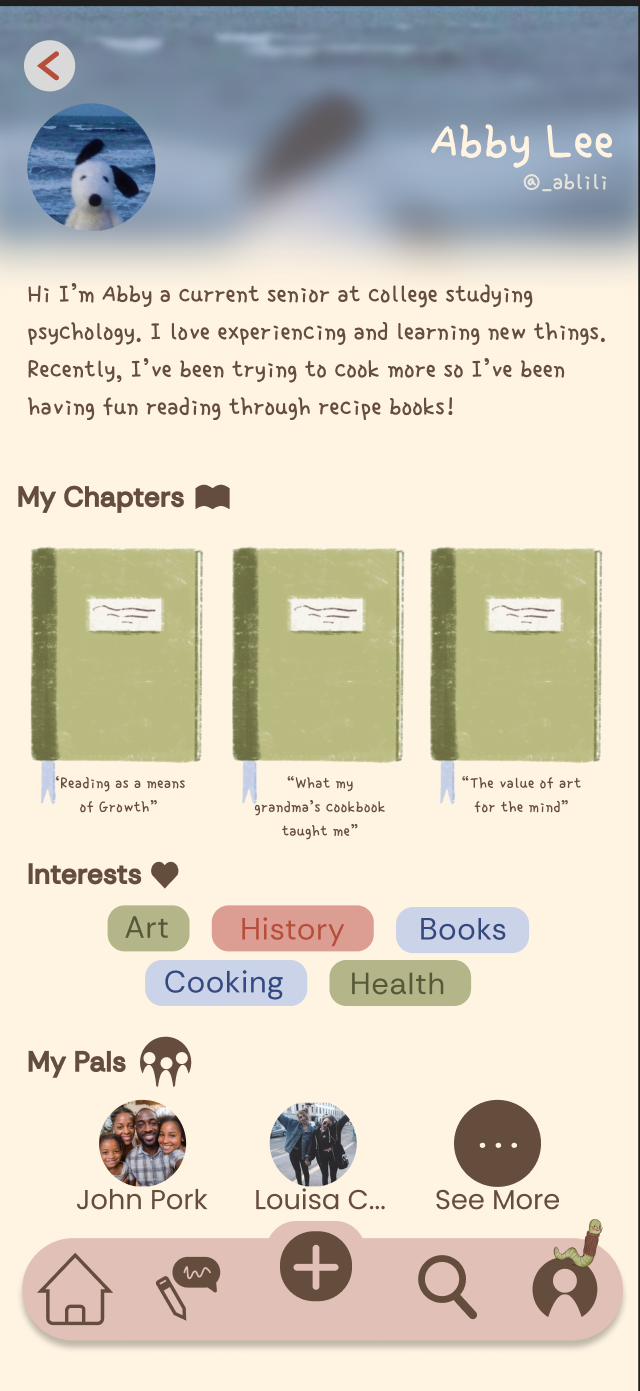
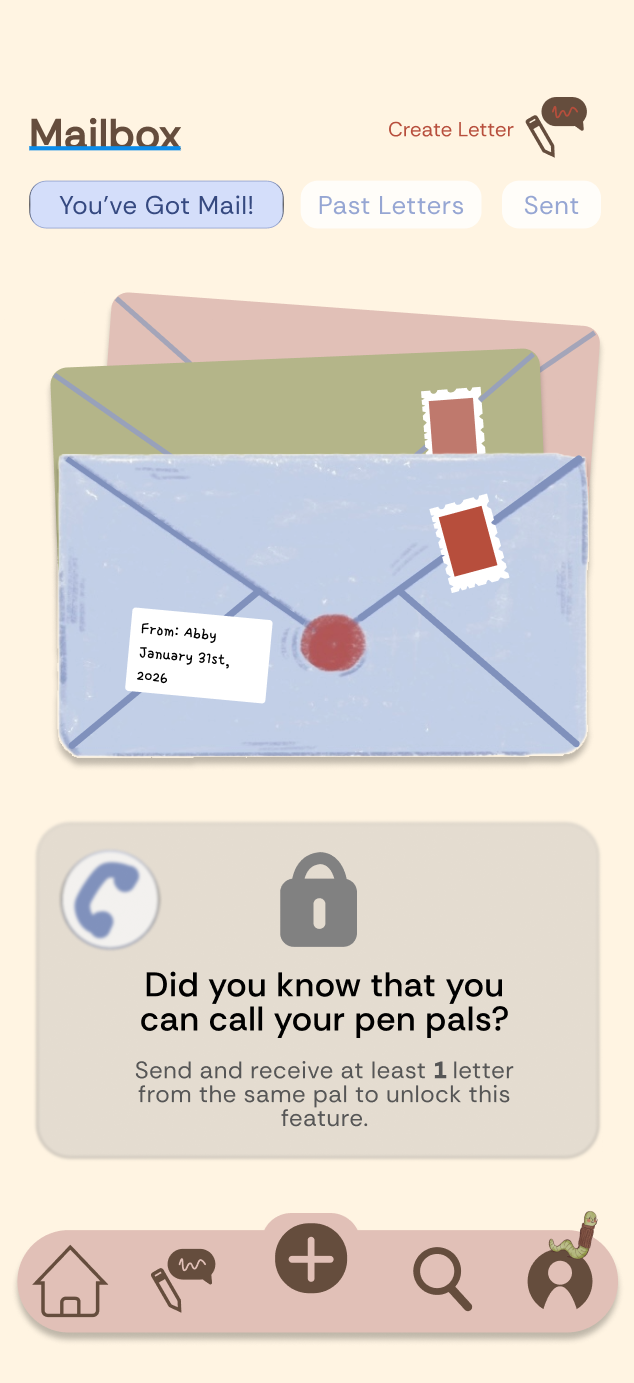
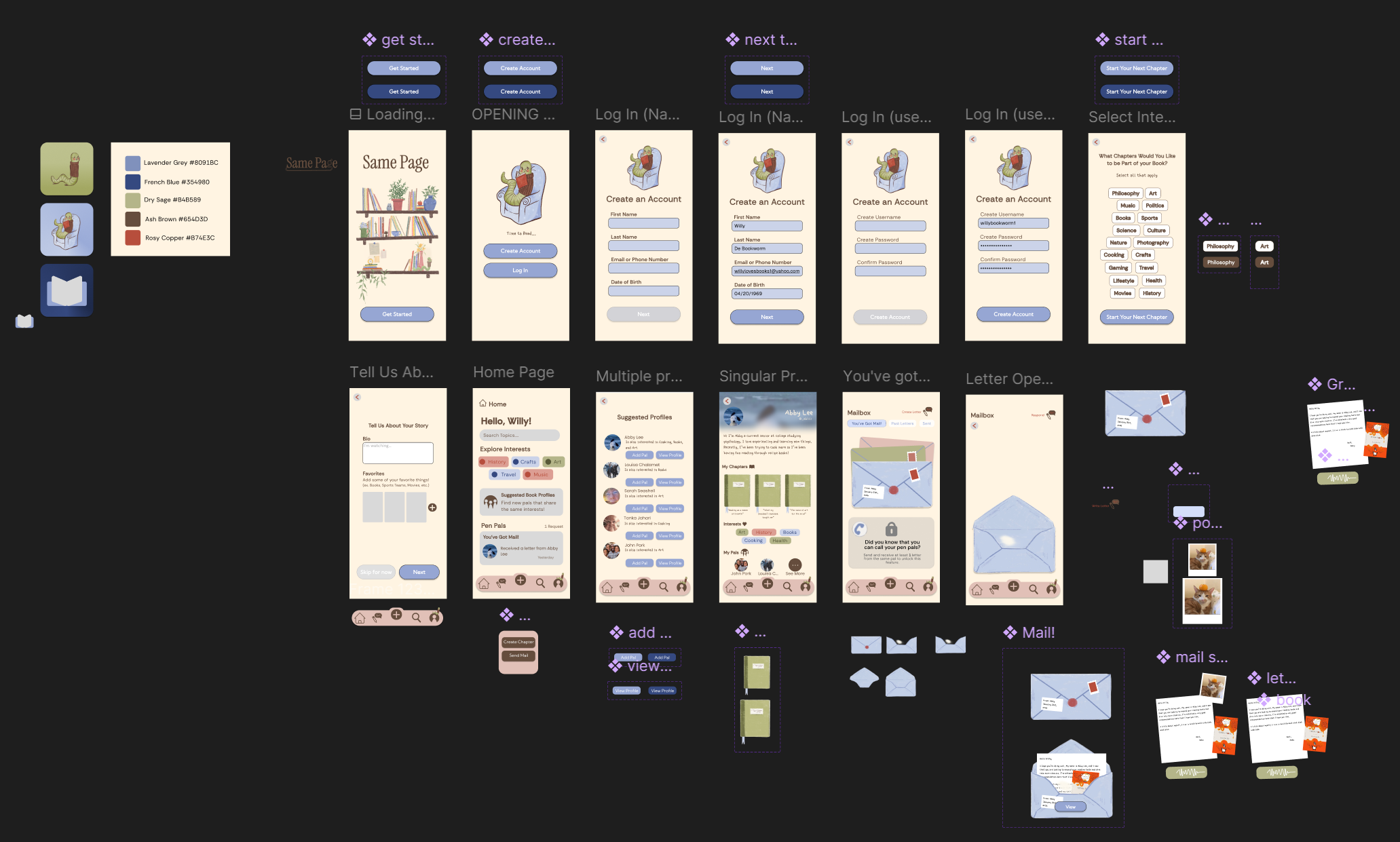
1. Prototype link Link
2. Describe your project
Our project centers on connecting different generations of users with older adults, especially those in nursing homes or assisted living homes, through simple, welcoming digital pen-pal experiences. The app prioritizes accessibility and familiarity, drawing inspiration from slower, more intentional forms of communication like letters, phone calls, and storytelling rather than fast, noisy social media. Users are matched based on shared interests, music, books, life experiences, and more, and can connect via text, voice notes, photo albums, or optional calls. Older users can share stories, wisdom, personal archives, and their general interests, while younger users offer companionship, curiosity, and fresh perspectives. The interface adapts to different comfort levels with technology, emphasizing large text, clear structure, and strong visual and audio feedback. By respecting generational communication styles and removing pressure to “perform,” the platform creates meaningful, low-stakes connections where conversations feel purposeful, mutual, and human, bridging generations through shared stories and values rather than screens alone.
3. Describe your research process and findings. If you conducted any surveys or interviews, please include the survey form and/or interview questions here. If you conducted secondary research by pulling from online sources, please include a link to your sources.
Our research process combined secondary research with simulated user profiles to understand intergenerational communication barriers and accessibility needs. Due to time constraints and the difficulty of reaching older adults, particularly those in nursing or assisted living environments, we were unable to conduct primary interviews or surveys within this project’s timeframe. To address this limitation responsibly, we created simulated users using AI, grounded in existing academic research, demographic data, and well-documented generational communication patterns. These simulated users allowed us to explore realistic motivations, fears, and usability concerns while remaining transparent about our methodology. Our secondary research focused on generational differences in communication styles and technology use. Prior studies (Venter, 2017; Taneja, Wu, & Edgerly, 2018) highlight that Baby Boomers strongly prefer face-to-face communication, phone calls, and email, valuing formality, clear grammar, and structured interactions. Email accounts for approximately 80% of their professional communication, while instant messaging is used far less due to its informal tone. In contrast, Generation Z favors instant messaging and private social platforms, prioritizing speed, informality, emojis, and multimedia expression. These findings revealed a significant mismatch in expectations that often leads to discomfort or disengagement on existing platforms. Using these insights, we generated a panel of simulated users across life stages, not just age,including older adults, midlife users, and younger users. Each profile included background, motivations, fears, and dealbreakers. For example, older simulated users expressed anxiety around cluttered interfaces, slang-heavy language, and feeling rushed or patronized. Younger users were more concerned with emotional safety, weak moderation, and interactions that felt forced, performative, or overly gamified. Across generations, there was a shared desire for meaningful conversation without long-term obligation or social pressure. The simulated users were then used to “walk through” onboarding, matching, and communication flows, allowing us to identify friction points such as overwhelming interfaces, unclear expectations, and mismatched communication norms. This process helped validate design decisions around simplicity, accessibility, flexible matching, and slower, pen-pal–style interaction. While simulated users cannot replace real-world interviews, grounding them in credible secondary research allowed us to uncover consistent patterns and design responsibly within our constraints. Future iterations of the project would prioritize direct testing with older adults and caregivers to validate and refine these findings.
4.Describe your most important design decisions. What research findings and/or user testing results led you to make these decisions?
In terms of our design decisions, we prioritized accessibility, a straightforward communication style, and ease of use, especially when regarding the nature of our target audience. Early research showed that intergenerational communication often breaks down not because of a lack of interest but because platforms are designed around fast, informal, and socially performative norms that alienate older users. Qualitative findings revealed that “Baby Boomers” strongly prefer formality, clarity, and structured communication, relying primarily on email, phone, and face-to-face communication, while younger users favor instant messaging, informality, and multimedia expression. This gap informed nearly every design choice. First, we prioritized a simple, highly structured interface. Older users in our simulated profiles expressed frustration with cluttered layouts, slang-heavy language, and unclear expectations. As a result, we limited the number of core pages (home, messages/calls, archives) and emphasized large typography, high contrast, and clear visual and audio feedback for every interaction. Multiple interface “complexity levels” were explored to allow users to choose a version that matches their comfort level with technology rather than forcing a one-size-fits-all experience. Second, we intentionally avoided conventional social media mechanics such as likes, feeds, and gamification. Research and user insights, particularly from profiles like Evelyn and Jordan, showed strong resistance to anything that felt noisy, performative, or trivializing. Instead, we designed the app around pen-pal–style exchanges, including long-form writing, voice notes, photo albums, and optional calls. This supports Baby Boomers’ preference for thoughtful, complete communication while still allowing younger users to engage through media they are comfortable with. Third, we designed interest-based, non-exclusive matching rather than fixed pairings. Research indicated hesitation around long-term obligations and emotional labor, especially among midlife and younger users. Allowing users to connect through shared topics, music, books, recipes, and life stories creates flexibility while still fostering meaningful interaction. Users are not locked into a single match, reducing pressure and increasing psychological safety. Finally, we integrated a story archiving component that enables users to share written stories, scanned handwritten notes, voice recordings, and photo collections. This decision was informed by older users’ desire to feel useful and valued, and younger users’ interest in real, lived experiences rather than surface-level interaction. Accessibility features such as voice-to-text and transcription were added to support different abilities and comfort levels. Together, these decisions reflect a core principle: meaningful intergenerational connection requires respect for different communication norms, clear structure, and technology that adapts to users, rather than asking users to adapt to technology.
Built With
- figma

Log in or sign up for Devpost to join the conversation.