-
-
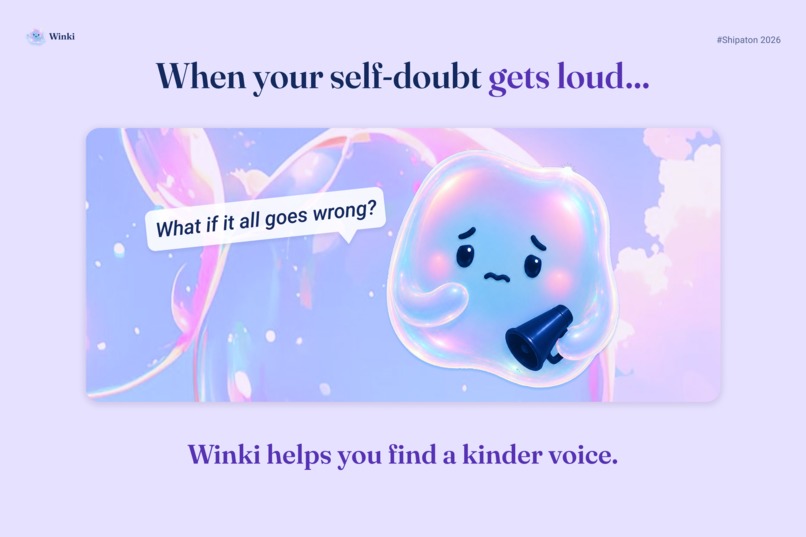
Meet Winki – your companion for kinder self-talk
-
Winki’s logo and mascot
-
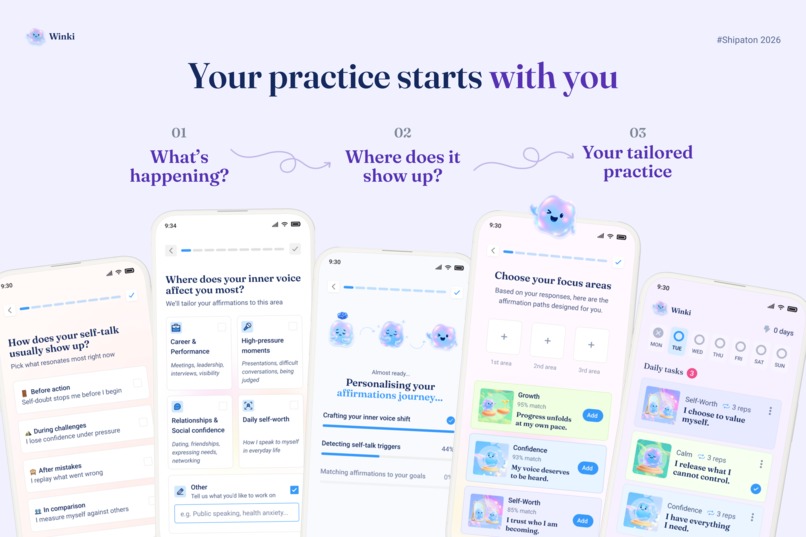
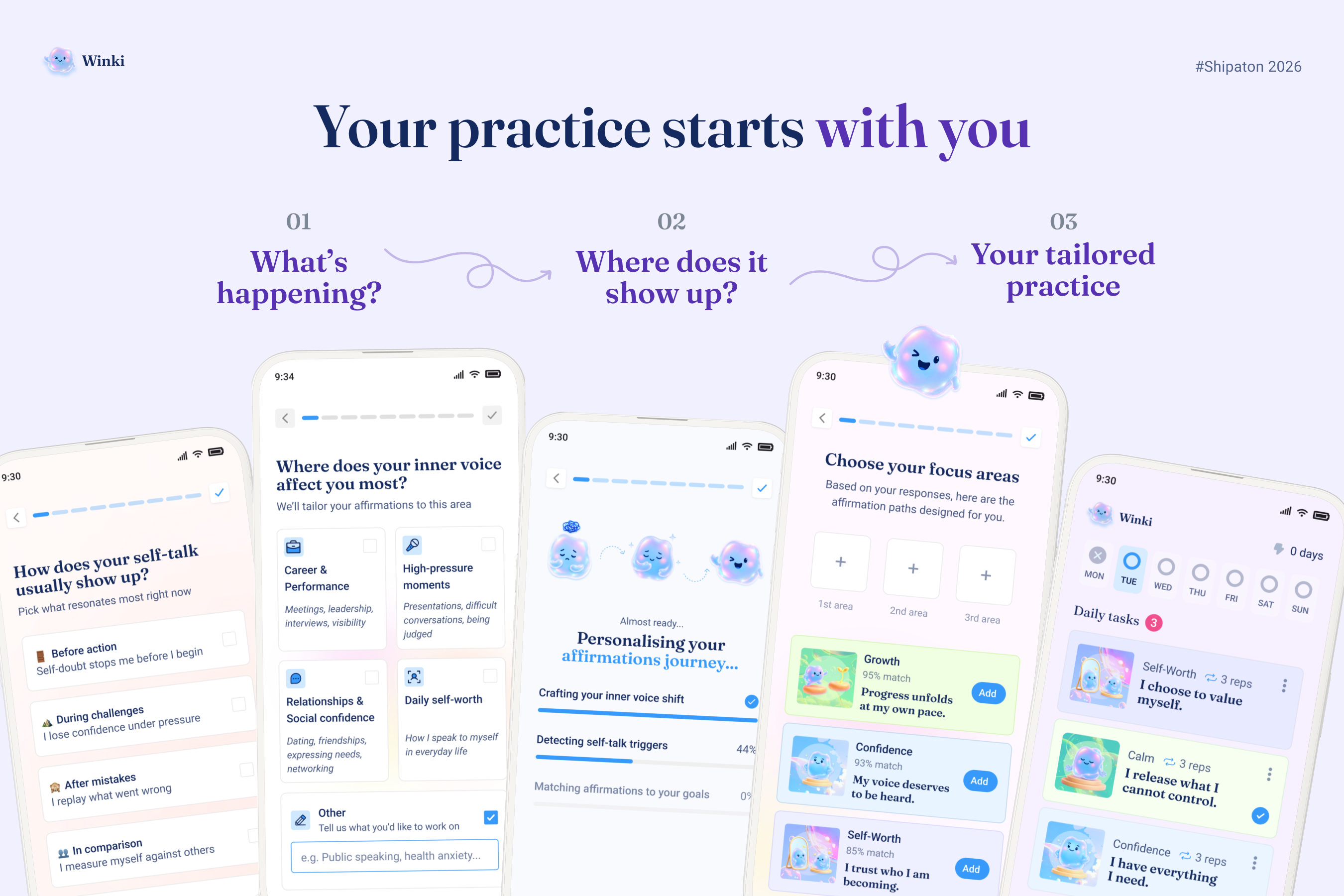
From Self-reflection to Personalised practice
-
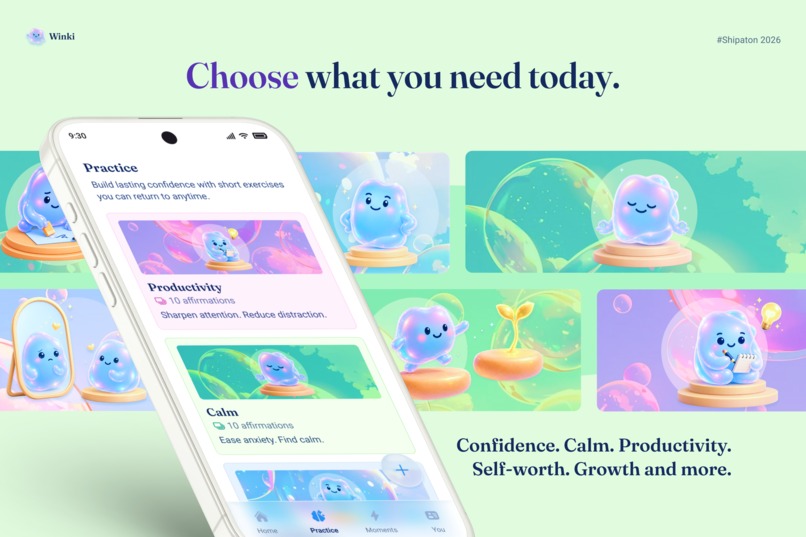
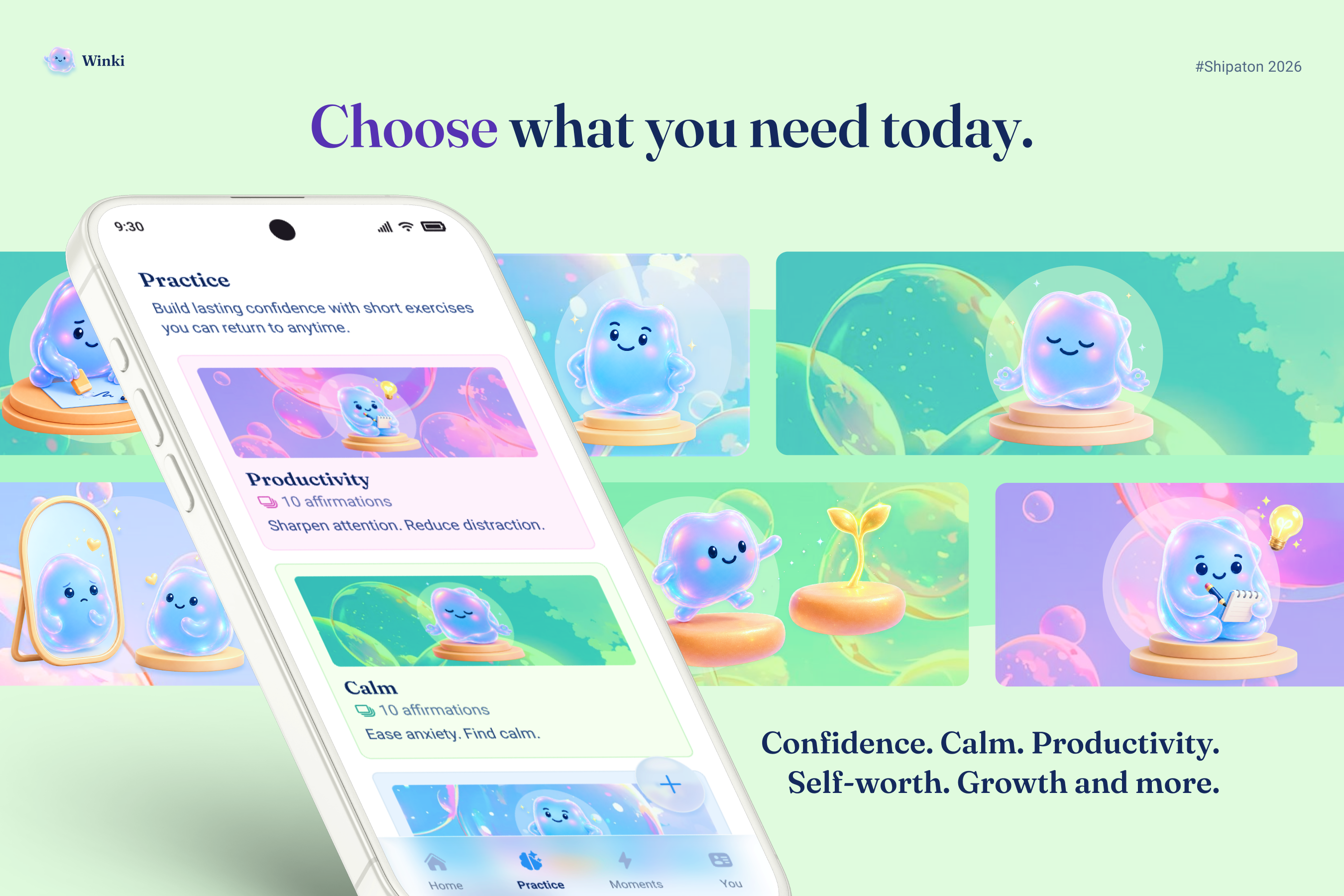
Users can explore the core Practice Categories
-
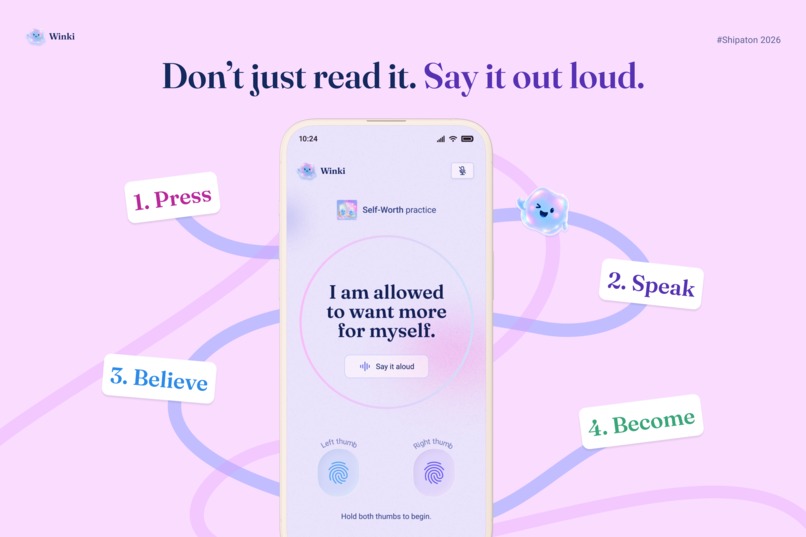
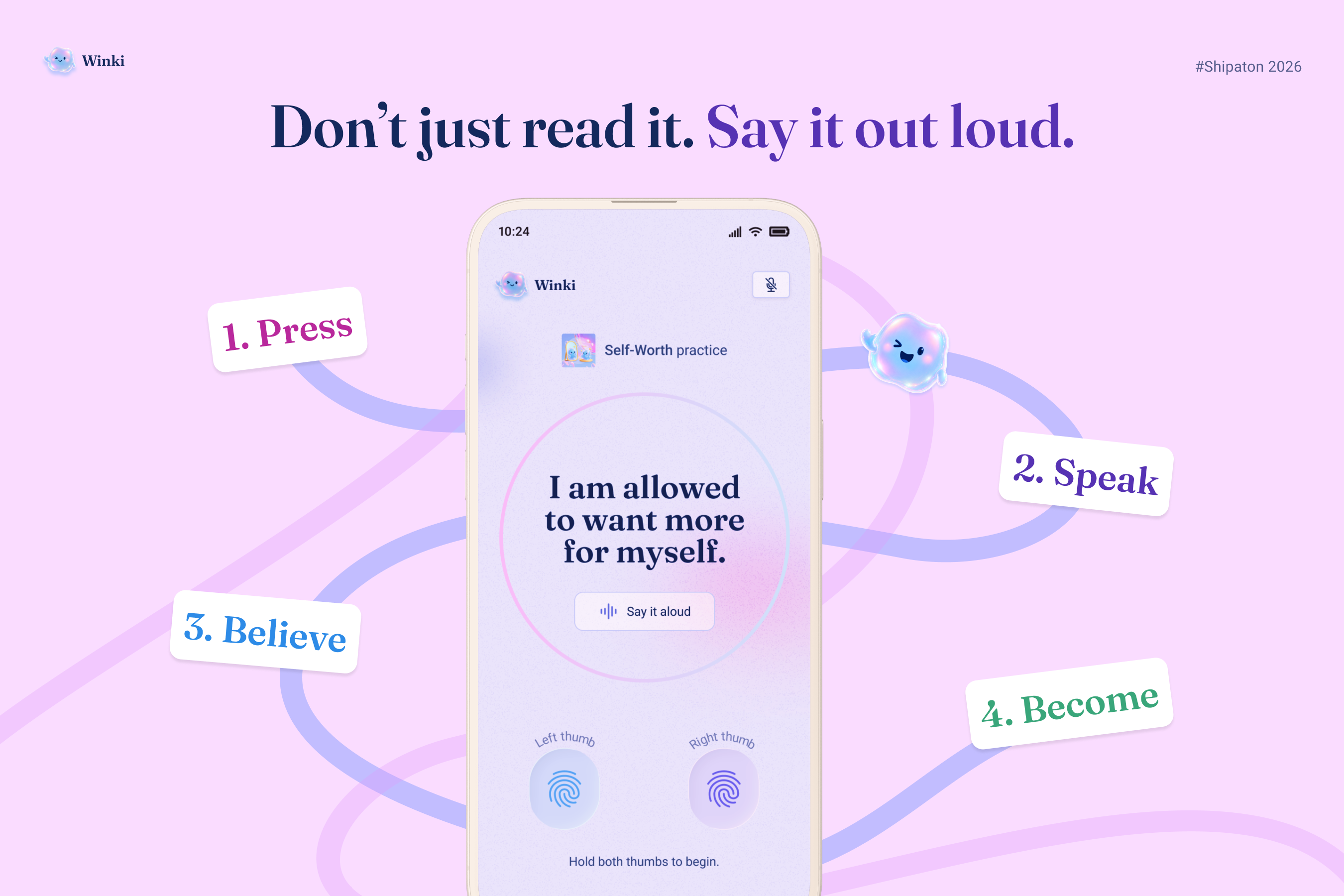
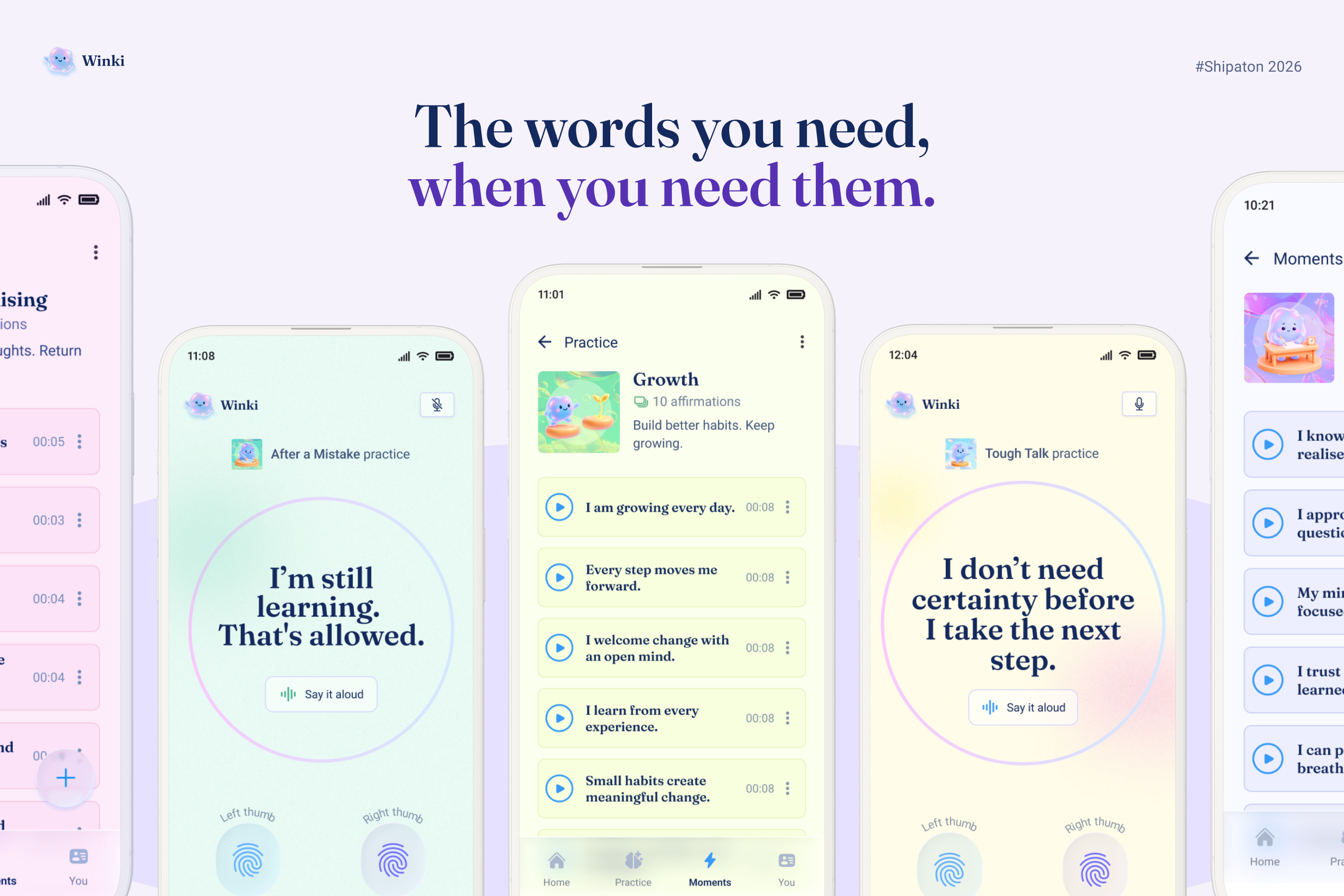
Affirmations Practice screen
-
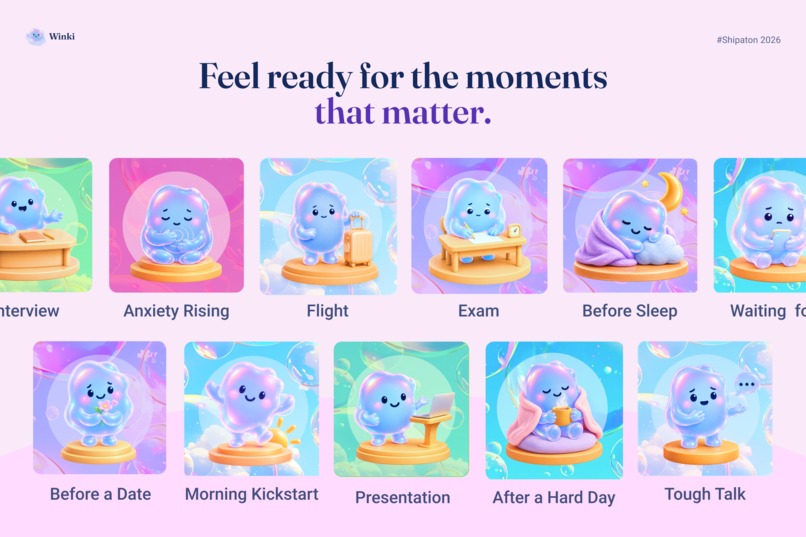
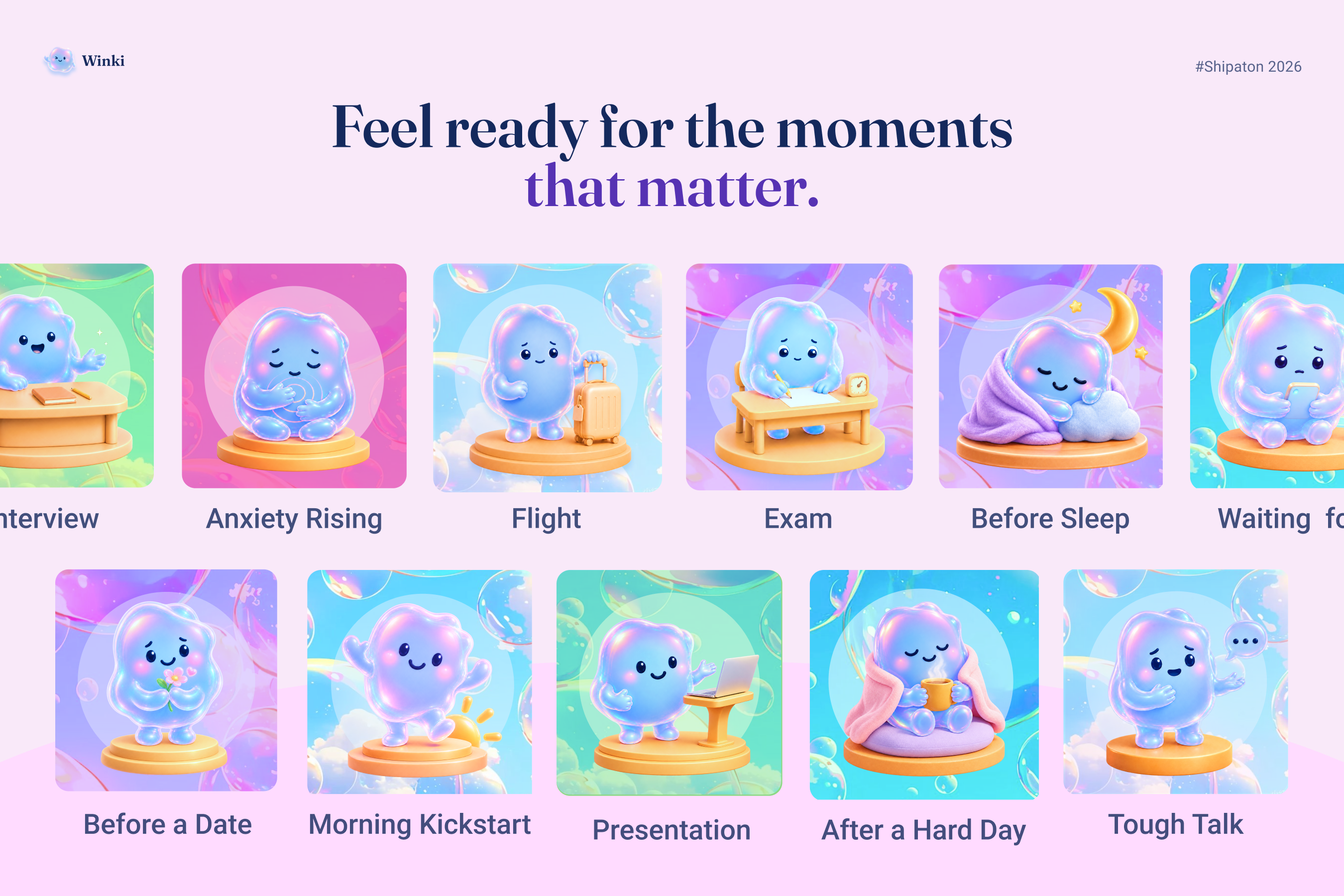
Users can choose supportive practices for life’s Stressful Moments.
-
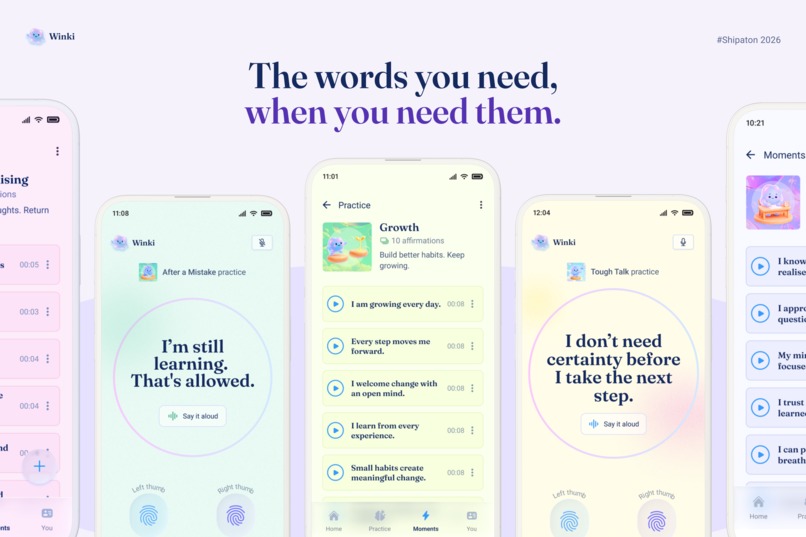
Examples of grounded and believable affirmations
-
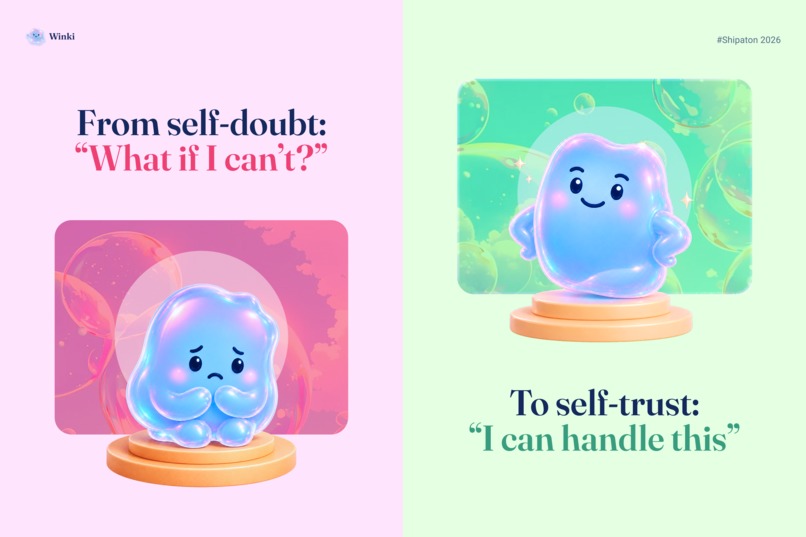
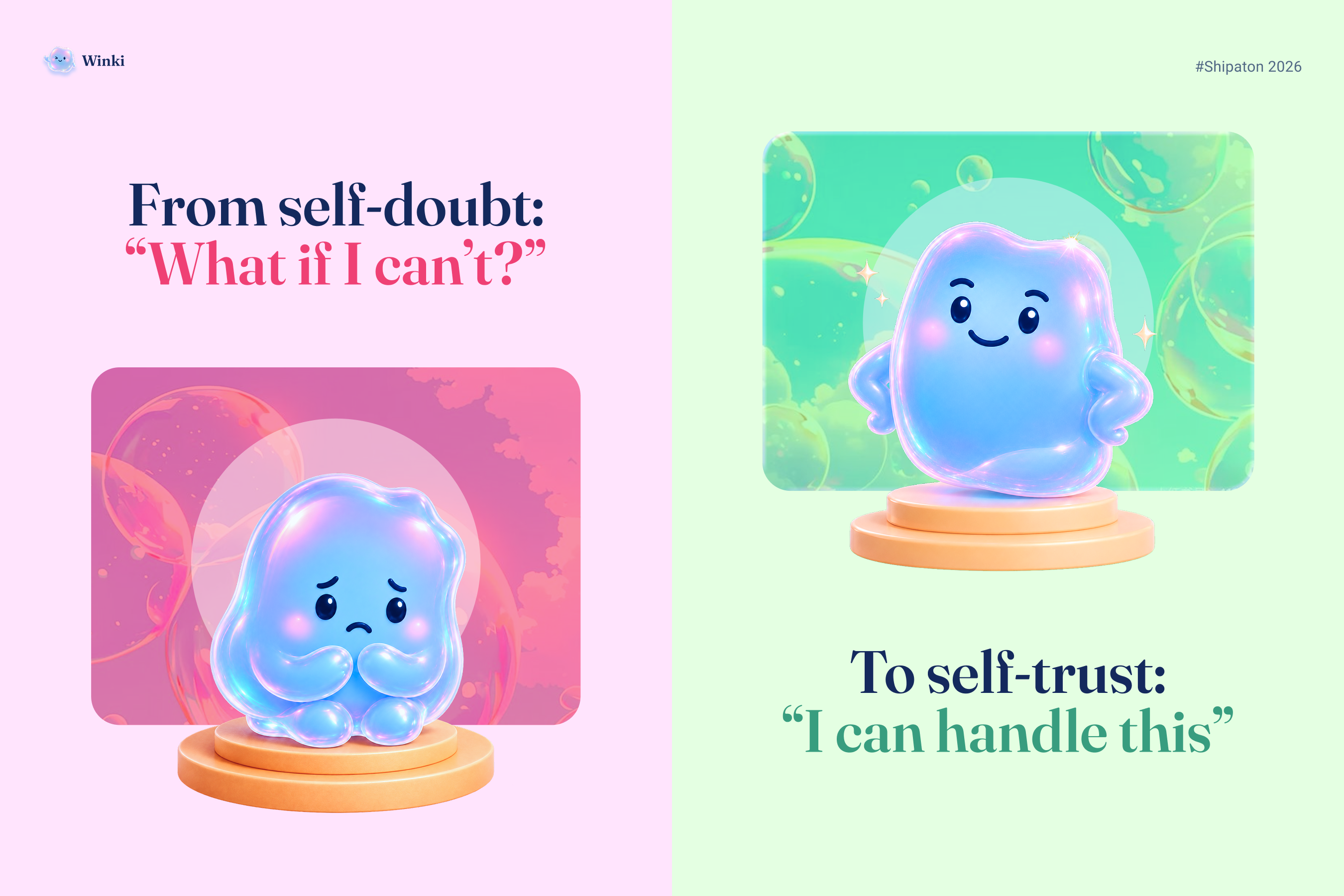
From self-doubt to self-trust
-
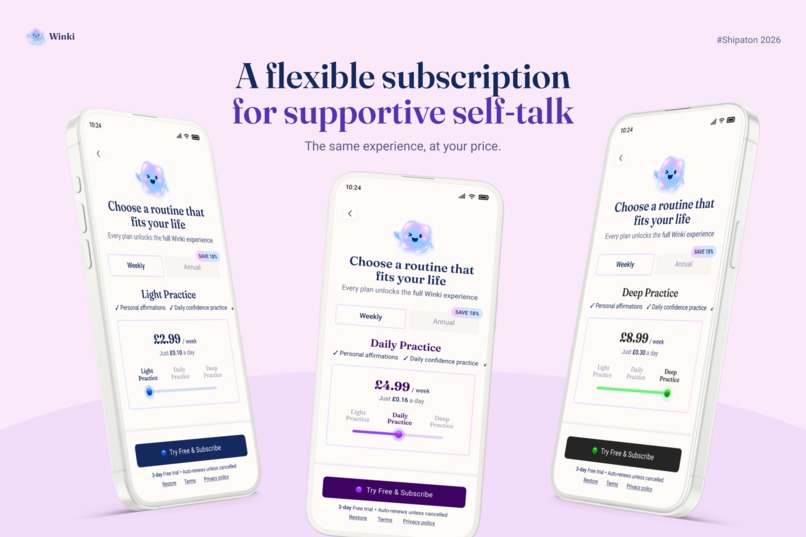
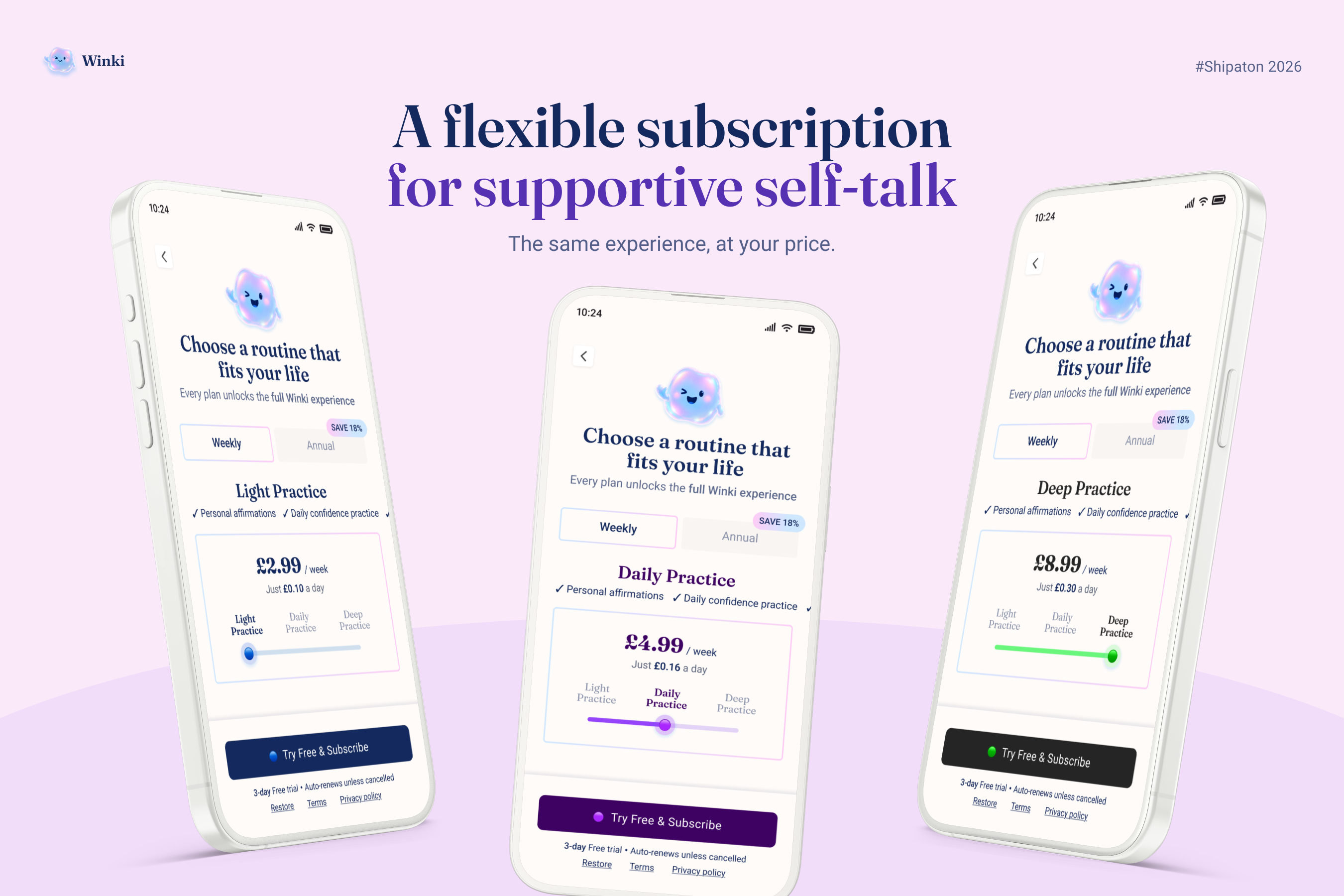
Flexible subscription options. The same experience, at a price that fits you
-
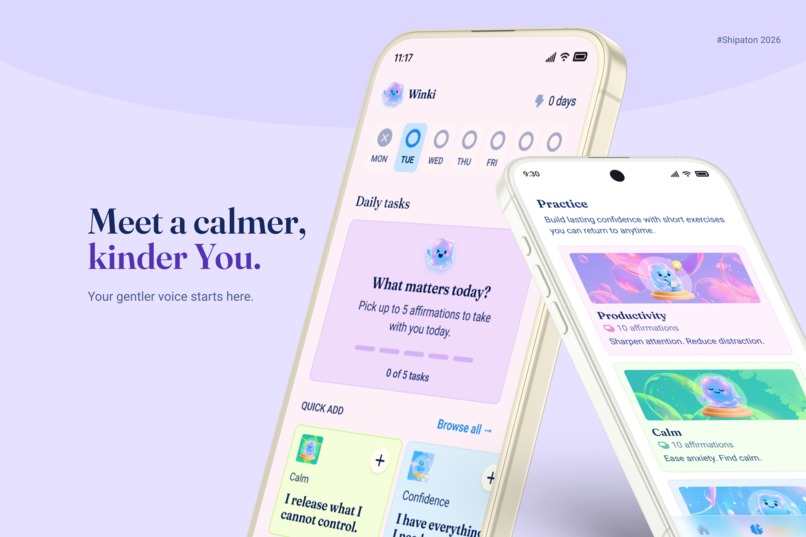
A calmer, kinder you starts here
-

WinkiApp icon_1024x1024
-
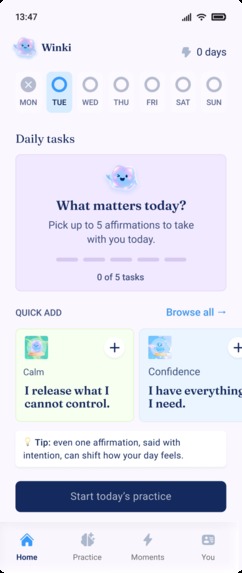
Screenshot_Home
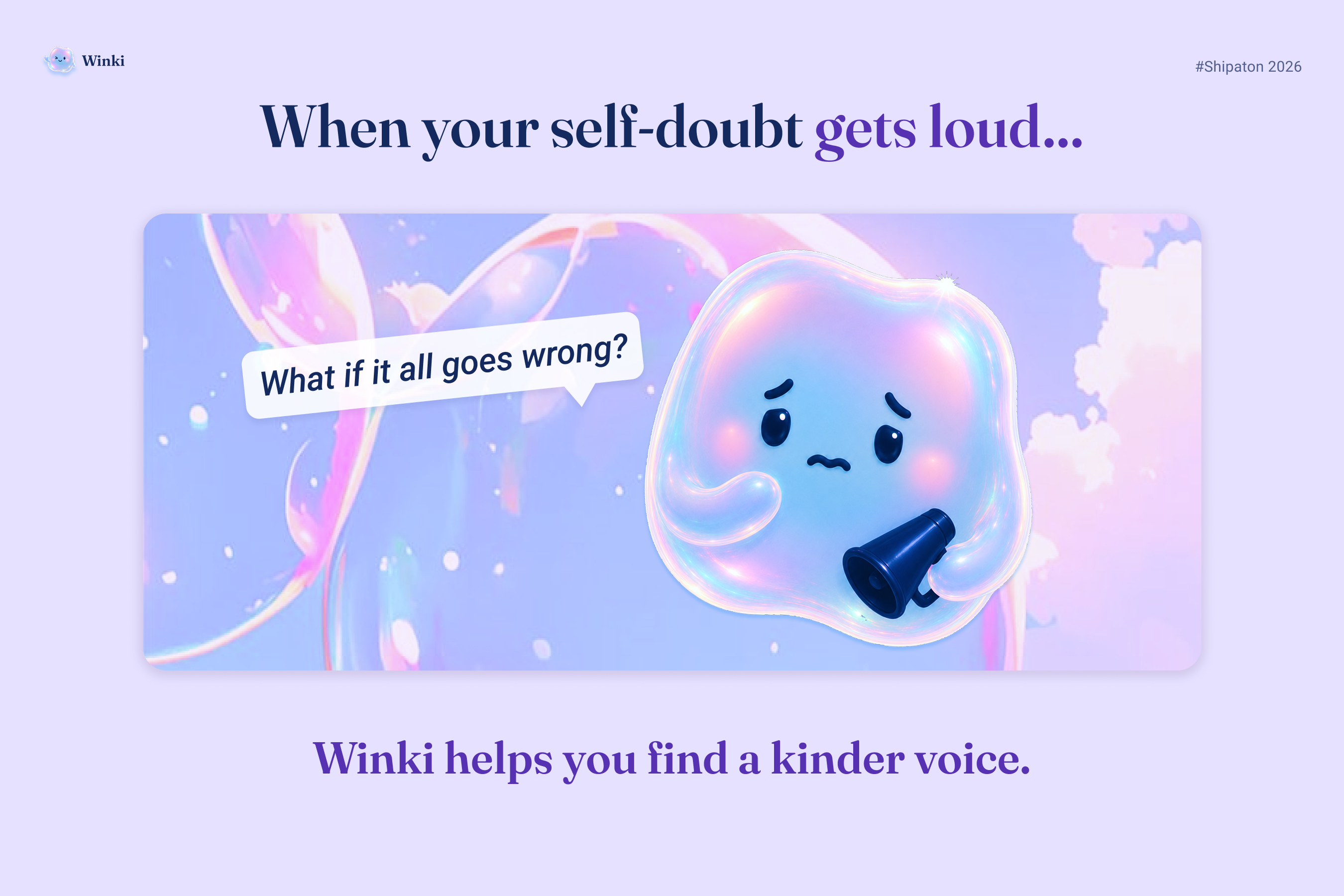
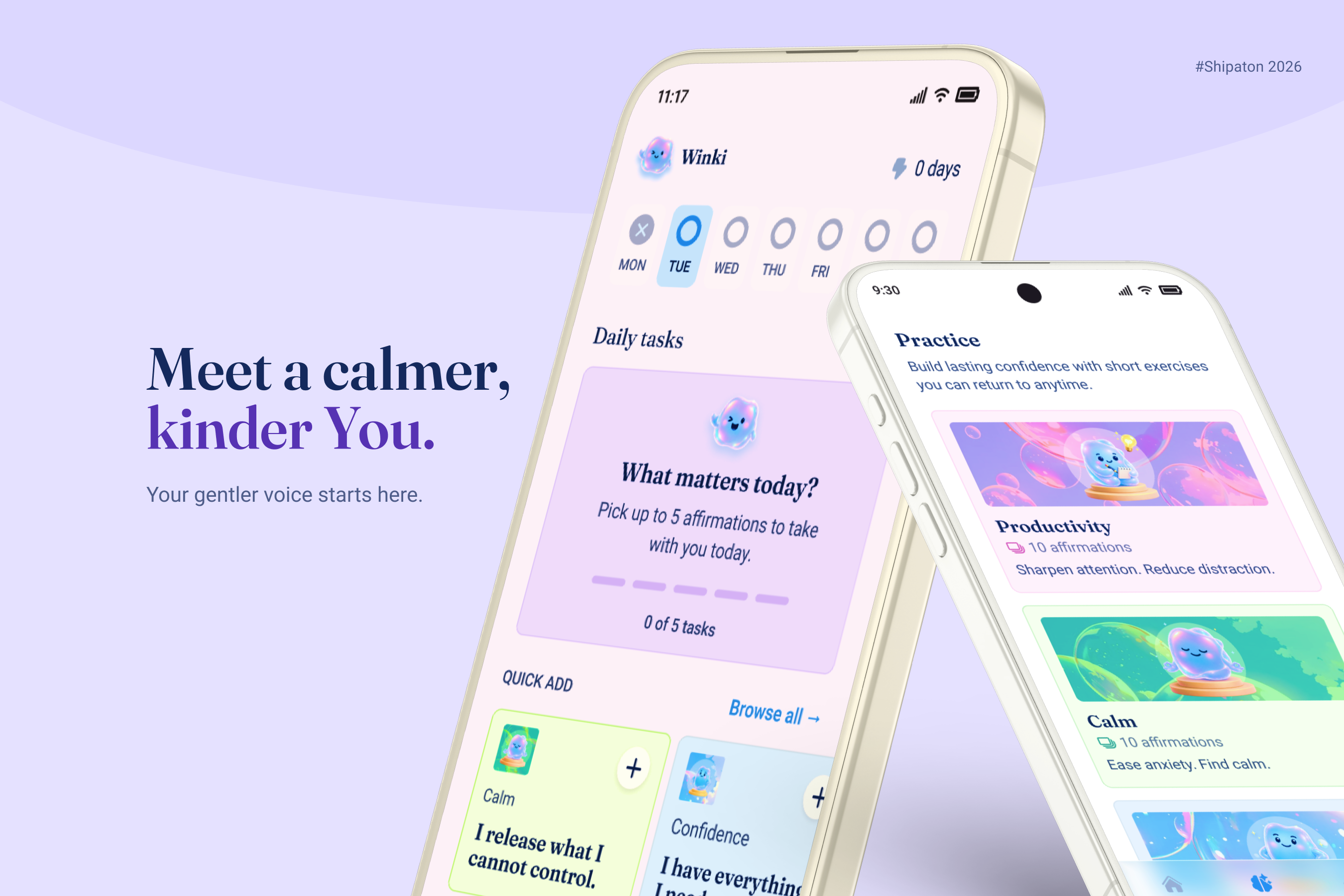

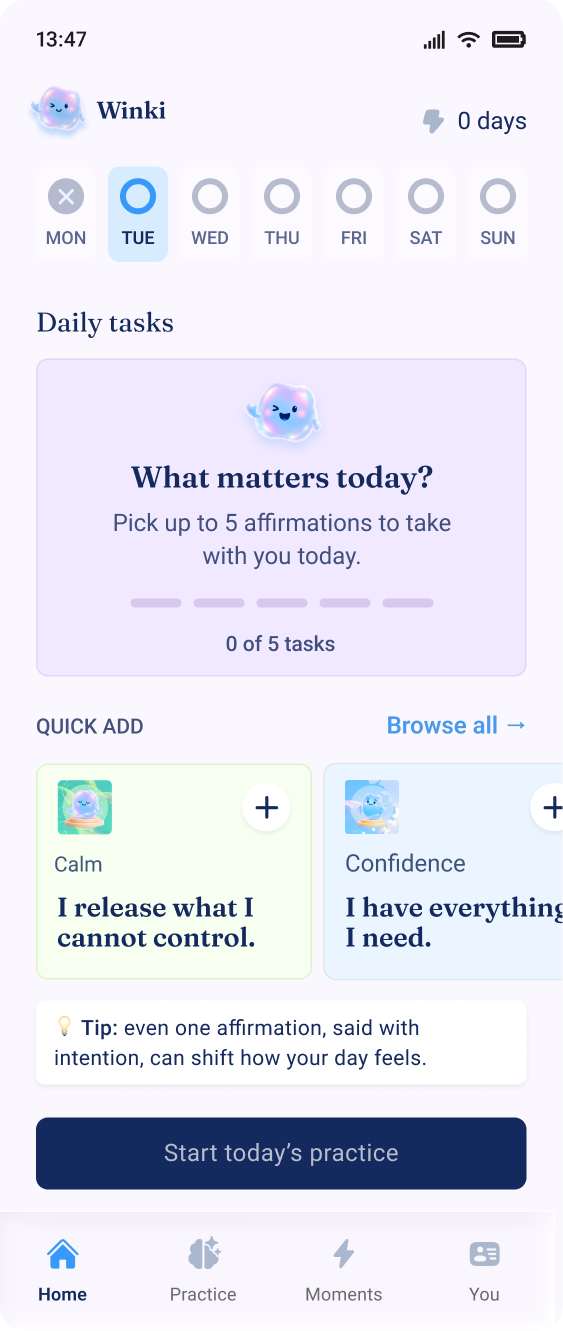
Inspiration
Research shows that our minds naturally tend to focus on negative or self-critical thoughts, allowing self-doubt to become the loudest voice 🥺 But self-talk isn’t fixed: with regular, realistic practice, we can build a calmer, kinder and more supportive inner voice. That insight inspired Winki.
Most affirmation apps make the experience passive: you read a sentence, swipe and move on – often repeating words that feel too unrealistic to believe. We wanted to make affirmations feel more active, grounded and intentional. Winki is built around one simple idea: don’t just read affirmations - say them out loud.
Instead of repeating unrealistic affirmations like “I am fearless”, Winki uses grounded phrases such as “I can feel afraid and still take the next step”. Saying them aloud turns passive reading into an active daily practice that feels honest, believable and useful.
What it does
Winki guides users through short, voice-first affirmation sessions.
Users choose a journey based on what they want to work on, such as confidence, self-worth, relationships, motivation, calm, or personal growth.
During a session, users hold dedicated touch points with their thumbs on the screen and say each affirmation aloud. The interface reacts to their touch and voice, making the experience feel more engaging and deliberate than simply scrolling through quotes.
Changing the way we speak to ourselves takes time, so Winki is designed around building a real practice, not a one-off feel-good moment. Daily tasks and streaks encourage users to come back, practise regularly and gradually turn more supportive self-talk into a habit.
How we built it
We designed Winki around a very focused interaction.
The training screen moves through several states: idle, ready, speaking, and completion. Animations become more active when both thumbs are placed on the screen and respond while the user is speaking.
We also structured the content into journeys instead of showing users an endless feed of generic affirmations. This gives every session a purpose and makes it easier to build a consistent daily habit.
Challenges we ran into
The biggest challenge was making such a simple idea feel meaningful rather than gimmicky.
Voice feedback needs to feel immediate, but too much animation quickly becomes distracting. We spent a lot of time balancing visual feedback, motion, and simplicity.
Accomplishments that we're proud of
We are especially proud of turning a normally passive experience into something interactive.
Instead of asking users to consume more content, Winki asks them to stop for a moment, focus, and actively participate.
What we learned
We learned that the interaction itself can be just as important as the content.
An affirmation is only a sentence, but asking someone to hold the phone, focus on the words, and actually speak them creates a much stronger experience.
We also learned that keeping the product simple is difficult. Every animation, interaction, and piece of copy has to support the core ritual rather than compete with it.
What's next for Winki: affirmations aloud
Next, we want to expand Winki with more journeys, better personalisation, smarter progress tracking, and more responsive voice interactions.
We want Winki to become more personal over time, adapting to the moments, themes and phrases that resonate with each user. We also plan to let users create, edit, save and organise their own affirmations – whether it’s advice from a therapist, words from someone they trust or a phrase for a specific challenge. This will turn Winki from a collection of ready-made affirmations into a personal toolkit for supportive self-talk.
The long-term goal is to make practising supportive self-talk aloud feel as natural as opening a meditation, fitness or journaling app.


Log in or sign up for Devpost to join the conversation.