-
-
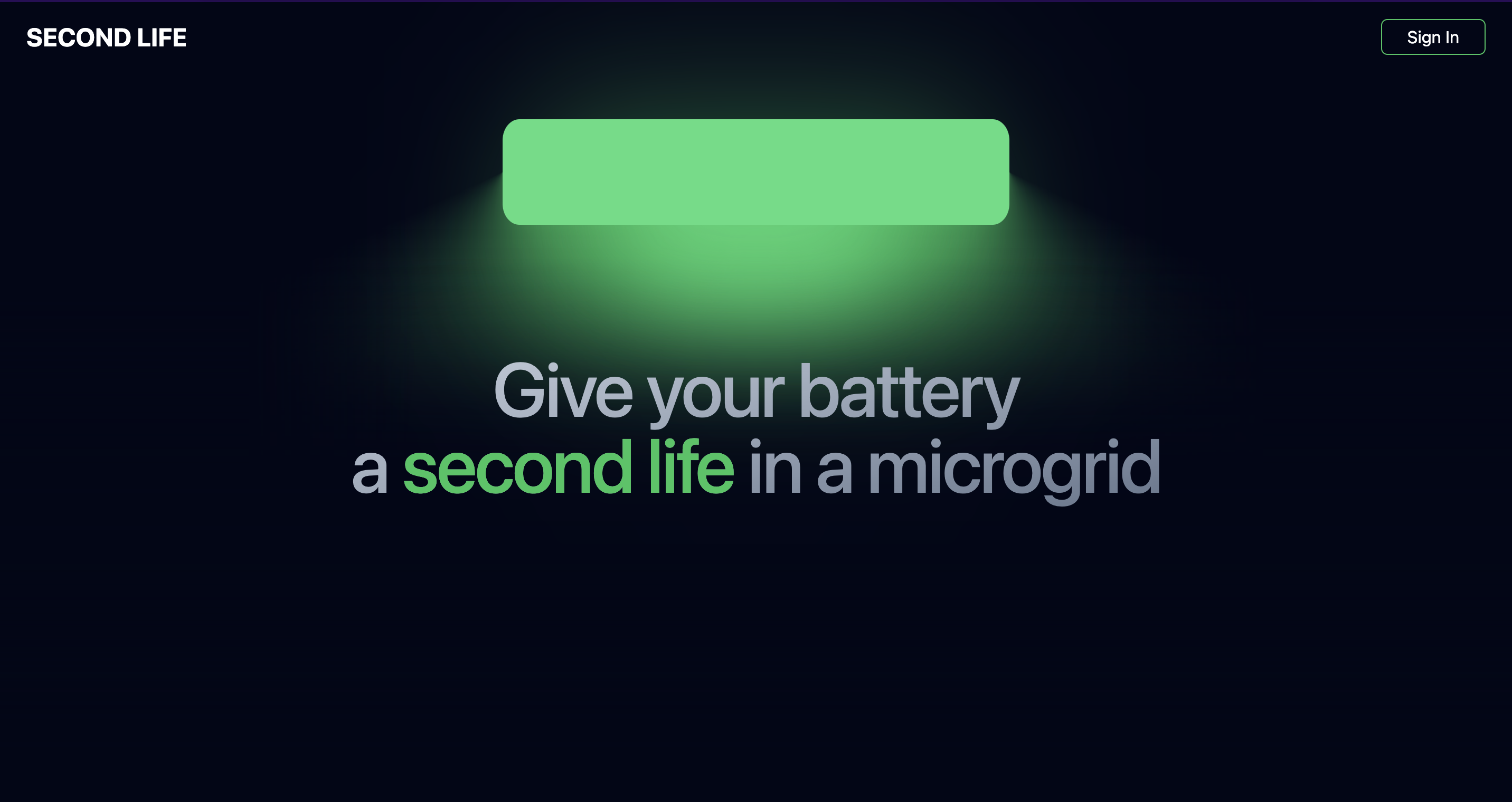
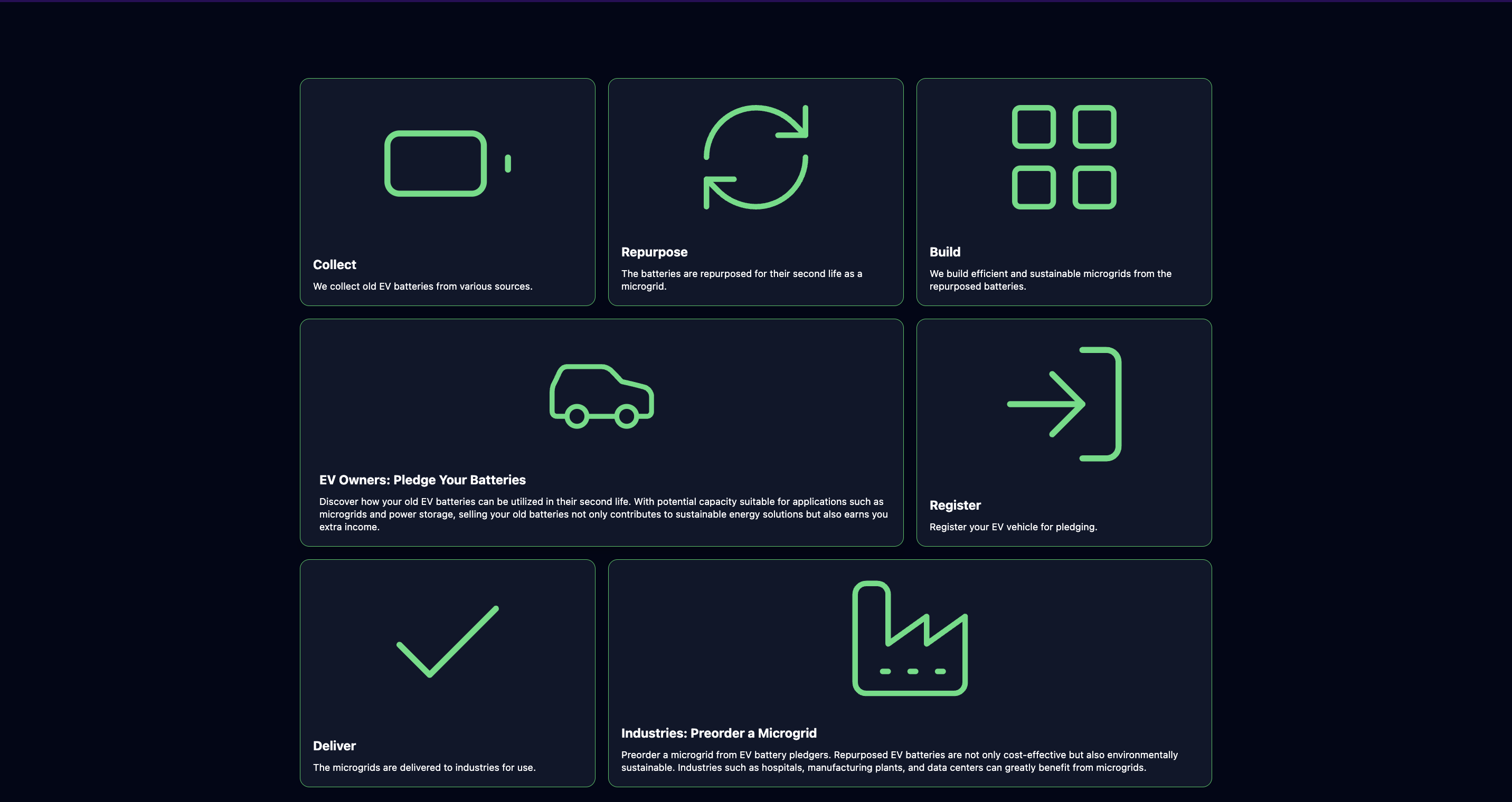
Hero Page
-
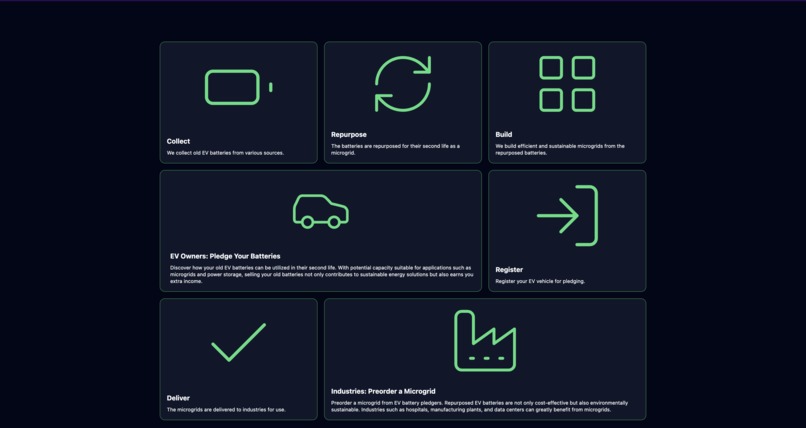
Bento Grid
-
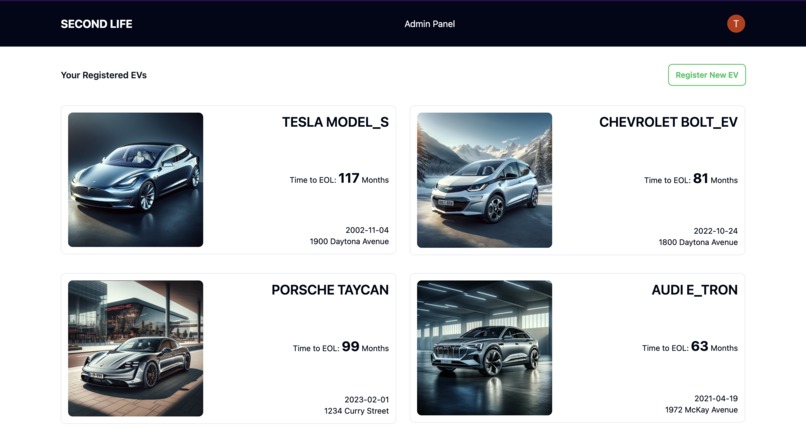
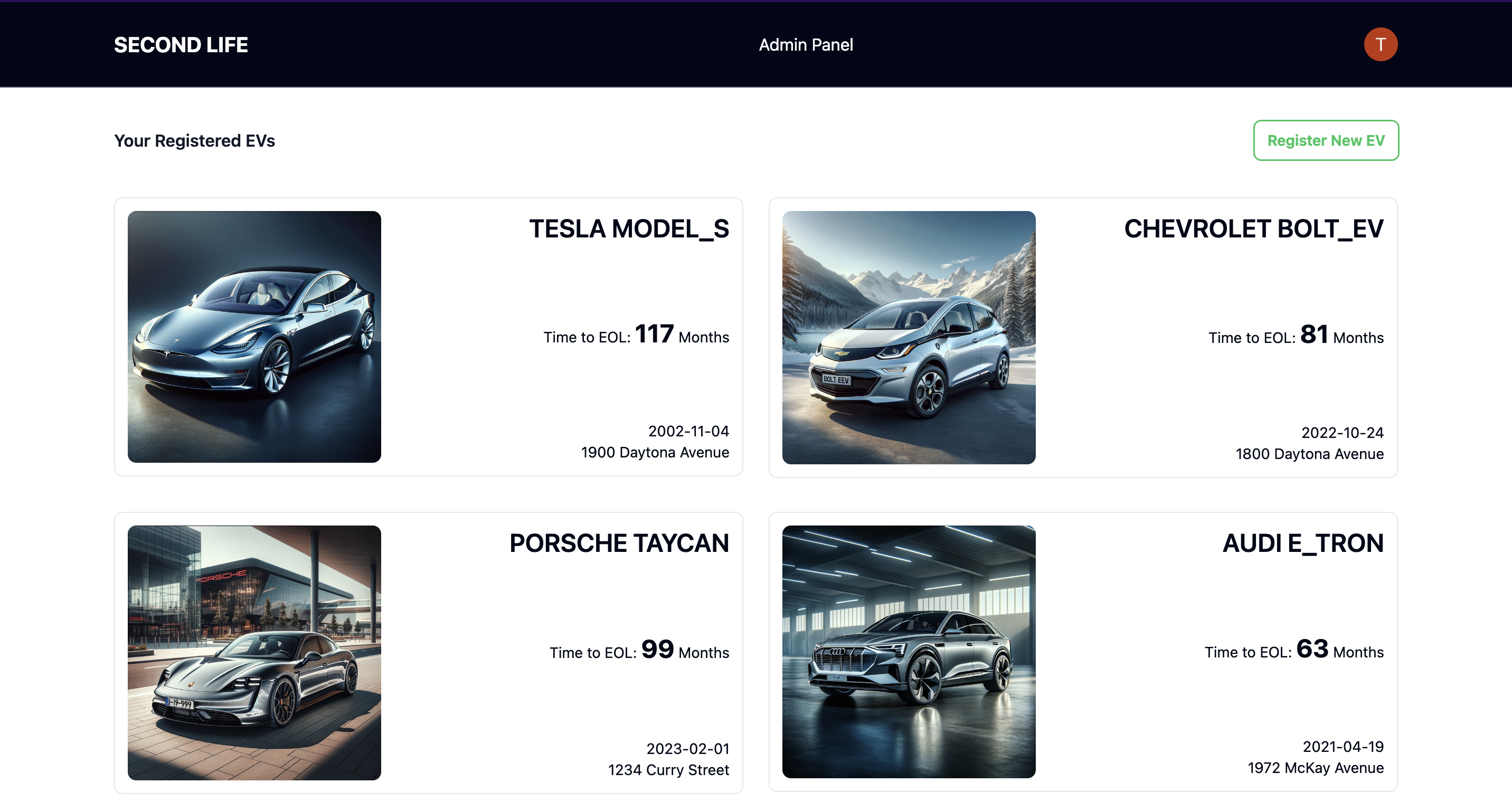
Pledge or Register EV
-
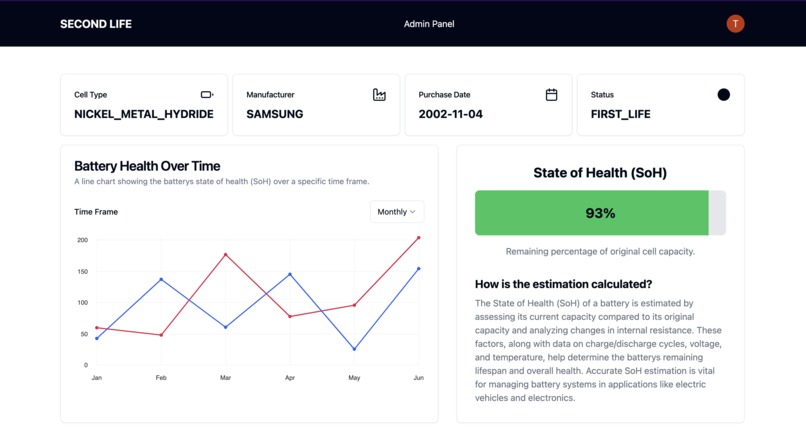
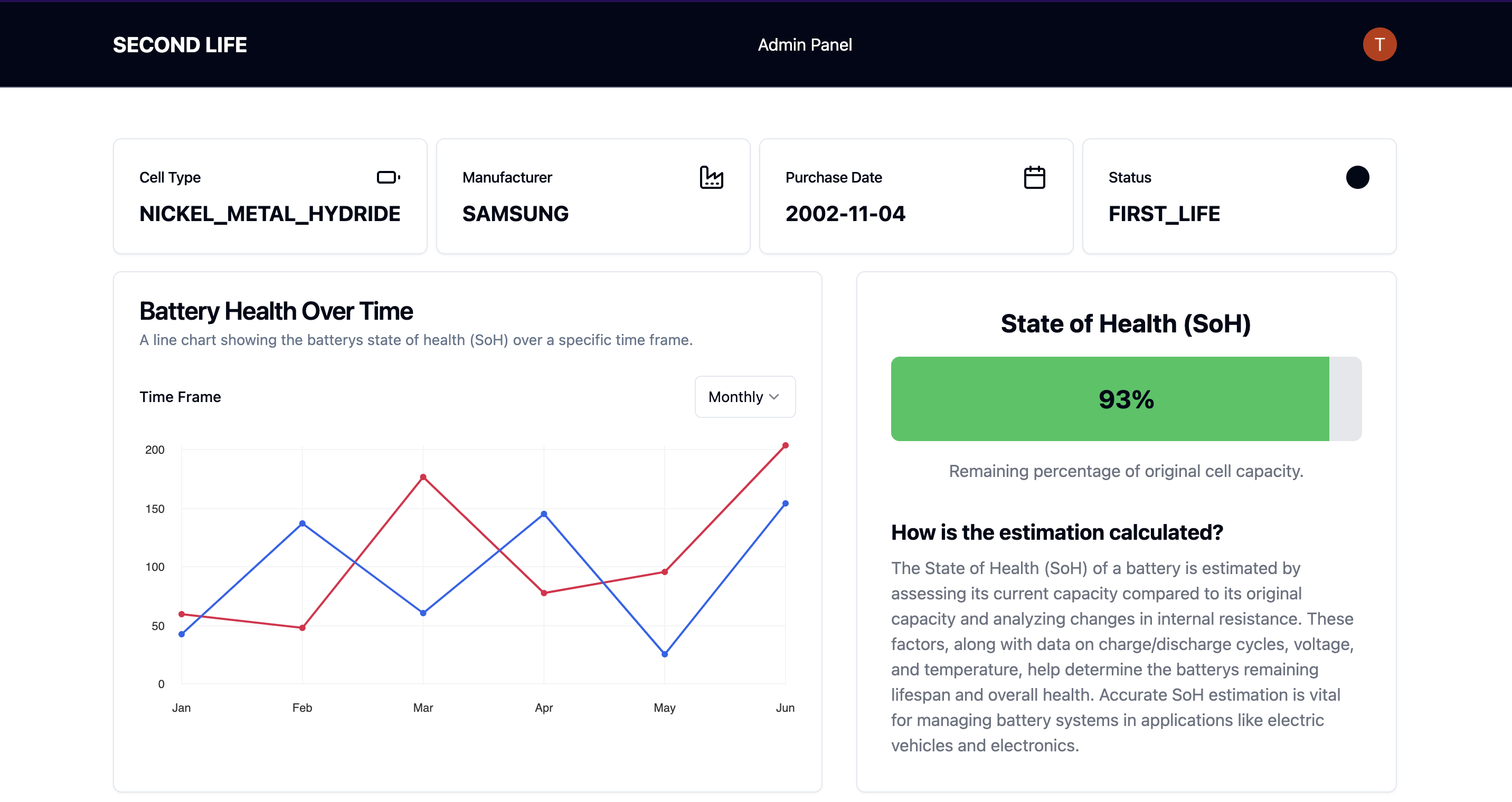
View Your EV's Passport and Eligibility for Second Life
-
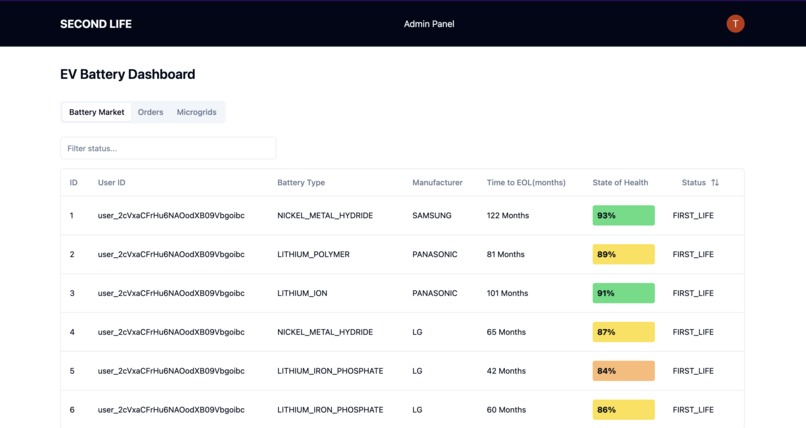
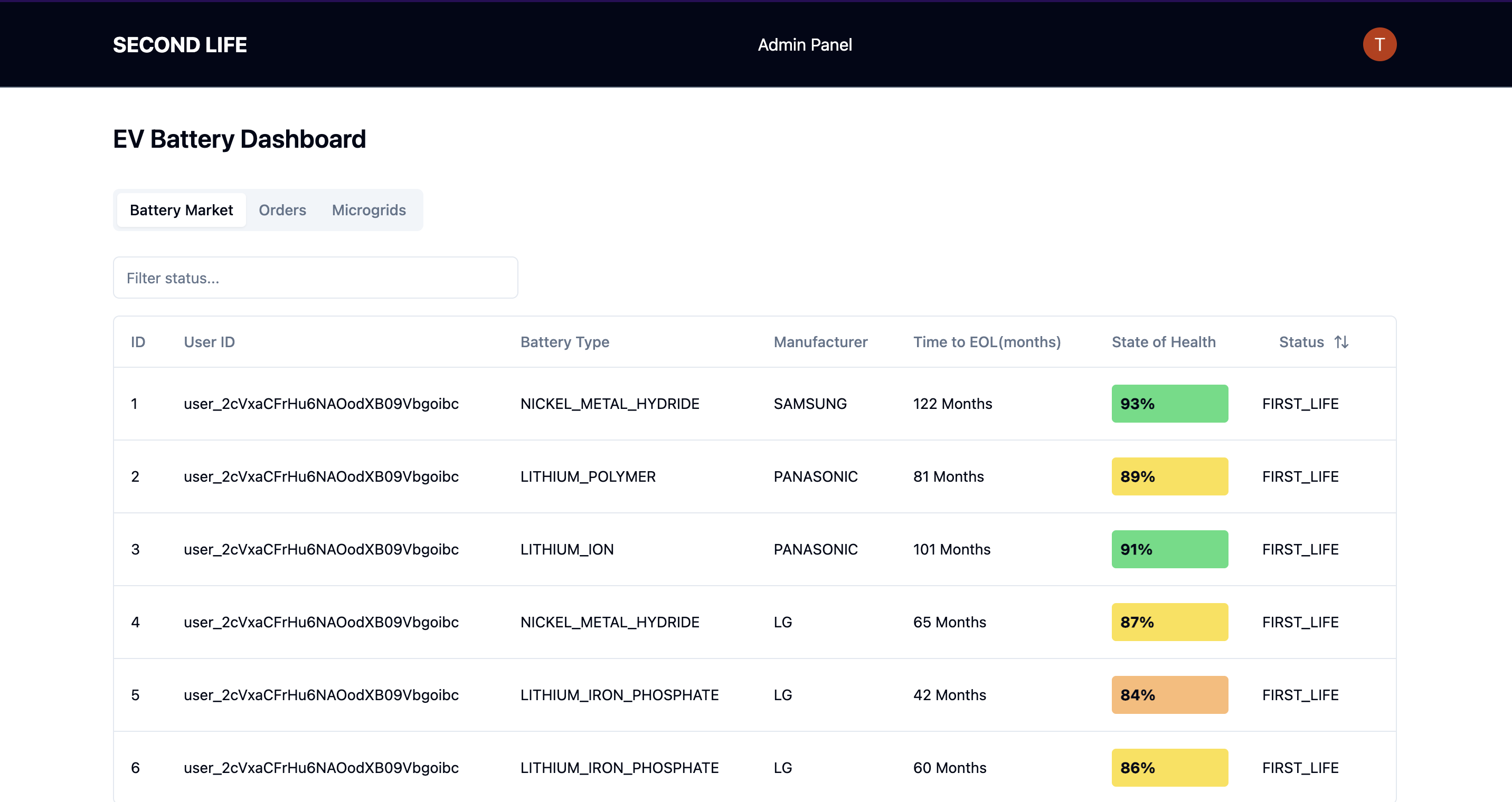
Current EV Battery Market and Inventory
-
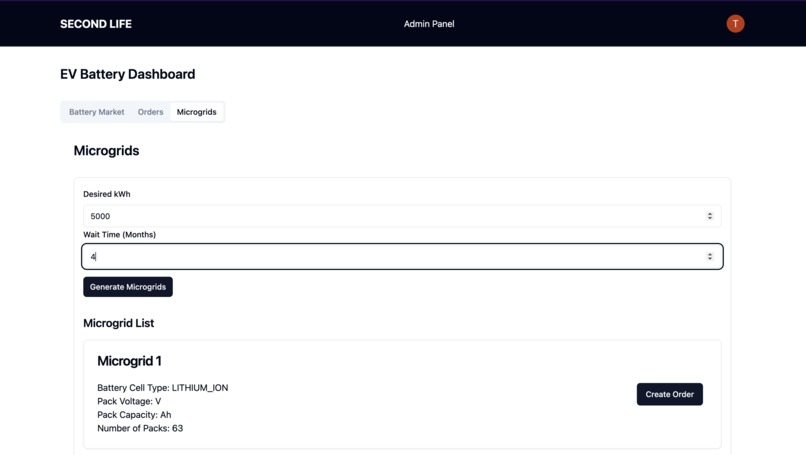
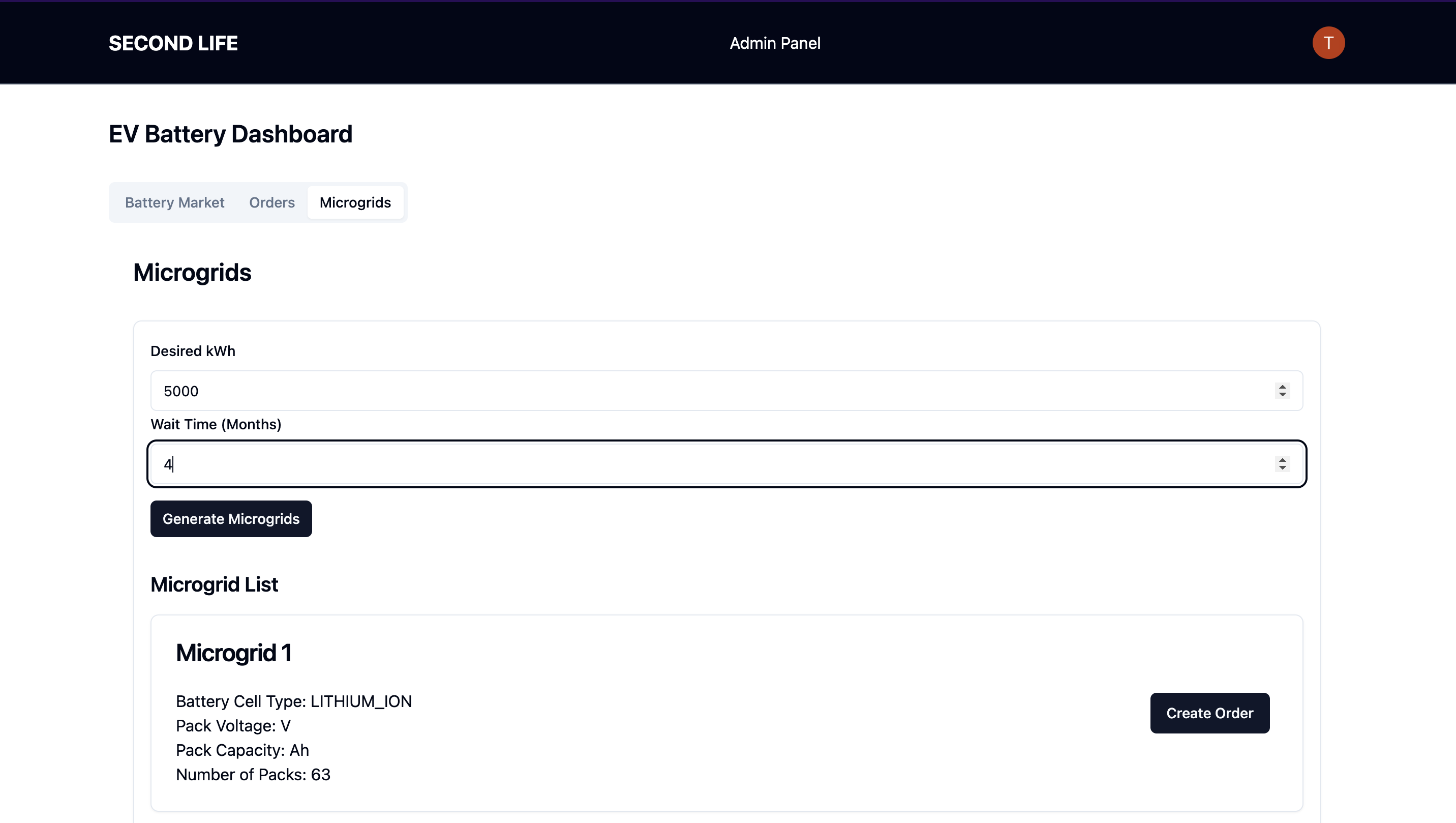
Order from Inventory based on Industry Microgrid Requirements
-
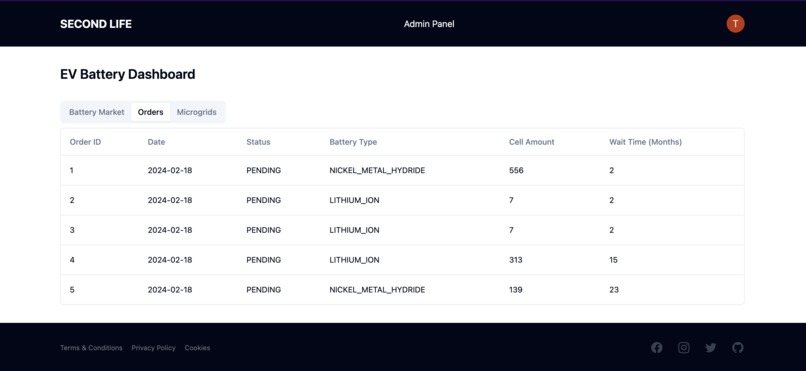
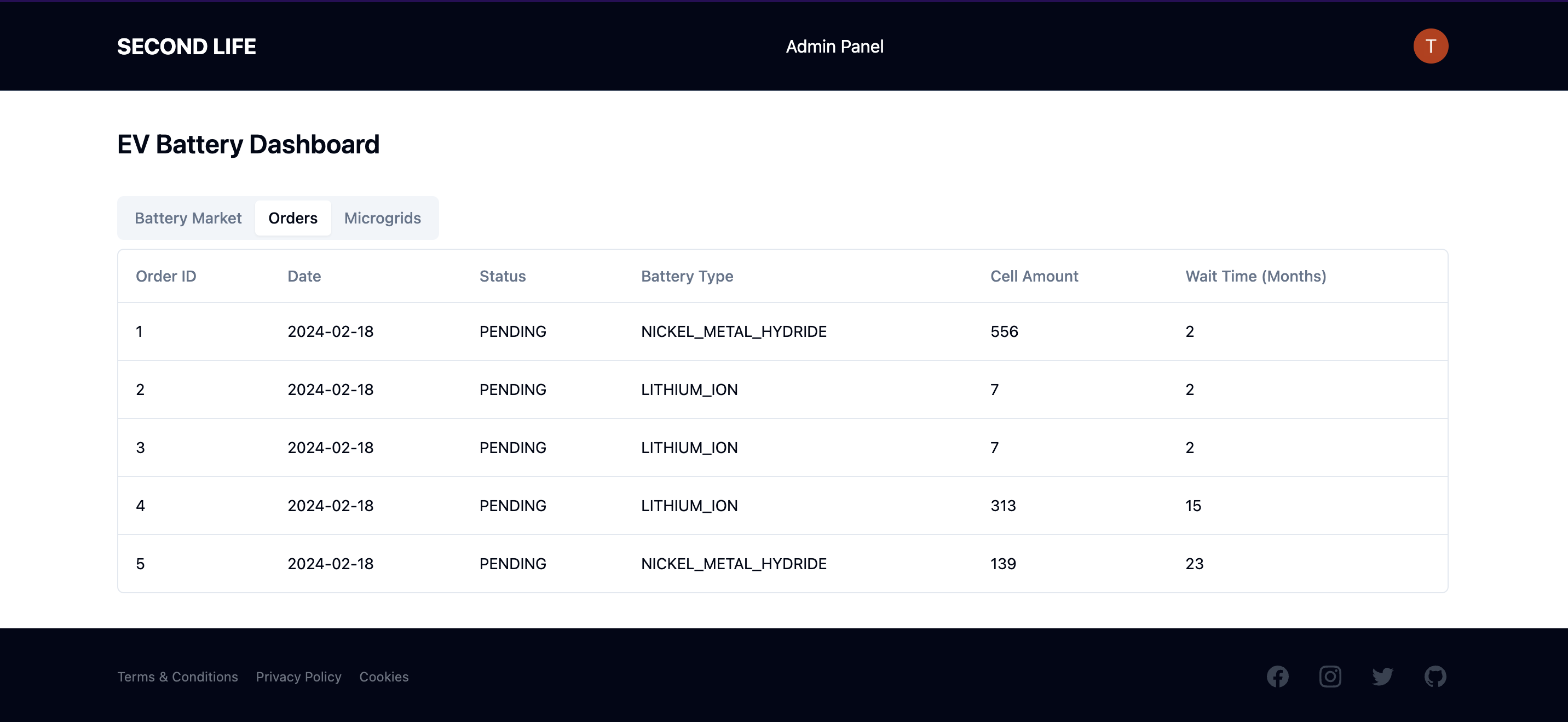
Industry Orders Page
https://drive.google.com/file/d/1xW566YGMhzTWguRCoE_tCwpv-GauX81S/view?usp=sharing
Inspiration
The inspiration for Second Life comes from the growing concern over the environmental impact of discarded electric vehicle (EV) batteries. With the rise of EVs, there's an urgent need to find sustainable solutions for batteries that have reached the end of their lifecycle in vehicles. Second Life is motivated by the opportunity to repurpose these batteries, reducing waste and contributing to renewable energy solutions by integrating them into microgrids or power blocks. This initiative not only addresses the challenge of battery disposal but also supports the transition to more sustainable energy systems.
What it does
Second Life is a platform that facilitates the collection, testing, and repurposing of end-of-life EV batteries into energy storage solutions, such as microgrids or power blocks. By giving these batteries a "second life," the platform helps to create cost-effective and environmentally friendly energy storage systems. These repurposed batteries can be used in various settings, including remote communities, industrial sites, and as backup power sources, enhancing energy resilience and reducing carbon footprints.
How we built it
- Frontend Development: Utilizes Next.js, a React framework that supports features like server-side rendering and static site generation, enhancing the user interface and experience.
- Hosting Service: Hosted on Vercel, ensuring seamless deployment, automatic scaling, and high performance for the platform.
- Backend Infrastructure: Powered by a Node.js API, providing a scalable solution for server-side logic.
- User Authentication: Integrated with Clerk for secure and user-friendly authentication, safeguarding user data and interactions.
- Database Management: Employs Prisma as the ORM for Node.js and TypeScript, facilitating efficient and type-safe database operations, crucial for managing the lifecycle and health data of collected batteries.
Challenges we ran into
A significant challenge we faced involved assumptions regarding data acquisition, specifically the state of health (SOH) of battery packs. Given the nature of our software project, we initially presumed that SOH data would be directly accessible from the vehicles via IoT technology. Furthermore, while we successfully developed a minimum viable product (MVP) pipeline for acquiring batteries from electric vehicle (EV) owners and managing inventory tailored to diverse microgrid configurations, the intricate process of physically engineering the microgrids remains a complex hurdle.
Accomplishments that we're proud of
We are proud of developing a fully functional MVP platform that bridges the gap between end-of-life EV batteries and their potential for second-life applications. It is a scalable software solution and we think that it has potential to become very relevant in the near future as a platform for giving EV batteries a Second Life.
What we learned
Throughout this project, the team gained insights into the complexities of battery technology, the logistics of recycling and repurposing materials, and the intricacies of energy storage systems.
What's next for Second Life
Moving forward, Second Life aims to find ways to monitor the State of Health of the batteries of EV owners so that we can track when an EV battery is eligible for its second life. As well, we aim to expand upon the platform so that industries can preorder a microgrid based on the available cells in our inventory.
Built With
- nextjs
- node.js
- prisma
- react
- typescript


Log in or sign up for Devpost to join the conversation.