-
-
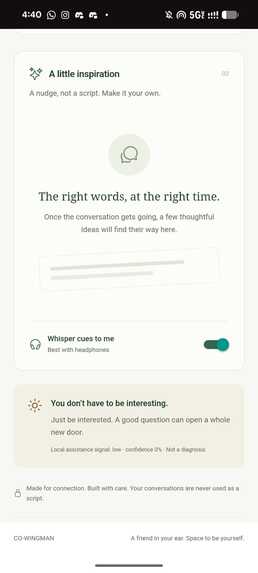
-
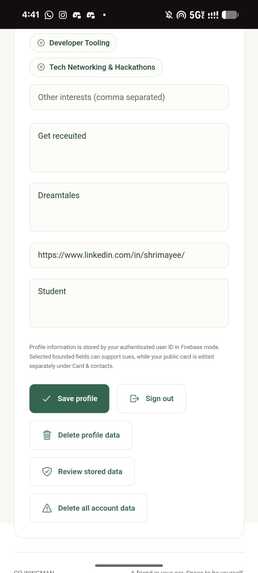
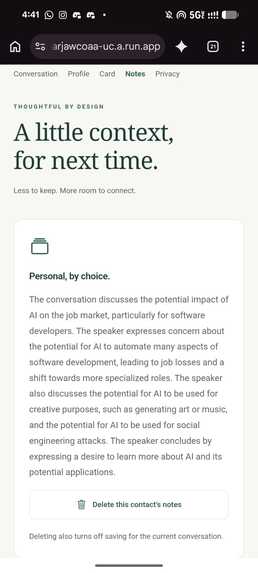
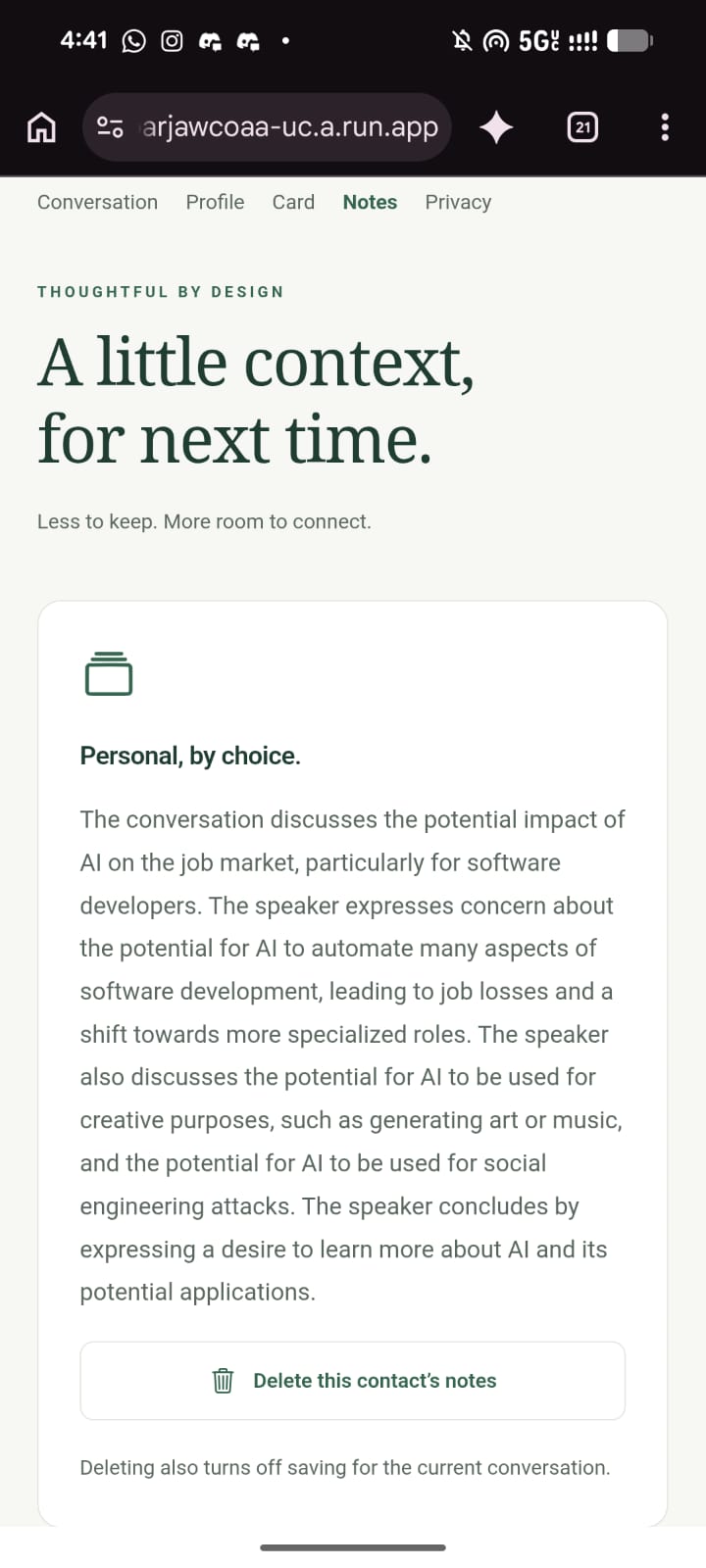
Summarize your experience
-
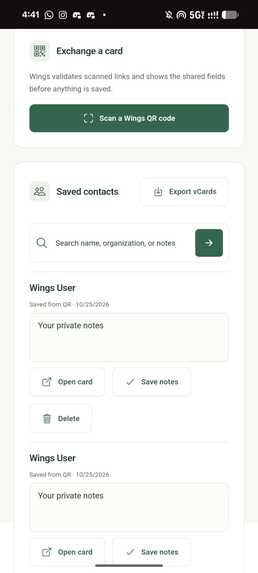
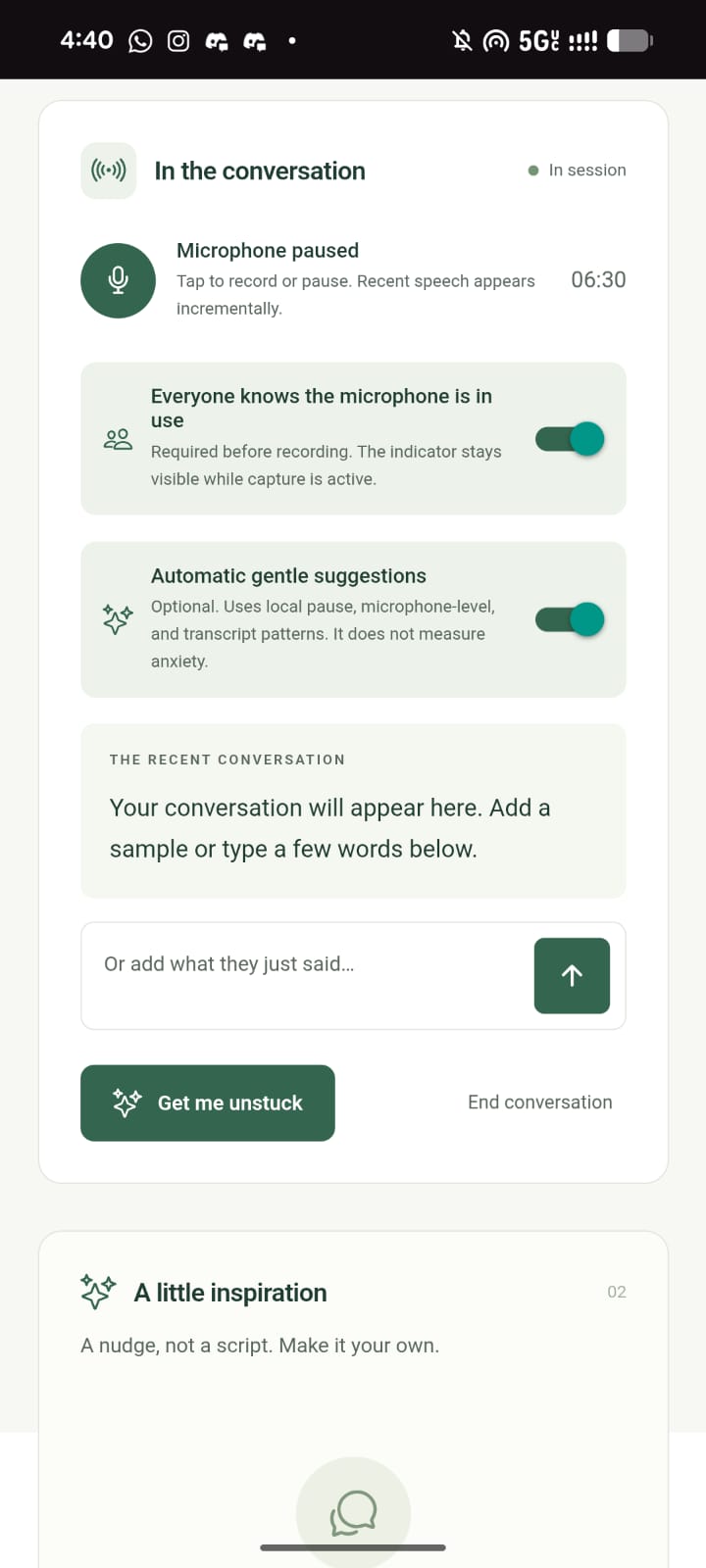
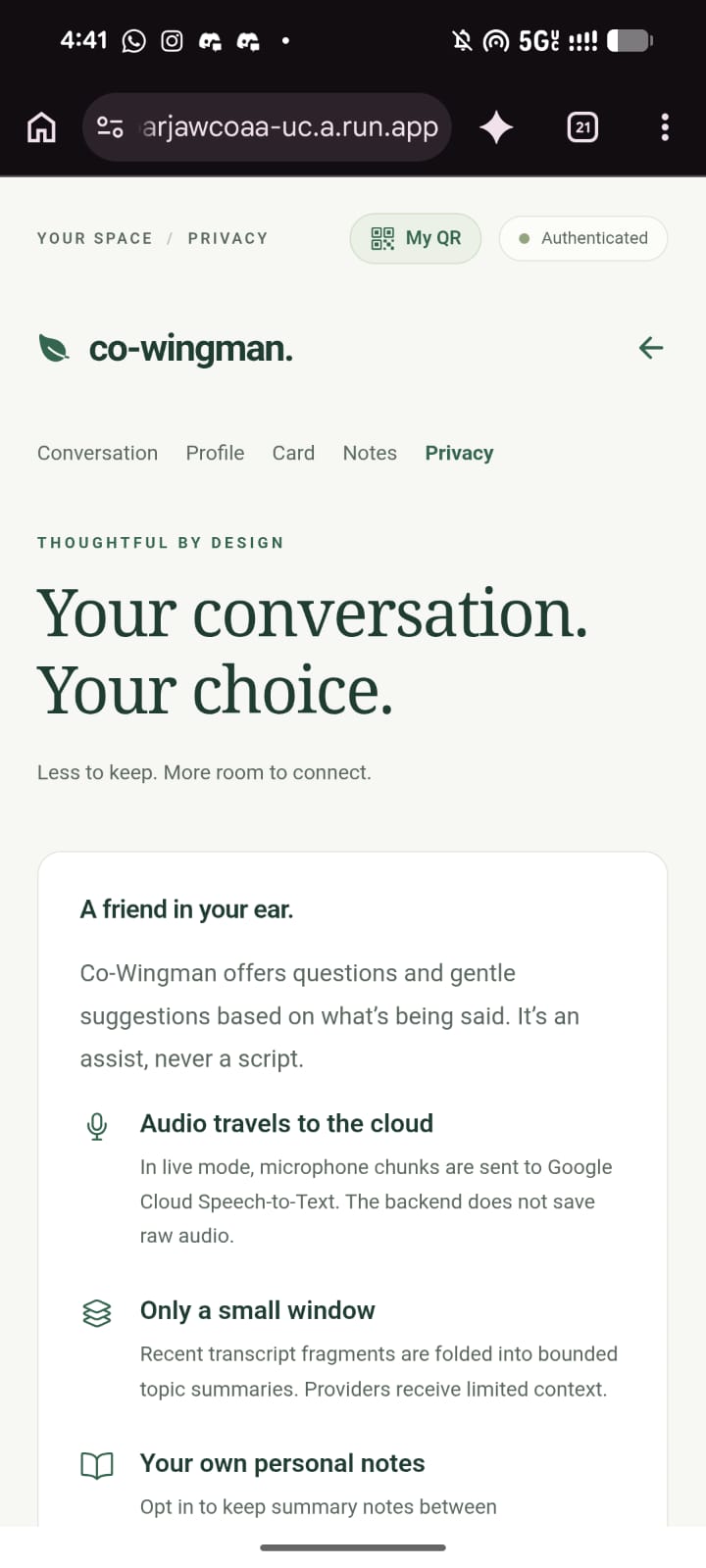
your private notes
-
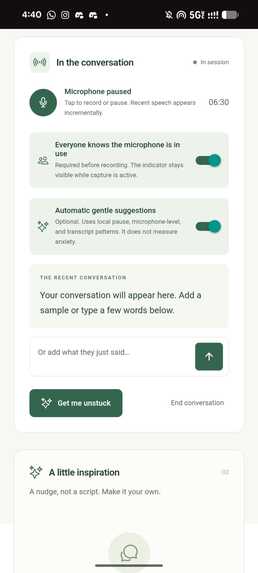
Chat preferences
-
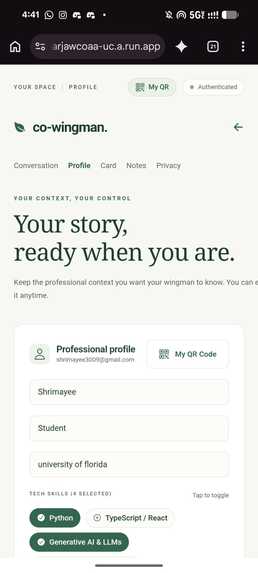
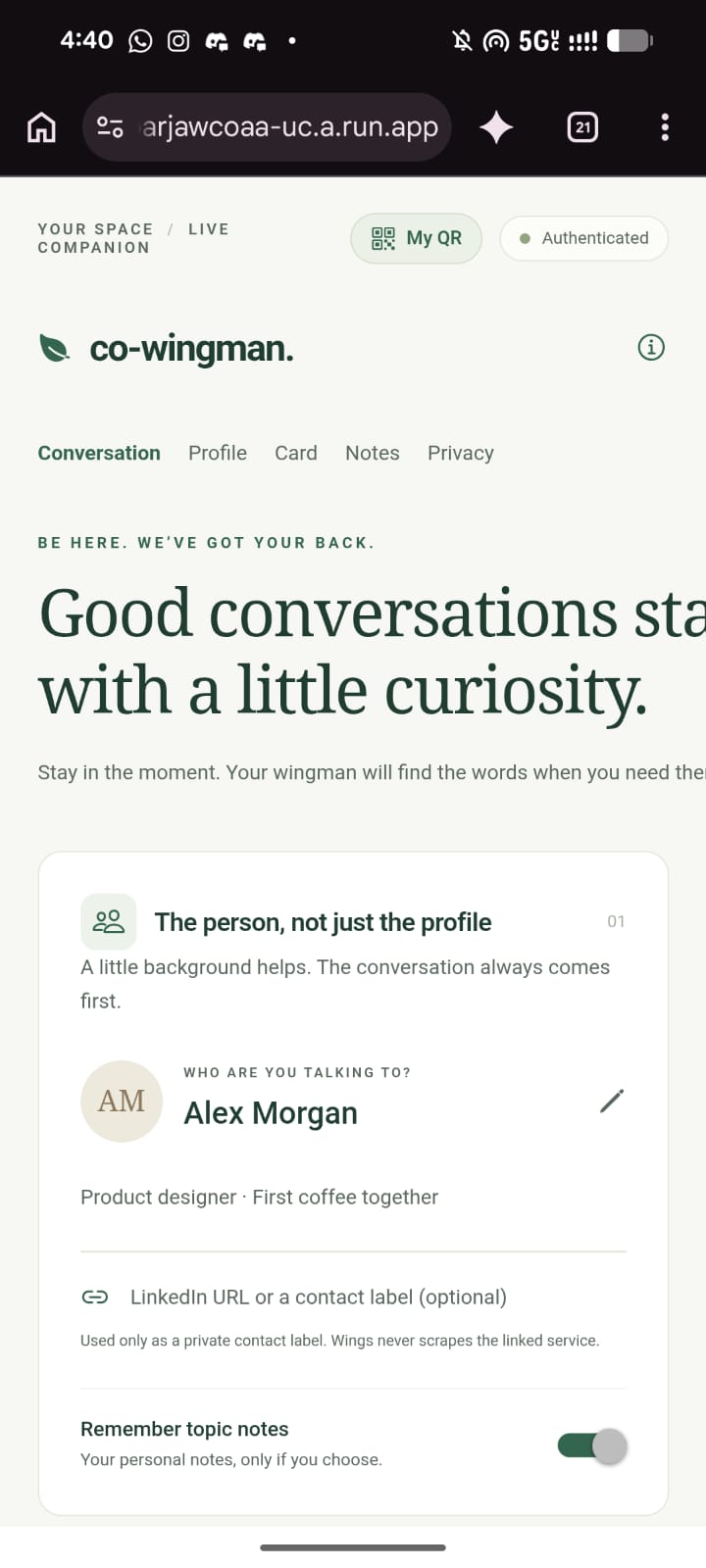
Start your experience
-
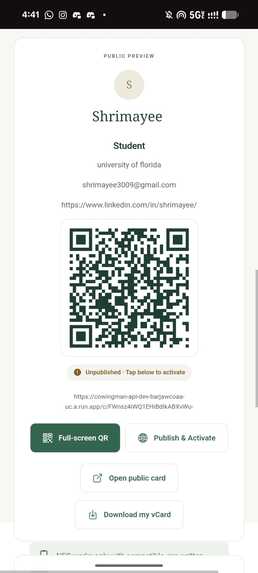
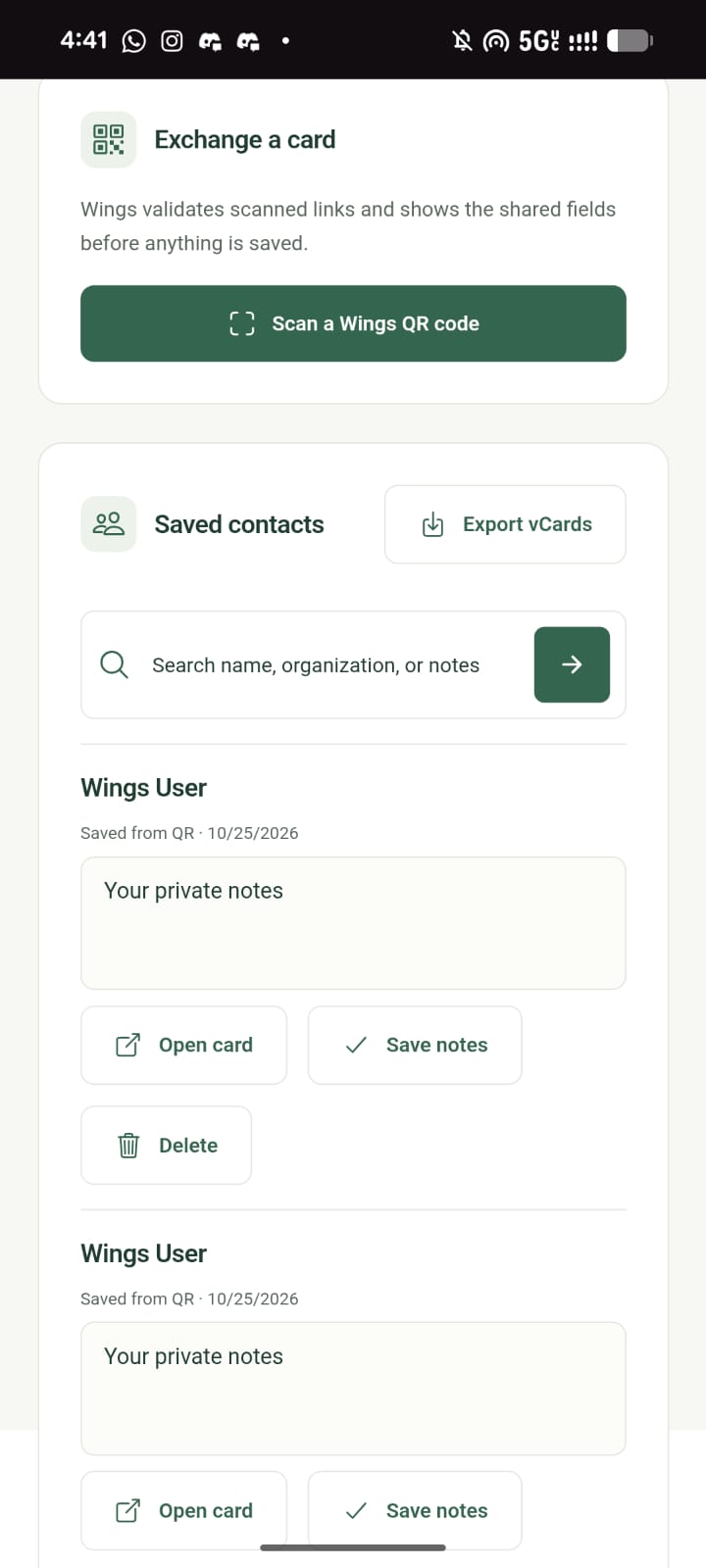
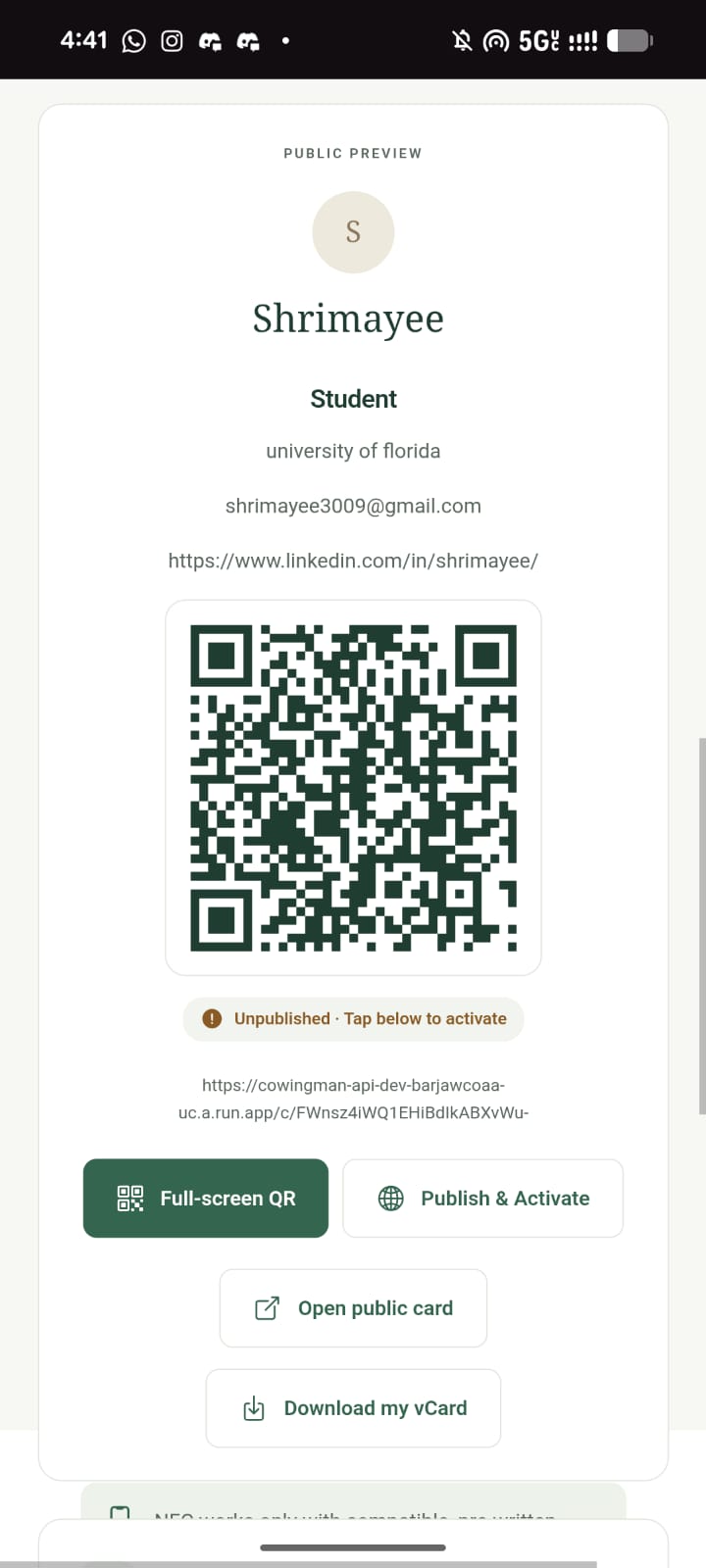
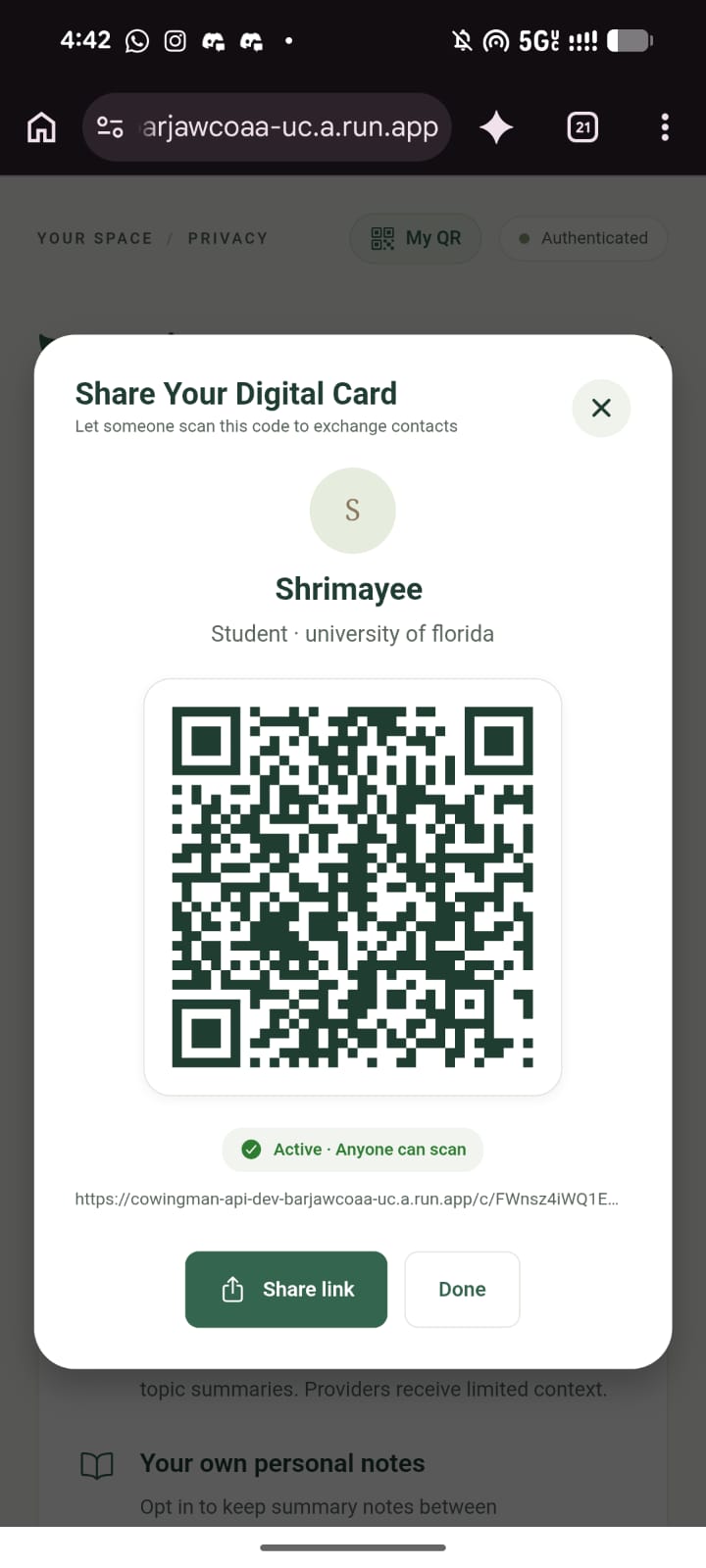
qr card to scan to exchange name card
-
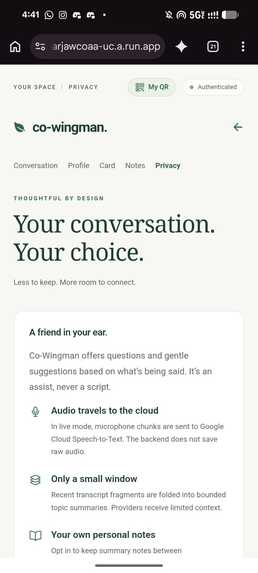
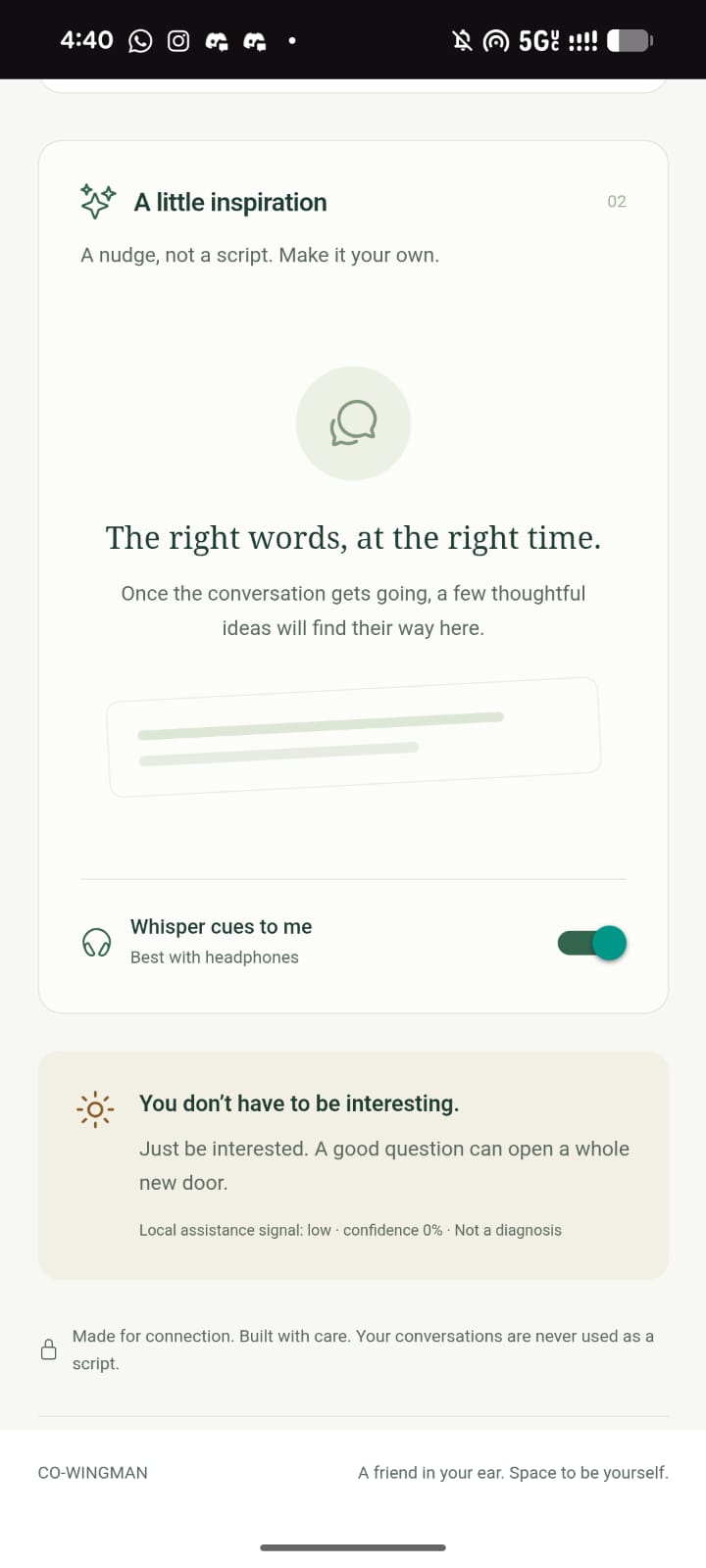
assistant to help with
-
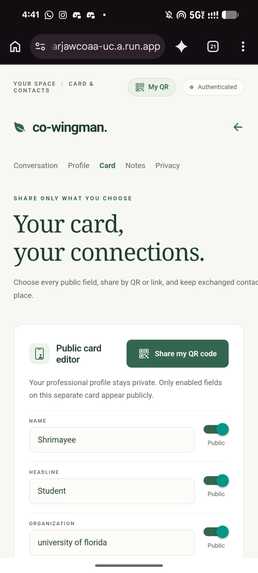
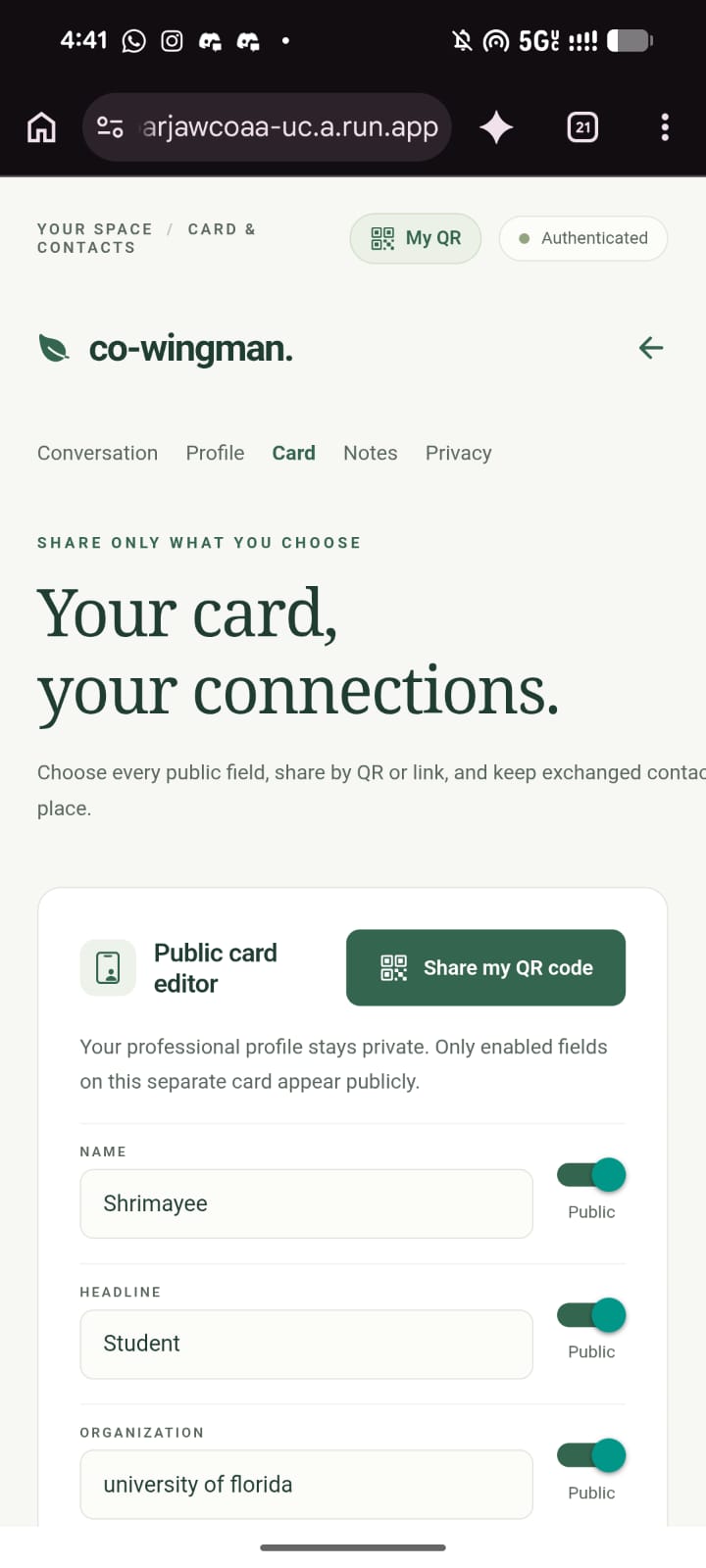
Your name card
-
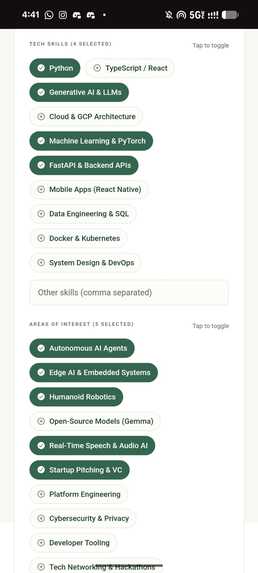
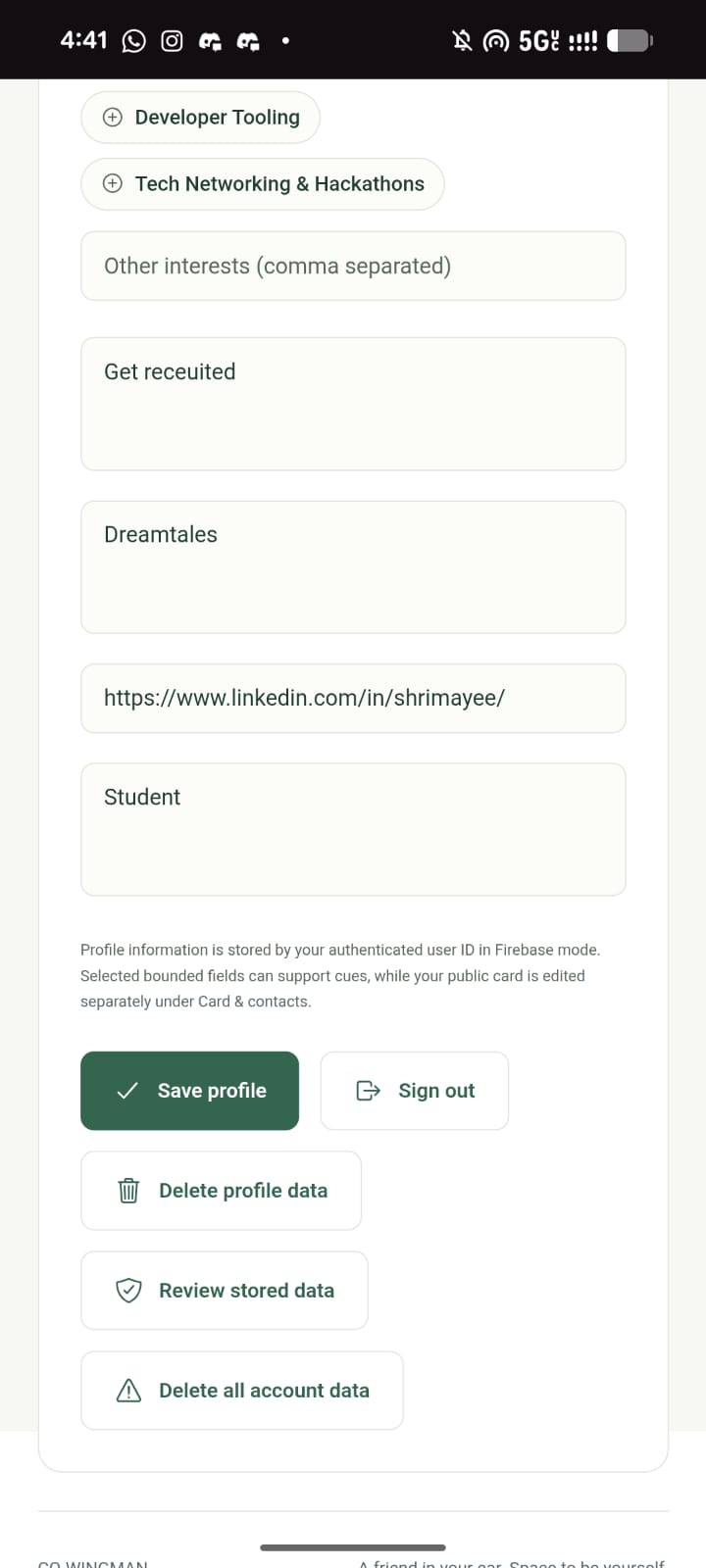
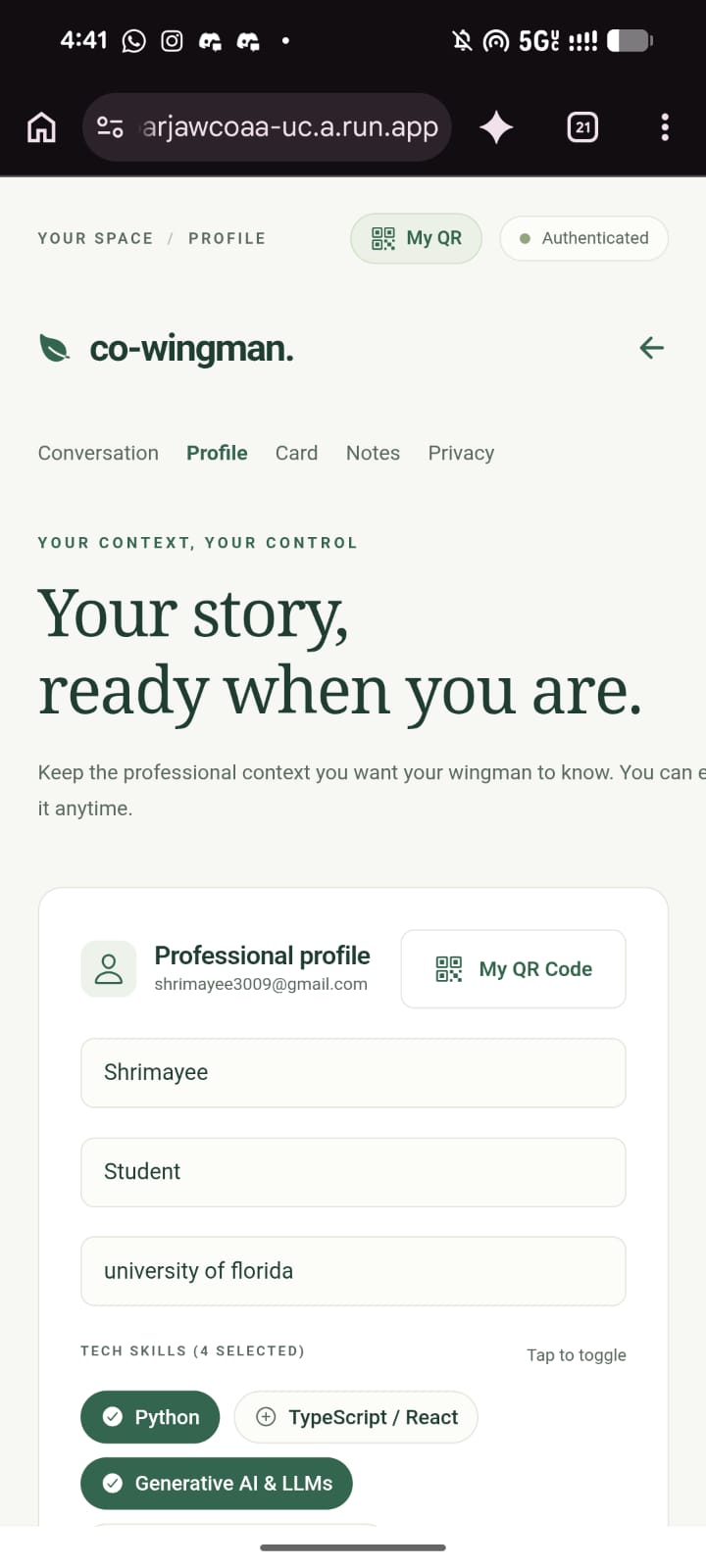
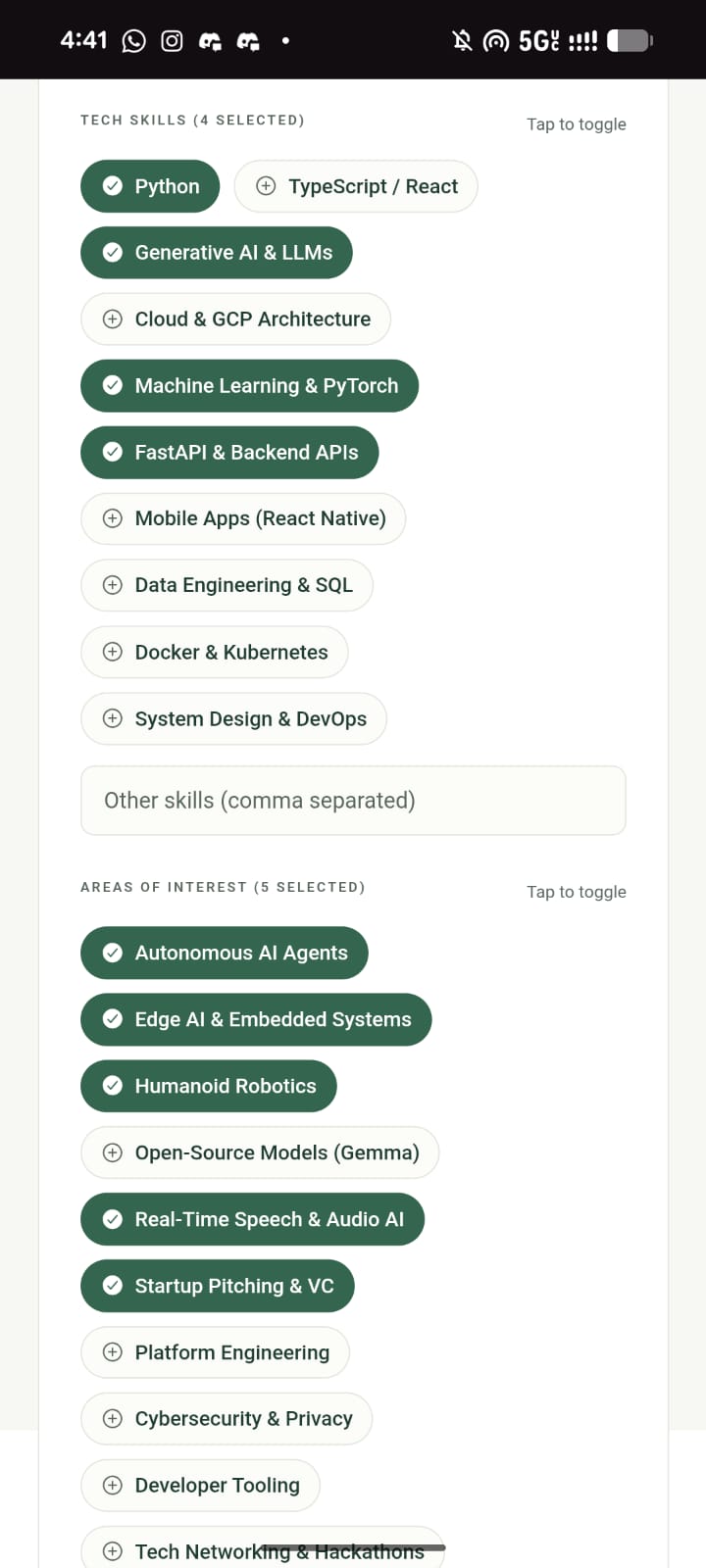
select your areas of interests that help ai help you to show what you like
-
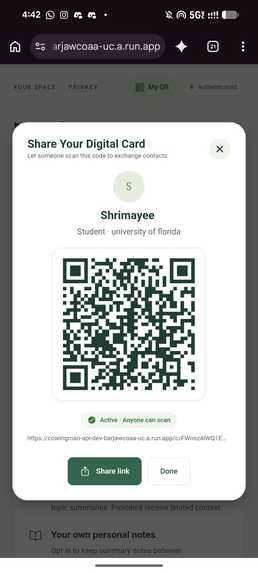
Scan my Name card to exchange details
-
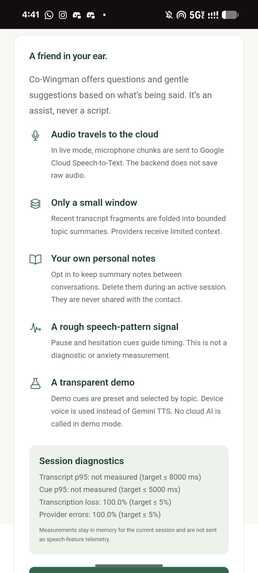
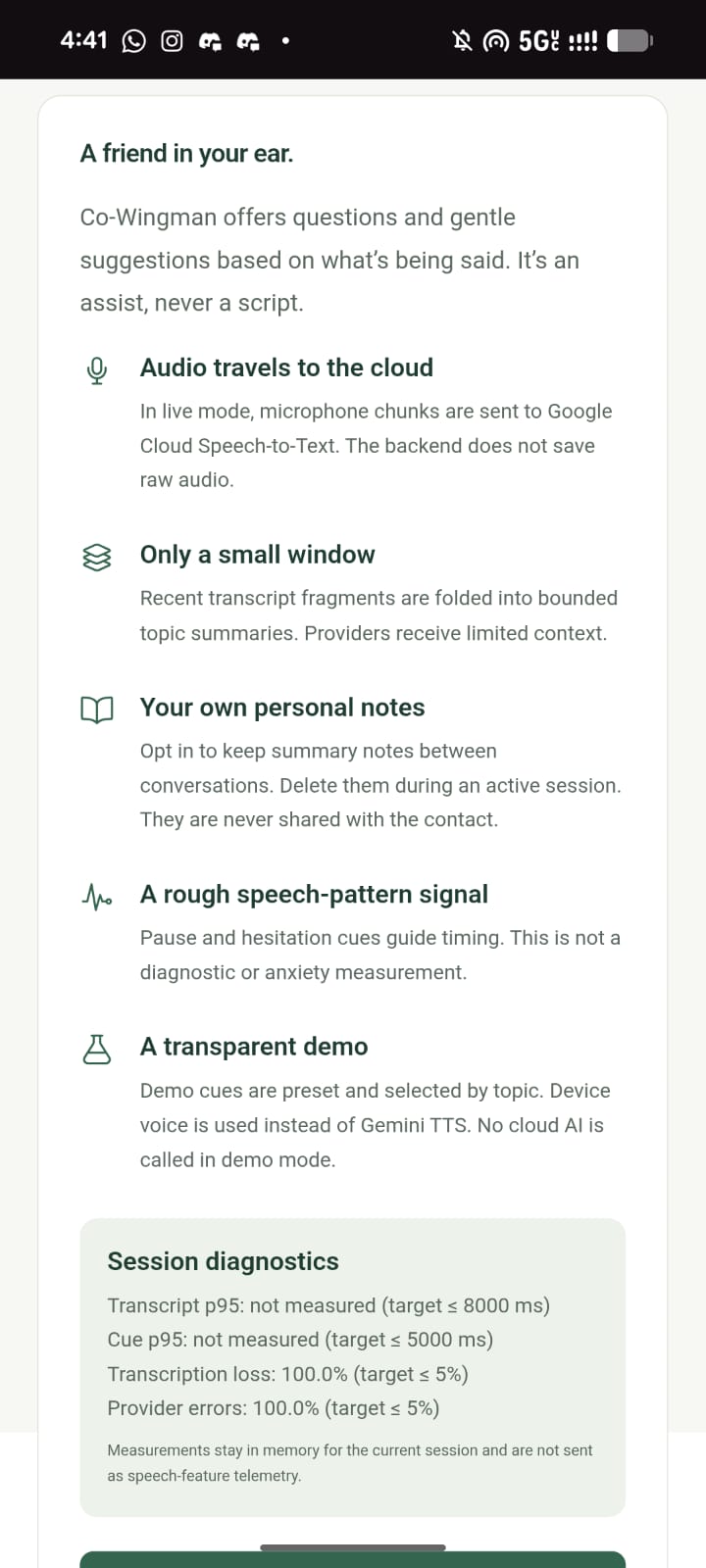
What is Cowingman
-
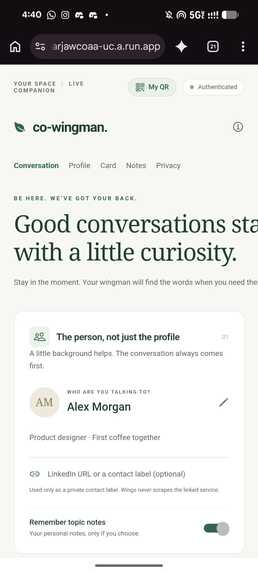
Preferences
-
What we do
-
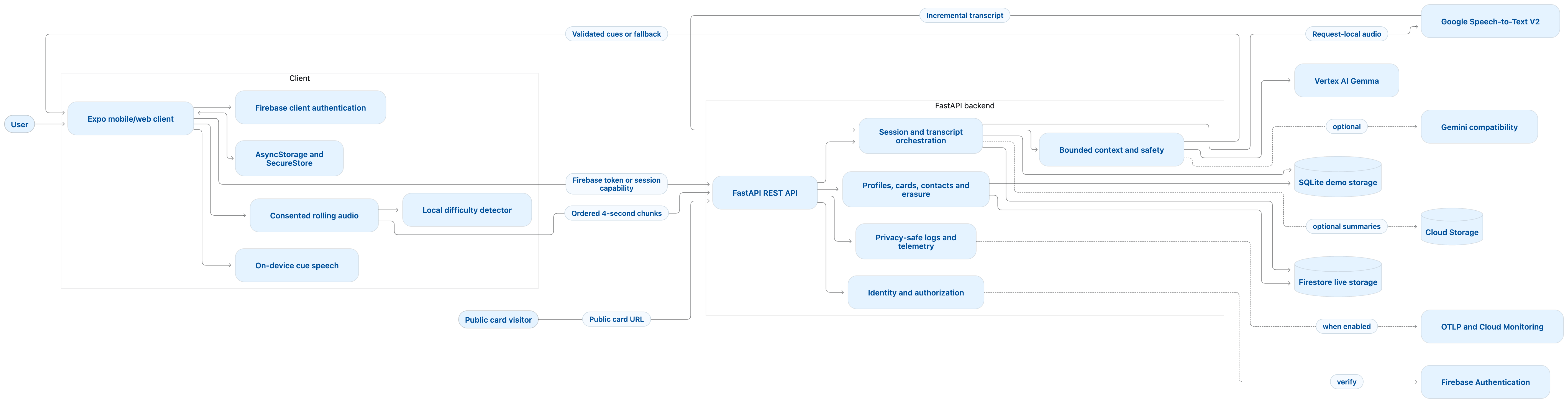
Architecture diagram
Inspiration
We've all been there. You walk into a networking event, meet someone interesting, and suddenly your mind goes blank. You forget their name, struggle to find the right words, or overthink what to say next. For people who experience social anxiety, even a simple conversation can feel overwhelming.
We started Wings with one question: What if everyone could have a personal wingman who helps them feel confident in any conversation?
We wanted to build something that doesn't replace human interaction but makes it easier, more natural, and more meaningful.
Our vision is simple: Technology should help us connect with people, not disconnect us from them.
What it does
Wings is an AI-powered, real-time conversation companion that helps you navigate social interactions with confidence.
Imagine having a wingman in your pocket who understands what's happening in your conversation and knows when you might need a little help.
Wings is designed to:
- Provide real-time conversation assistance: Understand the context of conversations and discreetly suggest what to say when you're stuck.
- Recognize moments of hesitation: Identify potential awkward silences, uncertainty, or conversational difficulties and offer timely support.
- Help you remember people: Keep track of names, important details, and previous interactions so you can reconnect naturally.
- Suggest meaningful questions: Offer personalized conversation starters and follow-up questions based on context.
- Make networking effortless: Enable digital business card exchanges using NFC technology.
- Build stronger connections: Generate conversation summaries and help you remember what matters about the people you meet.
Unlike traditional AI chatbots, Wings is designed to assist during real-world conversations rather than requiring you to stop interacting and type into a chat.
It's not about having AI speak for you. It's about helping you become the best version of yourself.
How we built it
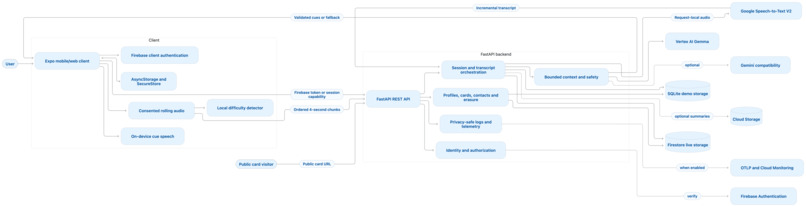
We designed Wings around a real-time, context-aware AI architecture that brings together speech processing, language models, and mobile technology.
Our technical approach includes:
- Google Cloud Platform (GCP): Cloud infrastructure for hosting and managing backend services.
- Google Vertex AI: AI infrastructure for deploying and serving our language model.
- Gemma 4: The language model selected to understand conversational context and generate useful, natural suggestions.
- vLLM: High-performance model serving for efficient inference.
- Real-time audio processing: A planned pipeline for capturing and processing live conversations.
- Context-aware AI processing: An architecture designed to maintain conversational context, recognize relevant moments, and produce helpful responses.
- NFC integration: Planned functionality for quickly exchanging contact information.
- Observability and monitoring: Instrumentation to measure system performance, latency, errors, and AI response quality.
We are taking a milestone-driven development approach, starting with the foundational infrastructure and AI integration before building out the complete real-time mobile experience.
Our biggest architectural priority is keeping Wings responsive, discreet, and useful without interrupting the natural flow of conversation.
Challenges we ran into
Building an AI assistant for real-world conversations introduces challenges beyond those of a traditional chatbot.
1. Real-time latency
Conversations move quickly. A suggestion that arrives several seconds too late can become irrelevant. Designing an architecture capable of delivering contextually useful responses with low latency is one of our biggest technical challenges.
2. Knowing when to intervene
An effective wingman doesn't constantly interrupt. It knows when to step in and when to stay quiet. Determining when someone might need help without making the experience distracting is a central product challenge.
3. Understanding conversational context
Human conversations are unpredictable. People interrupt each other, change subjects, use sarcasm, and communicate through subtle cues. Building an AI system that can maintain context and generate relevant suggestions requires careful orchestration.
4. Privacy and trust
Wings deals with real conversations, which can contain sensitive personal information. Designing consent-aware audio processing, responsible data handling, and user-controlled memory is essential to earning trust.
5. Making AI feel invisible
We don't want users staring at their phones while talking to someone. Designing assistance that feels natural and unobtrusive is just as important as building powerful AI capabilities.
Accomplishments that we're proud of
One of our biggest accomplishments has been turning a relatable social problem into a concrete product vision and technical development roadmap.
We're particularly proud of:
- Defining a human-centered AI experience: Rather than building another chatbot, we've designed a product focused on improving face-to-face interaction.
- Establishing a milestone-based development plan: Breaking an ambitious real-time AI product into practical, achievable engineering stages.
- Designing our cloud AI architecture: Selecting Google Cloud, Vertex AI, Gemma 4, and vLLM as the foundation for our conversational intelligence.
- Prioritizing observability from the beginning: Treating latency, reliability, and system behavior as first-class engineering concerns.
- Thinking beyond conversation suggestions: Envisioning a complete networking companion that combines AI guidance, contact exchange, conversational memory, and relationship building.
Most importantly, we're proud that Wings focuses on a problem that technology often overlooks: helping people feel more confident connecting with one another.
What we learned
Building Wings has reinforced an important lesson: The most useful AI isn't always the AI that talks the most. Sometimes, it's the AI that knows when to stay silent.
We've learned that creating a great conversational assistant requires much more than connecting a language model to a microphone.
It requires understanding human behavior, preserving conversational context, minimizing latency, building user trust, and delivering assistance at exactly the right moment.
We also learned the importance of designing for real-world conditions. Networking events can be noisy, conversations can be unpredictable, and users may need help without having time to interact with an app.
Finally, we've learned that the most meaningful applications of AI aren't necessarily about automating human tasks. Sometimes, they're about empowering people to do things they already want to do, but with more confidence.
What we want to do in future
Scale this, privacy analysis, reduce latency for queue generation
Built With
- ai-assistant\
- artificial-intelligence\
- context-aware-ai\
- conversational-ai\
- gemma-4\
- generative-ai\
- google-cloud\
- large-language-models\
- machine-learning\
- mobile-app\
- natural-language-processing\
- networking\
- nfc\
- python\
- real-time-ai\
- social-ai\
- speech-recognition\
- vertex-ai\
- vllm\


Log in or sign up for Devpost to join the conversation.