-
-

Our logo
-
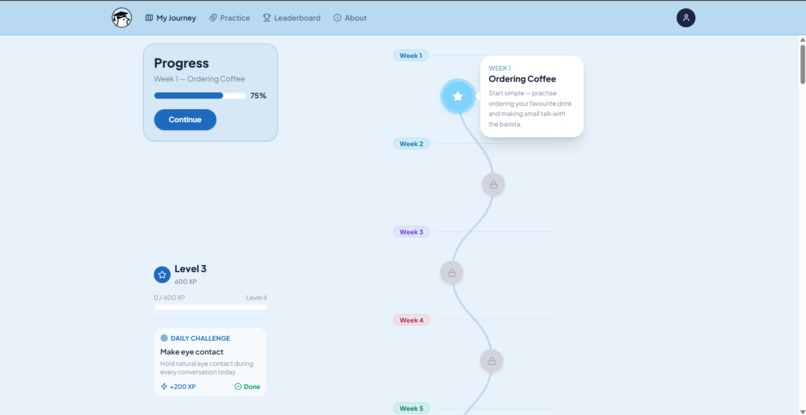
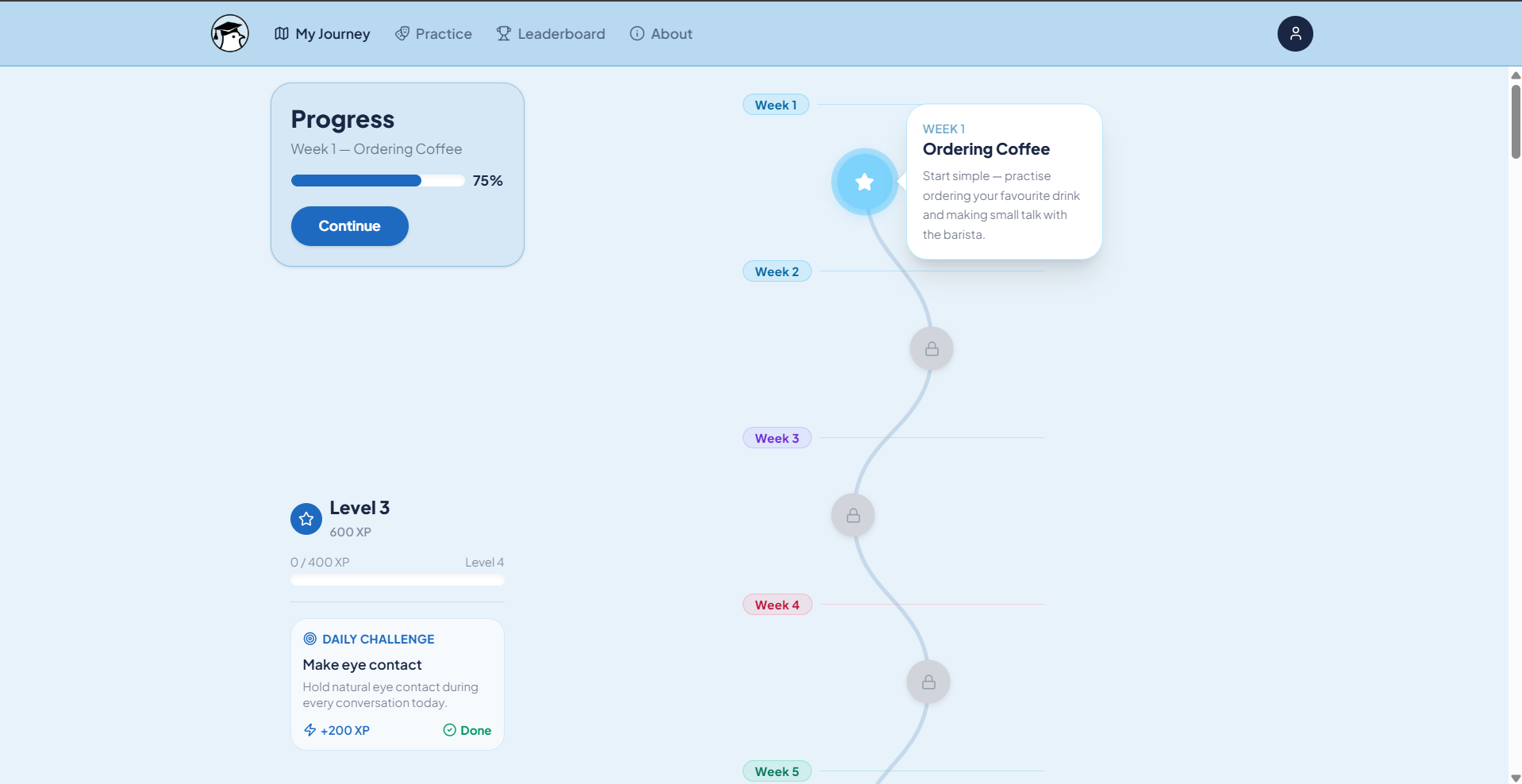
Our main learning tree pahe
-
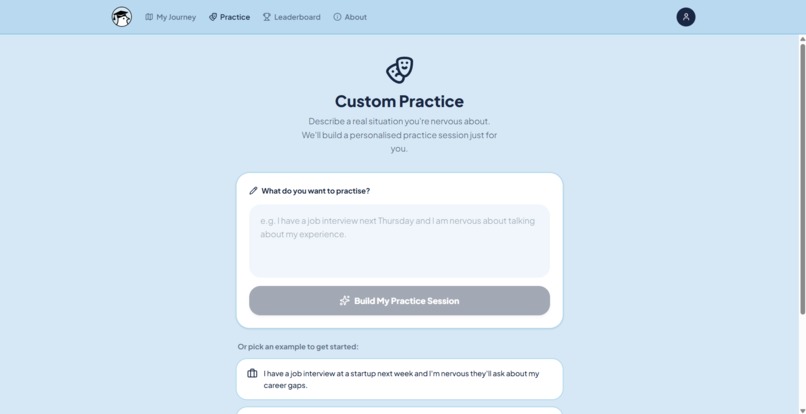
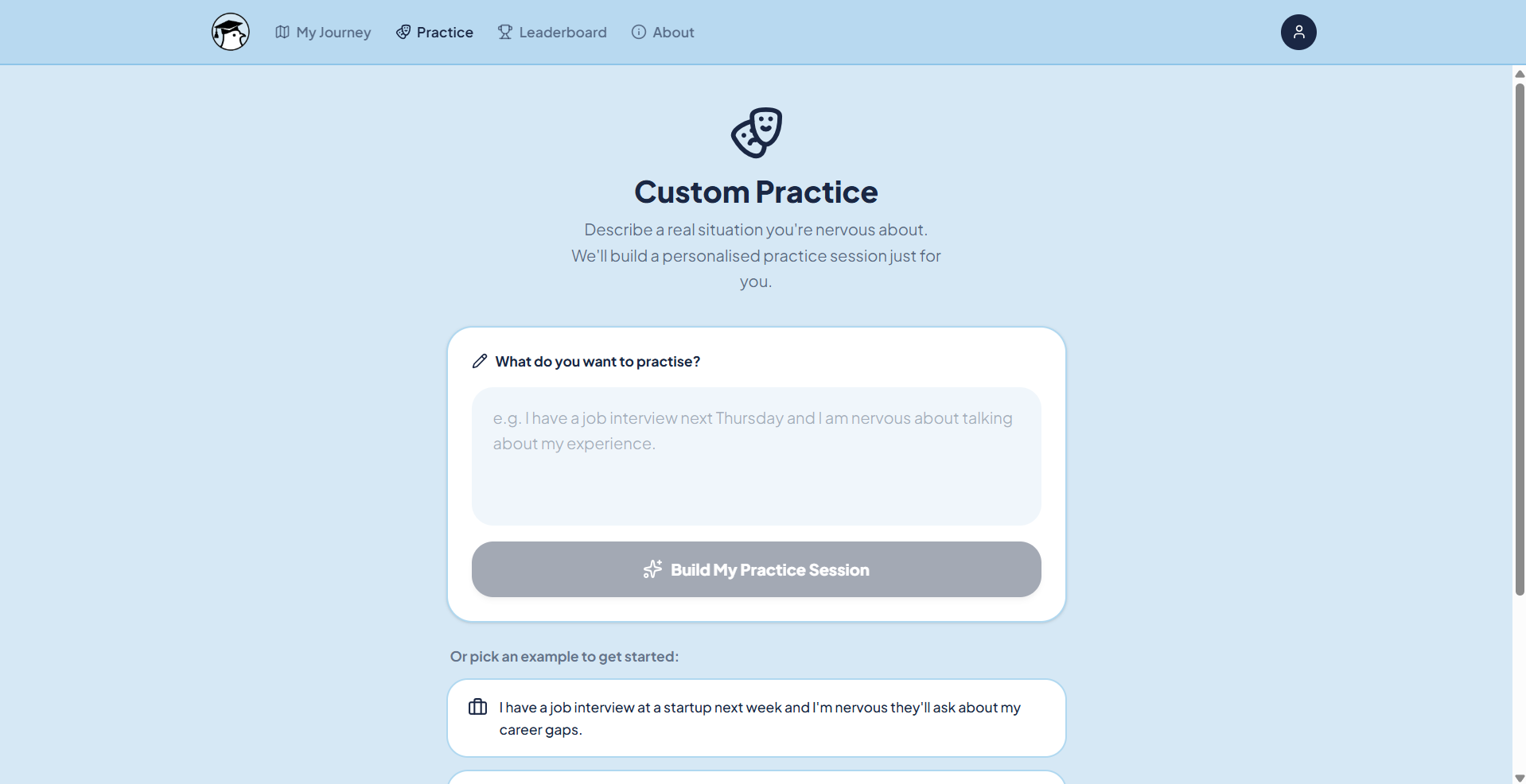
Custom Scenario page where you can put in a personalised scenario to train with
-
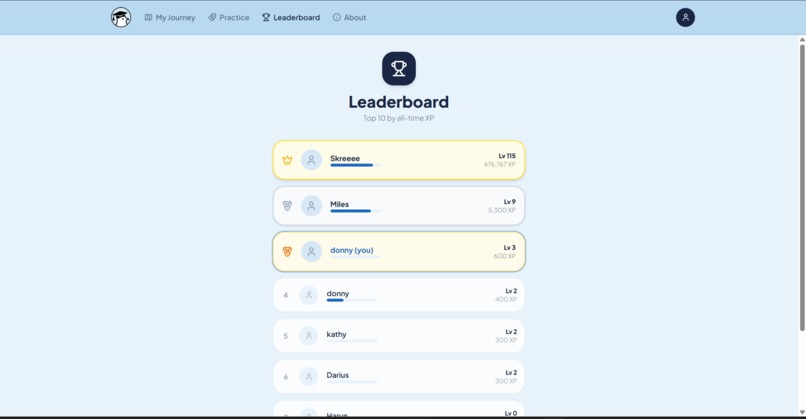
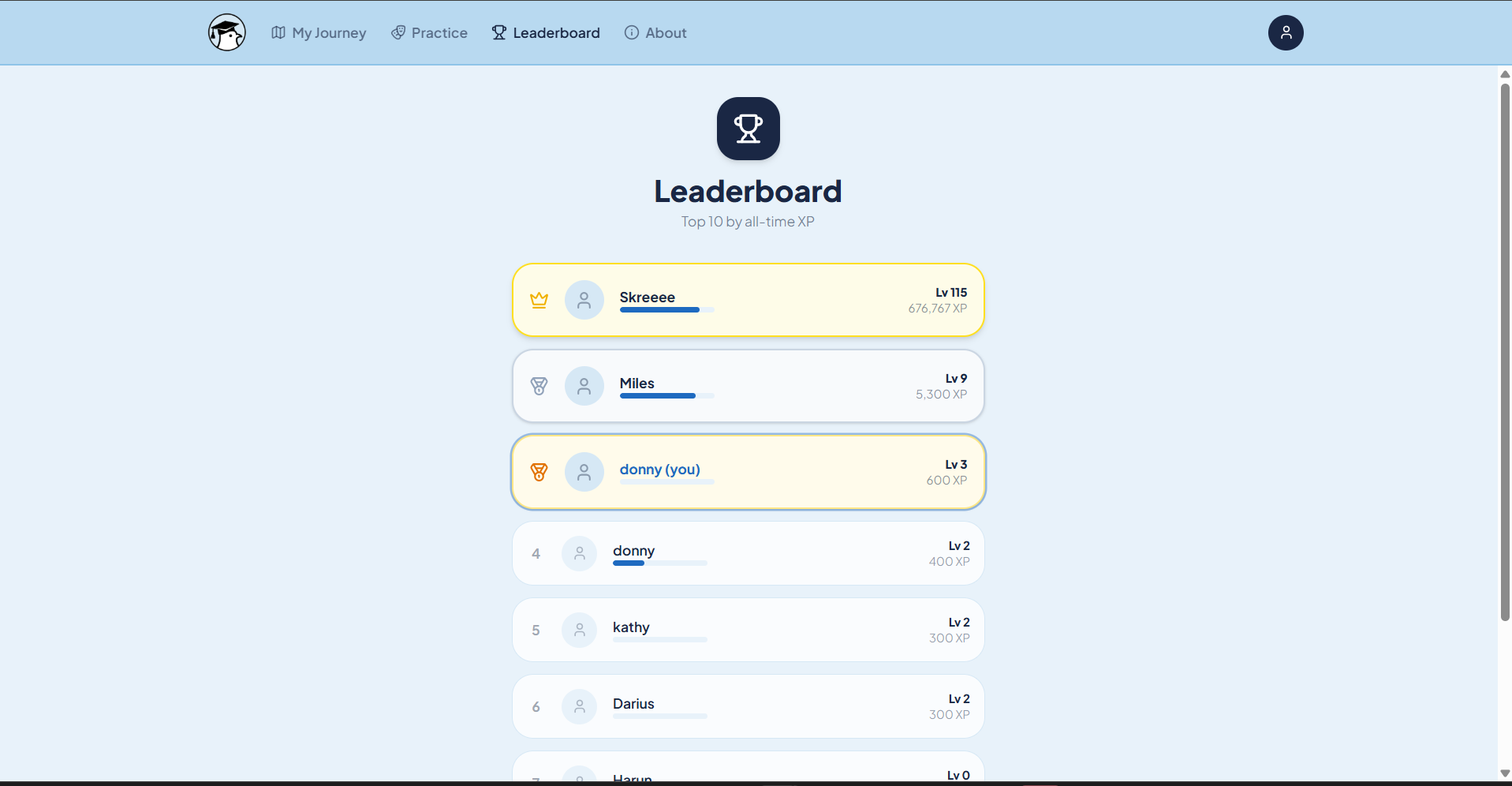
Leaderboard, creates a sense of competition, gamifying the learning encouraging users to do more lessons to gain xp
-
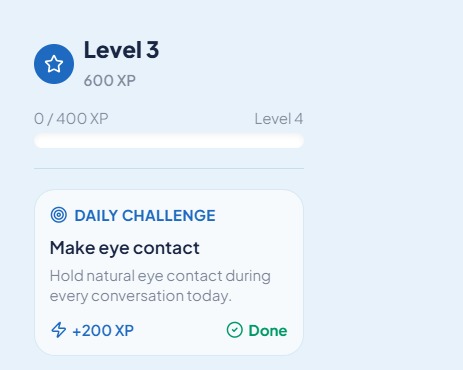
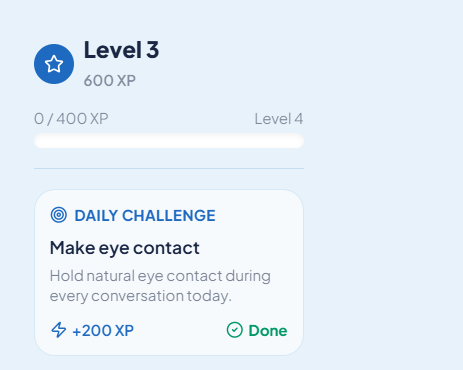
the daily challenge adds a non-virtual component encouraging users to get out and about to improve social skills
-
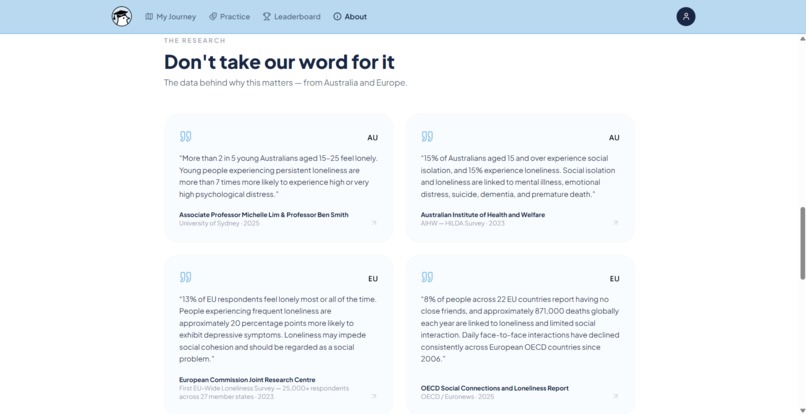
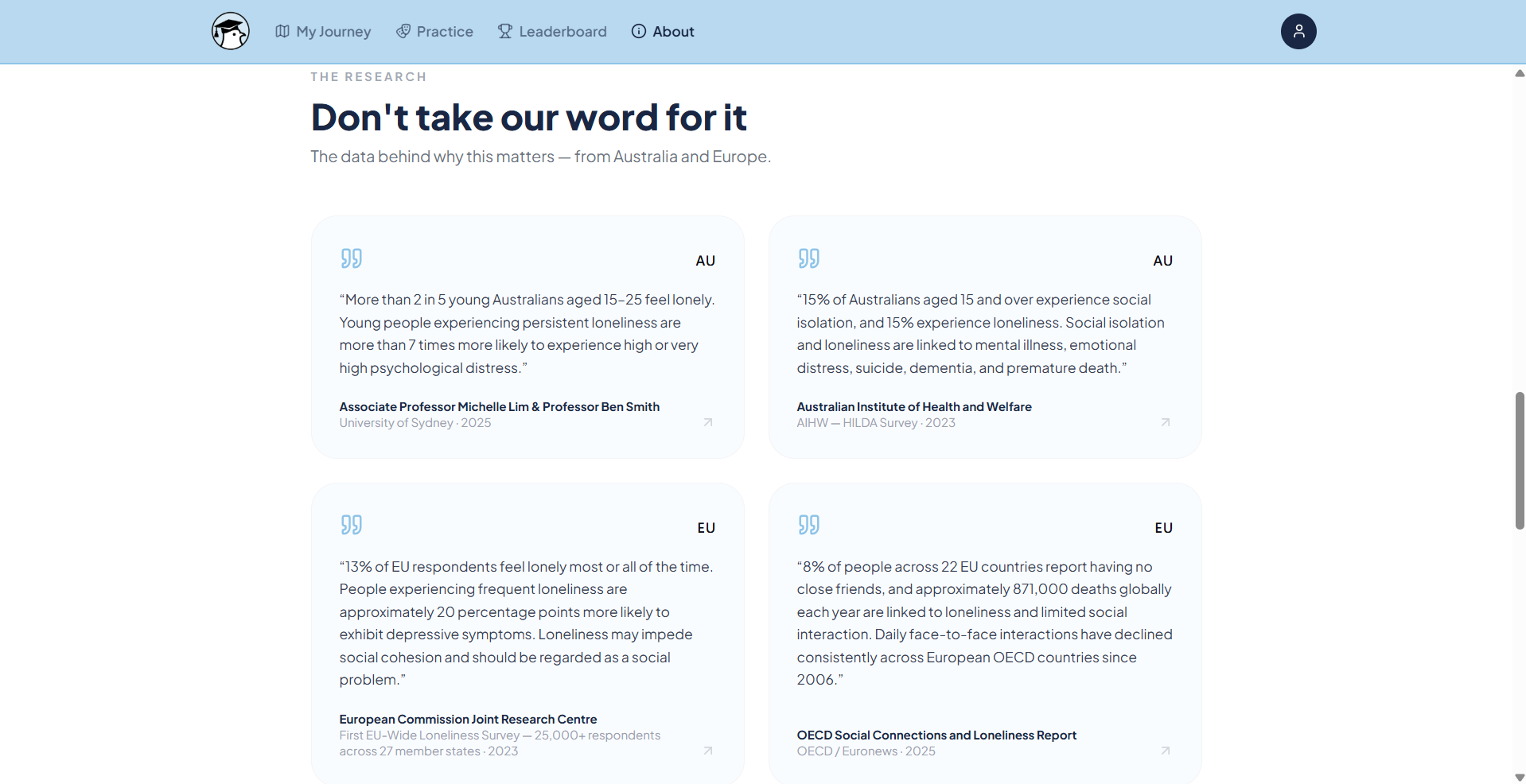
The scientific research that underpins our approach.
-
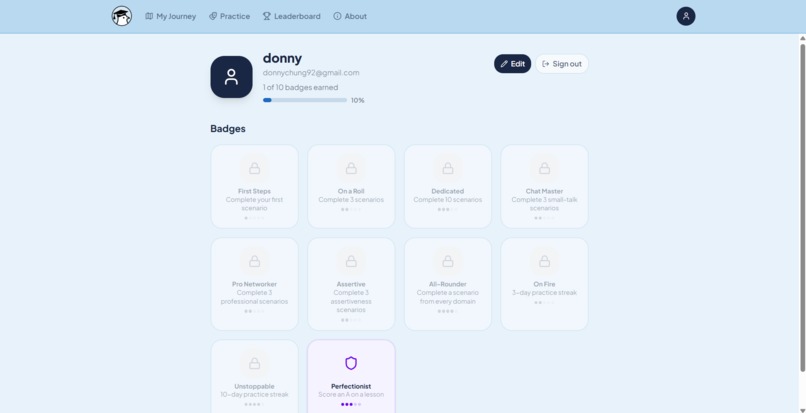
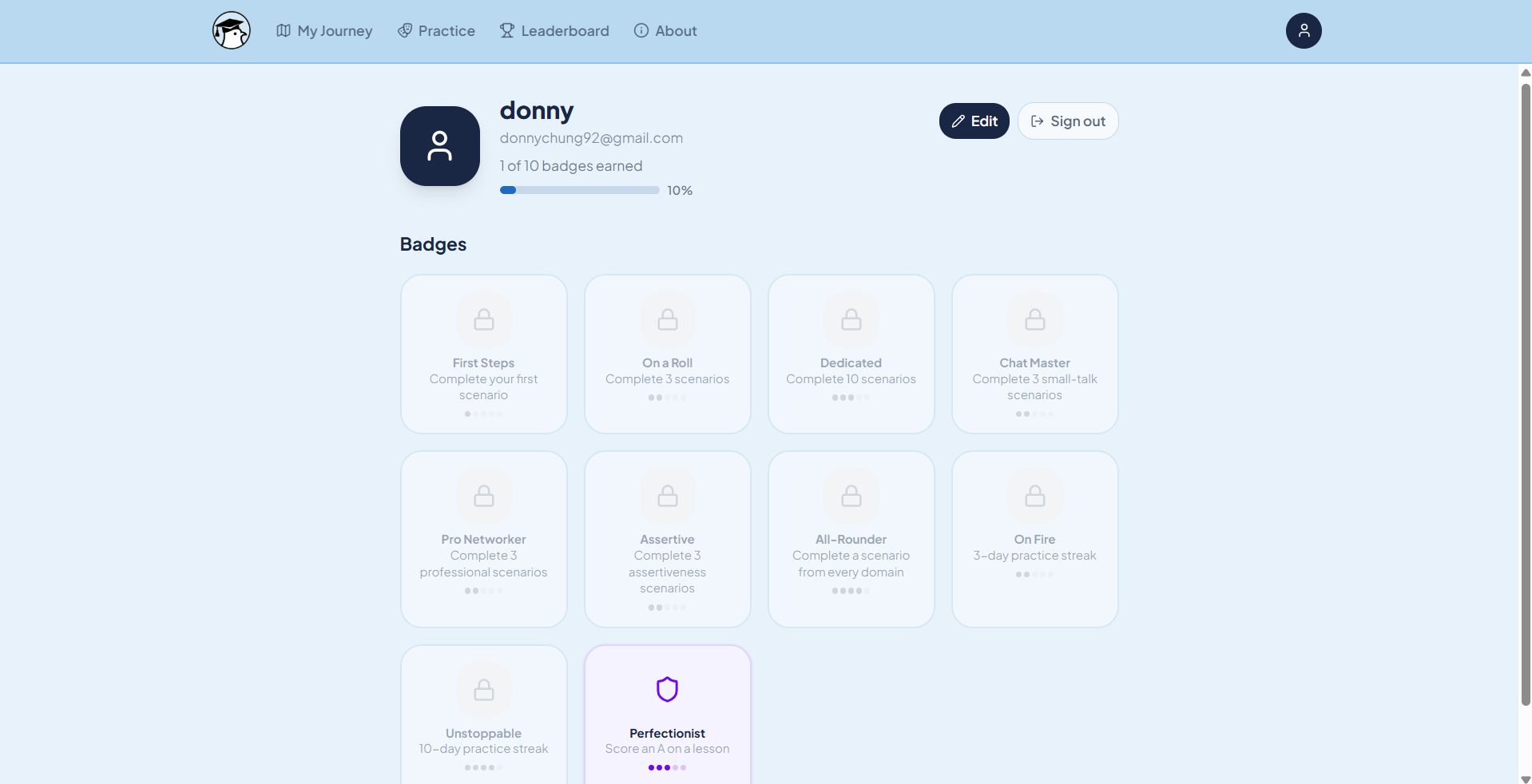
Each user has a personalised profile that tracks progress and unlocks achievement badges as they improve

Inspiration
Most of us have been there. You're about to walk into a job interview, ask someone out, or start a conversation with someone new and you freeze. You go home and replay everything you should have said.
Now imagine a kid with autism trying to understand why a conversation went wrong. No feedback. No do-over. Just confusion.
We wanted to build something that gives everyone regardless of background or neurotype a safe, judgement-free place to practice being human.
What It Does
Wingman is an AI social skills coach. You pick a real-world scenario — a job interview, a first date, an awkward confrontation — and our AI plays the other person while you practice in real time using voice or text.
It tracks your progress across checkpoints, gives live feedback, and unlocks harder scenarios as you improve. A structured roadmap keeps you growing week by week, and a weekly test gates your next level until you've genuinely earned it.
How We Built It
We built Wingman in 48 hours using:
- Next.js 15 — frontend framework
- Supabase — auth and data
- GPT-4o-mini — AI conversations
- ElevenLabs TTS — voice responses
- Web Speech API — voice input
Scenarios are driven by a structured prompt system that keeps the AI in character and the user always in the practice role. We layered on a full progression system with XP, badges, and an onboarding quiz that personalises difficulty from day one.
Challenges We Ran Into
Getting the AI to consistently stay in role was harder than expected. Early versions would flip the roles mid-conversation or make the correct answer obvious by always placing it first. The fix came down to a single prompt restructure — specifying the AI's role before any scenario context locked the behaviour in place.
We also had to carefully manage voice input and output together so the mic wouldn't pick up the AI speaking. Syncing live checkpoint tracking with the final evaluation without double-counting hits took several iterations to get right.
Accomplishments We're Proud Of
Shipping a fully working progression system in 48 hours. A user can:
- Sign up and complete onboarding
- Work through lessons with live feedback
- Take a weekly test and pass it
- Watch the next week unlock on their roadmap
The voice experience genuinely feels natural. We're also proud that the product has a real use case beyond the hackathon — particularly for autistic young adults who benefit from structured, repeatable social practice.
What We Learned
Prompt engineering is everything. Here's what broke us early:
# Bad — AI would flip roles
"You are helping the user practice a job interview."

# Good — AI stays in character
"You ARE the interviewer. The user is the candidate. Never break character."
Small wording changes completely changed conversation behaviour. We also learned to build in stages rather than polishing early — getting a working end-to-end experience done first, then refining the details.
What's Next for Wingman
- Expanded scenario library — community-contributed scenarios and difficulty tiers
- Expert knowledge system — coaches and researchers contributing personalised feedback guidance
- Partnerships with schools and autism support organisations
- Long-term: make social skills practice something every person on the planet can access for free
Built With
- claude
- elevenlabs
- gpt-flatline
- html
- javascript
- supabase
- ttsengine
- typescript
- vercel


Log in or sign up for Devpost to join the conversation.