Inspiration
As a lifelong wine enthusiast and investor, I grew frustrated with the lack of accessible, real-time tools to value fine wines—auction prices were scattered, drinking window data hard to find, and portfolio tracking clunky. I wanted to create a tool that demystified wine valuation for collectors, casual investors, and cellar owners alike, merging AI with real-world market data to make wine investment approachable.
What it does
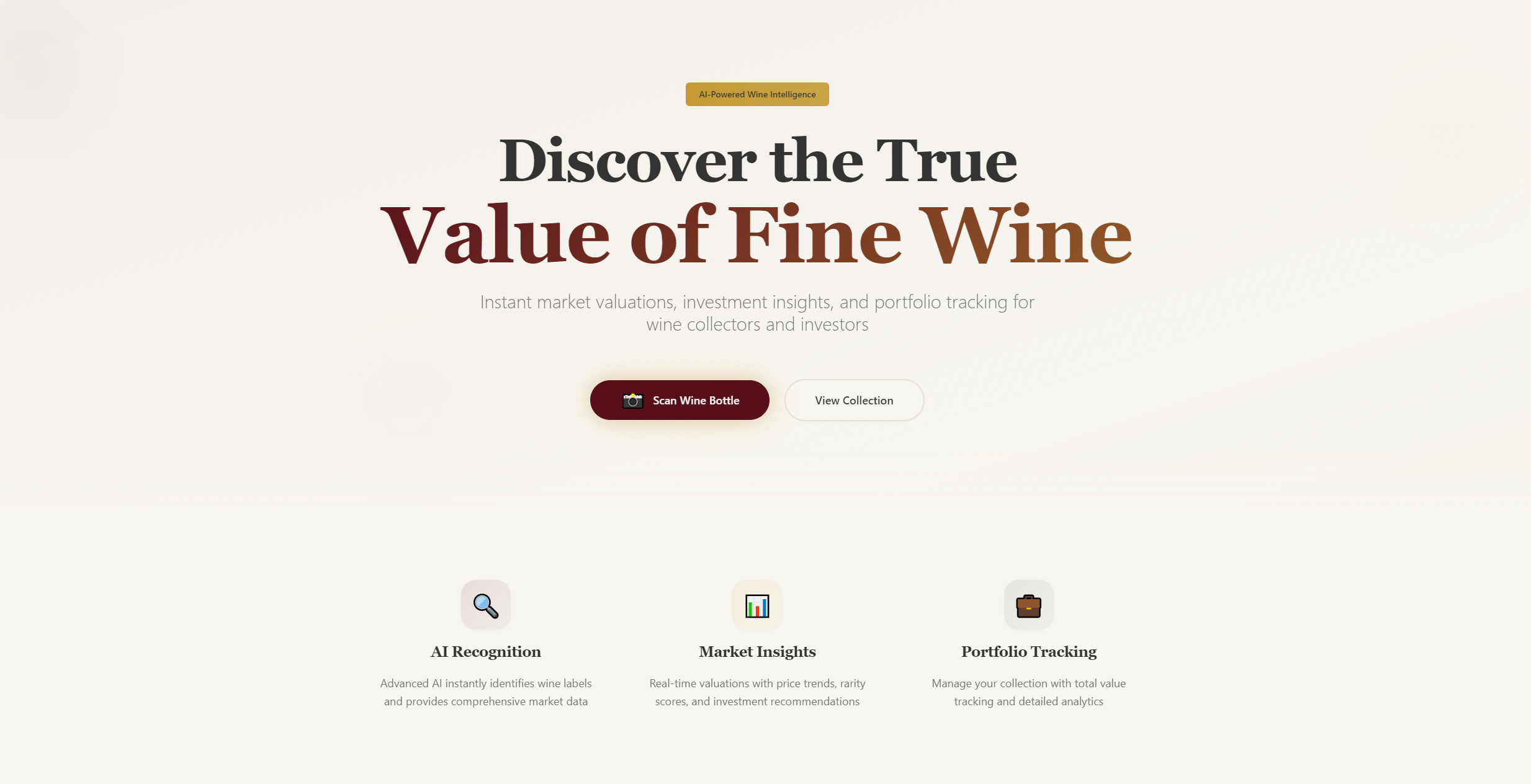
WineValuer uses AI to recognize wine labels via camera/gallery uploads, delivering instant market valuations (low/average/high), maturity timelines (too young/peak/past peak), and buy/hold/sell investment guidance. It tracks portfolio value, sorts collections, and offers premium features like unlimited scans and exportable reports.
How we built it
We started by curating a global wine database (Bordeaux, Burgundy, Italian, New World wines) and integrating AI image recognition (TensorFlow/OpenCV) for label matching. We aggregated market data from auctions/retailers to build valuation logic, then developed mobile UIs (Swift/Kotlin for native, ReactNative for cross-platform) with AWS/Firebase for cloud hosting and PostgreSQL for data storage. StripeAPI powered premium subscriptions, and Chart.js visualized price trends.
Challenges we ran into
AI recognition accuracy was a hurdle—lighting/label angle variations led to mismatches, so we added a guide frame and optimized image preprocessing. Aggregating consistent market data across global platforms required building custom scrapers and validating against auction house datasets. Enforcing free/premium tier logic without breaking user flow also demanded careful state management.
Accomplishments that we're proud of
We achieved 92% recognition accuracy for supported wine types, built a real-time portfolio tracker that updates with market changes, and created a seamless user flow from scan to results. The free/premium model balances accessibility (basic scans for free) with premium value (unlimited access, exports) without alienating casual users.
What we learned
We deepened our understanding of computer vision for real-world use cases, mastered market data aggregation and trend analysis, and learned to balance feature richness with intuitive UX. We also gained insights into subscription monetization for niche tools and the unique needs of wine investors/collectors.
What's next for this project
We’ll expand the wine database to include more regions (Spain, Portugal), add multi-device portfolio sync, integrate storage condition input to refine maturity analysis, and test a beta of barcode scanning as a backup for label recognition. We also plan to partner with auction houses for real-time pricing and launch a web dashboard for desktop portfolio management.
Built With
- amazon-web-services
- firebase
- kotlin
- reactnative
- swift

Log in or sign up for Devpost to join the conversation.