Inspiration
Every major enterprise crisis begins the same way: information arrives faster than humans can process it.
A ransomware attack, customer data leak, AI-generated disinformation campaign, legal injunction, or funding collapse instantly creates thousands of disconnected signals—system logs, financial reports, emails, legal notices, cloud events, and human conversations. Teams waste valuable hours manually reconstructing what happened while the crisis continues to escalate.
We asked ourselves a simple question:
What if an autonomous team of AI specialists could investigate the crisis the moment it begins?
Instead of relying on a single AI assistant, we envisioned a system where multiple specialized AI agents work simultaneously, each responsible for a different aspect of the investigation, before collaborating to produce one unified recovery strategy.
That vision became WindSurf AI.
What it does
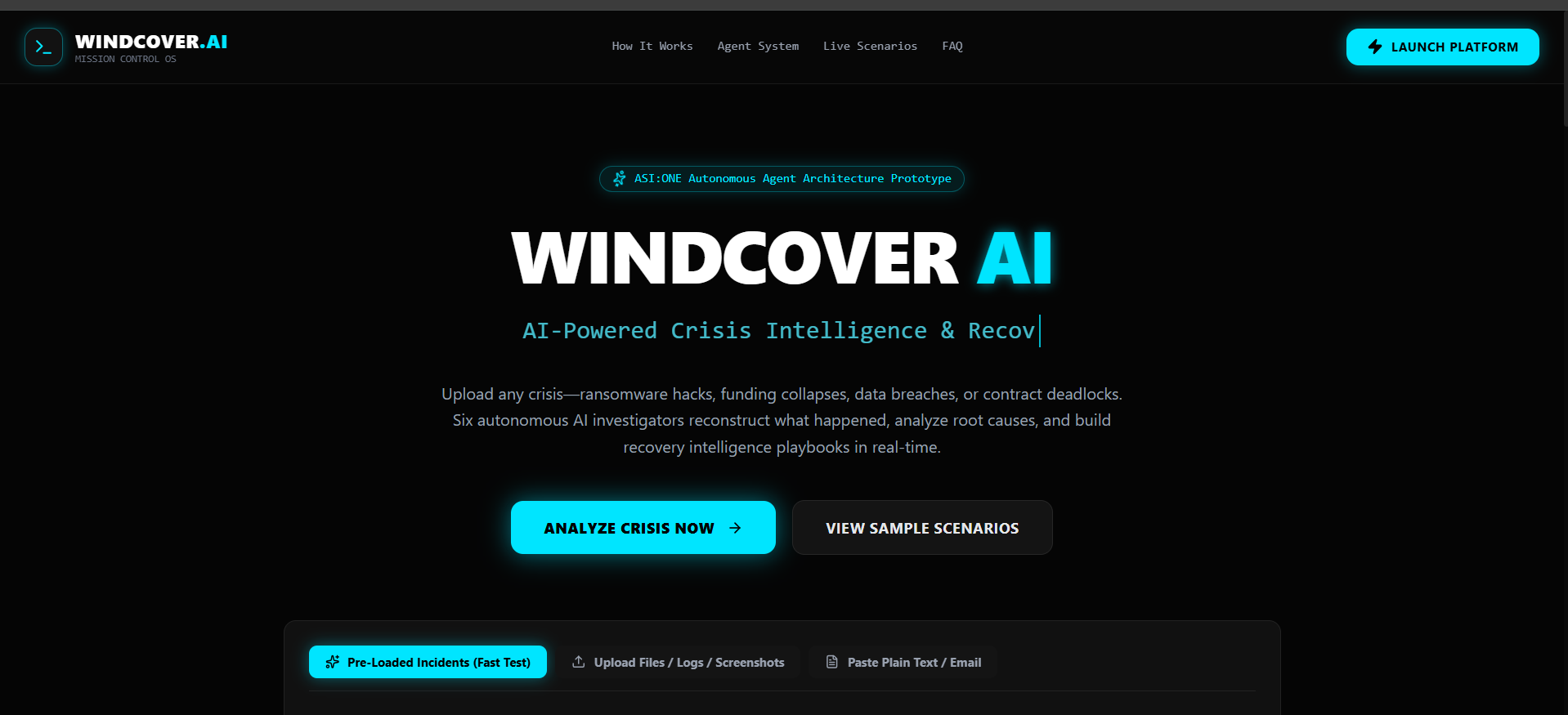
WindSurf AI is an autonomous multi-agent crisis intelligence platform designed for enterprise incident response.
Rather than acting like a chatbot, WindSurf AI behaves like a coordinated incident response team.
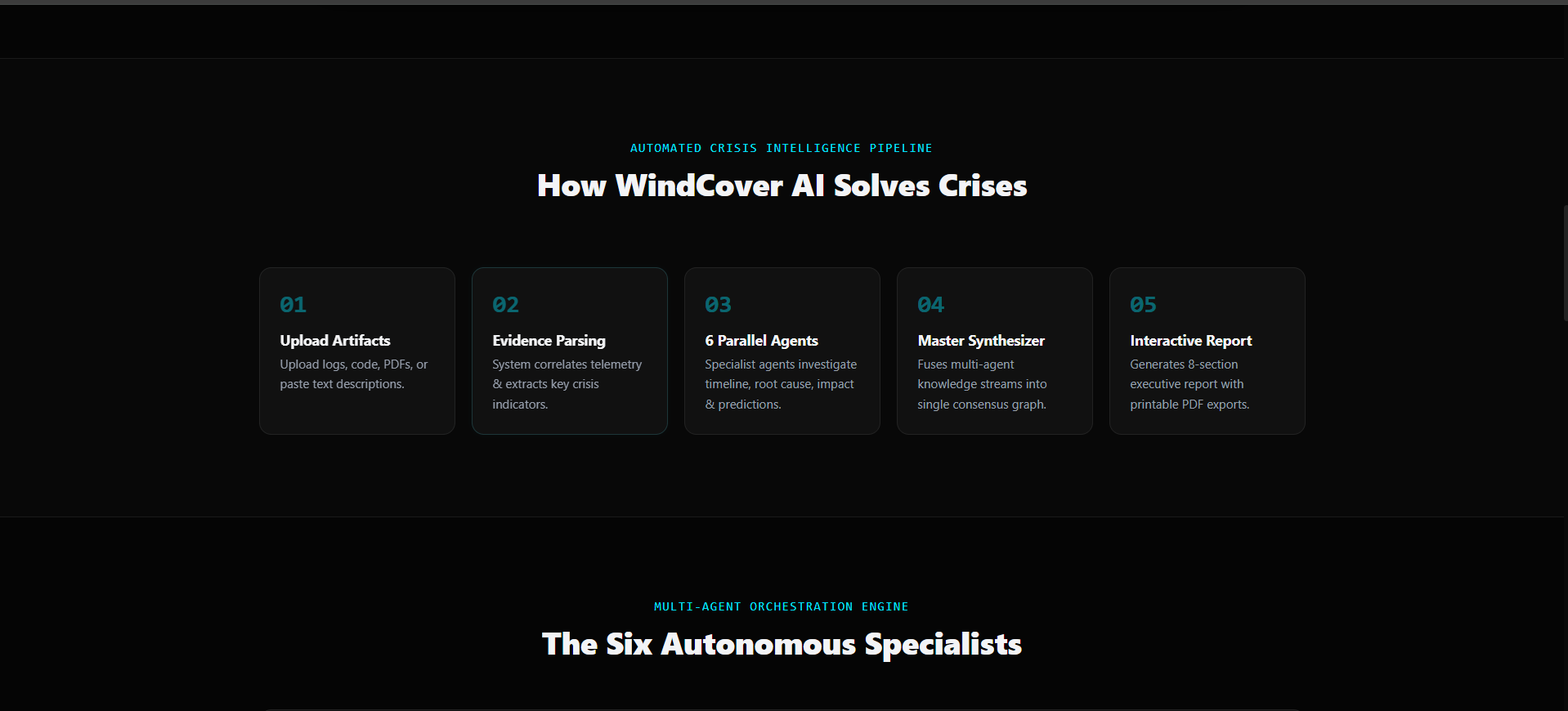
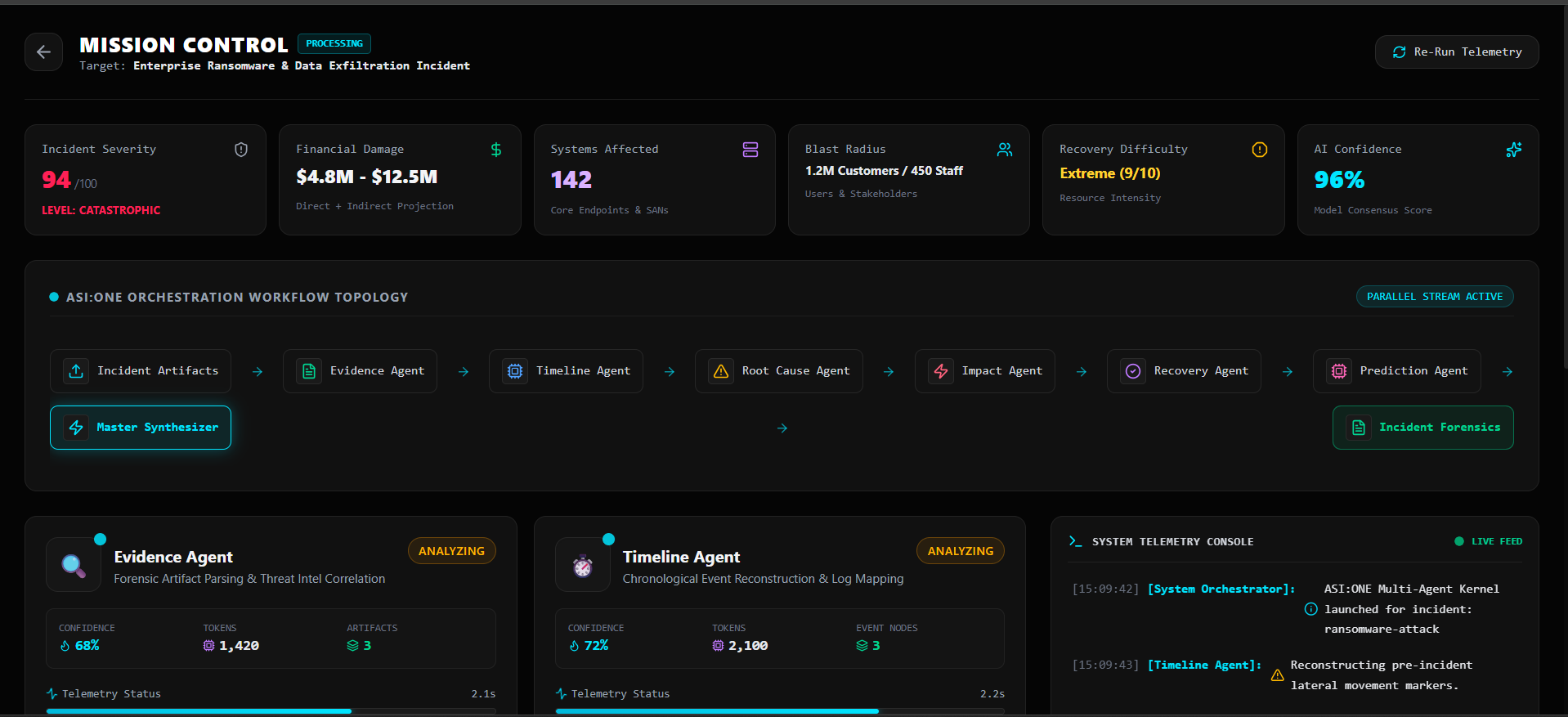
When evidence is uploaded—whether system logs, legal notices, financial reports, infrastructure changes, or security artifacts—the platform launches six autonomous specialist agents in parallel.
Each agent focuses on a unique responsibility:
- Evidence Agent extracts critical indicators from uploaded artifacts.
- Timeline Agent reconstructs the complete incident chronology.
- Root Cause Agent identifies why the incident occurred using structured causal analysis.
- Impact Agent calculates operational, financial, legal, and reputational blast radius.
- Recovery Agent generates immediate containment actions and longer-term recovery playbooks.
- Future Prediction Agent estimates downstream risks and probable future consequences.
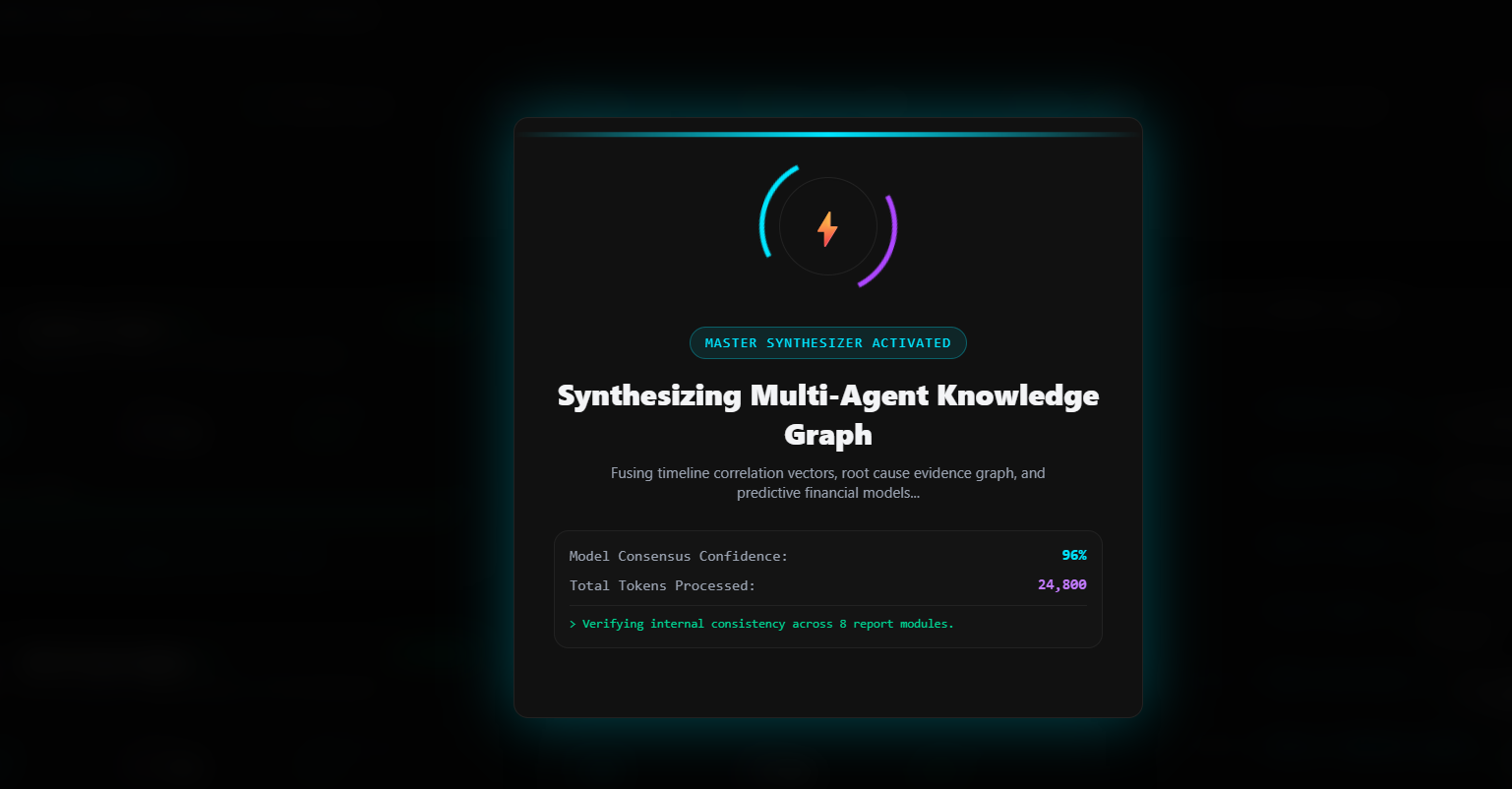
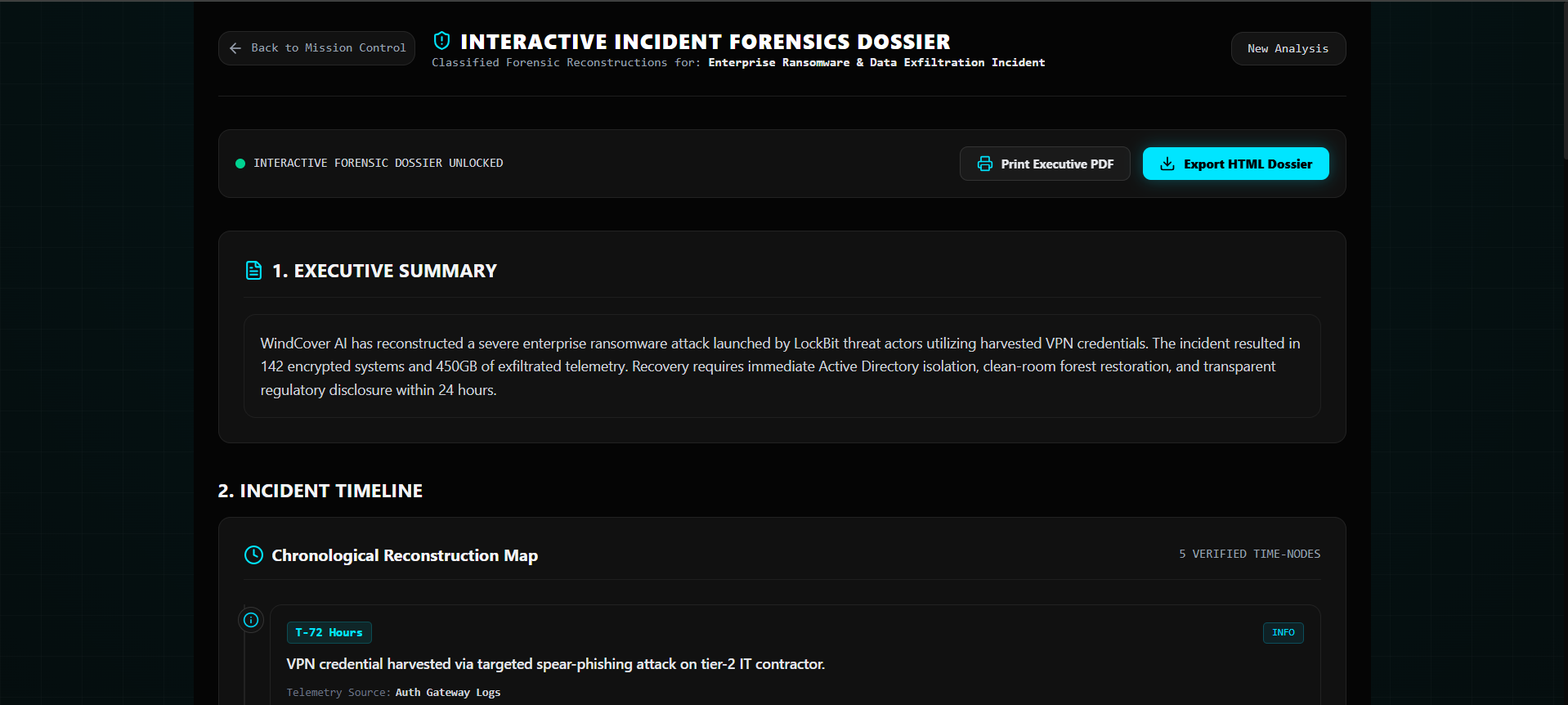
Instead of presenting isolated outputs, a Master Synthesizer combines every agent's findings into a single executive-ready forensic intelligence report.
The platform also includes:
- Interactive Mission Control dashboard
- Live agent telemetry
- Crisis severity scoring
- Blast-radius visualization
- Executive forensic dossier
- PDF and HTML report generation
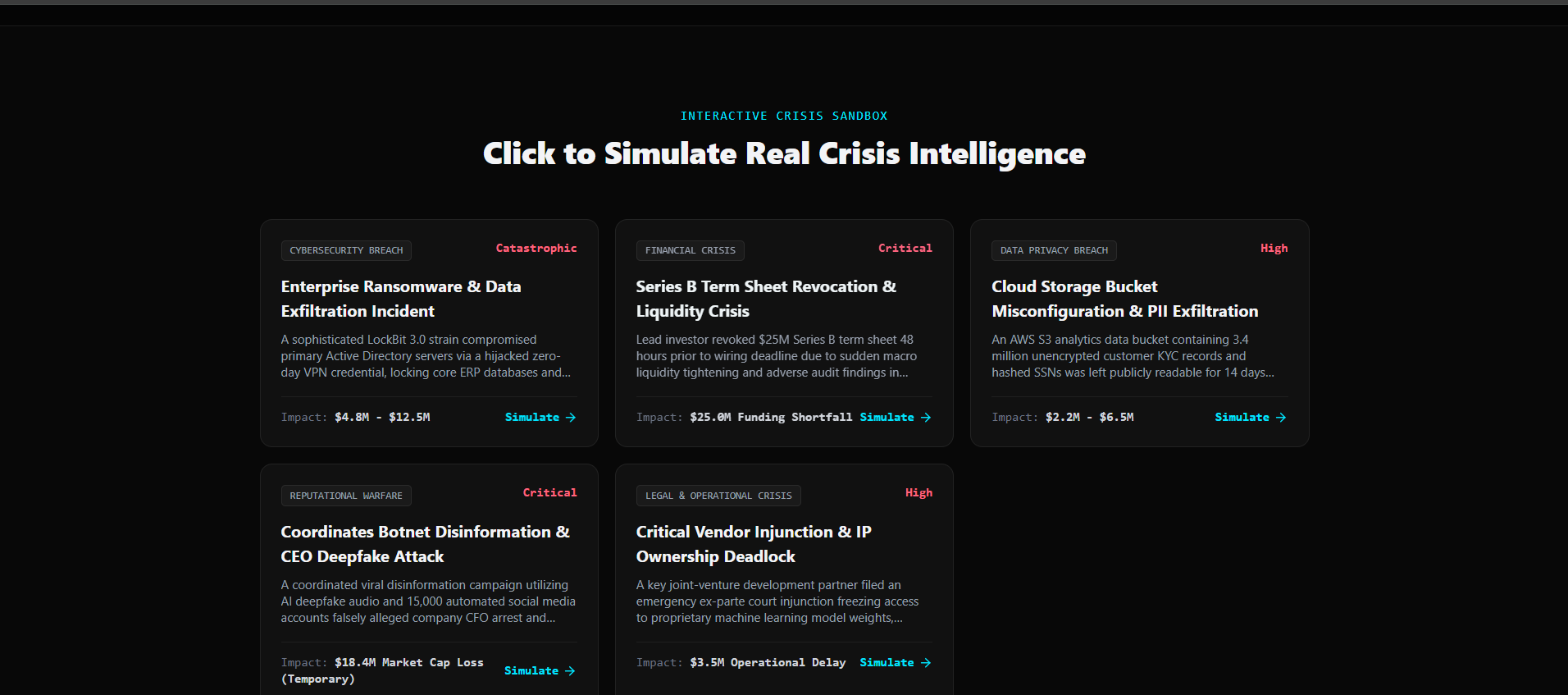
- Built-in enterprise crisis simulations for rapid demonstrations
The result is an AI-powered command center capable of transforming chaotic incidents into structured recovery intelligence within minutes.
How we built it
WindSurf AI was built as a modern full-stack web application using:
- Next.js 16
- React 19
- TypeScript
- Tailwind CSS v4
- Framer Motion
- Mermaid.js
The application follows a modular multi-agent architecture.
Each specialist agent performs an independent analytical task before publishing structured outputs to the Master Synthesizer, which merges conflicting evidence into a single consensus report.
We designed the interface around a Mission Control experience rather than a traditional dashboard, allowing users to observe every stage of the investigation in real time through streaming logs, confidence scores, workflow visualization, and live telemetry.
To demonstrate real-world applicability, we created multiple enterprise crisis simulations covering ransomware attacks, cloud misconfigurations, AI deepfake campaigns, startup funding failures, and intellectual property disputes.
Challenges we ran into
The biggest challenge wasn't building AI—it was designing believable collaboration between autonomous agents.
Each specialist needed a clearly defined responsibility while avoiding duplicated reasoning. Creating a workflow where agents could investigate independently yet still contribute toward one coherent conclusion required careful system design.
Another challenge was presenting complex investigations in a way executives could understand within minutes. Instead of overwhelming users with raw technical data, we transformed findings into visual timelines, impact matrices, recovery checklists, and board-ready forensic reports.
Designing a fast, immersive interface that still communicated large volumes of information without cognitive overload was another significant challenge throughout development.
Accomplishments that we're proud of
We're proud that WindSurf AI feels less like using software and more like supervising an autonomous crisis response team.
Highlights include:
- Six autonomous specialist agents operating in parallel
- Executive-grade forensic intelligence reports
- Interactive crisis simulations across multiple industries
- Real-time mission control interface with live investigation progress
- Automated recovery planning and future risk forecasting
- Exportable reports suitable for executives, legal teams, and incident responders
Most importantly, we demonstrated how coordinated AI agents can accelerate enterprise decision-making during high-pressure situations where every minute matters.
What we learned
This project taught us that effective multi-agent systems require specialization rather than simply increasing model size.
Breaking a complex investigation into independent expert roles produced clearer reasoning, more explainable outputs, and a workflow that users could actually trust.
We also learned that great AI products are not only about model intelligence—they are equally about orchestration, visualization, explainability, and human-centered decision support.
Finally, we discovered that presenting AI reasoning transparently builds significantly more confidence than providing a single opaque answer.
What's next for WindSurf AI
WindSurf AI is only the beginning.
Our roadmap includes:
- Live cloud security integrations
- SIEM and SOC platform connectors
- Enterprise ticketing integrations
- Continuous monitoring with autonomous agent triggers
- Cross-organization collaboration workspaces
- Regulatory compliance automation
- Predictive digital-twin crisis simulations
- Memory-enabled autonomous agent collaboration
- Support for additional enterprise crisis domains
Our long-term vision is to evolve WindSurf AI into an autonomous crisis operating system where intelligent agents continuously monitor, investigate, coordinate, and recommend actions before incidents become disasters.
Built With
- app
- css
- framer
- lucide
- motion
- next.js
- primitives
- react
- reusable
- router
- shadcn-style
- tailwind
- typescript
- ui

Log in or sign up for Devpost to join the conversation.