Inspiration
What it does
How we built it
Challenges we ran into
Accomplishments that we're proud of
What we learned
What's next for WindCare
CareCircle AI — Protecting the Caregiver, Supporting the Patient Inspiration
Caregiving is often focused almost entirely on the patient, while the person providing that care is expected to keep going regardless of their own stress, fatigue, sleep, and workload.
We were inspired by a simple question:
Who takes care of the caregiver?
CareCircle AI was built around the idea that sustainable patient care requires a healthy and supported caregiver. Instead of treating caregiver wellbeing as a separate feature, we made it part of the care-planning loop itself.
What We Built
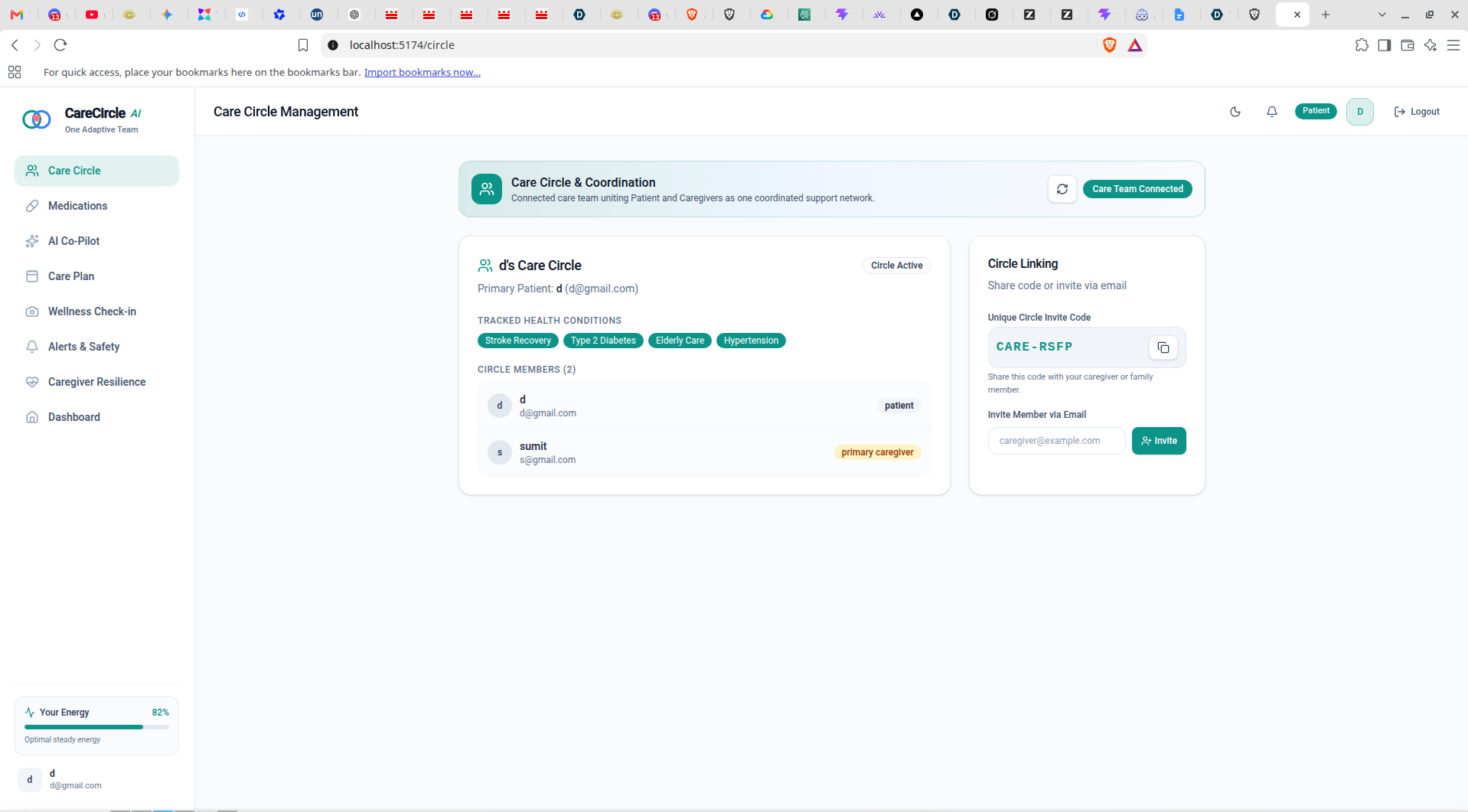
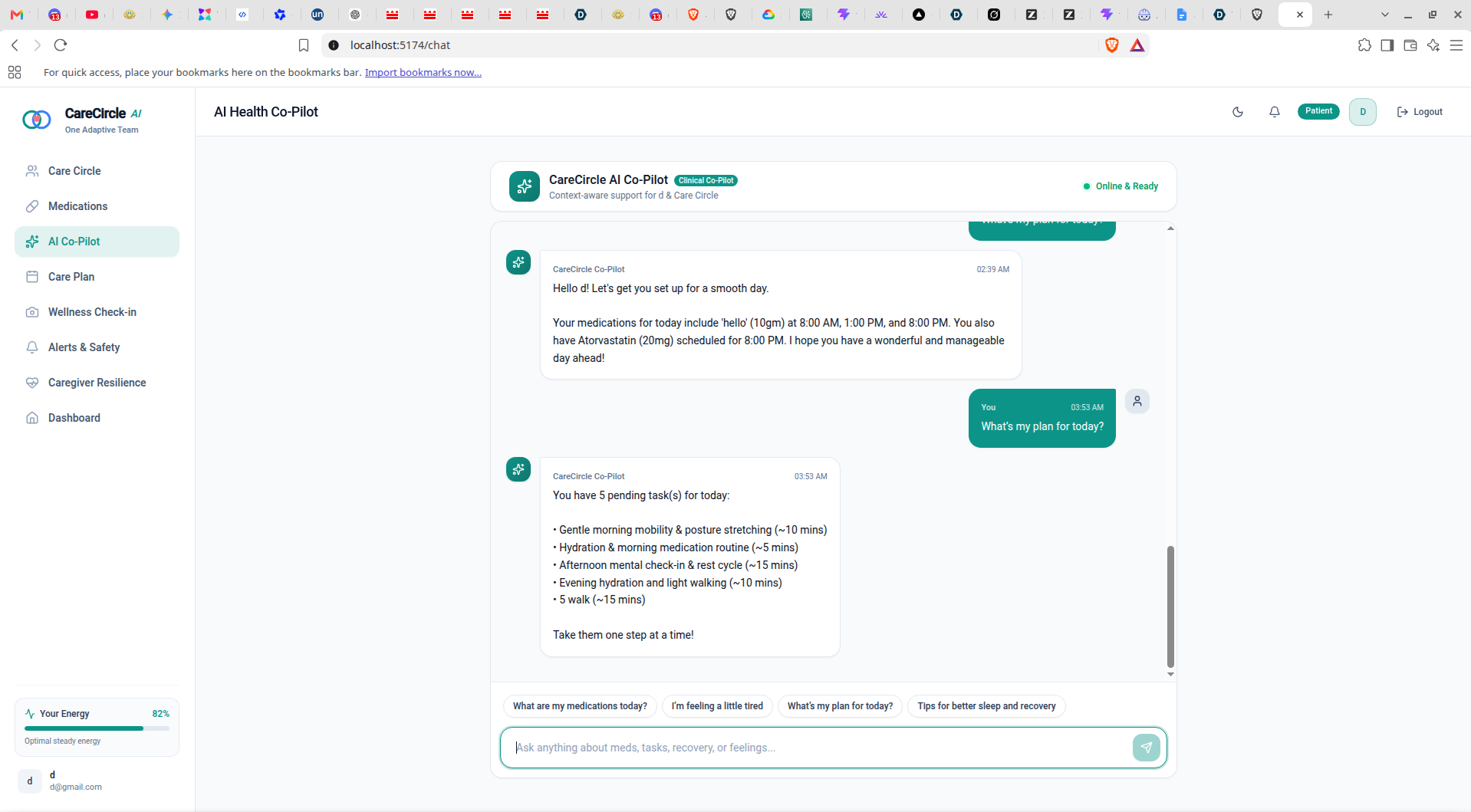
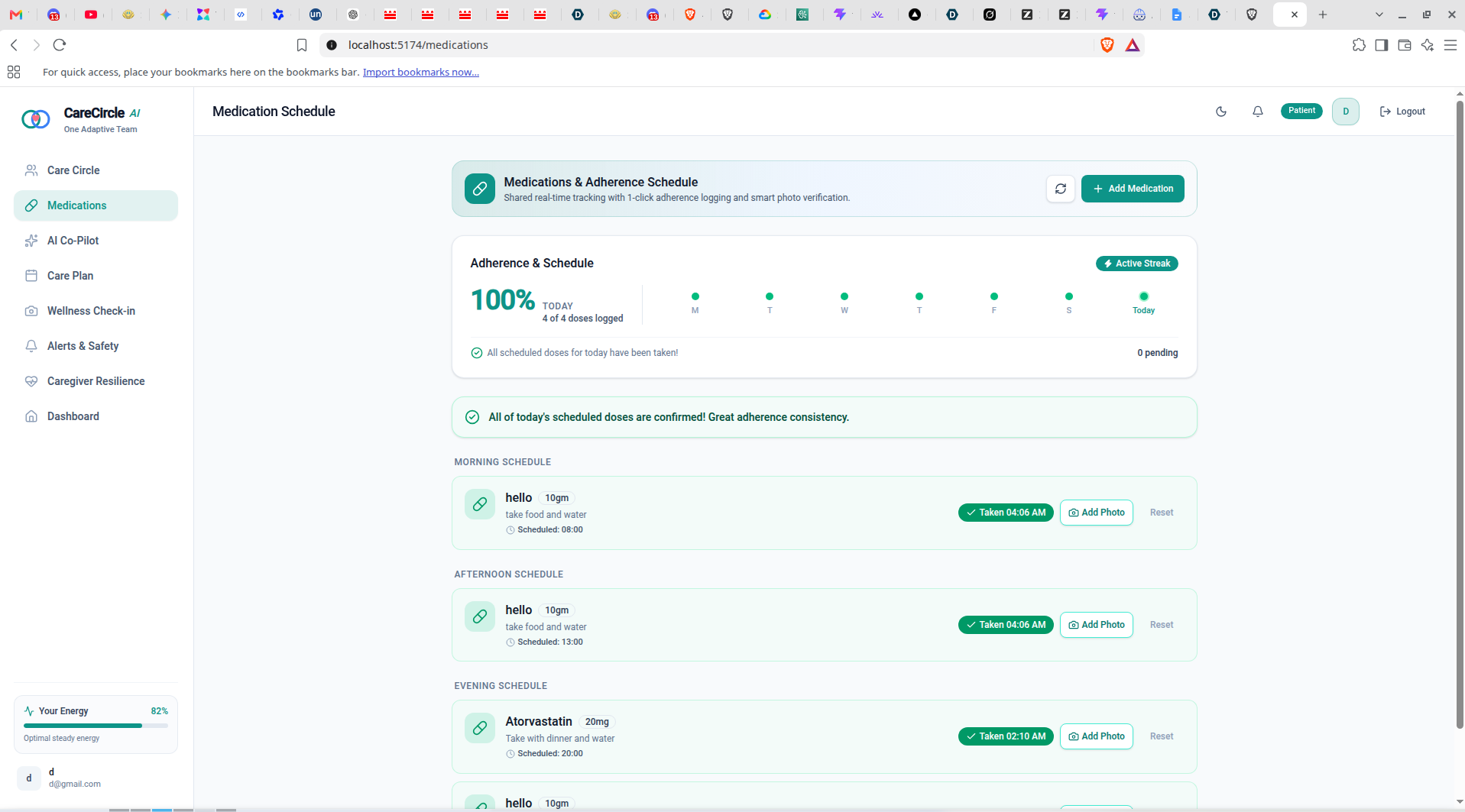
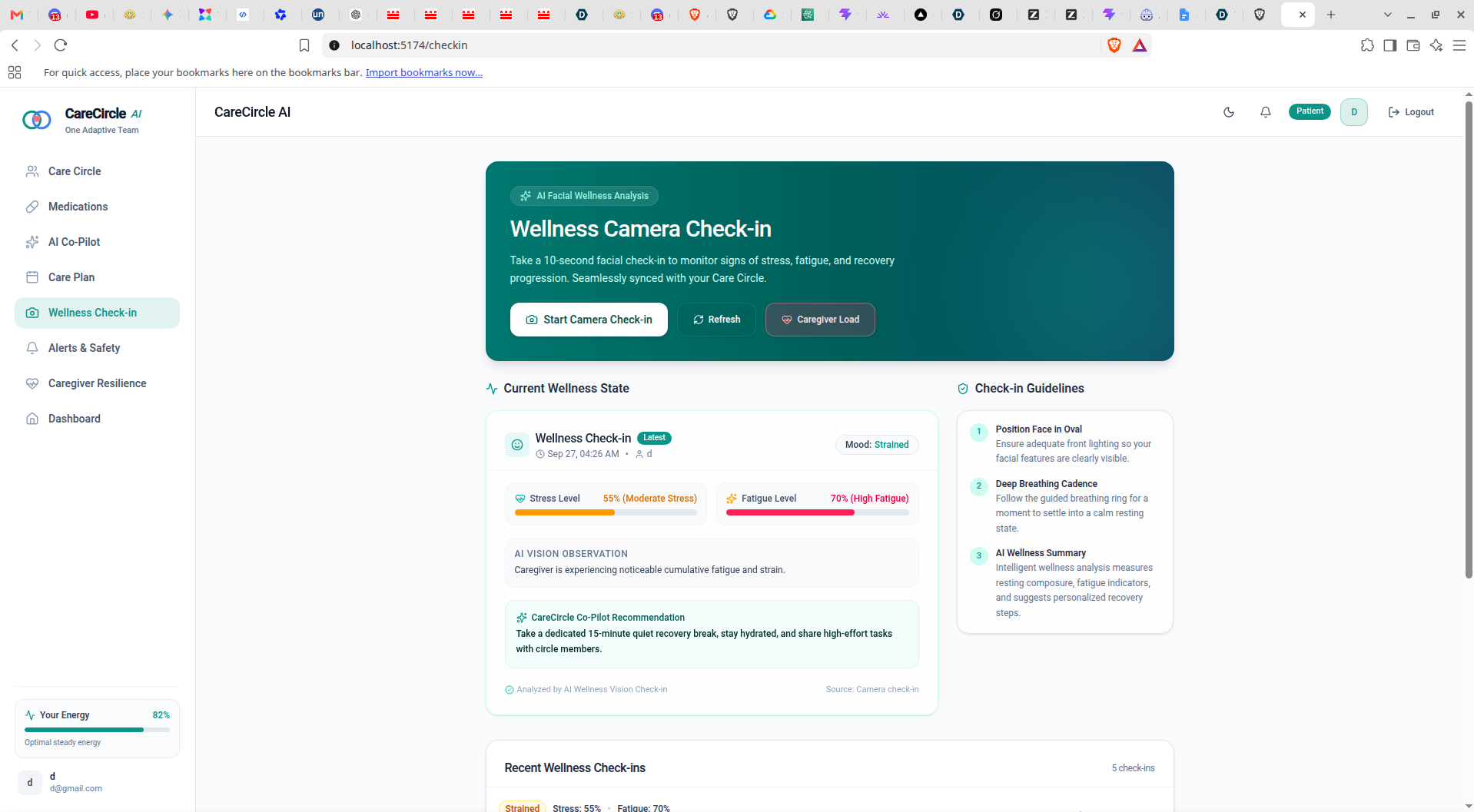
CareCircle AI is an AI-powered coordinated care platform that connects the patient, caregiver, care circle, medications, safety monitoring, daily care planning, and AI assistance in one system.
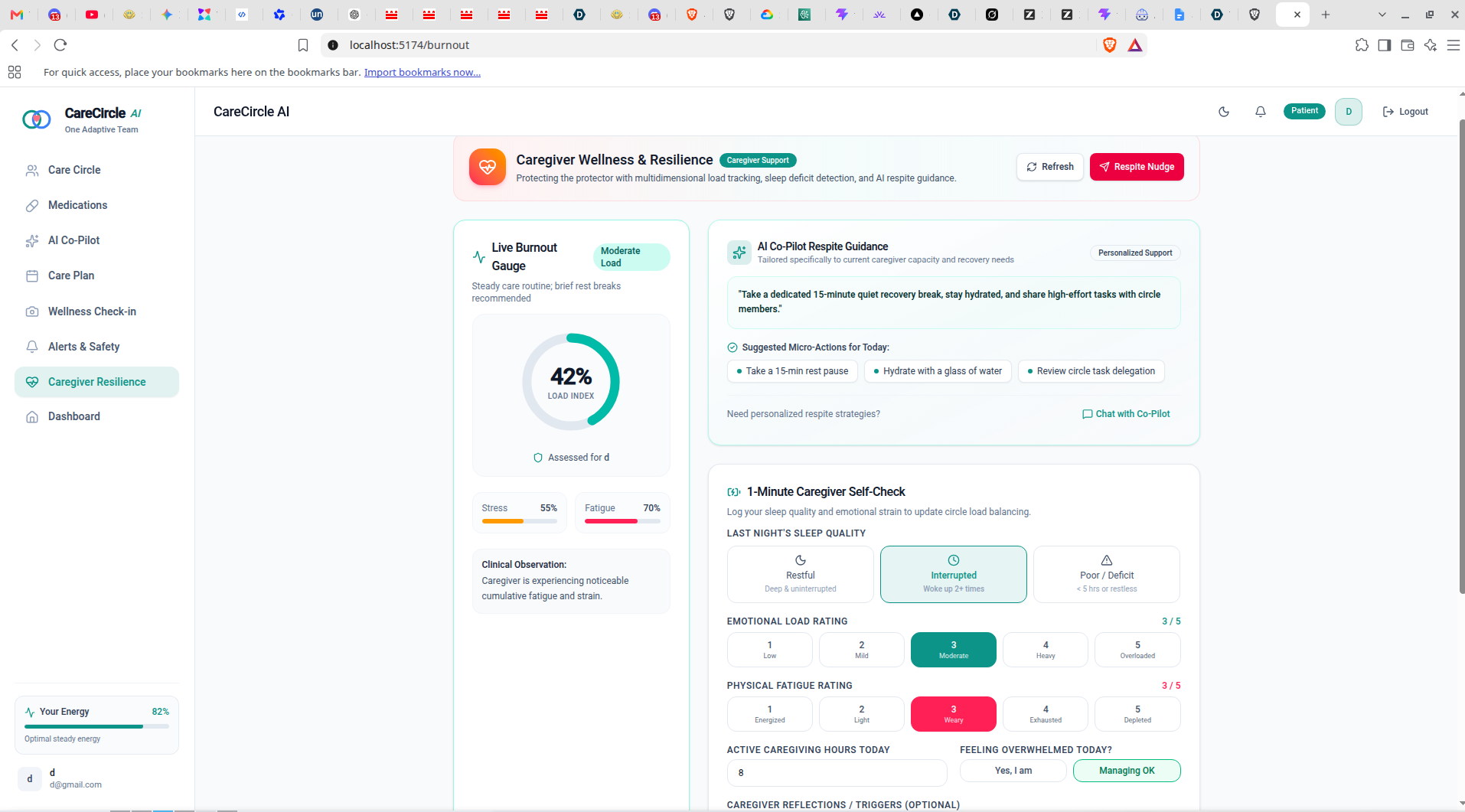
One of our core features is Caregiver Wellness & Resilience.
The caregiver can complete a quick self-check covering:
Sleep quality Emotional load Physical fatigue Active caregiving hours Feeling overwhelmed Optional reflections
The system combines these signals with real care activity, such as pending tasks and active alerts, to understand the caregiver's current capacity.
The result is presented through a simple Caregiver Load Index, making the caregiver's wellbeing visible instead of hidden.
AI-Powered Resilience Guidance
CareCircle AI analyzes the caregiver's current state and generates personalized guidance.
For example, when the system detects increased fatigue, it can recommend actions such as:
Taking a short recovery break Staying hydrated Delegating high-effort tasks Reviewing the caregiver's task load Connecting with other members of the care circle
The goal is not simply to display a score. The AI converts that information into small, practical actions that a caregiver can take immediately.
Adaptive Care Planning
The most important part of our approach is that caregiver wellbeing does not remain isolated inside a dashboard.
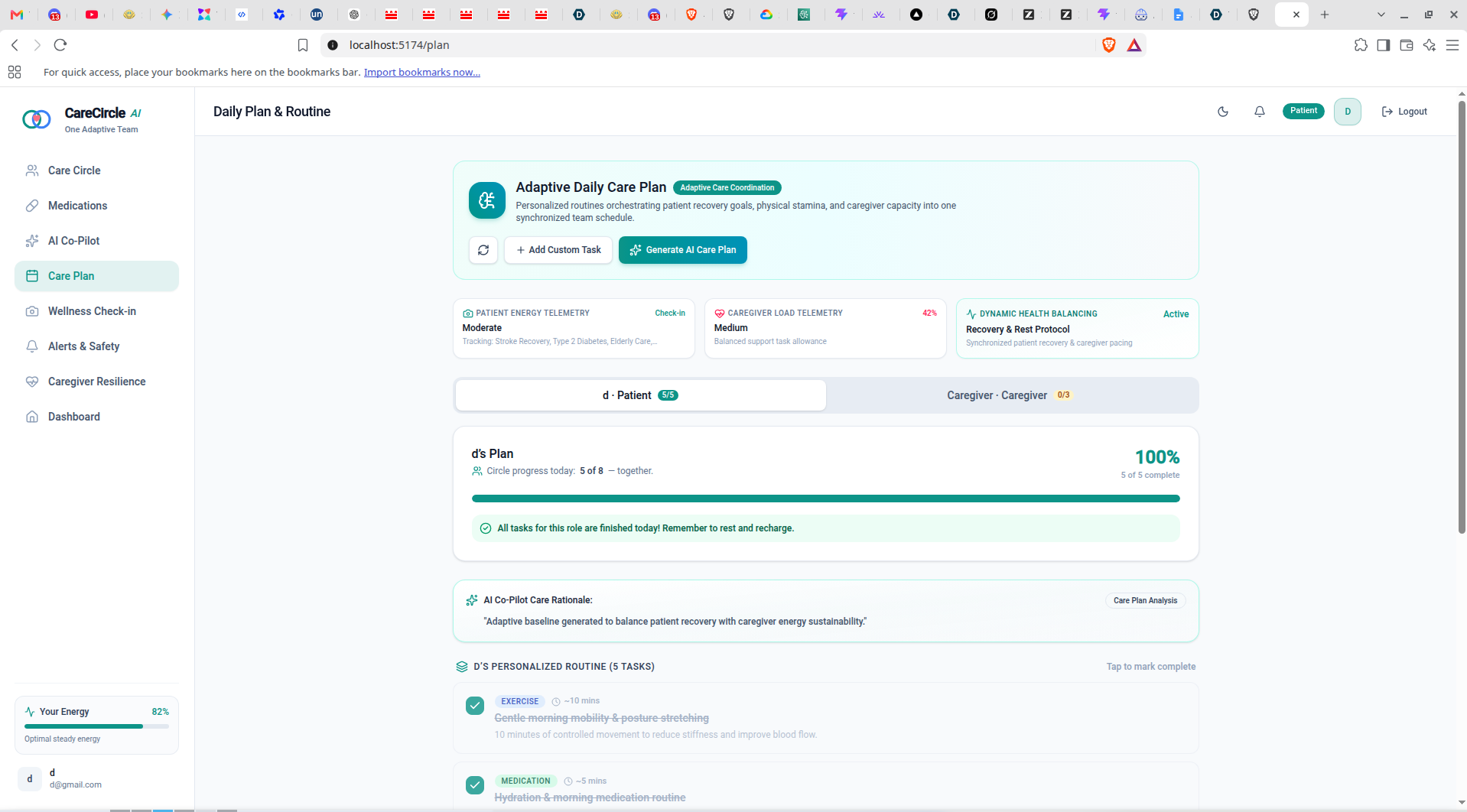
The caregiver's capacity feeds into our adaptive care-planning system.
When high caregiver strain or poor sleep is detected, the system can adjust the daily care plan by prioritizing essential responsibilities, reducing unnecessary caregiver workload, and creating recovery time.
This creates a feedback loop:
Caregiver State → AI Analysis → Respite Guidance → Task Rebalancing → Updated Care Plan
This allows the care plan to adapt not only to the patient's needs, but also to the capacity of the person providing care.
Care Circle & Respite Support
Caregiving should not always be a one-person responsibility.
CareCircle AI connects caregivers and family members through a shared care circle. When additional support is needed, the caregiver can use the Respite Nudge to request backup from other members of the circle.
This helps transform caregiver support from an informal conversation into an actionable part of the care workflow.
Safety & Early Intervention
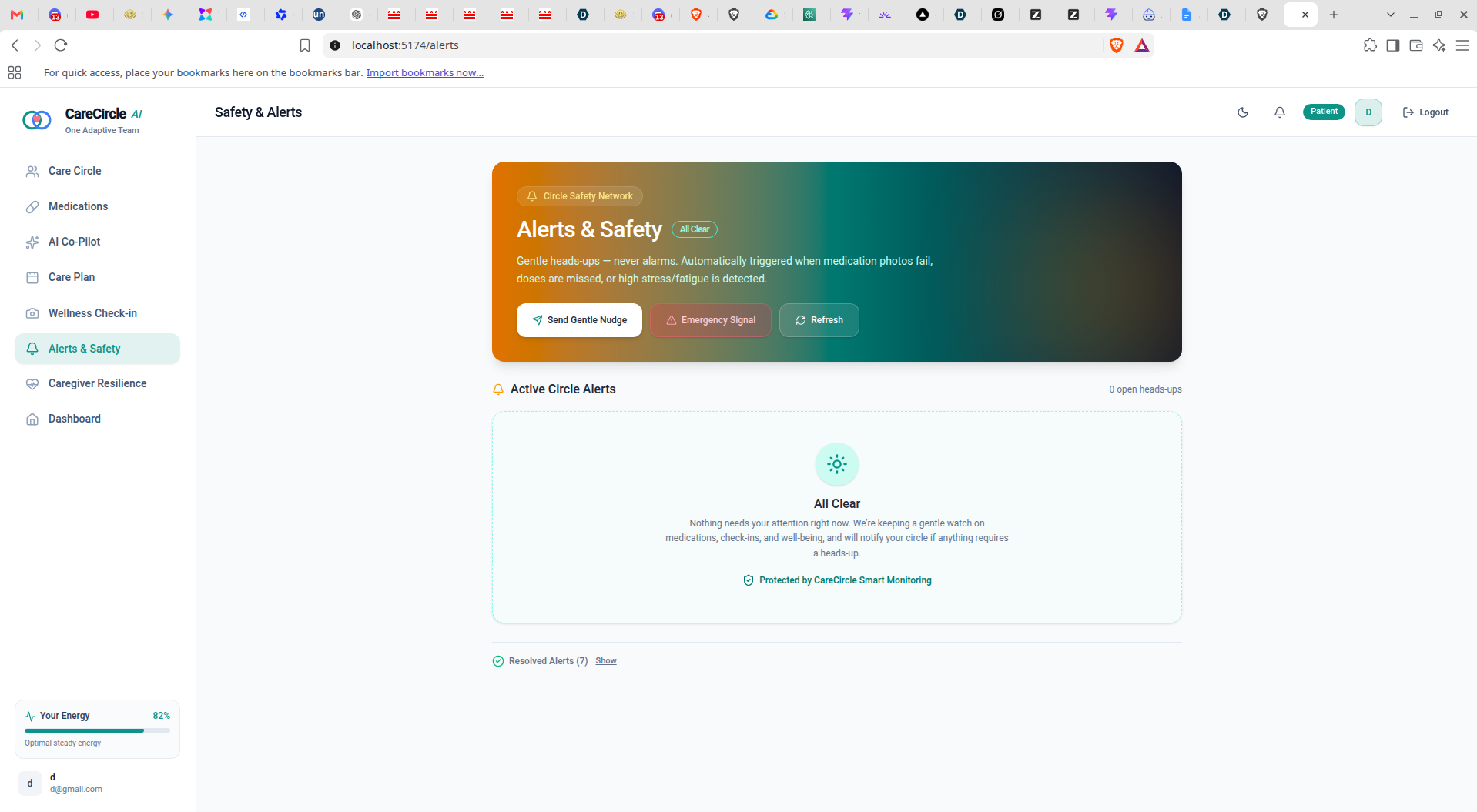
We also built an alert system that can respond when caregiver load becomes significantly elevated.
Instead of waiting until a caregiver is completely overwhelmed, the platform can surface an early heads-up and suggest actions such as:
Rebalancing tasks Taking respite Connecting with the AI Co-Pilot Asking other circle members for support
The philosophy is early support rather than late intervention.
How We Built It
CareCircle AI uses a multi-layer architecture.
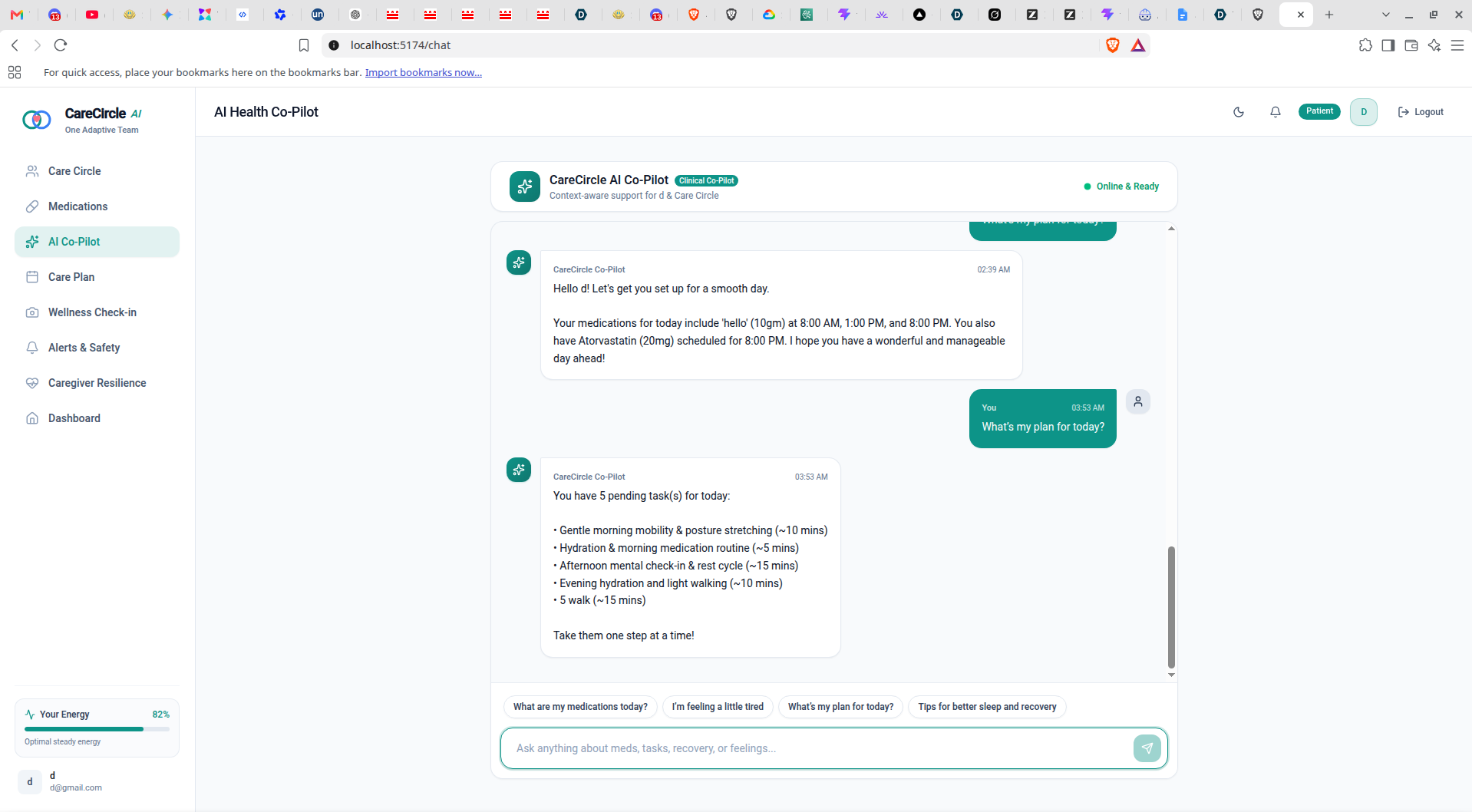
The frontend provides the caregiver dashboard, wellness check-in, medication tracking, care plan, safety alerts, care-circle management, and AI Co-Pilot.
The backend manages care data, caregiver assessments, alerts, task information, and real-time updates.
An AI service analyzes caregiver context and produces resilience guidance and recommendations.
We also connected caregiver capacity with an adaptive planning workflow so that wellbeing signals can influence the tasks generated for the day.
For reliability, the system also includes deterministic fallback logic so that core caregiver-load evaluation can continue even when the AI service is temporarily unavailable.
What We Learned
Building CareCircle AI taught us that an AI healthcare experience should not be about simply adding a chatbot.
The more important challenge is context.
A useful AI system needs to understand multiple signals together:
What the patient needs What the caregiver is currently handling How much work is pending How the caregiver is feeling Whether safety signals are appearing What actions can realistically be taken next
We learned that the best AI interaction is often not a long answer. Sometimes it is a simple recommendation at the right moment, such as:
"Take a 15-minute recovery break and delegate the evening task."
Challenges We Faced
One of our biggest challenges was connecting subjective caregiver wellbeing with objective care activity.
A caregiver might report moderate stress, while the system could simultaneously see a large number of pending tasks and active alerts. We therefore designed the system to consider both sources instead of relying on a single input.
Another challenge was making AI recommendations actionable rather than generic. We wanted the Co-Pilot to produce recommendations that could actually influence the care plan and workload.
We also had to think about reliability. Because caregiver support should not completely depend on an external AI service, we implemented fallback logic for essential scoring and capacity evaluation.
Finally, we focused heavily on keeping the interface simple. Caregivers already have enough cognitive load, so the product uses clear scores, short recommendations, one-tap actions, and visual status indicators instead of complicated workflows.
The Vision
CareCircle AI's vision is to make caregiving a shared, adaptive, and sustainable process.
We don't want technology to replace caregivers.
We want technology to recognize when caregivers need support, help coordinate the care circle, and continuously adapt the care plan around the real-world capacity of everyone involved.
Because better patient care starts with taking care of the people who provide it.

Log in or sign up for Devpost to join the conversation.