-
-
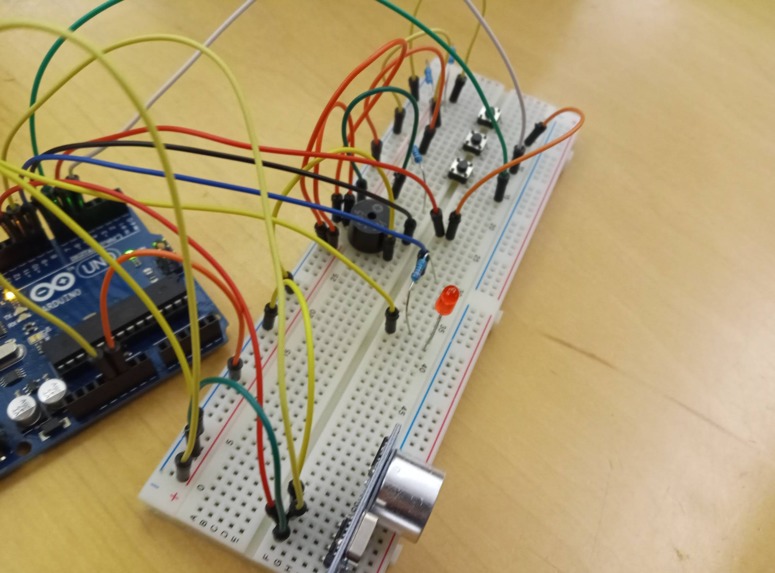
Breadboard wiring
-
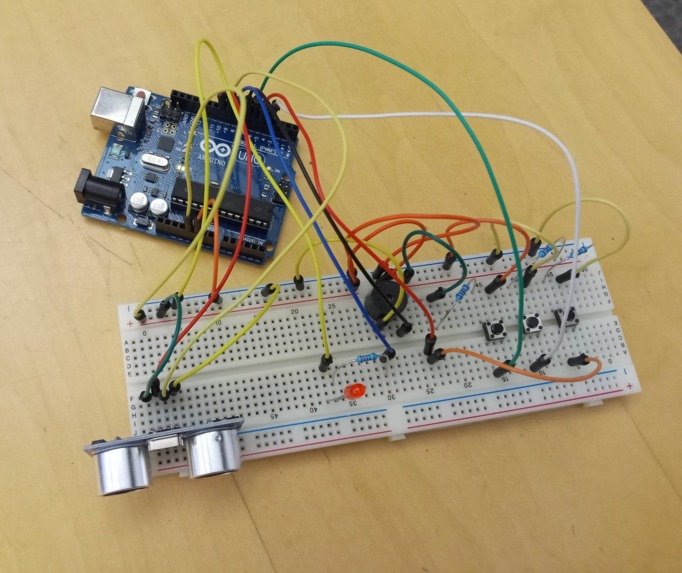
Home security alarm
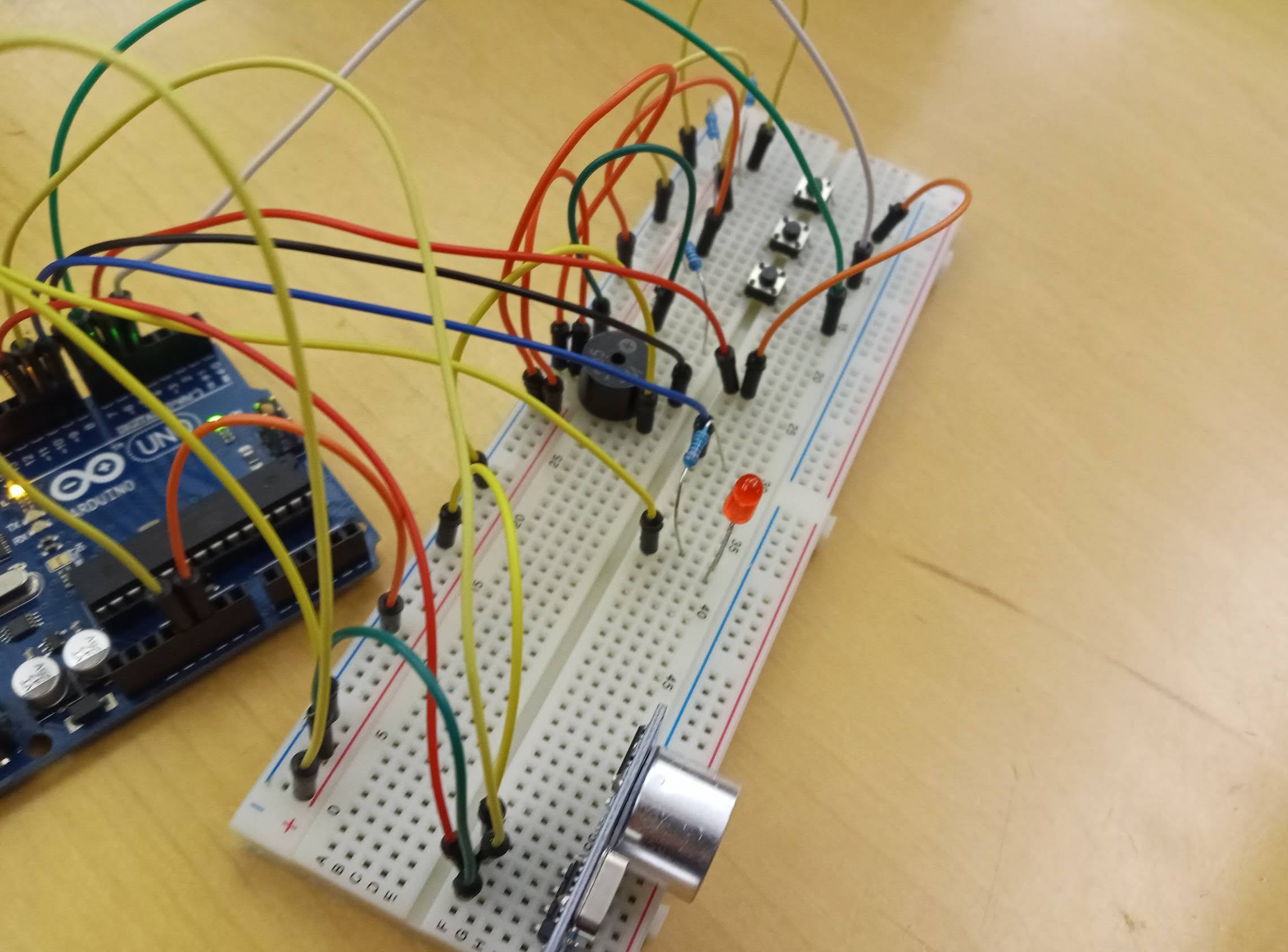
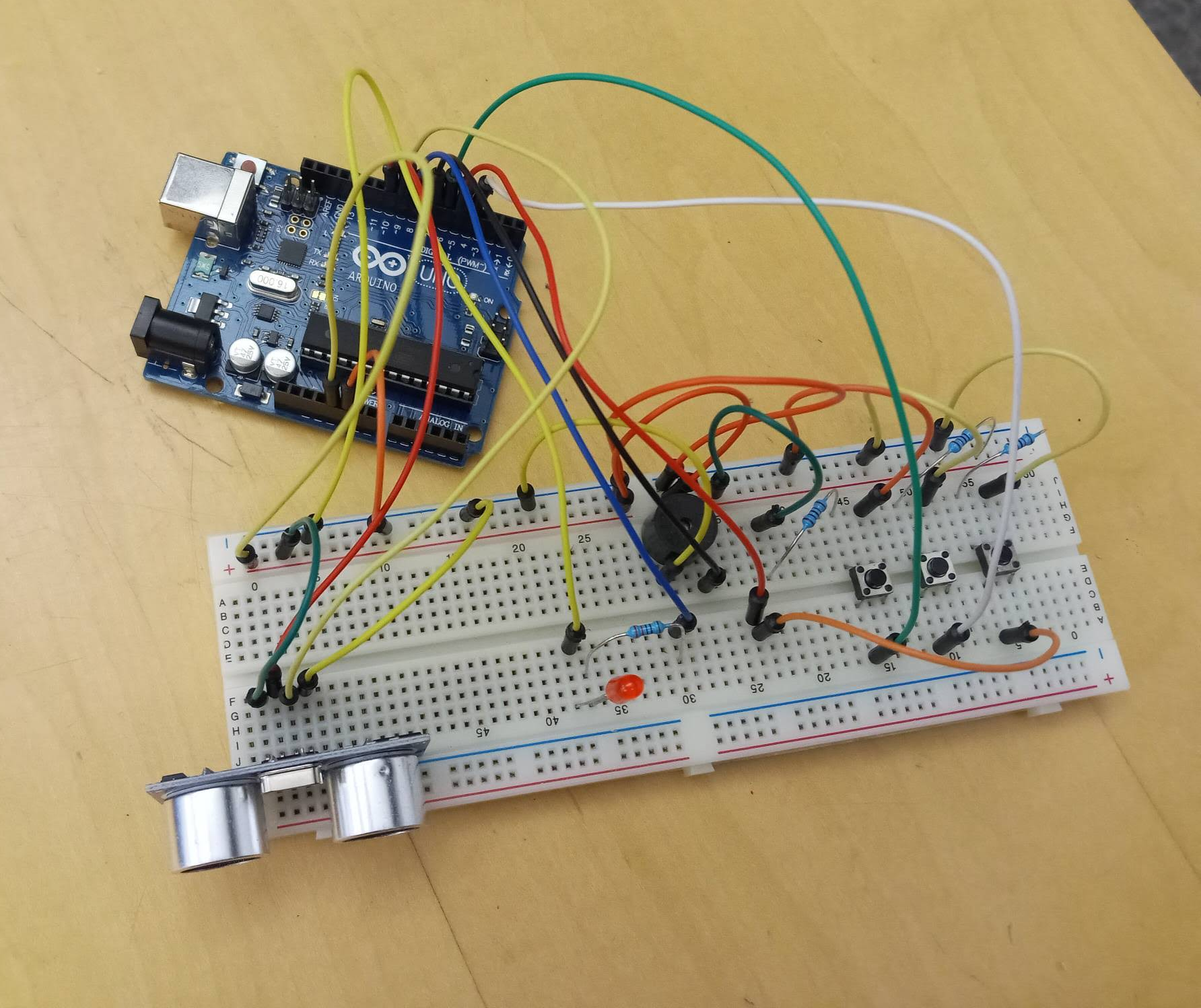
Inspirations
On my first day at my UC Riverside apartment, my roommate told me about stories of how people tried entering private apartments and the importance of keeping our door locked. This was obviously alarming, so I felt a need for a stronger security system which led to my low cost alarm and security system.
What it does
Through Arduino and a breadboard, my alarm system takes in input from a ultrasonic sensor and computes a calculation to determine if distance is less than 70cm, a warning light appears, if less than 30 cm, then an alarm blares and the light begins flashing. There is also a passcode protected shut off feature.
How we built it
I built the project using Arduino by following a tutorial online to convert ultrasonic information to distance followed by logic which would give current to my LED and buzzer. The push buttons are a sort of pass word protected break which I implemented with branches. I used Ohms Law and the internet to determine what kind of resistors I would need for my LED and pushbuttons, and used the digital ports on the Arduino to send current.
Challenges we ran into
The hardest part was getting the LED and Alarm to go off at the same time. Since this was my first time coding my own project in Arduino instead of using pre-existing code, I had no idea how to get both to continue in the loop. When the siren sounded good, the LED was too slow, and when the LED flashed the siren sounded poor. Hence, I used two for loops and put the flashes outside the loops and limited my use of delay which got a great balance for both my alarm and my siren.
Accomplishments that we're proud of
I am extremely proud of my exit feature with the push buttons since I could not figure out how to stop the program since I did not know how to exit the loop in Arduino and eventually came across the exit(0); function which made stopping the program a charm. I also am proud of getting the LED and siren to go off at the same time since I had difficulties with threading and found the for loops to be a simple but effective solution.
What we learned
In the end, I learned how to truly code in Arduino, make my own electronics projects. Use components and hardware, but also find a balance in software in hardware. My main focus was finding a real problem for real people and I believe I accomplished this in my project. Safety is important for people and even if this just provides an increased peace of mind, I learned that I can always improve. After I added my LED, I went for a buzzer, then a pass code. In the future, I could upgrade to a Bluetooth integration of communication with the police, maybe a taser, but there is always room for improvement. I learned how I can build on my own skills while helping other people with a problem which I can relate to and solve.
What's next for William's Home Security Alarm
I may or may not be adding a taser to the system, but first I will need to learn how to safely create an arc and how to get enough power. I hope this can be brough to a larger scale so that students and maybe even businesses and homeowners can have an extra layer of security when going to bed at night. Most apartments don't have additional defense besides a deadlock, and this can provide that extra step to deter criminals at a very cheap one time cost.
In terms of the competition, I was shooting for best hardware/beginner, but I am glad I had a chance to learn so much and could reach out to different mentors, big shoutout to Nathan for lending me his ultrasonic sensor, Alex for inspiring my buzzer siren, and Kenneth for helping me think about how to have both the LED and buzzer activate at a fast speed simultaneously. I feel like I have the confidence to take on my own personal projects outside of hackathons now that I took on a new and unfamiliar task. But I am very excited for the hackathons moving forward.

Log in or sign up for Devpost to join the conversation.