Inspiration
William began with a deeply personal journey.
One of our co-founders was diagnosed with Major Depressive Disorder after months of emotional exhaustion, anxiety, and isolation. Looking back, the diagnosis wasn't the beginning of the problem—it was the result of a long period during which countless opportunities for earlier support had already been missed.
During recovery, psychotherapy, medication, and the study of Transactional Analysis (TA) fundamentally changed how we understood emotional well-being. We realized that the most important part of recovery wasn't the one-hour therapy session—it was everything that happened between therapy sessions. Those ordinary days were filled with emotional struggles, difficult decisions, relationship challenges, and moments when simply having someone who truly understood could have made an enormous difference.
As our team shared our own experiences, we discovered a common belief: emotions are rarely the real problem—they are signals. Behind every difficult emotion are real-life challenges involving relationships, work, family, identity, and purpose.
Today's support system often leaves people with only two choices: struggle alone or wait until they need professional intervention. We believe there should be something in between—a trusted companion that helps people understand themselves before emotions become crises.
That's why we built William: not to replace therapists or human relationships, but to create the missing layer between everyday emotional life and professional mental health care.
What it does
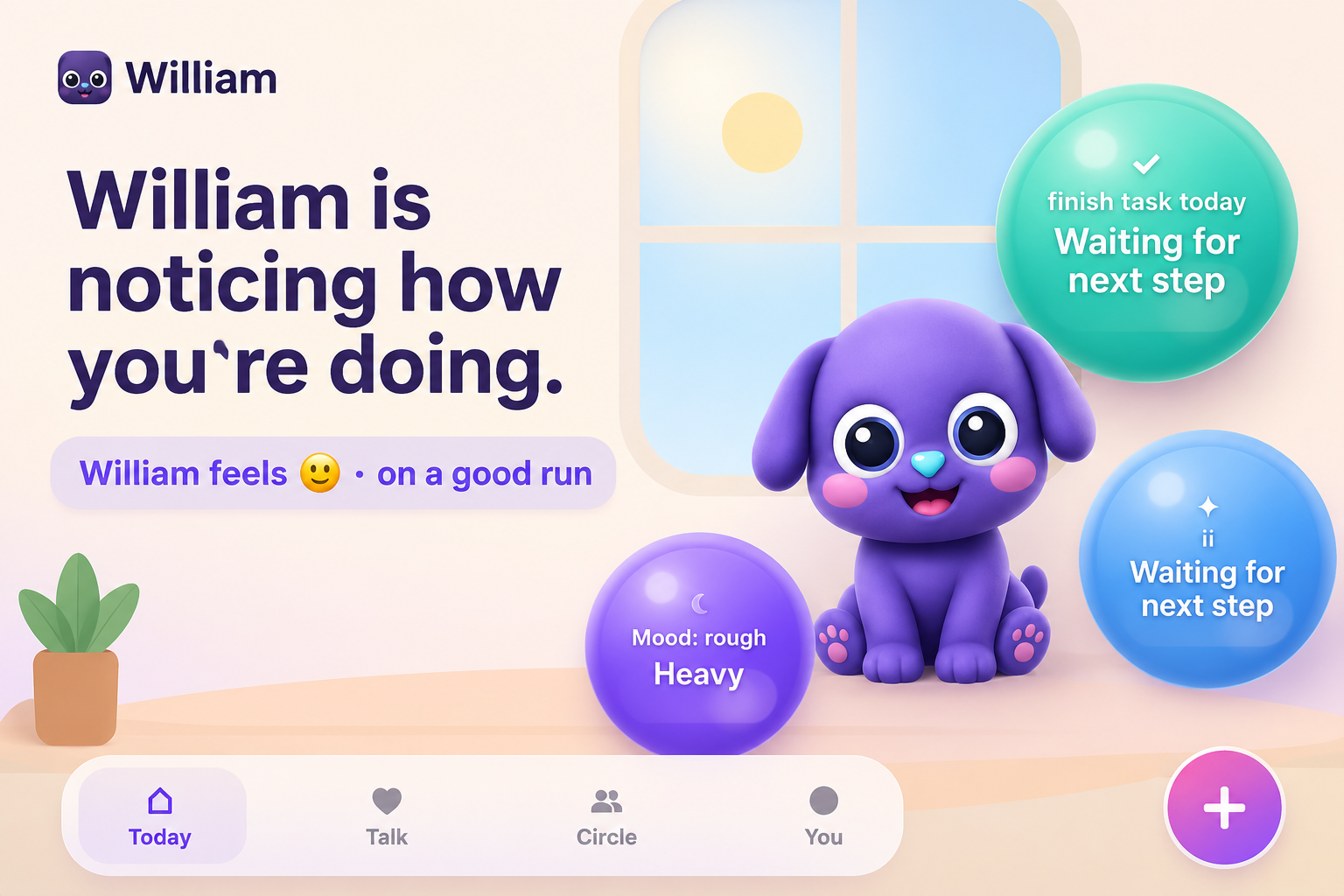
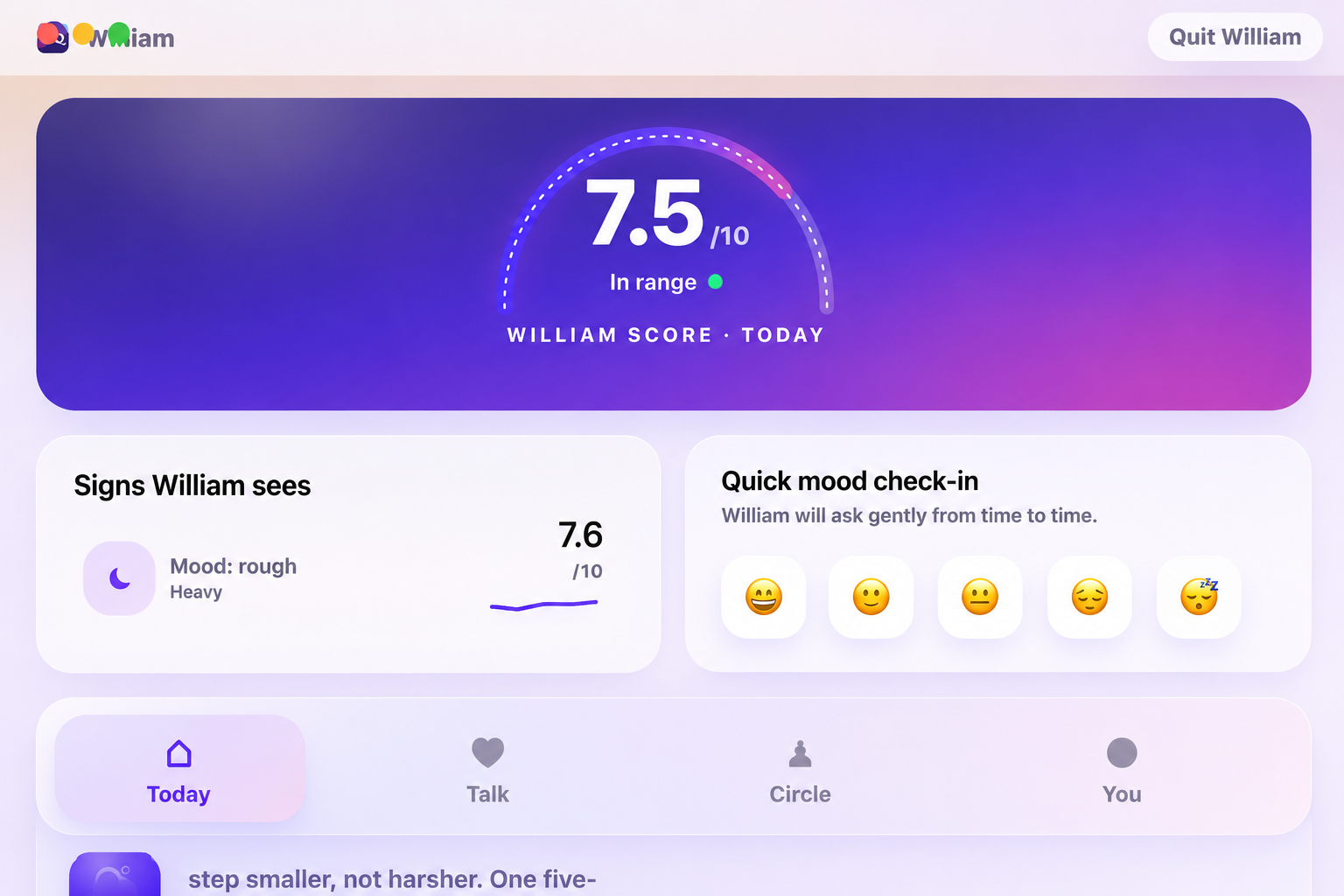
William is an Emotion-First Personal Growth Operating System designed to help people better understand themselves, build healthier relationships, and grow over time.
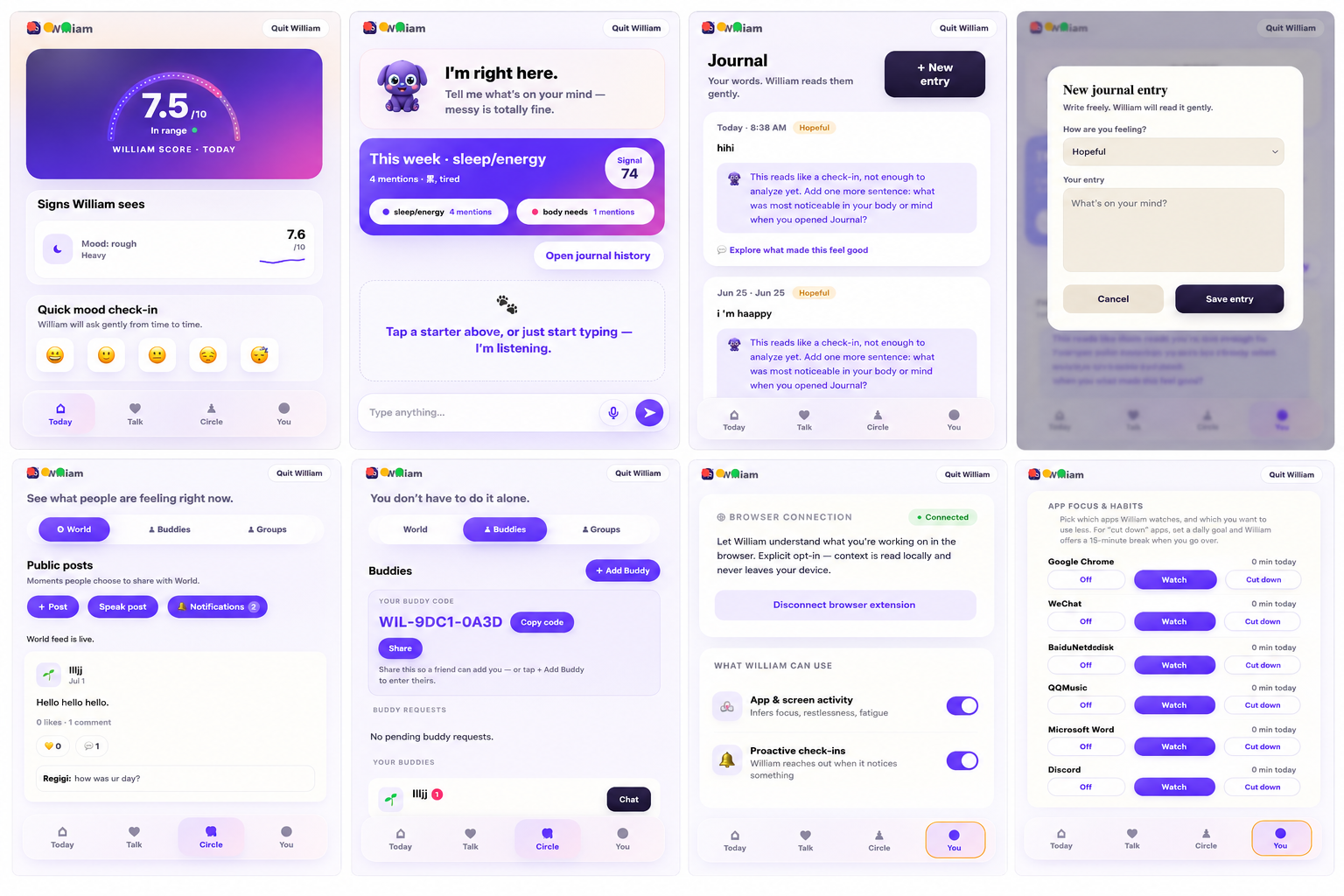
Rather than acting as another AI chatbot, William supports personal growth through five connected layers:
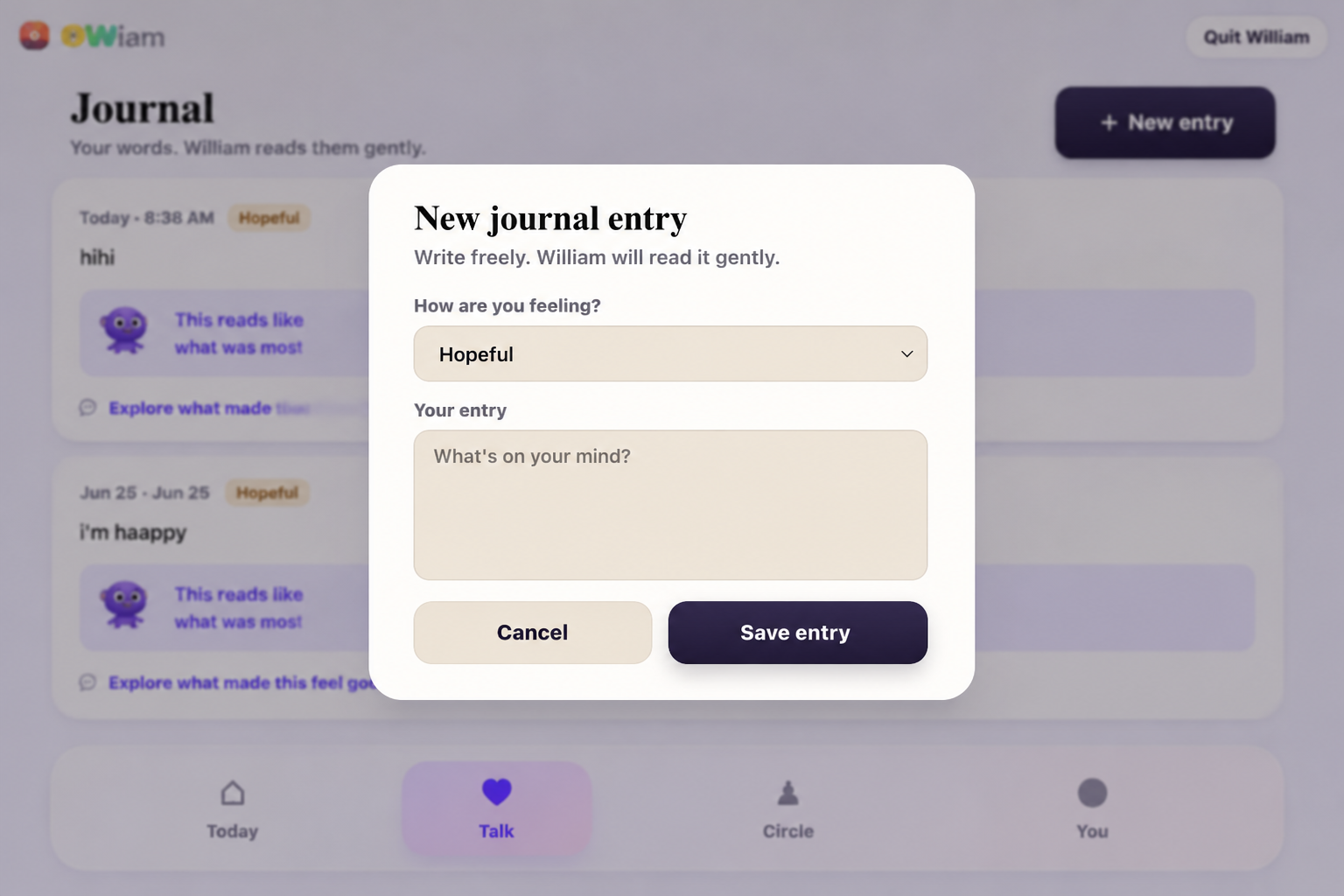
- A private and psychologically safe space for honest self-expression.
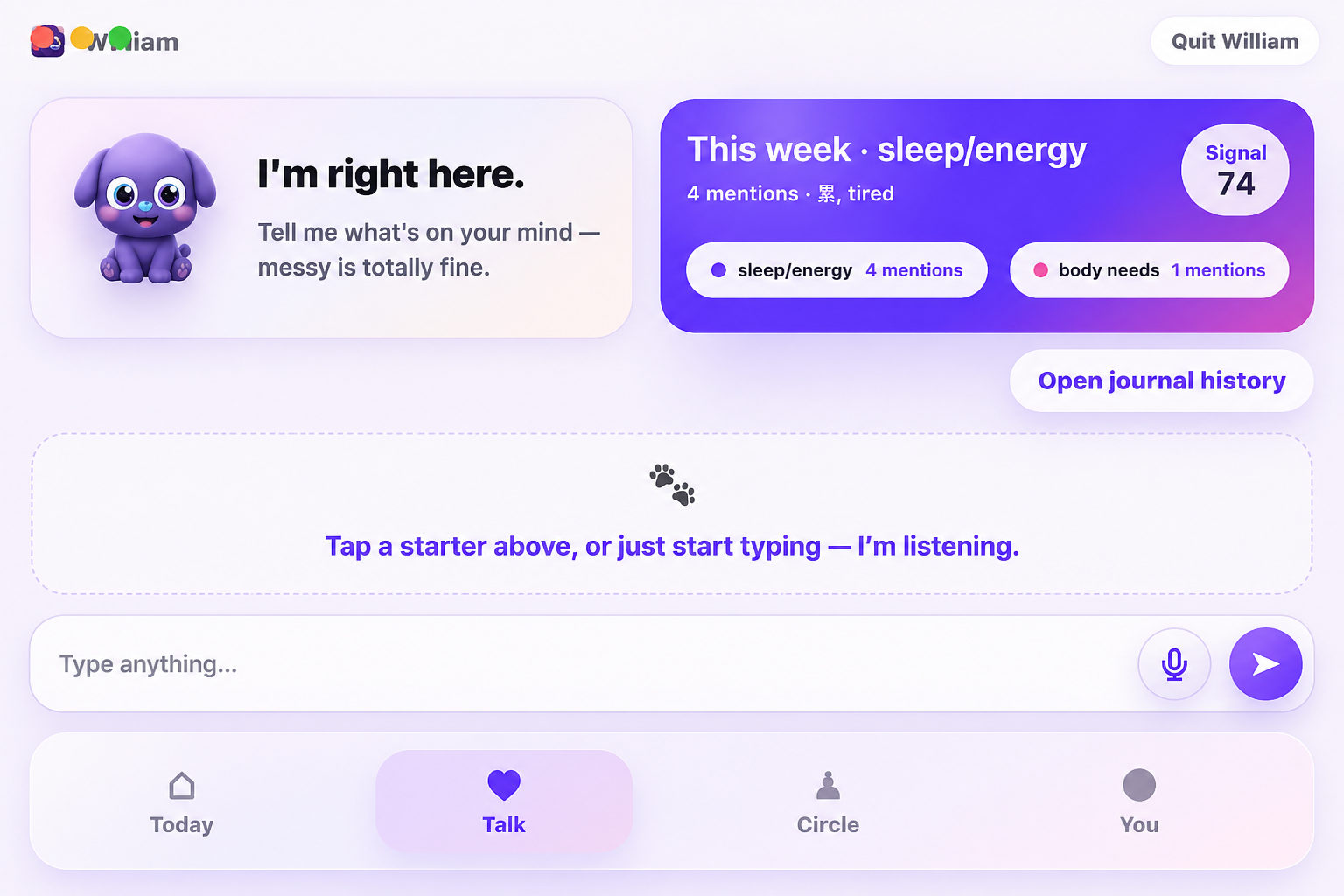
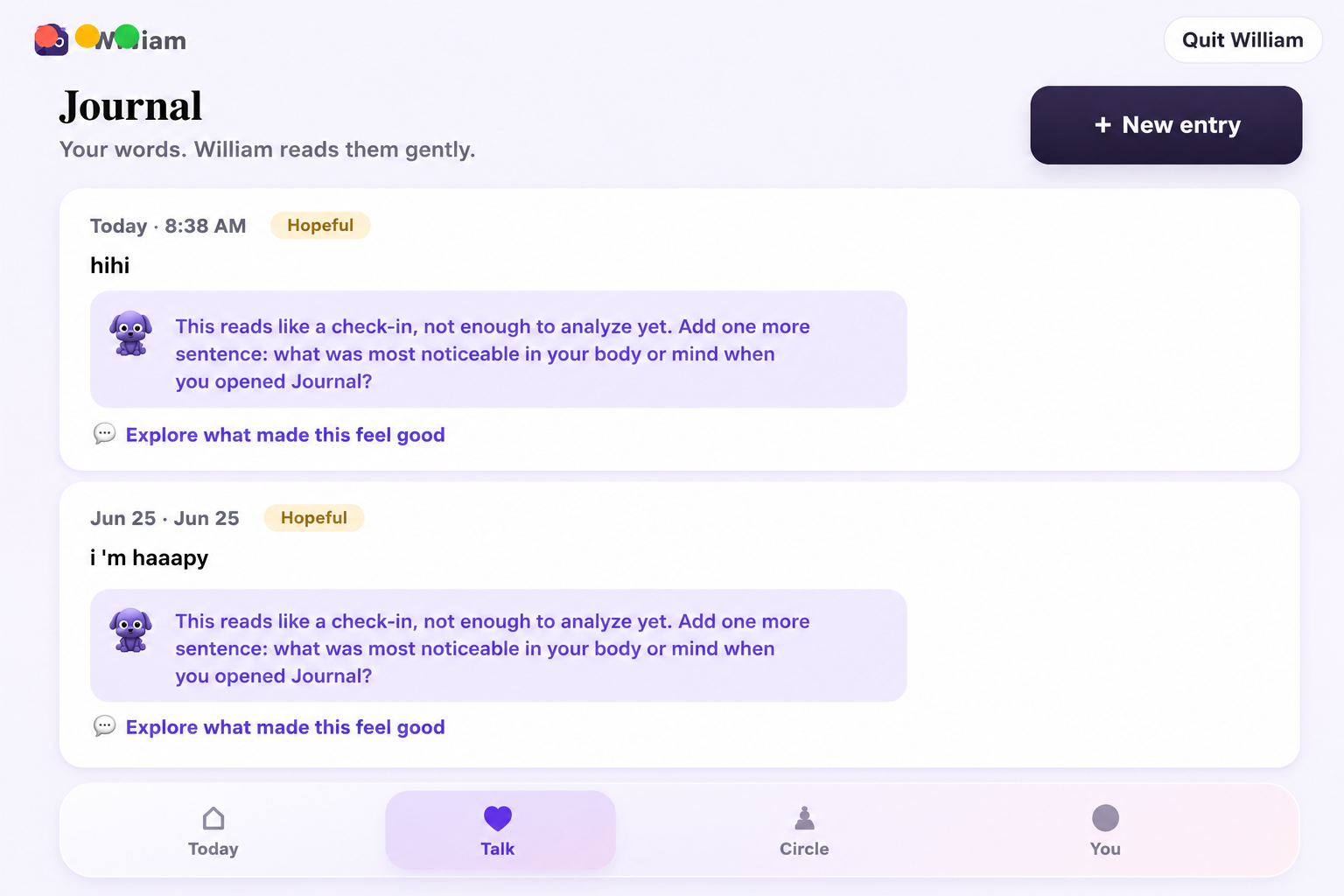
- AI-powered emotional reflection through natural conversations and journaling.
- Long-term memory that develops a living understanding of each user's identity, values, and emotional patterns.
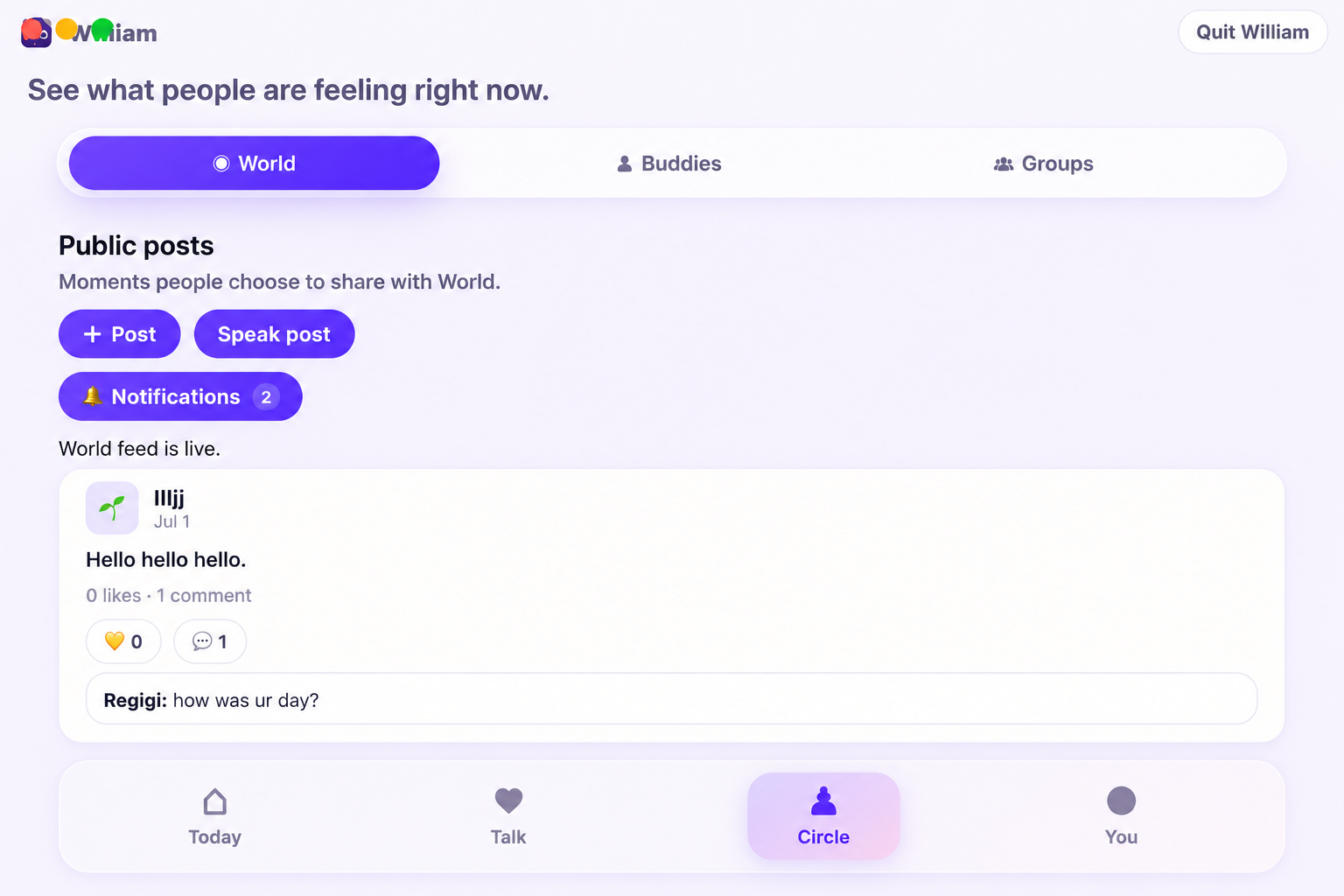
- Authentic human connection by encouraging meaningful relationships instead of algorithm-driven engagement.
- A Growth Ecosystem that connects users with therapists, coaches, educators, communities, and - - - other real-world support when AI alone is not enough.
Our philosophy is simple:
- AI helps people understand themselves.
- Humans help people grow.
- The ecosystem helps people move forward.
William is designed to connect these three elements into one continuous growth journey.
How we built it
William is powered by OpenAI models as the reasoning engine behind long-term personal growth.
Instead of treating every conversation as an isolated interaction, William continuously builds a deeper understanding of each user through long-term memory, contextual reasoning, and personalized reflection.
We combined OpenAI's language and reasoning capabilities with our own Personal Growth OS architecture, which integrates emotional journaling, identity modeling, long-term memory, relationship mapping, and ecosystem recommendations into a unified experience.
Rather than optimizing for conversation length or user engagement, every interaction is designed to help users gain deeper self-awareness and make meaningful progress in their real lives.
Challenges we ran into
Our biggest challenge wasn't technical—it was philosophical.
Many AI companions are designed to maximize engagement. We wanted William to maximize personal growth instead.
That meant solving questions that had no obvious answers:
- How do you build an AI that knows when not to speak?
- How do you provide emotional support without creating emotional dependency?
- How do you use long-term memory without defining someone by their past?
- How do you recognize when AI is no longer the best source of support?
We believe AI should never replace therapists, friends, or communities. Instead, William is designed to understand its own limitations and encourage users to reconnect with real people and trusted support systems whenever appropriate.
Finding that balance became one of the defining challenges of this project.
Accomplishments that we're proud of
We're proud that William is more than another AI companion.
We've created a new framework for thinking about personal growth in the AI era.
Instead of treating emotions as problems to eliminate, William treats them as the starting point of self-understanding.
Instead of replacing human relationships, William helps strengthen them.
Most importantly, we've demonstrated a different vision for AI:
AI + Human + Ecosystem
We believe lasting personal growth happens when intelligent technology, meaningful human relationships, and trusted real-world support systems work together.
What we learned
Building William fundamentally changed how we think about AI.
We learned that emotions are rarely the problem—they are signals pointing toward something deeper.
AI is incredibly powerful at helping people reflect, organize their thoughts, and better understand themselves. However, real growth never happens through AI alone.
Growth requires action.
Growth requires relationships.
Growth requires community.
The future isn't AI replacing humans. It's AI helping people reconnect with themselves and with each other.
What's next for William: Emotion-First Personal Growth OS
William is only the beginning.
Our long-term vision is to build the world's first Emotion-First Personal Growth Operating System.
We're expanding William into a Growth Ecosystem, where AI works alongside therapists, coaches, educators, communities, developers, and trusted partners. Rather than becoming another closed AI product, William aims to become the infrastructure that connects emotional understanding with real-world growth.
Our ambition isn't to build the best AI companion.
Our ambition is to build a Personal Growth Operating System where AI, humans, and ecosystems work together to support lifelong growth.
Built With
- api
- chrome
- cloudflare
- css3
- desktop
- electron
- extension
- html5
- ipc
- javascript
- json
- llama.cpp
- llm
- mini
- openai
- phi-4
- speech-to-text
- whisper
- workers

Log in or sign up for Devpost to join the conversation.