Inspiration
My sister makes custom jewellery and sells it online, paid through PayPal. She's brave enough to have started on her own, she lives off it, and she's fine with what she makes. But she has no business plan, no idea what next month looks like, and no answer to "will this ever scale?"
I come from the business side: years of growth and unit economics in startups. Every time we talk about her shop, I show her where to look in her numbers and how she could make more. Once she said: "I wish I had someone like you on my team, always." Most hobby sellers don't have a sister like that. So I built one.
What it does
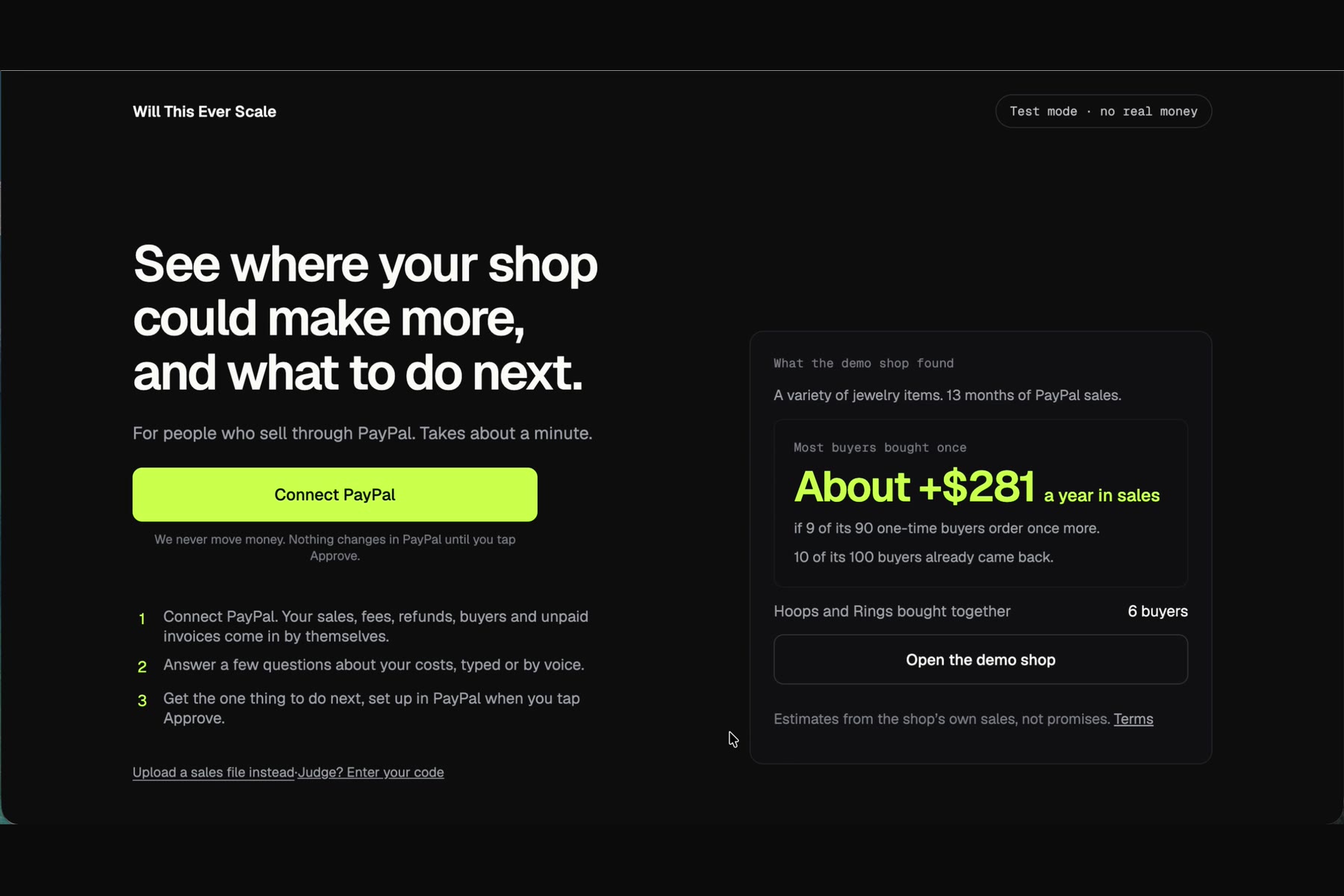
Will This Ever Scale is a money tool for hobby sellers who take payments through PayPal.
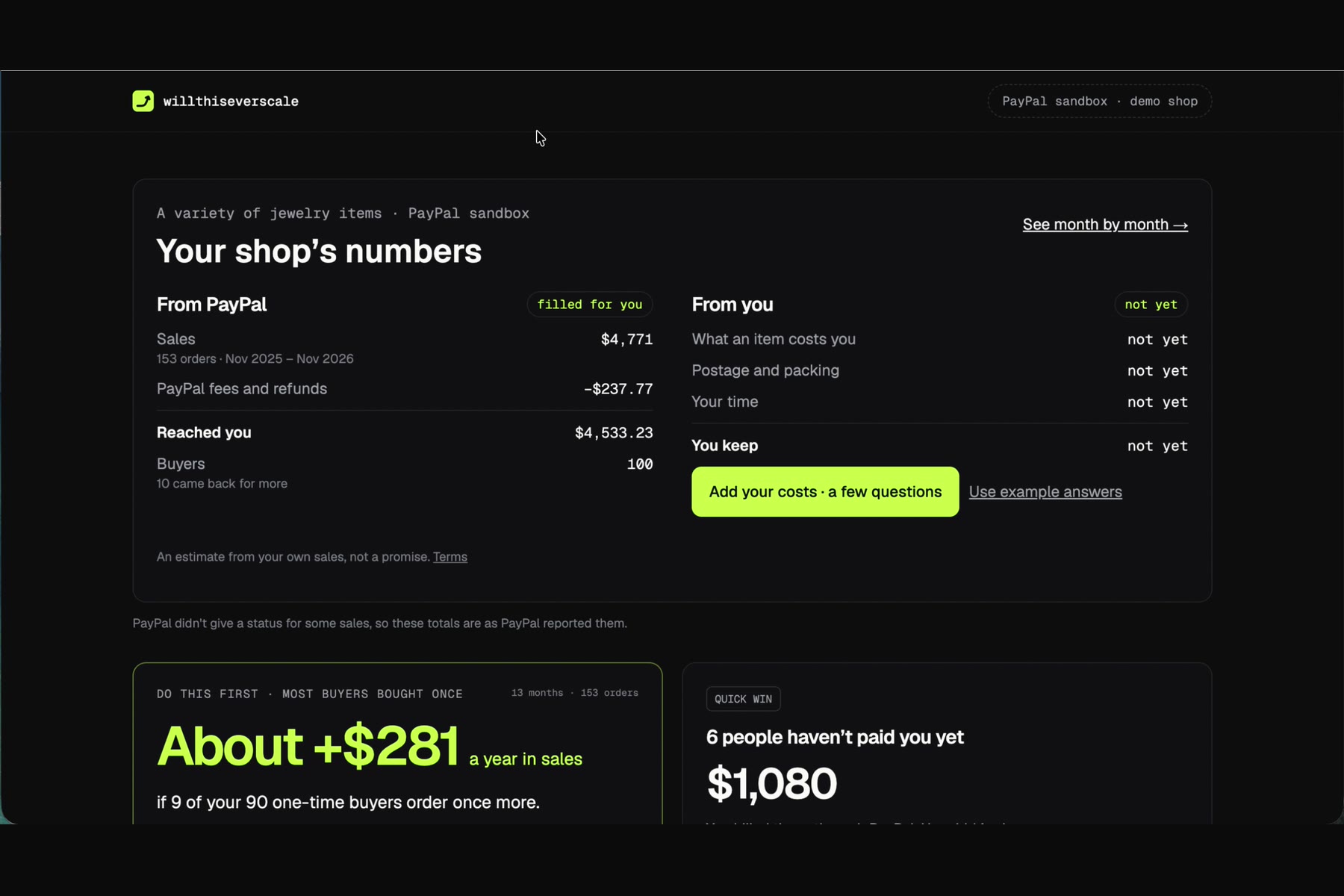
- Connect PayPal (or upload a PayPal CSV). It reads sales, fees, refunds, buyers and unpaid invoices, and builds your shop's numbers in the background: what came in, what PayPal took, what reached you.
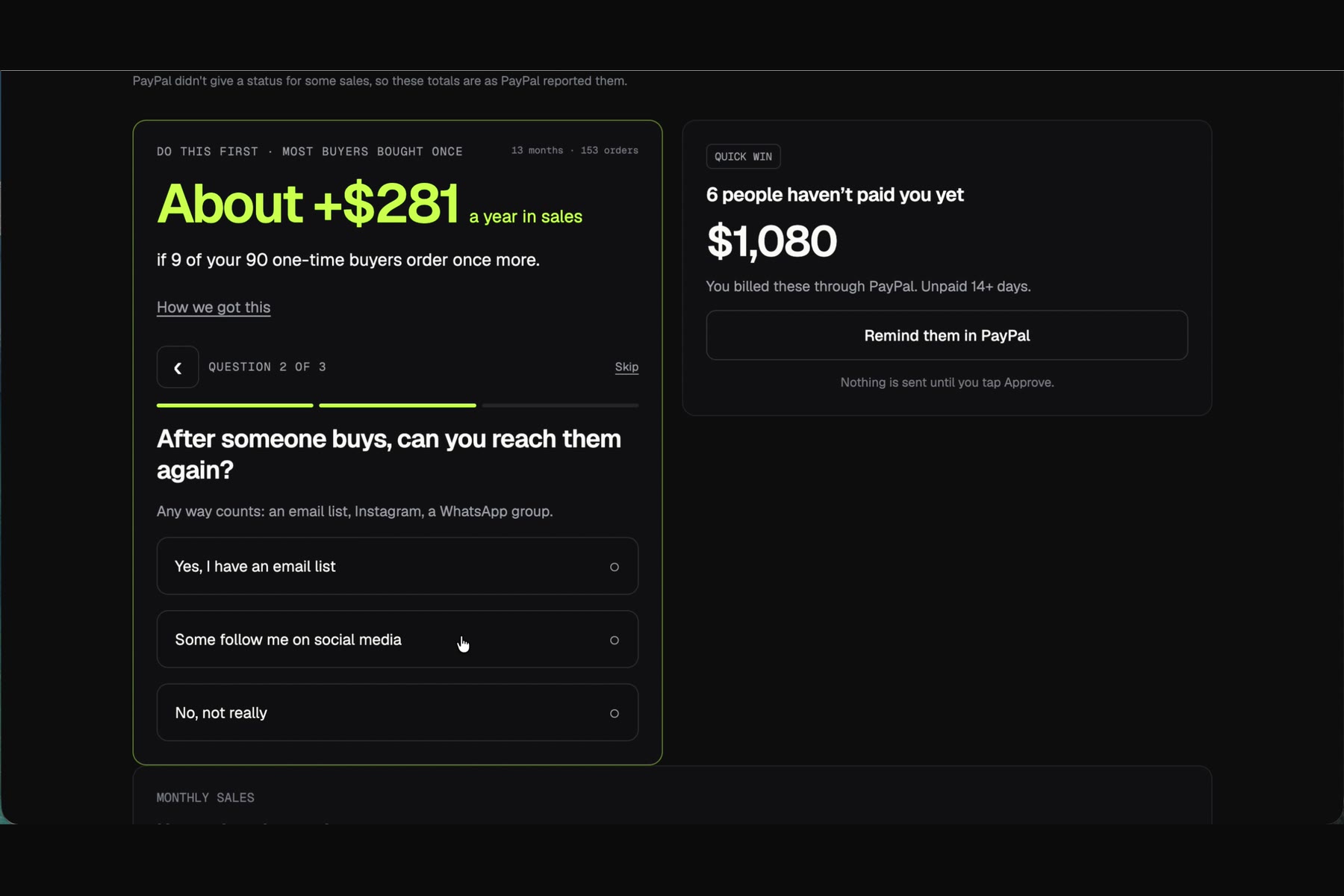
- Tells you what to do next, in money. Each card is one opportunity with an estimate: most buyers bought only once (about +$281 a year if 9 of 90 one-time buyers order once more), 6 people haven't paid you yet ($1,080), items bought together, quiet regulars to bring back, your best seller.
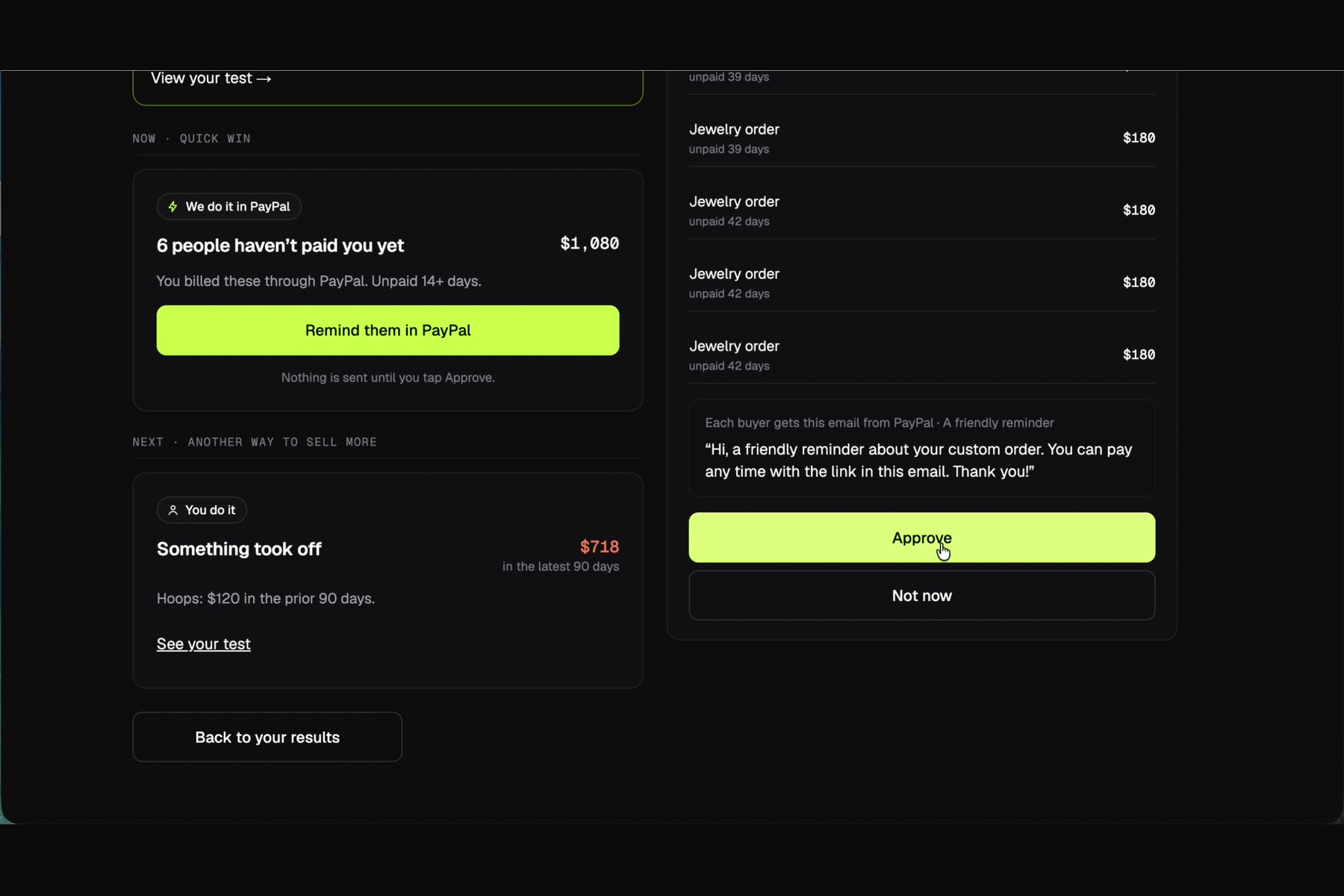
- Does it for you in PayPal, after you approve. Send invoice reminders, or create a payment link for a set. You review exactly what PayPal will send, then tap Approve.
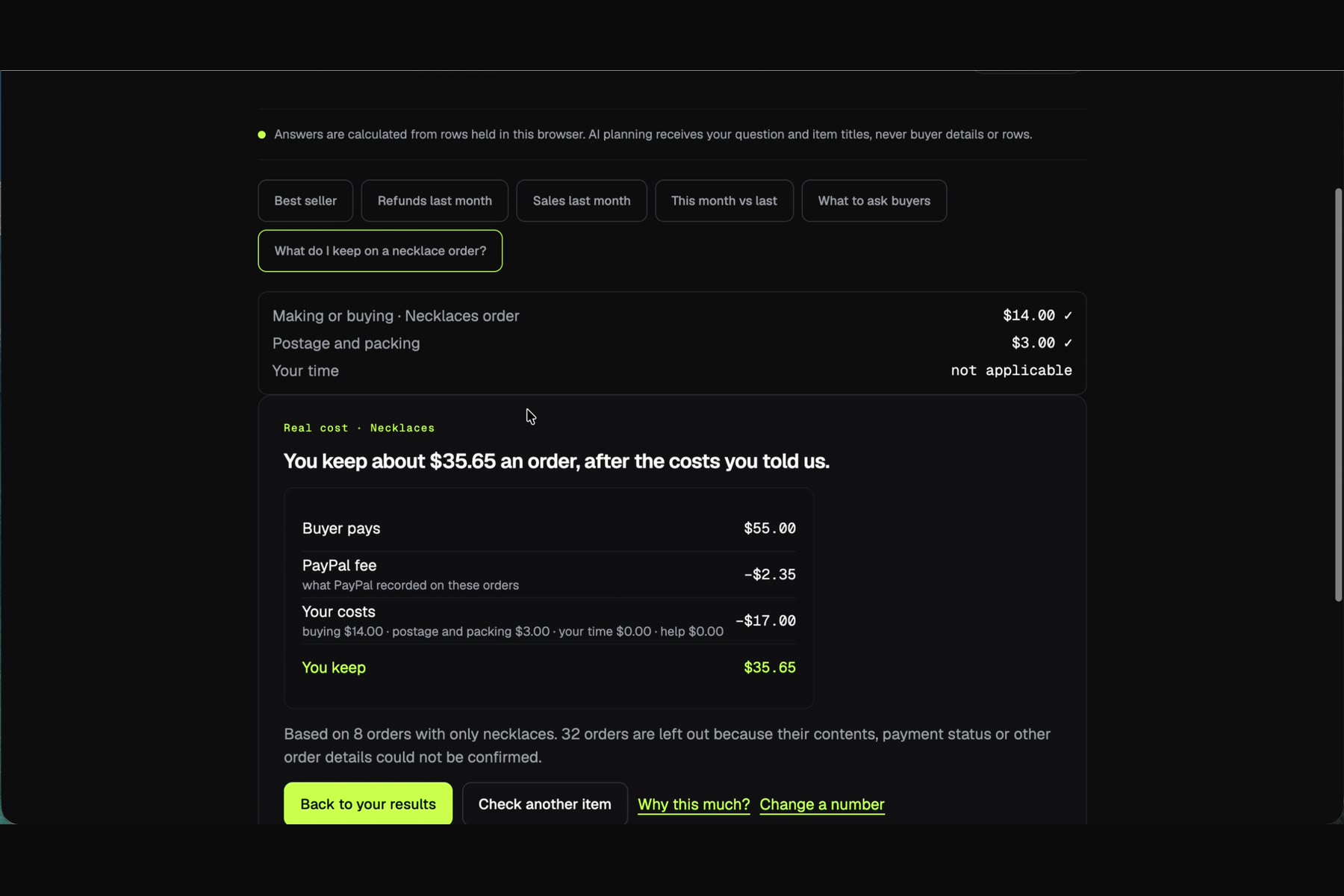
- Asks for the costs PayPal can't know, like a person would. A short chat asks whether you make or buy your items, what one costs and what packing and postage cost, reads every number back, then shows what you actually keep on an order.
- Ask your data. Ask "what's my best seller?" or "how much did I make last month?" in plain words.
Every figure is an estimate, not a promise. Sellers are beginners, so every screen answers "so what?" instead of showing a dashboard.
How I built it
- Next.js + TypeScript on Vercel, MIT-licensed, built solo with AI coding agents.
- PayPal (sandbox): Log in with PayPal (OAuth), Transaction Search for sales and fees, Invoicing for unpaid invoices and approved reminders, Payment Links and Buttons for sets, Catalog products, plus the PayPal Agent Toolkit for fixed, allowlisted transaction and invoice calls with REST fallbacks.
- AI is the communication layer. Beginners don't read dashboards, so they talk to their numbers instead. Amazon Bedrock with Amazon Nova 2 Lite groups messy item names and describes what the shop sells, plans the lookups behind "Ask your data", and runs the cost interview: it understands plain-language answers and reads every number back before it's used. The app's code does the maths; AI output is validated and never decides a figure. Buyer names, emails and raw transactions are not sent to the model.
- Voice (beta): "Talk it through" lets sellers answer the cost questions out loud. A small voice-activity model in the browser detects speech, Amazon Transcribe turns it into text, Nova 2 Lite checks the answer, and Amazon Polly speaks the reply. Typing works the same.
- Every PayPal action is a signed proposal that runs only after explicit approval of that exact proposal, with readback to confirm it happened.
Potential impact
Everyone's incentives line up: PayPal earns a fee on every sale, so every extra sale this helps a seller make is extra volume for PayPal too. PayPal reports 439 million active accounts across about 200 markets (end of 2025), and third-party trackers estimate over 35 million merchant accounts. As an illustration only: if 100,000 small sellers each added the ~$281 a year that the demo shop's first card points to, that's about $28 million more in sales a year going through PayPal. Most of these sellers will never hire an analyst or open a spreadsheet; this gives them the business side in plain language.
Challenges I ran into
- Sandbox sales can't be backdated, so the demo combines a real sandbox snapshot (153 orders, $4,771) with generated earlier months, clearly labelled.
- Turning raw PayPal transactions into a seller's real picture: refunds, fees, unknown event codes and oddly named items.
- Reading another seller's PayPal needs PayPal partner approval, so for now Connect PayPal works only for our demo sandbox seller. Real sellers (and judges) can upload any PayPal activity CSV instead.
Accomplishments that I'm proud of
A beginner can go from PayPal data to "here's the one thing to do next, here's what it's worth, tap to do it in PayPal" in about a minute, without knowing what unit economics is.
What I learned
Sellers don't want more charts. They want to be told what to do, in money, and have it set up for them.
What's next for Will This Ever Scale
- Real seller connections through PayPal partner onboarding, then more payment providers.
- A more proactive assistant: it spots the next step, explains it in money and offers to set it up.
- Talk to your shop from ChatGPT and Claude through connectors (MCP).
- Ads: what you pay to get a buyer, next to what a buyer is worth.
- Voice out of beta: a full spoken conversation with your own numbers.
Try it (judges)
- Open https://app.willthiseverscale.com/judge and enter
PAYPAL-JUDGE-2026(a free pass; the app is normally paid). - Try different shops: choose Upload a sales file instead and upload any PayPal activity CSV, your own or one of the five sample shops in the repo's
sample-files/folder. Each shop gets its own numbers and cards. Nothing is hardcoded. - Or open the demo shop for the PayPal actions: sending invoice reminders and creating a payment link in the PayPal sandbox, after you approve.
Full steps are in the repo README.
Built With
- amazon-bedrock
- amazon-nova
- amazon-web-services
- next.js
- paypal
- paypal-agent-toolkit
- paypal-payment-links
- paypal-rest-api
- paypal-transaction-search
- react
- typescript
- vercel
