Inspiration
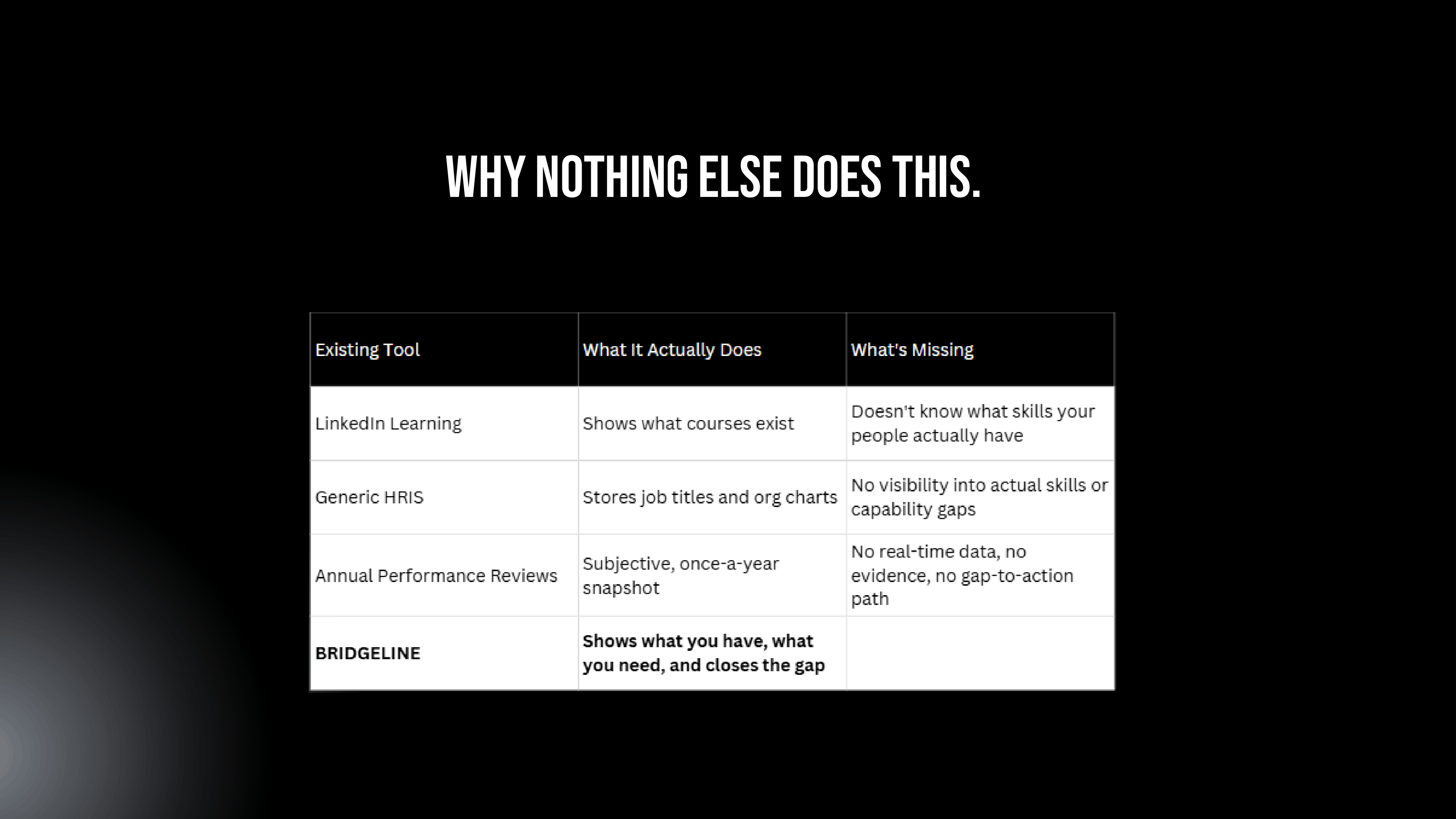
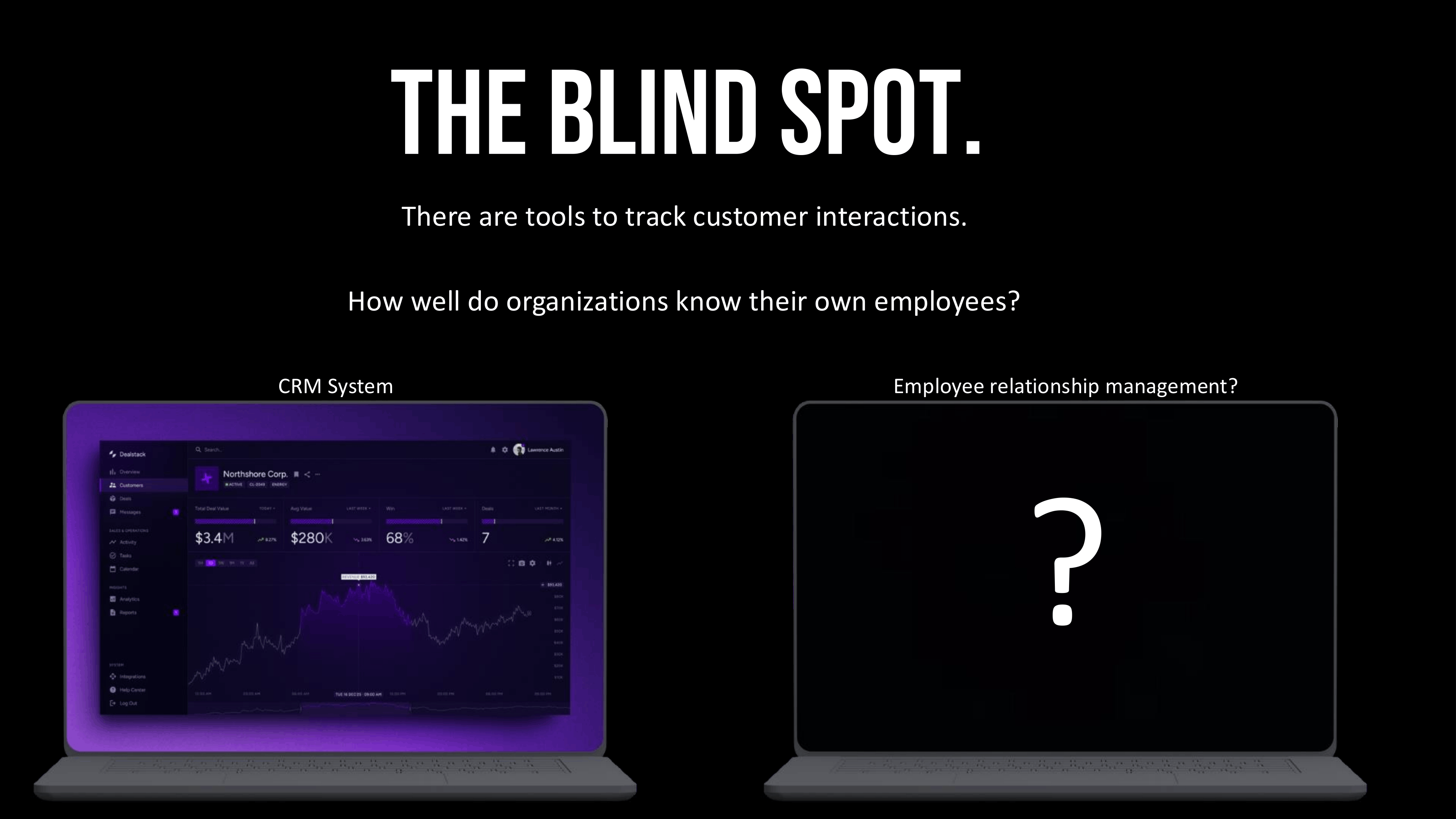
Nothing is the system of record for workforce capability, the way a CRM is for customers. Skills tools fail because the data is self-reported and nobody trusts it. We also noticed our two prompts weren't separate problems — you can't recommend AI use cases without knowing what skills exist to build them. That connection became the project.
What it does
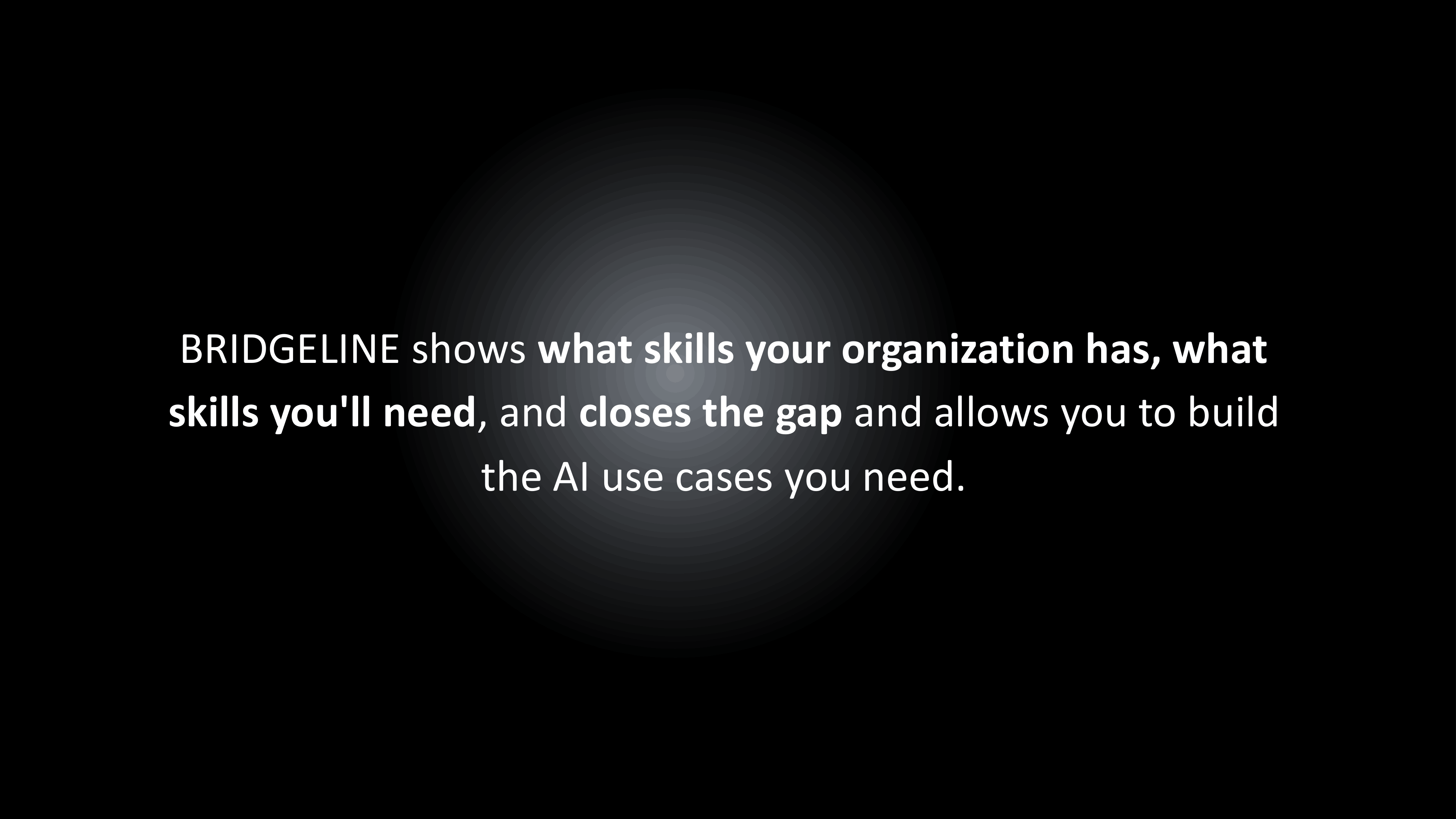
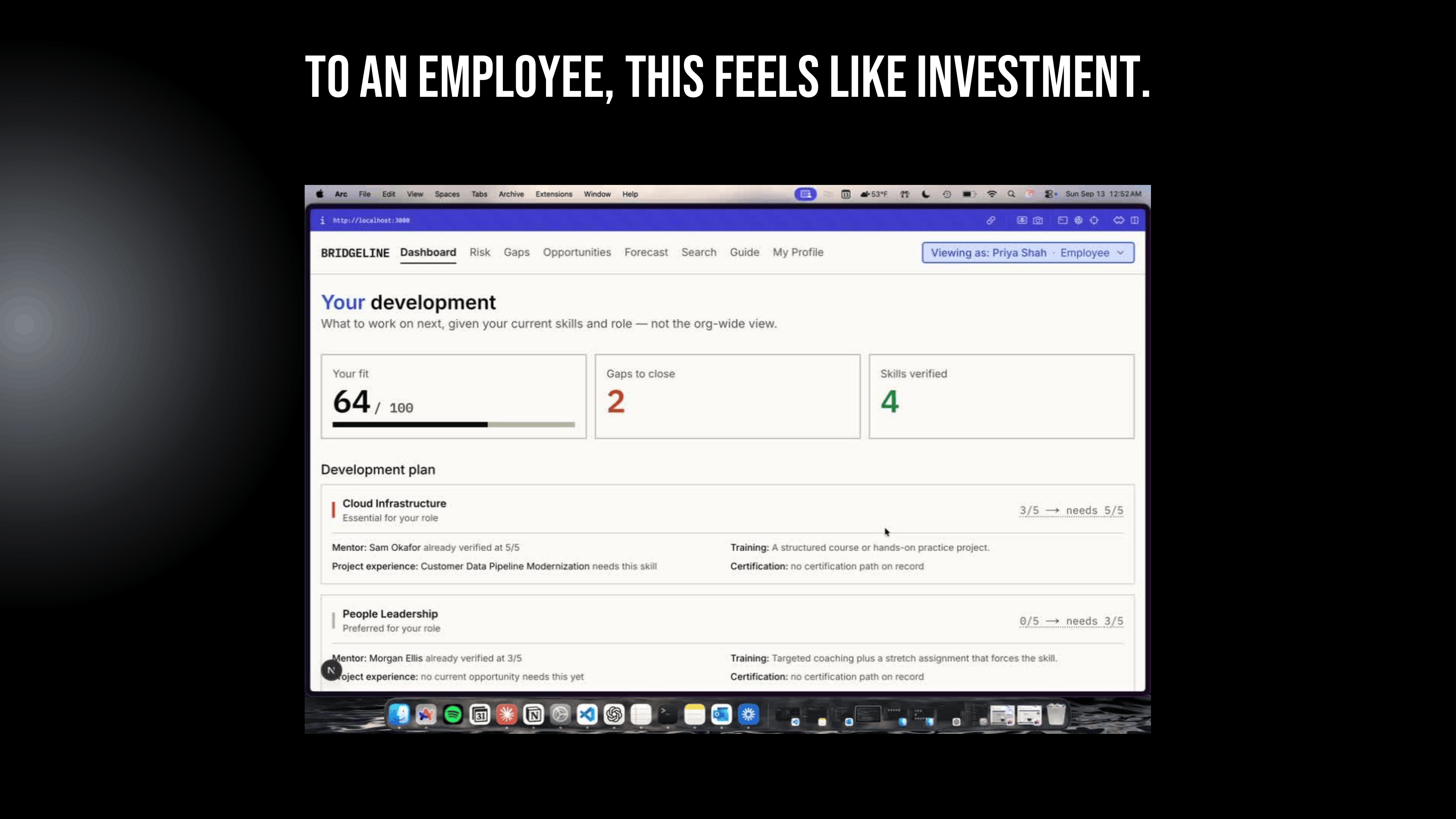
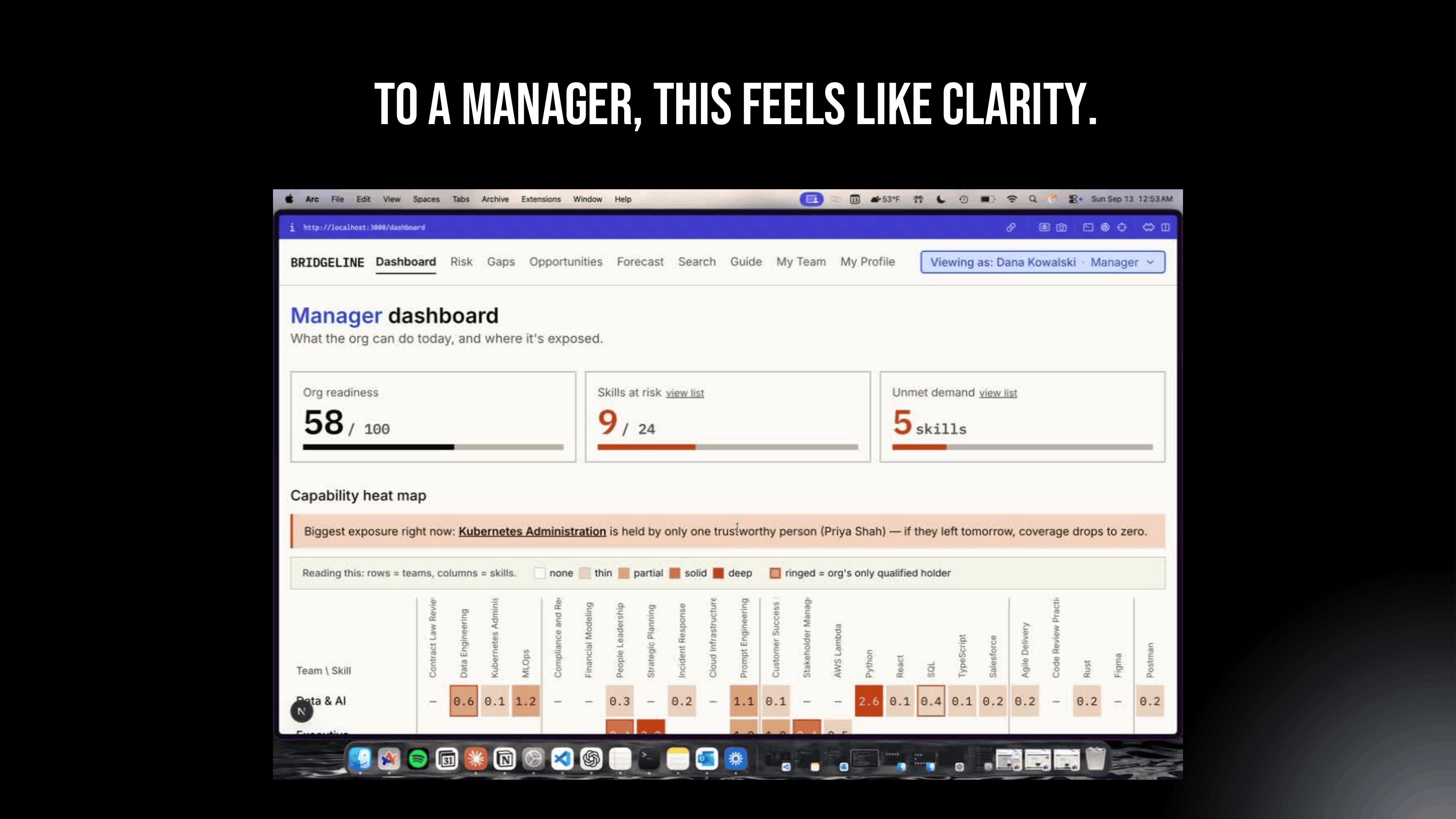
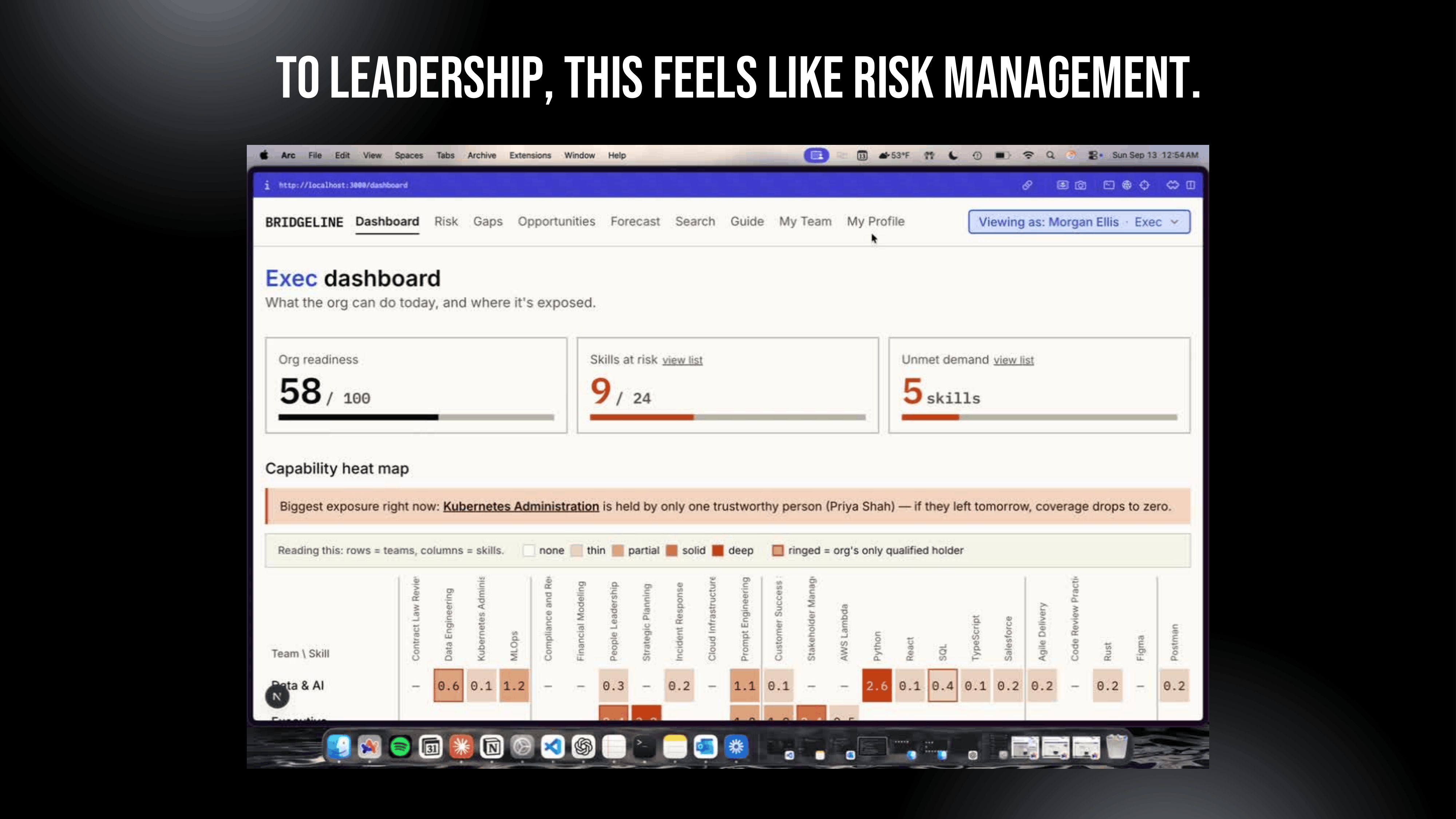
Bridgeline connect skills within the company, create a bank of that and allows managers to access those employees quickly. It also tracks every skill with two numbers, not one: proficiency (how good) and confidence (how much to trust that). Unverified claims cap at level 3. On top of that: a capability heat map, a concentration-risk register, gap ranking, and an AI-run manager interview that generates a ranked Opportunity Register — each with benefit, risk, complexity, and a staffability verdict against the real workforce. Every employee also gets a personal development plan: a named mentor, training, a live project, and a certification path for each gap.
How we built it
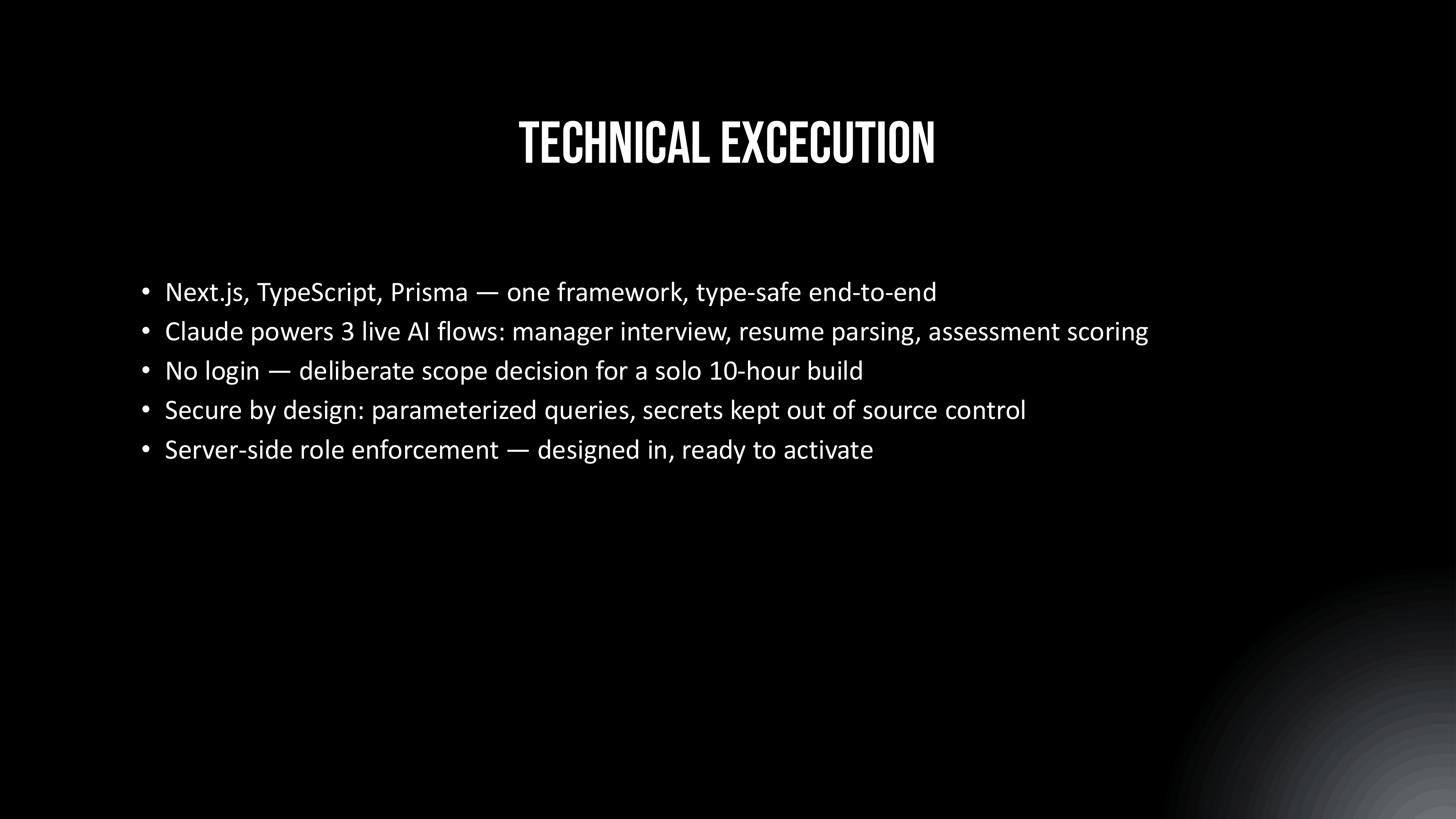
One Next.js app, Prisma + SQLite, Anthropic Claude for three live flows (manager interview, resume parsing, self-assessment), all using forced tool-use with retries so a live demo never dead-ends on a bad response. One architectural rule underpins it: a single matching engine powers gap analysis, mentor matching, search, and staffability — never a second one. The seed script writes through the same code the live flows use.
Challenges we ran into
A heat map bug where we divided by the wrong denominator made a skill held by 1 of 8 people look like team strength instead of risk. A Next.js caching issue broke the role switcher after adding a landing page, in a genuinely subtle way. And a corrupted local Xcode install broke git entirely mid-build — fixed by installing Git via Homebrew instead.
Accomplishments that we're proud of
All three AI flows work end to end against the real API, including PDF/Word resume parsing. Over 500 automated checks validated the trust model, and it surfaced a real, unplanted concentration risk on its own. The one-matching-engine rule held up in practice across six features, and each role (employee/manager/exec) gets a genuinely different experience, not just a relabeled dashboard.
What we learned
Separating proficiency from confidence is a stronger story than we expected — it's what makes people trust the rest of the product immediately. Reliability beats sophistication in a live AI demo: a forced-schema call with a retry beats a more "natural" prompt that might not survive being run live. And modern framework caching can produce bugs that look like logic errors but are really about what a framework decided not to re-render.
What's next for Bridgeline
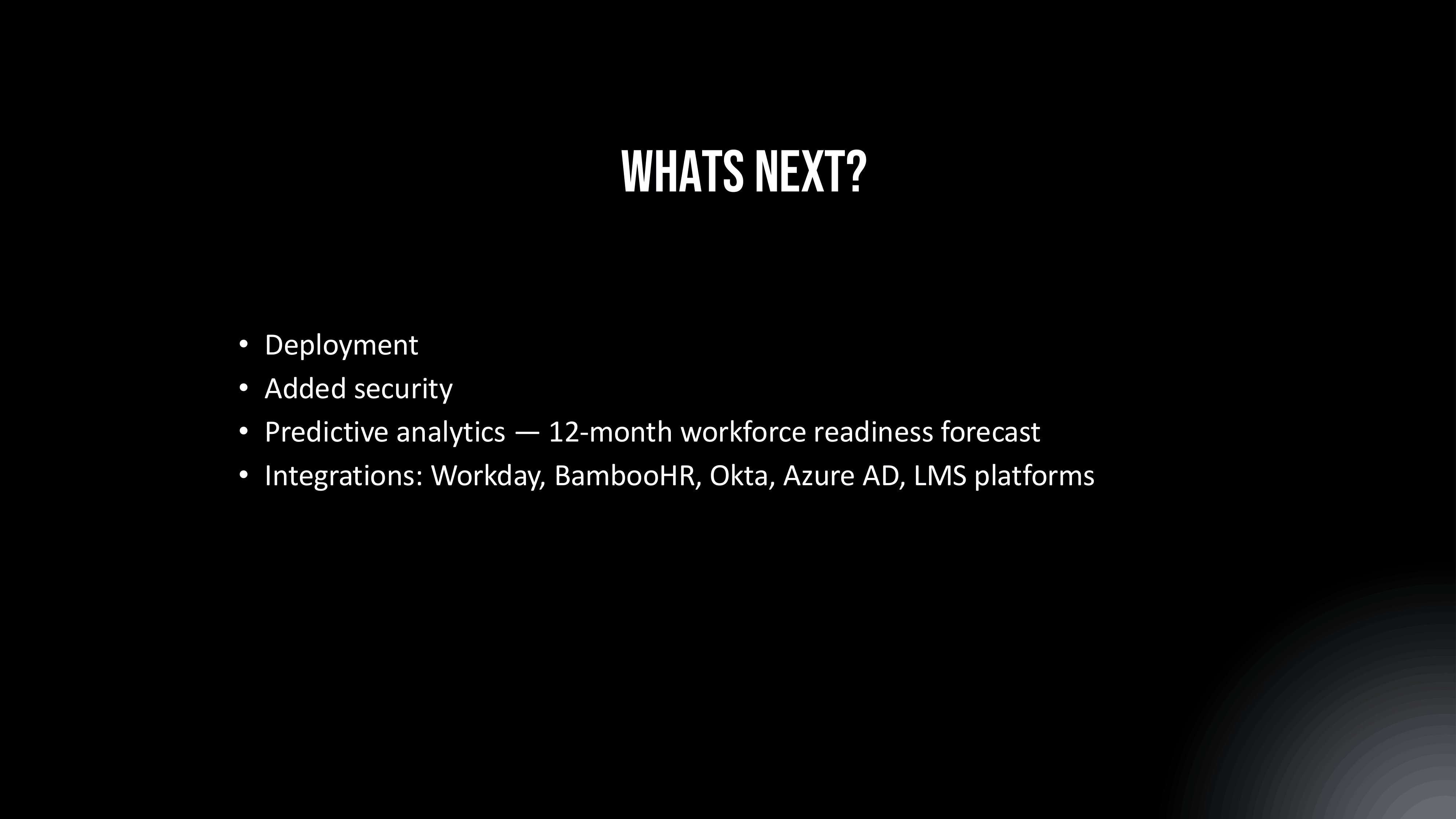
Real canonical skill data in place of our placeholder set. Server-side enforcement of the access policy that's currently just UI convention, real SSO, and a hosted encrypted database — before any real employee data touches it. Then HRIS/LMS integrations, interactive mentor matching, succession planning, and the hardware hook we designed in from day one: a badge tap writing evidence through the same pipeline as everything else.


Log in or sign up for Devpost to join the conversation.