-
-
reporting
-
reports
-
overview
Inspiration
Wildlife is disappearing faster than most people realize, but reporting a sighting, injured animal, poaching incident, or other wildlife threat can still be surprisingly difficult.
We wanted to build something that makes wildlife conservation participatory where ordinary people can become the eyes and ears of conservation organizations.
That idea became Wildsignal: a platform where people can report wildlife sightings and incidents and turn those individual observations into useful conservation data.
What it does
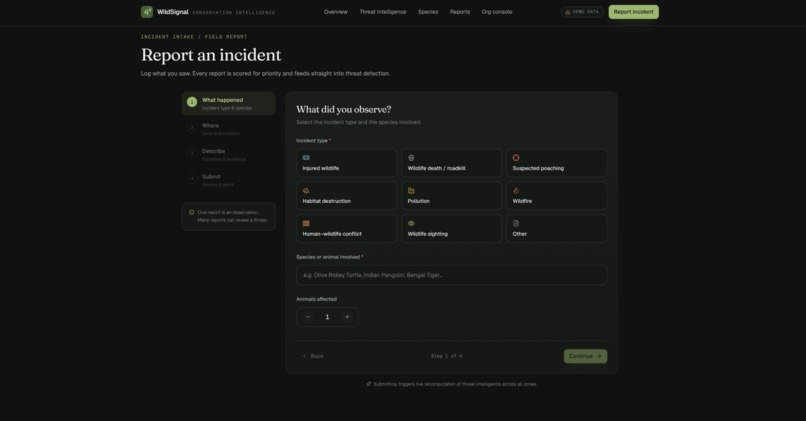
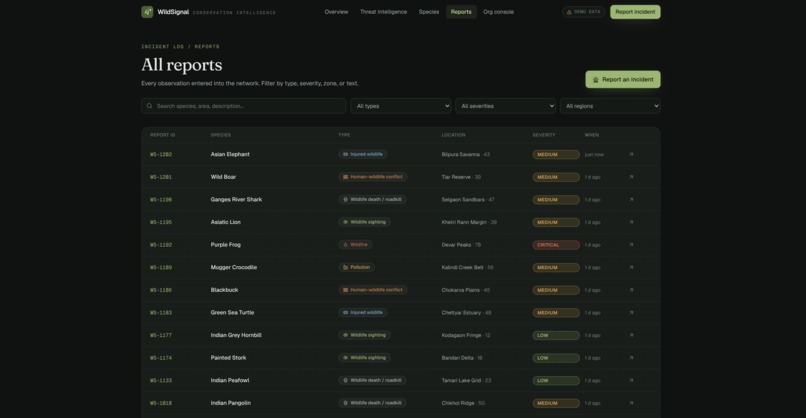
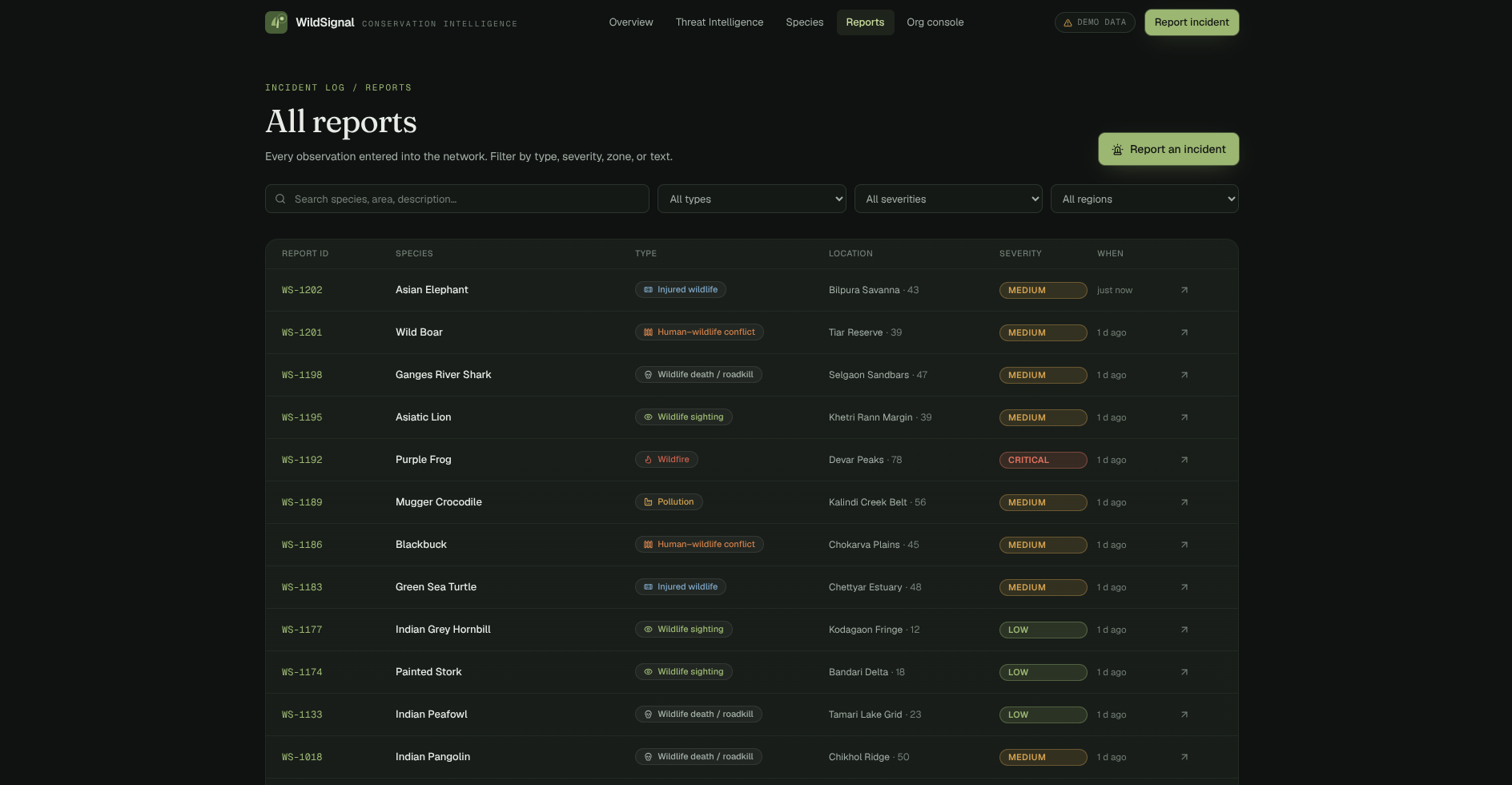
Wildsignal is a wildlife reporting platform that lets people submit reports about animals and wildlife-related incidents.
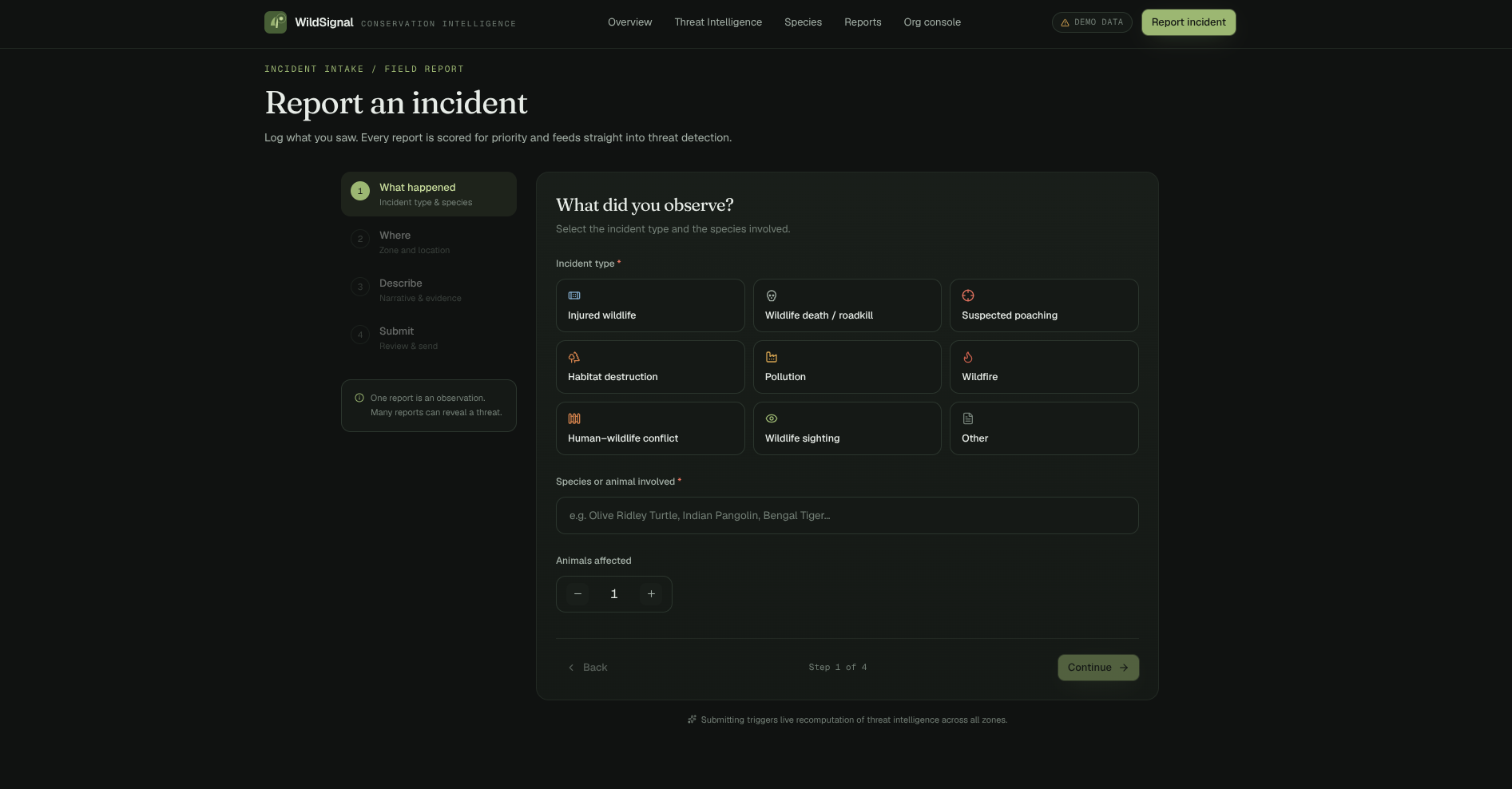
Reports can contain information such as the species, location, what was observed, and supporting evidence. The platform organizes these reports so they can become a useful source of information for researchers, conservationists, and organizations.
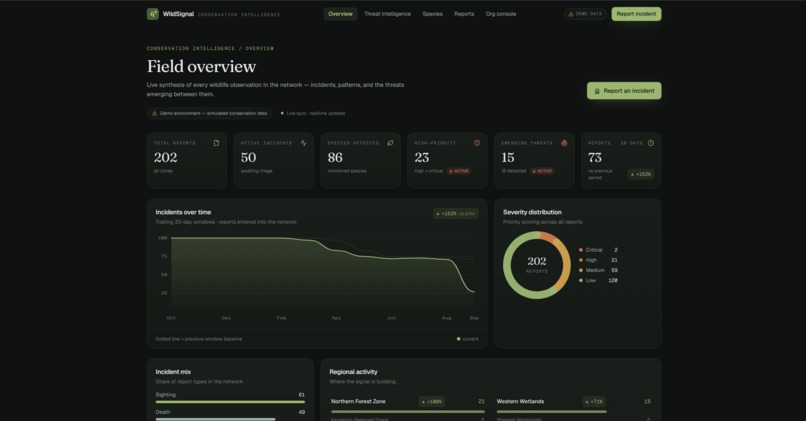
Instead of wildlife data being locked away in separate databases or only collected by professionals, Wildsignal creates a bridge between the public and the people working to protect wildlife.
How we built it
We built Wildsignal as a modern web application using Next.js and TypeScript, with a structured backend for storing and managing wildlife reports.
The platform was designed around a simple reporting workflow: submit an observation → structure the information → make it useful for conservation.
We focused heavily on making the experience straightforward enough that someone who isn't a wildlife expert can still contribute meaningful information.
Challenges we ran into
One of our biggest challenges was figuring out how to turn messy real-world observations into structured data.
A person might see an animal for only a few seconds, be unsure of the species, or provide incomplete information. Designing a reporting system that remains simple for users while still collecting useful data was a major balancing act.
We also had to think about report reliability and verification. Wildlife data can have serious consequences, so distinguishing useful reports from inaccurate or misleading ones is something we want to improve further.
Accomplishments that we're proud of
We're proud that we turned a relatively simple idea — "let people report wildlife" — into an actual platform concept with a much bigger purpose.
Wildsignal isn't just a database of animal sightings. It's an attempt to create a network where observations from everyday people can contribute to a larger understanding of wildlife.
We're especially proud of building something where the technology serves a real-world conservation problem rather than being technology for technology's sake.
What we learned
We learned that collecting data is only half the problem.
The real challenge is making that data structured, trustworthy, and actionable.
We also learned how important UX is when building platforms that depend on contributions from ordinary people. If reporting something takes too long or requires too much knowledge, people simply won't do it.
What's next for Wildsignal
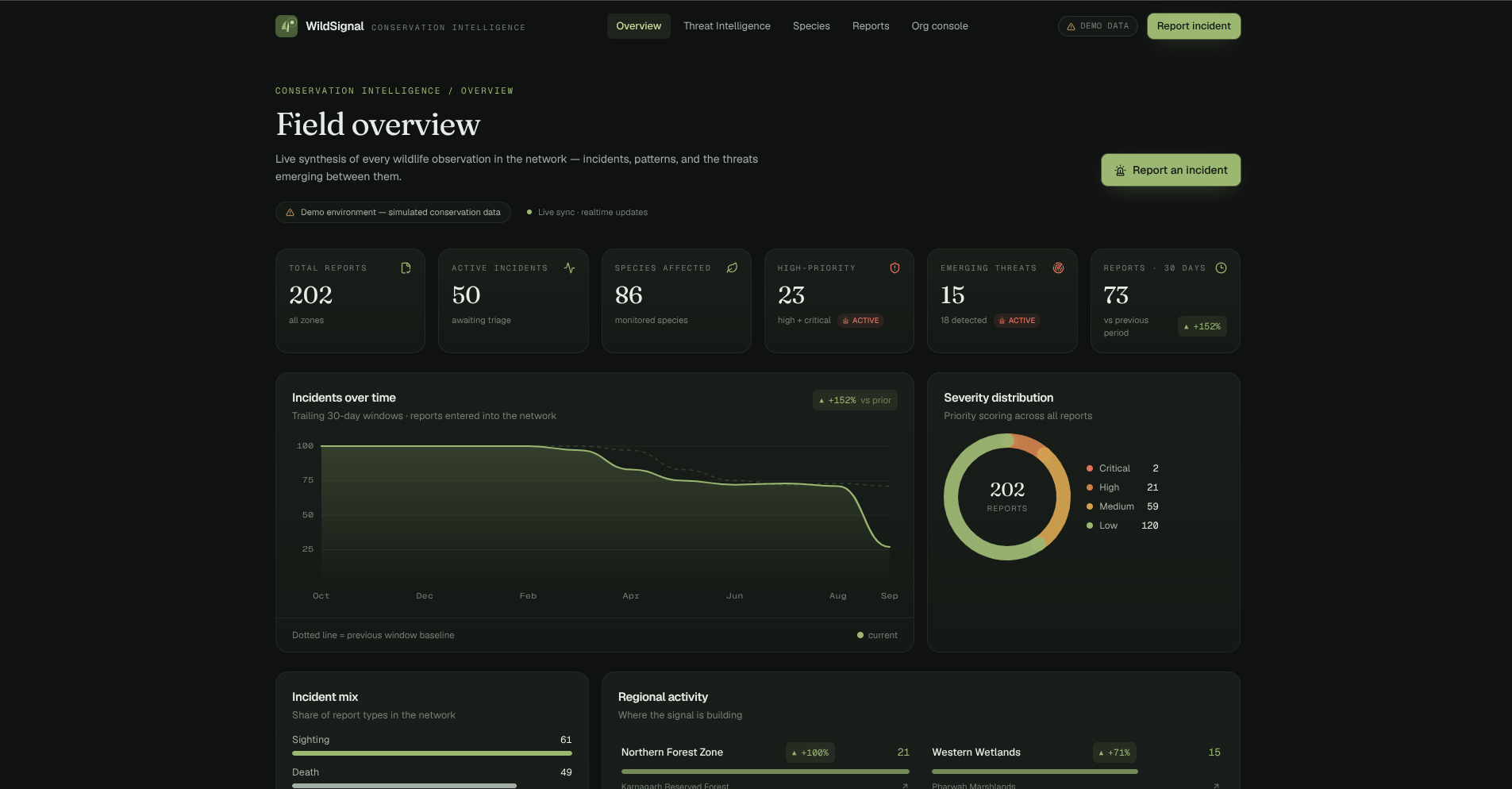
We want Wildsignal to evolve from a reporting platform into a broader wildlife intelligence and conservation network.
Next, we'd like to add better report verification, species identification assistance, dashboards for conservation organizations, analytics, and stronger tools for tracking wildlife populations and incidents over time.
Eventually, we want Wildsignal to connect the people who see wildlife, the researchers who study it, and the organizations that protect it.
Millions of people see wildlife. Wildsignal turns those sightings into signals for conservation.
Built With
- convex
- database
- next
- realtime
- typescript


Log in or sign up for Devpost to join the conversation.