Inspiration
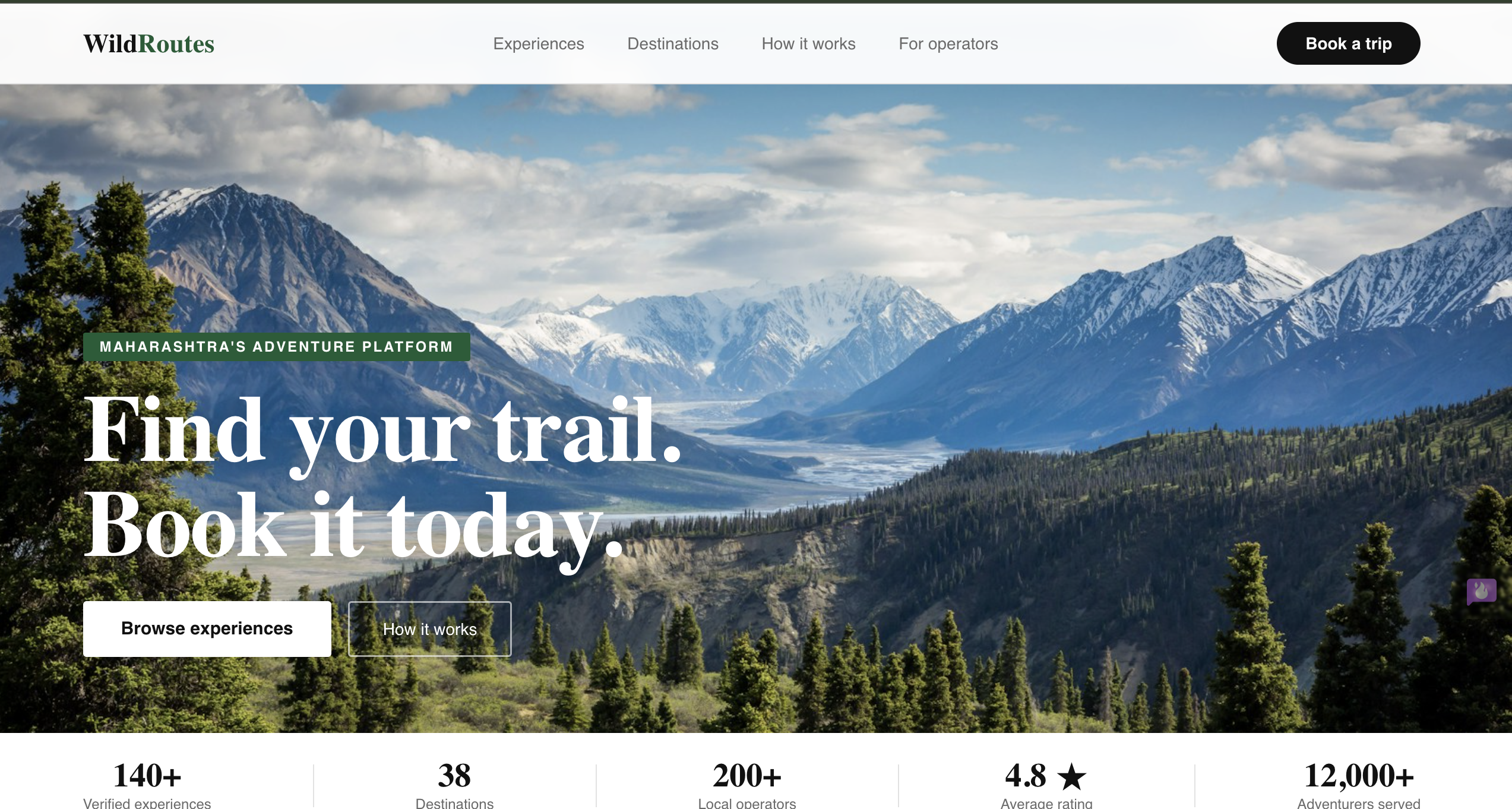
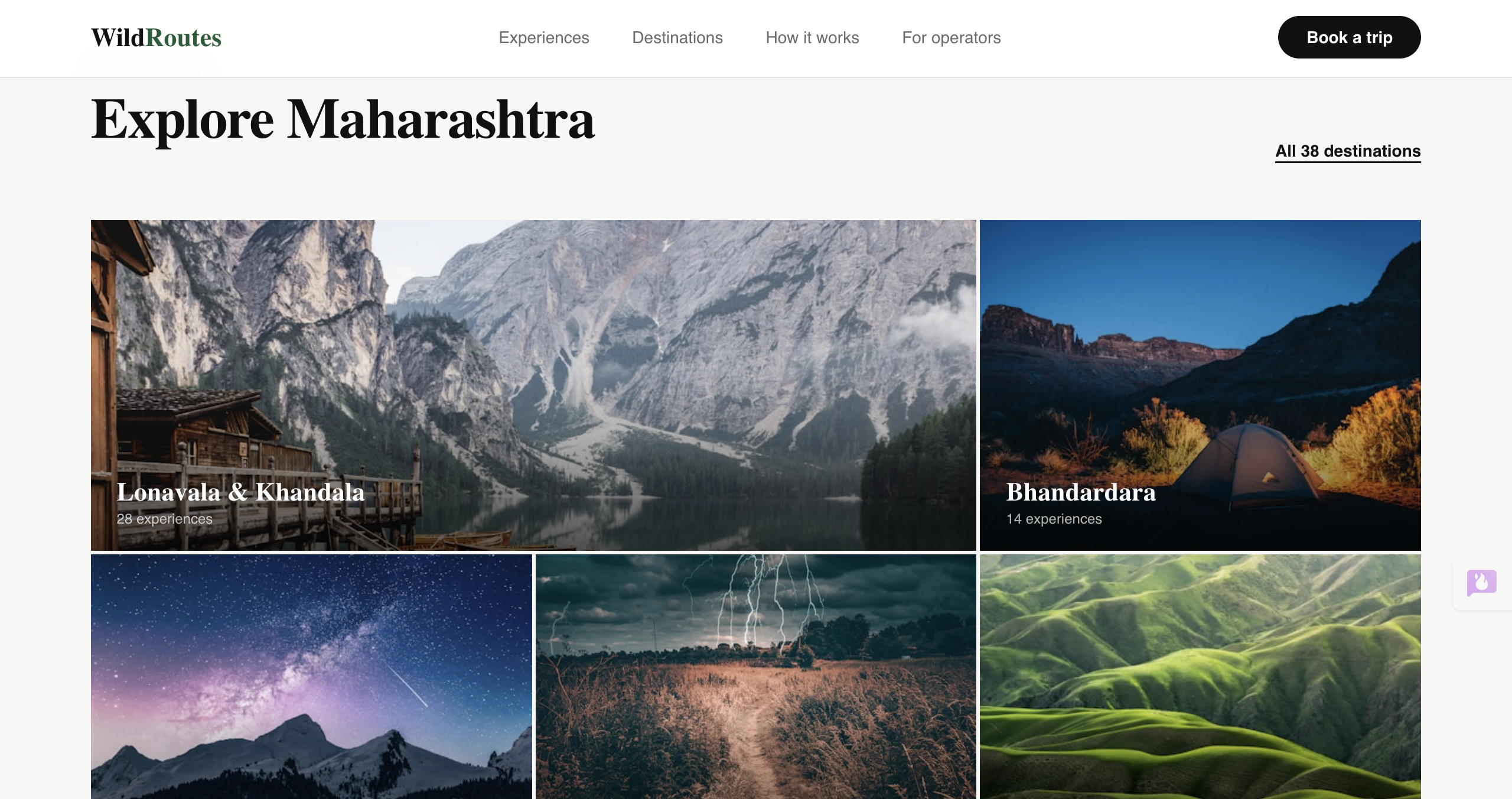
Maharashtra has some of the most breathtaking adventure destinations in India. Rajmachi, Bhandardara, Kolad, Harishchandragad. But there is no single trusted platform where someone in Mumbai or Pune can discover, compare, and book a weekend trek or camp without going through WhatsApp groups and random travel blogs. That gap is what inspired WildRoutes.
What it does
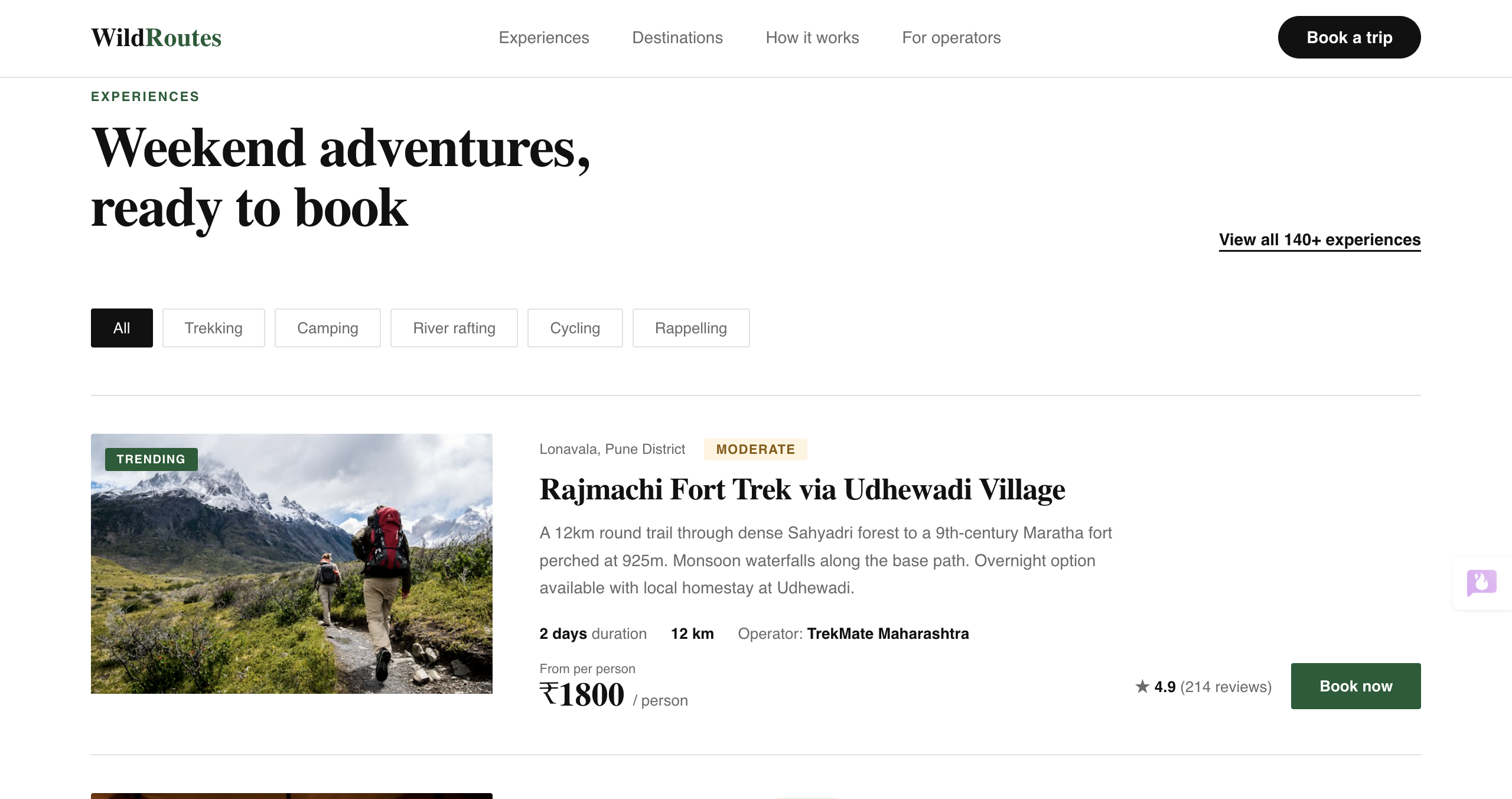
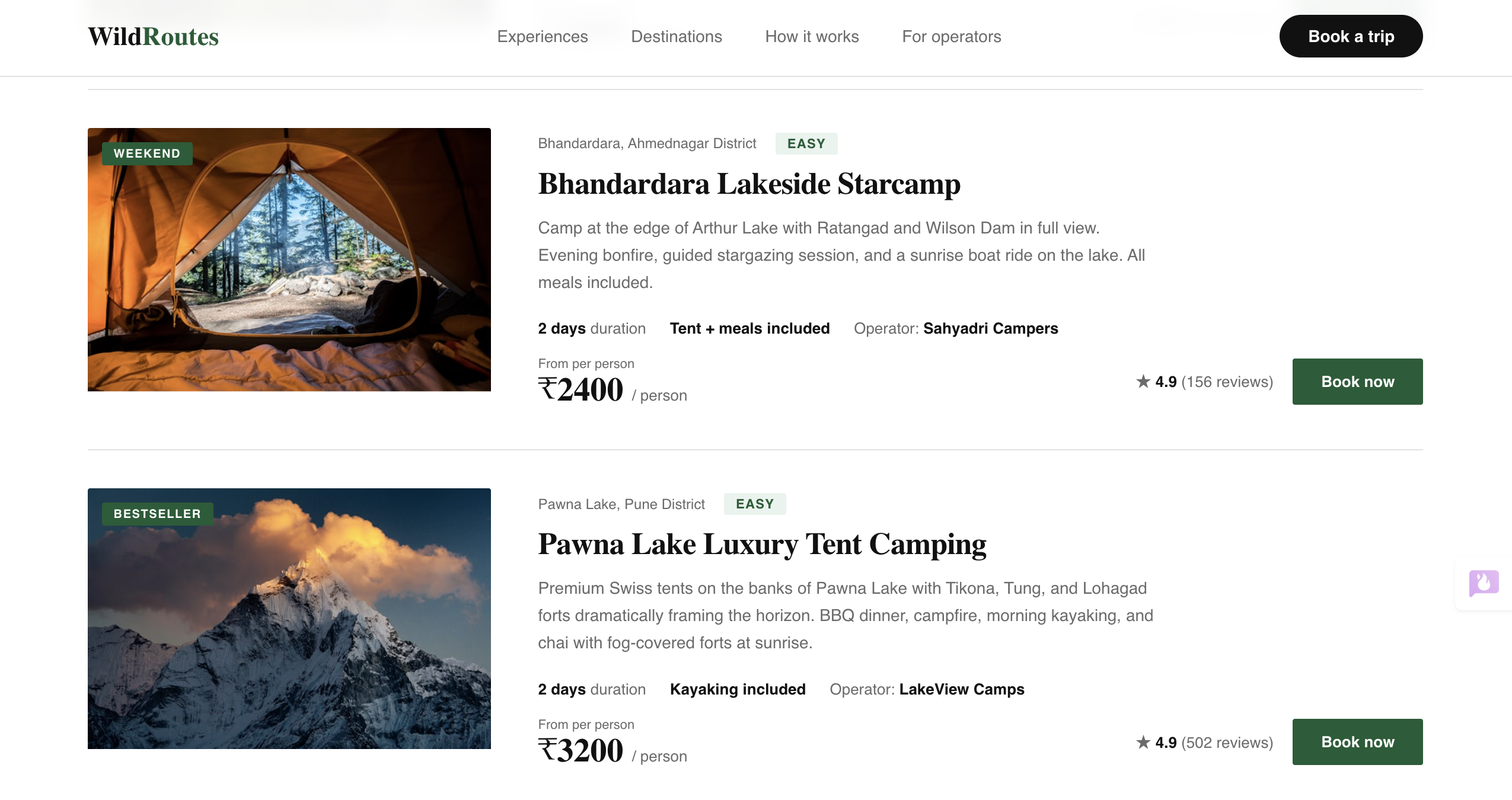
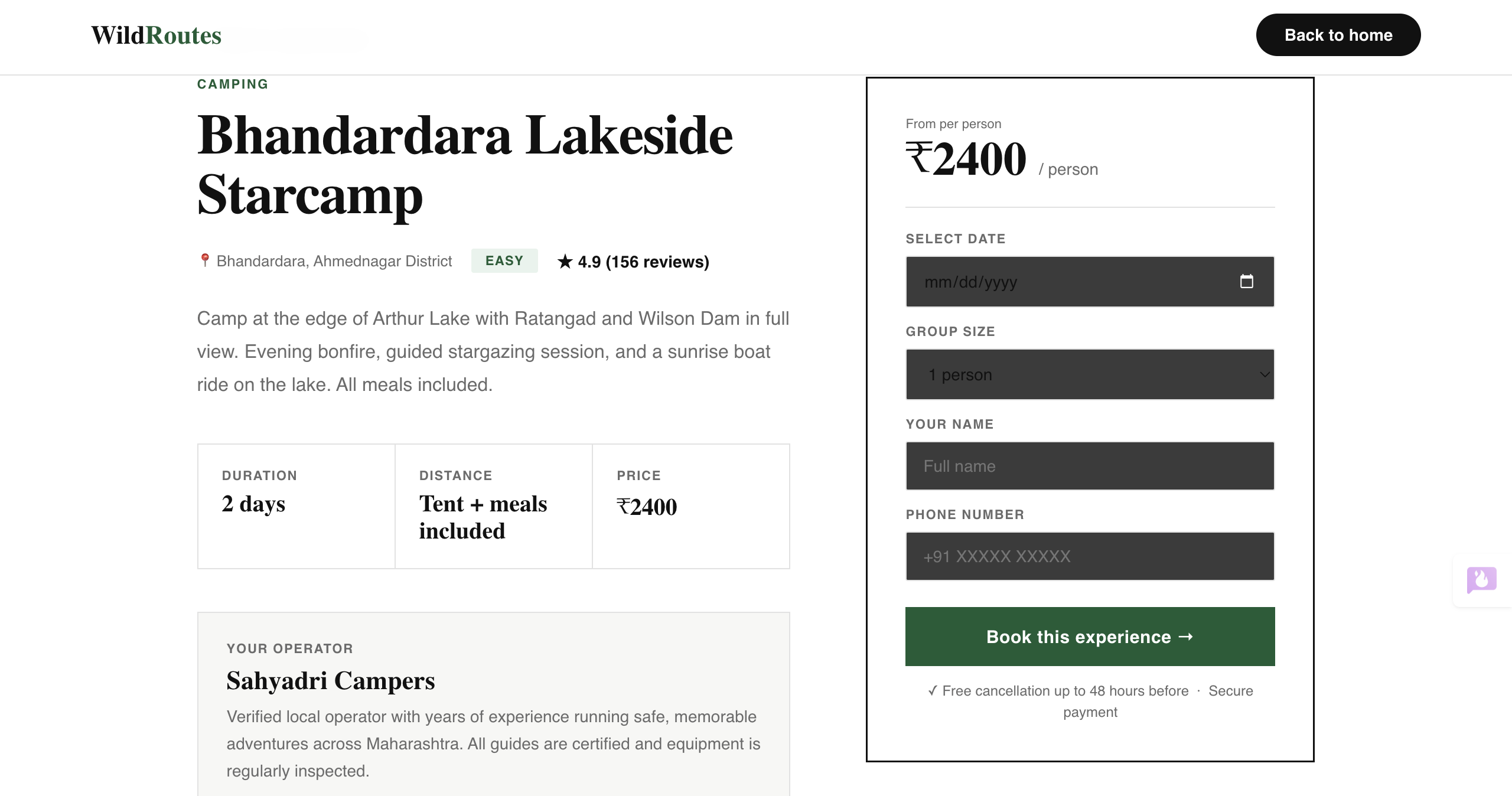
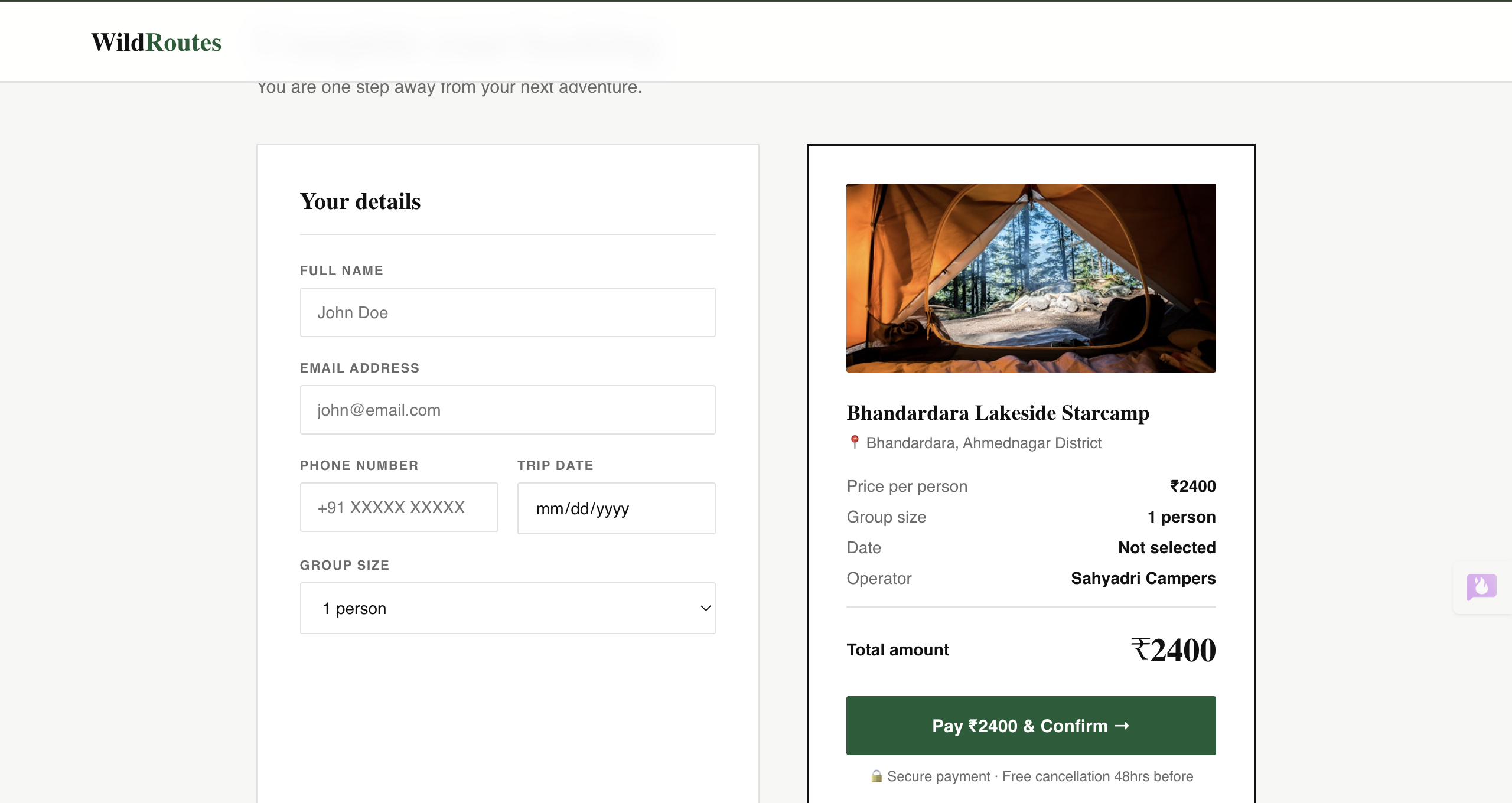
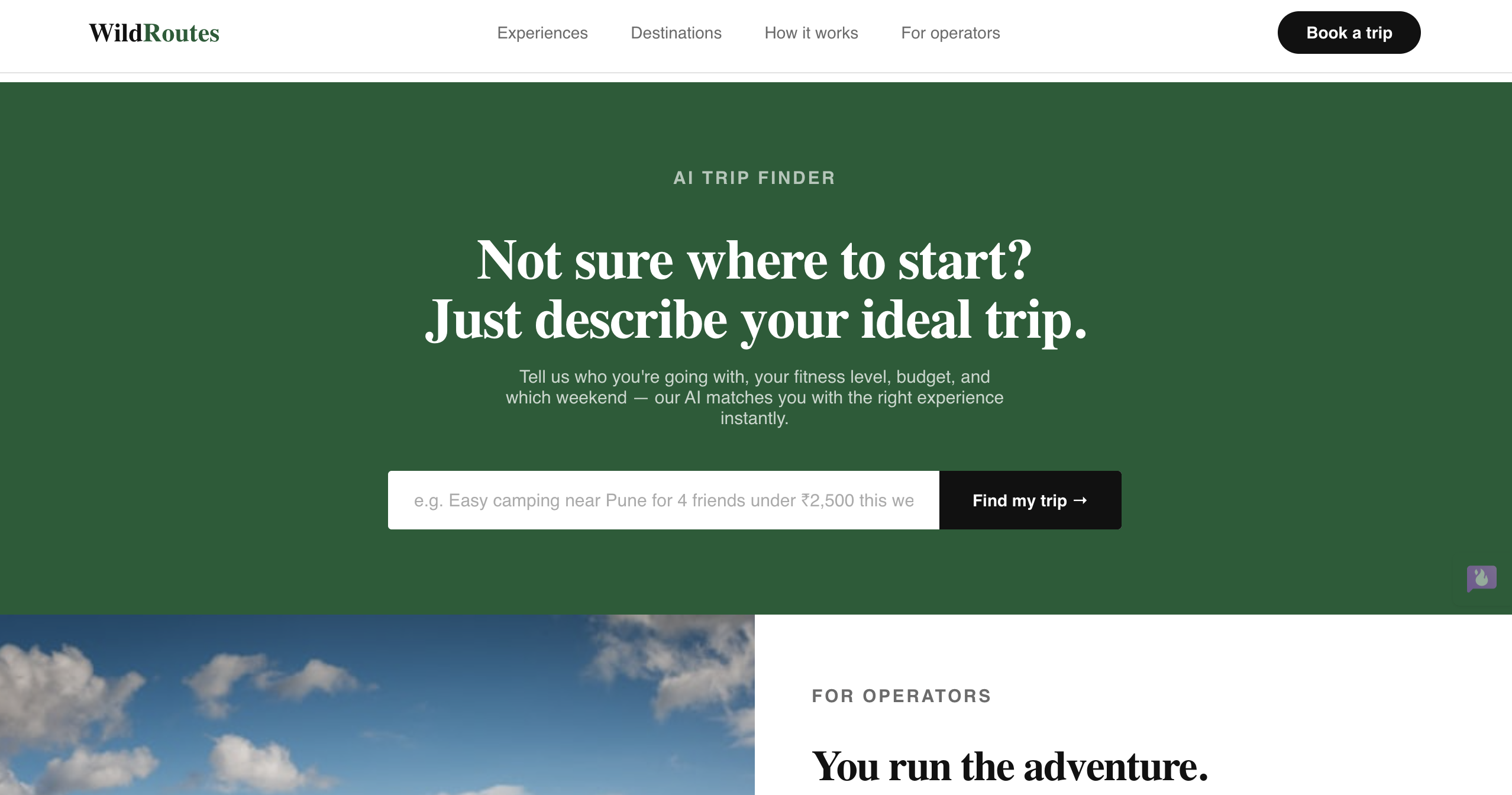
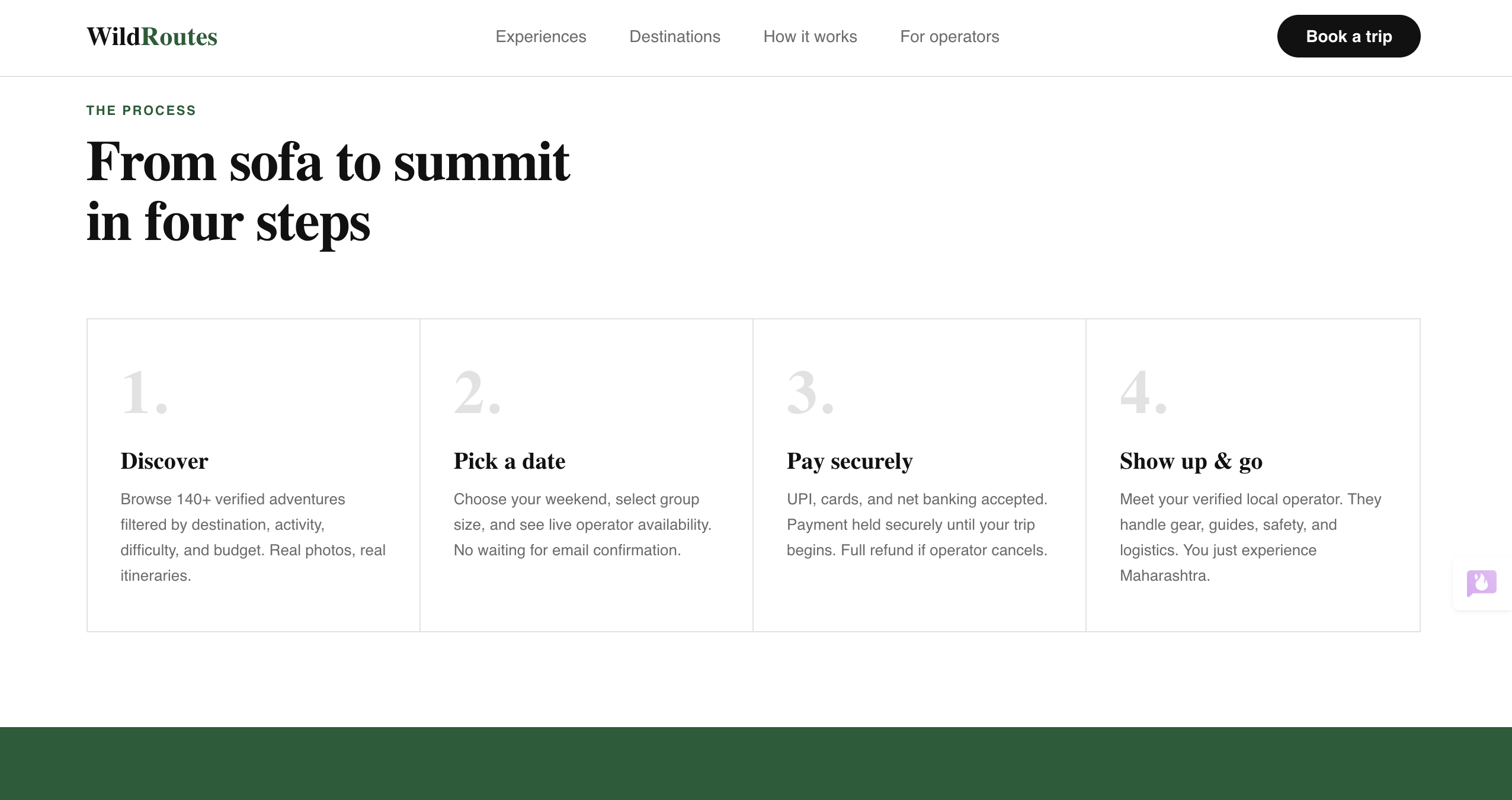
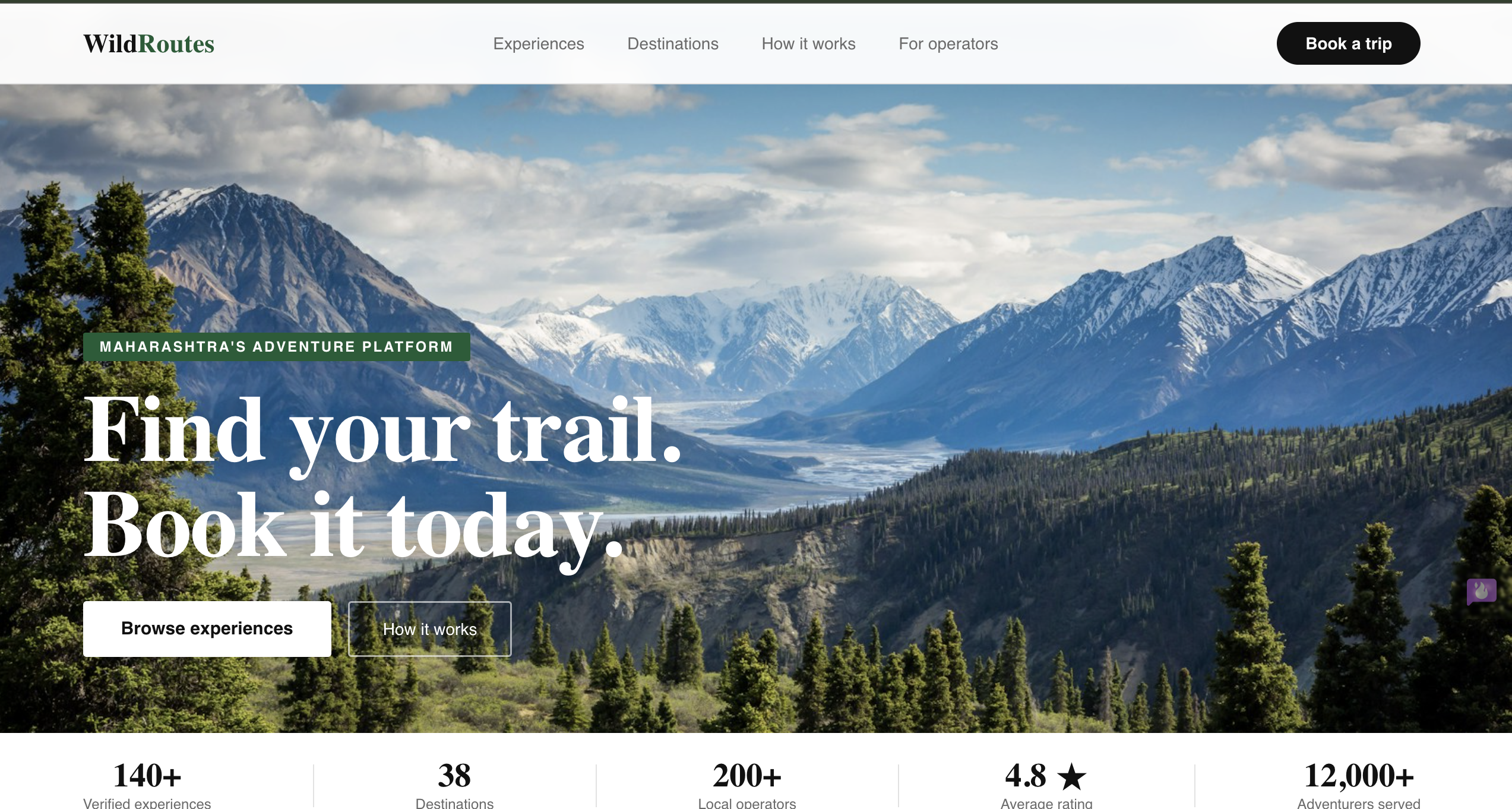
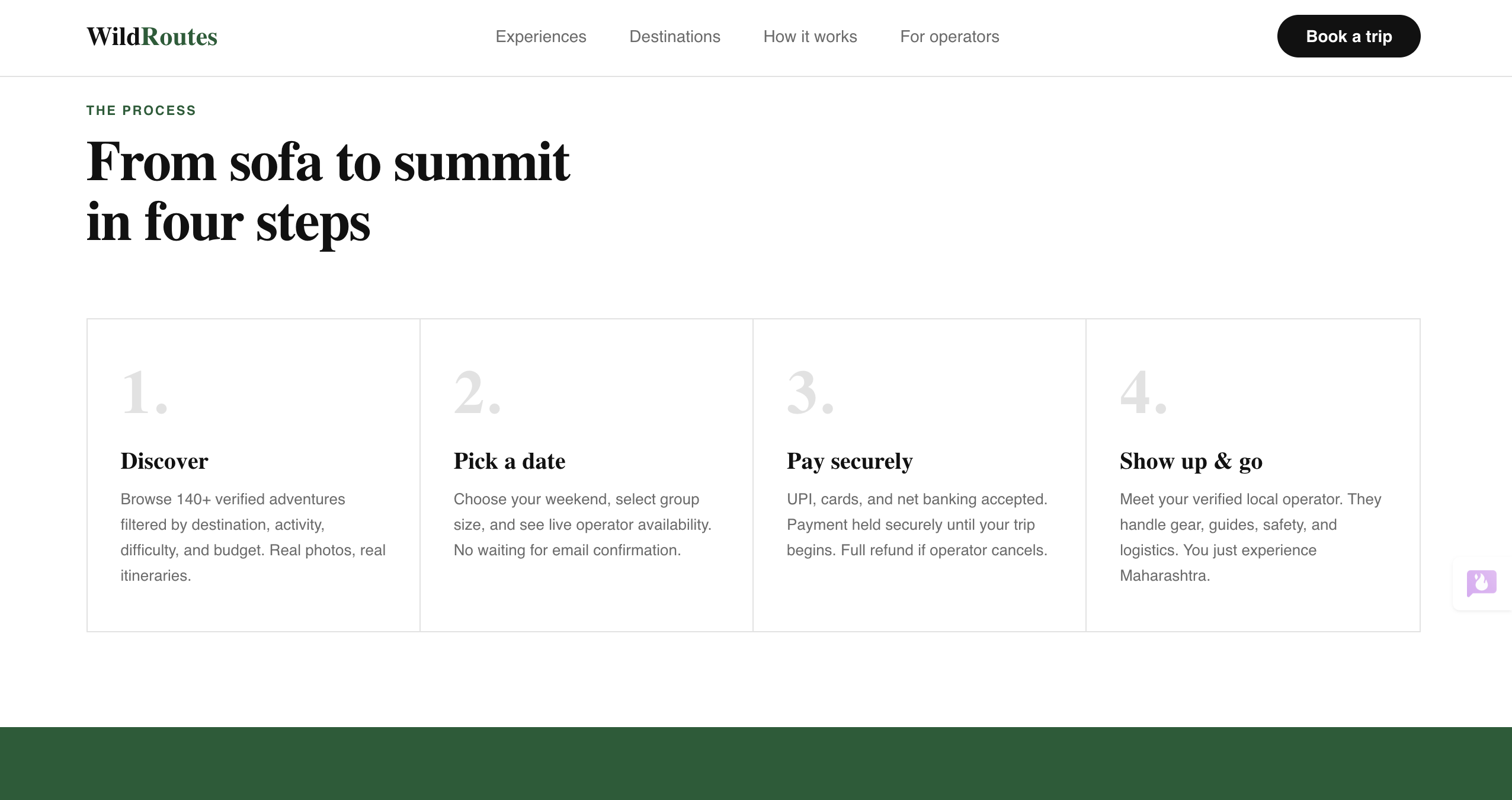
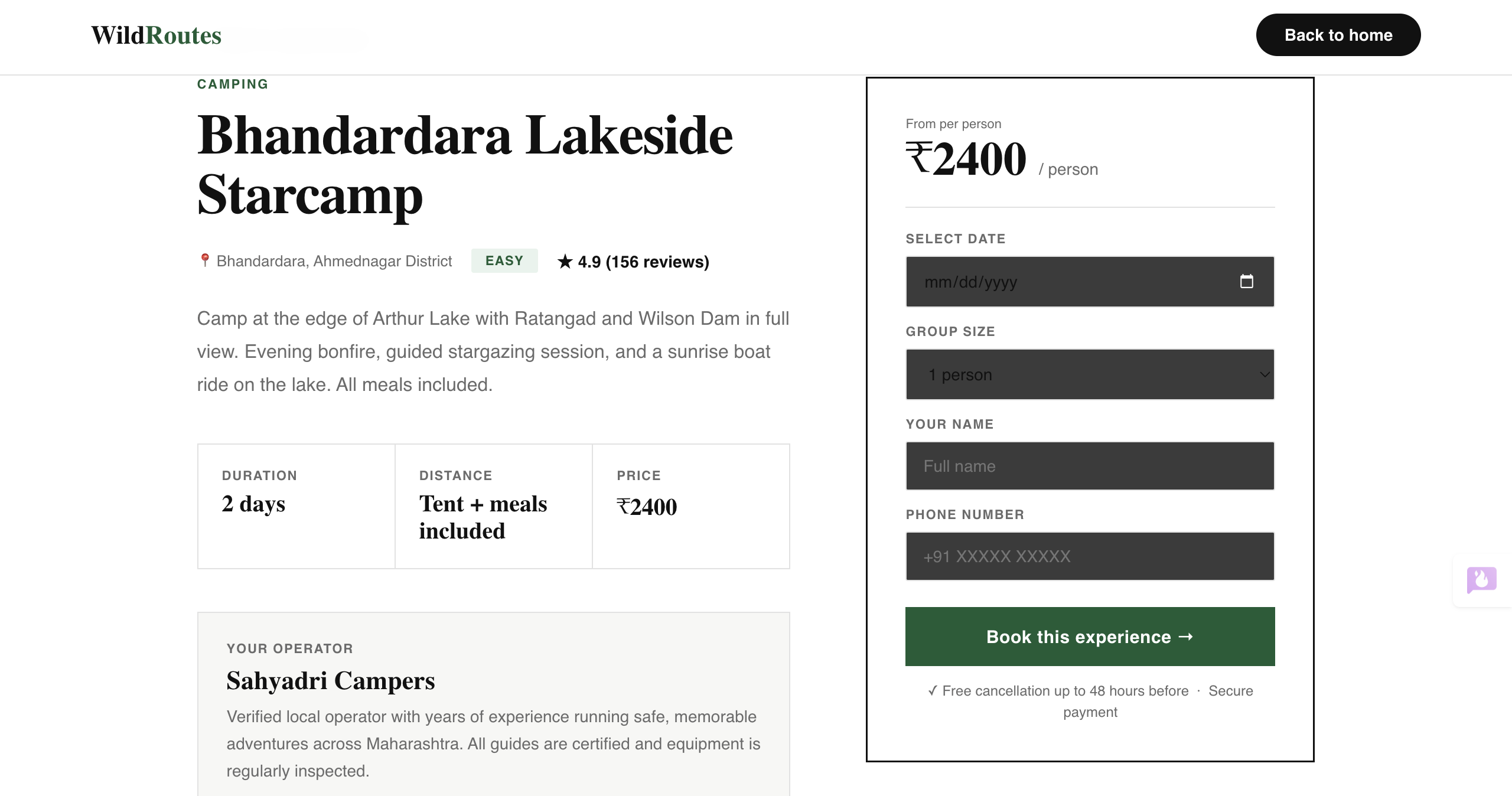
WildRoutes is a two-sided adventure booking marketplace for Maharashtra. On one side, travellers can browse verified experiences across trekking, camping, river rafting, cycling, and rappelling. They can view full listings with pricing, itineraries, difficulty ratings, and operator profiles, then book and pay in minutes. An AI trip finder lets users describe what they are looking for in plain English and returns personalised recommendations from the live activity database.
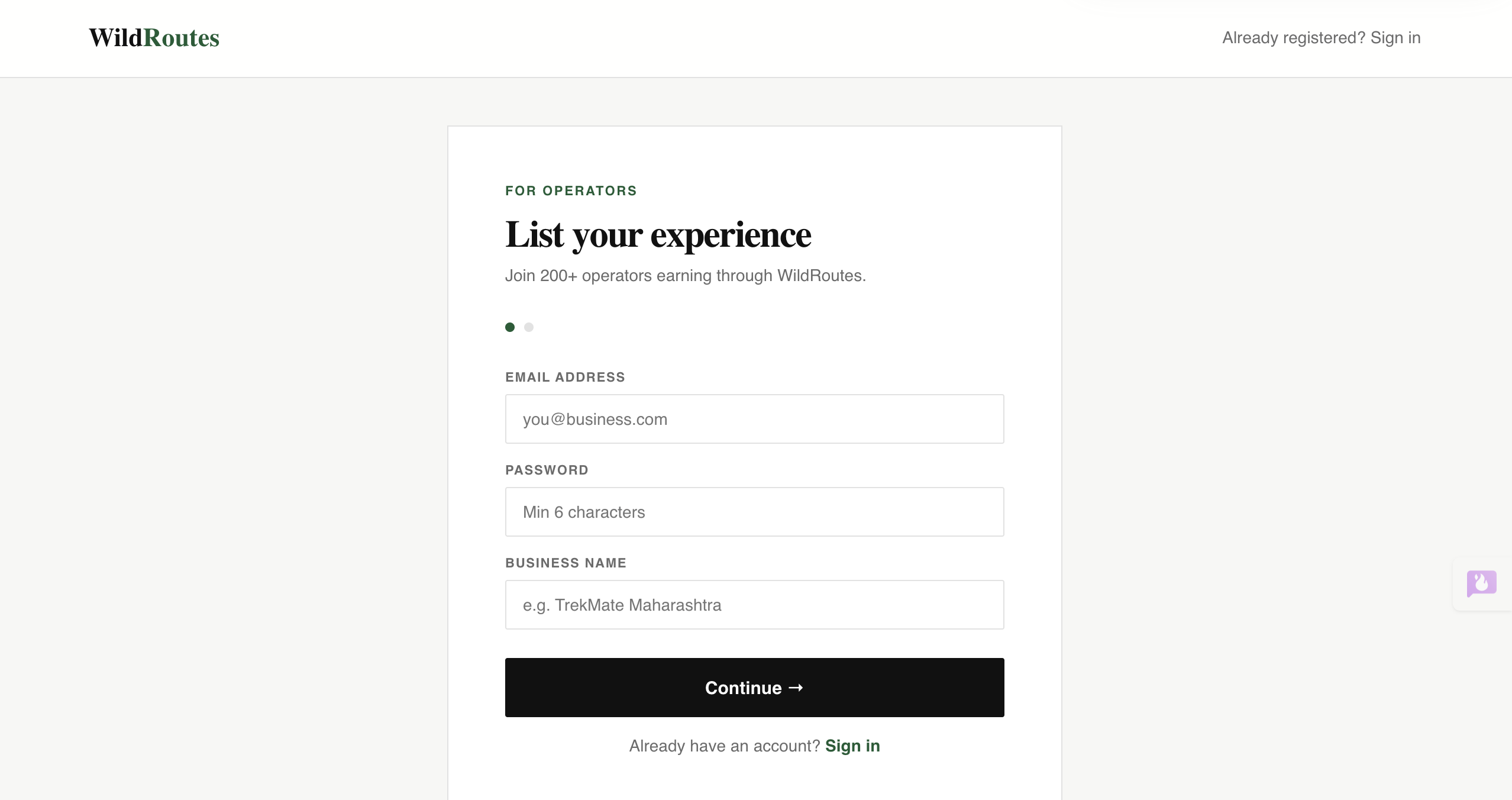
On the other side, adventure operators get a dedicated dashboard where they can register their business, add new activity listings, track bookings, and monitor revenue — all without needing to touch any code.
How we built it
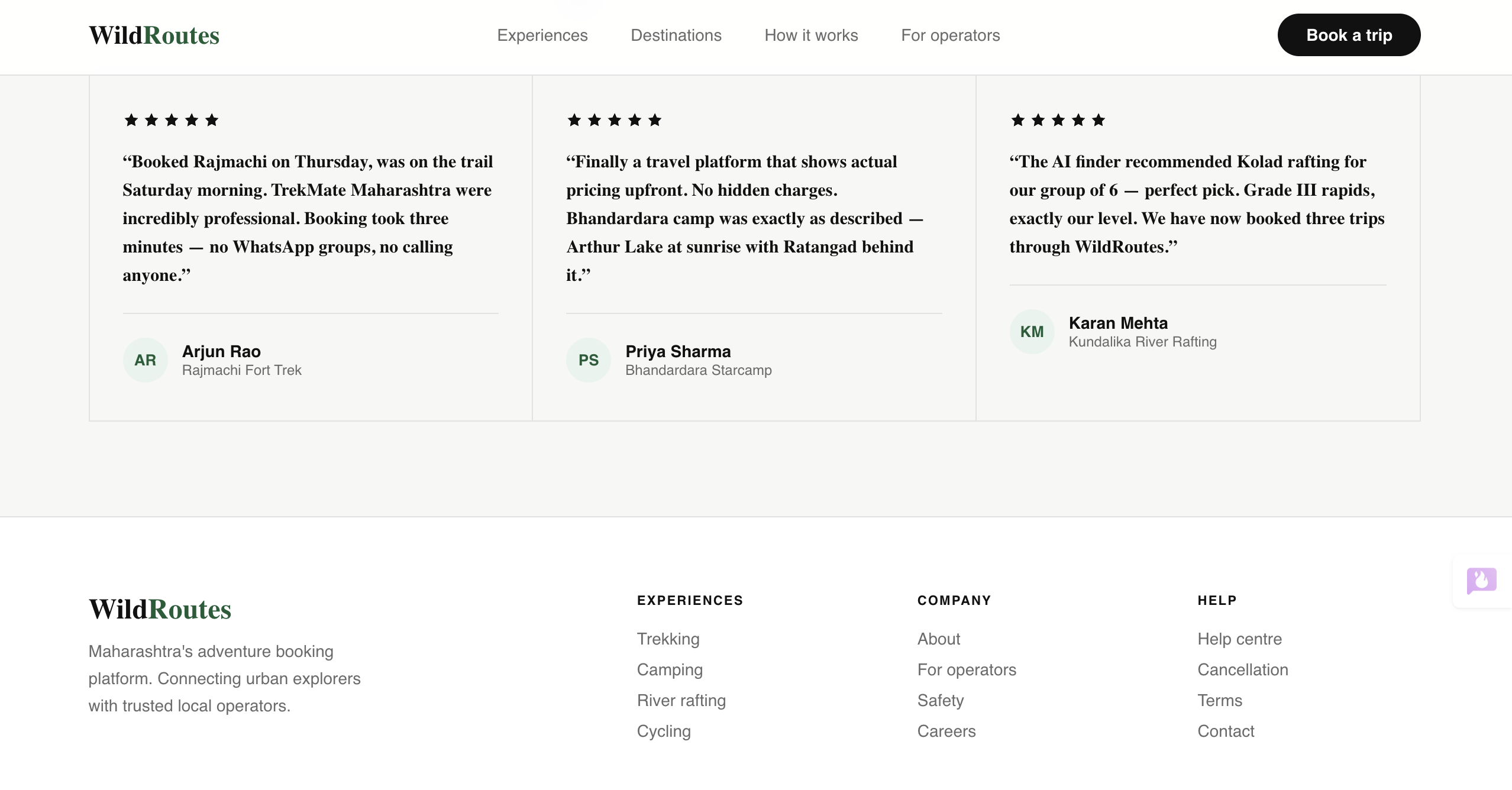
I built the frontend with Next.js and wrote all the CSS from scratch. No component libraries, no templates. The design is intentionally clean and editorial, inspired by how travel magazines present destinations rather than how apps typically look. The backend runs on Supabase which handles the PostgreSQL database, authentication, and real-time data. All activities, bookings, and operator profiles live there. The AI trip finder uses a keyword scoring algorithm that reads natural language queries and matches them against live activities with personalised reasons for each recommendation. The whole platform is deployed on Vercel with automatic deployment on every GitHub push.
Challenges we ran into
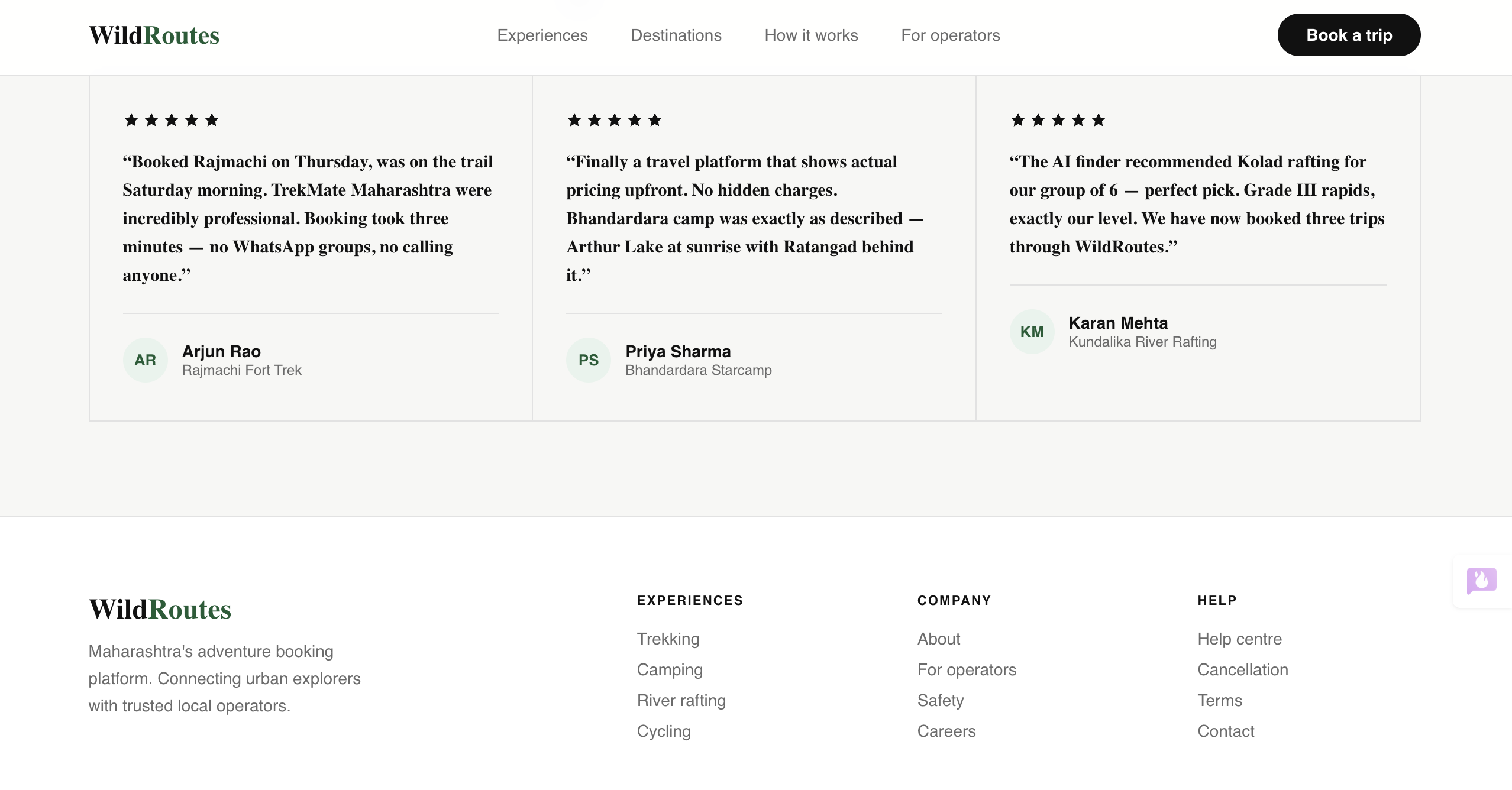
The hardest part was building a genuinely functional full-stack platform solo within the hackathon timeline. Connecting the frontend to a live database, handling authentication for two separate user types, and making the booking flow work end to end each had real technical hurdles. Making the platform feel like a real product rather than a demo required seeding authentic Maharashtra content with real pricing, real operator names, and real locations. A marketplace lives or dies on the quality of its content.
Accomplishments that we're proud of
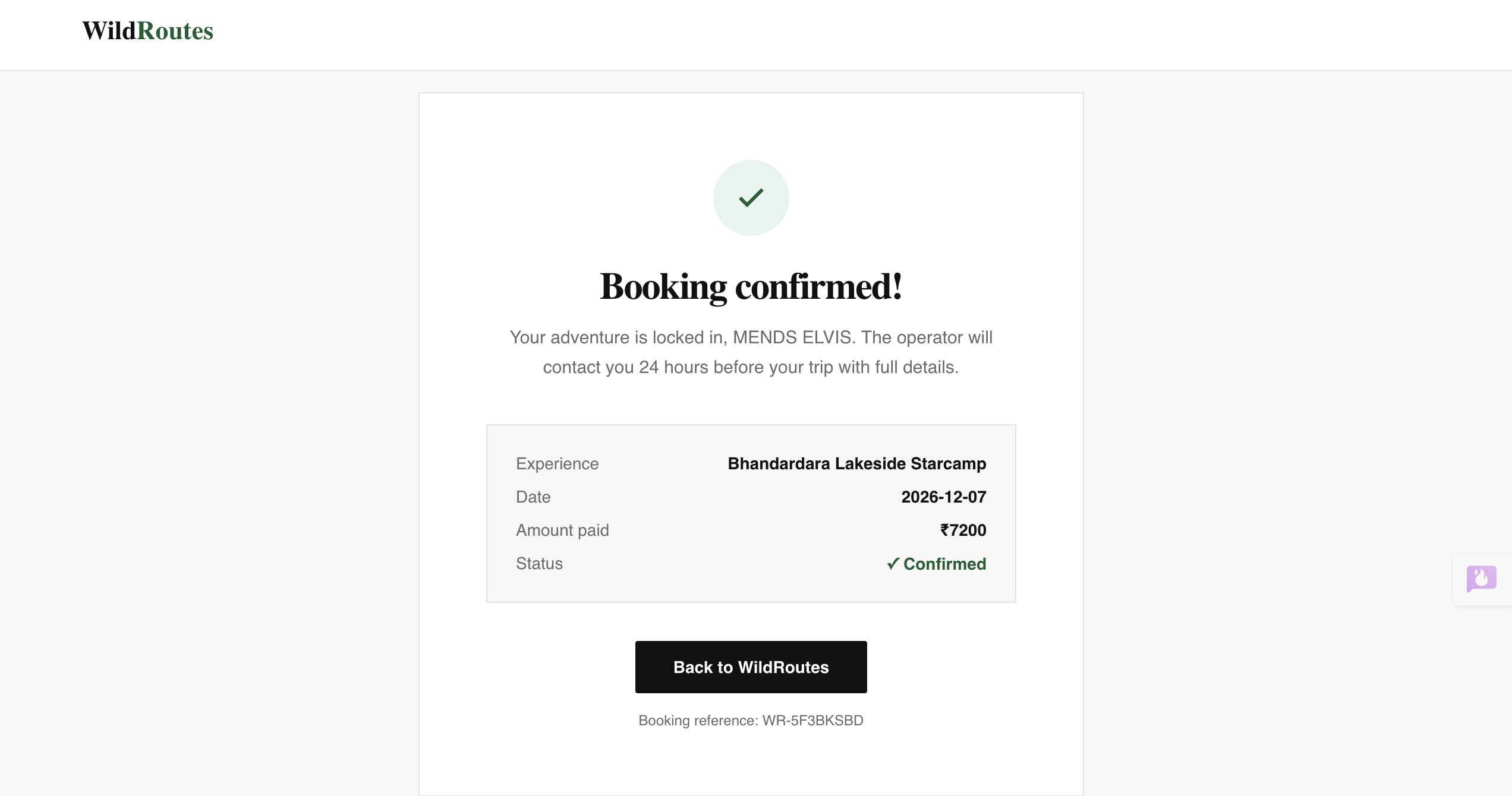
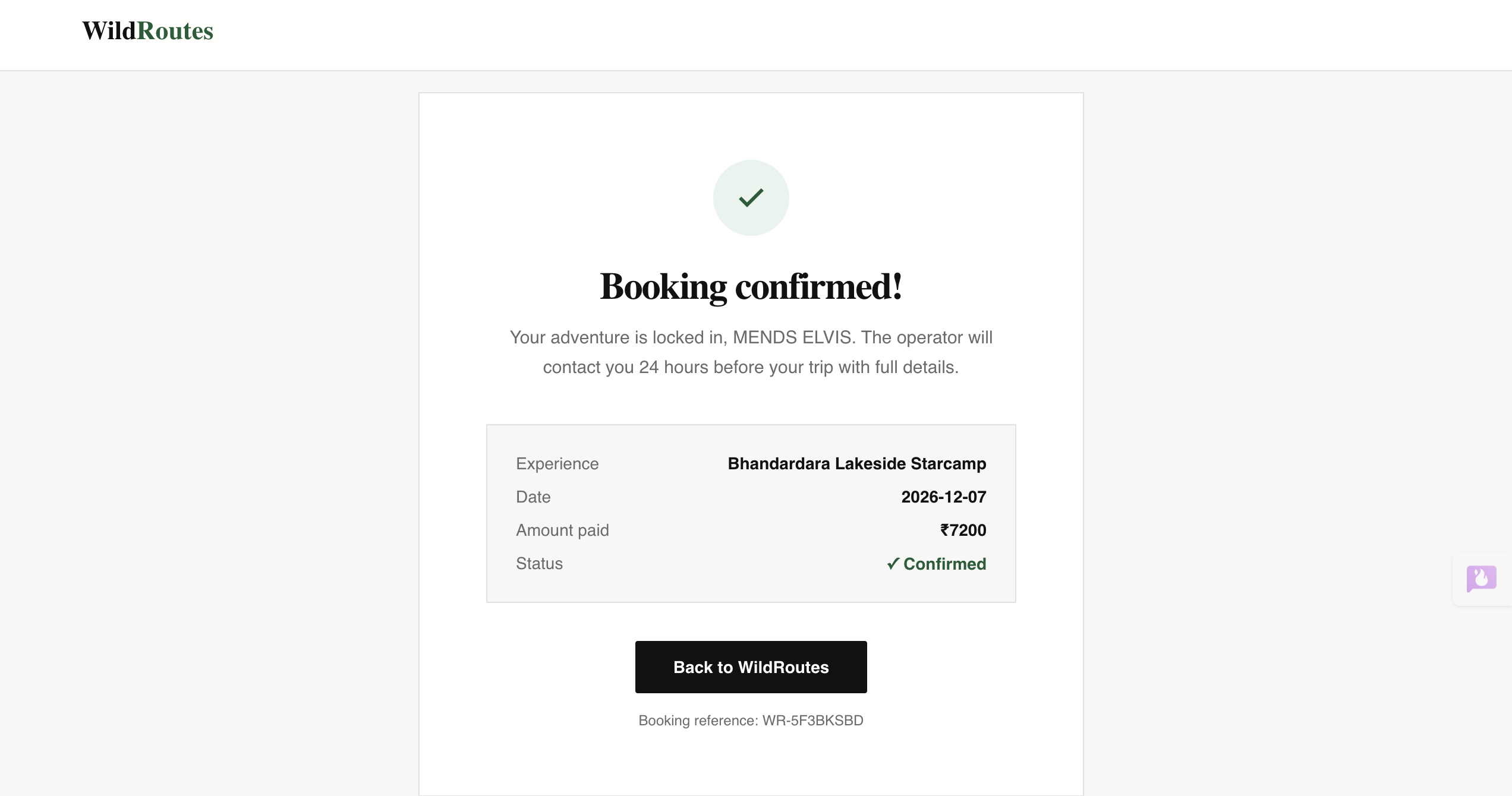
Shipping a fully working two-sided marketplace solo in the hackathon timeline. The booking flow saves real data to a live PostgreSQL database. The operator dashboard lets operators add listings that appear on the platform instantly. The AI trip finder returns real personalised recommendations from natural language queries. The entire platform is live and accessible to anyone right now.
What we learned
Building WildRoutes taught me how a real marketplace works at both the product and technical level. The trust mechanisms, the two-sided user model, the importance of data feeling real. I also learned that shipping a working product beats a perfect prototype every time.
What's next for WildRoutes
Real payment integration with Razorpay, an operator verification and review system, a mobile app, and expansion to Goa and Himachal Pradesh.
Built with
Next.js, React, JavaScript, CSS, Supabase, PostgreSQL, Vercel, Node.js
Built With
- css
- javascript
- next.js
- postgresql
- react
- supabase
- vercel

Log in or sign up for Devpost to join the conversation.