-
-
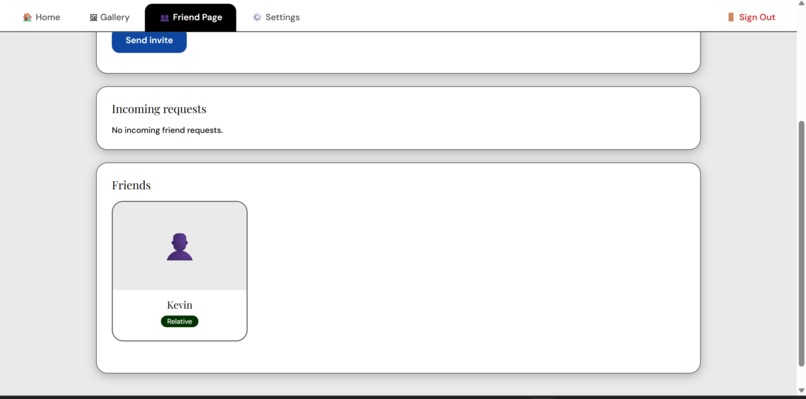
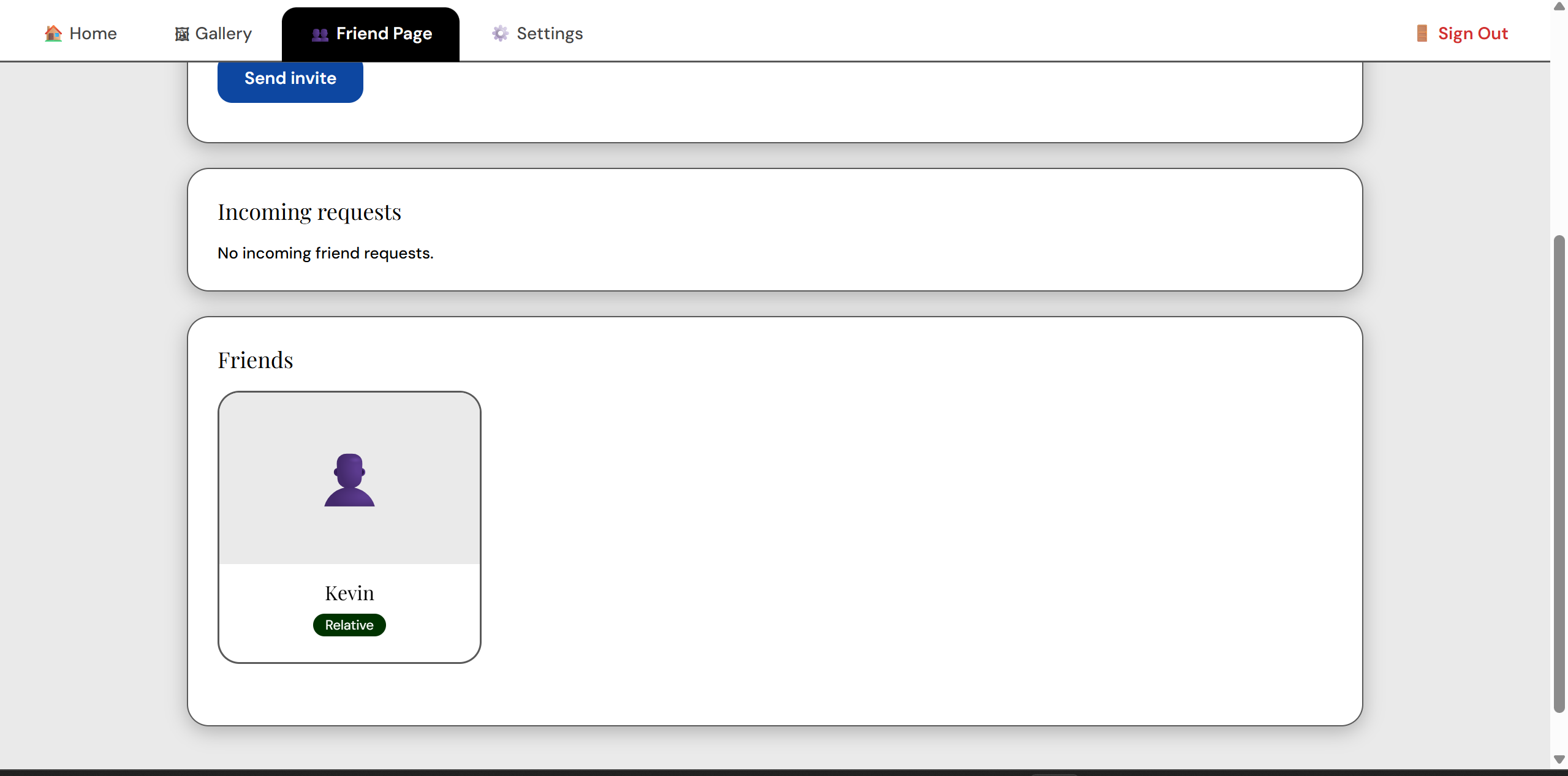
Friend Page
-
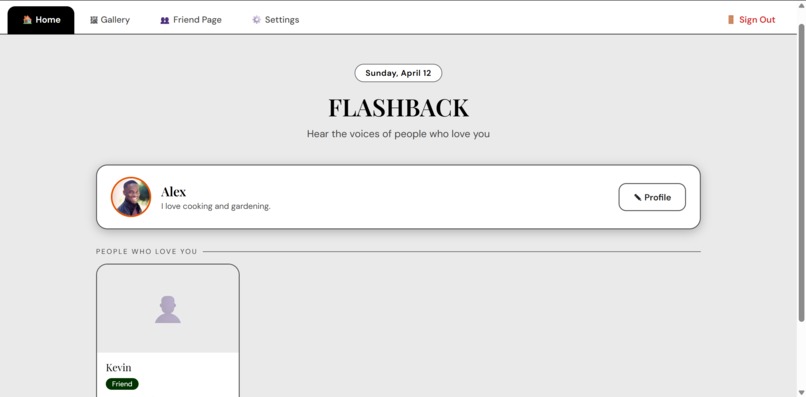
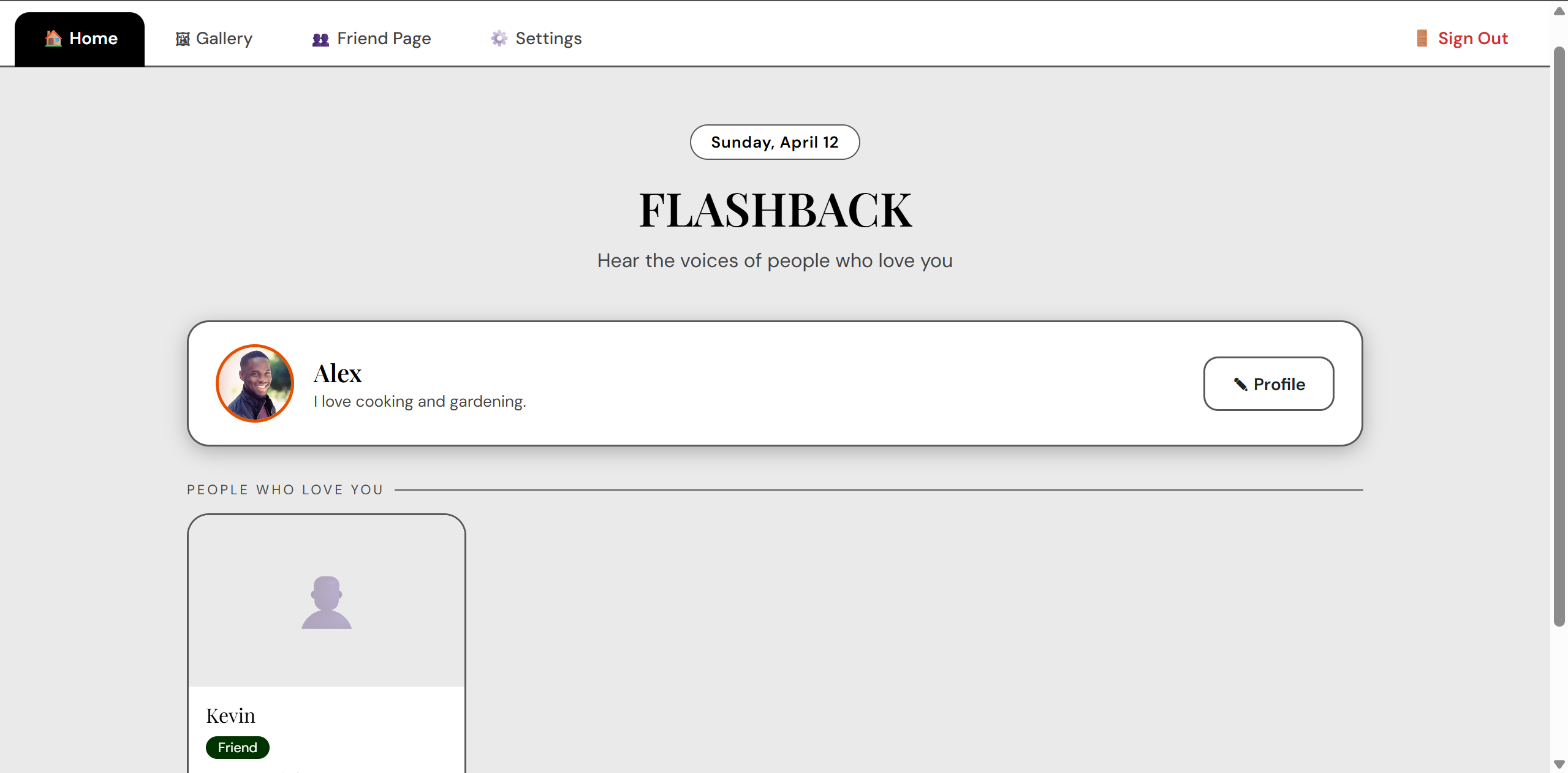
Home Page
-
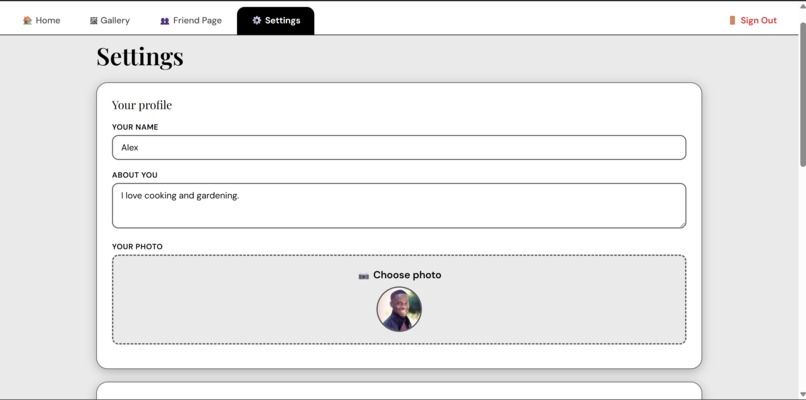
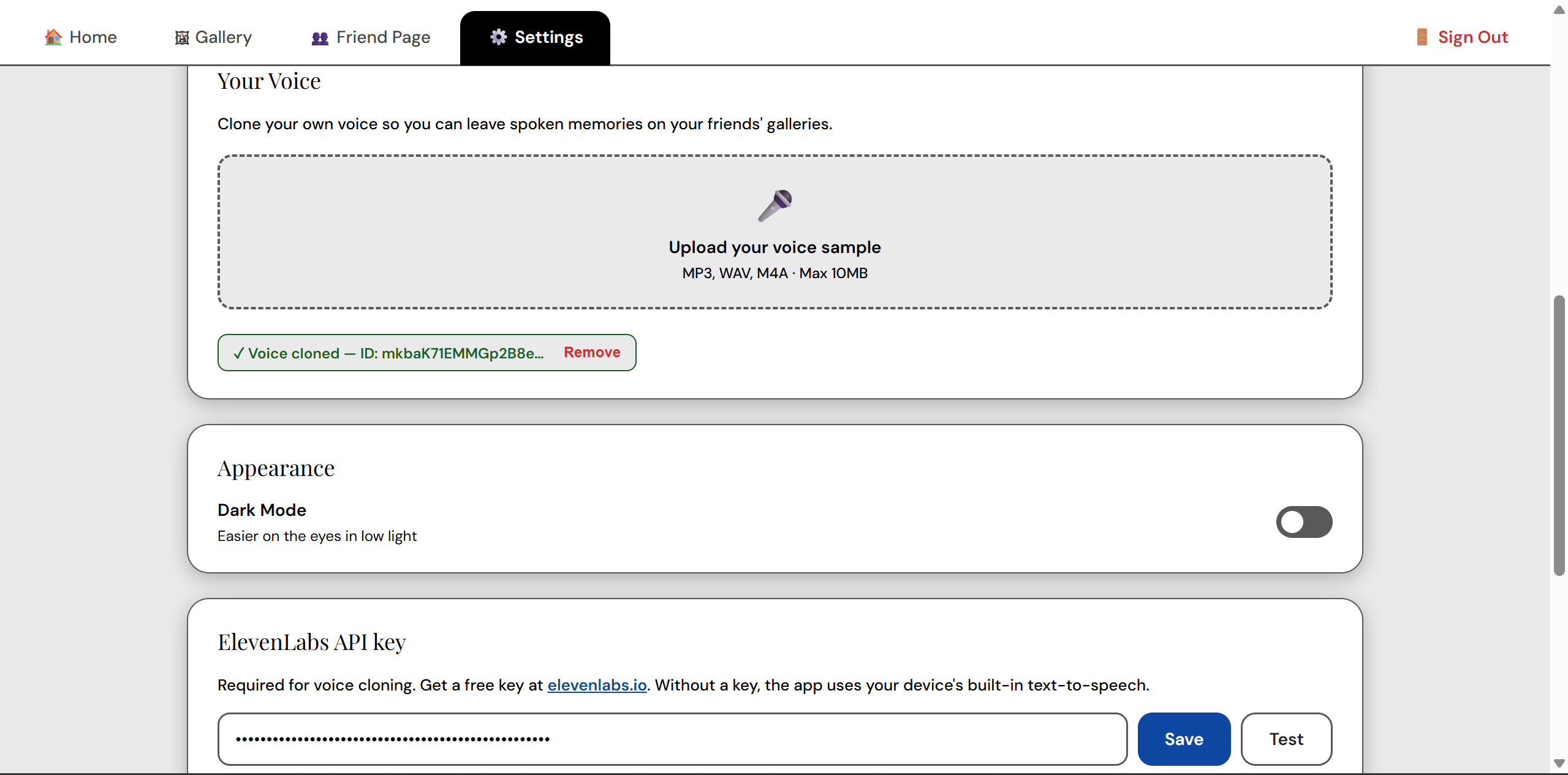
Settings
-
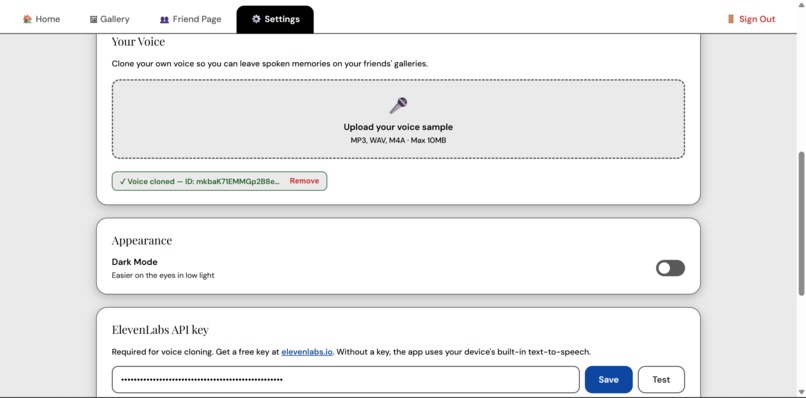
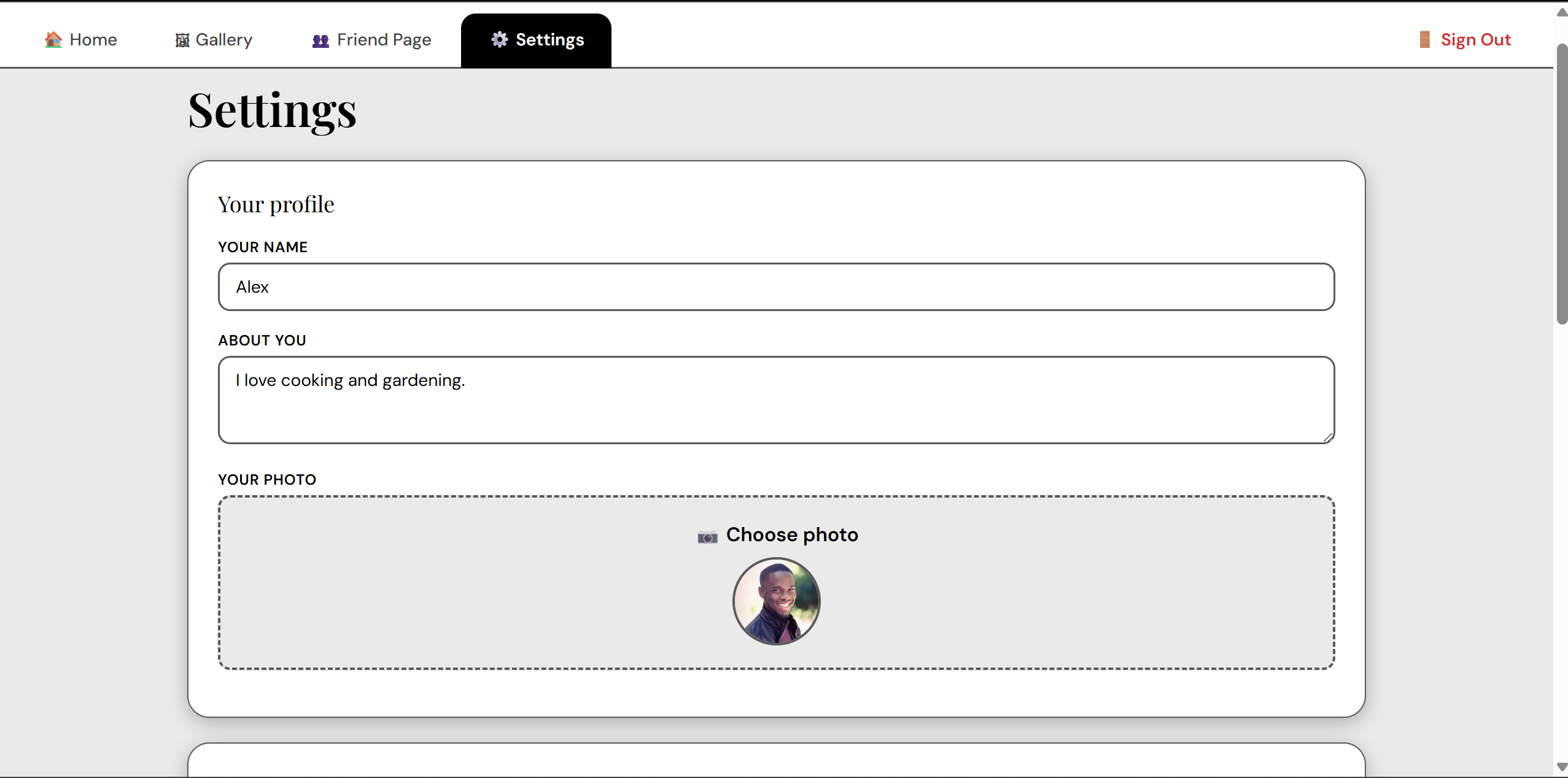
Settings
-
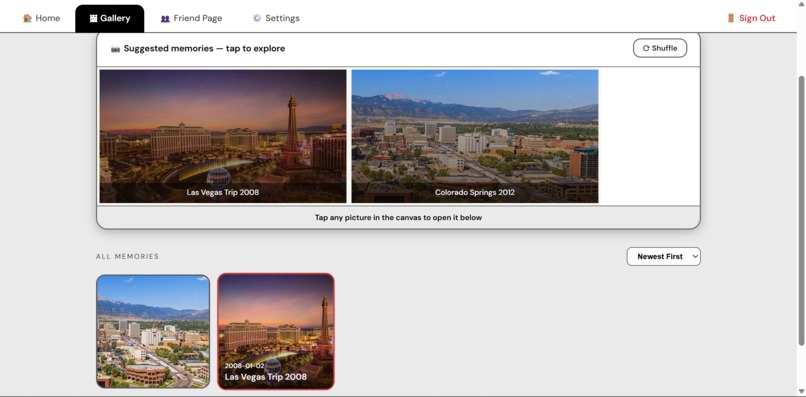
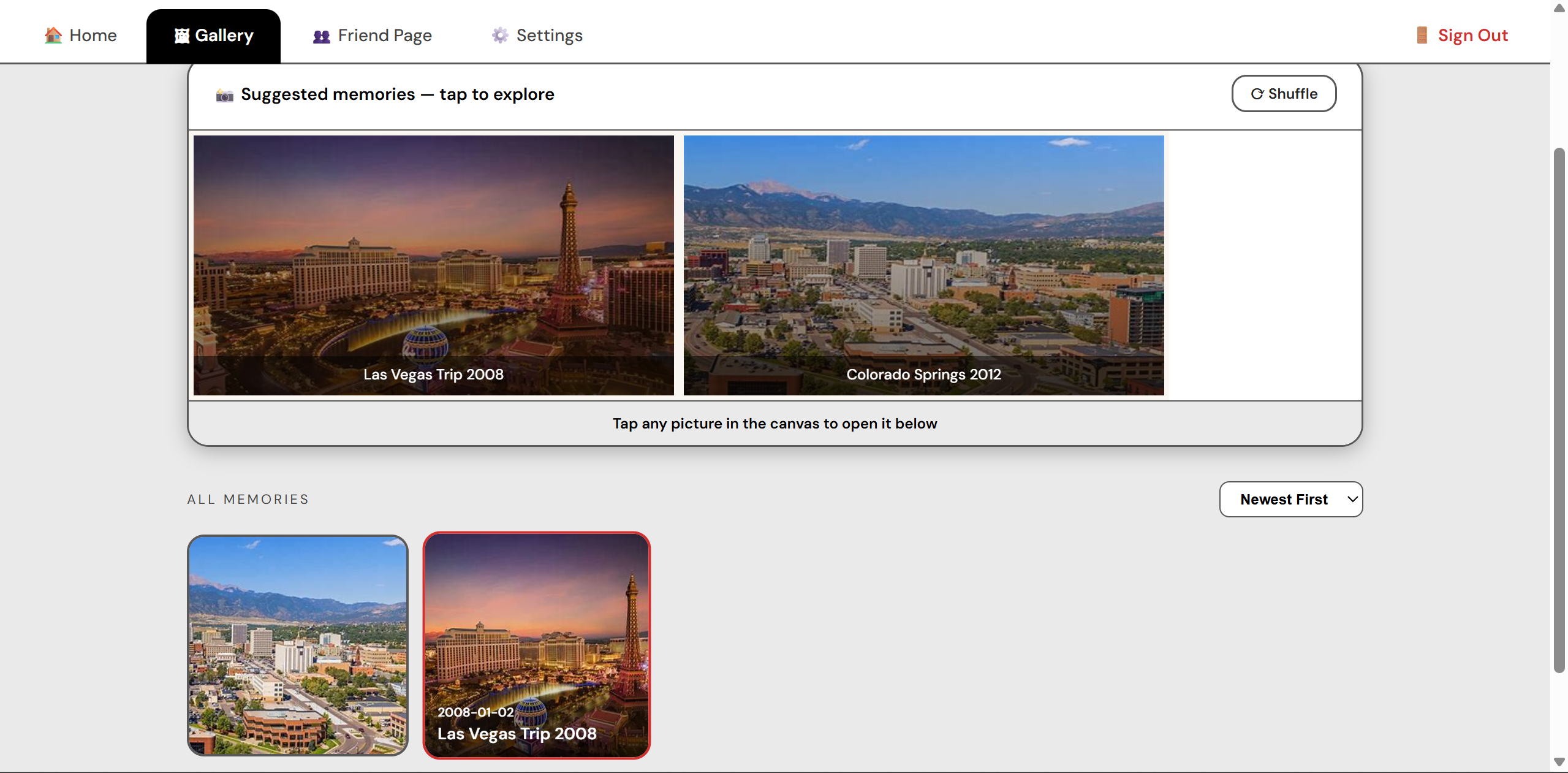
Memory Gallery
-
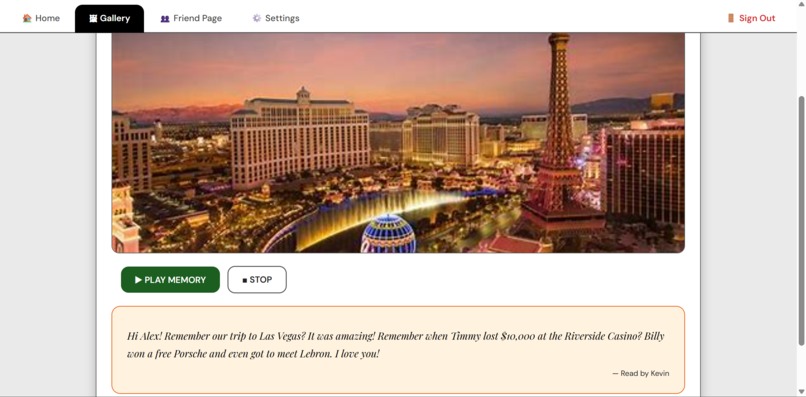
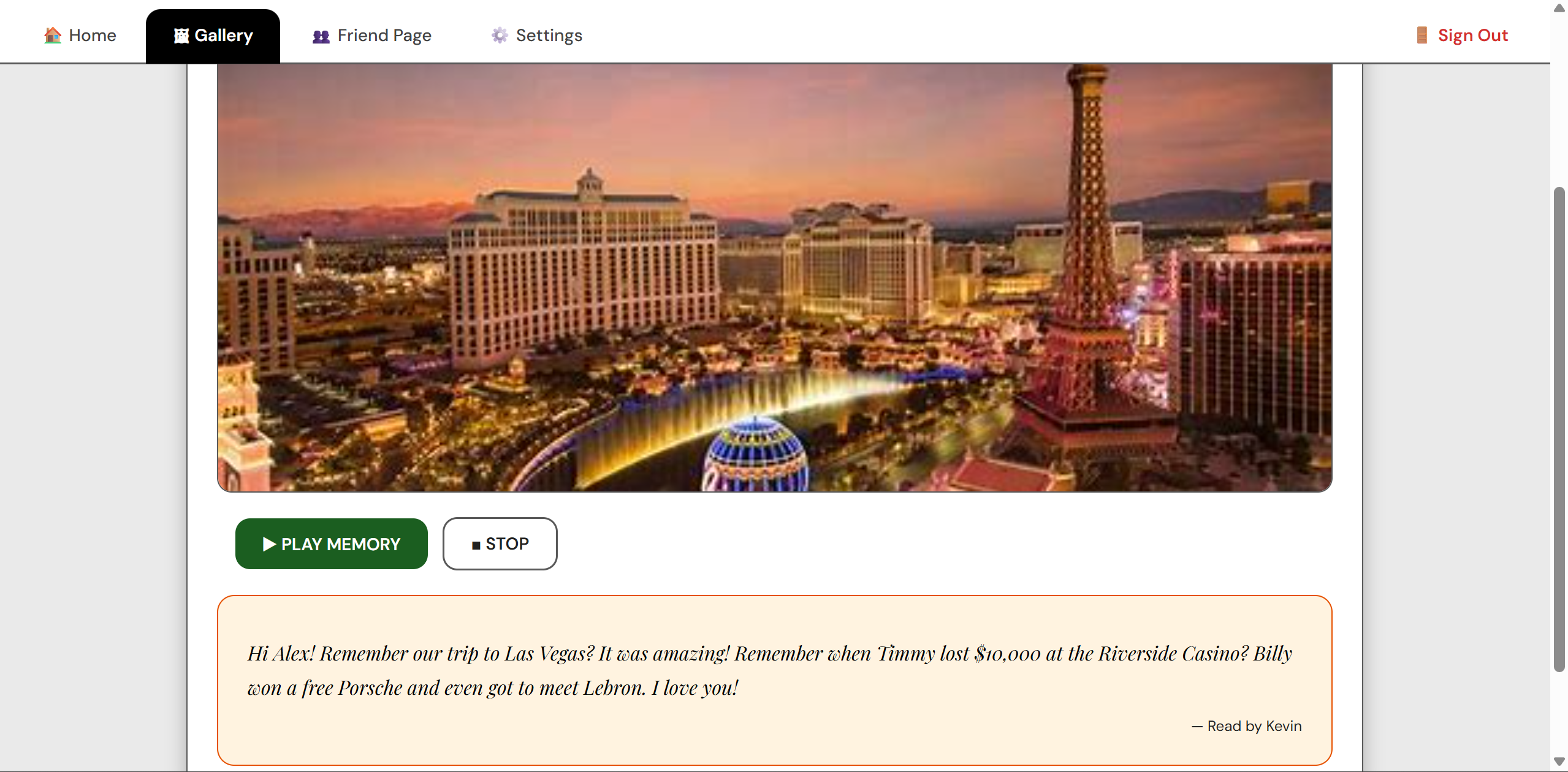
Individual Memory
Inspiration
- Time passes, but memories remain. For Alzheimer’s patients, the struggle to recall core memories obscures the relationships and experiences that define them.
- We researched reminiscence therapy and implemented its core theory into a digital application.
- Our team developed a digital memory book integrated with AI-powered text-to-speech.
- This app serves as a functional resource to help Alzheimer’s patients recall core memories via repetitive exposure, leveraging human-like audio to trigger recognition of loved ones.
What it does
- Immerses Alzheimer's patients in their formative memories by allowing relatives to post photos with personalized, embedded text-to-speech.
- Allows family members to communicate through a digital feed designed to mimic a traditional memory book with descriptive captions.
- Features AI-powered audio on each image that precisely mirrors the relative’s actual cloned voice.
- Combines visual and auditory stimuli to offer a more robust method for memory training and recollection than a phone call or physical book alone.
How we built it
- We created FLASHBACK using a lightweight, fast, and accessible full-stack approach:
- Frontend: Built entirely with vanilla HTML, CSS, and JavaScript for rapid load times and complete DOM control without bulky frameworks.
- Backend: Node.js and Express were used to deploy a secure server proxy that handles API calls and cross-origin requests.
- AI Voice Integration: We integrated the ElevenLabs API to power the core auditory experience, dynamically cloning voices and generating high-fidelity text-to-speech linked to specific photos.
- Database: Utilized Firebase Firestore to manage user accounts, store memory data, and enforce a robust role-based access system between patients and relatives.
Challenges we ran into
- API Security (CORS): Direct calls to the ElevenLabs API from the browser were blocked by CORS policies. We had to pivot and engineer a custom Node.js backend proxy to safely route requests and hide API keys.
- Asynchronous audio management: High-quality AI voice generation takes a few seconds, leading to overlapping audio tracks when users spammed the "Play" button. We engineered a custom audio tracking system with generation IDs to lock the UI, prevent "ghost plays," and destroy abandoned fetches.
- Database structuring: Seamlessly binding unique API keys and cloned Voice IDs to specific memories in Firebase without breaking access controls required complex data tunneling and state management.
Accomplishments that we're proud of
- Successfully built a seamless role-based architecture that allows family members to securely tunnel into a loved one's profile and narrate memories from anywhere.
- Engineered a custom, highly accessible UI from scratch, featuring a high-contrast theme and dark mode to assist elderly patients with visual impairments.
- Flawlessly integrated dynamic ElevenLabs voice cloning to instantly recognize and play the correct relative's voice for each specific memory.
- Bridged complex AI backend tools with a beautifully simple, comforting, and empathetic frontend interface.
What we learned
- Backend networking: We gained deep hands-on experience in full-stack integration, secure API routing, and building custom proxies for sensitive credentials.
- State management: We learned how to effectively manage vanilla JavaScript state and keep a dynamic UI perfectly synced with a live Firebase database without relying on frameworks like React.
- Web Audio API: We learned how to safely stream, track, and terminate audio blobs in the browser to handle edge-case user inputs.
- Accessible design: We learned how to balance powerful AI capabilities with strict, real-world accessibility standards and empathetic design.
What's next for FLASHBACK
- IoT Integration: We plan to expand FLASHBACK beyond the screen by integrating it into physical devices like digital picture frames or simple push-button interfaces.
- LLM AI Assistants: We are looking into integrating Large Language Models (like Claude) to analyze uploaded photos and automatically suggest warm, context-aware captions for relatives.
- Expanded capabilities: We want to add multi-language support and allow for multi-voice conversational memories on a single photo.
- Clinical testing: We plan to partner with reminiscence therapists to gather clinical feedback and refine the healing experience.


Log in or sign up for Devpost to join the conversation.