-
-
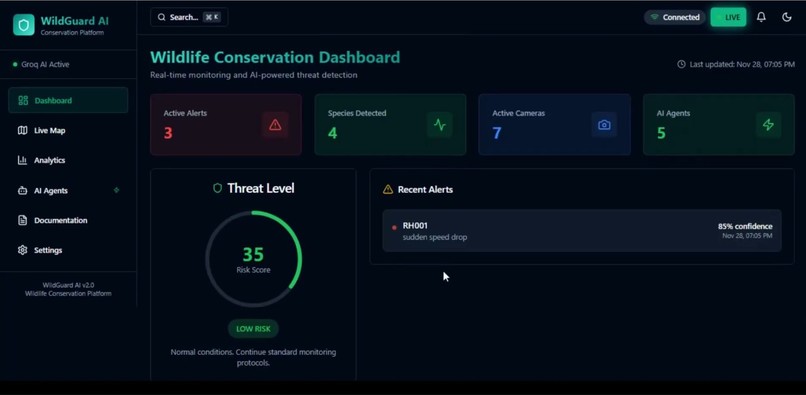
Dashboard
-
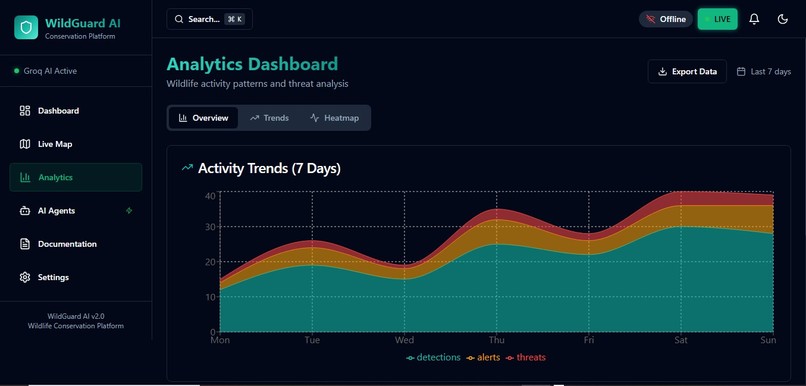
Analytics Page
-
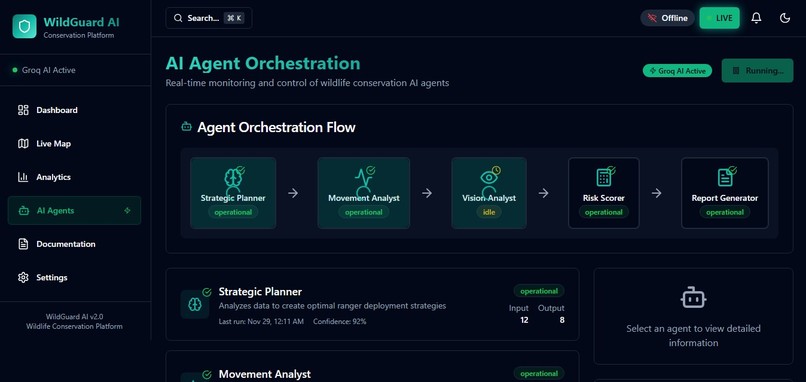
AI Agents
-
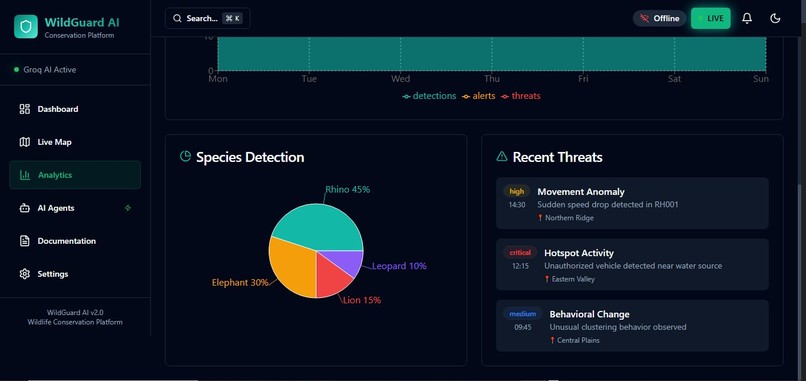
Analytics Page
-
AI Agents
-
Analytics Page
-
Live Map
Inspiration
Black Rhinos are critically endangered and still being lost to poaching every year. Growing up in Africa and later learning ML and cybersecurity, it never felt right that advanced AI is used for ads and clicks while rangers on the ground still lack real‑time intelligence. WildGuard AI is my attempt to put cutting‑edge tech in service of conservation, starting with one species and one park at a time.
What it does
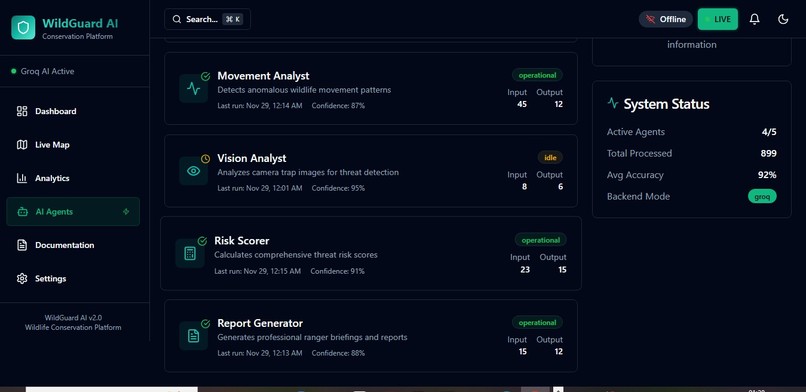
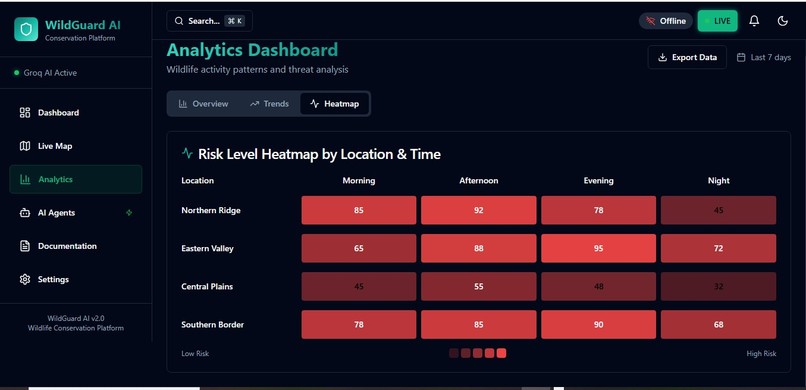
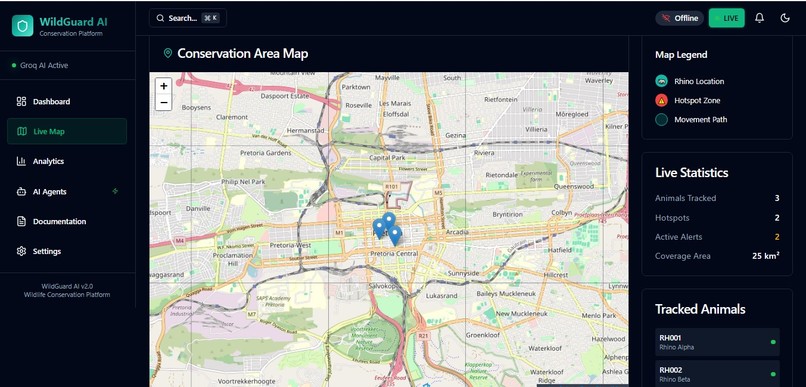
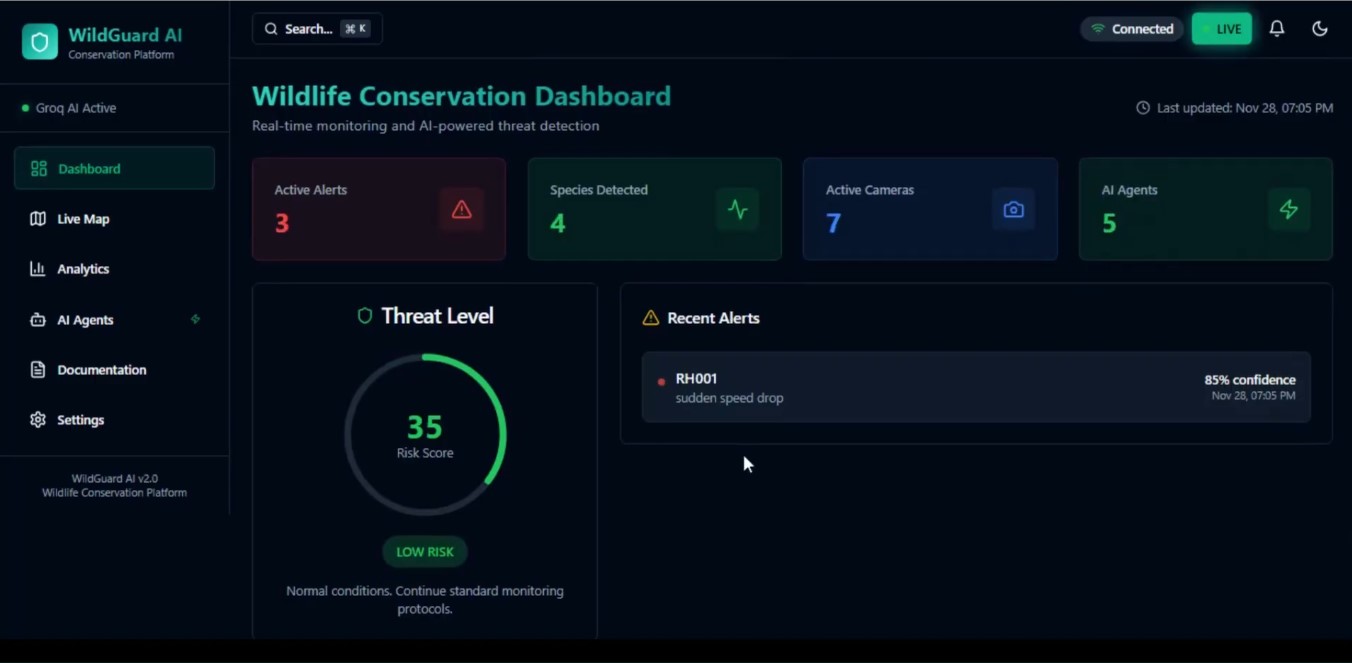
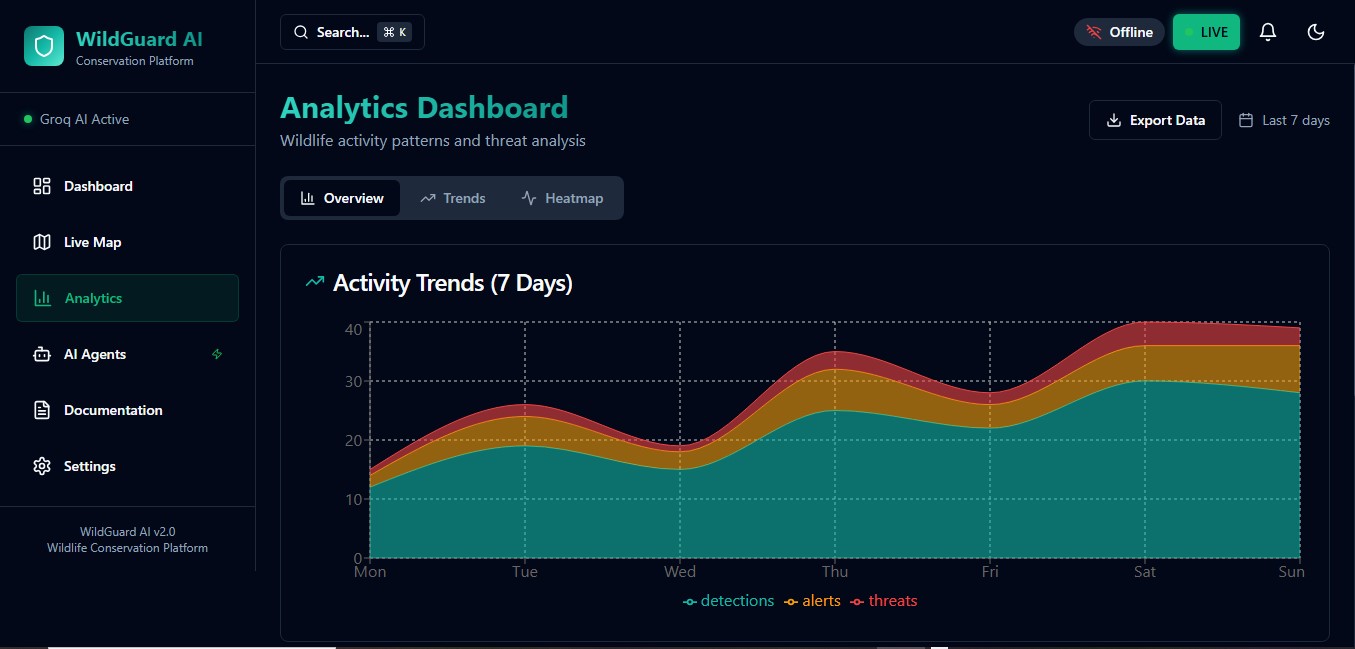
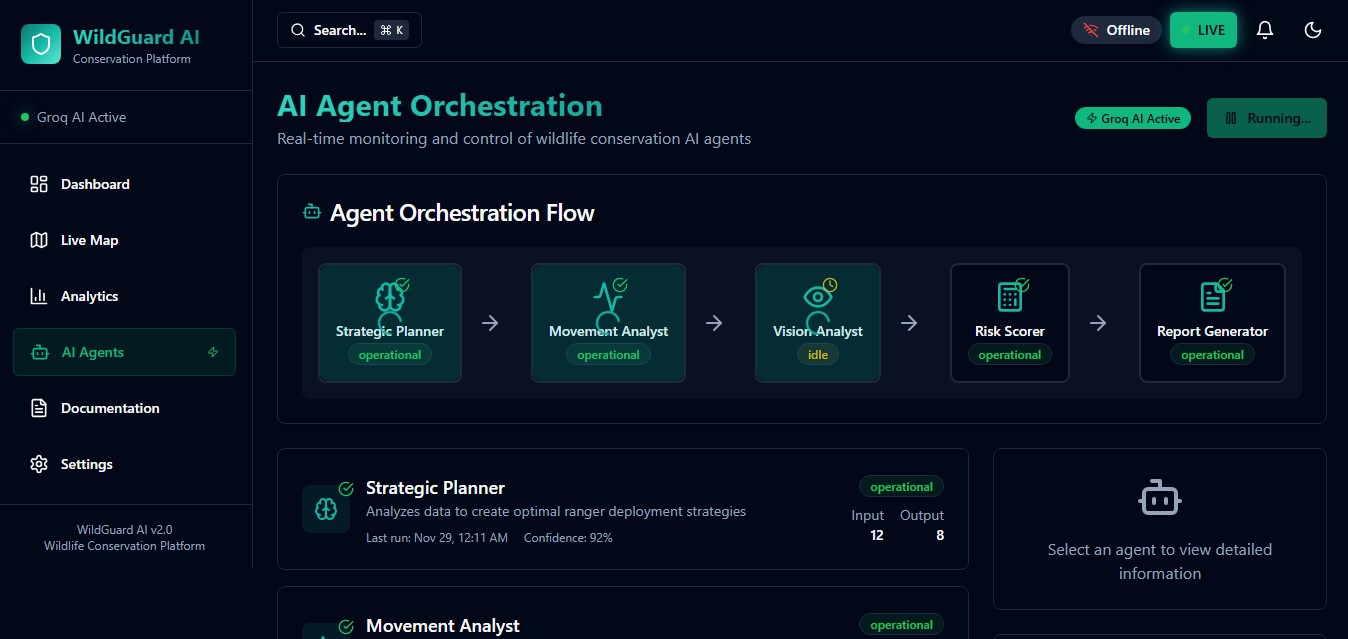
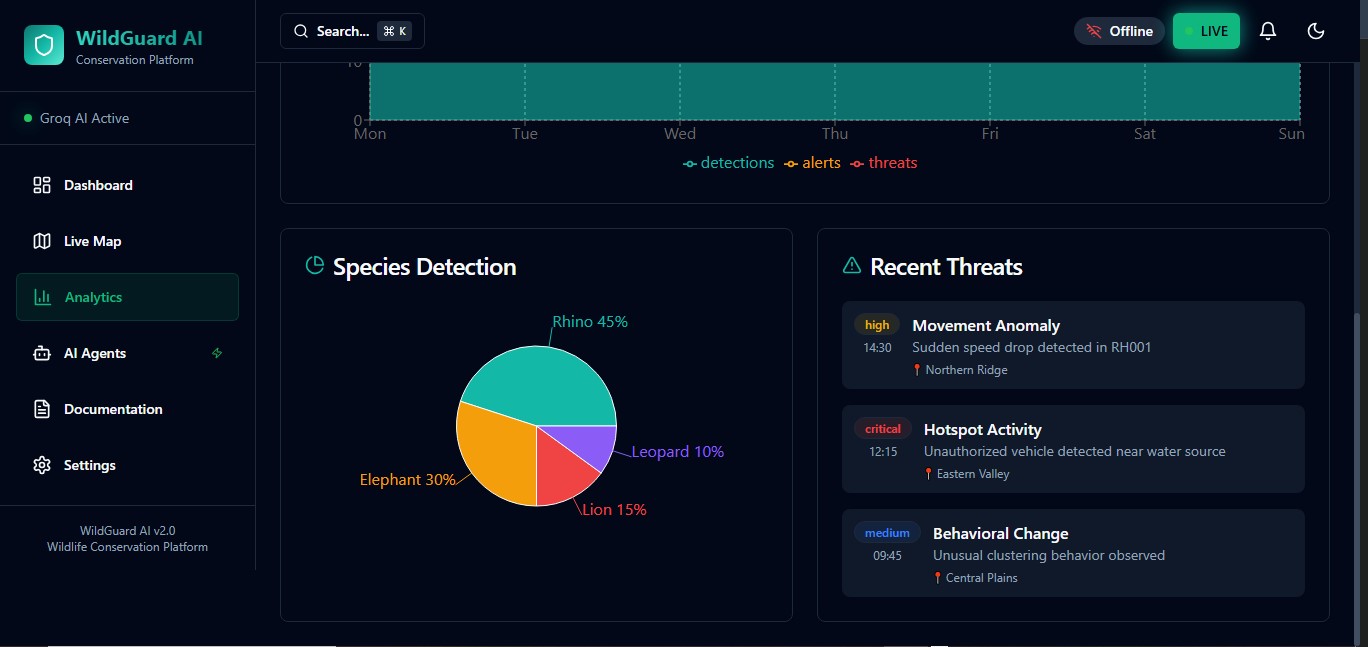
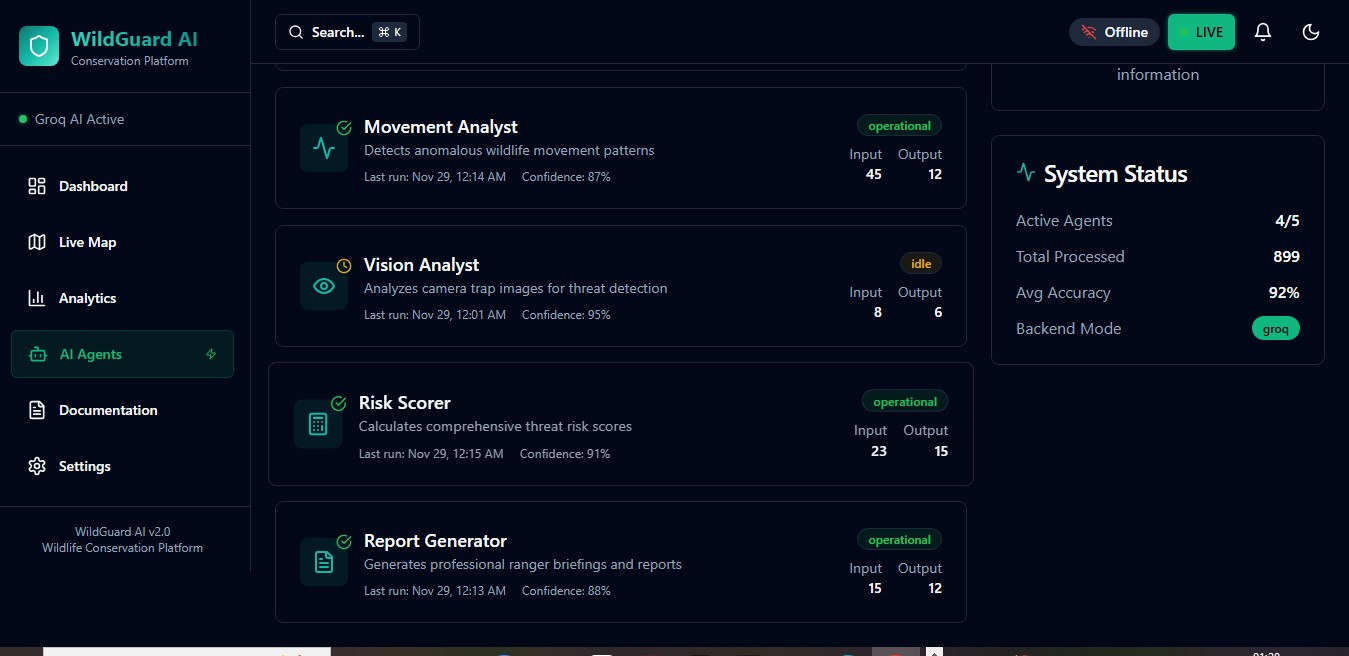
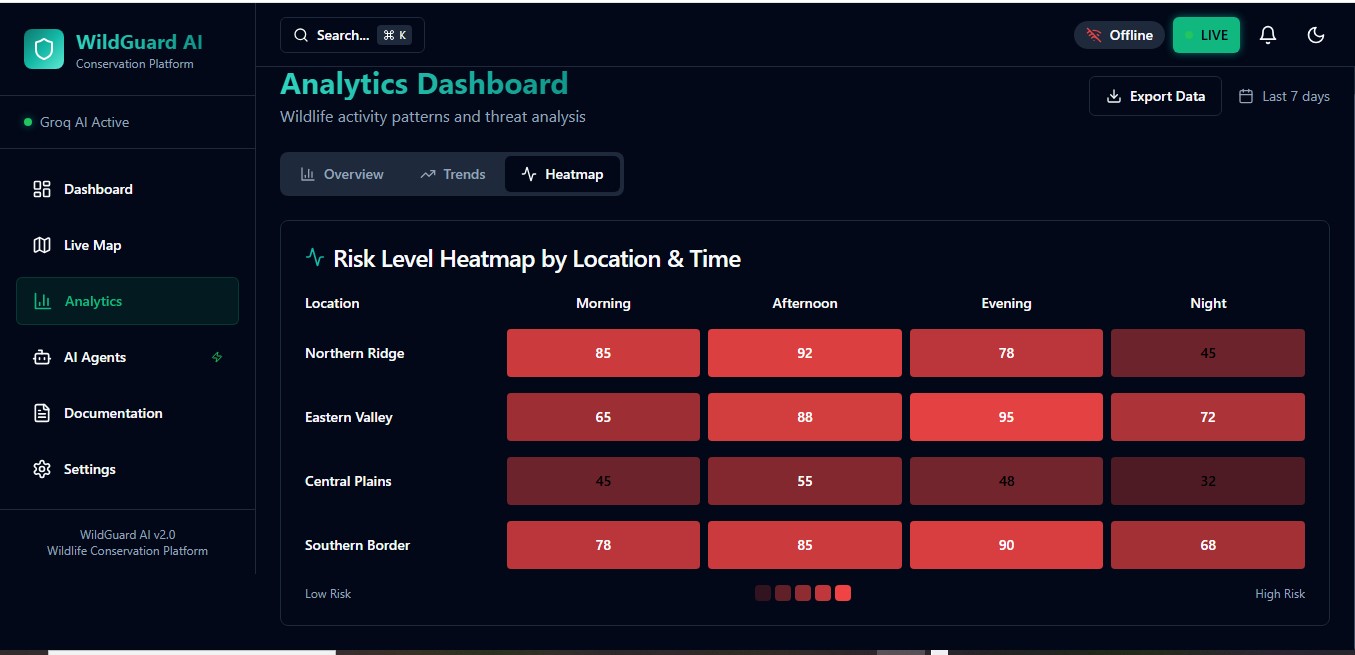
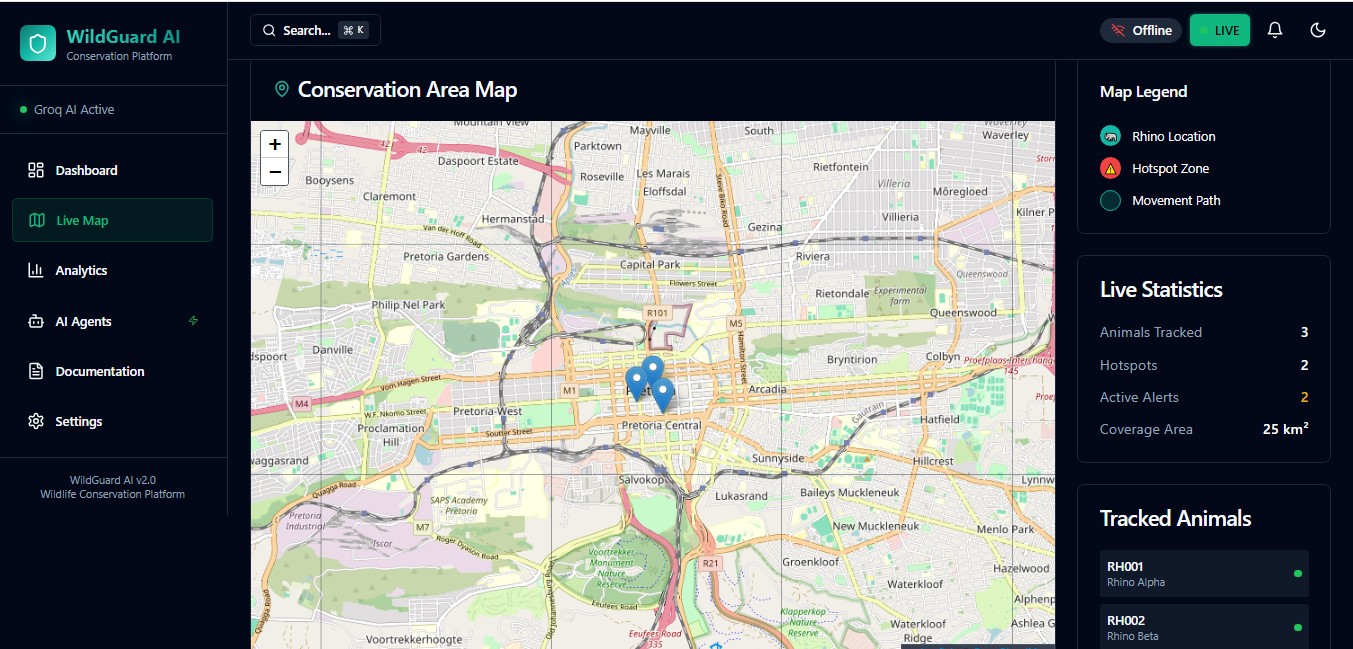
WildGuard AI is a Groq‑powered, multi‑agent system that helps rangers detect and respond to poaching threats in real time. The platform ingests simulated wildlife movement and alert data, analyzes it with five specialized AI agents, calculates a dynamic risk score, and generates an actionable ranger briefing. Rangers can monitor everything through a web dashboard with a live map, analytics, and agent status views.
How we built it
I built a full‑stack app with a React + TypeScript frontend (Vite, TailwindCSS, Framer Motion, Zustand, SWR, Recharts, Leaflet) and a Python + Flask backend. The backend exposes REST APIs and orchestrates five Groq agents using the llama3‑8b‑8192 model. The frontend talks to these APIs to render live metrics, maps, charts, and agent state. The app is deployed with the frontend on Vercel and the backend on Railway, wired together via an API base URL and environment variables. I used Kiro as my main AI coding IDE and Amazon Q Developer inside it to generate code, debug issues, and iterate faster.
Challenges we ran into
The hardest parts were wiring the frontend to the correct backend URLs across local and deployed environments, handling JSON errors from failed API calls, and managing CORS. Getting the multi‑agent orchestration stable with clear responses for the UI also took time. Deployment was another challenge: serverless timeouts ruled out one backend option, so I had to shift to a longer‑running environment and reconfigure everything under time pressure.
Accomplishments that we're proud of
I’m proud that this is a fully working, deployed system built solo in just a few days: real frontend, real backend, real AI agents. The dashboard feels like a “mission control” for a reserve, not just a demo. Integrating five Groq agents, deploying on Vercel + Railway, and documenting everything properly (README, deployment docs, video, screenshots) while still studying ML and cybersecurity at the same time is a big personal milestone.
What we learned
I learned how to design and orchestrate a small multi‑agent AI system around a real‑world problem, not just a toy prompt. I deepened my experience with React, Flask, Groq’s OpenAI‑compatible API, and production deployment. I also learned how to use AI coding assistants (Kiro + Amazon Q Developer) as real teammates: from scaffolding components to debugging nasty integration bugs under a deadline.
What's next for WildGuard AI - Groq-Powered Wildlife Conservation
Next steps are to plug in real data sources: GPS collar feeds, camera traps, and ranger reports from actual reserves. I want to add authentication for ranger teams, SMS/email alerts, and a lightweight mobile interface. Longer term, the goal is to pilot WildGuard AI with a conservation partner, tune custom models on their data, and expand from rhinos to broader anti‑poaching operations across multiple parks in Africa.
Built With
- amazon
- flask
- framer-motion
- groq
- kiro-ide
- leaflet.js
- python
- q
- railway
- react
- recharts
- swr
- tailwindcss
- typescript
- vercel
- vite
- zustand


Log in or sign up for Devpost to join the conversation.