Inspiration
Every year, wildfires destroy millions of acres, displace thousands of people, and cause untold ecological and economic damage. Current detection systems often react after the damage has begun. I wanted to change that — to create an intelligent, automated, end-to-end disaster relief agent network that not only detects wildfires in real time but also coordinates immediate response.
Inspired by how multi-agent AI and LLM orchestration systems (like AWS AgentCore and Google’s Gemini) are transforming industries, I asked myself:
“What if agents could monitor live data, analyze anomalies, and instantly generate action plans — all autonomously?”
What I Built
My project is an wildfire relief orchestration system that uses agents to perform each stage of disaster management:
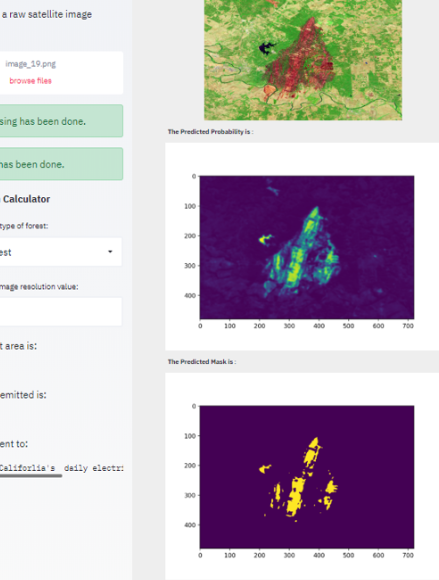
- Detection Agent – Continuously monitors wildfire data streams (weather, thermal, satellite) and flags anomalies using models AWS Sagemaker.
- Context Agent – Gathers nearby fire stations, evacuation zones, wind patterns, and previous similar cases from AWS DynamoDB.
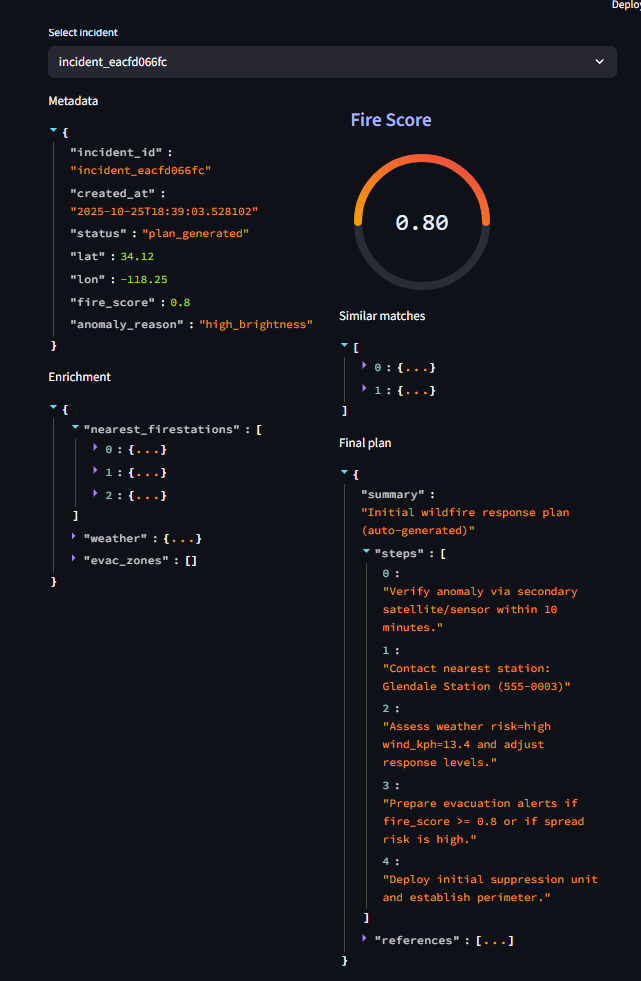
- Analysis Agent – Compare the situation with similar historical cases from DynamoDB and predicts risk escalation by analyzing previous response patterns, climate conditions and resource availability.
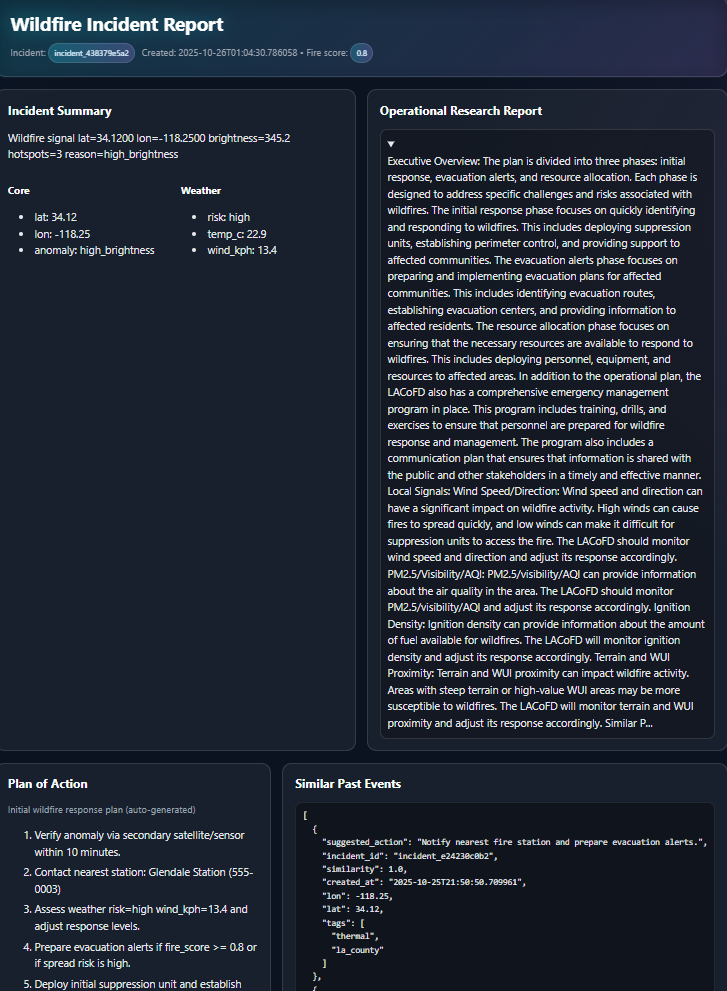
- Action Agent – Generates a context-aware plan of action and triggers mock alerts via to local authorities and relief teams.
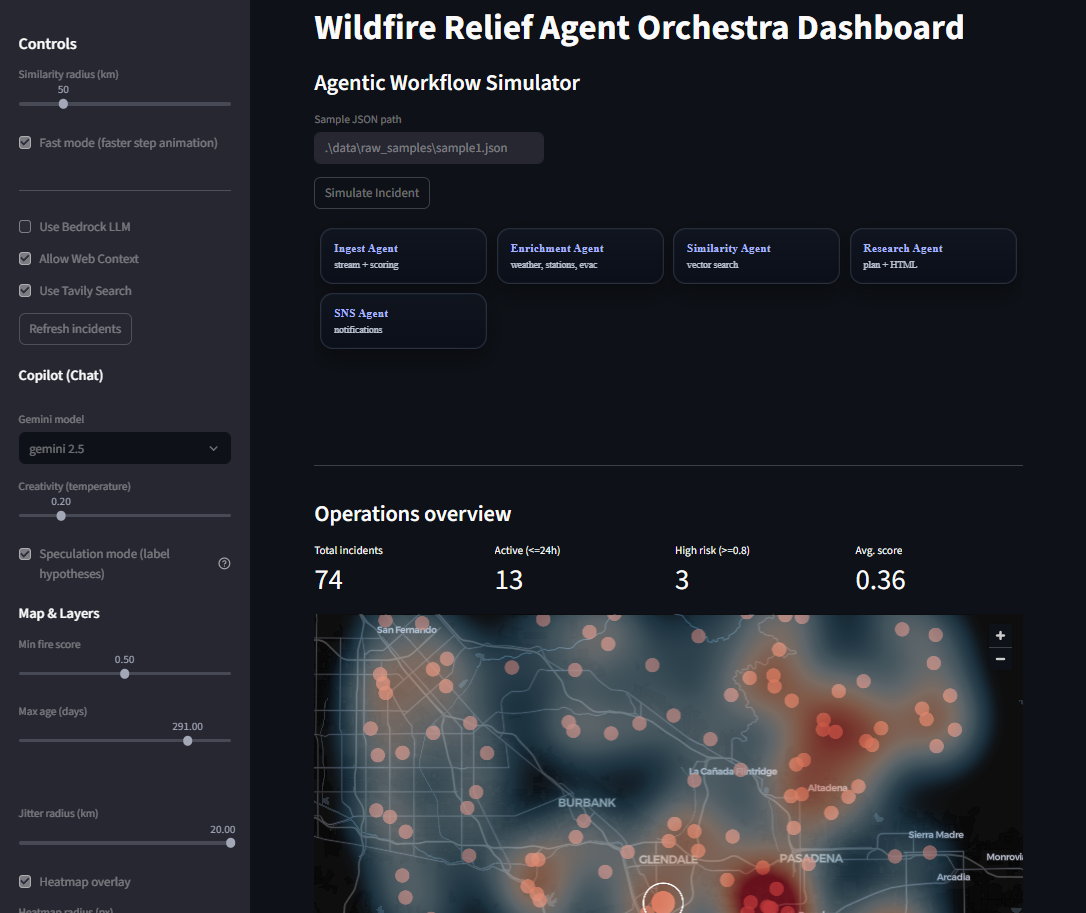
- Visualization Dashboard – Built on Streamlit, showing real-time data, alerts, and recommended actions.
⚙️ How I Built It
I structured the system as modular agents connected through AgentCore and managed via MCP strands (for composable workflows):
- Data Ingestion: AWS Lambda pulls real-time data from wildfire APIs and weather sources into S3.
- Processing & Storage: Data is structured into JSON-like objects for DynamoDB, enabling efficient lookups.
- Agent Reasoning: Gemini and Bedrock models perform reasoning, similarity matching, and action generation.
- Communication: AWS SNS automates outbound alerts; Step Functions orchestrate multi-agent workflows.
- Visualization: Streamlit dashboard displays the full pipeline, showing which agents are active and their outputs.
💡 What I Learned
- How multi-agent frameworks like MCP and AgentCore can modularize complex systems.
- Integration of AWS Bedrock and Gemini to blend reasoning, retrieval, and execution.
- Importance of designing data pipelines for real-time monitoring and fail-safe response.
- How to build scalable prototypes quickly using AWS Step Functions + DynamoDB.
Challenges I Faced
- Managing data synchronization between multiple microservices in near real-time and most importantly finding a way to integrate gemini models, and using pre-trained models through AWS!
- Ensuring agents communicated efficiently without overflowing/too much context, summarizing the context that is passed by efficiently.
- Balancing hackathon time constraints with complex AWS configurations, and building with multiple AI agents and balancing code speed with retaining knowledge of how the code and internal systems work.
- Structuring data efficiently without relying on a vector DB due to time constraints, using clever DynamoDB schema design instead with a heuristic "vector" like column which summarized the data well enough .
Impact
This project demonstrates how cloud AI Inference through services like Sagemaker can be leveraged to solve high-stakes real-world problems.
Built With
- agentcore
- mlstate-opa
- sagemaker
- strands

Log in or sign up for Devpost to join the conversation.