Inspiration
The 2019 United Nations report on biodiversity has found something very alarming, that is, around one million species “already face extinction, many within decades. there will be a “further acceleration” in the global rate of species extinction, which is already “at least tens to hundreds of times higher than it has averaged over the past 10 million years”. Monitoring different species is an essential step towards conservation. Camera traps are generally used to understand biodiversity in an ecosystem. But this is faced with two major challenges. First, one image after another with nothing useful in it, this is caused by triggering of motion sensors by moving of tree branches, leaves or any other thing. with no animal in sight, with millions of images that get captured with multiple cameras, sorting the photos is a nightmare for scientists. Second Camera traps are not that cheap for the developing parts of the world.
What it does
With WildEye, we try to solve both of these problems with a Neural Network Classifier trained on EC2 DL1 instance and an affordable camera trap costing 15 USD
To deploy the device, we open the deployment web app where we can add the new device with each device having a unique device ID, click on get Long and lats so each device has a location of deployment then we click on Deploy to create a separate directory for the device on S3. Then hardware devices can be deployed in the wild.
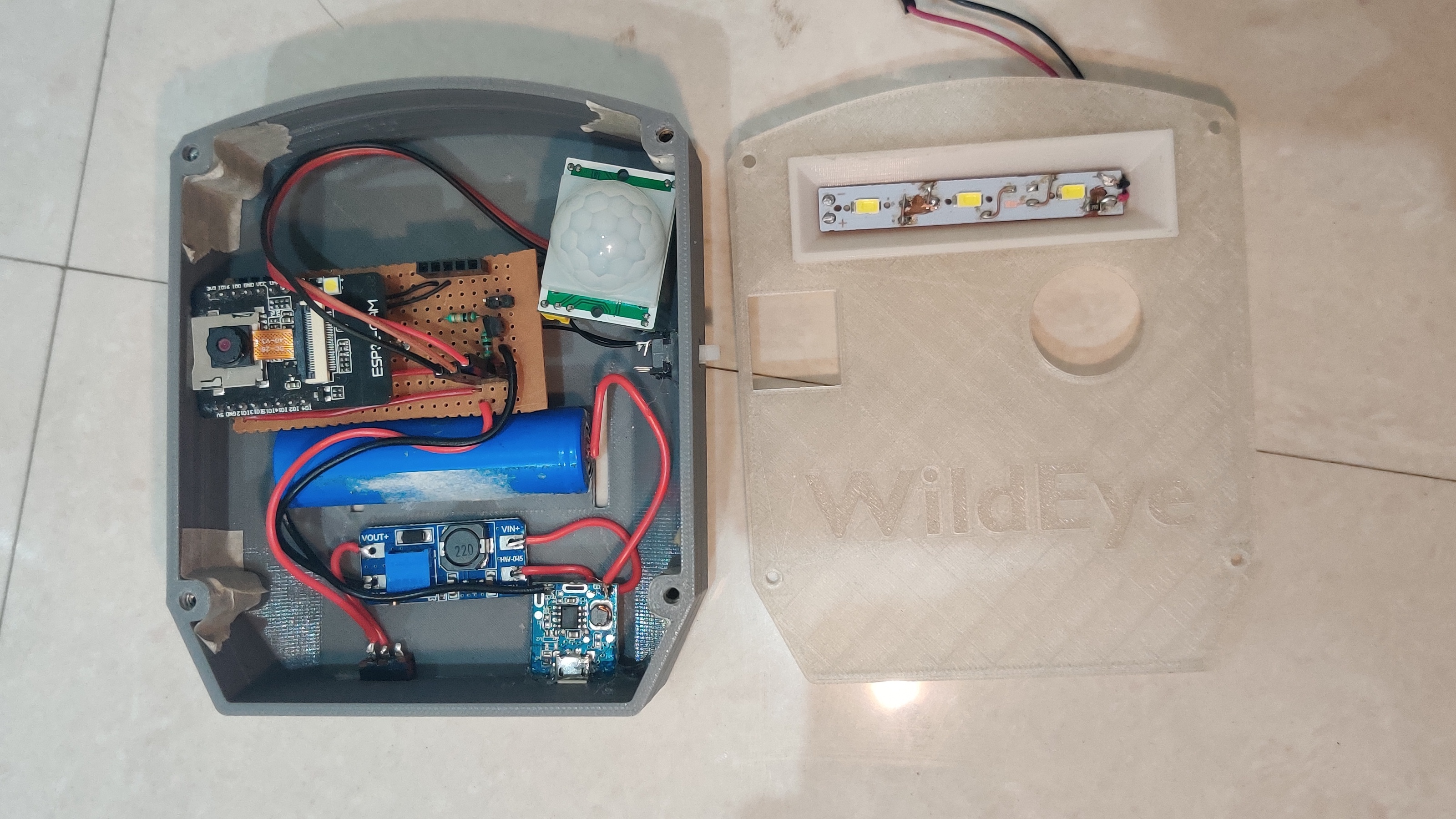
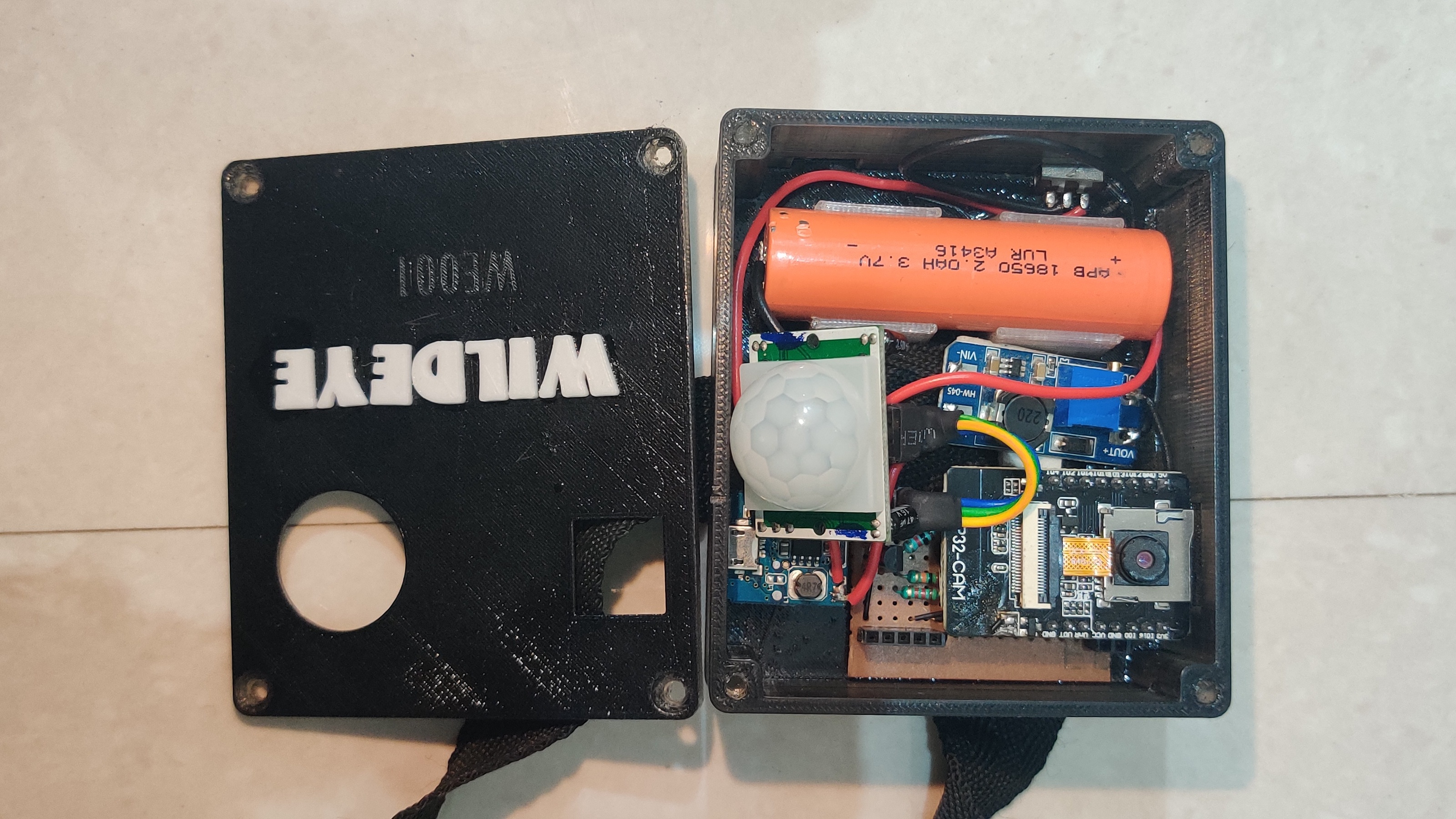
As soon as motion is detected through the Proximity Infrared sensor, the ESP32 Cam is woken up from sleep, takes a photograph, and saves it on the SD card.
After taking the device in after completion of deployment, A python script is used that runs a classification model trained on EC2 DL1 instance using transfer learning which takes two arguments as input, one is the SD card directory and the other is target directory, eventually, all the images are classified into two folders, animals and empty.
Now to upload the photo we open the upload section of the web app we open the folder for where the images are located, select the device ID and click on upload, the images are uploaded into the appropriate device directory inside the S3 bucket.
Finally, visualization of the images and device locations can be done on the Visualization part of the web app done for simple understanding and comprehension of data collected and devices deployed. Because Images are stored on S3, they can be accessed from anywhere.
How we built it
For Hardware mainly went through two different iterations, images of both are uploaded and are attached in this article. For first prototype, we just took an ESP32 cam, a li-ion cell, and a PIR motion sensor. For the second one, we improved with a dedicated flash.
Challenges we ran into
All the three team members faced different challenges with our divided work (Web. ML and Hardware)
Web: Kamal who worked on the web faced most challenges while connecting the data to the S3 bucket . ML: Tanishq faced the most challenge when trying to deploy the ML on the microcontroller, eventually having to backtrack and do the classification after the device had completed deployment.
Hardware: For Mukul working on properly calibrating the PIR sensor was the hardest part.
Accomplishments that we're proud of
We're proud of what we could accomplish in so little time, and how impactful and affordable this project can be for the conservation efforts going on.
What we learned
Kamal learned AWS backend integration with the frontend.
Tanishq learned to use the power of EC2 DL1 for ML and AI
Mukul learned how to use image processing on microcontrollers and improved his prototyping skills.
What's next for WildEye
The next in line for the project is to attempt to build on the edge inference, therefore saving the memory for more useful images to be taken.
Remove the IR filter of the camera lens and test the performance under no visible light with an IR LED flash, so it would be less intrusive for the wildlife.
Use the power of classification to identify the species in the image for better assistance to the scientists and conservationists.
Built With
- amazon-ec2
- amazon-web-services
- ec2-dl1
- esp32
- habana
- html
- tensorflow


Log in or sign up for Devpost to join the conversation.