Inspiration
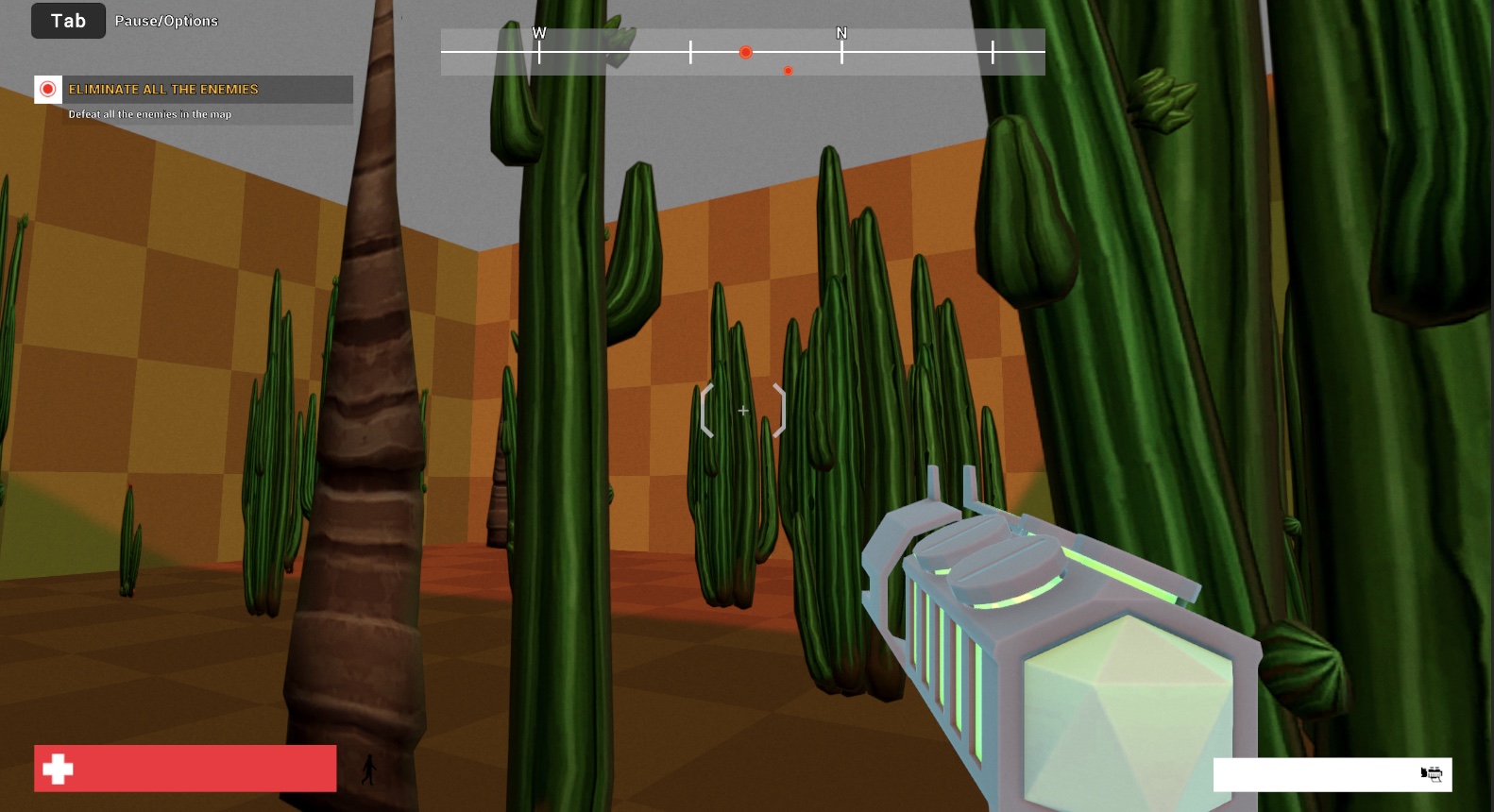
This project was inspired by the classic wild west theme combined with the intensity of first-person shooters (FPS) and survival games. We wanted to include the theme and also use a futuristic enemy. As we were fond of IO games with an fps structure we wanted to make an fps game.
What it does
The player combats a wave of enemies each level and after killing them, the player finishes the objective which allows the player to move forward.
How we Built the Project
Unity FPS Microgame: we started with Unity’s FPS Microgame as a foundation for the player movement and shooting mechanics. Custom Enemy Respawn System: Implemented a script to respawn enemies at random locations while controlling their behavior and stopping respawns after a certain limit. Scene Management: Added transitions between scenes based on player progress, such as completing objectives after killing all enemies. Score and UI Integration: Developed a score manager to track player progress, linked it to enemy kills, and displayed it in the game’s UI.
Challenges Faced
Multiple NavMesh Agents: One of the biggest challenges was managing multiple enemies using the NavMesh system. This required fine-tuning to ensure enemies didn’t interfere with each other’s movement. Scene Transitions: Handling seamless transitions between different game states, such as moving to the next level after all enemies were defeated, was a complex task that required careful scripting. UI and Game Logic Integration: Ensuring the score system and enemy kill count were properly displayed in the UI presented difficulties, particularly in linking the score manager to enemy deaths.
Accomplishments
Developed a Fully Functional FPS Game: Built a playable first-person shooter set in the Wild West, featuring enemy AI, respawn mechanics, and scene transitions. Implemented Dynamic Enemy Respawning: Created a system where enemies spawn at random locations and stop after a set limit, adding challenge and unpredictability to the gameplay. Integrated Score System and Objectives: Developed a scoring mechanism that tracks kills and displays progress on the UI, giving players clear goals and feedback. Utilized NavMesh for AI Movement: Successfully implemented Unity’s NavMesh system to handle multiple enemies navigating the environment, making for realistic AI behavior albeit with a few bugs. Scene Transition on Objective Completion: Enabled smooth transitions to the next level when all enemies are defeated, keeping the game progression fluid.
What we Learned
Throughout this project, we had learned several important aspects of game development:
Unity Game Development: Building and managing scenes, player interactions, and object spawning. Enemy AI and Pathfinding: Implementing enemy behavior with Unity's NavMesh system to simulate lifelike movements and decision-making. Game Mechanics: Integrating scoring systems, enemy respawn mechanics, and transitions between game levels. Problem Solving: Debugging issues such as multiple NavMesh agents, managing game state transitions, and linking scripts to in-game UI elements. Game objects in unity. Shaders and other assets use.
What's next for Wild west robot survivor 3d
Adding Score, Increase levels and making it so that we fix the navmesh for the enemies for more than one enemy at one spot making it more challenging. Having multiplayer and more guns along with this is something we had also planed. Game mechanics such as sliding and flying using a jetpack and other movement and player GUI improvement is another.


Log in or sign up for Devpost to join the conversation.