-
-
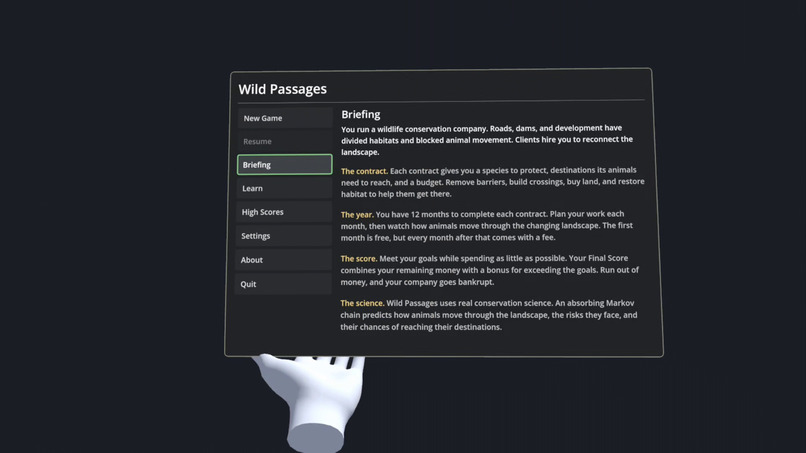
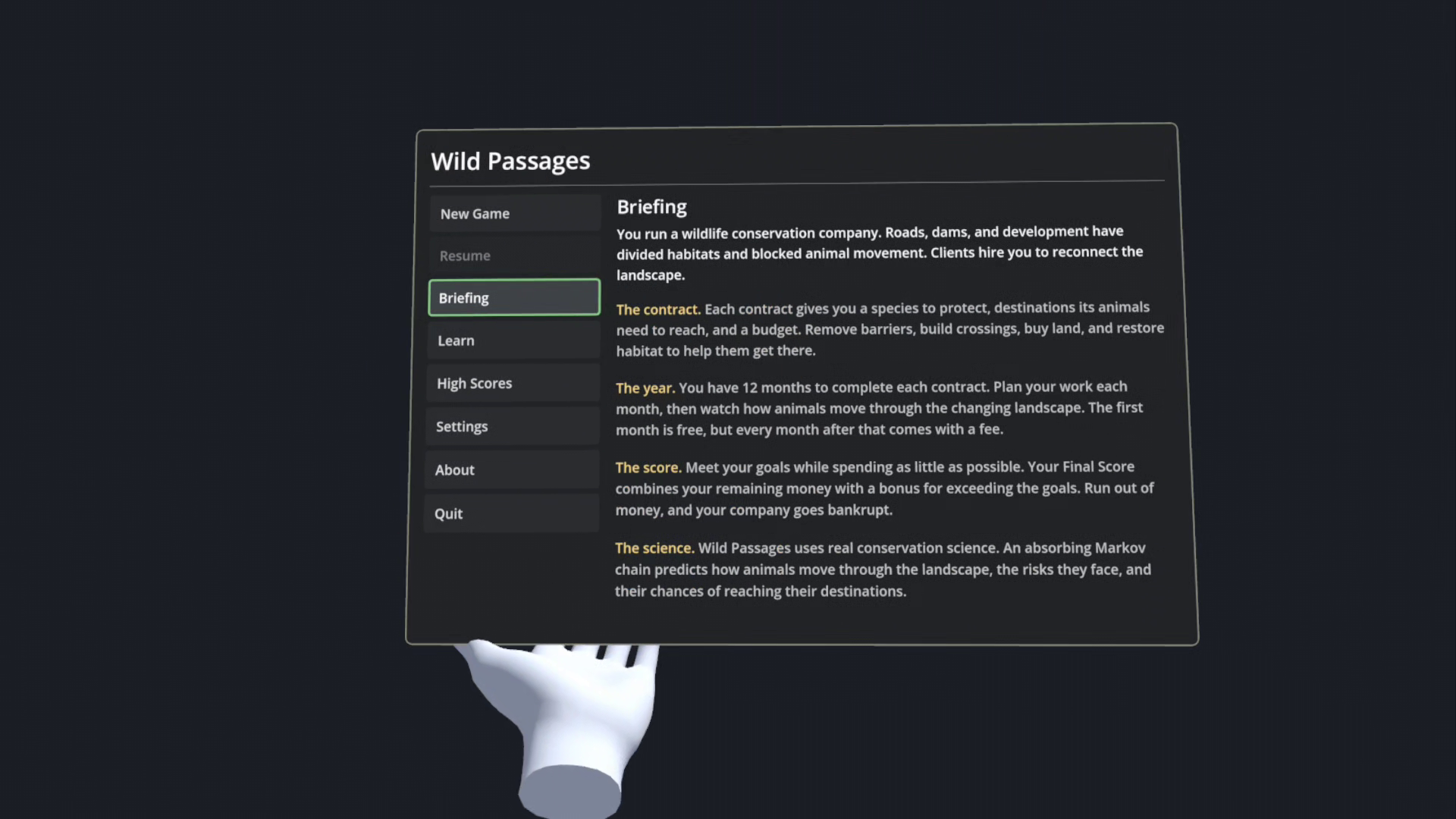
Briefing page. The main menu and game board can be repositioned by facing a palm up
-
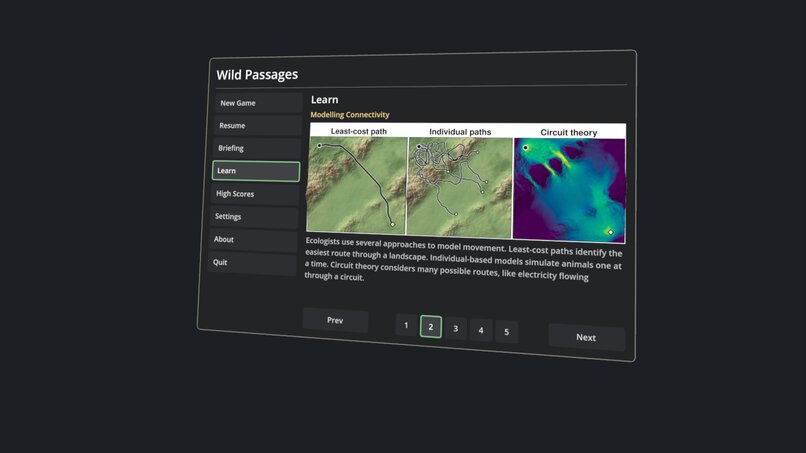
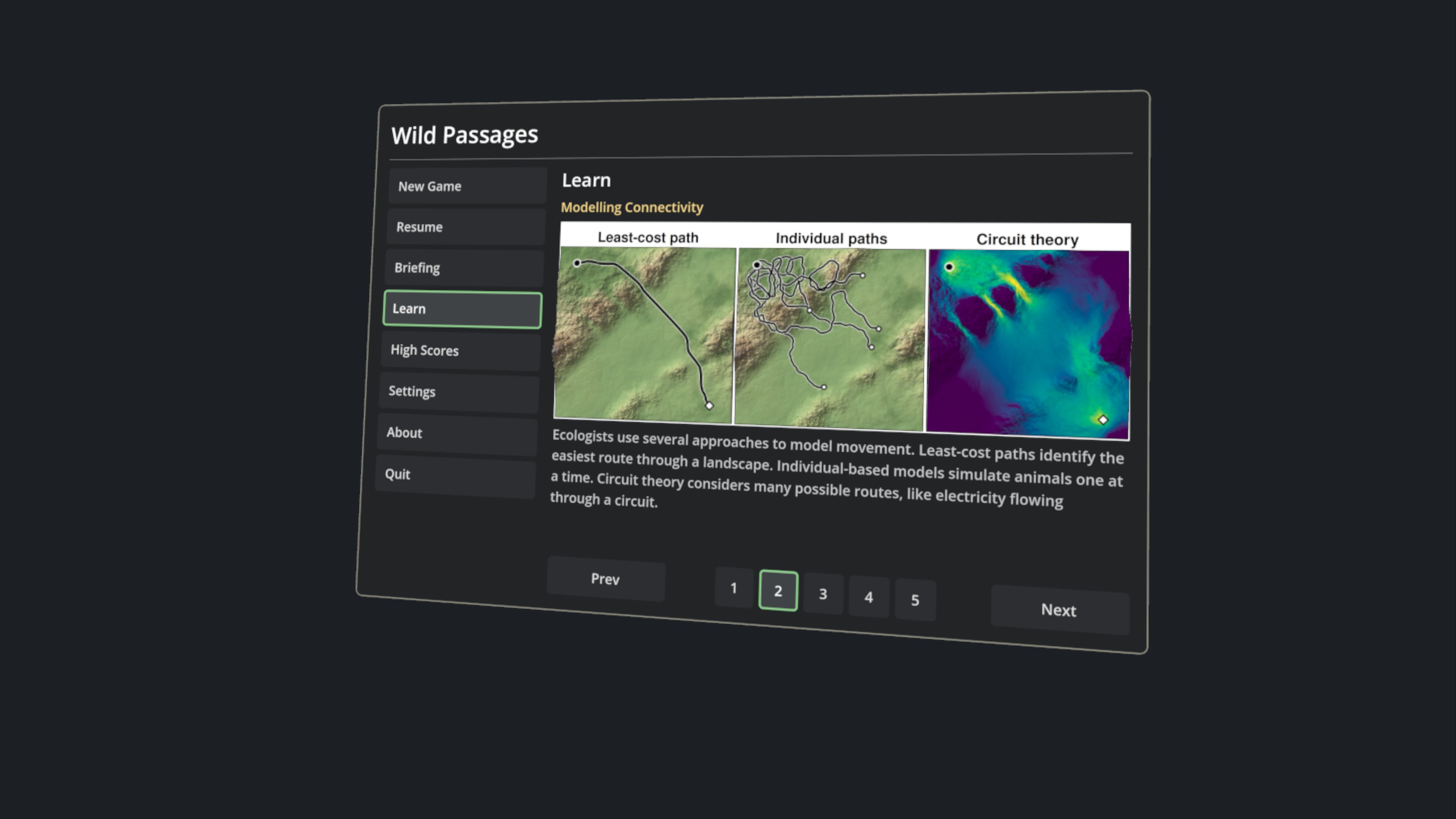
Learning pages
-
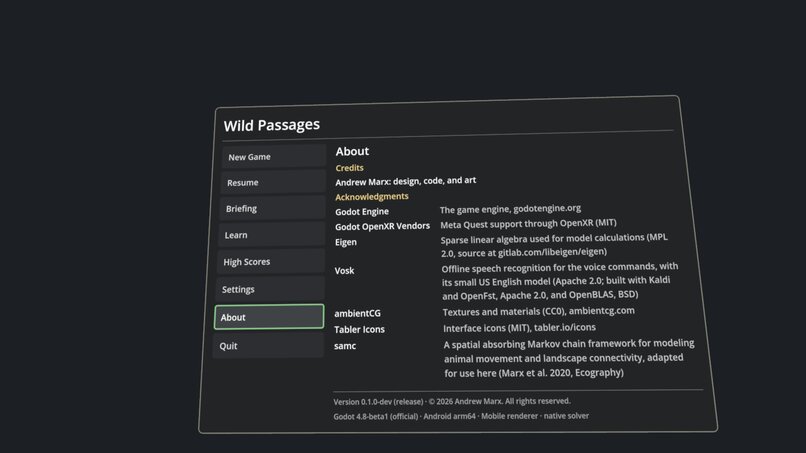
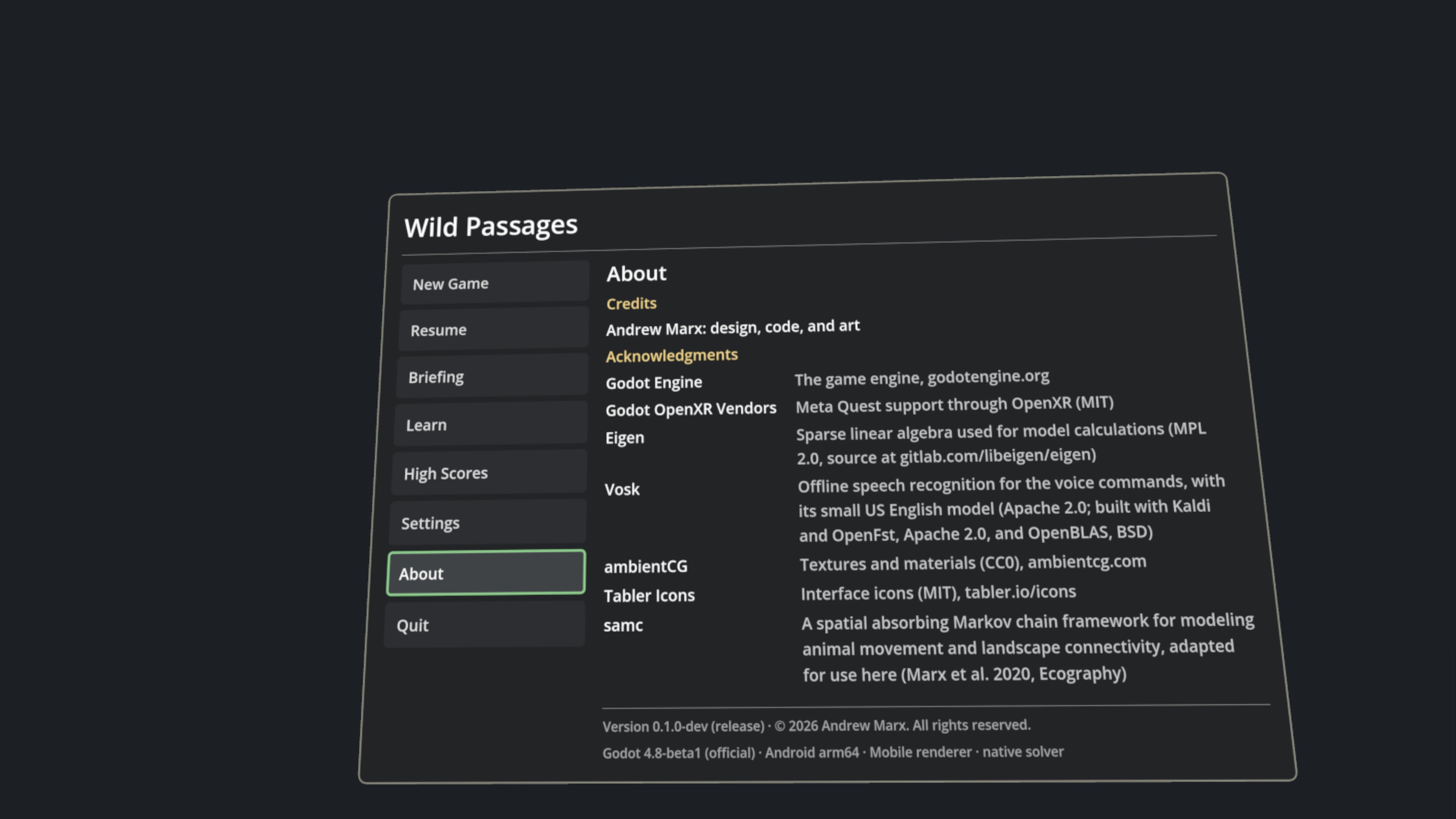
About
-
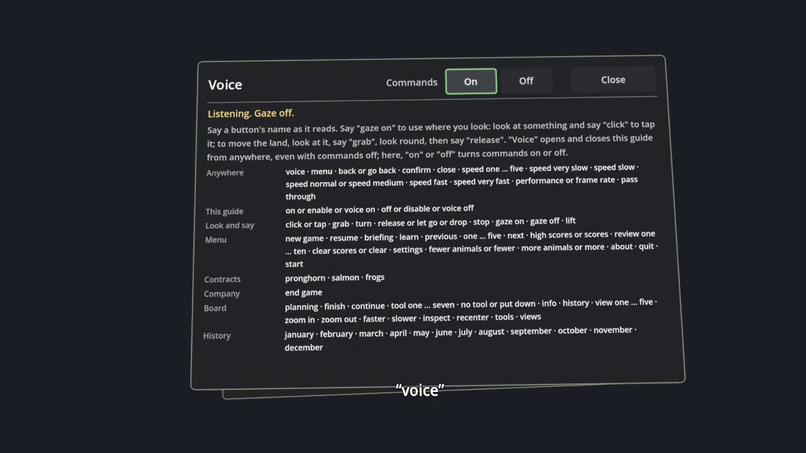
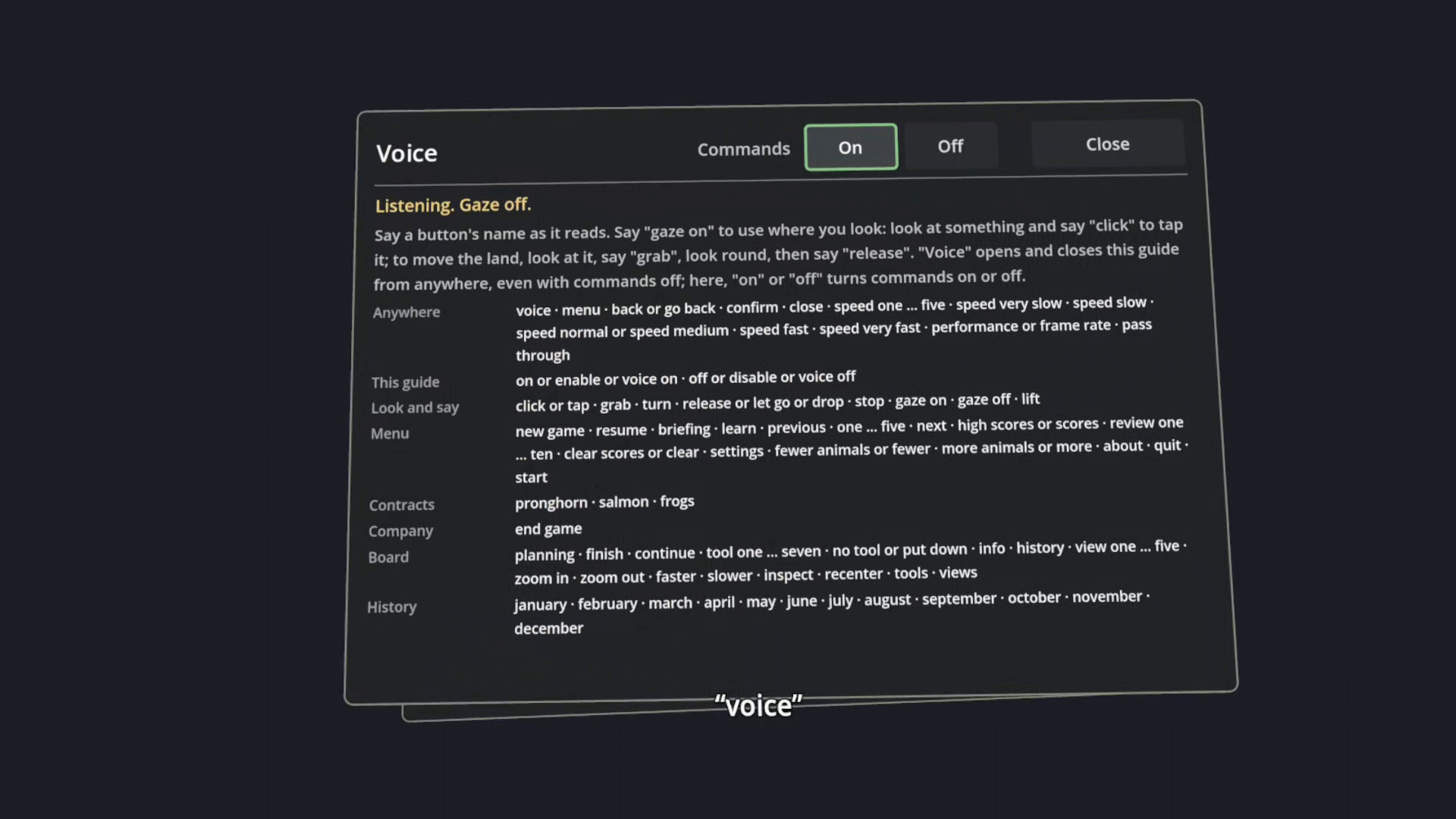
The voice commands page can be brought up any time by saying "voice".
-
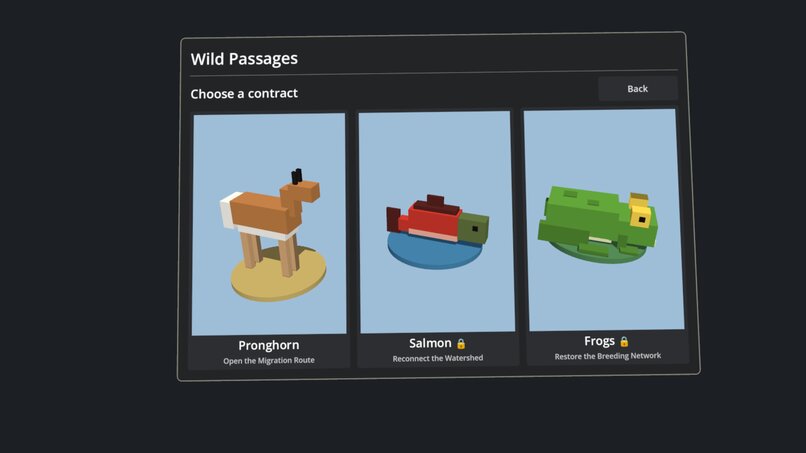
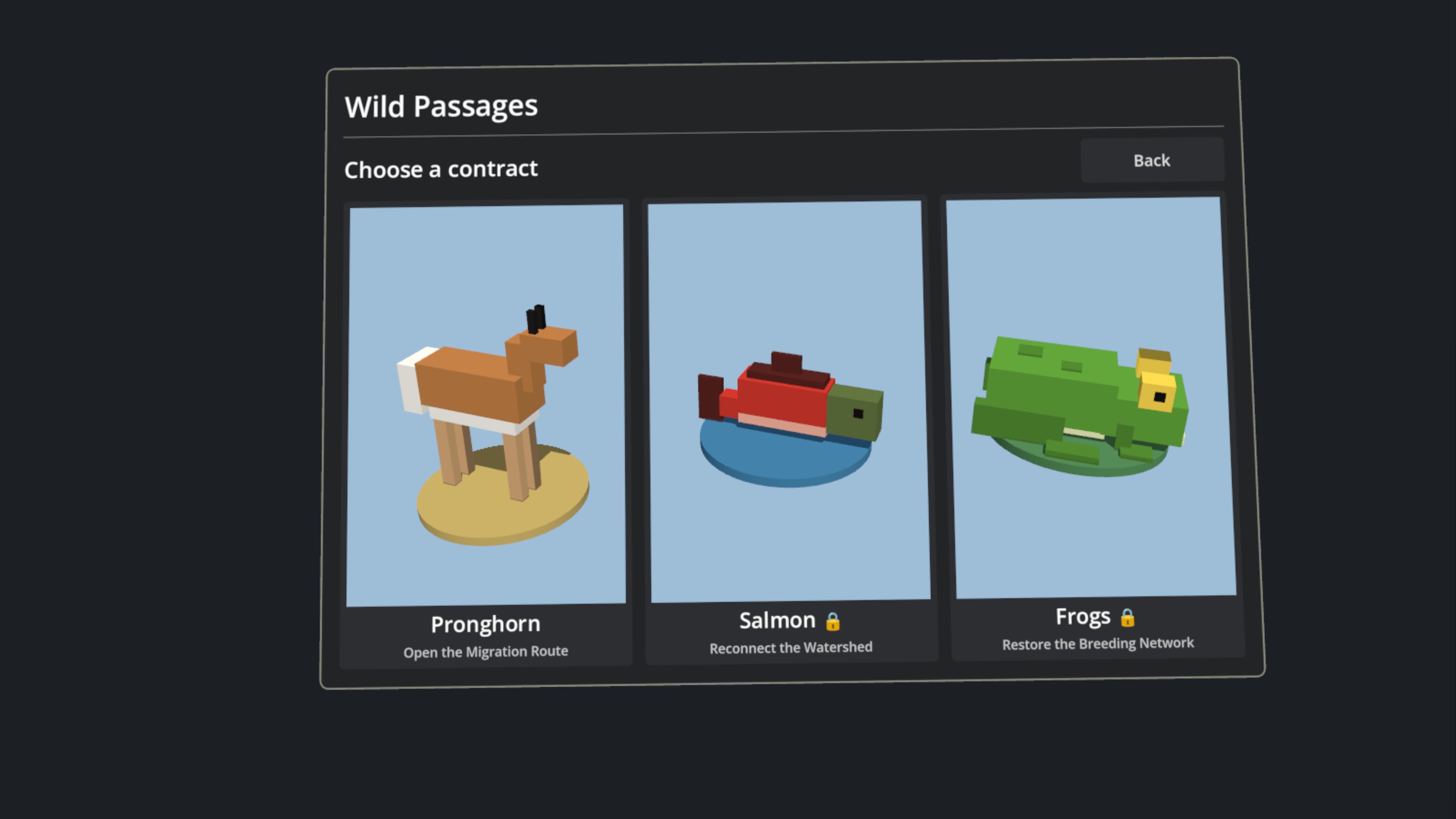
Contracts
-
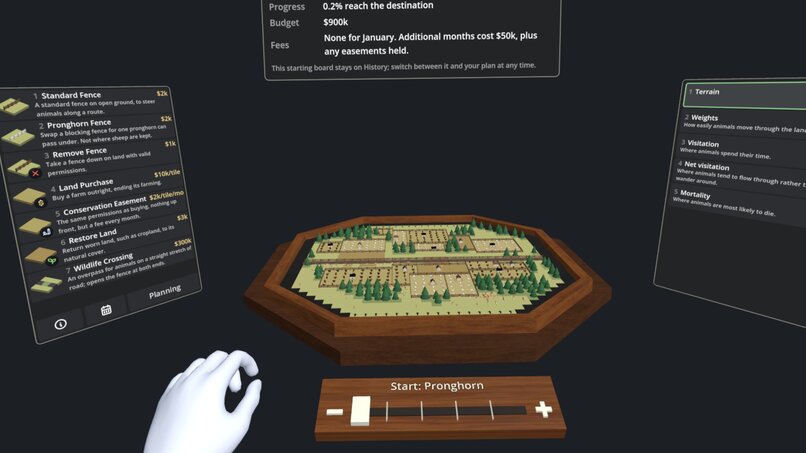
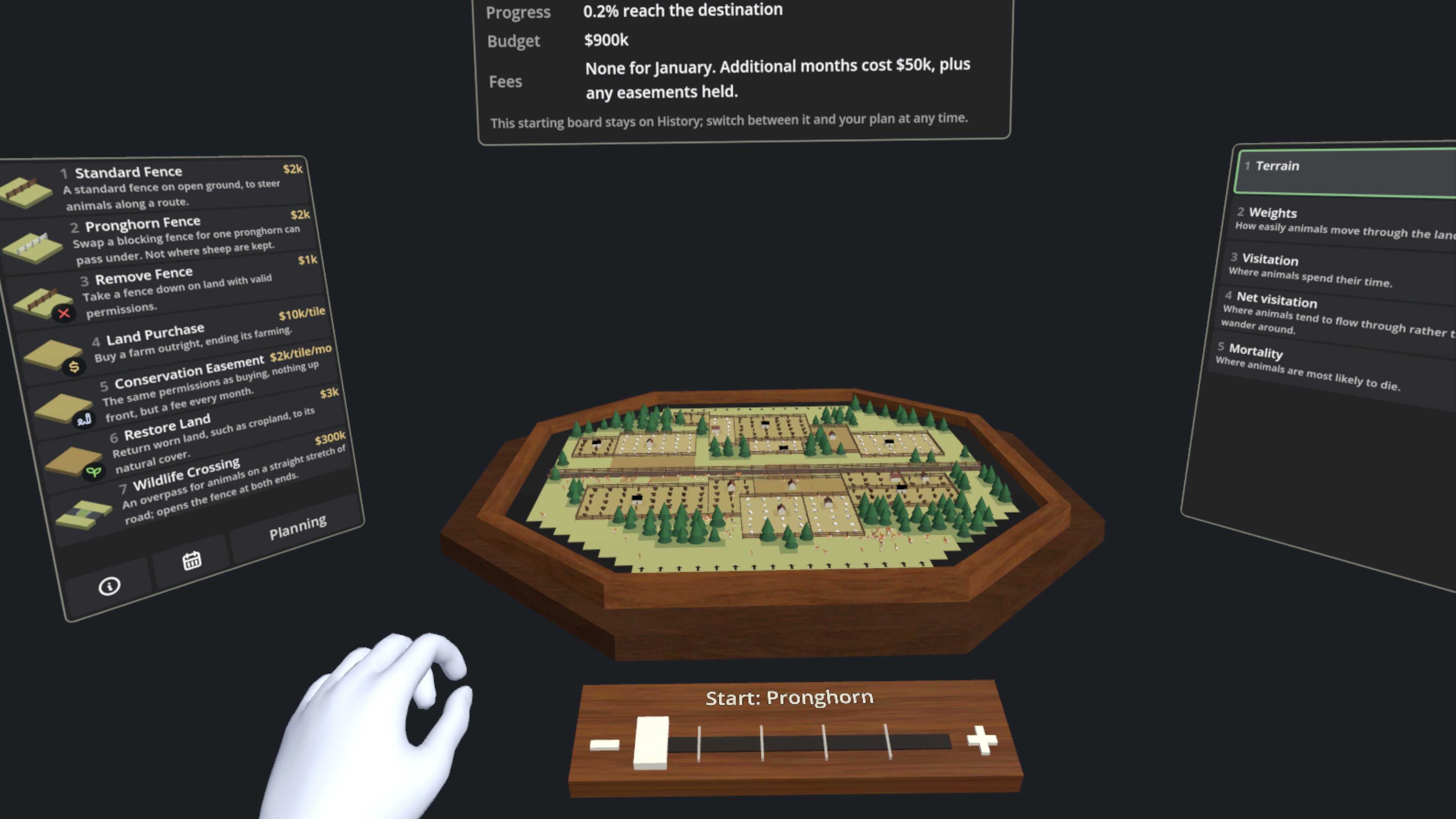
Main game
-
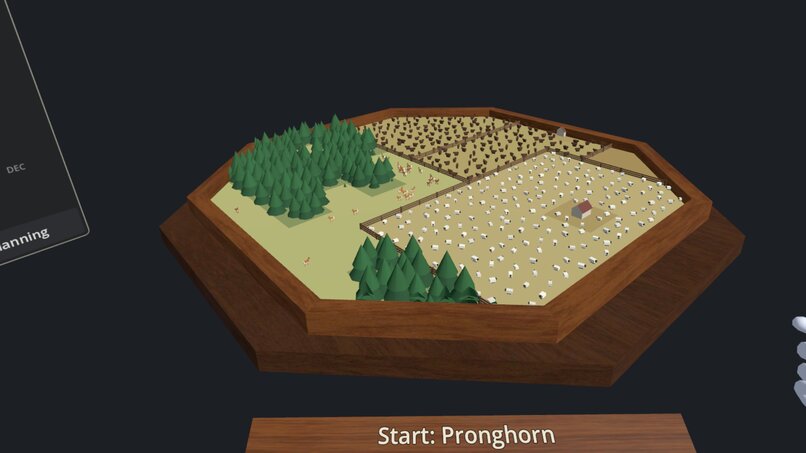
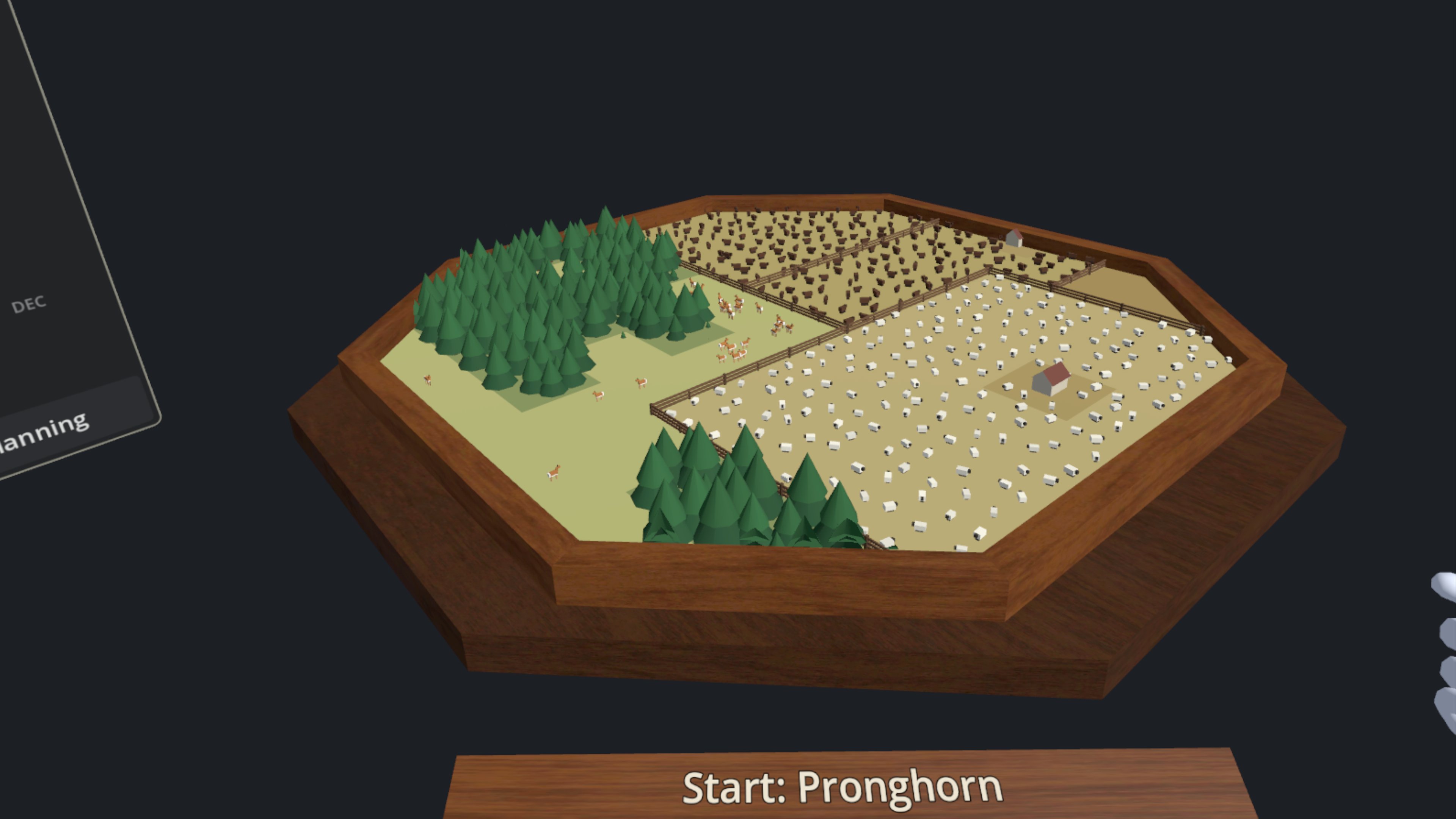
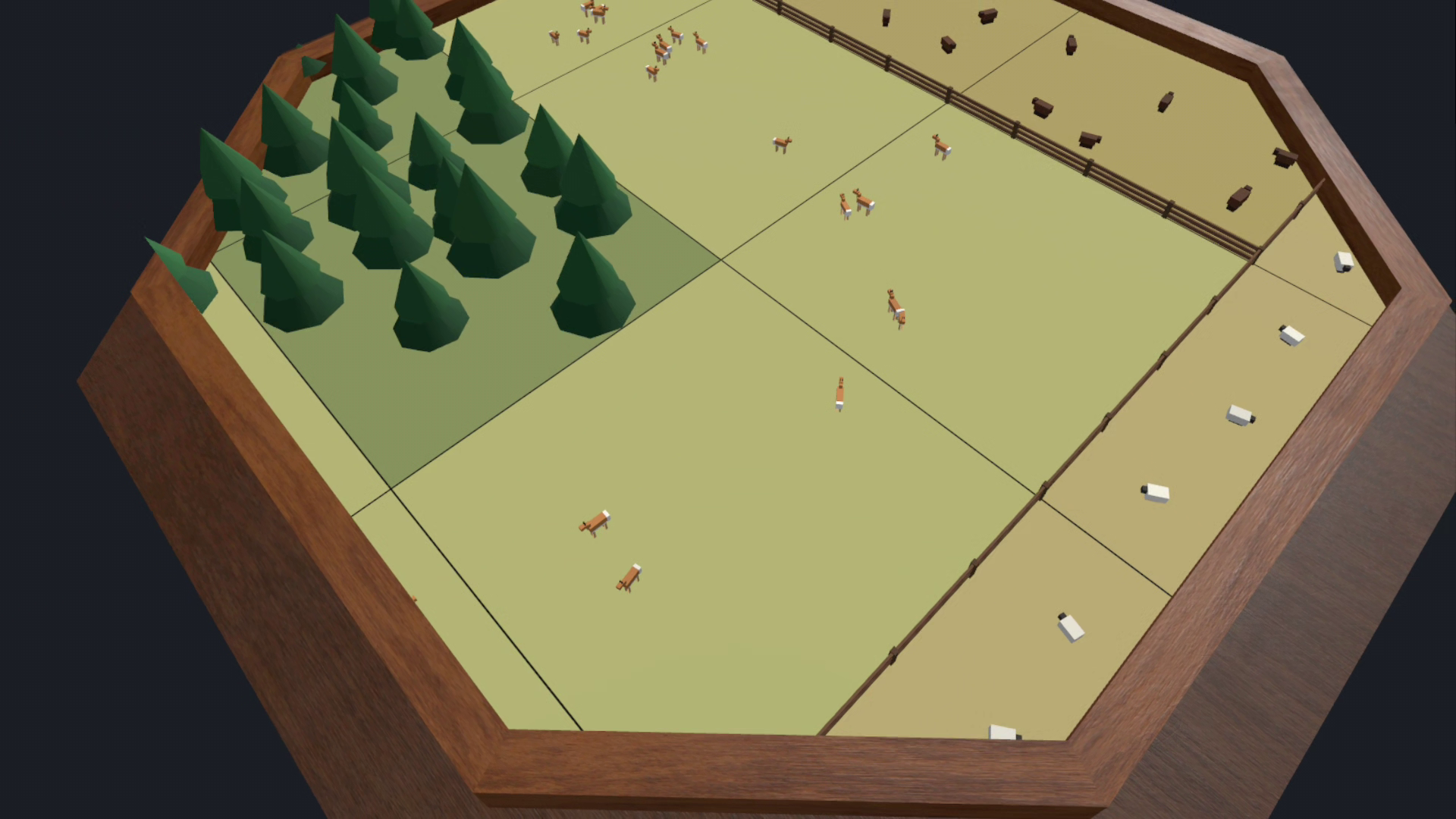
Pronghorn closeup
-
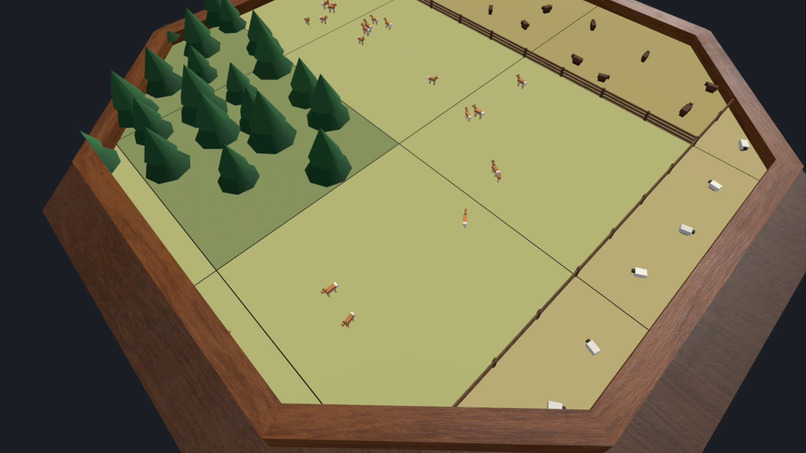
Super close-up
-
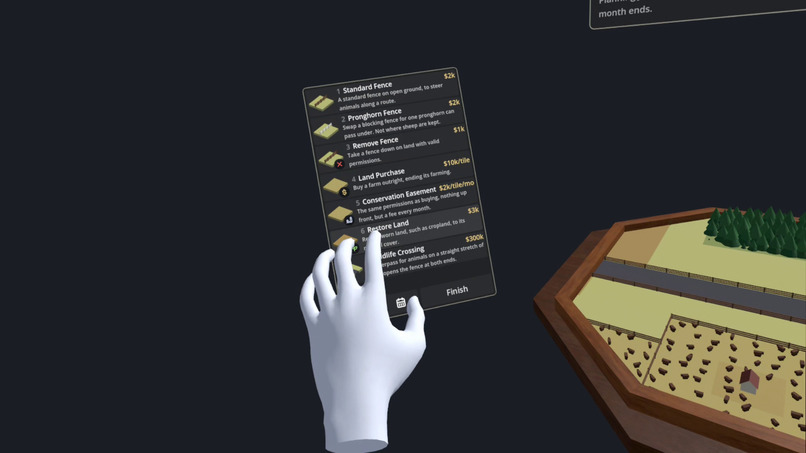
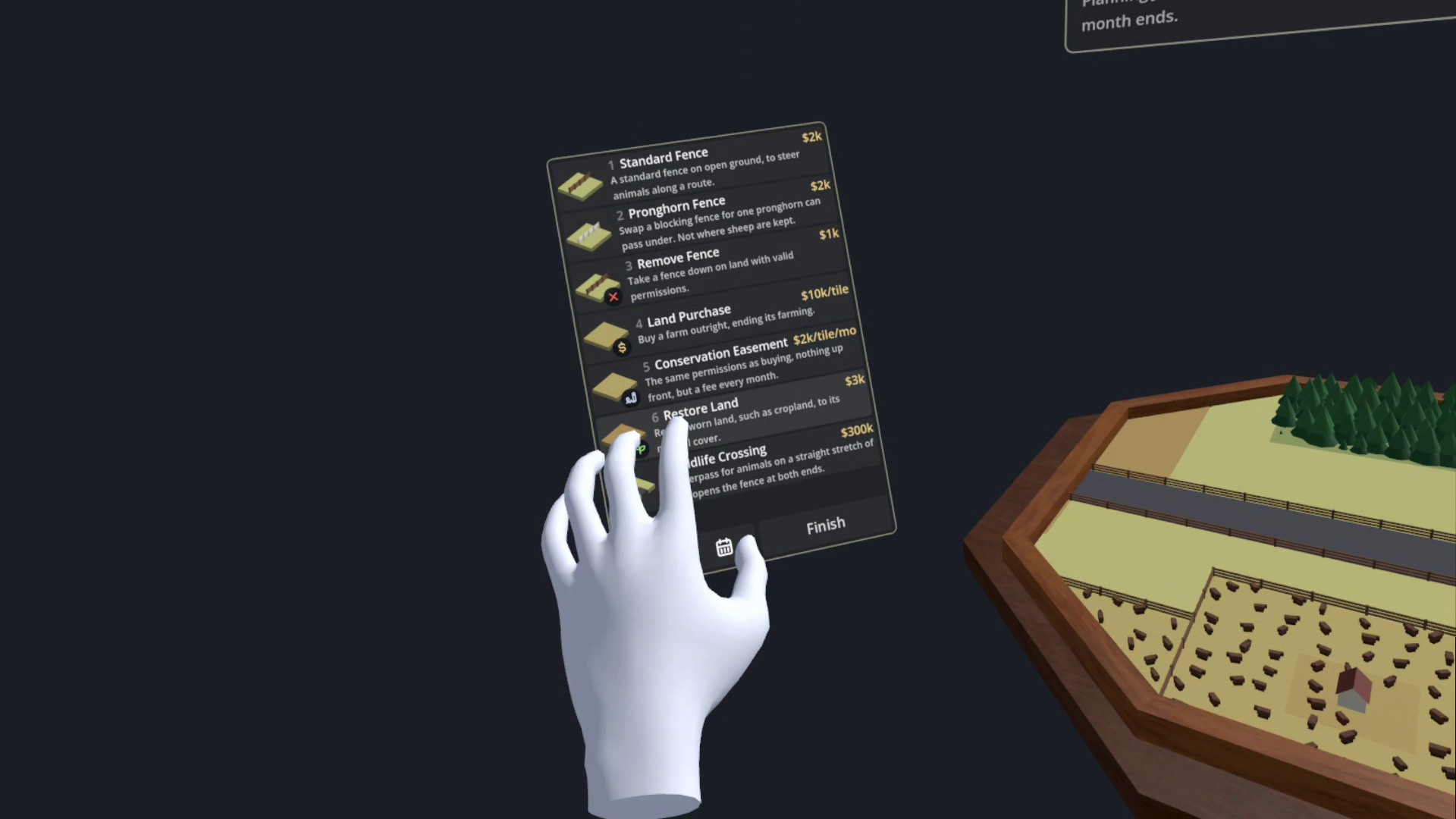
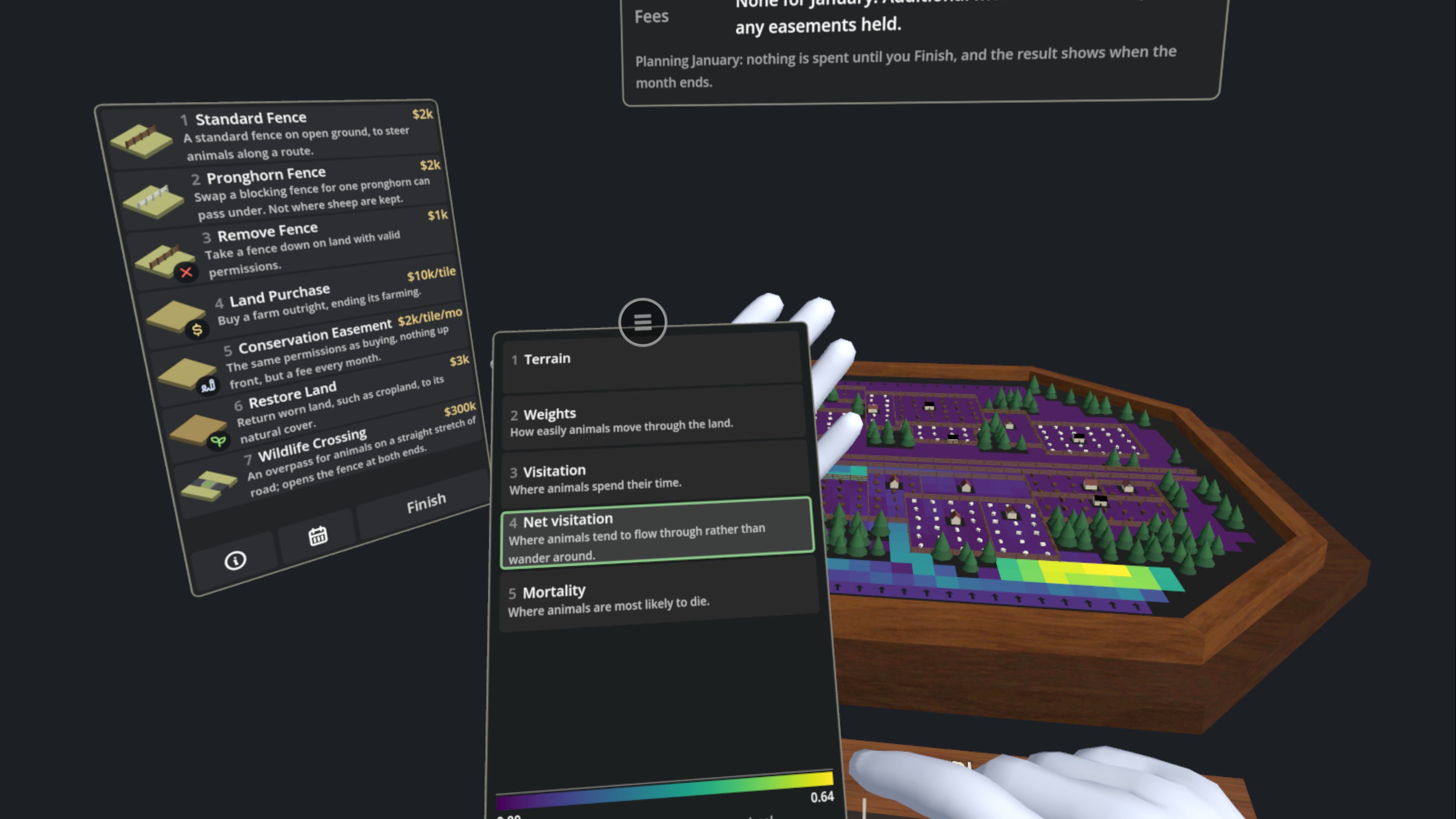
Menu for tools to shape the landscape
-
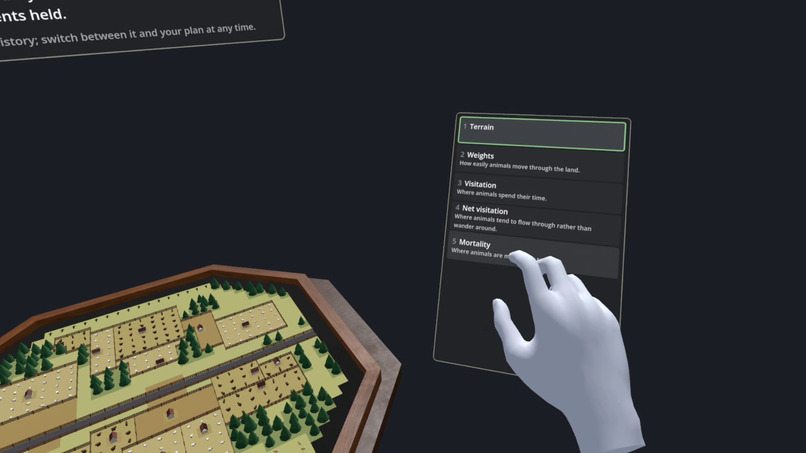
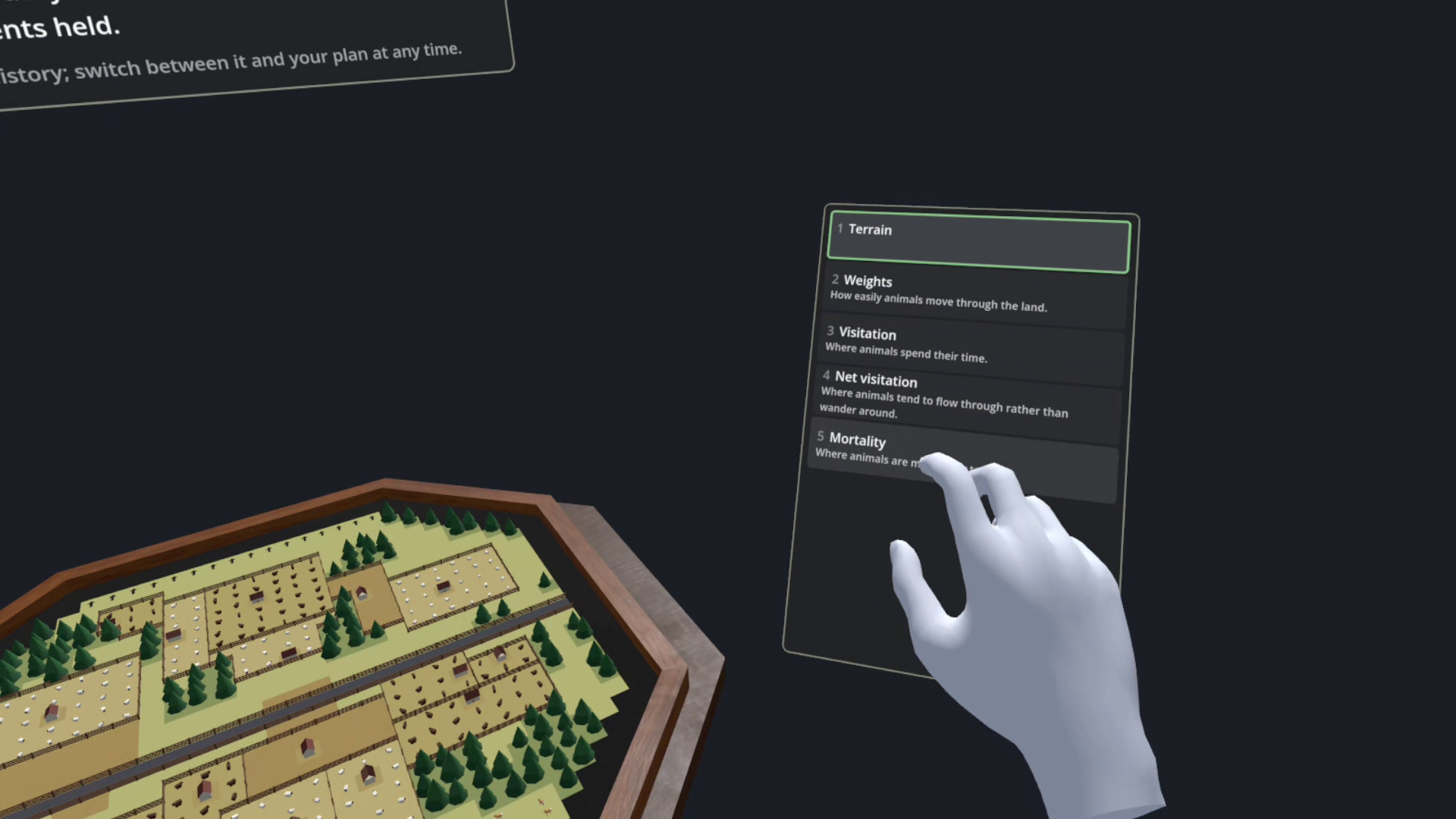
Menu for changing the view between terrain and the connectivity model outputs
-
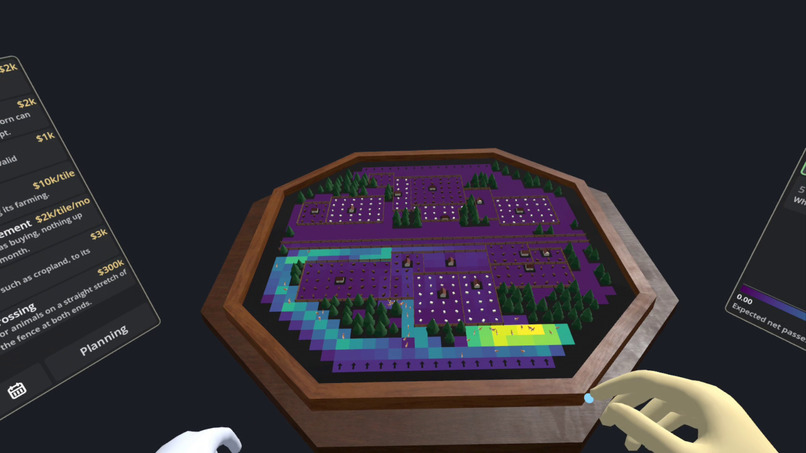
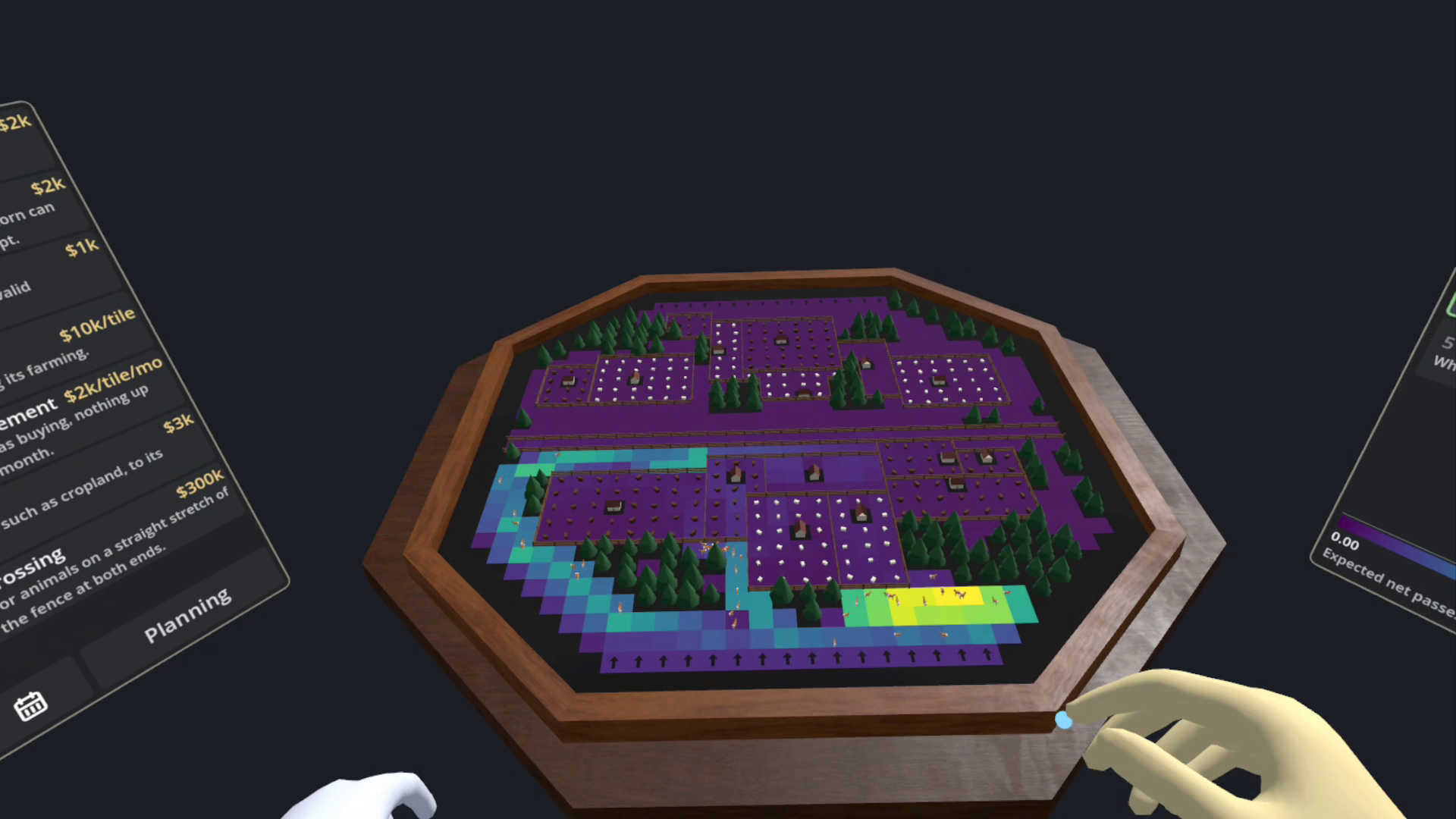
One of the connectivity model outputs highlighting how movement tends to "flow"
-
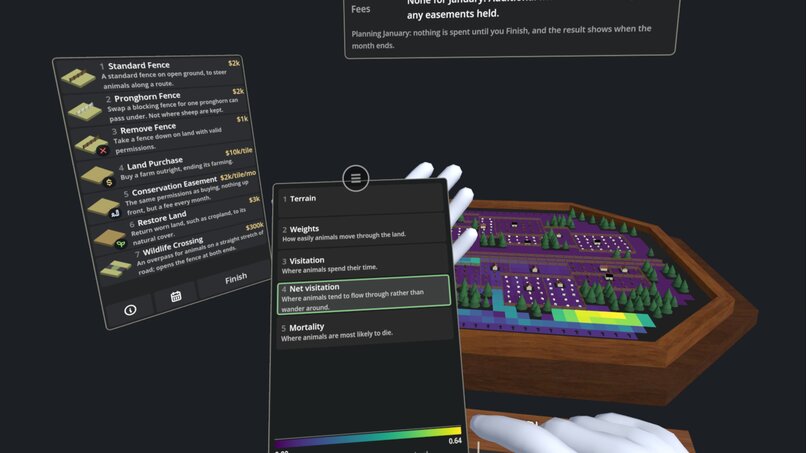
Hand menu
-
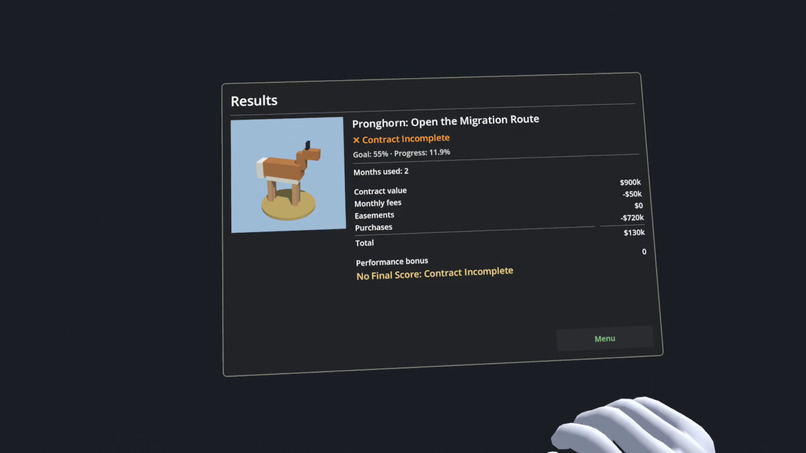
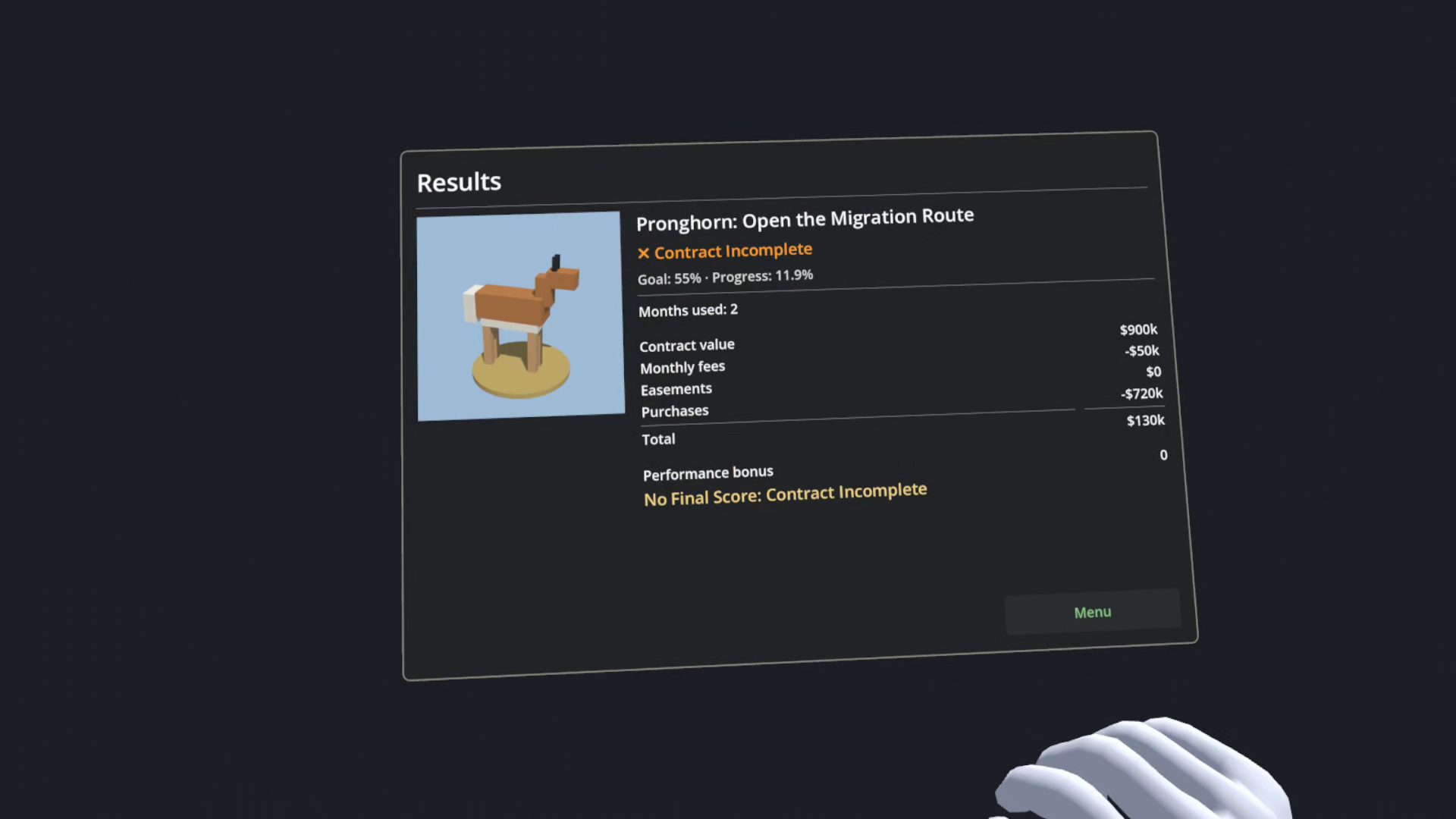
Results page
Inspiration
As a wildlife ecologist and software developer, I've spent several years translating mathematical models of wildlife movement and landscape connectivity into software for conservation research. Although these models are valuable scientific tools, the underlying concepts can be abstract and difficult to communicate.
I've also been exploring ways to make these ideas more intuitive through visualizations and animations. The Meta VR Start Developer Competition inspired me to take this a step further by turning the science into a game.
Many conservation problems already resemble puzzles. They involve finding ways to reconnect habitats, protect wildlife, and balance competing priorities with limited resources. I realized that the same reasoning ecologists use to solve these problems could form the foundation of an engaging game.
What it does
Wild Passages is a VR puzzle and strategy game where players take on the role of a wildlife conservation company, working to reconnect fragmented habitats and help wildlife move safely across landscapes.
Each conservation contract presents a landscape, a budget, and specific objectives to accomplish within 12 months. Players must decide how to spend their resources, whether purchasing land, restoring habitat, removing barriers, or building wildlife crossings.
What makes Wild Passages different is that wildlife movement is driven by a mathematical model used in real conservation science rather than scripted paths. Animals respond to the landscape based on habitat preferences, movement behavior, and environmental barriers.
Players can observe how animals move, visualize connectivity patterns, identify problem areas, and see how their conservation decisions change the landscape.
The goal is to make real ecological concepts accessible through experimentation and problem-solving, without requiring players to have a background in ecology.
How I built it
I developed Wild Passages independently using the Godot game engine, targeting the Meta Quest platform.
The scientific foundation comes from samc (Spatial Absorbing Markov Chains), an open-source research tool I develop for modeling animal movement and landscape connectivity.
I adapted concepts from this research into an interactive game environment, combining probabilistic movement models with VR visualizations and conservation-focused gameplay.
The project also involved designing immersive interactions that allow players to explore and manipulate landscapes directly, including touch, gaze-based controls, and voice commands.
Throughout development, I focused on balancing scientific realism, computational performance, and intuitive gameplay.
Challenges I ran into
The biggest challenge was translating complex scientific concepts into gameplay that is both understandable and enjoyable.
Scientific connectivity models can produce enormous amounts of information, but most of it isn't immediately meaningful to someone unfamiliar with the field. I had to think carefully about how to represent that information visually and give players useful feedback without overwhelming them.
Performance was another challenge. Simulating wildlife movement and visualizing the results can be computationally demanding, particularly on standalone VR hardware.
Designing interactions for VR also required a different approach from traditional desktop software. I wanted players to interact naturally with the landscape rather than navigate complicated menus or controls.
Finally, developing the project independently meant balancing programming, game design, visual presentation, and scientific accuracy within a limited development period.
Accomplishments that I'm proud of
My biggest accomplishment is bringing together two areas of my work that have generally been separate: scientific research software and interactive game development. I've had many ideas in the past about creating games with conservation concepts, but this is the first time I've committed to making it happen.
Rather than simply building a game inspired by conservation, I wanted the underlying science to be an essential part of the gameplay. The same mathematical ideas used to investigate real-world wildlife connectivity now help create challenges that players can explore and solve themselves.
I'm proud of creating a VR experience that presents ecological problems in a way that is visual, interactive, and approachable. It's an experience that I think is valuable for anyone ranging from general players to students and professionals in conservation.
Most importantly, Wild Passages demonstrates how scientific modeling can become a tool for education and engagement, not just research.
What I learned
Developing Wild Passages taught me a great deal about VR development, interaction design, performance optimization, and the process of turning an idea into a playable experience. It was also my first foray into voice recognition.
In research, we often focus on producing accurate models and interpreting their results. Game development requires thinking about how people explore those results, what motivates them to experiment, and how they learn from their decisions.
I learned that scientific accuracy and engaging gameplay don't necessarily have to compete. When designed carefully, the science itself can create meaningful challenges and rewarding experiences.
What's next for Wild Passages
My goal is to continue expanding Wild Passages into a more complete conservation strategy game. Its design is structurally setup in a way that it should be easy to incorporate more "roguelite" elements for replayability.
Future development will focus on adding more landscapes, wildlife species, conservation challenges, and management tools. I also want to explore additional ecological processes and create scenarios that introduce players to increasingly complex conservation decisions.
Ultimately, I hope Wild Passages can serve both as an entertaining game and as an educational tool that helps students, conservation professionals, and the general public better understand wildlife movement and the importance of connected landscapes.
Built With
- c++
- eigen
- gdextension
- gdscript
- godot
- godot-cpp
- godot-openxr-vendors
- kaldi
- meta-quest
- openxr
- samc
- vosk

