-
-
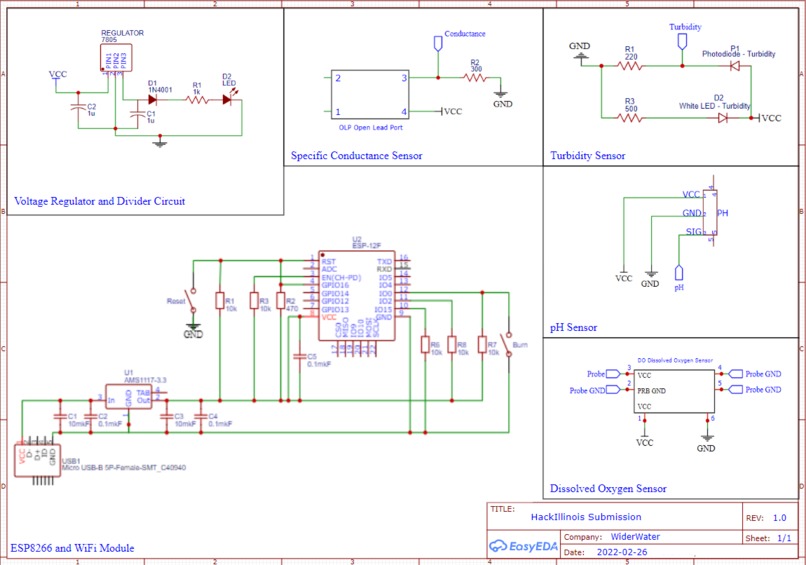
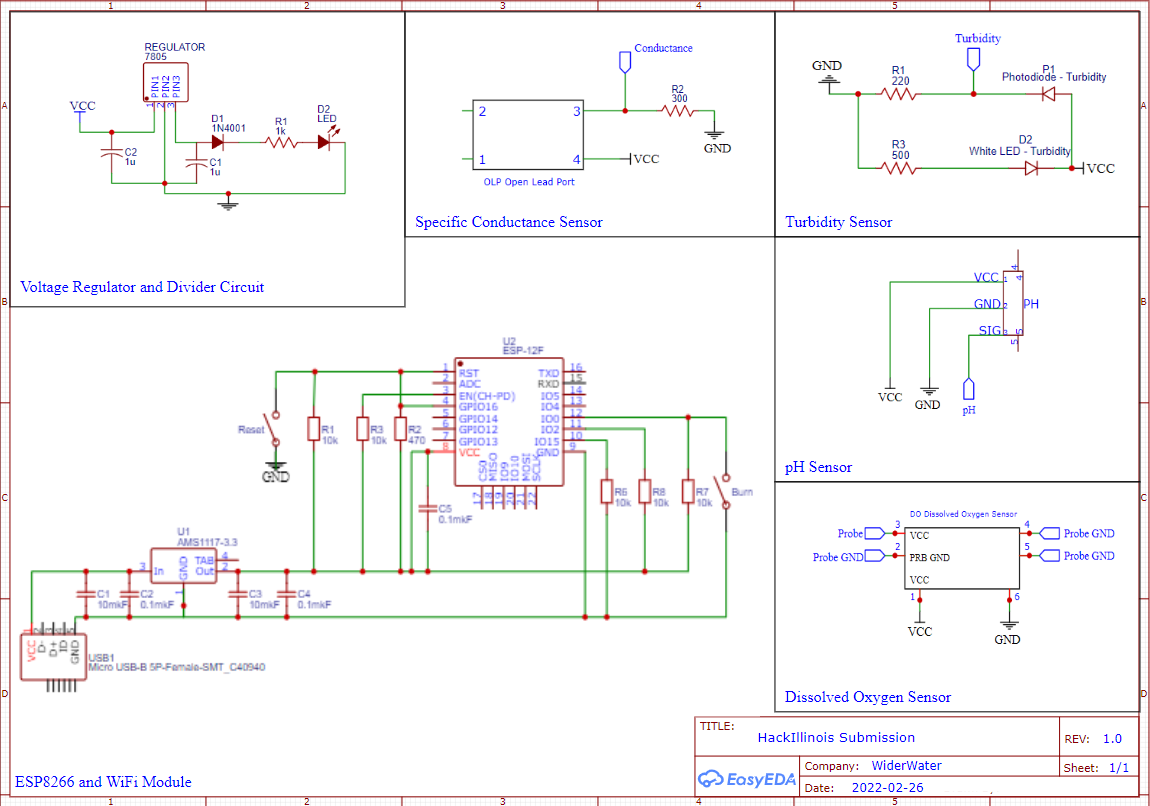
Hardware Schematic for WiderWater
-
Slide 1
-
Slide 2
-
Slide 3
-
Slide 4
Inspiration
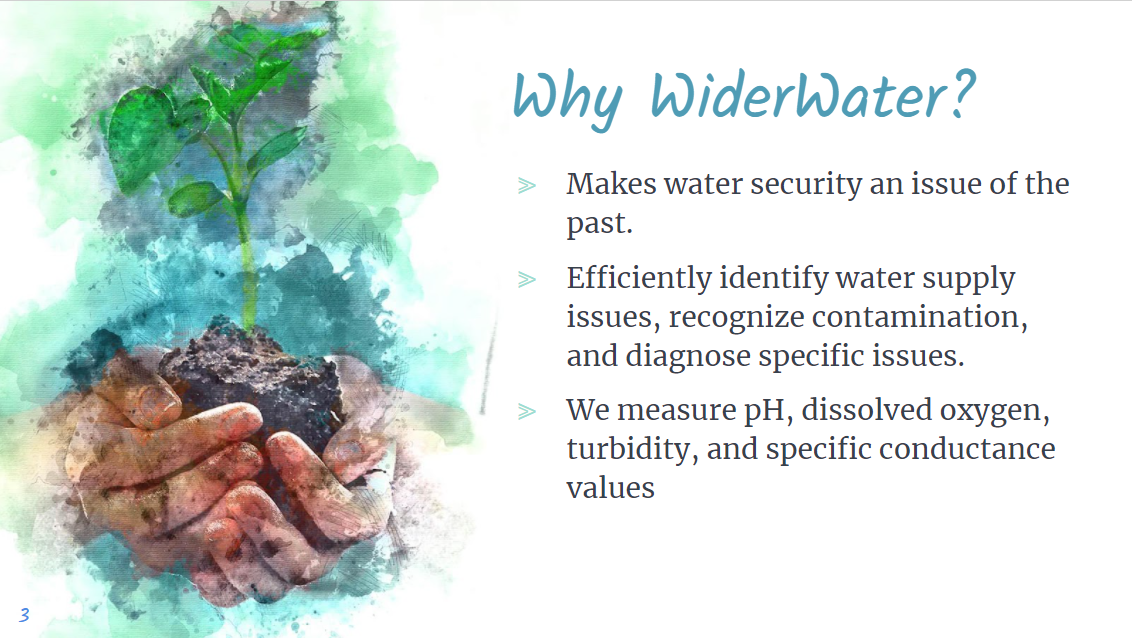
After looking over the tracks in this hackathon, we wanted to create a hack that could have a large impact on the suburbs, cities and other regions of the world. As I was trying to find a universal problem, I saw the refrigerator light turn orange, indicating that the water filtration system needed to be replaced. Using our knowledge of basic sensor technology design, we have developed hardware and software solutions that may help solve individuals' water quality problems. Water is the center of life on earth, but water security still plagues many communities. Therefore, we decided to develop a system that makes water safety a problem of the past.
What it does
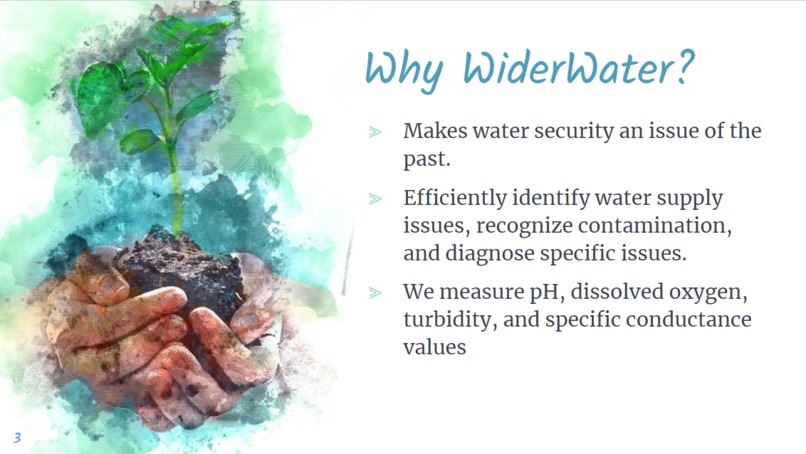
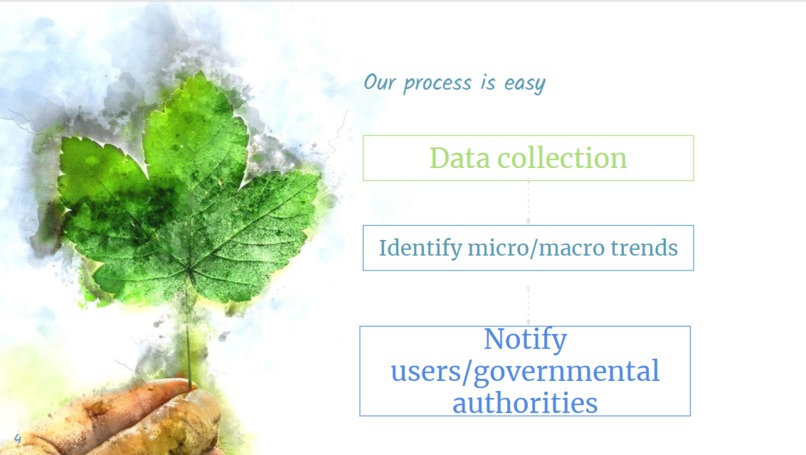
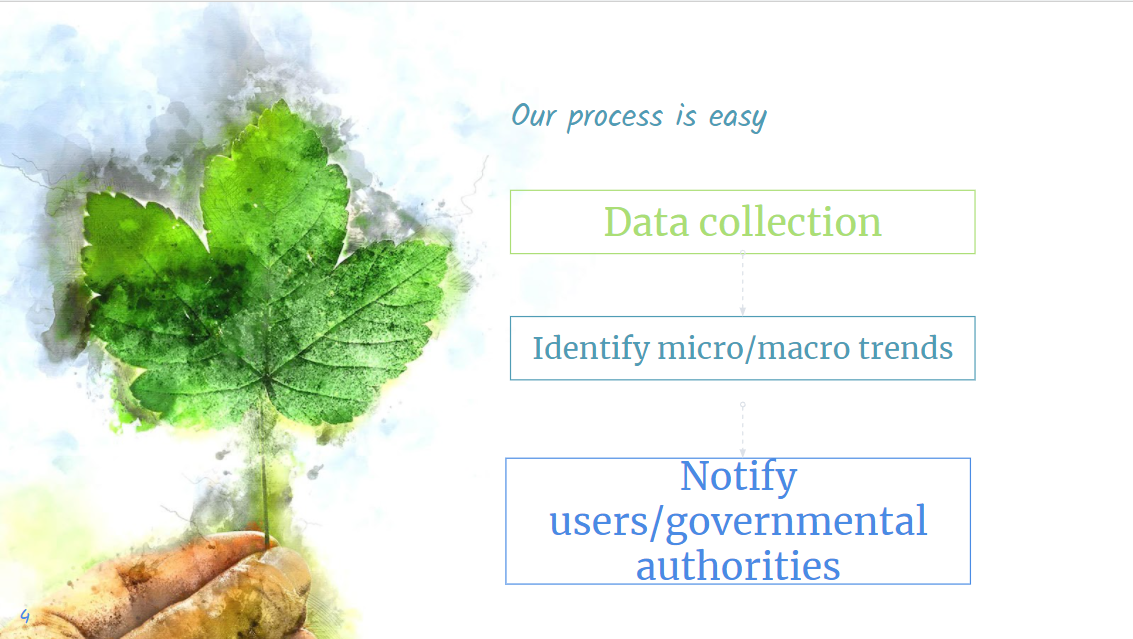
WiderWater collects data from households in local communities, stores it in a database, and then provides an accurate analysis of micro and macro water health trends. For example, if a particular household's water quality is adversely changing relative to the rest of the neighborhood and town, we can identify a localized source of water contamination (e.g., pipe rusting, calcium deposits, etc.). However, suppose we detect that an entire community's water quality is trending towards poor values. In that case, we can quickly take action and notify the appropriate environmental protection governmental bodies to identify bulk sources of contamination (e.g., fertilizer runoff from industrial farms). We first built schematics for a small, cost-effective device that measures pH, dissolved oxygen, turbidity, and specific conductance. This device can be deployed in a home's central water supply unit, and its sole responsibility is to record data and deposit it into a user-friendly website. The website allows users to create personal accounts to access data specific to their region. The sensors then send data via a C++ program (not yet implemented) to a MySQL database. The data received from each household would then be analyzed to efficiently identify water supply problems (such as pipe deterioration), detect pollution, and diagnose specific issues in the plumbing of individual homes. Since all of these data points are stored in a MySQL server, they can be accessed for long-term trend analysis. As the number of users grows, the program will be able to better analyze the causes of water safety issues and provide local governments with efficient tools for troubleshooting local issues.
How we built it
Front-end: The core user interface was developed using sleek designs in HTML5, CSS, JavaScript which you can see screenshots of above. The user interface has an active user and new user sign on page that interfaces with our database to update user demographic information.
Back-end: (Not implemented) The Python script for data analysis does a couple of key things, but the two most important are 1) facilitating the interface between local scripts and the active MongoDB server through PyMongo and 2) conducting statistical analysis (specifically t-tests) for determining the deviation from the community mean on the various indicators.
Hardware: The hardware design was created using EasyEDA, a hardware emulator/circuit design platform. Amongst the many components, we have voltage dividers and regulators, switches, 2 custom-built sensors, 2 prebuilt sensors, WiFi module, serial communication through a microcontroller to the connected computer/laptop, and on-boarded ESP8266 microcontroller addressing of the various inputs.
Challenges we ran into
Our biggest challenge came with developing the front-end of the website as majority of the team was not experienced with HTML and CSS. However, we learned a lot about the syntax and the vast amount of things you can accomplish with it.
Accomplishments that we're proud of
We are very proud of how fast we were able to put together a nice-looking website and learn the basics of a new language so fast.
What we learned
We learned a lot of skills in cross-platform integration, UI design, and also hardware development/integration. The cross-platform elements of the software and hardware design took into account many considerations and required us to learn.
What's next for WiderWater
We plan on expanding the project and building the first prototype of the hardware. This would allow us to supply our website with real-time data.


Log in or sign up for Devpost to join the conversation.