-
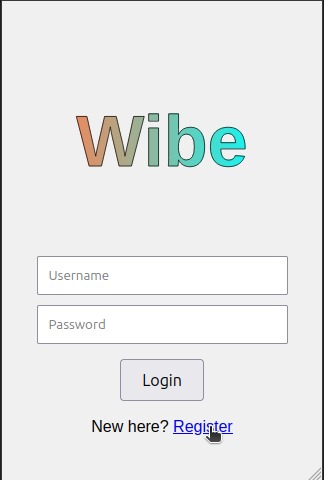
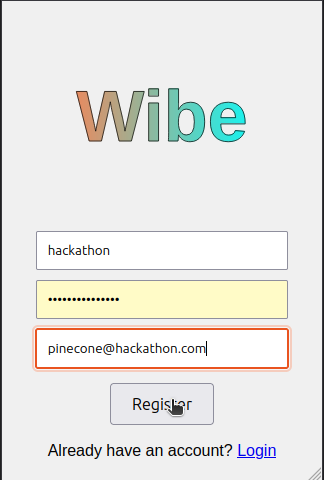
Register
-
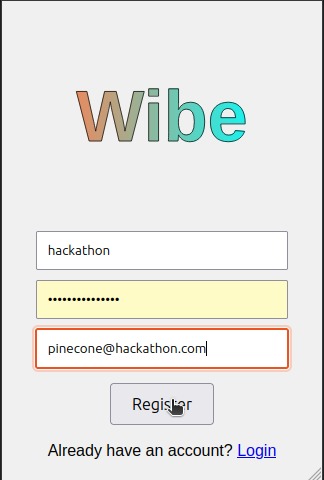
Account details
-
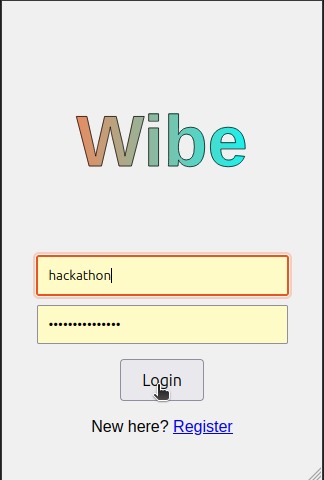
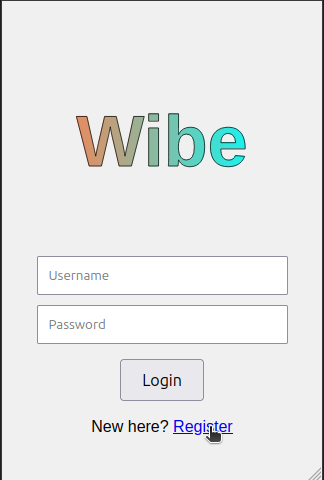
Login
-
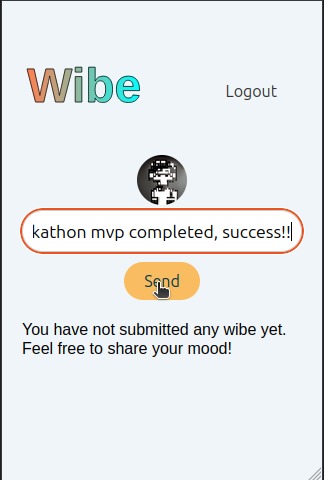
Wibe and send
-
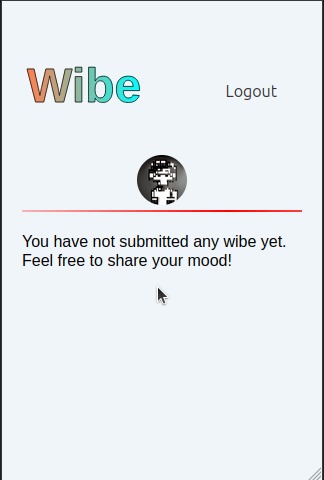
Loading...
-
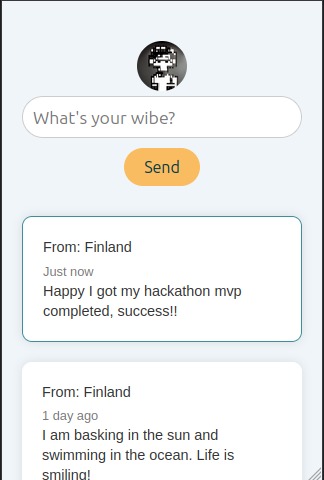
Your wibe, and you can see others with similar wibes too. Enter a new wibe to change feed.
Wibe: A Tool for Connection
Inspiration
My inspiration for Wibe stems from a desire to highlight the shared human experience and promote a sense of global unity. I observed that conventional social media platforms often foster division and comparison, and I wanted to create a tool that encourages connection, equality, and authenticity.
What it does
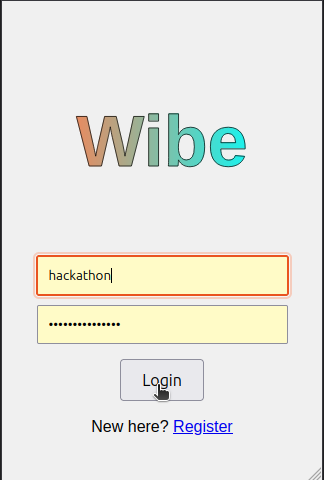
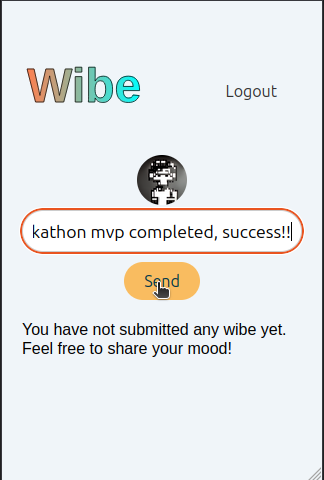
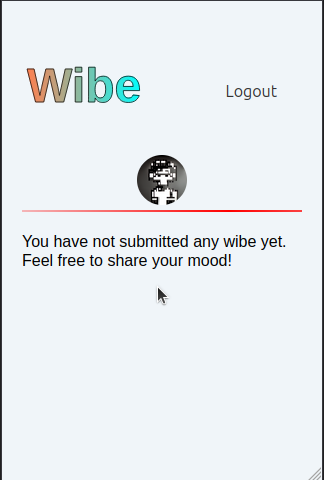
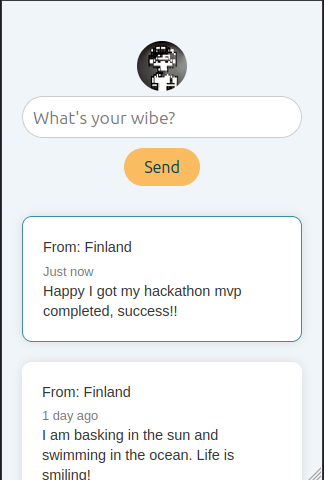
Wibe is a digital space where users worldwide can express their current moods or "wibes". Each post is tagged with the country of origin, reinforcing a sense of global interconnectedness. Wibe is a tool for building empathy and understanding.
How I built it
I leveraged Flask for the backend, creating APIs for tasks like user registration, login, and mood submissions. The frontend was crafted with HTML, CSS, and JavaScript. The Fetch API was used for making asynchronous data requests, and the user's country was obtained via the IPAPI service. I also utilized Pinecone, a vector database, to efficiently manage and query the mood data and openAI API to create the mood vectors.
Challenges I ran into
The most significant challenge was integrating Pinecone and PostgreSQL to work cohesively. Figuring out how to configure these two different databases, each with their characteristics, to operate together smoothly was a tough task. Furthermore, creating the mood posts with the appropriate dimensions using OpenAI presented another hurdle.
Accomplishments that I'm proud of
Successfully building Wibe as a fully-functioning web application from the ground up is an achievement I am proud of. In particular, I am jappy with the successful implementation of the country-tagging feature, which emphasizes the global nature of our shared wibes.
What I learned
This project significantly enhanced my understanding of Flask, front-end technologies, and Pinecone. I learned to manage application state during network requests and handle asynchronous requests using the Fetch API.
What's next for Wibe
My plan is to bring depth to the Wibe experience while staying true to its core value of anonymity and collective mood sharing. I'm want to introduce a feature that generates unique, abstract images from users' moods, using text-to-image technology. This would allow users to express their moods not only through words but also through visual art, adding another dimension to the Wibe experience.
I'm also contemplating the introduction of private 'rooms' for groups or teams who wish to share their collective mood. Members can post their moods in these private spaces, creating an atmosphere of shared emotional experience within the group.
In addition to these, a feature I am looking to implement is the ability for users to view their own mood history. I plan to present this in the form of a graphical dashboard, illustrating a users mood over time. This could provide users with insights into their emotional patterns, adding a personal touch to the Wibe experience.
Lastly, based on user interaction and feedback, I'm planning to fine-tune the existing mood dimensions<.
Built With
- cloudflare
- css
- digitalocean
- flask
- github
- html
- ipapi
- javascript
- nginx
- openai
- pinecone
- postgresql
- python


Log in or sign up for Devpost to join the conversation.