-
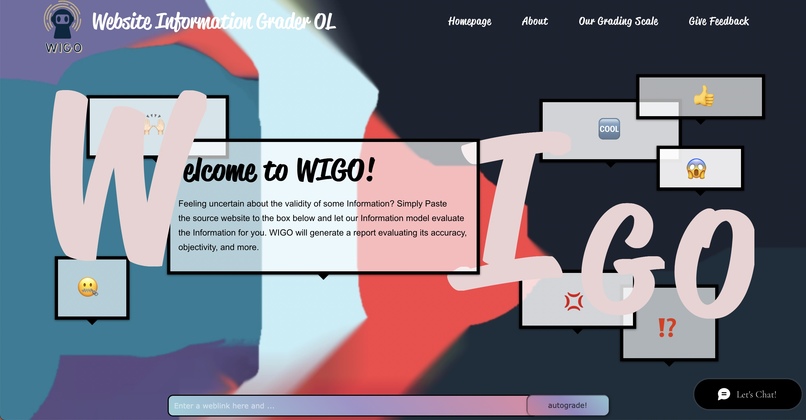
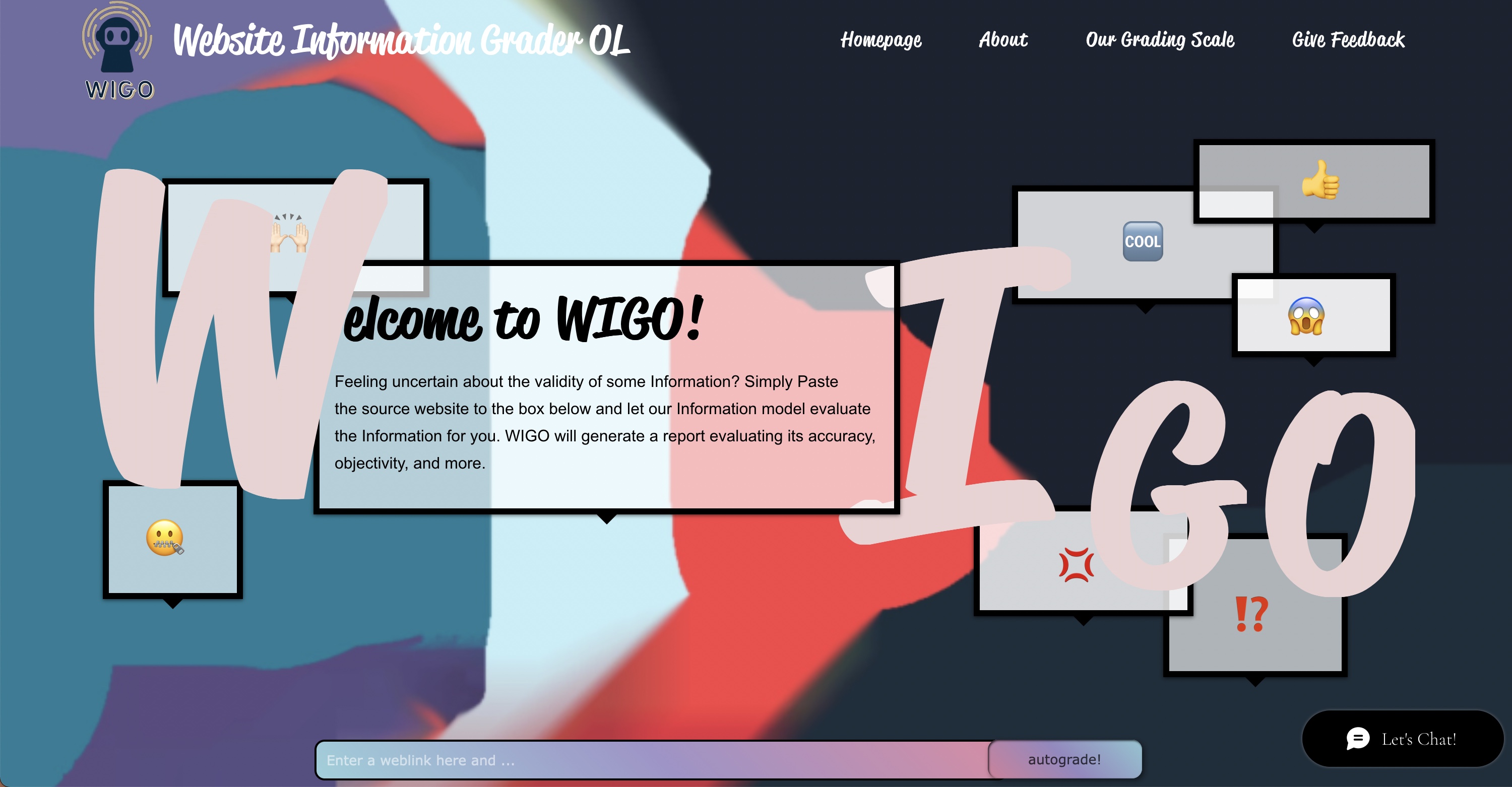
User Interface prompting for weblink
-
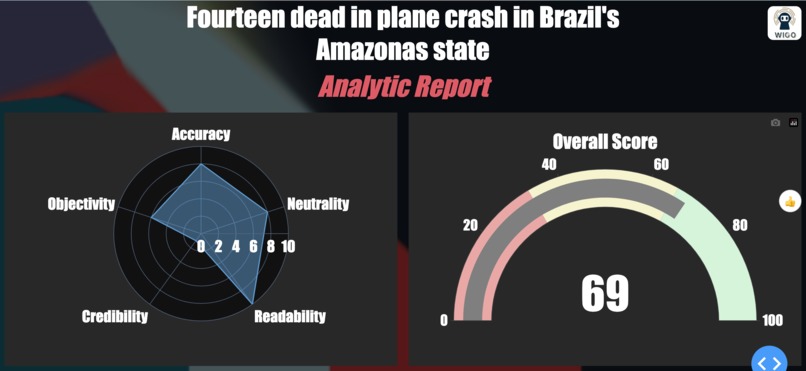
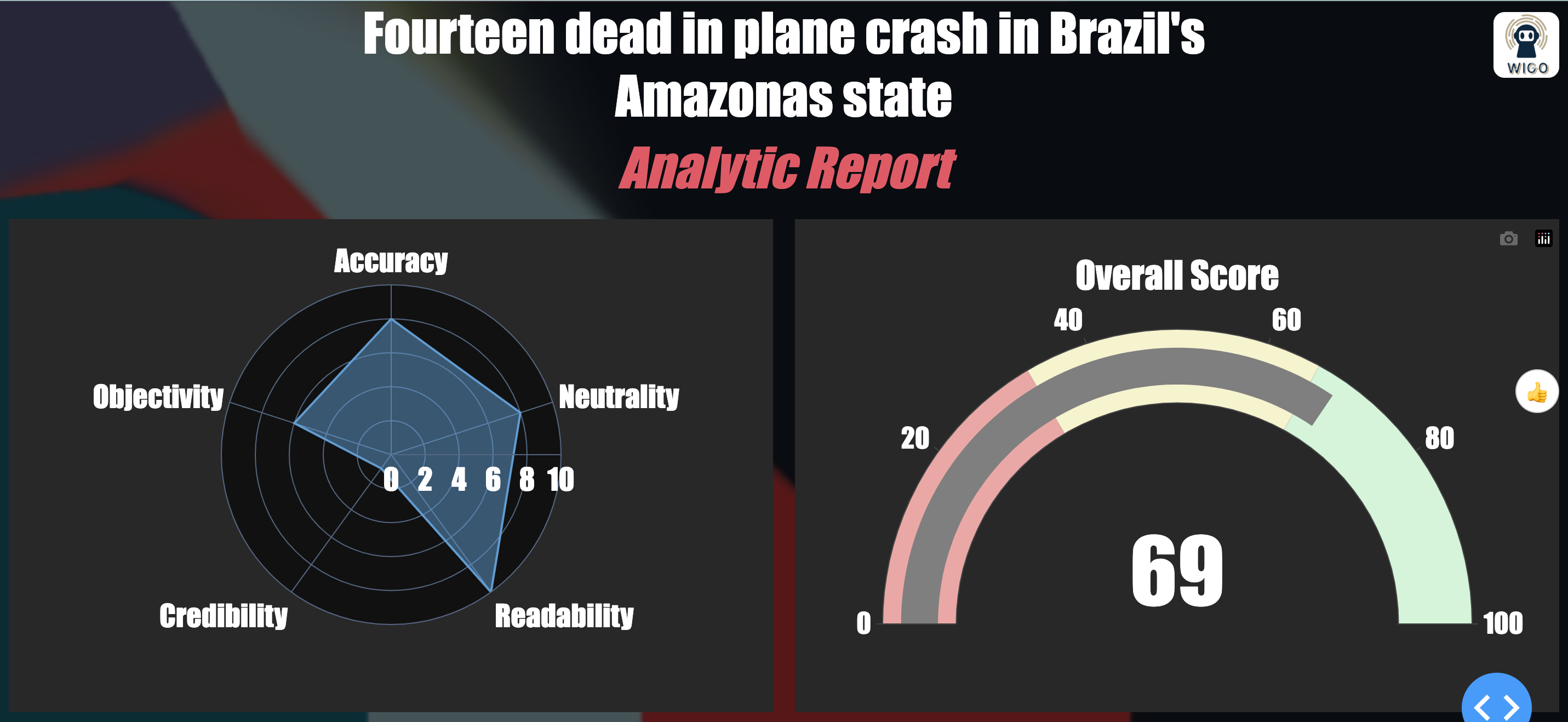
Sample 'Graph' Widget
-
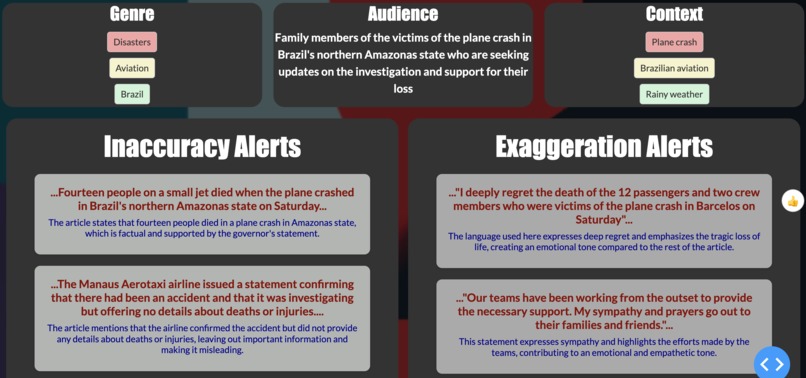
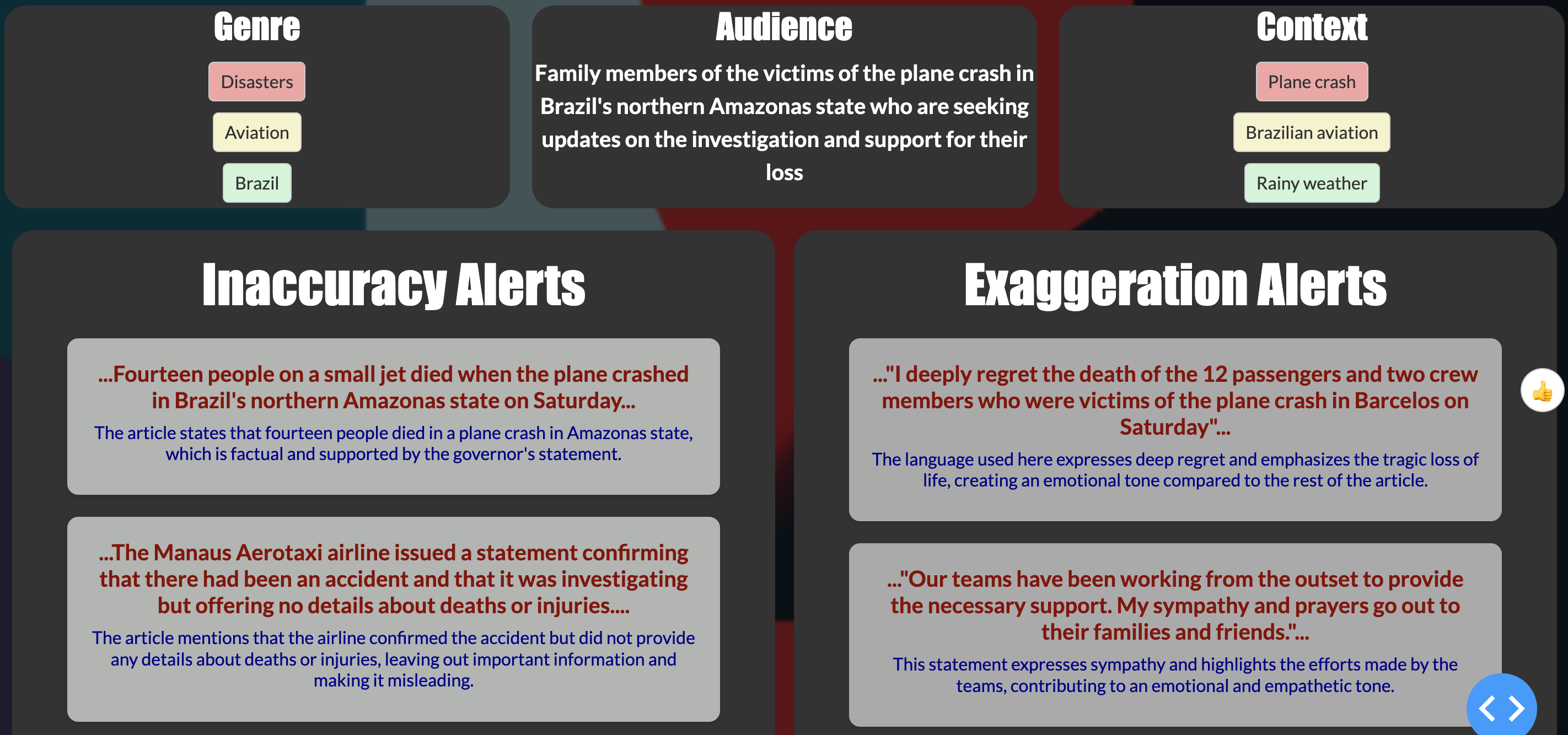
Sample 'Text' Widget
-
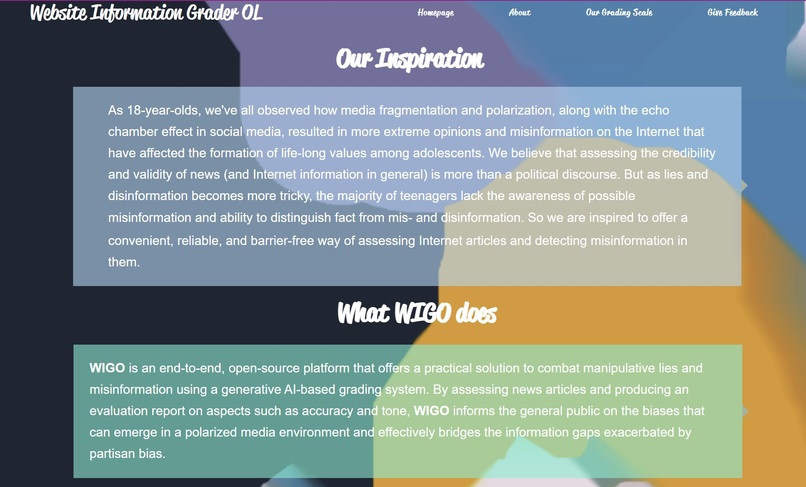
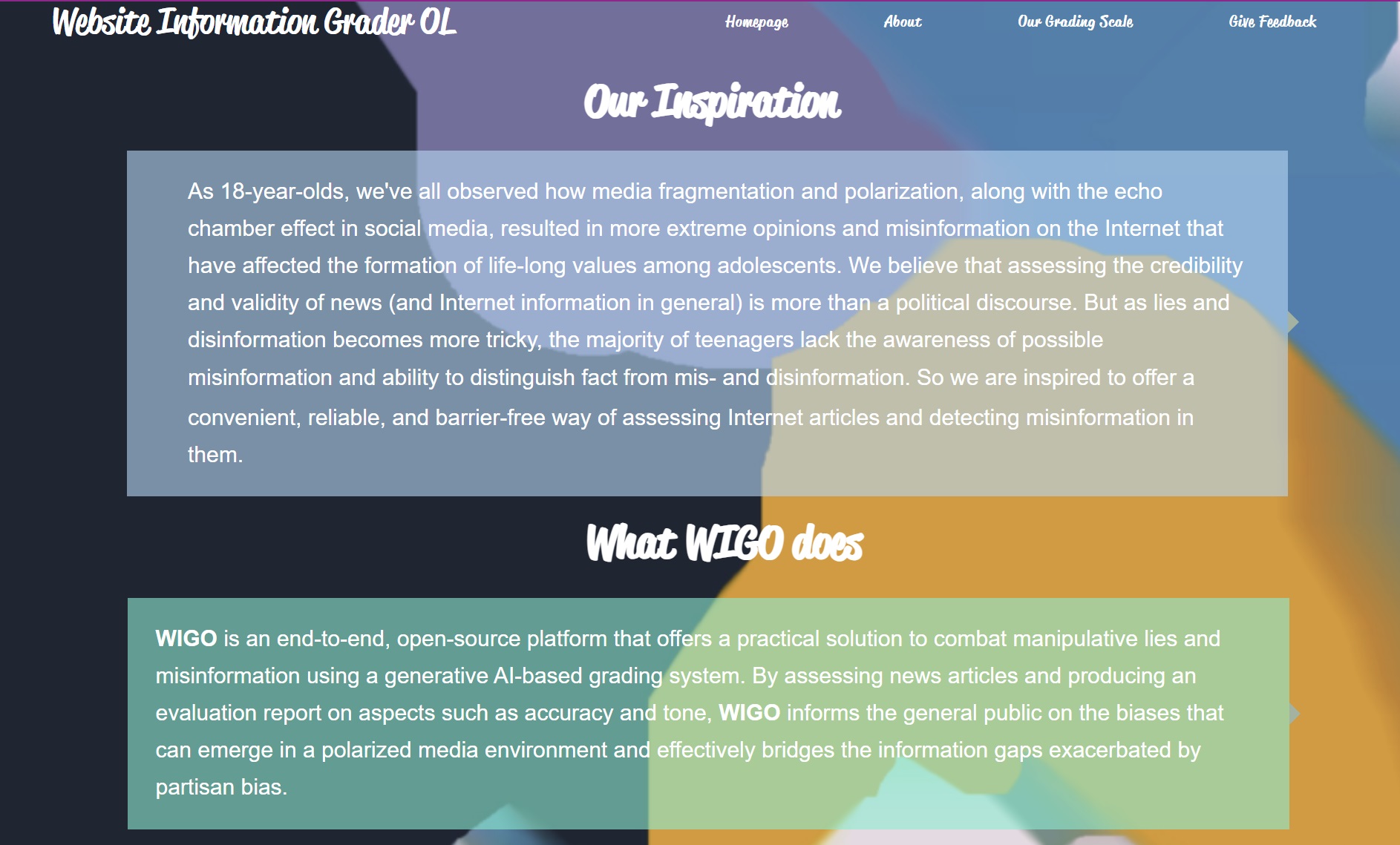
WIGO 'About' Section
-
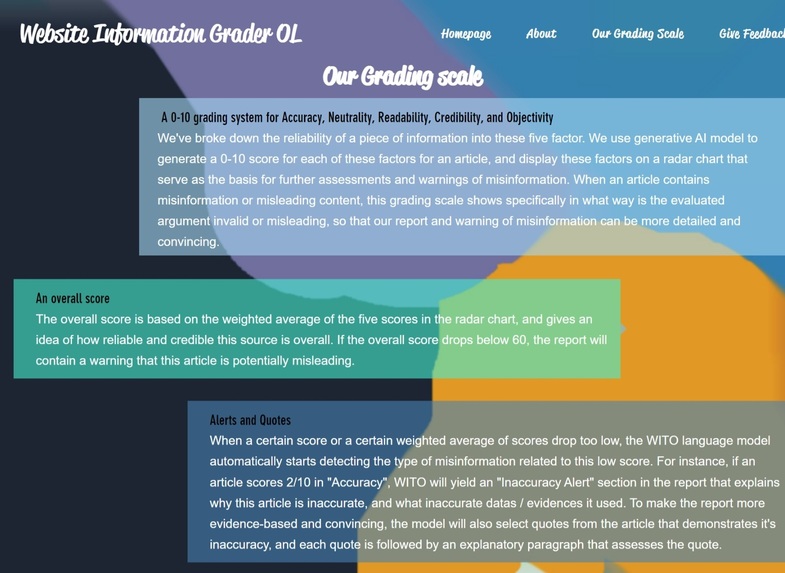
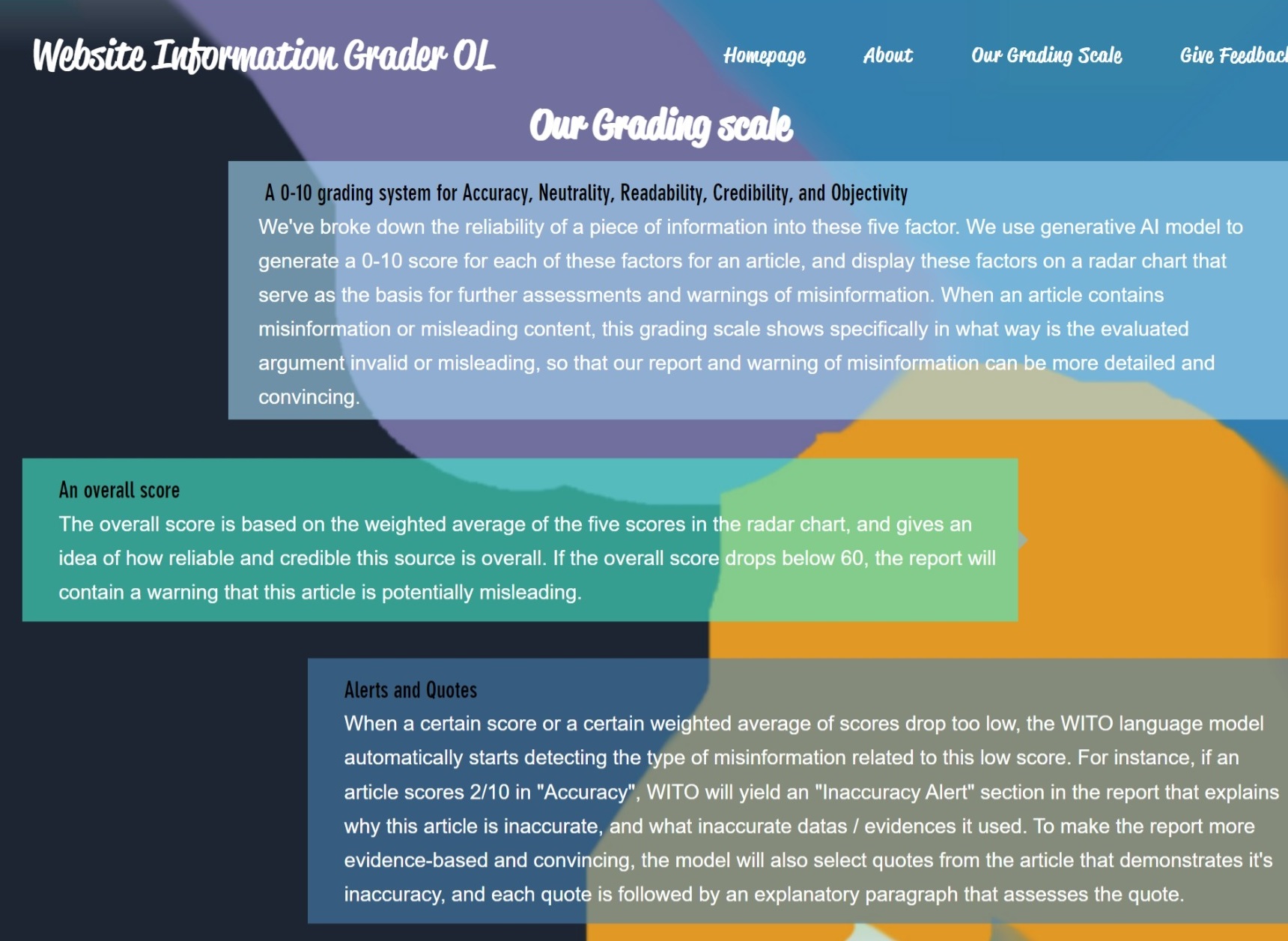
WIGO 'Grading Scale' Section
-
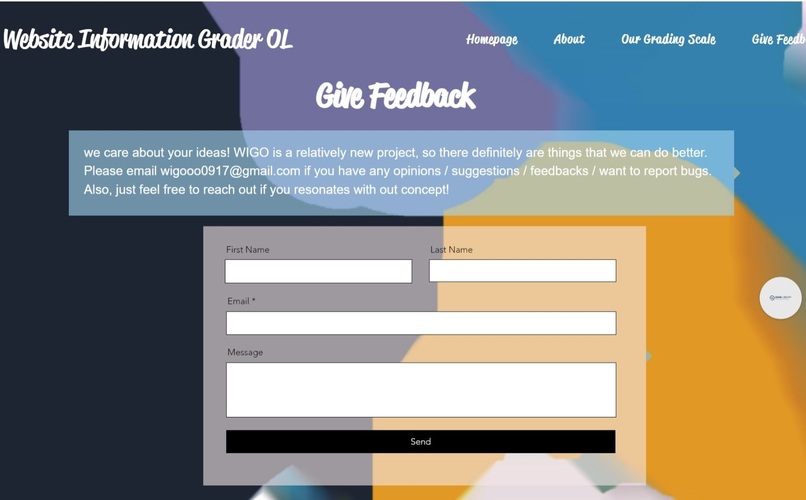
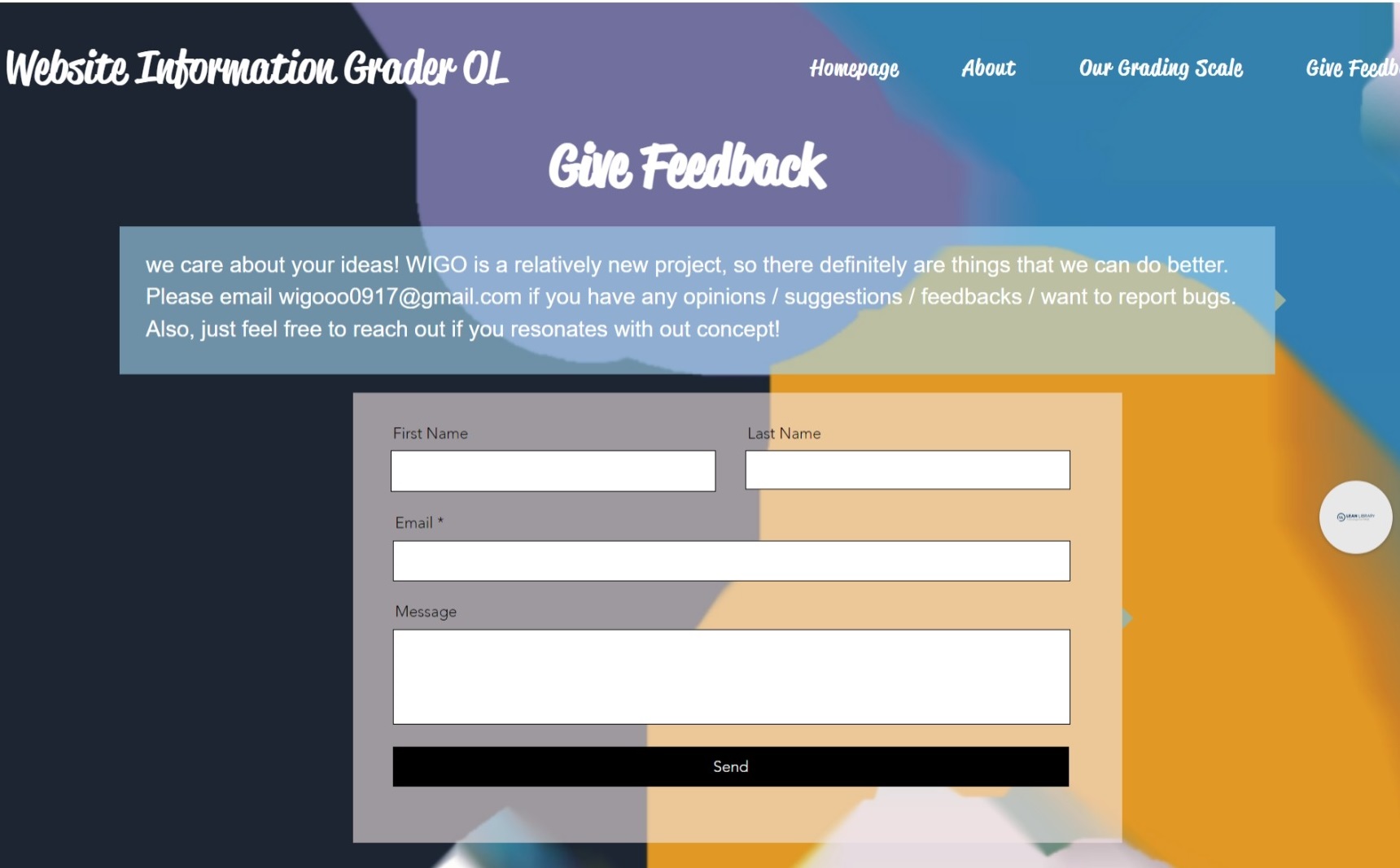
WIGO 'Feedback' Section
-
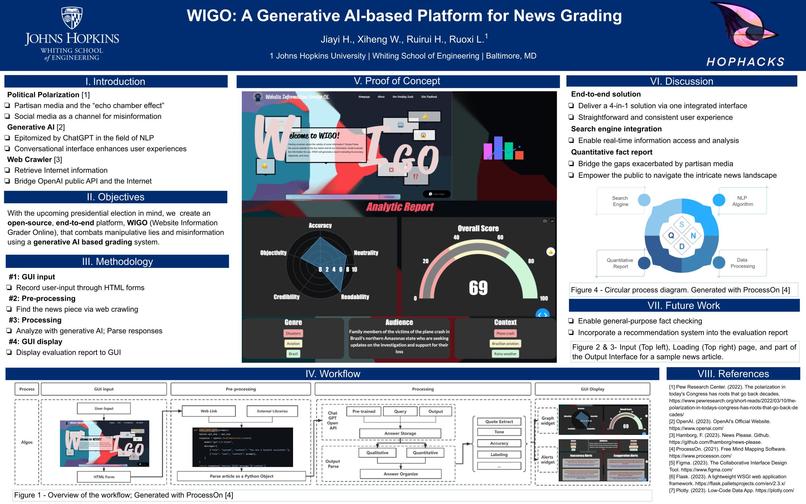
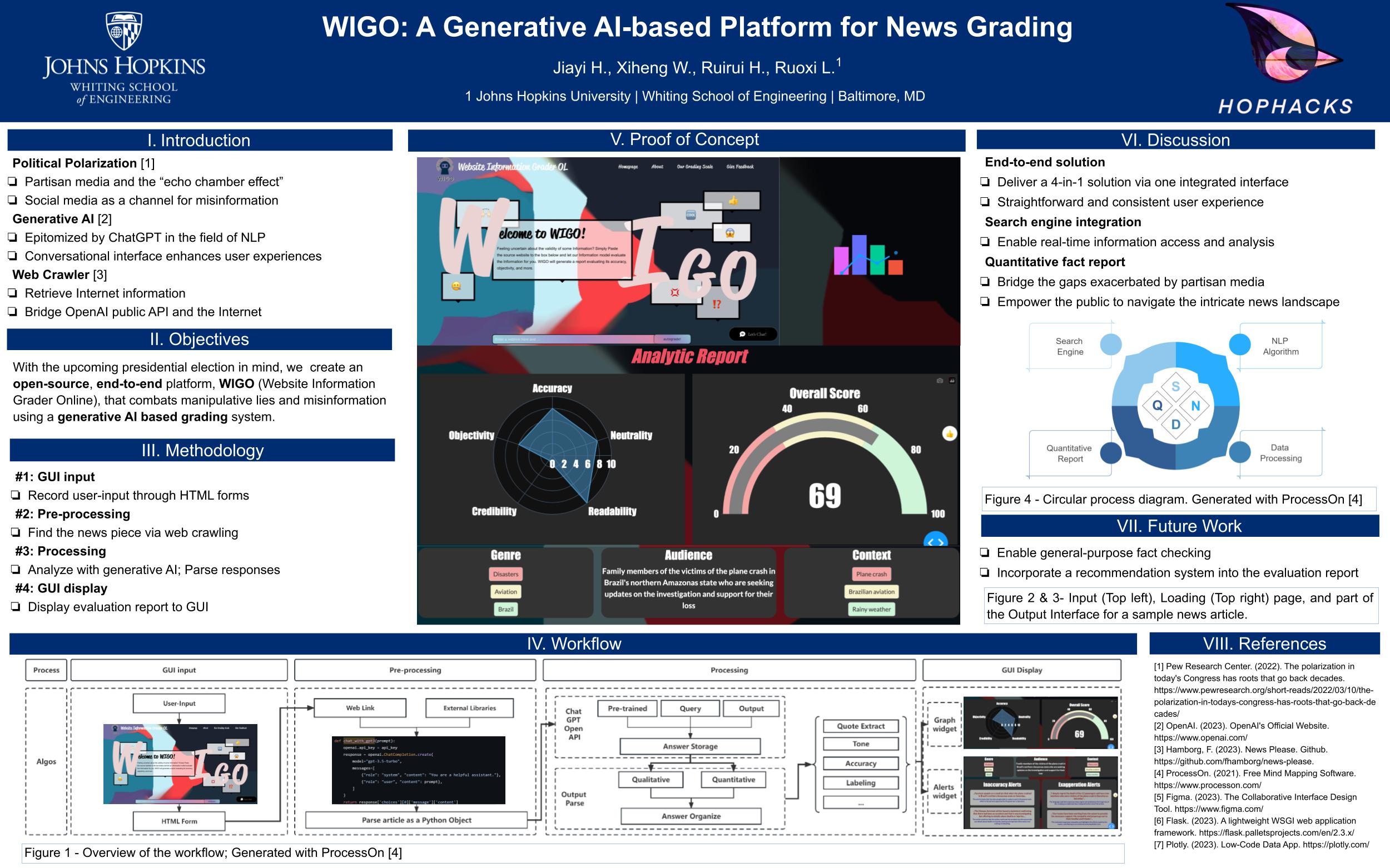
WIGO Technical Poster
WIGO: Website Information Grader OL
Inspiration
Media fragmentation, along with the echo chamber effect in social media, has exacerbated polarization in U.S. politics. As reported in 2022 by the Pew Research Center, on average, both parties are moving further apart from the ideological center than at any time in the past 50 years. This makes the ability to distinguish fact from mis- and disinformation absolutely crucial.
What it does
WIGO is an end-to-end, open-source platform that offers a practical solution to combat manipulative lies and misinformation using a generative AI-based grading system. By assessing news articles and producing an evaluation report on aspects such as accuracy and tone, WIGO informs the general public on the biases that can emerge in a polarized media environment and effectively bridges the information gaps exacerbated by partisan bias.
How we built it
The architecture of our platform consists of 4 key elements:
- The first is a UI hosted by Wix that prompts for user input, which is recorded using HTML forms.
- The second step is pre-processing, during which we fetch the news piece using a web crawler and store the article as a Python object.
- The third step is processing, during which we call upon the public API in OpenAI to generate responses. The responses are then parsed with a Python script to collect valuable quantitative and qualitative information.
- When all computations are complete, the last step is to generate an analytic report that quantitatively analyzes the news piece and displays the report on the UI.
Challenges we ran into
The biggest challenge we have run into was instability when accessing public API. Since public APIs are hosted on external servers, their performance can be unpredictable and subject to factors like server load, network congestion, and the API provider's infrastructure.
Accomplishments that we're proud of
Our platform has made 3 key achievements:
- First, we provide an end-to-end solution via one integrated interface, from the search engine, NLP Algorithm, and data processing, to report generation. This effectively enables a straightforward and consistent user experience.
- Second, we integrate OpenAI, which does not have direct Internet access, with the search engine, which allows for real-time information access and analysis that are more useful in real-world scenarios.
- Most importantly, our platform can assess news articles, produce an evaluation report on aspects such as accuracy and tone, and provide a quantitative fact evaluation with a consistent grading system. Our platform informs the general public about the biases that can emerge in a polarized media environment and effectively bridges the information gaps exacerbated by partisan bias.
What we learned
The two biggest takeaways we have are:
Version control is really important as it has allowed us to track changes and work on different parts of the application concurrently while merging can be performed with minimal conflicts.
Difference of opinion is inevitable in work environments, while respectful disagreement and constructive criticism are beneficial since they can lead to more creative solutions, strengthen team dynamics, and optimize the overall workflow.
What's next for WIGO
We believe our system has a feasible architecture that has real benefits for society and can be commercialized with more time. Here, we propose two works that can be done in the future:
- First, we aim to create a general-purpose fact-checking platform as the ultimate goal that can evaluate sources besides news articles, such as scientific papers and general digital information.
- Second, we aim to incorporate a recommendation system into the evaluation report, which provides more readings on the same topic with a perspective different from the inquired one or with a more rational perspective based on our grading system.


Log in or sign up for Devpost to join the conversation.