-
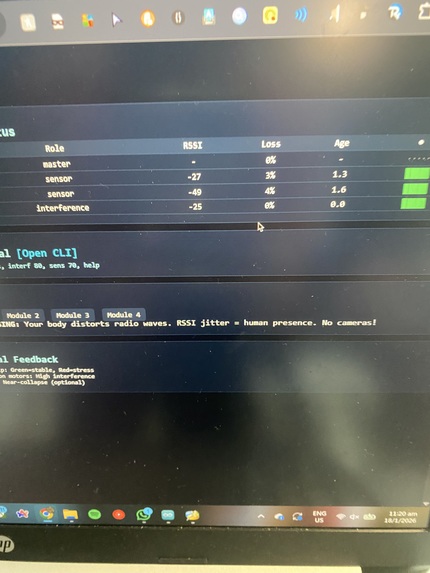
No obstacle between sensors
-
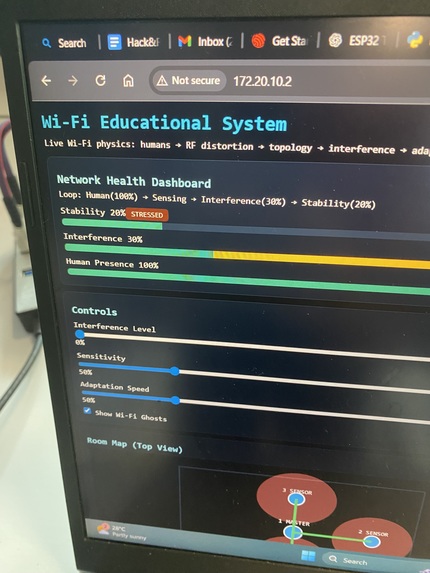
Obstacle(person) between the sensors
-
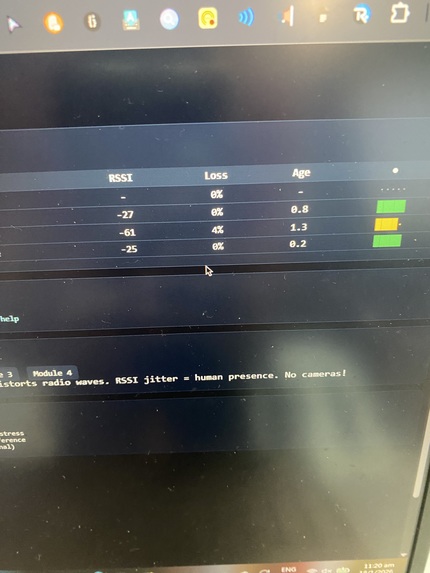
Obstacle(person) between the sensors
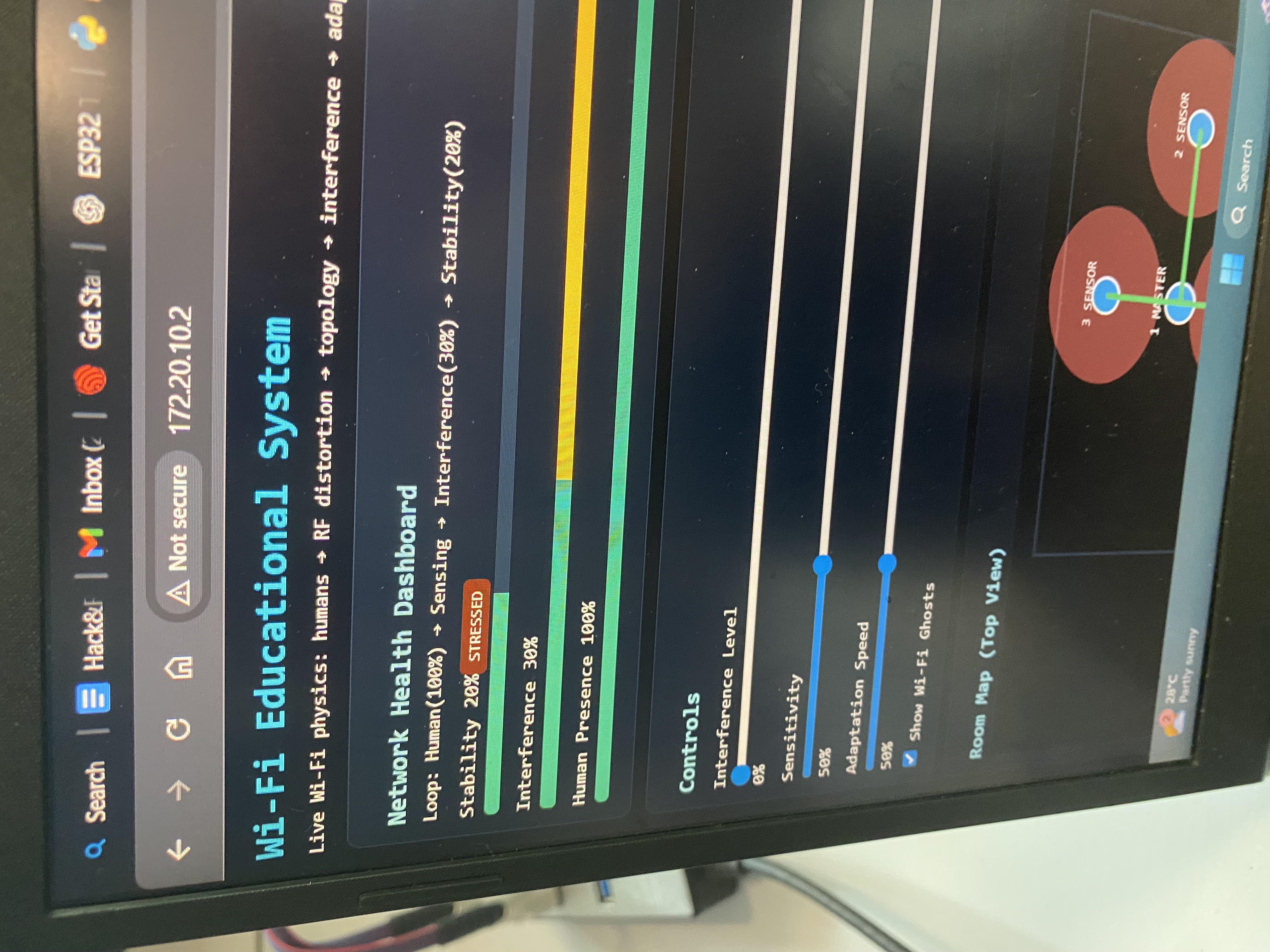
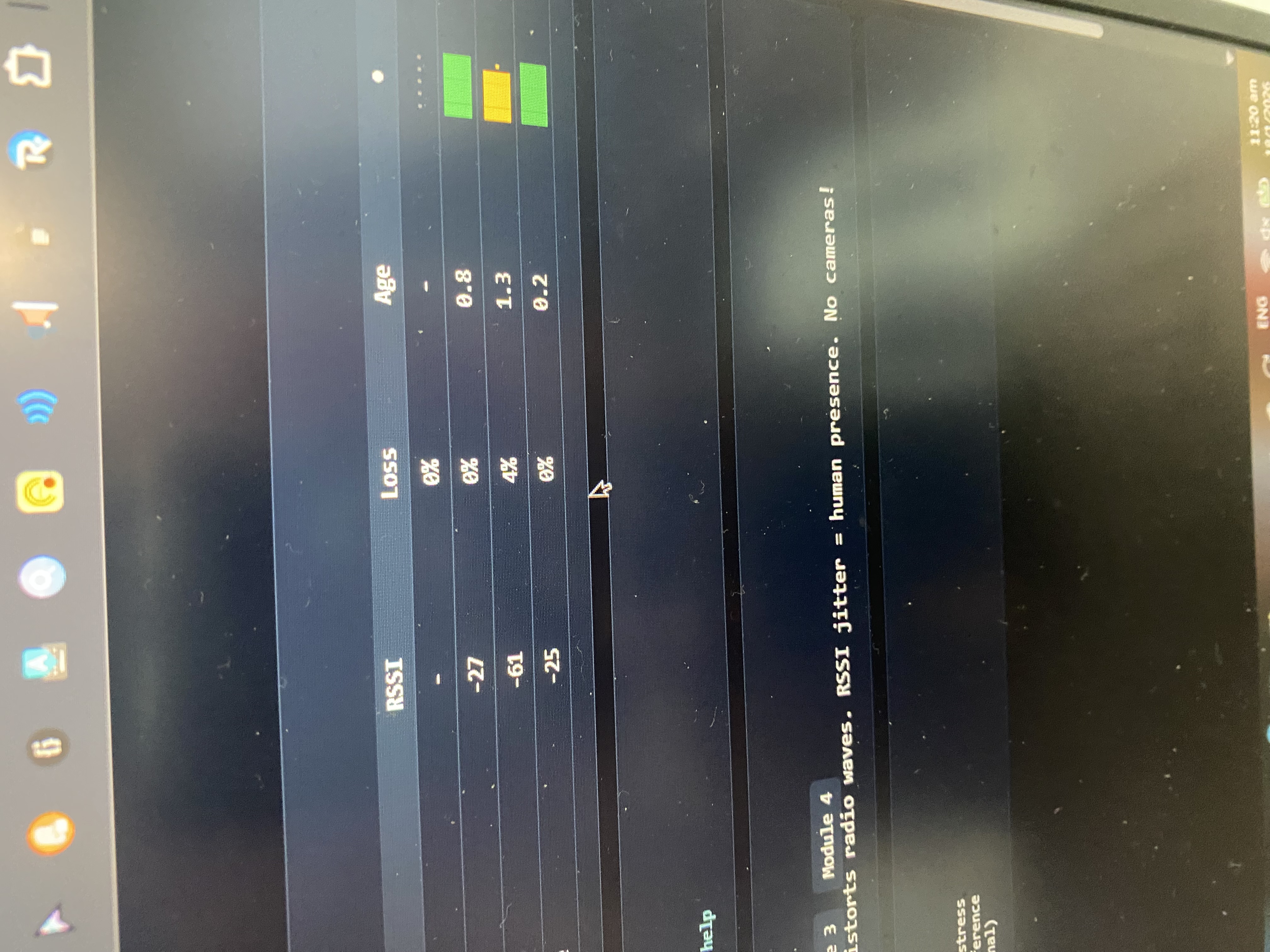
Inspiration
Sometimes, our wifi can get really slow, which could make us really frustrated, especially if we want to complete tasks or play games. We wanted to build this project to help people visualise their wifi, see where it works best, and how stable and responsive it is from their location, so that they could relocate to ensure better connection and productivity.
What it does
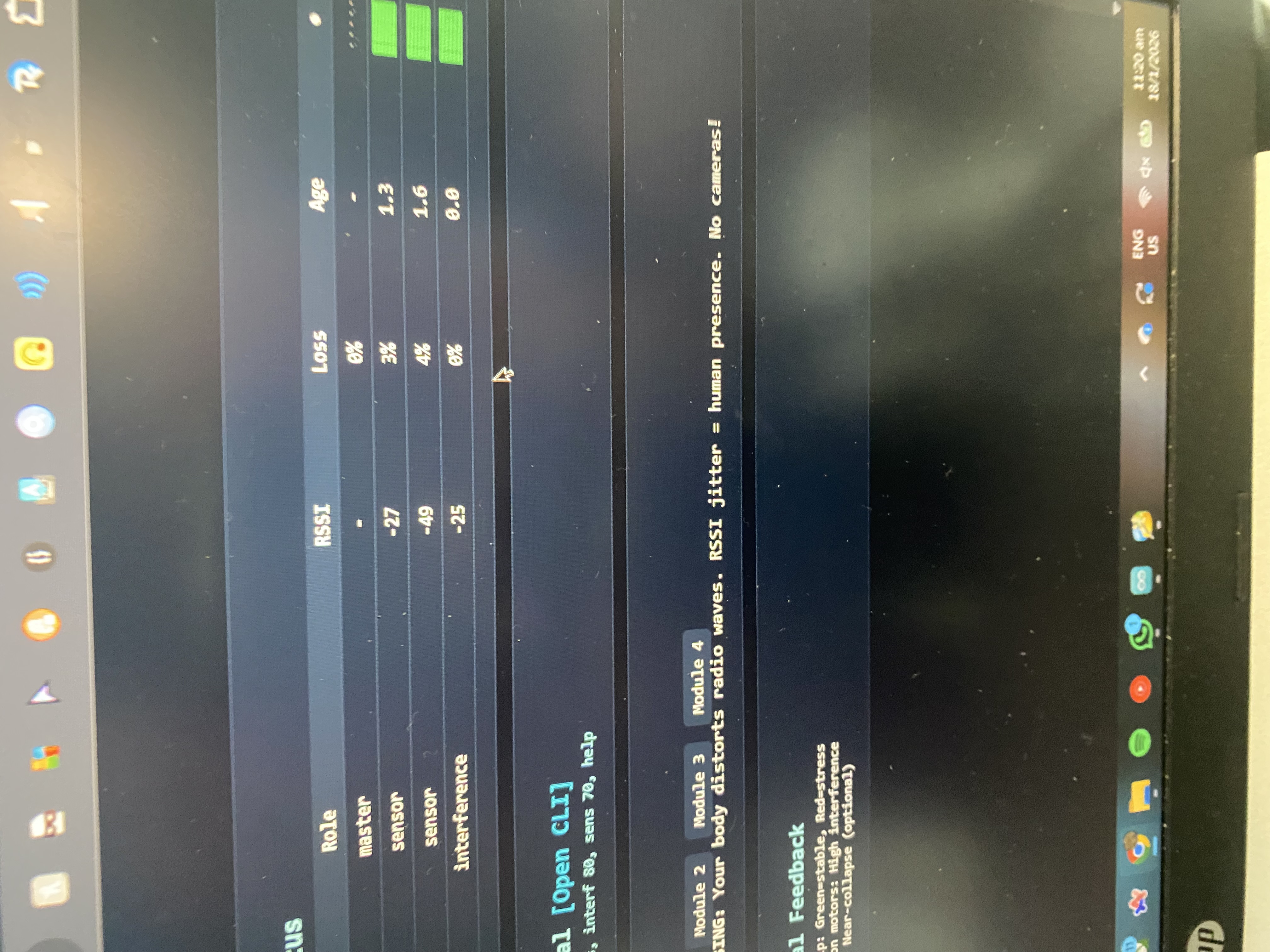
Our project has three main features. Firstly, our project provides an interface where we can detect wifi signals and how strong they are. Along with that, it can detect interferences in real-time and show if something is in the way between you and your wifi. Lastly, it gives all this information in one easy-to-understand, graphical interface accessible when connecting to the wifi.
How we built it
We used 4 ESP 32's and we coded the project in the Arduino IDE using the appropriate SDK's, instructions, tutorials, and Espressif's manuals in C++, HTML, CSS and JS.
Challenges we ran into
Early on in our competition, while we were coding our project, our Raspberry Pi corrupted multiple times due to power trips, which caused us to lose all of our progress. However, we adapted, and used our laptops to power the ESP32s, to prevent us from losing all of our progress again.
Accomplishments that we're proud of
Firstly, this is our first time participating in a hackathon together. Along with that, this competition, being an overnight competition, also gave us many opportunities to bond and have fun while working on our project. Secondly, we are really proud of the effort and work that we put into this project. This project of ours seems really daunting at first, and we had many negative and doubtful thoughts about how difficult it is. However, we tried really hard, and through clear communication, we managed to build this new and innovative project. Thirdly, we are really proud of how the project turned out. 24 hours may sound like a long time, but it was a really short period of time to develop something as complex as our project. Most of us had very little experience with coding the ESP32, and to accomplish such a feat was no easy task. We spent hours debugging, learning new modules and browsing online resources, but eventually, we reached our goal!!
What we learned
Through this project, we realised that things may not always turn out the way we thought they would. Initially, we expected to finish the project within the first night, as we did not foresee the obstacles that would stand in our way. However, we faced multiple setbacks and had to stay overnight to complete this project. Through this experience, we learnt to adapt and make the best use of our time. We switched from powering our ESP32s from the faulty Raspberry Pi to powering it from our laptop to avoid losing all our progress again when another power trip occurs. We also learnt to communicate and collaborate better as a team, delegating tasks to different individuals based on our respective strengths. In this way, we can ensure that we manage our time and work as efficiently as possible, allowing us to accomplish this task in 24 hours.
What's next for Wi-Find
We aim to make our project more large-scale as it is only a prototype right now and I feel that this product will be really useful for many people around the world.
Built With
- cpp
- css3
- esp32
- html5
- javascript

Log in or sign up for Devpost to join the conversation.