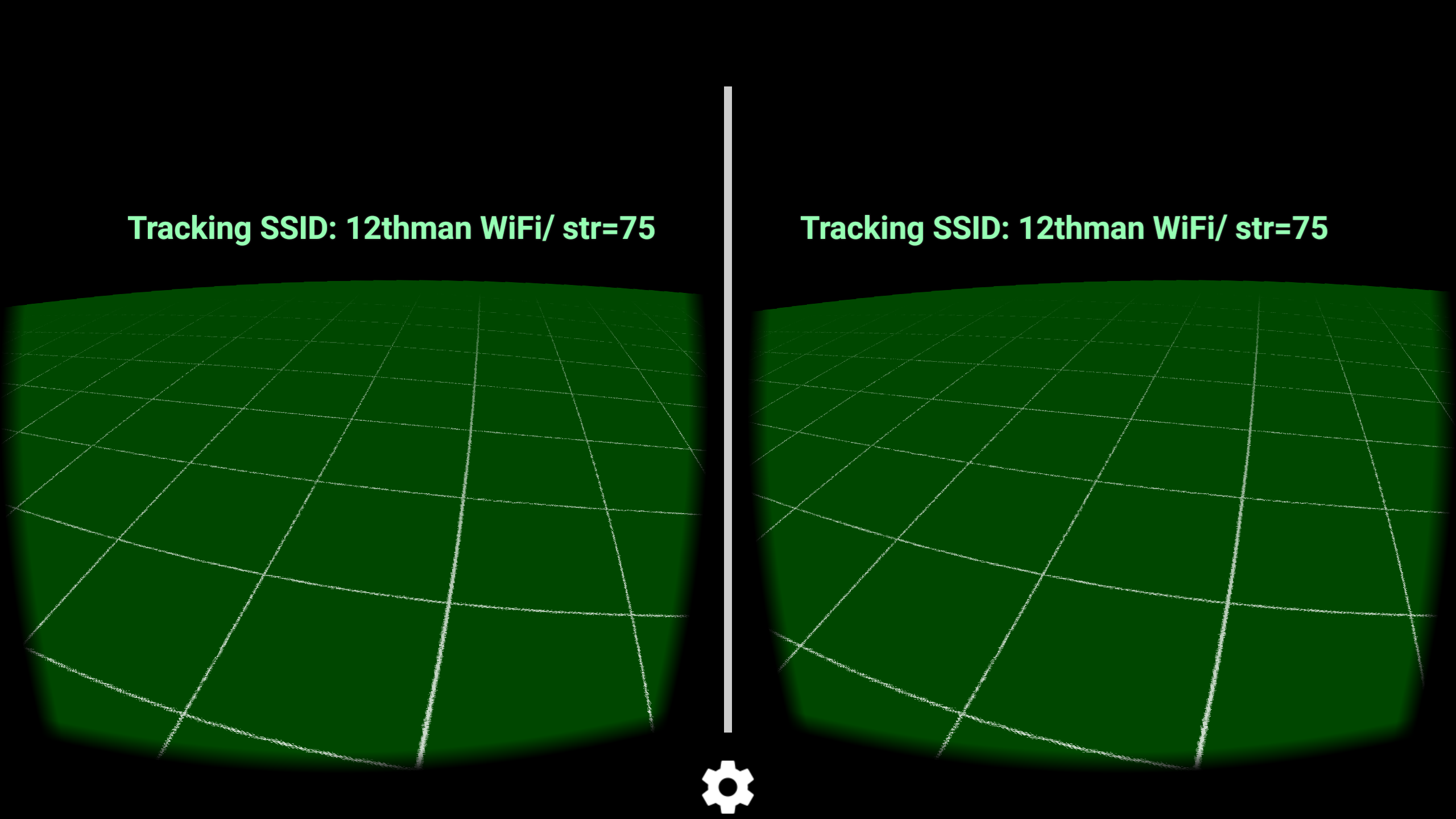
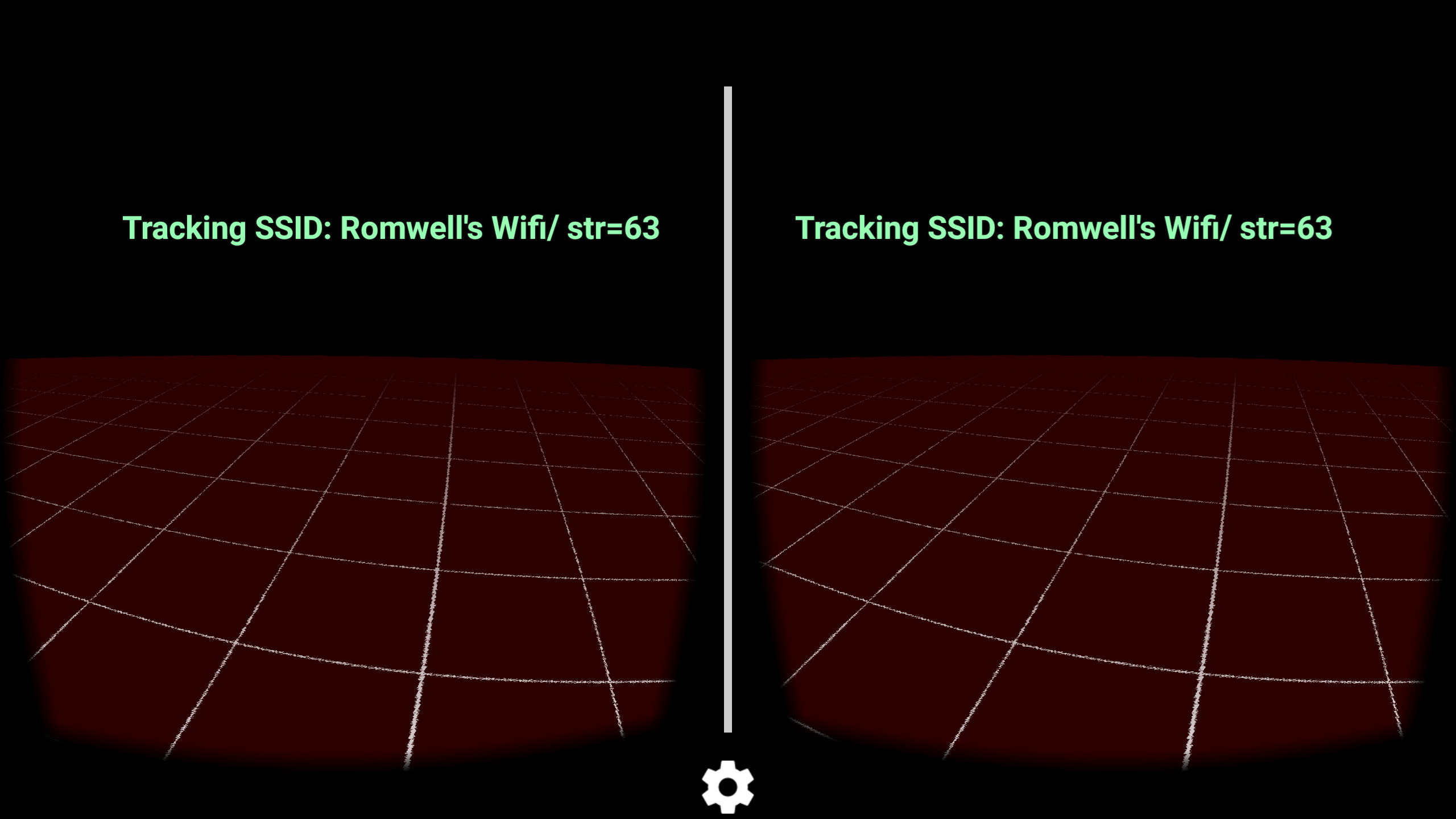
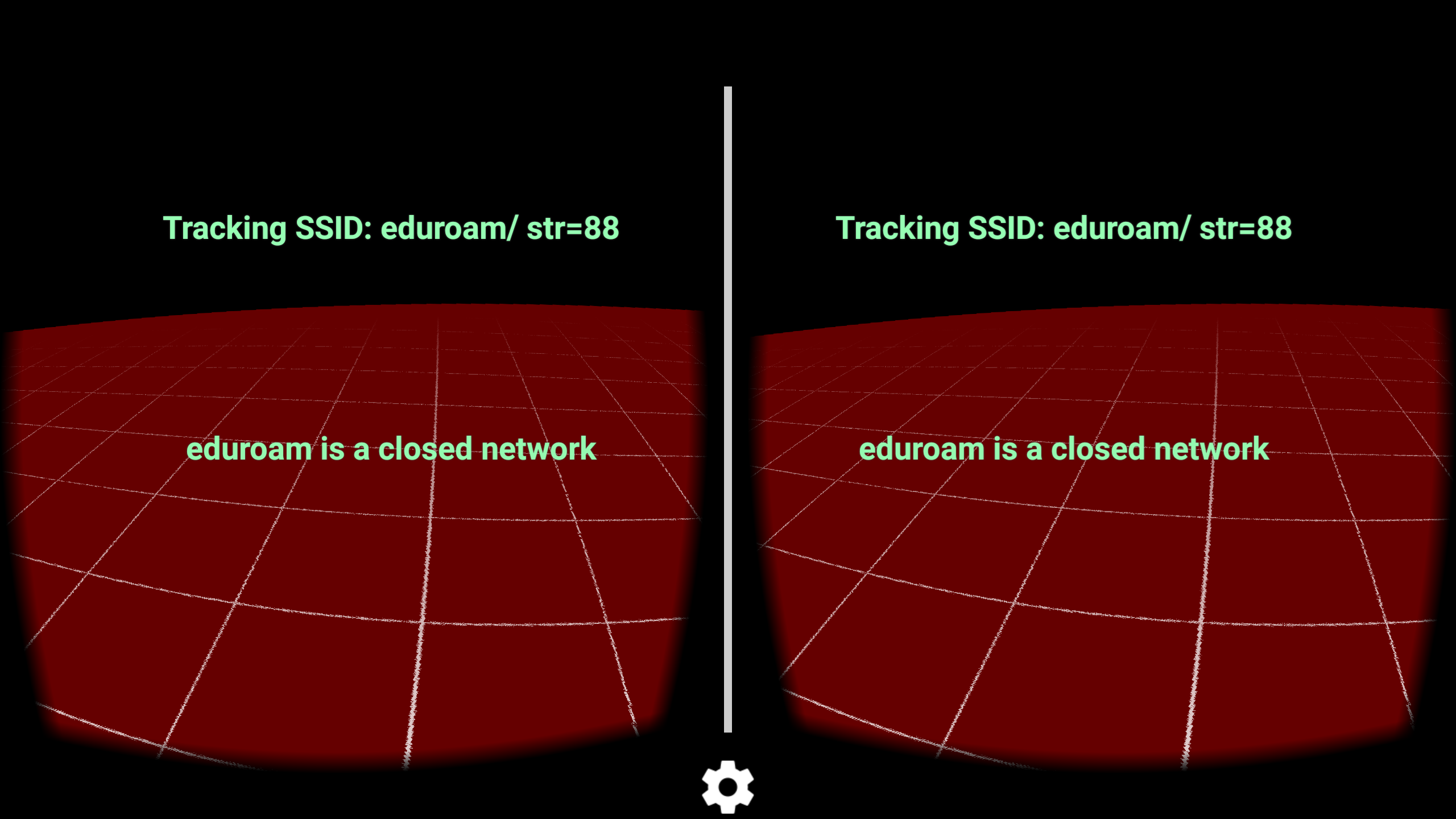
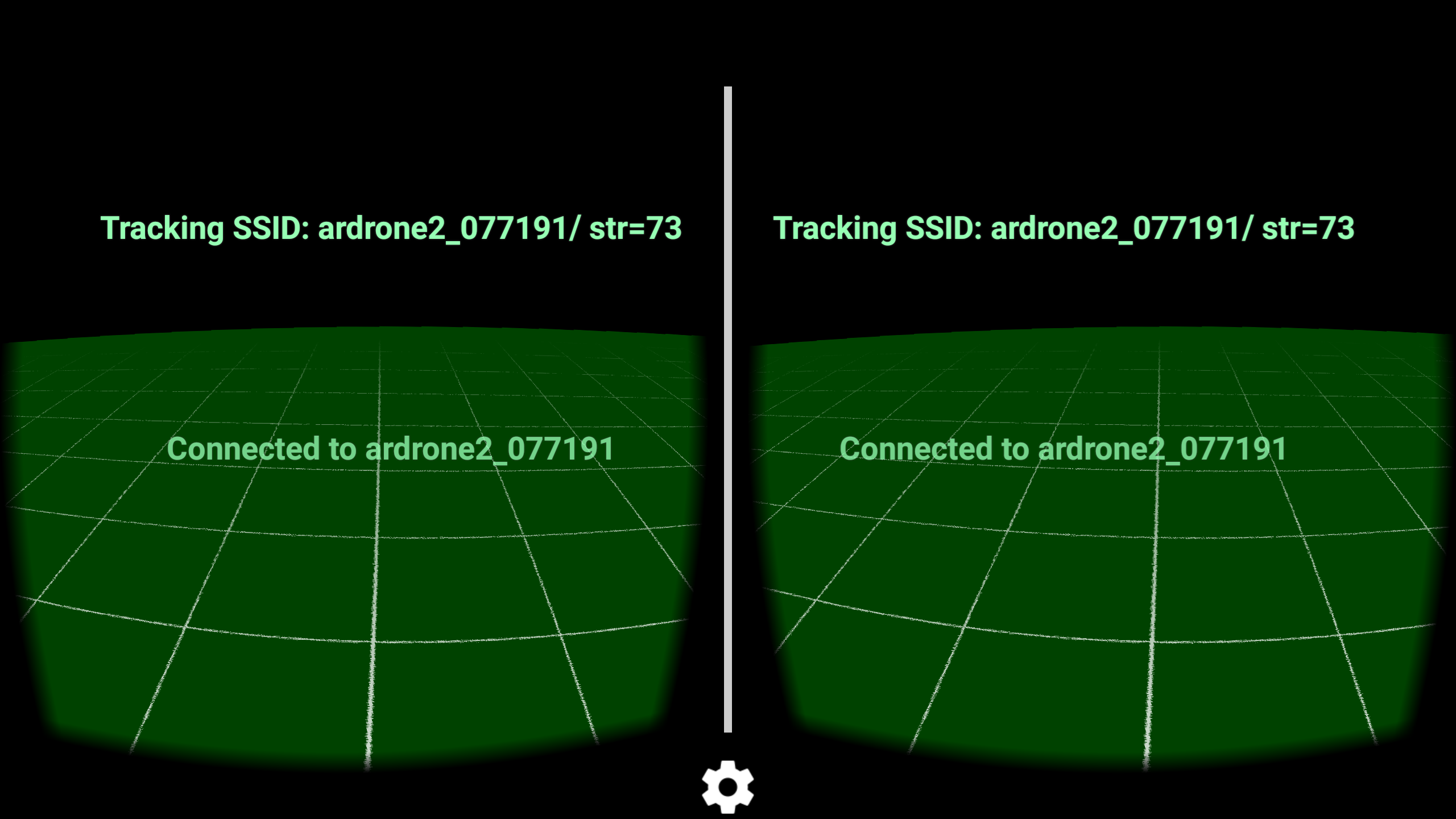
Our first project was abandoned due to the SDK for the signal analyzer using an old version of Gradle that could not be updated or fixed. Around approximately 7am, we changed our project plan to use the phone’s wireless antenna instead of the signal analyzer. Upon revising our project, we added a wifi manager to remove excess features on the google cardboard demo SDK. We then scanned and analyzed all the data coming in through the wireless adapter and found the BSSID of the access point with the strongest signal strength (measured in decibels). We set the program to change the color of the gridded floor based upon the signal strength. The floor starts at black for no signal all and changes along a gradient until the floor is bright red. The stronger the strength, the brighter the color of the floor. We had to do a lot of tweaking to get this to work exactly how we wanted, but the change is seamless now. When the phone is connected to an access point, the gridded floor turns green. If the phone cannot connect it displays a message indicating that the network is password protected and the floor turns red. The floor will get brighter or darker depending on signal strength even if not connected. After getting the graduated coloring to work, we added a function to display the name of the SSID with the strongest signal strength to the middle of the screen via toast when the button on the side of the Google Cardboard is pressed. We improved upon this idea and moved the SSID permanently to the to top center of the screen. The button is now used to switch between “following” BSSIDS. Next to the SSID name we added the signal strength of that particular SSID.
Future Improvements: In order to better serve the visually impaired, we would like to add a heartbeat sound to indicate signal strength. The better the signal strength, the faster the heart rate. If the signal gets weaker, the heart rate slows. When the signal is steady, so is the heartbeat. If the signal drops, the heartbeat flatlines for 5 seconds and then ceases as to not annoy the user. We plan to optimize this program to use the camera. We would like to be able to overlay the gridded floor onto real-time footage of the user’s surroundings (think Windows Holo Lens). This could create multiple uses for the product, including broadcasting to a remote location, connecting to facial recognition databases, night vision optimization, and many other uses. The signal finder could be changed to find different radio or audio frequencies, as well as possibly to find and view camera feeds or whatever else the user can imagine.

Log in or sign up for Devpost to join the conversation.