-
-
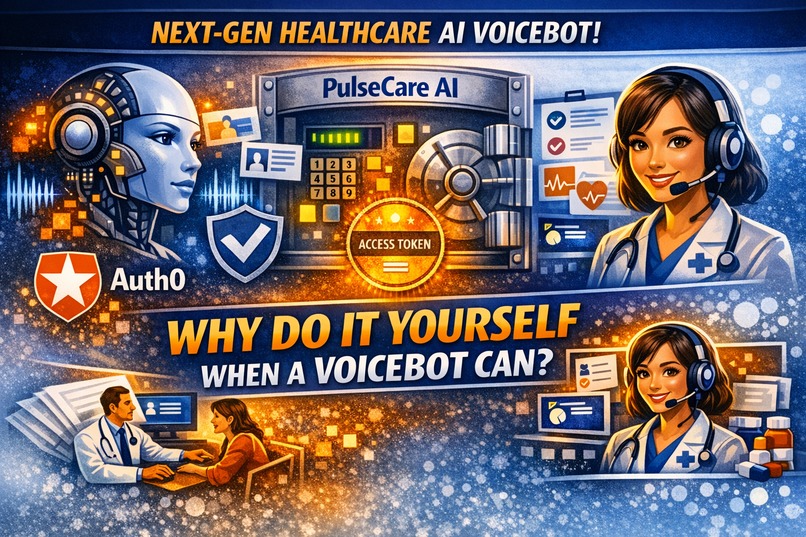
Why do it yourself when a Voicebot can?
-
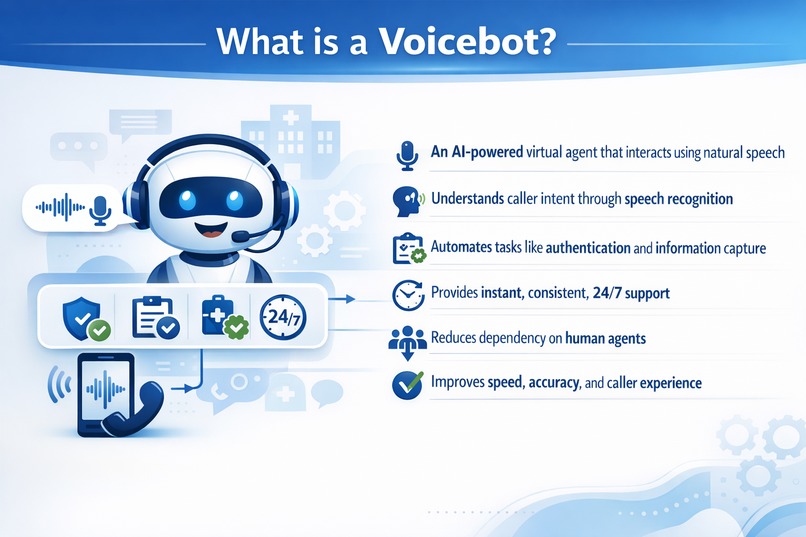
What is a Voicebot
-
Architecture
-
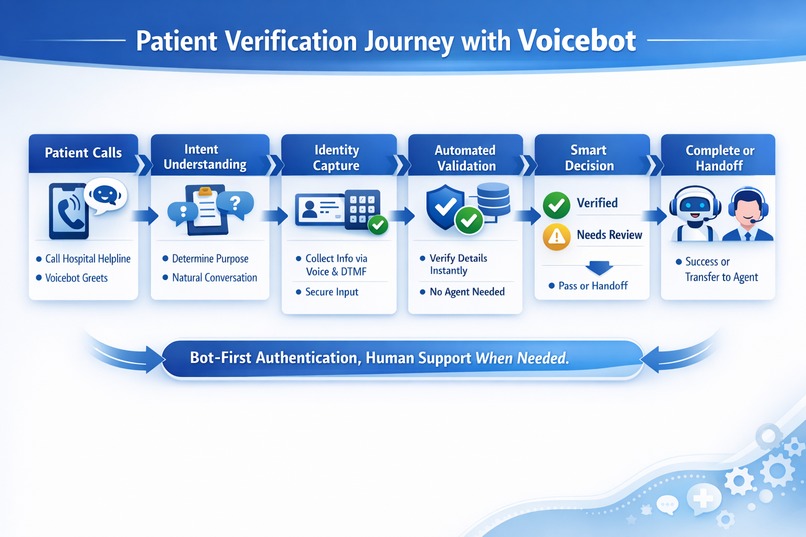
Patient flow
-
Monitoring and Reporting
-
Future Enhancement
Inspiration
Hospitals receive a massive volume of incoming calls every day, many of which are routine authentication or verification requests. Today, these calls are handled manually, leading to long wait times, repetitive work for agents, and a frustrating experience for patients. We were inspired by a simple question: Why should highly trained human agents spend so much time on repetitive authentication tasks that can be automated? This challenge motivated us to rethink the hospital “front door.” We wanted to create a system that allows patients to speak naturally, get authenticated quickly, and move forward without delays — while freeing human agents to focus on cases that genuinely need their expertise.
What it does
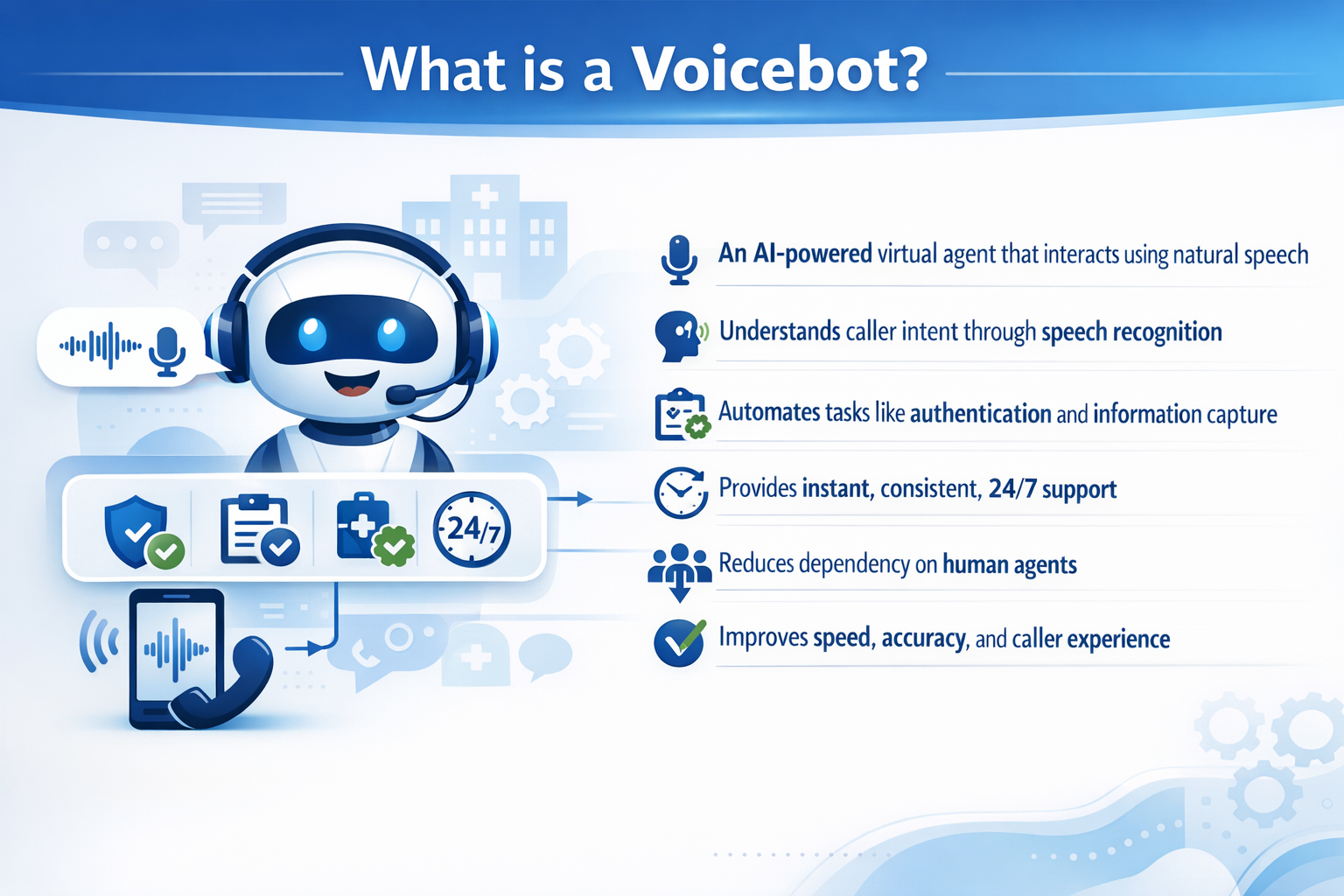
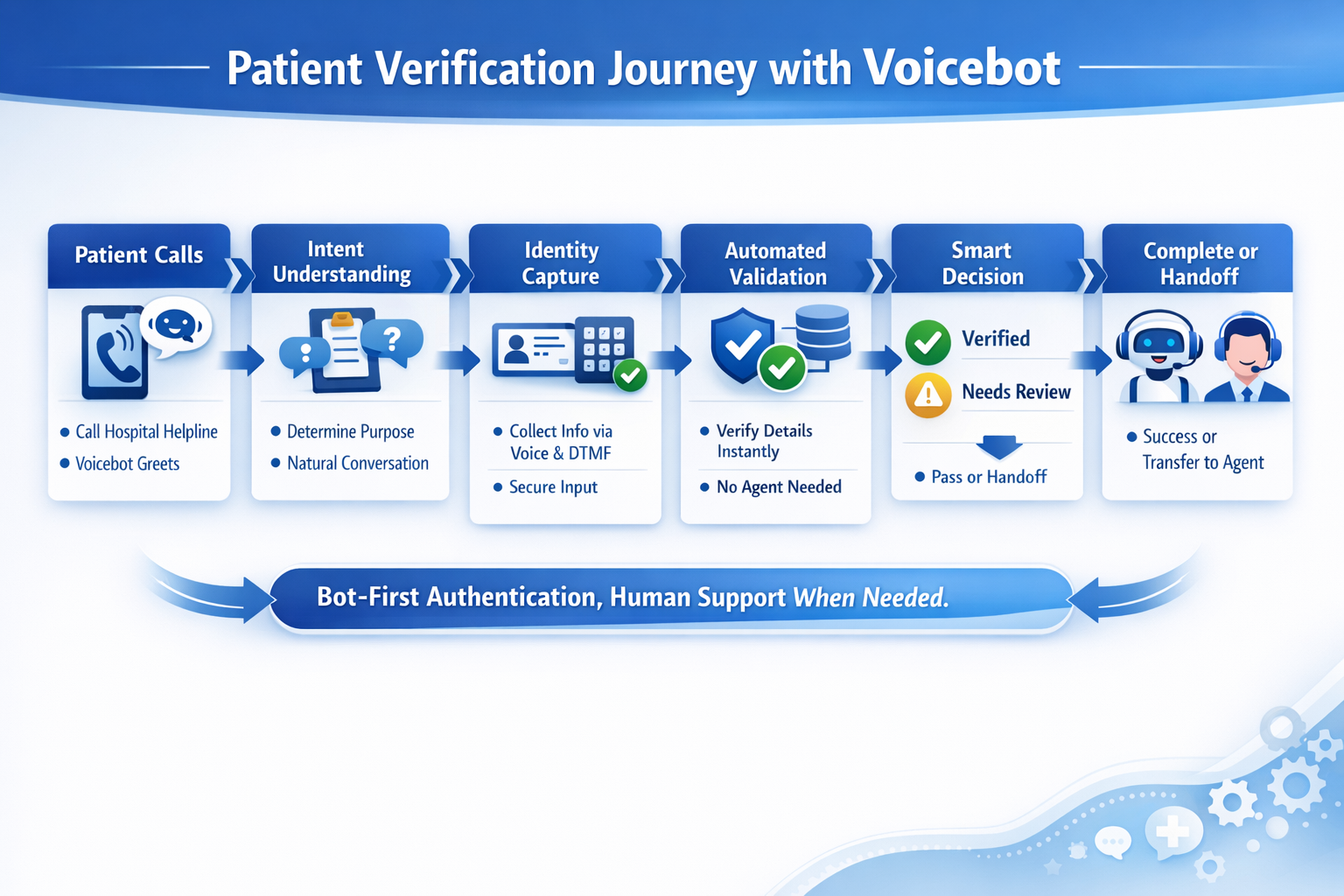
Why Do It Yourself When a VoiceBot Can is a Voicebot designed to automate patient authentication and frontline hospital interactions. The Voicebot: Allows callers to speak naturally or use DTMF keypad input Automatically captures and understands patient information Authenticates patients securely without human intervention Handles routine calls end‑to‑end Seamlessly routes complex or clinical cases to a guided clinical bot or a human agent Instead of acting like a simple IVR, the Voicebot automates the entire front‑door funnel of healthcare communication — reducing wait times, improving accuracy, and delivering a smoother patient experience.
How we built it
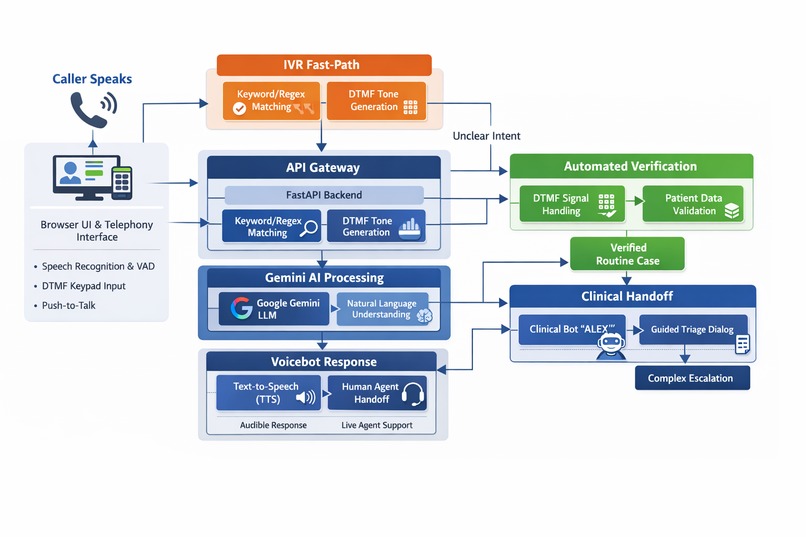
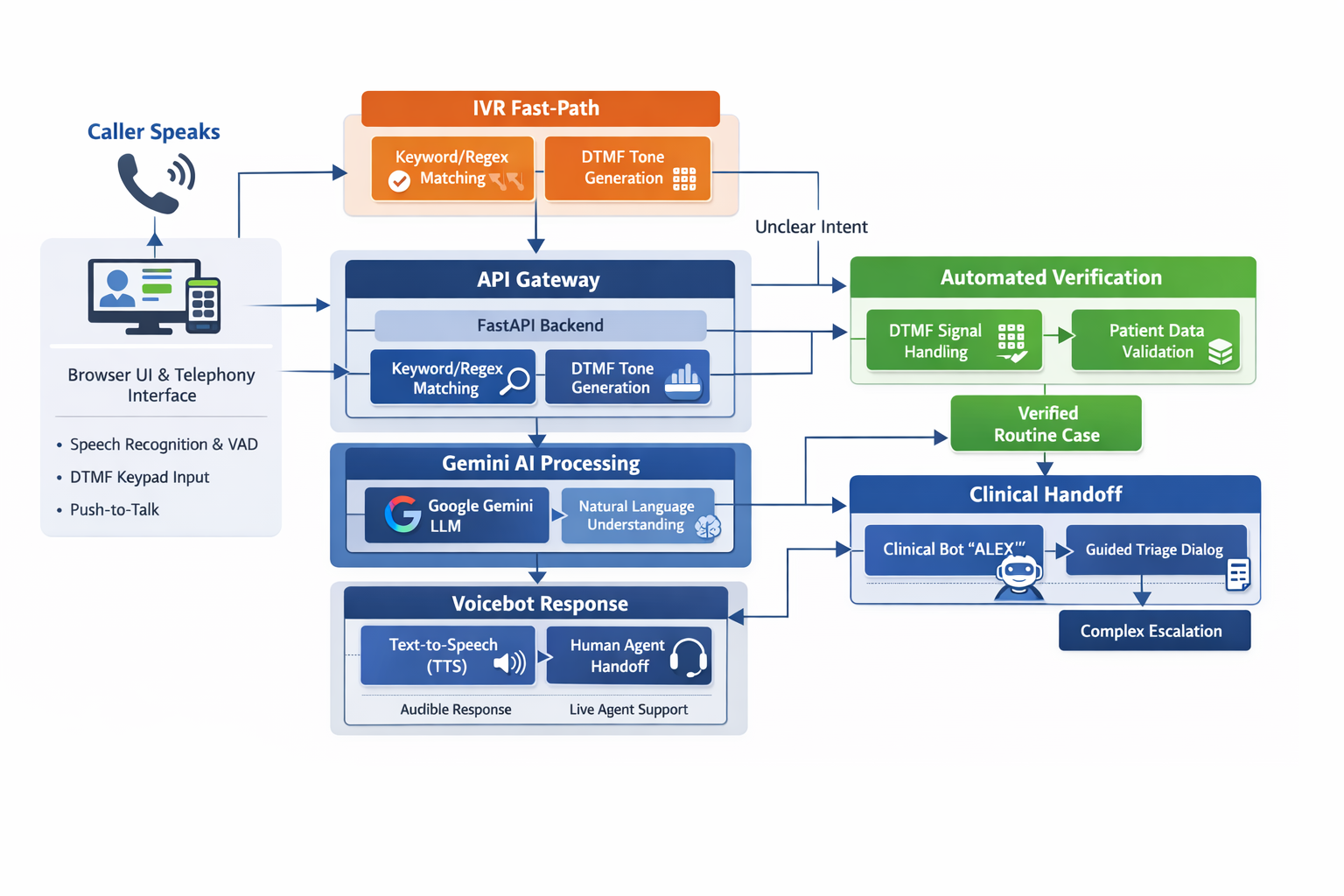
Our architecture is designed as a fast, intelligent, and modular call flow:
Voice & DTMF Capture The flow begins when a caller speaks. A browser‑based interface captures voice input using speech recognition and also supports DTMF input, simulating a real phone system. IVR Fast‑Path Layer Incoming requests first pass through a fast keyword‑matching layer. This detects common menu commands instantly and generates DTMF responses with minimal latency. AI Intent Understanding (Gemini) If the intent isn’t clear, the input is routed to Google Gemini, which provides natural‑language understanding and determines what the caller wants — authentication, general inquiry, or clinical support.
Automated Authentication Patient identifiers are captured and verified using secure DTMF handling and patient‑data checks. Routine authentication cases are completed automatically at this stage. Clinical Handoff (ALEX) If clinical assistance is required, the system hands off to ALEX, a guided clinical bot that follows structured triage flows while leveraging Gemini for natural conversational responses. Response & Escalation All responses are converted to speech via a TTS engine. When necessary, calls are smoothly transferred to a live agent with full context preserved.
Challenges we ran into
One of the biggest challenges was balancing speed and intelligence. Authentication flows must be fast, but healthcare callers also expect natural, conversational interactions. Other challenges included:
Handling imperfect speech input in real‑world calling conditions Designing fallback logic when intent is unclear Ensuring secure handling of sensitive identifiers Creating smooth handoffs from automation to human agents without friction
These challenges required careful orchestration between deterministic IVR logic and AI‑driven intent understanding.
Accomplishments that we're proud of
Successfully validated that patient authentication can be handled reliably by a Voicebot Reduced dependency on human agents for routine front‑desk calls Built a hybrid system combining fast IVR logic with AI intelligence Enabled seamless escalation to clinical bots and human reviewers Proved that voice‑first automation can deliver both speed and accuracy in a healthcare setting
Most importantly, this POC demonstrated that automation does not have to compromise patient experience.
What we learned
Through this POC, we learned that:
A majority of frontend hospital calls are well‑suited for automation Combining rule‑based fast paths with AI intent understanding is critical Patients are comfortable interacting naturally with a well‑designed Voicebot Clear prompts and adaptive flows significantly reduce retries and failures
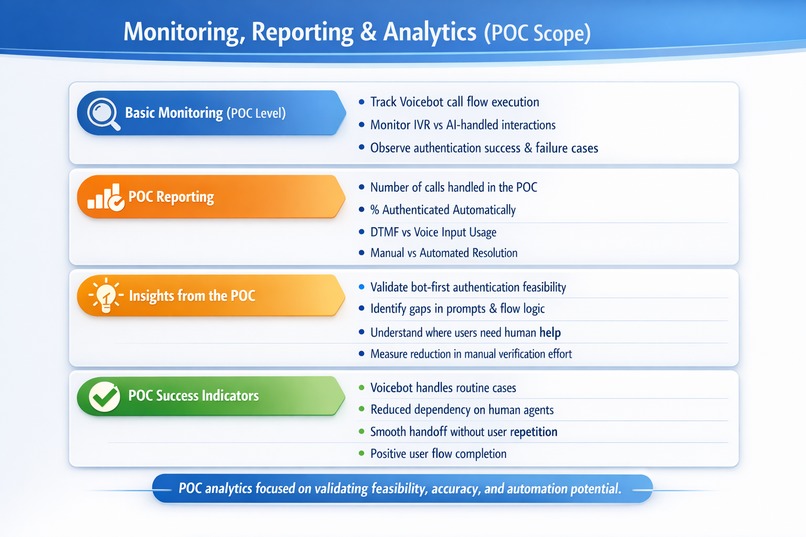
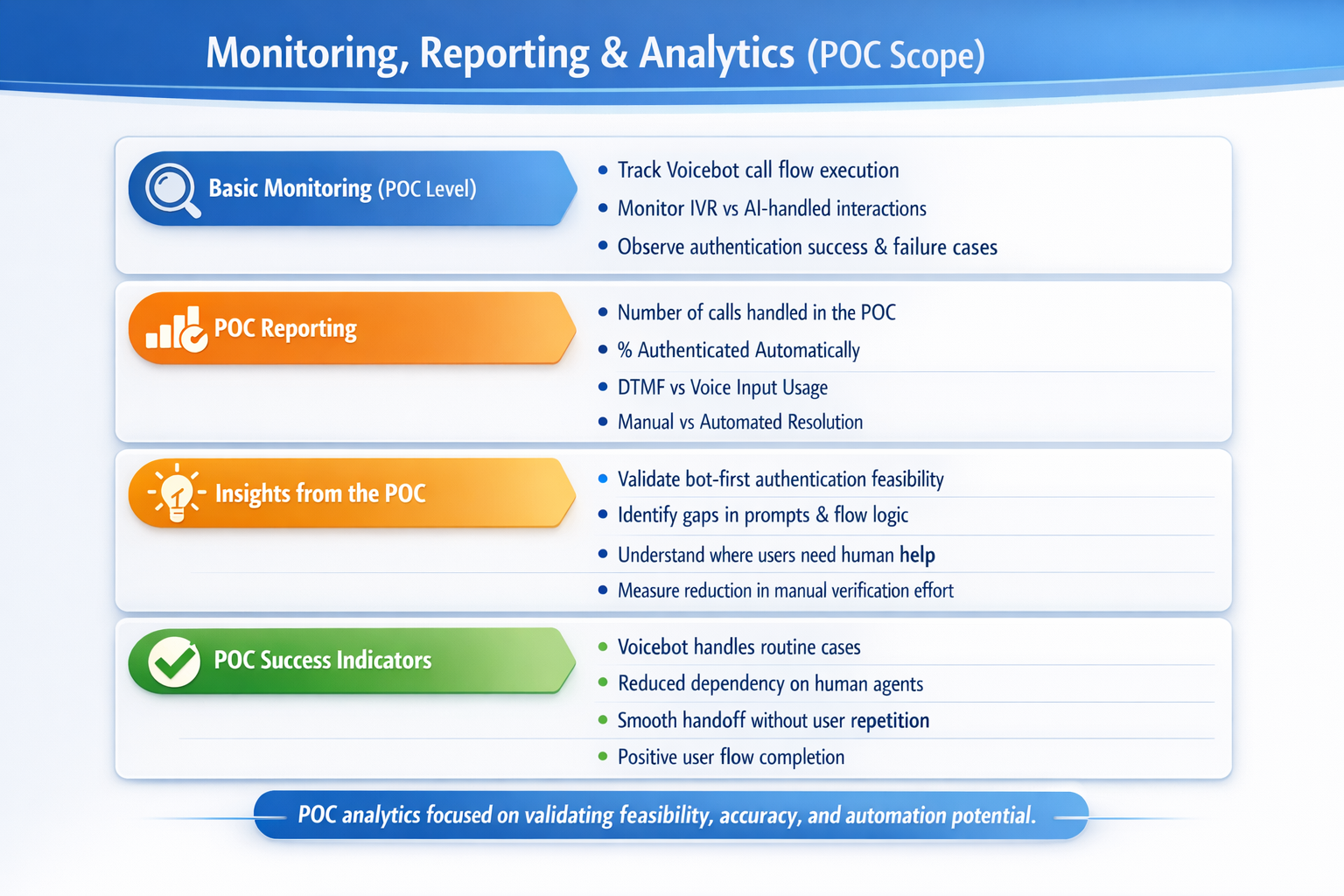
The lightweight analytics provided valuable insight into call patterns, authentication success rates, and where human intervention is still required.
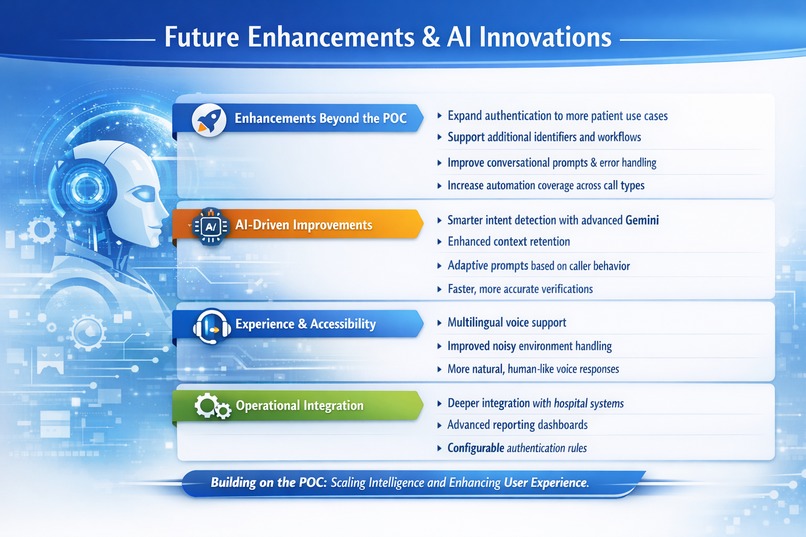
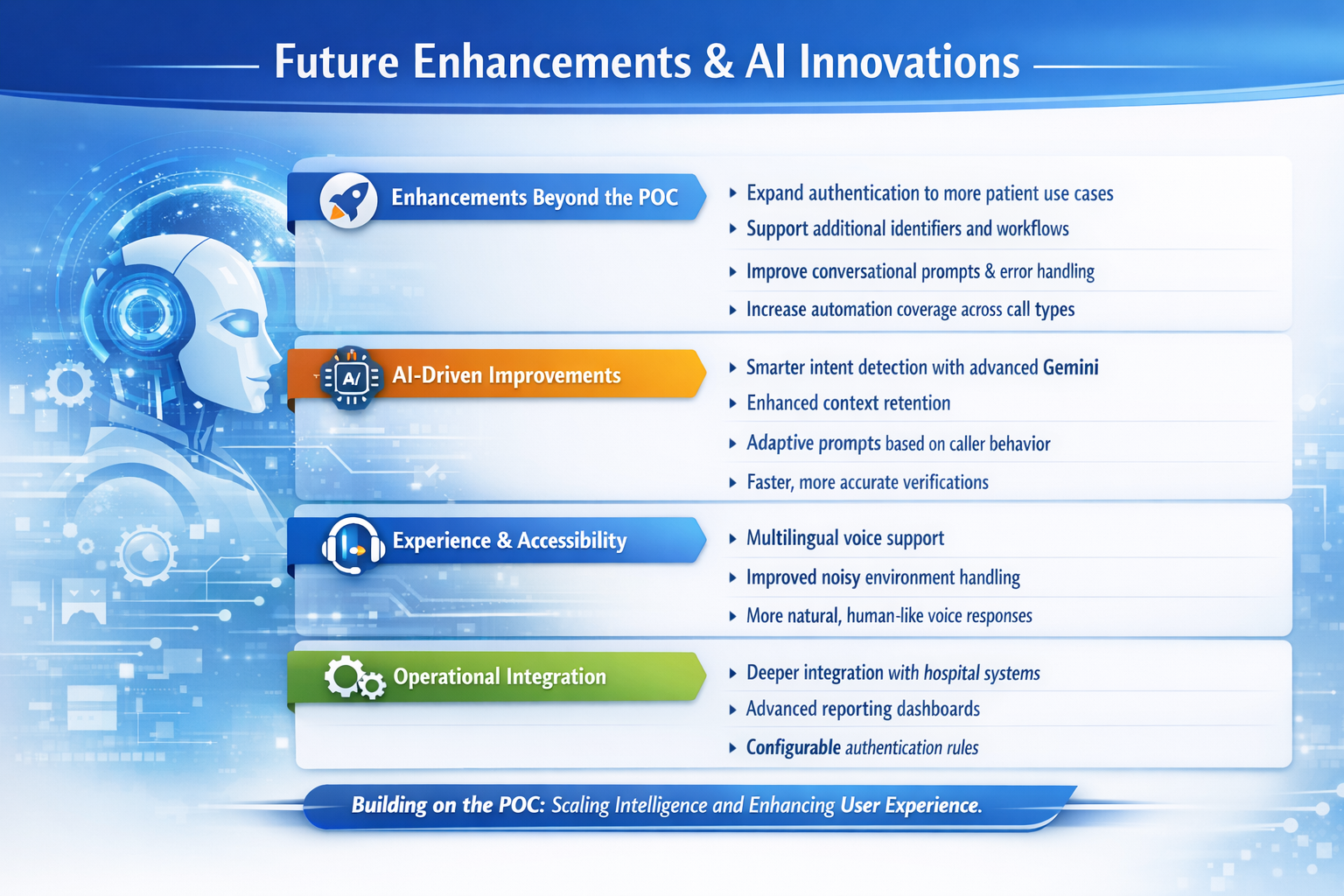
What's next for Why Do It Yourself When a VoiceBot Can This POC proved feasibility. The next phase focuses on scaling and enhancement:
Expanding authentication scenarios and broader patient journeys Using Gemini more deeply for conversational memory and adaptive prompts Adding multilingual support and accessibility improvements Improving resilience in real‑world calling environments Introducing deeper system integrations and advanced dashboards Expanding analytics for operational control and performance optimization
Our long‑term vision is a fully intelligent, voice‑first front door for healthcare — one that reduces manual workload, scales effortlessly, and delivers a modern patient experience.
Built With
- aiml
- auth0
- cloud
- html
- javascript
- llm
- machine-learning
- python
- regex
- restapi



Log in or sign up for Devpost to join the conversation.