-
-
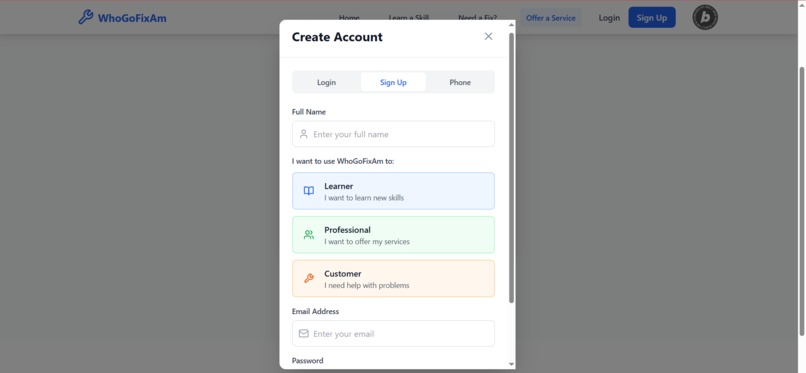
SignUp_Page
-
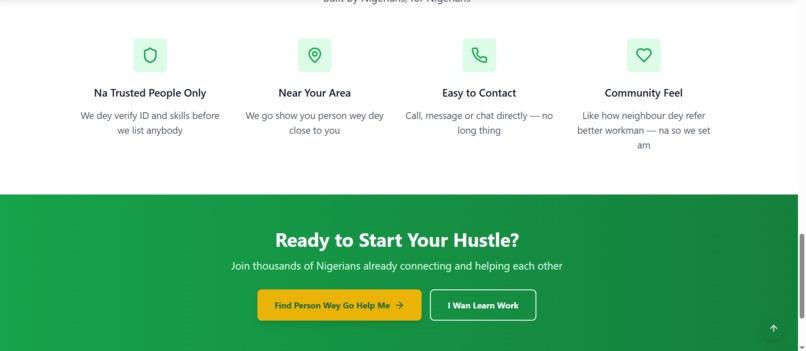
Why_Choose_Us_Page
-
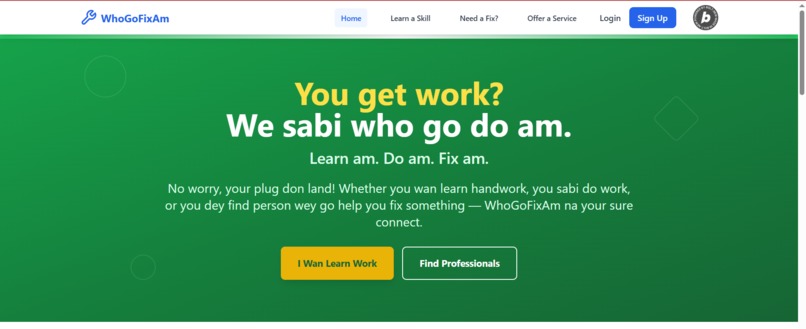
Homepage
-
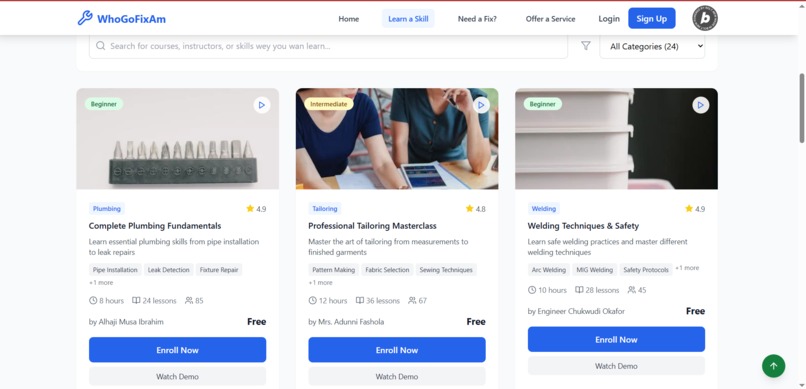
Learn_A_Skill_Page
-
Need_A_Fix_Page
Inspiration
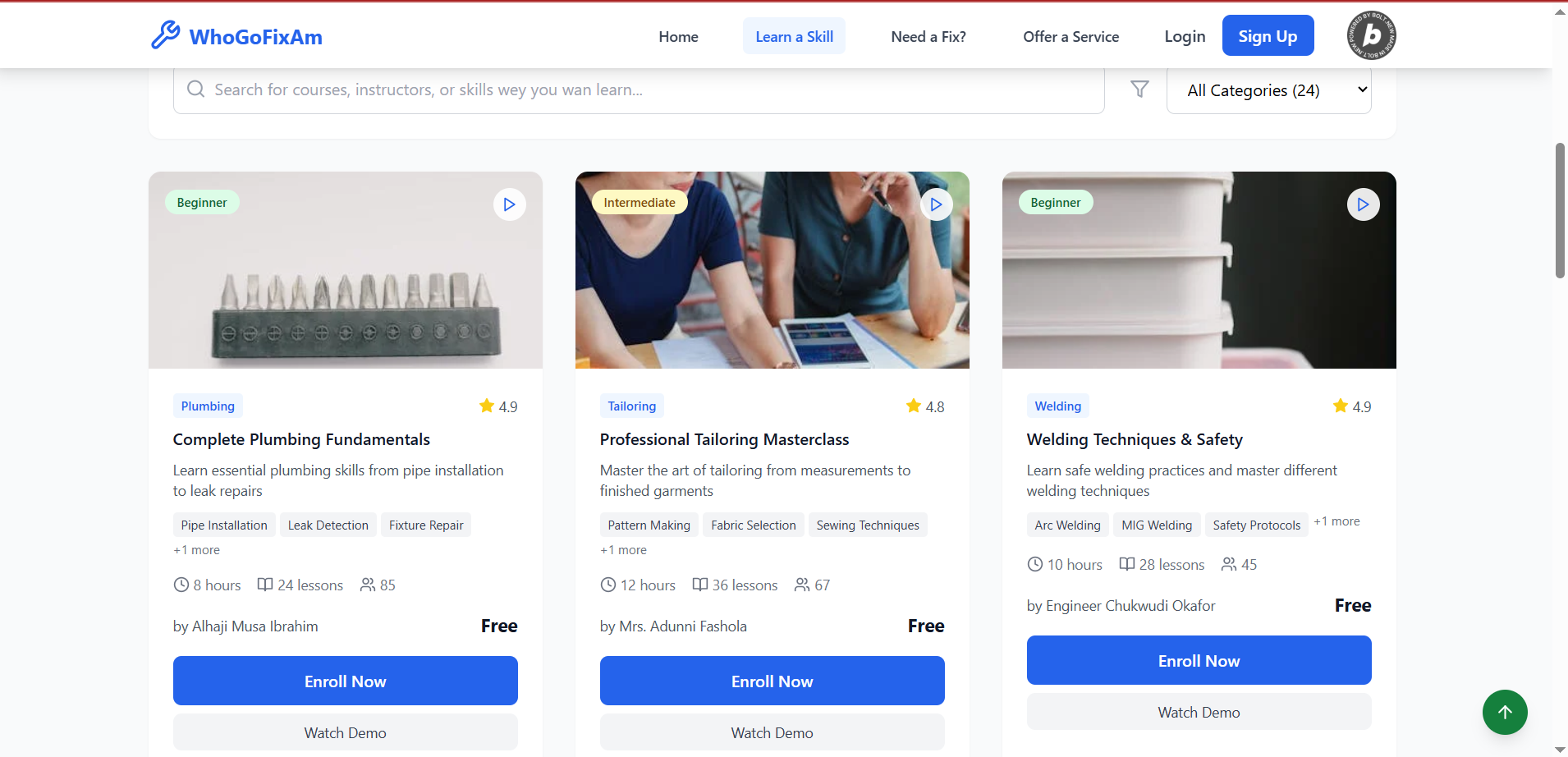
Everybody cannot learn tech, but everyone can benefit from tech. That was the spark for WhoGoFixAm. Growing up, I noticed there was no central, accessible platform where interested Nigerians — especially those from humble backgrounds — could easily learn vocational skills like tailoring, hair styling, plumbing, and shoemaking online or connect with local shops to train physically. Even after they learned these skills, they had nowhere to showcase their craft or access people who needed their expertise.
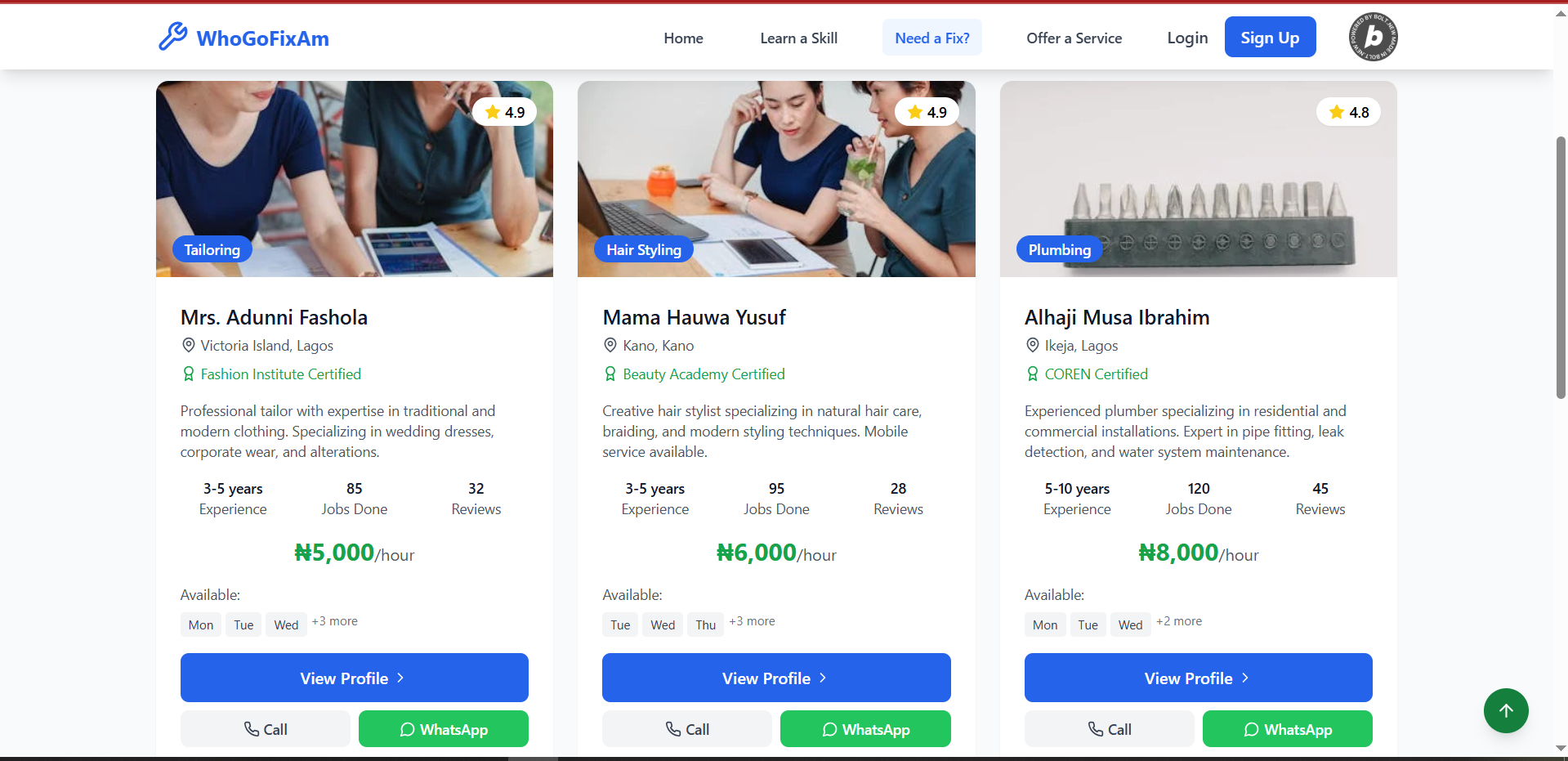
Professional, hands-on skill workers like mechanics, shoe makers, tailors, hair stylists, and welders often lack a marketplace to help them reach clients looking for quick fixes — until now. With WhoGoFixAm, we bridge that gap in a friendly and truly Nigerian way.
What it does
WhoGoFixAm empowers people across three main roles:
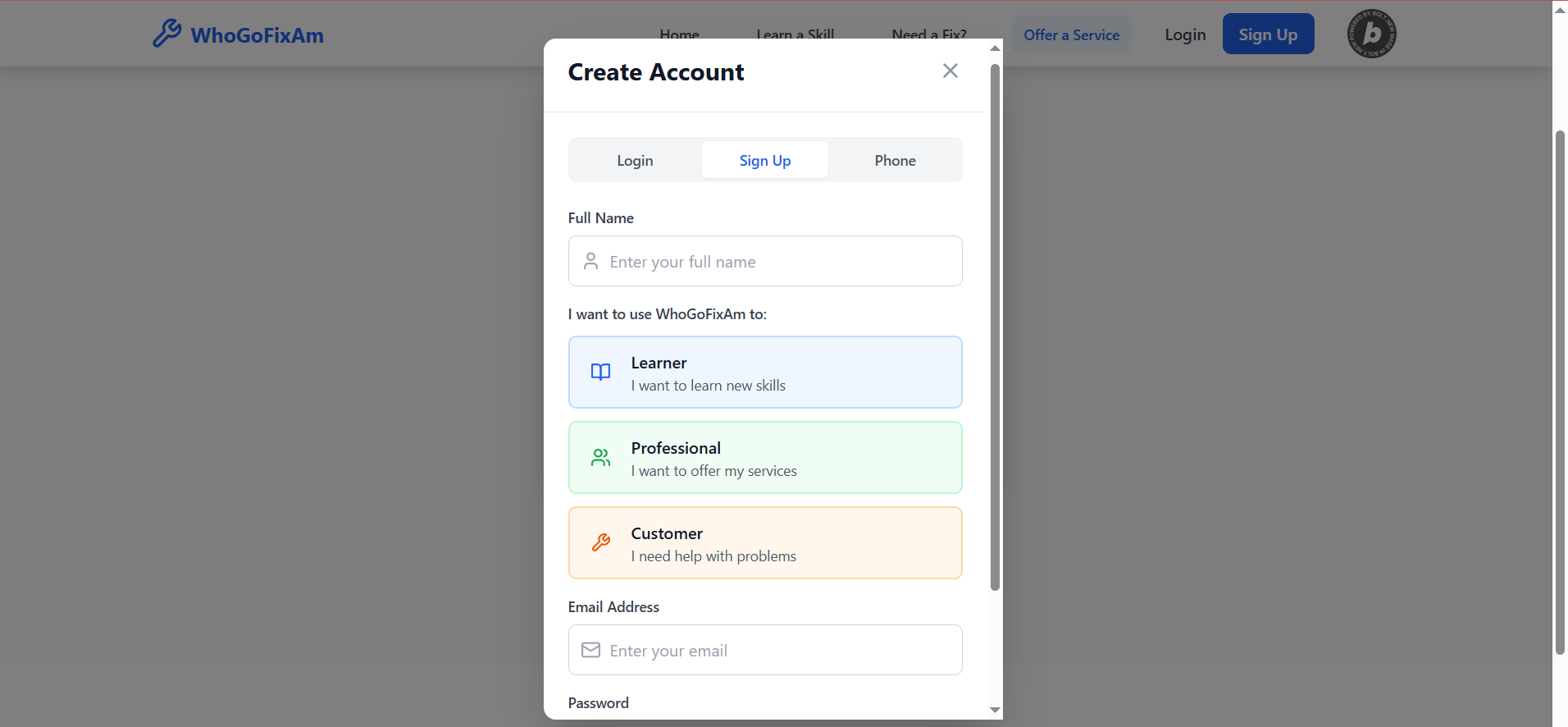
- 👨🎓 / 👩🎓 Learners: Users who want to learn new skills from community experts
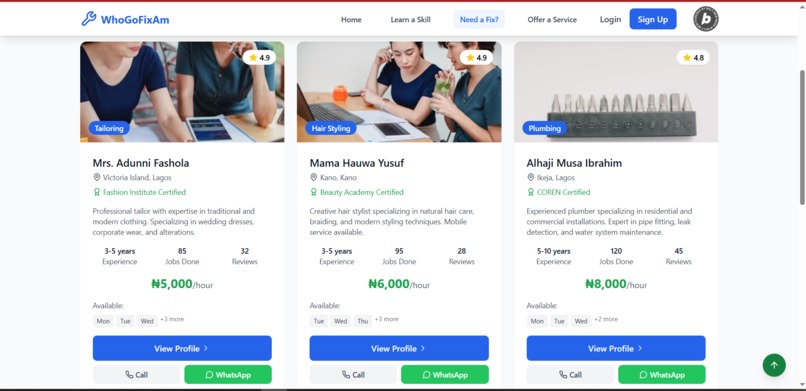
- 🔧 Sabi Workers (Professionals) can register and list their skills for people who need help with quick fixes at home — plumbing, electrical work, tailoring, you name it.
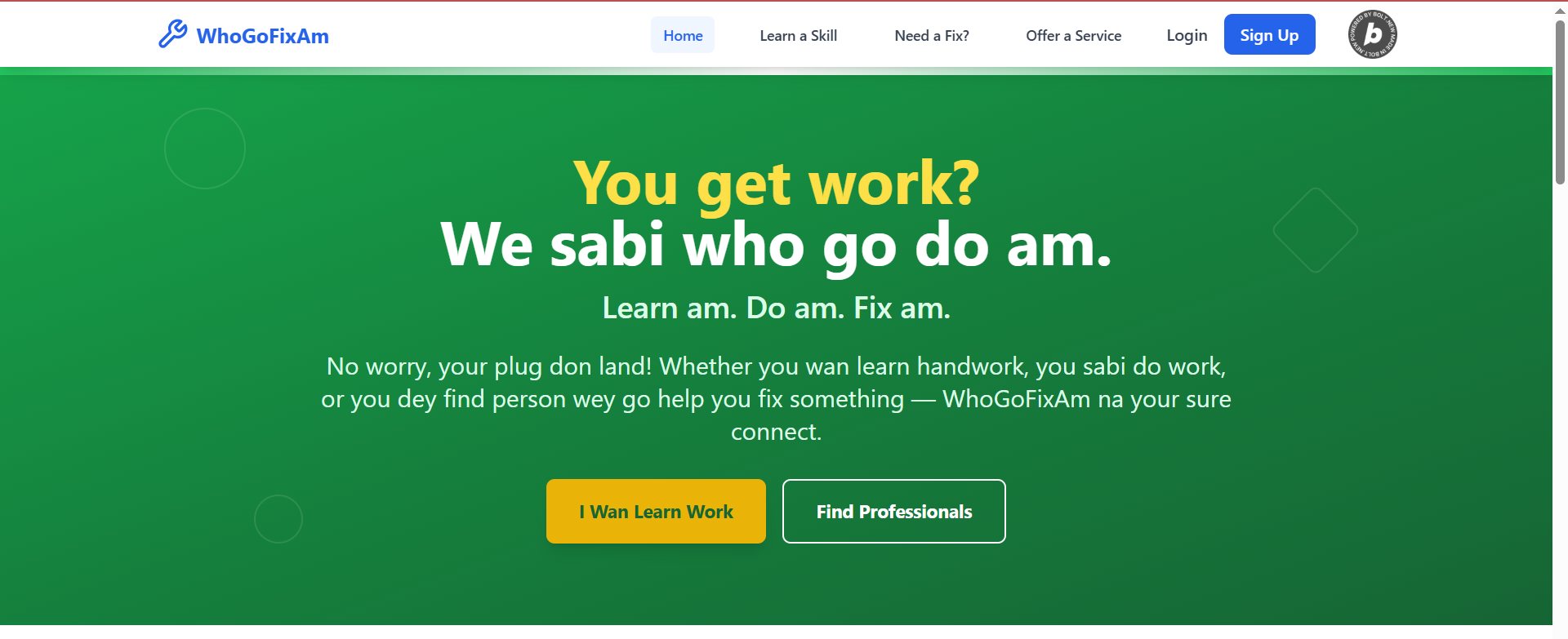
- 🤝 Clients (Customers) can easily search by skill and location to find trustworthy professionals. And yes — we do it all with a Pidgin English interface like: “You get work? We sabi who go do am!”
How we built it
We started by wireframing the core user flow — from signup to service or skill discovery — then built a fully functional React-based web app using Firebase for authentication and data storage. We kept the UI mobile-friendly and clean for seamless navigation. Our backend structure was built with scalability in mind — Firestore to store profiles, skills, and workshop data. We also outlined future features like ID verification for pros, and geolocation features for easier searches.
Challenges we ran into
- Getting the data structure right to support both learners and service seekers was trickier than expected.
- Implementing user roles and making sure that each role could only access its respective features was a bit complex initially.
- Crafting a UI that was simple enough for people of all ages and literacy levels.
- Balancing different kinds of professionals in one directory without losing focus or making the app feel crowded.
Accomplishments that we’re proud of
- Successfully created a working MVP that lets people register as professionals, or customers.
- Integrated basic features like skill browsing, profiles with contact information, and local workshop listings.
- Designed a friendly and familiar interface with Nigerian Pidgin language to make everyone feel at home — “No wahala - we get who go do am.”
- Built the foundation for scalable features like ID verification, Google Maps integration, and push notifications.
- Developed a structure that empowers Nigerians to monetize their vocational skills and gain more visibility — all in one place.
- Built an admin dashboard for verifying professionals and resolving disputes.
What we learned
- Building something truly useful means making it as simple and familiar as possible for the end-user.
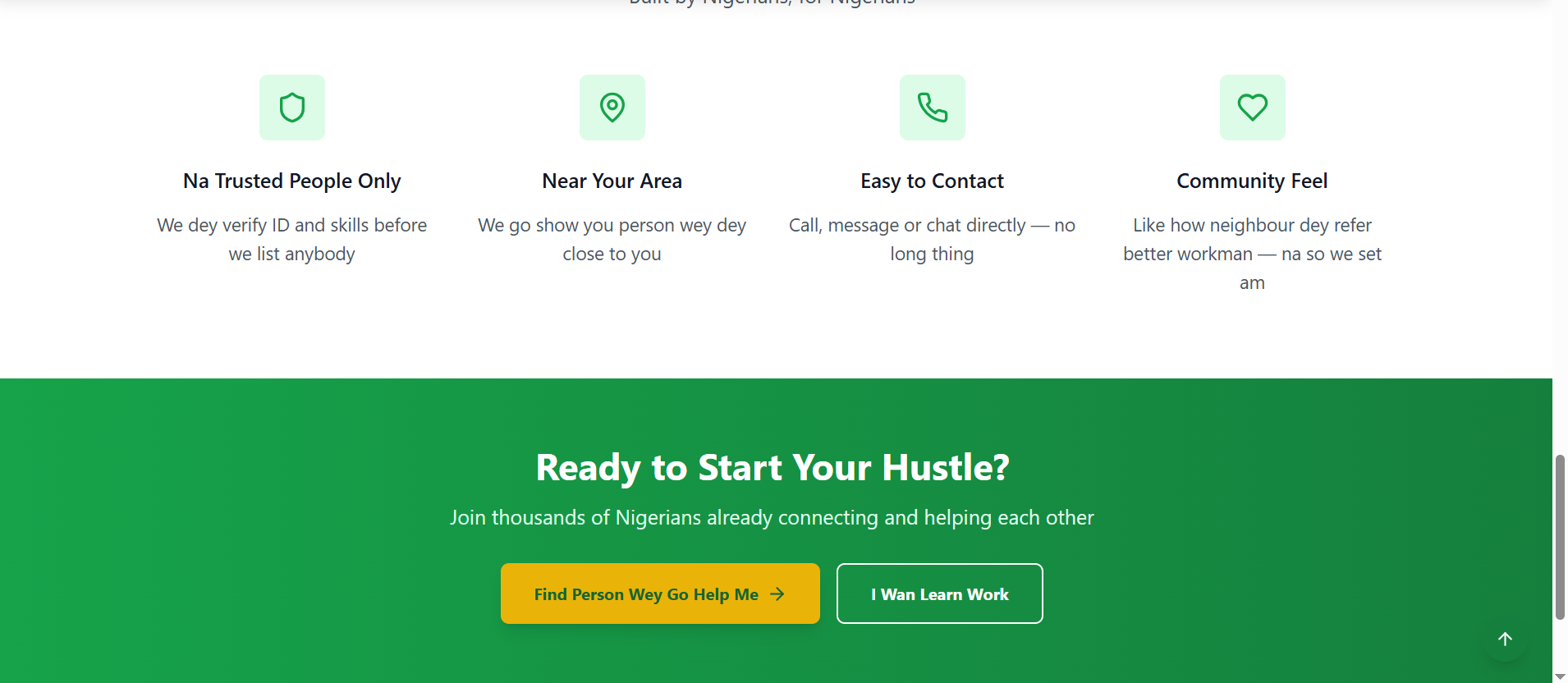
- Voice and tone matter — especially in a local context. Keeping the interface in Pidgin English lowered barriers and increased trust.
- Firebase as a backend proved super helpful in iterating quickly and managing real-time data.
- Finally, vocational skill workers in our communities are often overlooked online — and making their work accessible can have real-life impact.
What’s next for WhoGoFixAm
Our next steps include:
- Implementing ID verification so clients can trust professionals they’re hiring.
- Adding a Google Maps integration so learners can quickly find nearby workshops.
- Rolling out push notifications so people can get alerts about new trainings and new service providers.
- Onboarding our first 5000 users and ensuring we grow the ecosystem into a self-sustaining local marketplace where everyone can either learn am, do am, or fix am.
Built With
- bolt
- firebase-authentication
- firebase-sdk
- github
- netlify
- nigerian
- pidgin
- react
- react-router
- tailwind
- tsx
- typescript


Log in or sign up for Devpost to join the conversation.