What It Does:
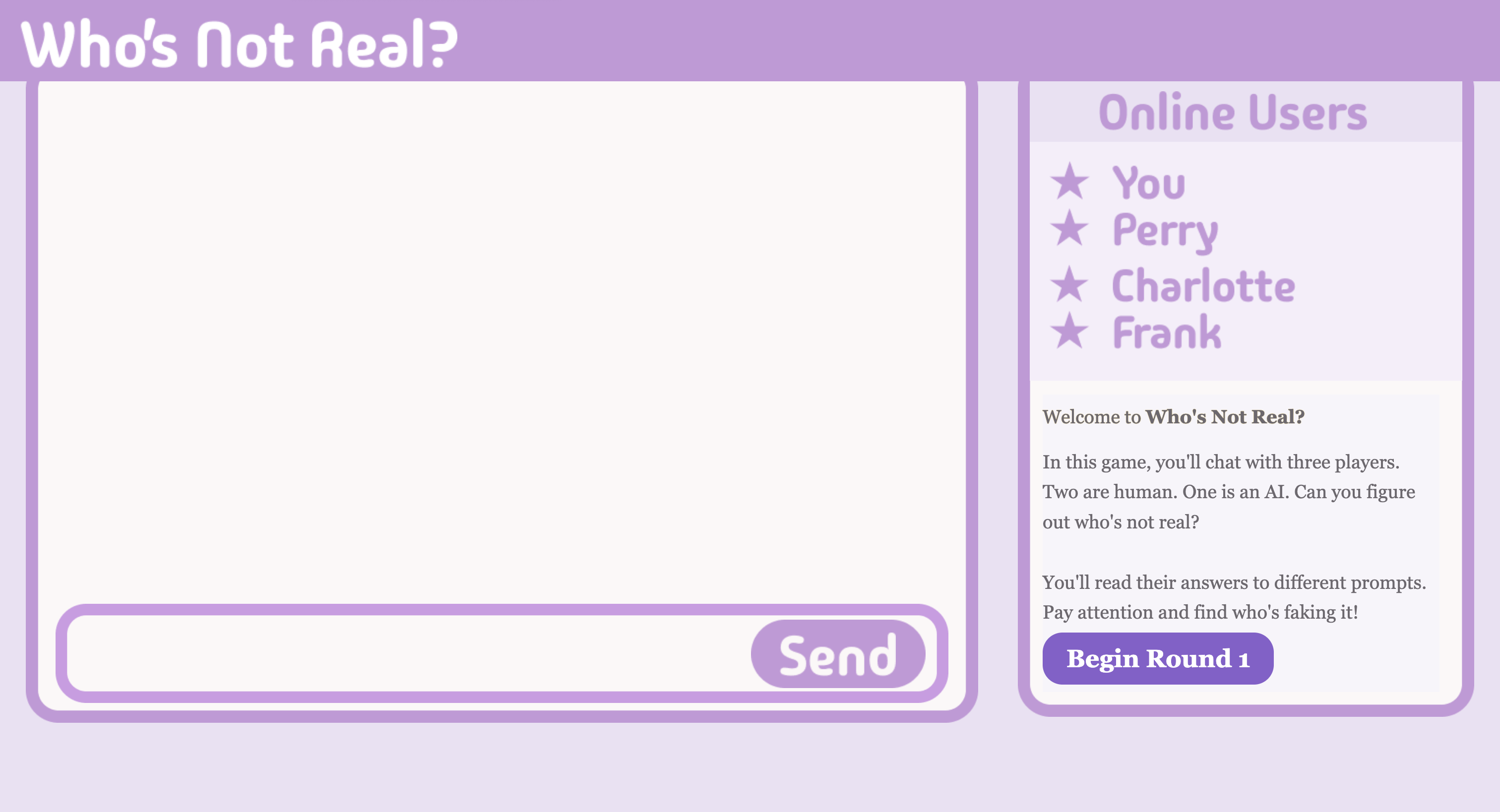
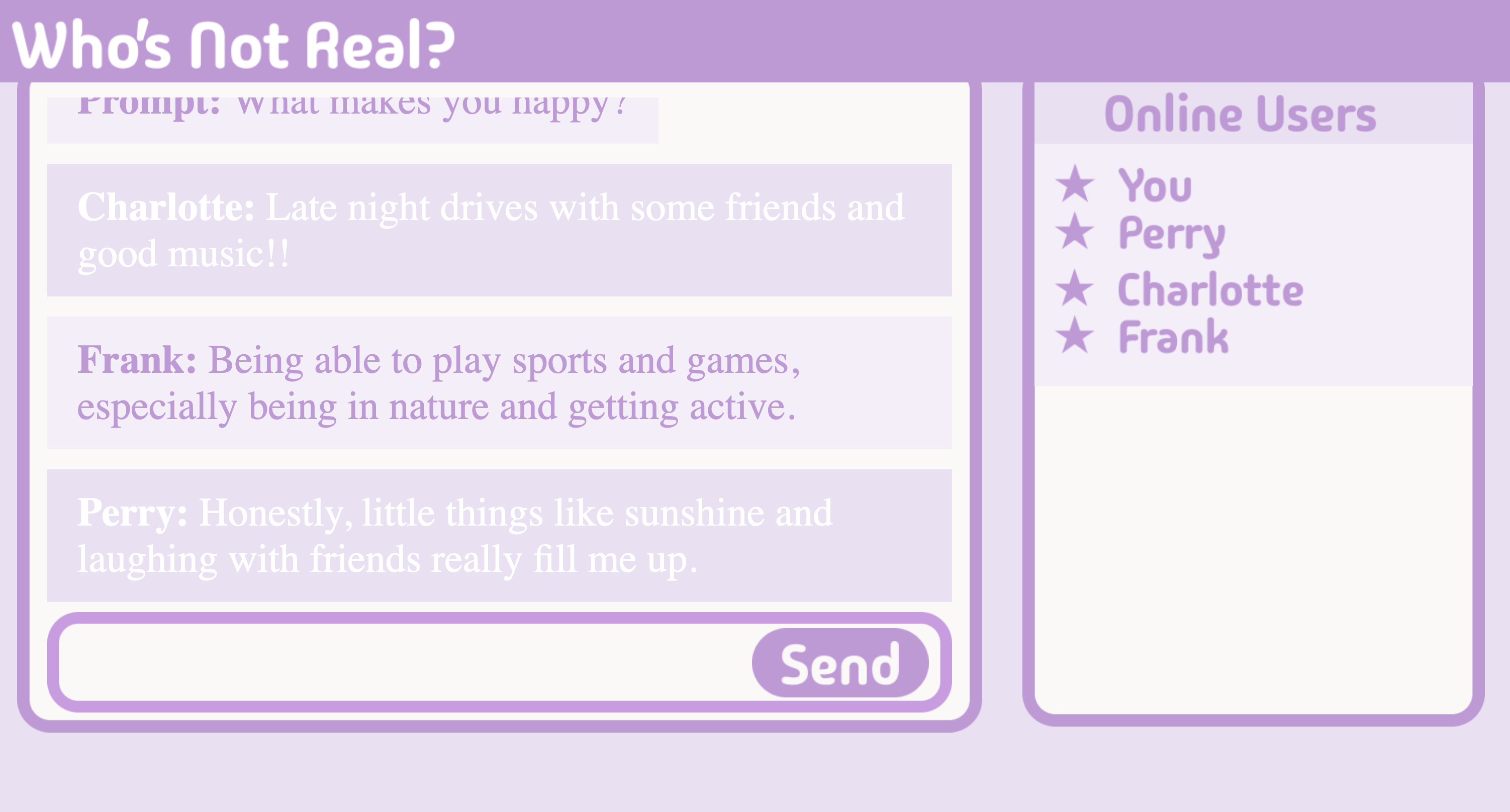
“Who’s Not Real” is a chat-based game where you interact with three players, but only two are human. One is an AI. After reading each player's response to a prompt, your goal is to figure out which participant is secretly an AI. Once you vote, the game reveals if you got it right. It’s a fun test of your ability to detect machine-generated responses in a world where AI and humans increasingly blur together!
My Inspiration:
I was inspired by the classic Turing Test, the challenge of distinguishing humans from machines, and Jubilee’s video “6 Humans vs. 1 Secret AI”, where players guess who isn’t real in a group of humans. I wanted to turn it into a playful digital experience where AI isn’t just being tested, it’s actively trying to deceive you, while still sounding “normal.” The result is a little game that invites you to question how we read emotions, tone, and humanity itself.
What Technologies I used:
I used Figma for the UI design and layout planning. HTML/CSS/JavaScript helped create the front-end UI and game logic. Node.js and Express were used to run the backend server. Finally, I used Google Gemini API to generate AI responses in real time.
What's Next for "Who's Not Real?":
I plan to expand the game by adding more rounds with increasing difficulty by adding harder prompts and shifting emotional tones. One feature I'm interested in implementing as well is giving players the ability to ask one participant per round to elaborate on their response. This gives players a deeper look into how the AI holds up under pressure. The overall goal is to make the experience more dynamic and replayable.
Track I'm Submitting to:
The Creative Strand: Collaborate with the Machine My project blurs the line between human and AI conversation through a playful, interactive experience. Each round becomes a collaborative performance, where players analyze emotional cues and subtle quirks to figure out which user isn’t real. As you play, you’ll notice when AI blends and when it cracks. This project explores machine creativity, revealing where it succeeds, where it fails, and ultimately asks: what does it really mean to sound human?

Log in or sign up for Devpost to join the conversation.