Inspiration
The chopstick-catching scene in The Karate Kid sparked the idea: what would it feel like to catch flies with chopsticks? I wanted to turn that small, difficult task into something playful and satisfying.
What it does
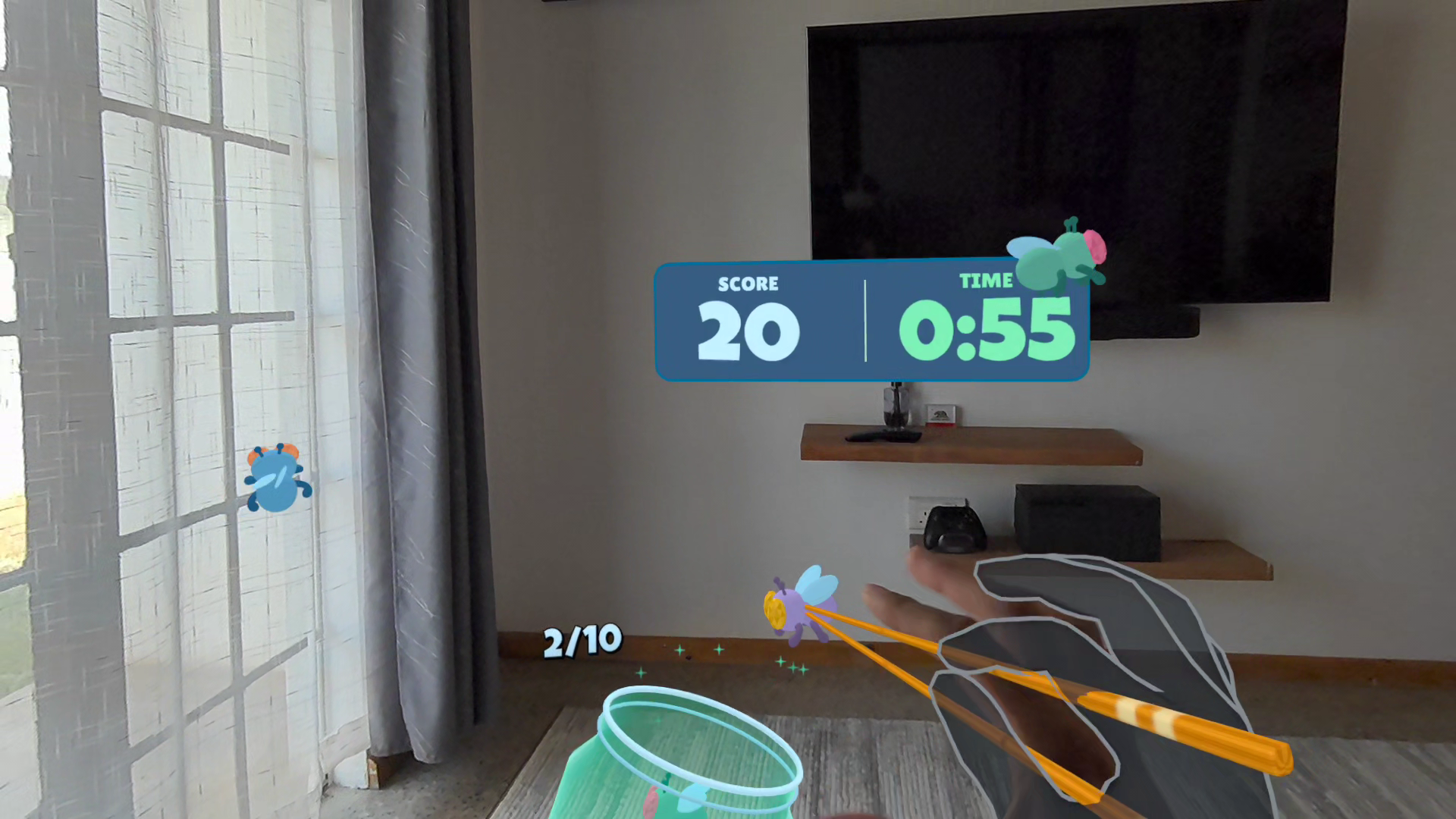
Who Let the Flies In? is a hand-tracked mixed reality game for Meta Quest. You have 60 seconds to catch as many flies as you can and put them in your jar, using virtual chopsticks controlled by your hands. No controllers required.
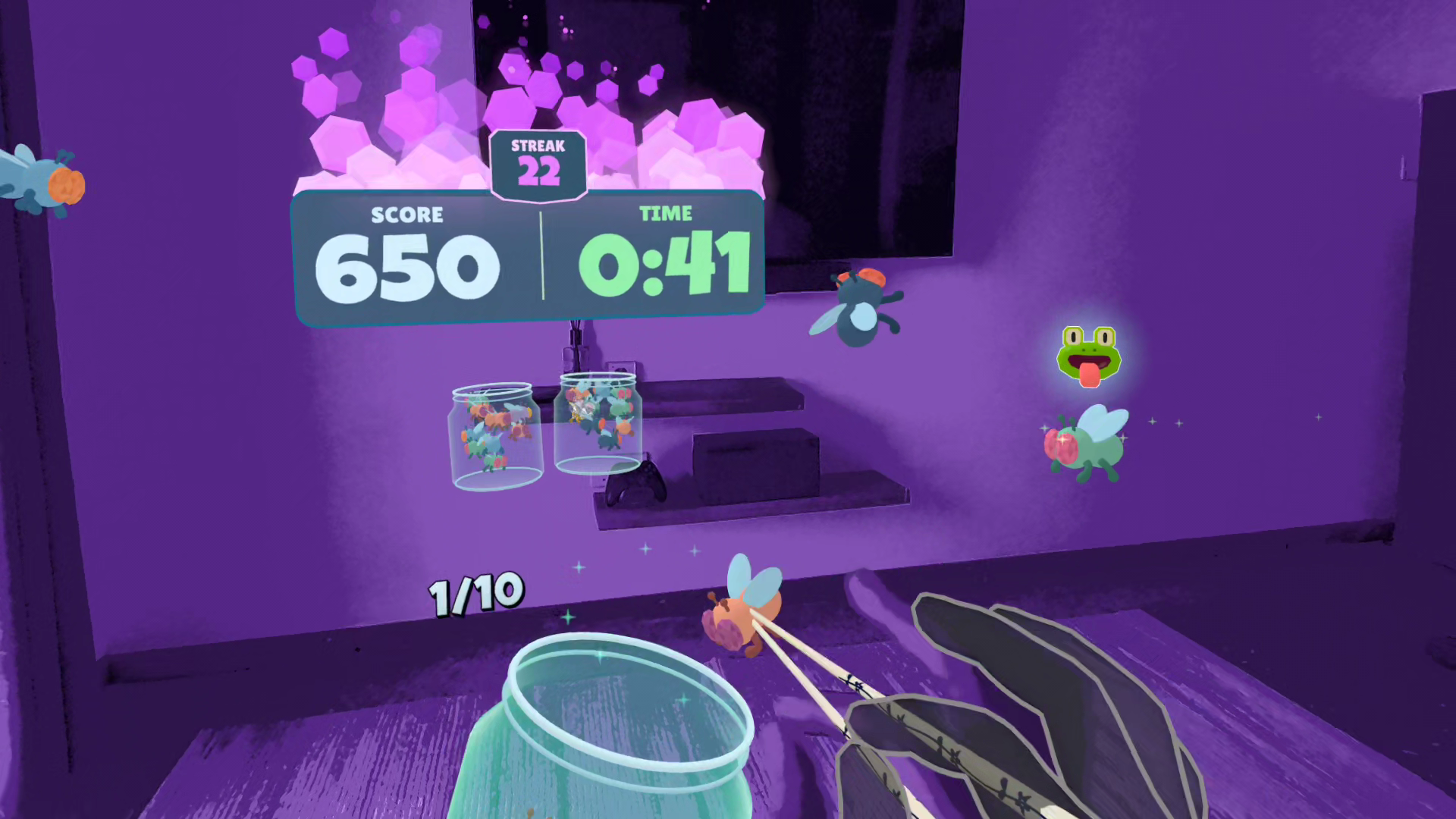
It starts with a simple rhythm: catch, jar, repeat. Consecutive successful catches build your score multiplier. As your streak grows, rising sound effects, purple scoreboard flames and colour effects across your surroundings make that progress something you can see and hear.
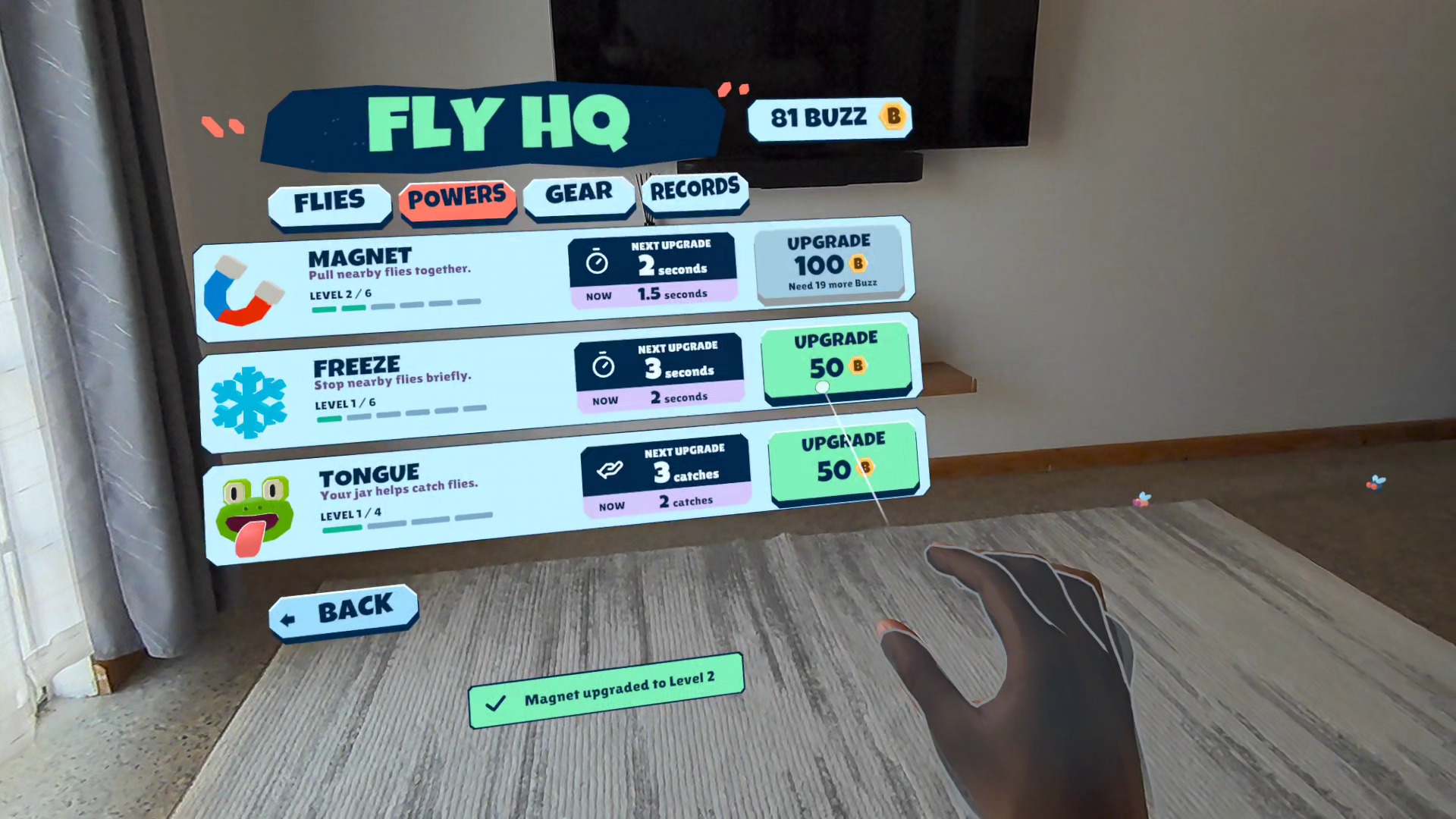
Three power-ups help you catch more flies:
- Magnet gathers flies into a growing chain.
- Freeze holds nearby flies still for easier catches.
- Tongue gives you assisted catches.
Permanent upgrades make these abilities more powerful. A short Magnet chain early on can become a ridiculous stack of flies later, with completed jars piling up as you bank your catches.
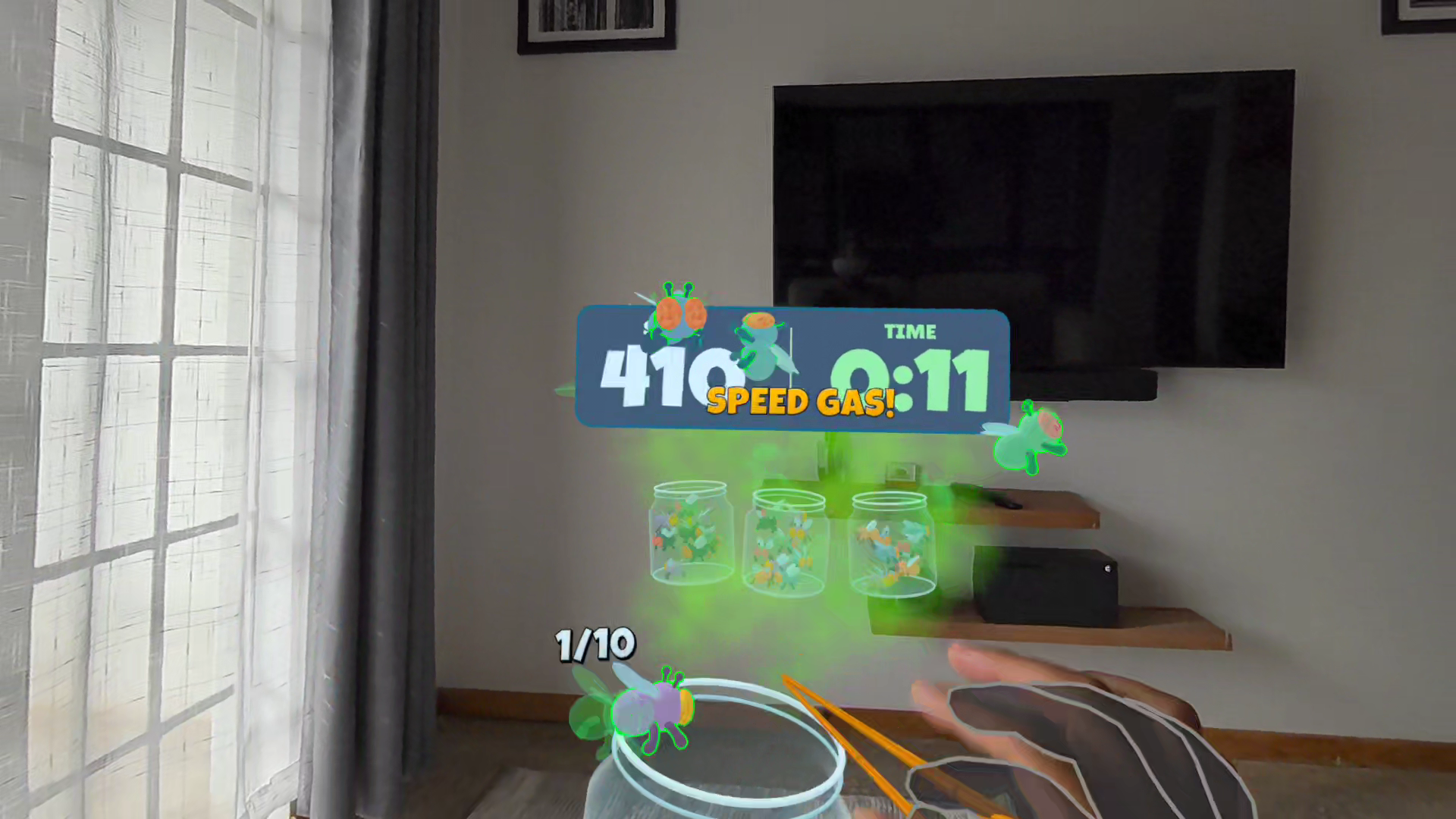
The troublemakers keep you paying attention. Bomb Flies explode when caught. Catch the Speed Gas Fly carrying a canister, and nearby flies become faster and harder to catch. Thief Flies steal from your jar until you catch and jar them.
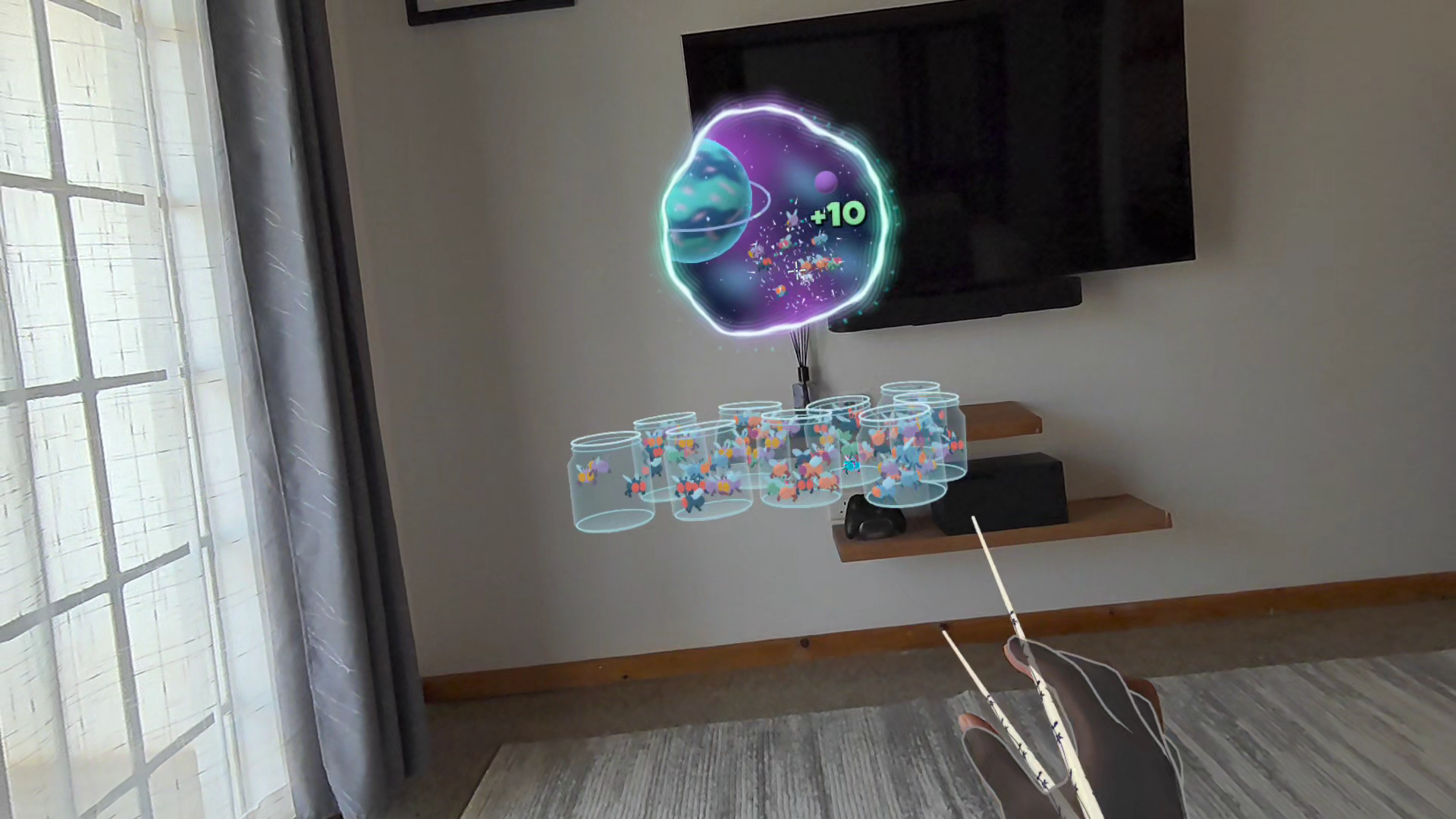
When the timer ends, your collected jars become targets in a bonus shooting round. Aim your chopsticks and shoot them back through the portal, earning ten extra points for each successful hit.
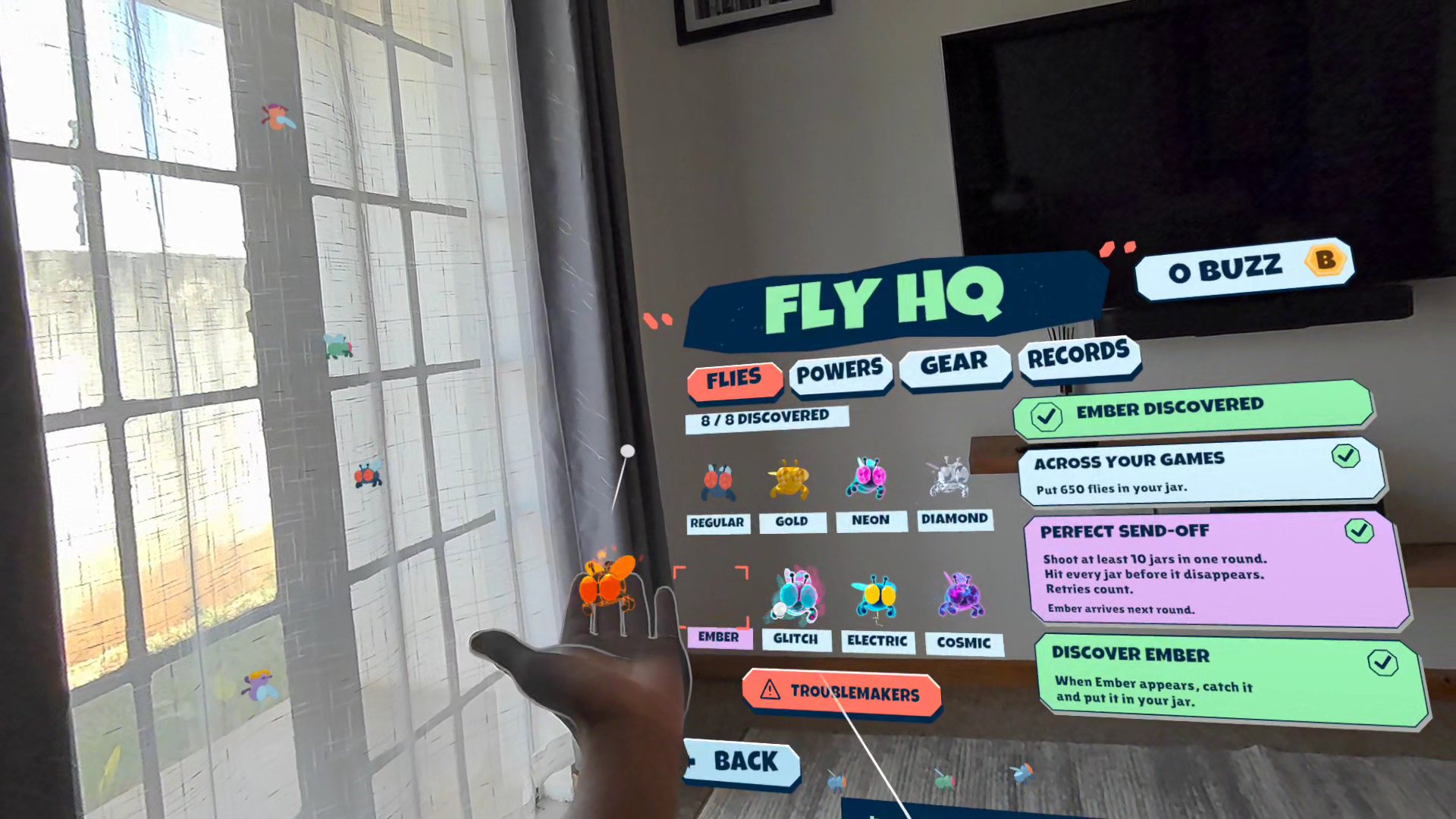
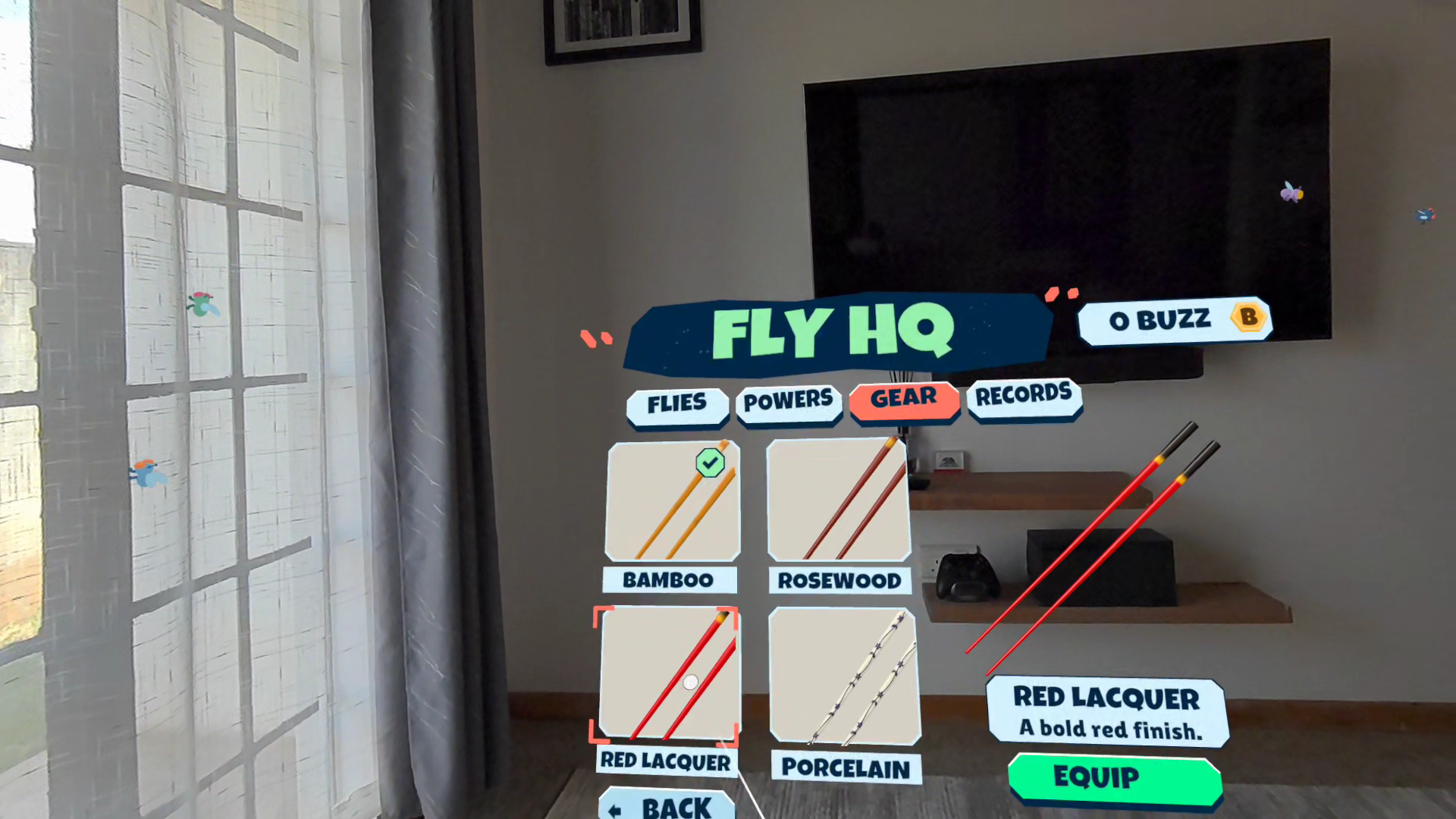
Each fly you jar also earns Buzz, which you can spend on permanent power-up upgrades and chopstick finishes in Fly HQ. The collection contains eight fly types: Regular and seven special species. Complete challenges to make special flies appear, then catch and jar them to unlock them. A global leaderboard gives you another reason to improve your next round.
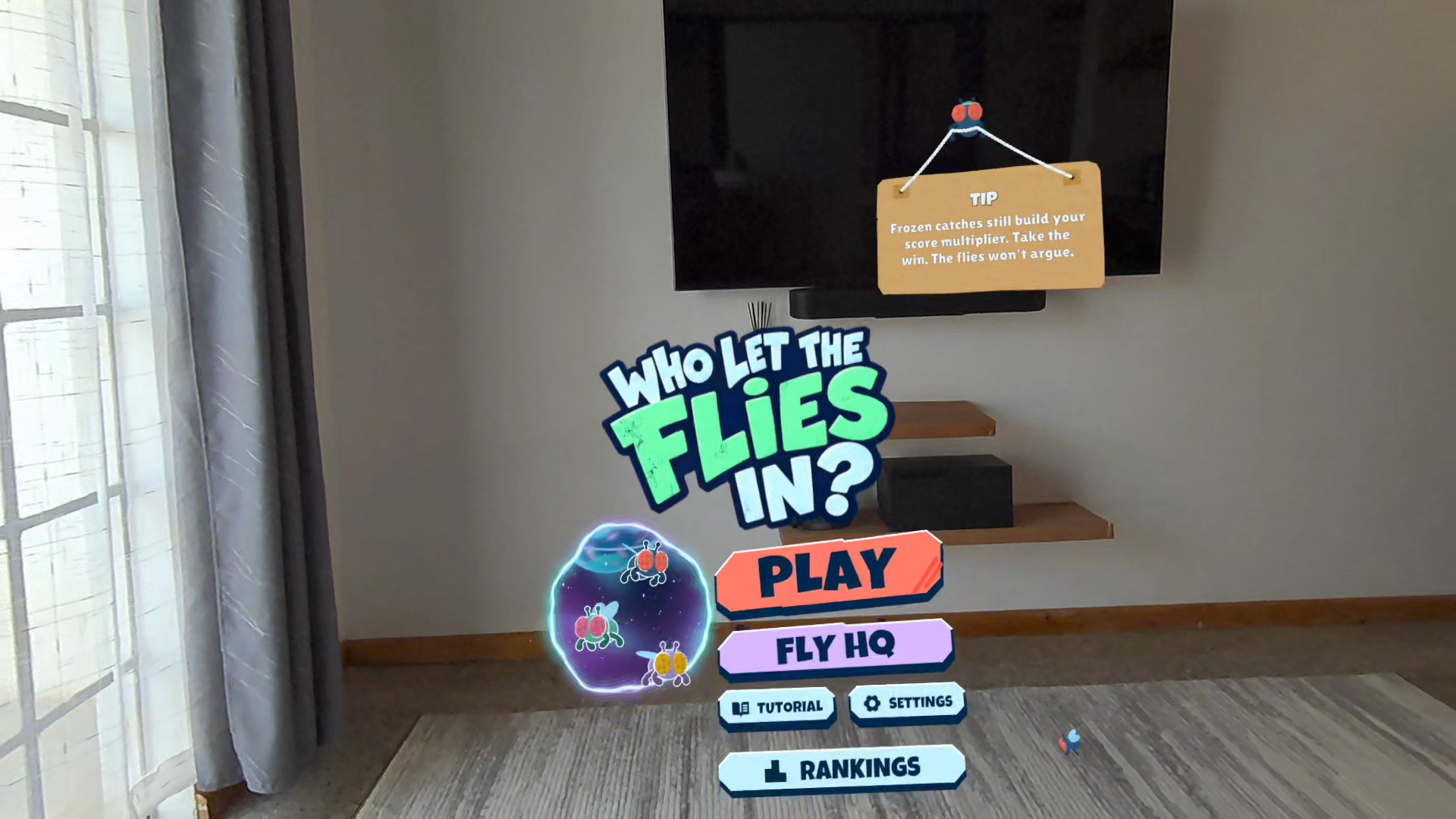
The flies remain part of your surroundings between rounds. While you browse the menus, Fly HQ or rankings, ambient flies land and crawl on detected real surfaces. These visitors are decorative: they make the infestation feel present.
How I built it
I built the game in Unity using C#, Meta XR and OpenXR. Hand tracking drives the chopsticks, jar, menus and bonus-round shooting. Passthrough keeps the real environment visible, while live environment-depth queries identify surfaces where ambient flies can land and crawl.
Codex was my AI development assistant throughout the project, helping me implement features, investigate bugs, write automated checks and iterate on designs. Through Unity MCP, it could inspect the project, interact with the editor, review console errors and capture previews. Meta’s VR development tools and MCP connection also supported device checks, debugging and performance analysis.
For the visual work, I used Blender and Blender MCP to create and refine 3D assets, arrange scenes and render artwork using the game’s models. This gave me control over the characters, materials, lighting and composition while keeping the artwork consistent with the game.
The process was iterative: I made design decisions, tested changes on the Quest and used the results to guide the next revision. Automated checks helped catch regressions, while recorded play-session data helped me assess progression and power-up balance. On-headset testing remained essential for judging comfort, clarity and game feel.
Challenges
Getting the chopsticks to feel natural required careful work on grip, orientation and catch detection. A tool can technically work while still feeling wrong in your hand.
Long Magnet chains created another challenge. Flies needed to flow into jars, completed jars needed to move into place, and each action needed clear sound feedback all while the player continued catching.
Live surface detection introduced uncertainty. Tracking can briefly drop, but a landed fly should not instantly disappear. I refined the visits so flies can finish landing and crawling before taking off and fading away.
What I learned
The headset was the most useful place to make design decisions. Several ideas looked promising in previews but felt distracting, unclear or unsatisfying during play.
I also learned that more modes do not automatically make a better game. After experimenting with alternatives, I focused the competition build on one complete 60-second loop, with progression, collection challenges and a bonus round.
Small changes often made the biggest difference: removing overlapping instructions, improving the timing of feedback, and making upgraded power-ups feel worth earning.
What’s next
I’d like to explore multiplayer: what happens when two people have chopsticks and want the same fly? Competitive catching and cooperative challenges could bring a different kind of fun to the game.
Other ideas in my development log include Meta achievements, playful interactions with the tip-carrying fly, and a photography journal for discovering flies around your surroundings.
These are directions to experiment with, rather than promised features. I want to test whether each idea adds something enjoyable while keeping the core catching experience simple and satisfying.
