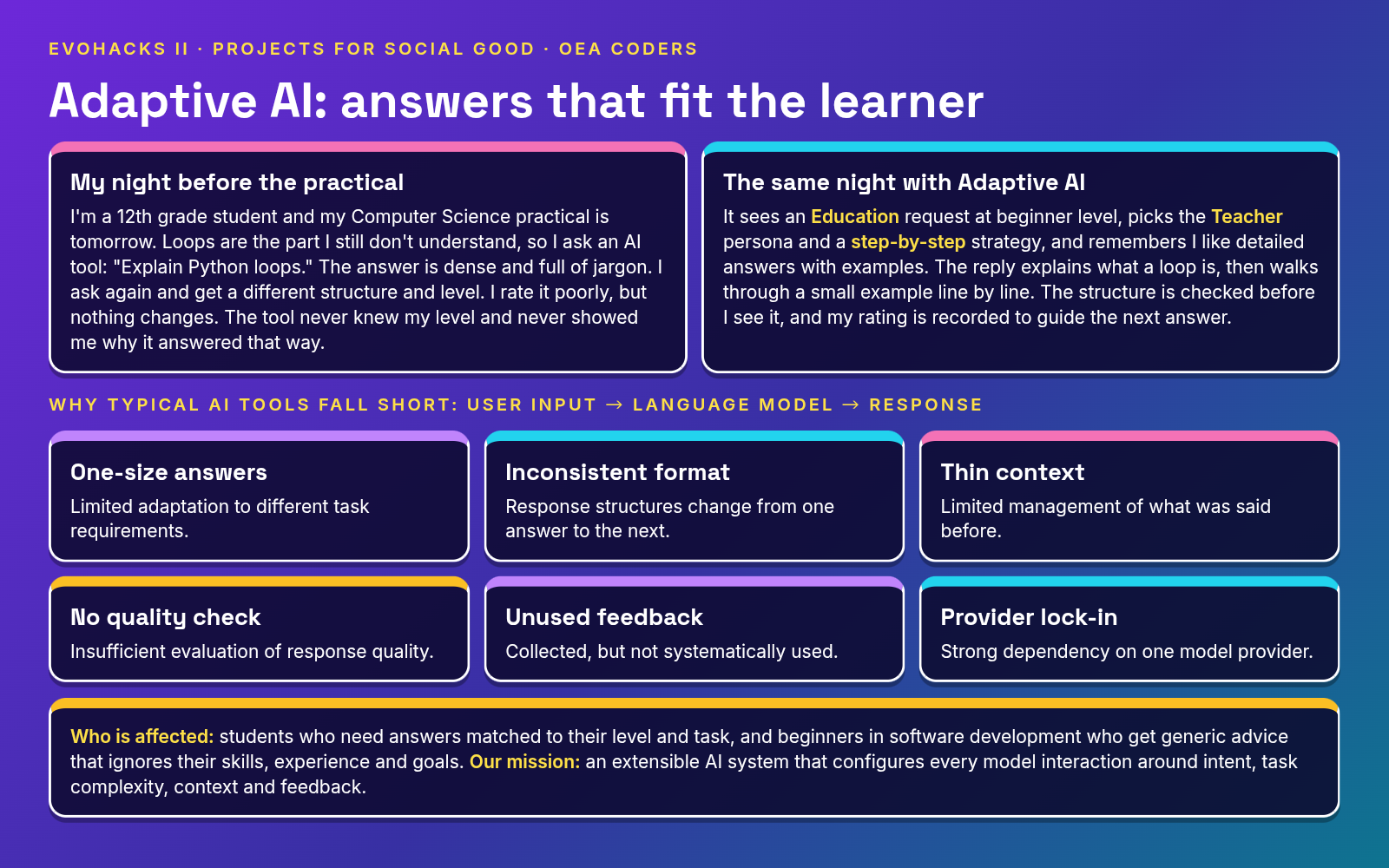
OEA Coders built Adaptive AI for the EvoHacks II "Projects for Social Good" theme. Most AI tools follow one pattern: user input, language model, response. That gives generic answers, inconsistent structure, weak context handling, no quality checks, unused feedback and dependence on one provider. Students feel this most, because they need answers that fit their level and task, and many tools don't show why they answered as they did.
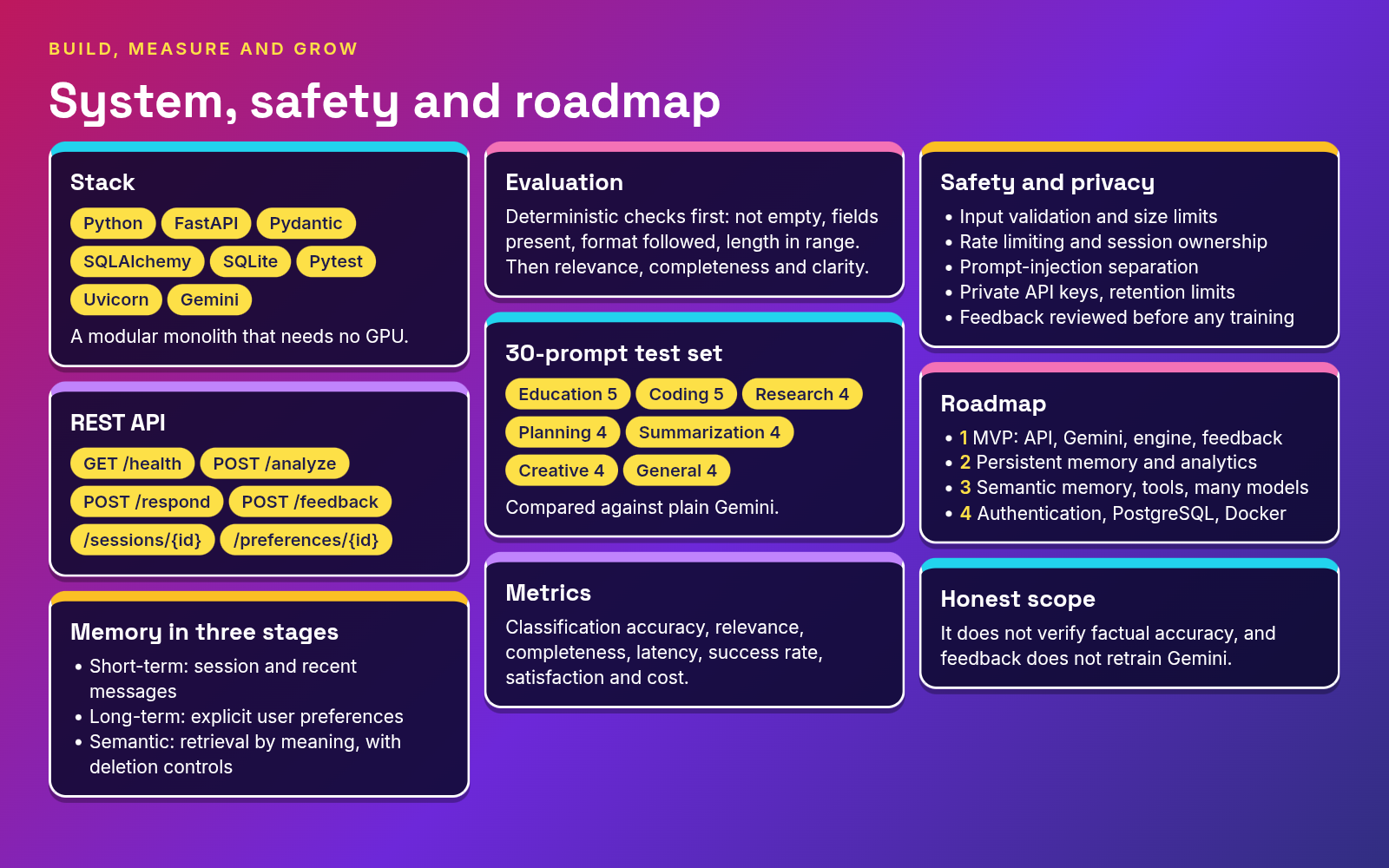
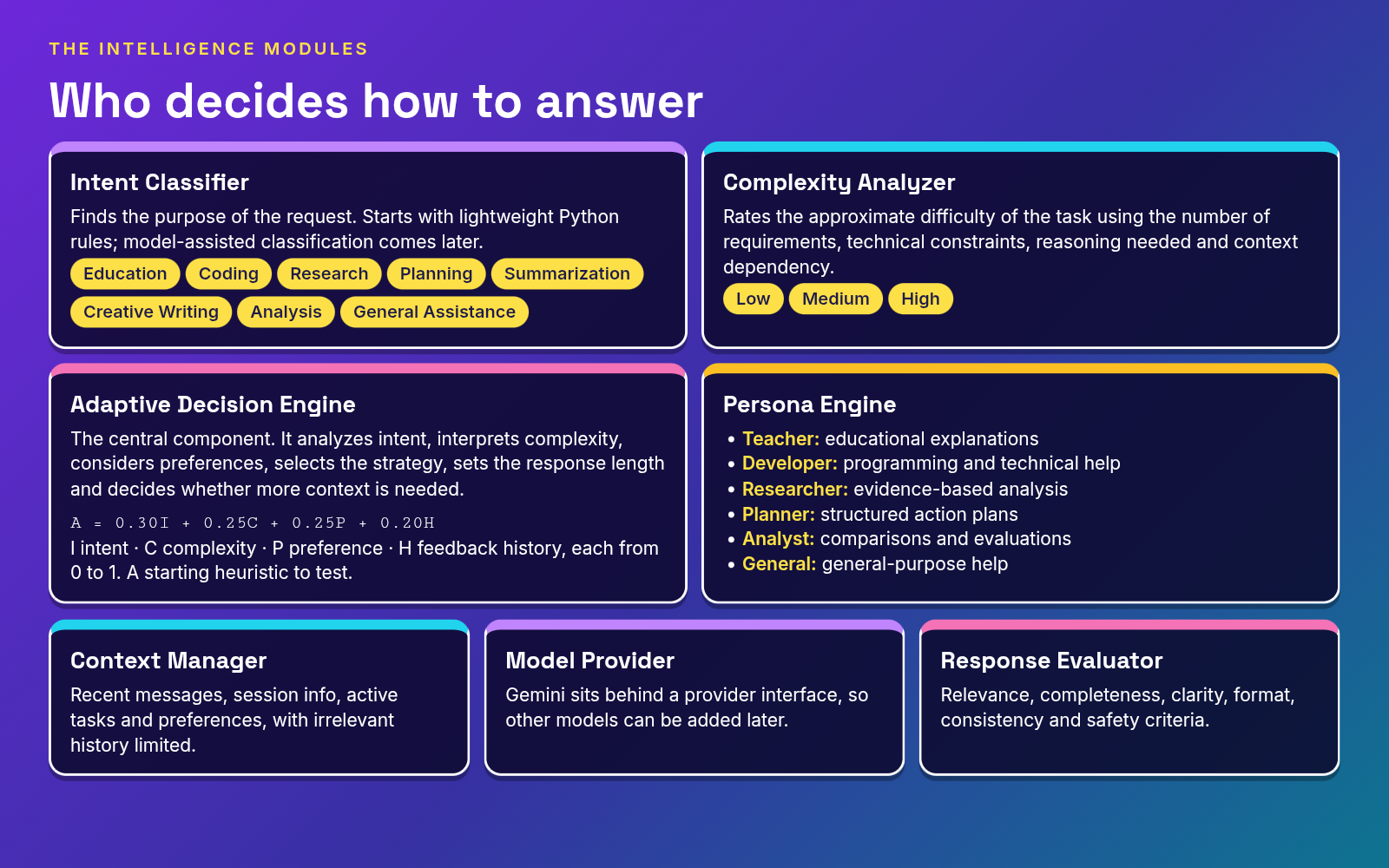
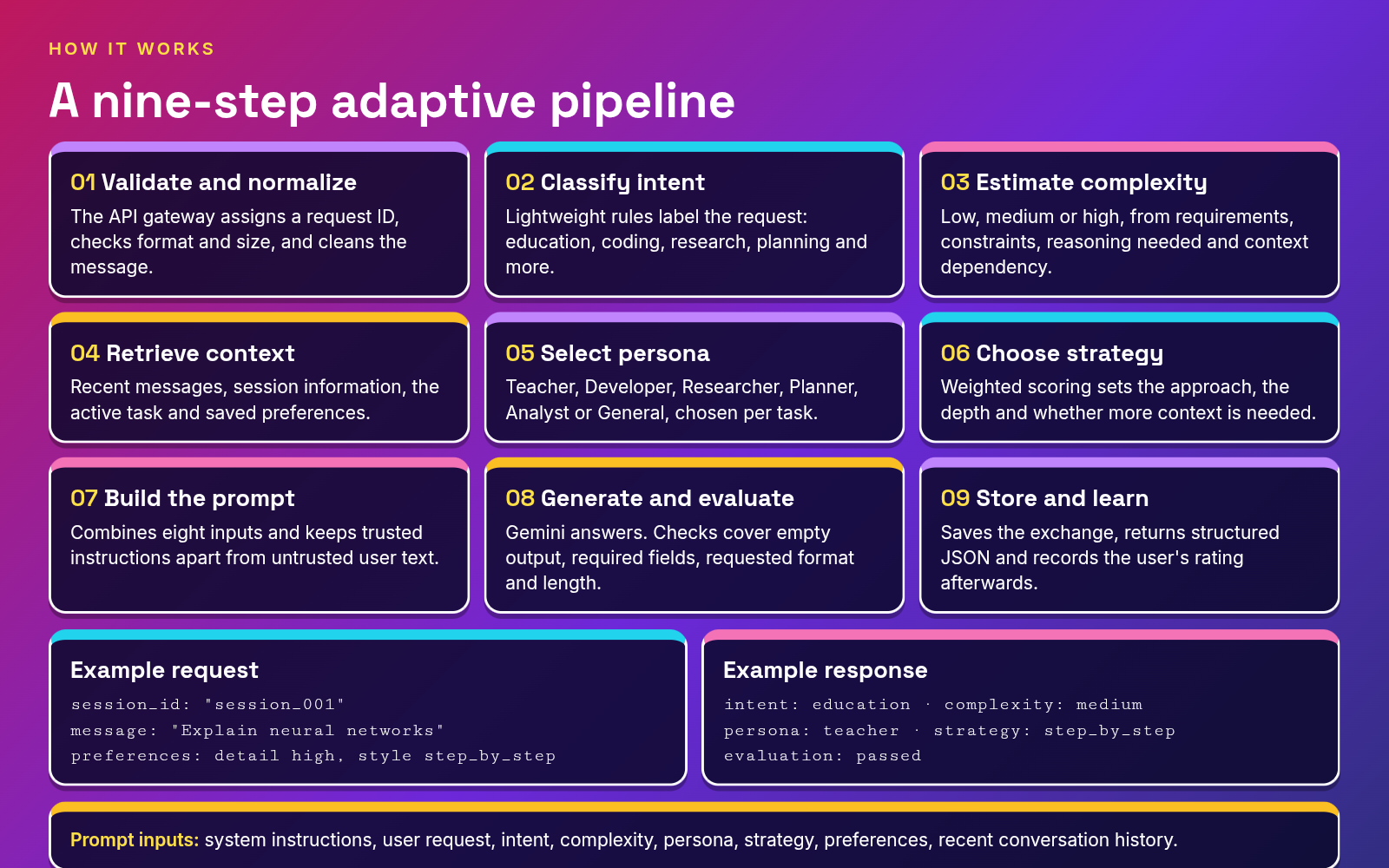
Adaptive AI adds a modular layer between the user and the model. It classifies intent, estimates complexity, and weighs the user's preferences and recent history. It then picks a persona (Teacher, Developer, Researcher, Planner, Analyst or General), a strategy and a response length, generates the answer, checks its structure and records the user's rating. The prototype is more transparent and context-aware, but it does not verify factual accuracy.
Future ideas
- Clarification engine: ask only the questions that matter.
- Persistent and semantic memory: recall relevant past conversations by meaning, with user controls and deletion.
- Feedback-driven strategy: learn which strategies work best for each task type.
- Smarter evaluation: model-assisted quality scoring on top of the basic checks.
- Multi-step tasks and tools: handle larger jobs with tool calling.
- Multiple models: switch providers behind one interface.
- Reviewed training data: fine-tune only on feedback that has been reviewed and consented to.
Built With
- backend
- claude
- design
- frontend
- github-jobs
- glassmorphic
- html
- innovative
- learn
- python
- team


