-
-
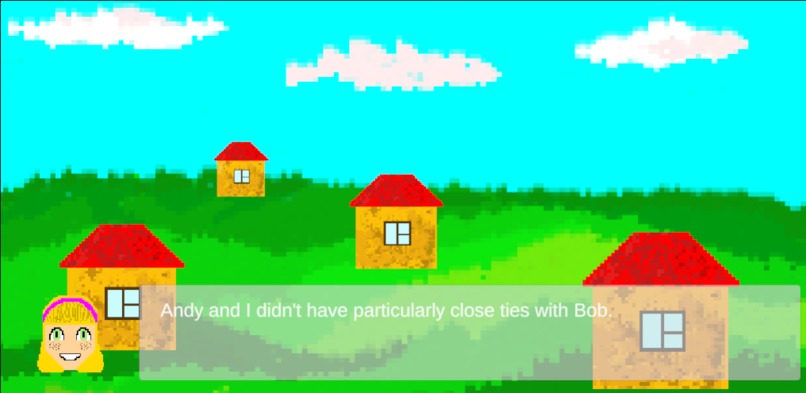
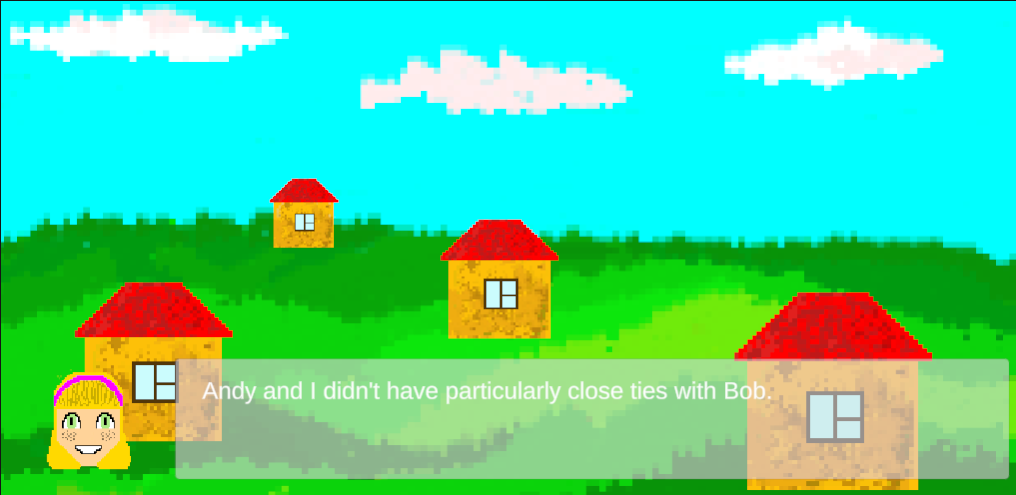
Interrogate citizens.
-
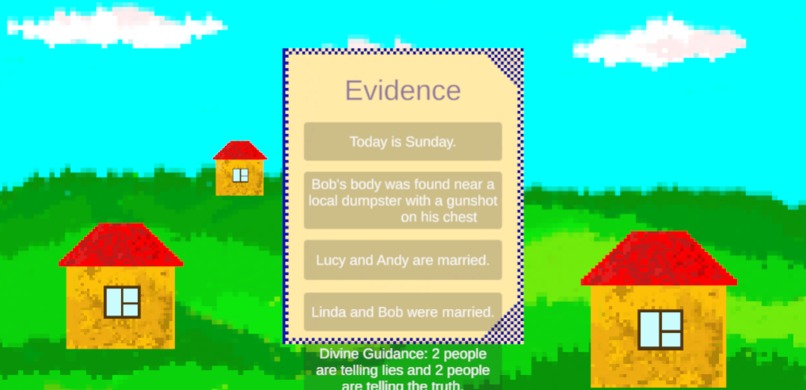
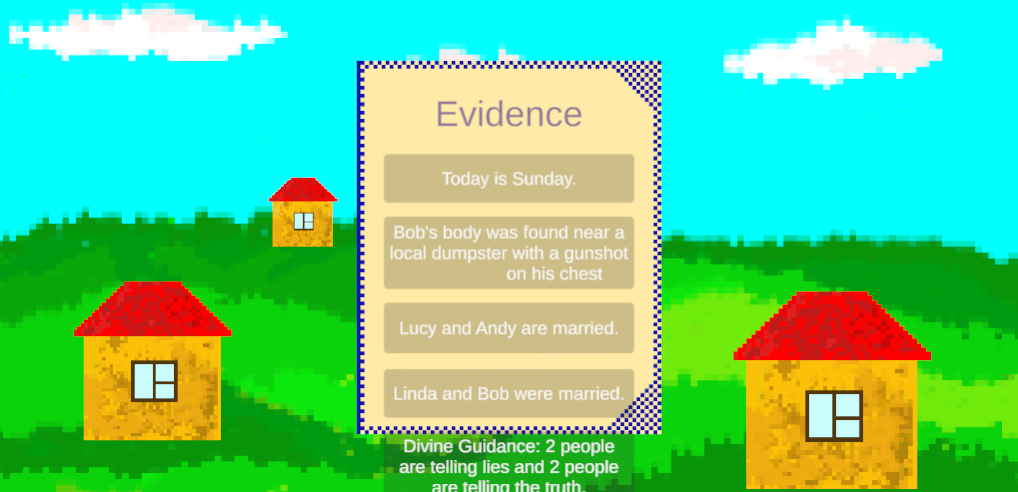
Examine the facts and evidence.
-
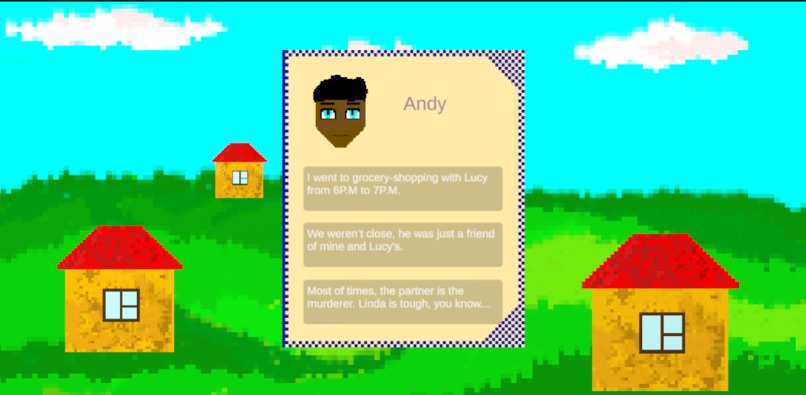
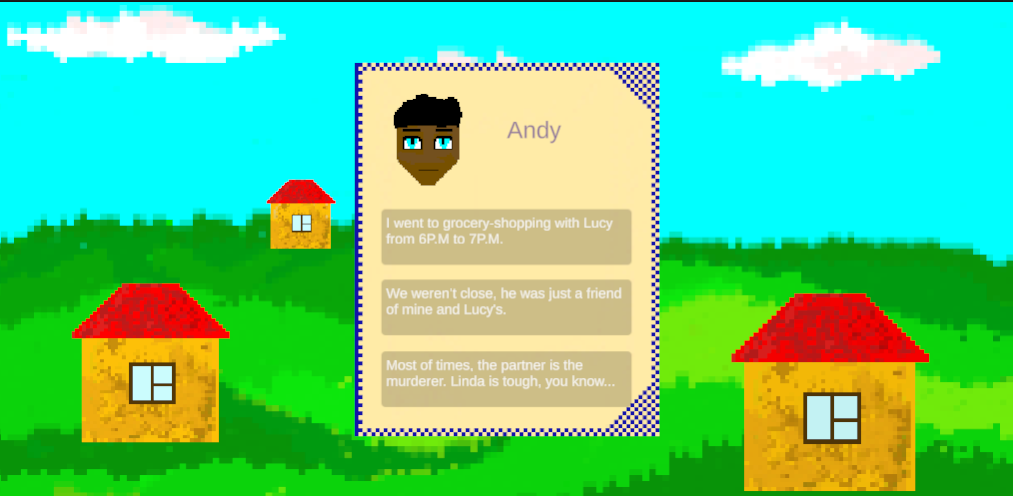
Note down people's statements.
-
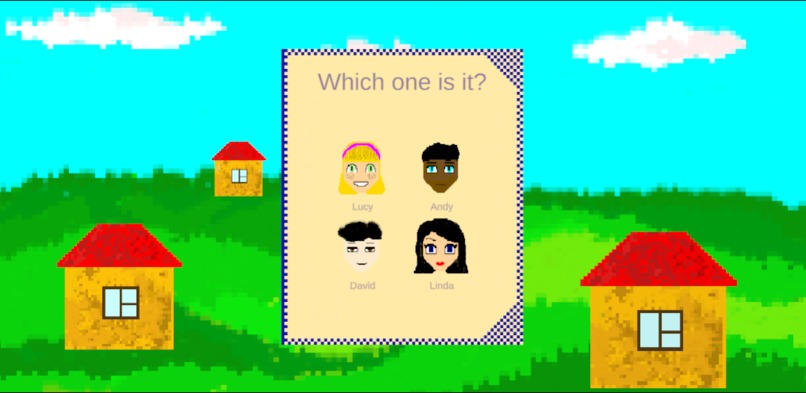
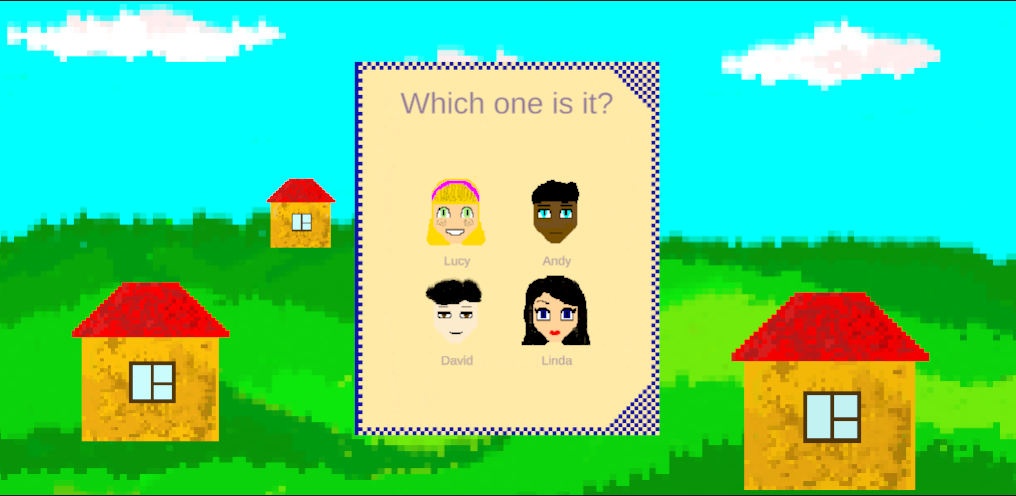
Find the Culprit!
-
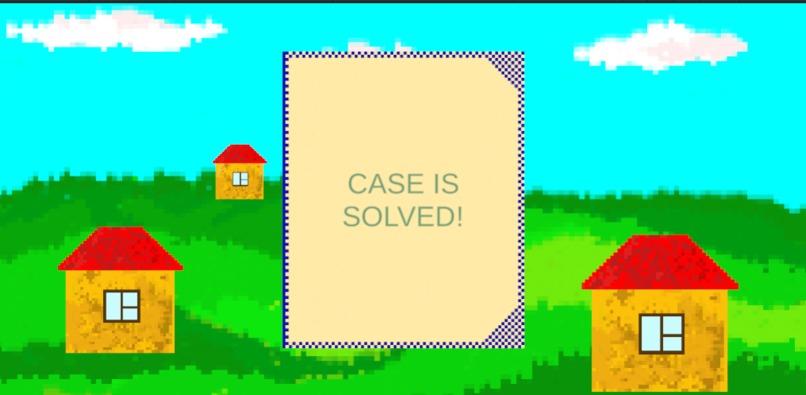
Case solved! Congrats!
Inspiration
Being truly interested in detective stories and the reliability of information presented to the press about various investigations inspired us to make a game about this. We wanted to explore the intersection of investigative work, media influence, and public perception. The game draws on themes from real-life crime investigations, where the truth is often obscured by conflicting reports, false testimonies, and the media's role in shaping narratives. Our goal was to create a detective experience where the player doesn’t just solve a murder but also navigates the complex relationship between evidence, misinformation, and the power of the press.
What it does
Players take on the role of a detective investigating the murder of Bob, a local figure found dead under suspicious circumstances. Four residents living near the crime scene are interviewed, but not all of them are honest. As the player, your mission is to gather evidence, cross-examine statements, and find the murderer. But the investigation doesn’t stop there. You must then present your findings to the media and shape the narrative that will be reported to the public. The choices you make in handling the information influence the journalists’ portrayal of the case, which can affect public opinion and even the outcome of the investigation.
How we built it
The game was designed using Unity, the pictures were made in PixilArt, and the script was written in Google Docs. We refined the scripts, design, and key functionalities multiple times to ensure we can deliver the story in the best possible way within 24 hours.
Challenges we ran into
Our team consists of 4 members, only one of which has experience with game development. Therefore, our challenge was to make sure everyone contributed to the project effectively and ensure coordination and communication. We had spent a lot of time trying to refine the script and the evidence presented by the people living there and see the game from the perspective of the player who has to find the culprit. We tried to make the facts clear, logical, and in some cases mutually exclusive, so that the player would be able to make conclusions by themselves. As for our development process, we had to reevaluate and take a step back every time a bug presented itself, as for a 24-hour game jam, our priority was to make a minimal viable product.
Accomplishments that we're proud of
We are happy we could make a working game with a cool and pretty interface and a great story! Most importantly, it is interesting to play!
What we learned
Throughout the development process, we learned a great deal about how storytelling and interactivity can be combined to create engaging and thought-provoking experiences. We gained insight into how players respond to uncertainty and deception in games. We also learned the importance of pacing and balancing story elements to maintain player engagement. We learned about each other as well, about great software, tools, tips and tricks, etc. Most importantly, we learned how to be a great team.
What's next for Who Killed Bob?
Looking ahead, we plan to expand "Who Killed Bob?". by adding more characters, deeper media interactions, and new storylines that explore different types of crime and misinformation. We also want to explore multiplayer options, where one player acts as the detective and another as a journalist, both influencing how the story unfolds in real-time. We will also develop sophisticated AI and graph algorithms to automatically generate and simulate scenarios, questions, responses and media.

Log in or sign up for Devpost to join the conversation.