-
-
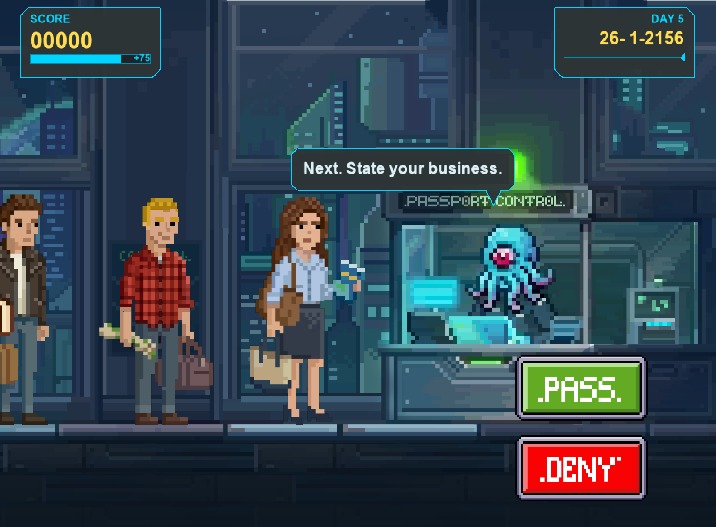
Who Is Not Human in Action - Desktop
-
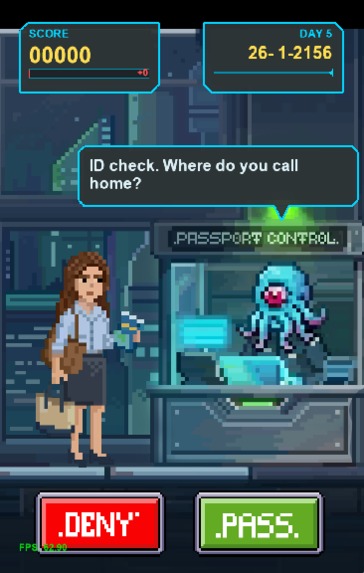
Who Is Not Human in Action - Mobile
Inspiration
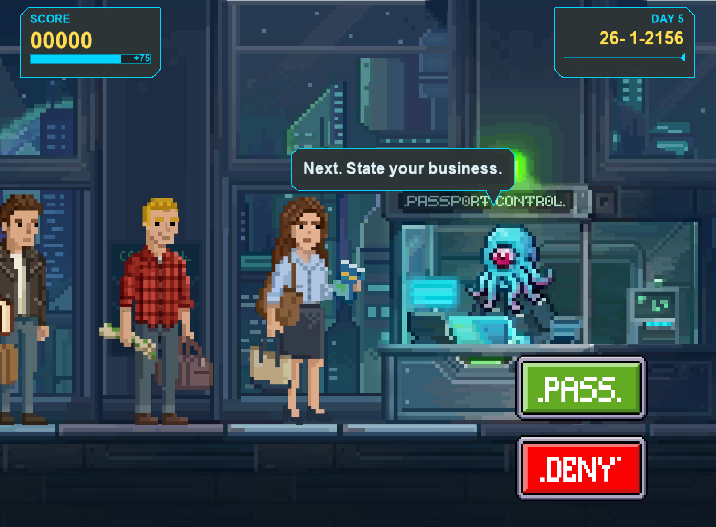
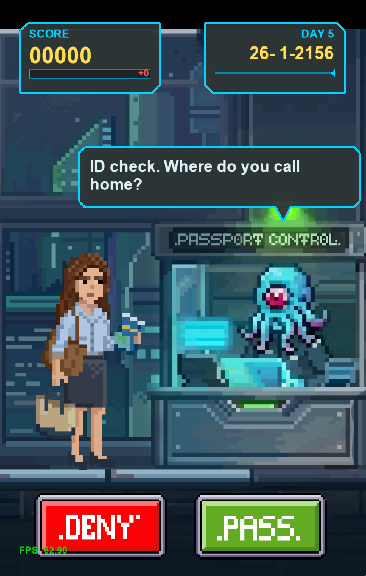
Who Is Not Human was inspired by pixel art and retro-style games that focus on observation and decision-making rather than action. Games like Papers, Please showed how simple visuals, repetition, and small inconsistencies can create tension and paranoia. I wanted to explore that same feeling, but in a sci-fi setting where identity itself is uncertain.
What it does
The game presents travelers who all claim to be human. In reality, only half of them are. Each traveler arrives with documents such as passports, names, and origin planets. Some of these details are wrong on purpose. The player must inspect the information, notice inconsistencies, and decide who is not human.
The challenge is speed AND attention to detail.
How I built it
I built the project using GameMaker and exported it through GX.games for browser play. This was a new workflow for me, as I normally work with Unity and Unreal Engine.
The game logic is driven by a central manager that spawns travelers from data. Each traveler is generated with attributes like identity, documents, and hidden non-human traits. The visuals are kept intentionally minimal using pixel art, so the focus stays on logic and deduction rather than animation or effects.
Challenges I ran into
Learning GameMaker and Devvit from scratch was the biggest challenge.
Other challenges included:
- Handling resolution and fullscreen behavior for Reddit Desktop and mobile
- Making sure travelers spawned, moved, and stacked correctly
- Keeping the rules understandable while still leaving room for doubt
- Bugs, bugs, bugs, bugs, ...
Accomplishments that I'm proud of
I am proud of shipping a complete, playable game in an engine I had never used before. I am also happy with how the core idea works with very few mechanics, and how the game creates tension without relying on action or horror.
Building a deduction experience that works with minimal visuals was a key personal goal.
What I've learned
This project taught me how quickly you can prototype strong ideas when you focus on core mechanics. It also helped me better understand GameMaker’s strengths and limitations, especially for small, logic-driven games.
Most importantly, I learned to trust simple systems and let the player do the thinking.
What's next for Who Is Not Human
When I have more time, I would love to expand the game further. I want to add more sounds to strengthen the atmosphere, along with additional traveler types and new alien variations.
I also plan to introduce more mechanics and rules, increase variation between runs, and hide small easter eggs for attentive players. The goal is to deepen the experience without losing the simplicity that makes the core idea work.


Log in or sign up for Devpost to join the conversation.