Inspiration
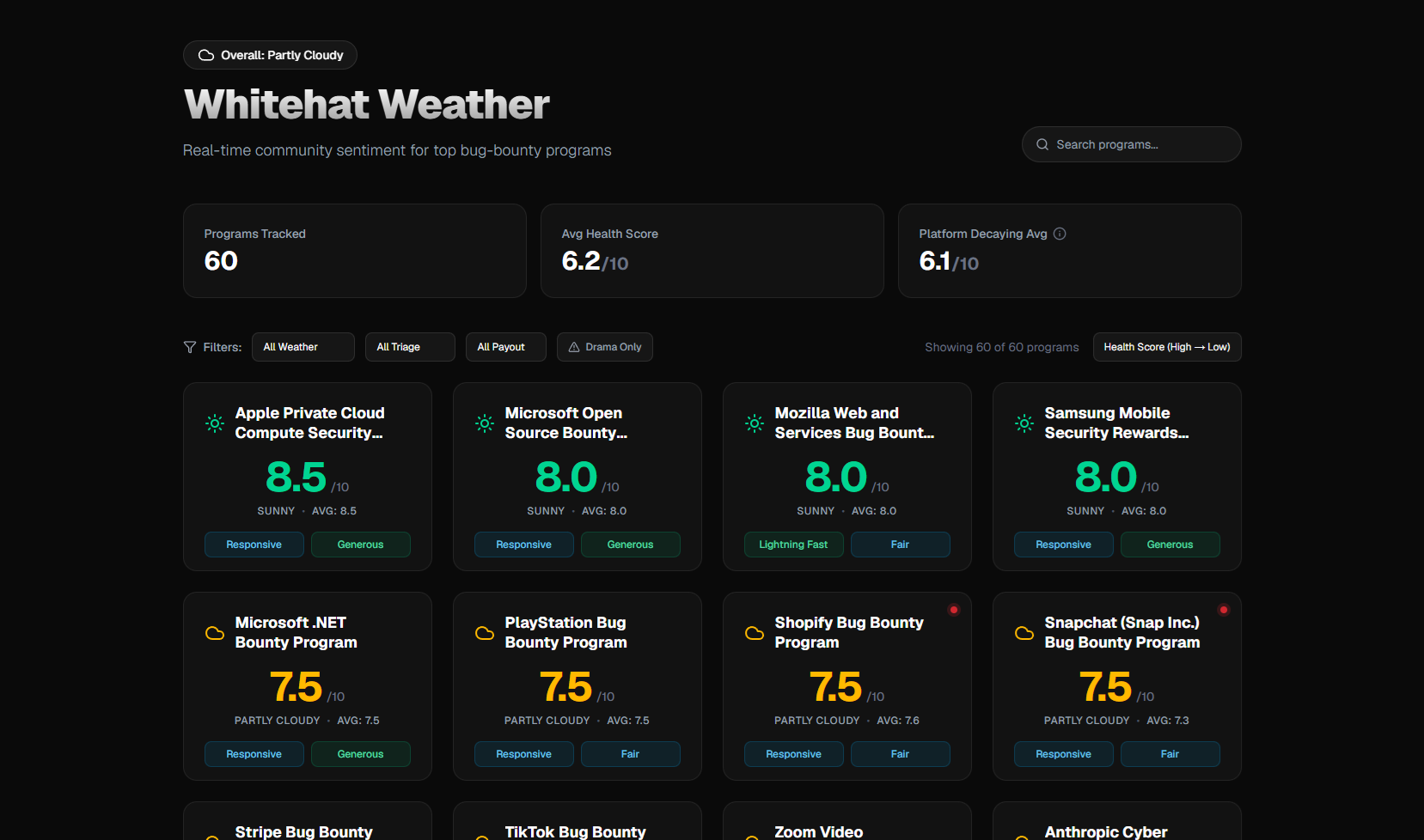
Bug bounty hunting is one of the most important jobs in cybersecurity, but researchers regularly face immense burnout. Independent hackers frequently encounter companies that silently patch reported bugs without credit, downgrade severities to avoid payouts, or feature hostile triage teams. I built Whitehat Weather to automate the manual research process and provide an objective, data-driven "weather report" so hackers know exactly which corporate programs are worth their time.
How I Built It
I engineered a highly resilient, fully serverless AI data pipeline to process massive amounts of unstructured community text.
Ingestion Engine: A Cloudflare Worker runs on a cron schedule, dequeuing programs and scraping 13+ distinct platforms in parallel (including Hacker News, Mastodon, GitLab, and Bugzilla).
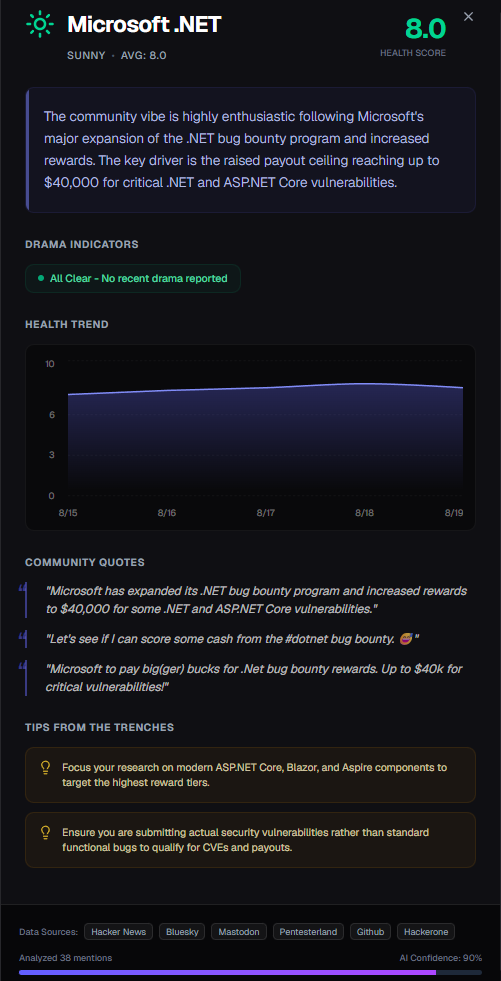
AI Sentiment Analysis: The scraped text is passed directly into Google Gemini 3.5 Flash. I enforced structured JSON outputs via Zod schemas to accurately extract granular metrics like payout fairness and triage speed.
Storage & Visualization: The validated JSON is stored in Supabase PostgreSQL. A Next.js frontend reads this cached data via ISR, visualizing the intelligence using Recharts and Tailwind CSS.
Challenges Faced
Our primary technical challenge was adhering to the strict CPU time limit on Cloudflare Workers' free tier. I aggressively optimized the execution by stripping heavy SDK dependencies (like @google/generative-ai and zod) in favor of zero-dependency native fetch() calls. This reduced our synchronous CPU time from ~100ms down to ~20ms and shrunk the bundle size from 983 KiB to just 54 KiB.
What I Learned
I learned the extreme nuances of edge-compute optimization and how to force LLMs to return strict, heavily-typed data structures in noisy environments.
Built With
- cloudflare
- gemini
- next.js
- supabase


Log in or sign up for Devpost to join the conversation.