-
-
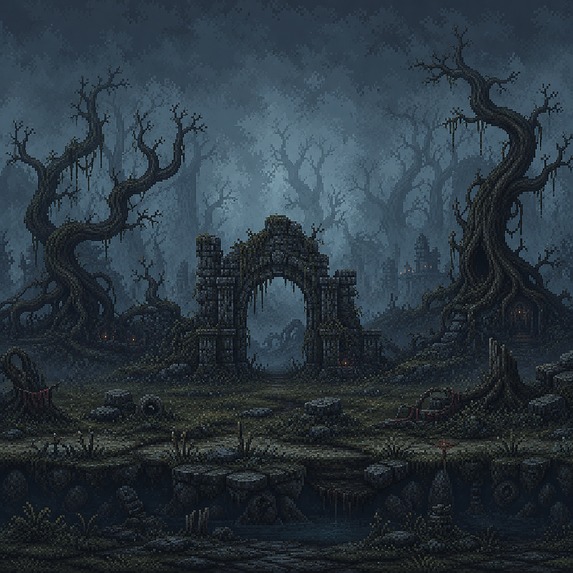
Area 1
-
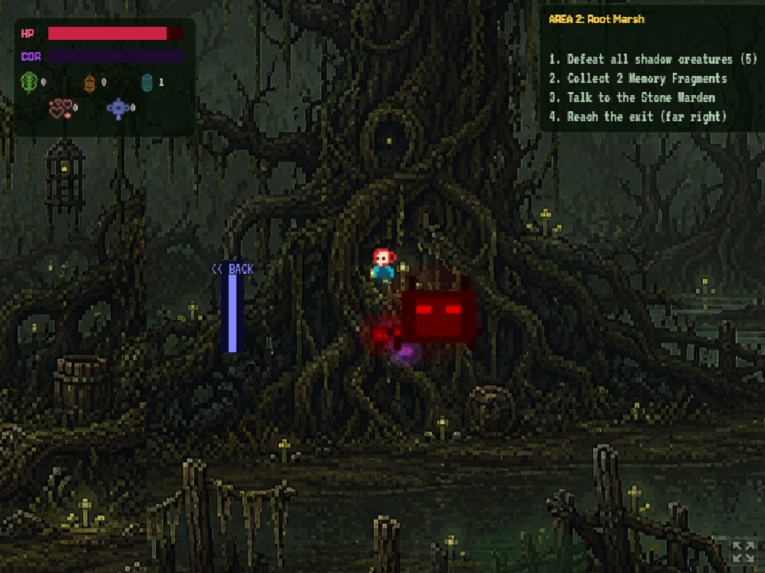
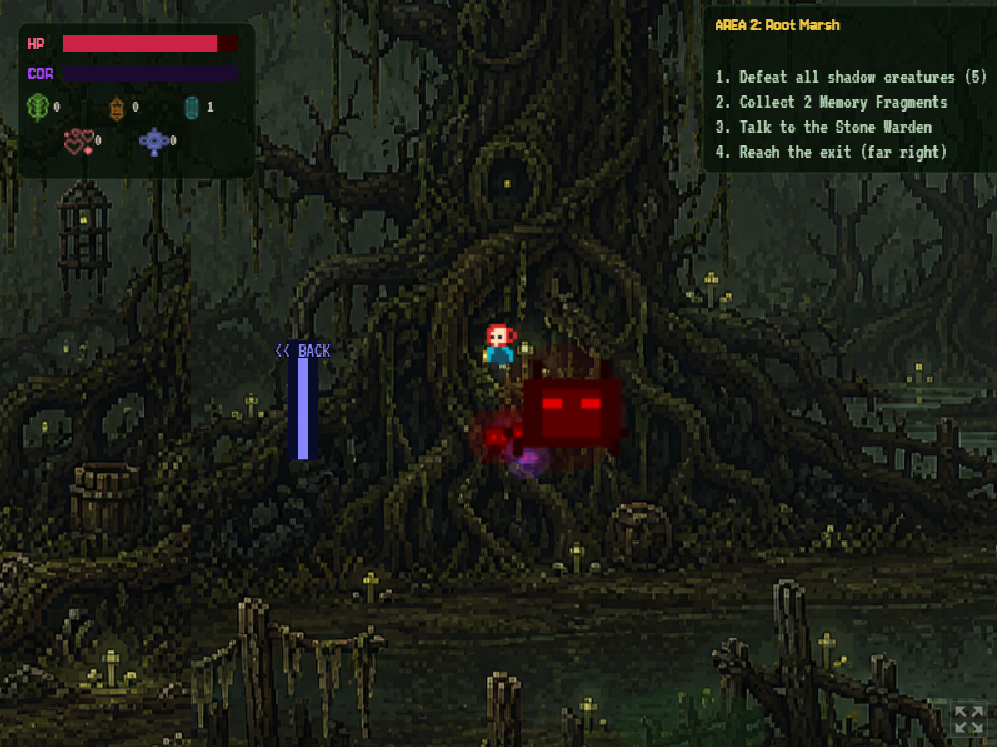
Area 2
-
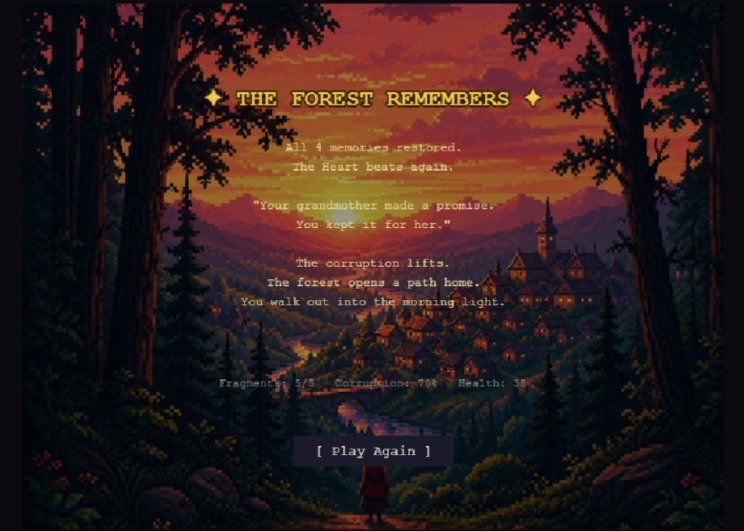
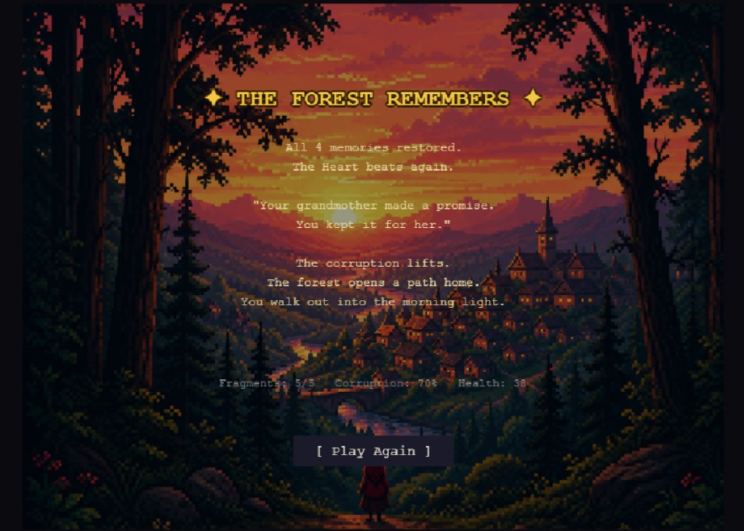
End Screen
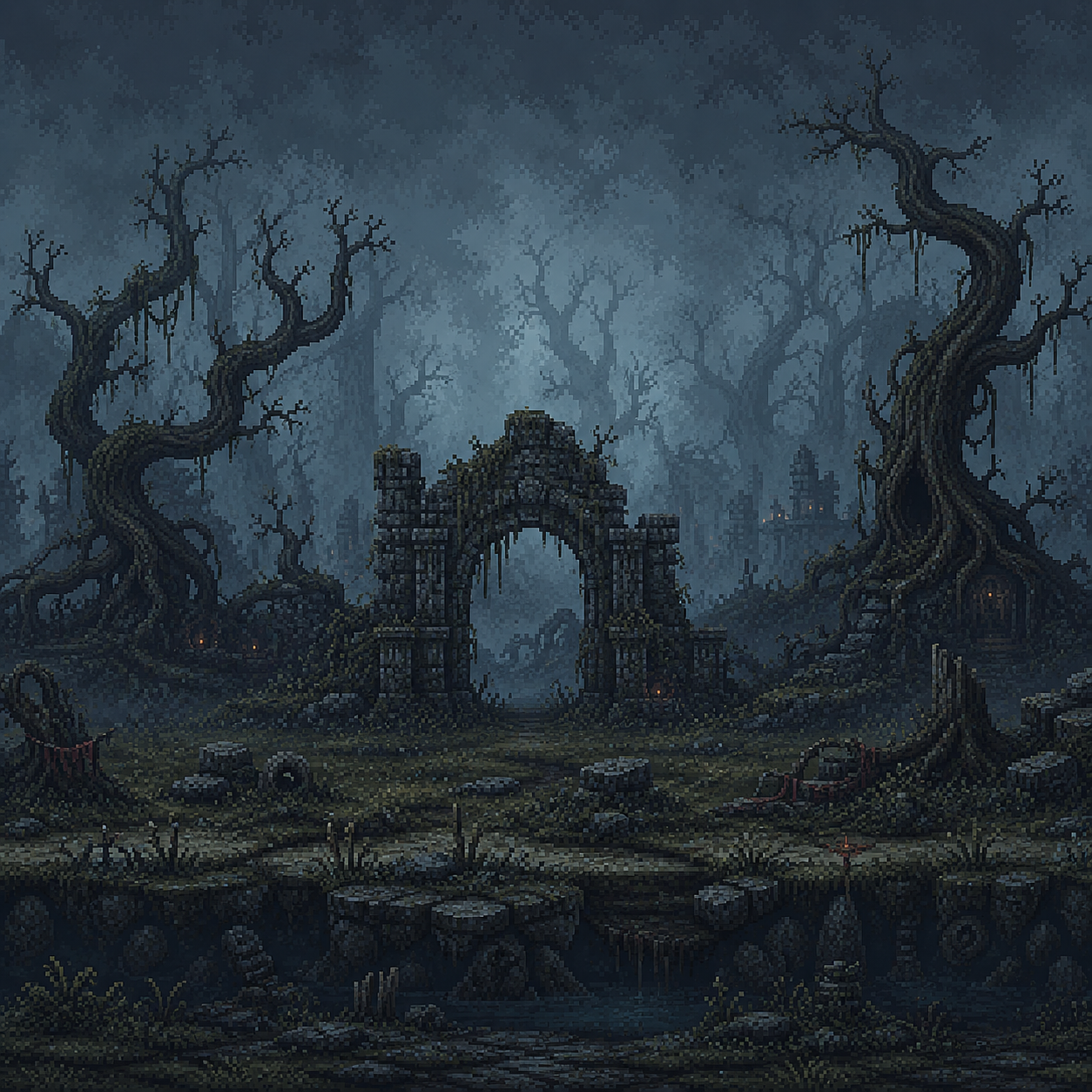
Inspiration
I have always loved mystical fantasy worlds in movies and visual storytelling, especially ones that feel emotional, atmospheric, and slightly haunting. Dark forests, glowing magic, mysterious characters, and cinematic environments have always fascinated me. I wanted to bring that same feeling into a game experience where the environment itself feels alive and emotionally connected to the player.
When I saw the opportunity to build a 2D game for this hackathon, I felt it was the perfect chance to create something artistic and immersive. Pixel art gave the project an authentic fantasy feel while still allowing me to experiment with atmosphere, lighting, and storytelling in a creative way. Instead of focusing only on mechanics, I wanted the player to feel the world of Whisperwood through its visuals, sounds, and mysterious tone.
What it does
Whisperwood is a cinematic 2D dark fantasy pixel-art adventure game where the player follows a young red-haired girl into a cursed forest filled with mysterious light, shadow creatures, and forgotten memories.
The game focuses on exploration, atmosphere, combat, and progression. Players move through dangerous environments, interact with eerie NPCs, collect important items, and slowly uncover the secrets hidden inside the forest. The experience is designed to feel emotional and immersive, with cinematic transitions, ambient audio, animated environments, and smooth side-scrolling gameplay creating a haunting fantasy atmosphere throughout the journey.
How I built it
I developed Whisperwood using JavaScript and the Maki framework, which made the development process much faster and more manageable compared to creating an entire 2D game structure from scratch.
I started the project using the maki new command, which instantly generated the initial setup needed for development. During development, maki dev provided fast Hot Module Replacement, allowing me to test changes in real time while working on gameplay, visuals, and interactions.
One of the most useful features for this project was Maki’s built-in tilemap editor. It helped me quickly create and organize the different game environments with simple configurations such as Tile size, Map dimensions, Width and height in tiles, etc. This made building and iterating on multiple areas much easier during the hackathon. Instead of manually structuring everything, I could focus more on atmosphere, gameplay feel, and visual design.
Maki’s scene management system also helped me handle transitions, level flow, and environmental organization smoothly. For the final deployment, maki build automatically bundled the JavaScript files, optimized assets, compressed audio and pixel-art resources, and generated a clean web-ready build.
The project itself combines:
- JavaScript gameplay systems
- Pixel-art environments
- Animated backgrounds
- Scene transitions
- Sound effects and ambient music
- NPC interaction systems
- Story-driven progression
Using Maki allowed me to spend less time configuring systems and more time creating the actual experience of Whisperwood.
Challenges I ran into
One of the biggest challenges was creating the exact atmosphere I imagined for the forest. At first, building environments entirely through small pixel tiles did not create the cinematic depth and immersion I wanted. To improve this, I switched to larger illustrated pixel-art backgrounds and integrated them into the gameplay, which made the world feel much more alive.
Audio implementation was another challenge because some online audio sources stopped working consistently during testing. To solve this, I manually collected and implemented separate sound effects for gameplay actions and movement.
Creating detailed pixel-style icons was also more difficult than expected, so I adapted certain PNG-based assets and integrated them while still maintaining the game’s visual consistency.
Accomplishments that I’m proud of
- Creating a visually immersive dark fantasy atmosphere
- Designing a cinematic pixel-art style with smooth transitions
- Successfully developing the project individually during a hackathon
- Building animated environments that feel alive and atmospheric
- Using Maki to rapidly develop and optimize the game workflow
- Combining storytelling, exploration, and gameplay into one experience
What I learned
This project taught me how important atmosphere is in game design. Visuals alone are not enough. Small details like lighting, fog, movement, audio, scene transitions, and environmental pacing all work together to shape how a player emotionally experiences a world.
I also learned how much development speed and organization matter during a hackathon. Using Maki helped me focus more on creativity and gameplay instead of spending most of the time building technical systems from scratch. Features like the tilemap editor, live development updates, and scene management made experimentation much easier and allowed me to iterate quickly.
Working on Whisperwood also improved my understanding of scene flow, environmental storytelling, audio integration, visual consistency, and balancing creative ambition with realistic project scope. It showed me how even a relatively small project can feel immersive when all the elements support the same mood and direction.
What's next for Whisperwood
- Add improved enemy AI and combat mechanics
- Expand the story, lore, and NPC interactions
- Introduce boss fights and unlockable abilities
- Improve animations, effects, and environmental details
- Develop a larger playable demo with additional areas
Built With
- html5
- javascript
- maki
- vite


Log in or sign up for Devpost to join the conversation.